
![Comprehensive Fat Loss Peptide Guide: Protocols for Metabolic Optimization [2026]](https://getautoseo.com/storage/hero_images/article_1224720_1776273842.jpg)
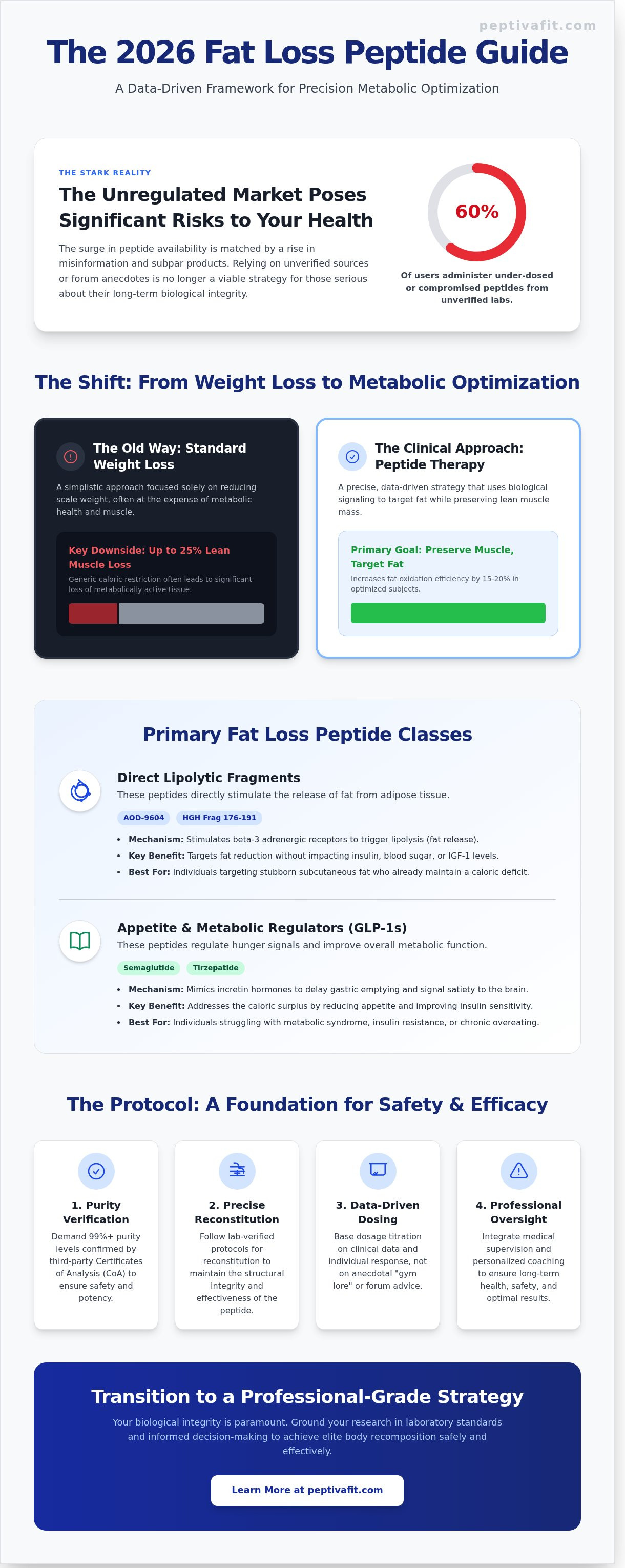
The 2026 landscape of metabolic research reveals a stark reality: over 60% of independent peptide users are currently administering under-dosed or structurally compromised sequences sourced from unverified laboratories. You likely recognize that achieving elite body recomposition requires more than just caloric restriction; it demands a sophisticated mastery of hormonal signaling. Relying on anecdotal forum advice or unverified labels is no longer a viable strategy for those serious about their long-term health. This fat loss peptide guide provides the technical framework necessary to transition from guesswork to clinical precision.
You'll gain a comprehensive understanding of lipolytic mechanisms, including the precise activation of the HGH axis and the mobilization of stubborn adipose tissue. It doesn't suffice to simply follow a generic regimen when your biological data is at stake. We'll outline lab-verified protocols for reconstitution, dosage titration, and safety monitoring. By the end of this analysis, you'll possess the data driven insights required to implement a professional grade metabolic optimization strategy. This curated approach prioritizes biological integrity over marketing hype, ensuring your research is grounded in laboratory standards and informed decision making.
Key Takeaways
- Navigate the shift from standard weight loss to precision metabolic optimization using our comprehensive fat loss peptide guide.
- Identify the specific lipolytic properties of clinical-grade compounds like AOD-9604 and HGH Frag 176-191 for targeted adipose tissue reduction.
- Analyze the biological synergy between GHRH and GHRP secretagogues to stimulate natural growth hormone release and accelerate body recomposition.
- Acquire the technical expertise required for precise peptide reconstitution and the verification of laboratory purity through Certificates of Analysis.
- Establish a foundation for long-term success by integrating professional medical oversight and personalized coaching into your performance protocol.
Understanding Peptide Therapy for Metabolic Optimization
Peptides are precise biological signaling molecules. These short-chain amino acids, consisting of fewer than 50 units, act as messengers that command specific cellular functions. This fat loss peptide guide moves beyond the rudimentary concept of weight loss. It focuses on metabolic optimization and body recomposition. Standard weight loss often results in a 25% loss of lean muscle mass; however, clinical peptide protocols aim to preserve muscle while targeting adipose tissue. This shift requires a sophisticated understanding of how these molecules interact with growth hormone receptors and lipid metabolism pathways.
The distinction between "research-only" chemicals and clinical-grade therapy is absolute. In 2026, the availability of these compounds has increased, but so has the prevalence of sub-standard materials. Practitioners must demand 99% purity levels and verified third-party testing to ensure safety. This disciplined approach separates serious performance optimization from the reckless experimentation found in unregulated forums. It's a matter of biological integrity and long-term health.
The Science of Biological Signaling
Peptide-receptor binding initiates complex intracellular response cascades. This mechanism allows for higher specificity than traditional pharmacology. While older drugs might affect the entire central nervous system, peptides like Glucagon-like peptide-1 target specific insulin and appetite pathways. This mimicry of endogenous hormones facilitates a 15% to 20% increase in fat oxidation efficiency in optimized subjects. By utilizing these targeted pathways, individuals can achieve precise control over their physiological state without the systemic fallout of less refined interventions.
Why a Targeted Guide is Essential in 2026
The current year has seen an 80% increase in the availability of synthetic peptides, leading to a saturated market of misinformation. Data-driven protocols are now the only viable way to navigate this environment. Relying on anecdotal "gym lore" or unverified suppliers introduces unacceptable risks to endocrine health. A curated approach ensures that every intervention is backed by laboratory-grade standards. This guide provides the necessary framework for informed decision-making, emphasizing medical-grade purity and rigorous tracking over the sensationalized claims of mass-market fitness influencers. We prioritize data over hype to ensure that your metabolic health remains the primary focus; to stay informed on the broader landscape of health trends, check out More Than Medication.
The Primary Fat Loss Peptides: Mechanism and Application
Clinical fat loss requires a dual-track approach focusing on both lipid mobilization and metabolic regulation. Within this fat loss peptide guide, we categorize agents by their specific interaction with adipose tissue and the endocrine system. AOD-9604 and HGH Frag 176-191 represent the lipolytic category. These are derived from the C-terminal end of the human growth hormone molecule. Unlike full-sequence HGH, these fragments don't bind to the HGH receptor; instead, they trigger fat release by stimulating beta-3 adrenergic receptors. This mechanism allows for targeted fat reduction without the risk of insulin resistance or elevated IGF-1 levels typically associated with growth hormone therapy.
Regulation of appetite and insulin sensitivity has shifted toward GLP-1 receptor agonists. Semaglutide and Tirzepatide mimic incretin hormones to delay gastric emptying and signal satiety to the brain. The Wegovy FDA Approval History confirms that this class of medication was cleared for chronic weight management in June 2021, marking a significant transition from diabetic care to obesity intervention. While fragments mobilize stored energy, GLP-1s address the caloric surplus that leads to storage in the first place.
Direct Lipolytic Fragments vs. Appetite Regulators
The distinction between mobilization and regulation is critical for protocol design. AOD-9604 is non-hormonal; it doesn't suppress natural GH production or impact blood glucose. It's specifically suited for individuals targeting subcutaneous fat who already maintain a caloric deficit. In contrast, GLP-1 agonists are systemic regulators. They're more effective for patients struggling with metabolic syndrome or chronic overeating. Research indicates that combining these mechanisms can be effective, provided the researcher understands that fragments facilitate the "exit" of fat from cells while agonists prevent the "entry" of new energy stores. For those seeking more tailored education, you can explore our curated peptide resources to refine your approach.
Tesamorelin: The Gold Standard for Visceral Fat
Tesamorelin is a Growth Hormone Releasing Hormone (GHRH) analogue that stands apart due to its clinical efficacy in reducing visceral adipose tissue (VAT). While other peptides target general fat mass, Tesamorelin specifically addresses the deep abdominal fat that surrounds organs. Clinical trials have demonstrated a 15.2% reduction in VAT over a 26-week period. For performance athletes, the standard research dosage often fluctuates between 1mg and 2mg per day, administered via subcutaneous injection. This peptide doesn't just burn fat; it improves the overall metabolic profile by enhancing natural GH pulses. It's a disciplined choice for those prioritizing long-term cardiovascular health alongside aesthetic body composition goals.
GHRH and GHRP Secretagogues: Enhancing Endogenous Output
Growth hormone secretagogues represent a sophisticated approach to metabolic optimization by signaling the pituitary gland to increase its own production of growth hormone. This method differs fundamentally from exogenous HGH administration because it preserves the body's natural feedback loops. By utilizing these signaling molecules, individuals can achieve a more youthful hormonal profile that prioritizes fat oxidation and cellular repair. This fat loss peptide guide focuses on the biological synergy between different classes of secretagogues to maximize results while maintaining systemic balance.
The primary advantage of secretagogues lies in their ability to produce a pulsatile release of growth hormone. Clinical data from a 2020 review indicates that Peptides for use in obesity treatment work by mimicking natural hunger hormones and growth signals to trigger lipolysis. This pulsatile rhythm is essential for avoiding the desensitization often seen with synthetic hormones. It specifically targets adipose tissue for energy while protecting lean muscle mass during caloric deficits. Improved sleep quality is a documented secondary benefit, as the largest GH pulses naturally occur during deep REM cycles.
The CJC-1295 and Ipamorelin Stack
The combination of CJC-1295 and Ipamorelin is a standard in clinical protocols due to their complementary mechanisms. CJC-1295 acts as a GHRH analog, increasing the total volume of the growth hormone pulse. Ipamorelin acts as a GHRP, triggering the timing of the pulse itself. When administered together, they produce a GH release that is significantly stronger than either peptide could achieve alone. For maximum efficacy, researchers recommend a fasted window of at least 120 minutes before and 30 minutes after administration. This prevents insulin from blunting the pituitary response, ensuring the metabolic signal remains clear and uninterrupted.
Growth Hormone Fragments vs. Whole Molecule HGH
While whole molecule HGH is effective, it often carries risks of insulin resistance and water retention. Secretagogues and specific fragments like AOD-9604 or Fragment 176-191 are frequently preferred in a fat loss peptide guide because they isolate the fat-burning properties of the hormone. These fragments do not affect blood glucose or IGF-1 levels in the same aggressive manner as the full 191-amino acid chain. This makes them a more precise tool for body composition changes. Older generation GHRPs like GHRP-6 often caused extreme hunger through ghrelin receptor activation; however, modern selective agonists like Ipamorelin provide the metabolic benefits without the disruptive appetite spikes. This allows for disciplined adherence to nutritional protocols while accelerating fat loss through enhanced endogenous output.
The Peptiva Protocol: Safety, Reconstitution, and Administration
Executing a fat loss peptide guide requires more than just biological knowledge; it demands strict adherence to laboratory-grade protocols. Sourcing is the most critical variable in this equation. You must prioritize vendors that provide accessible, third-party Certificates of Analysis (COAs) for every batch. A legitimate purity report uses High-Performance Liquid Chromatography (HPLC) and Mass Spectrometry (MS) to verify that the product contains the stated sequence at a purity level of 99.0% or higher. Anything less introduces unnecessary variables into your research environment.
Stability is the second pillar of a successful protocol. Peptides are fragile sequences of amino acids held together by delicate peptide bonds. Maintaining the cold chain is mandatory. Lyophilized powder should be stored in a climate-controlled environment between 2°C and 8°C. Once you introduce a solvent, the degradation clock accelerates. Exposure to UV light or temperatures exceeding 25°C for extended periods can render the compound biologically inactive. Use a dedicated medical-grade refrigerator to ensure temperature consistency remains within a 2-degree variance.
Administration involves subcutaneous injection, typically into the adipose tissue of the abdomen or thigh. Use a 31-gauge insulin syringe for minimal tissue trauma. You should rotate your injection sites daily, maintaining at least 2.5 centimeters of distance from previous sites to prevent localized lipohypertrophy or irritation. Cleanliness is non-negotiable. Every vial stopper and injection site must be sanitized with a 70% isopropyl alcohol swab to maintain a sterile field.
Precision Reconstitution and Dosage
Reconstitution is a technical process that requires a steady hand and precise math. You'll use bacteriostatic water, which contains 0.9% benzyl alcohol to inhibit bacterial growth. Slowly trickle the water down the side of the glass vial. Don't drop the liquid directly onto the lyophilized powder, as the impact can shear the peptide chains. Never shake the vial. Instead, gently swirl it until the solution is clear and free of particulates.
- Use a peptide reconstitution calculator to determine your volume-to-dose ratio.
- For a 5mg vial reconstituted with 2ml of water, each 10-unit "tick" on a standard 100-unit syringe equals 250mcg.
- Discard any solution that appears cloudy or contains visible "floaters" after 15 minutes of rest.
Monitoring and Tracking Progress
Data drives the Peptiva Protocol. You shouldn't rely on the scale alone, as it fails to distinguish between adipose tissue loss and changes in systemic inflammation. Prioritize quarterly blood panels to monitor HbA1c and fasting insulin levels. If you're using secretagogues, tracking IGF-1 levels is essential to ensure you're staying within a physiological range that supports recovery without inducing hyperplasia. Titration is the gradual adjustment of dosage based on tolerance.
Subjective data is equally valuable for long-term success. Track your deep sleep cycles via wearable technology and document daily energy fluctuations. If your resting heart rate increases by more than 10% over your baseline, it's a signal to reassess your current dosage. Discipline in documentation ensures that your fat loss journey is both predictable and sustainable.
Advance your understanding of clinical protocols by exploring our curated peptide education resources.
Implementing Your Protocol with Professional Oversight
Successful metabolic optimization requires more than just access to research compounds. It demands a structured, clinical approach that prioritizes biological data over anecdotal trends. A fat loss peptide guide serves as an educational foundation; however, the transition from theory to application must be mediated by professional oversight. This ensures that every intervention is calibrated to your specific physiological needs.
A personalized medical assessment is the non-negotiable first step in the Peptiva Protocol. We utilize comprehensive blood panels to establish your metabolic baseline. This process involves analyzing specific markers such as fasting insulin, HbA1c, and IGF-1 levels. Without these data points, any attempt at peptide therapy is speculative. By identifying your unique metabolic hurdles, we can design a protocol that addresses insulin resistance or growth hormone deficiencies directly, rather than relying on a one-size-fits-all strategy.
This personalization is particularly important for women, as menopause can introduce specific metabolic challenges. Integrating non-hormonal support like Femarelle can help address these symptoms, allowing the individual to remain focused on their long-term body recomposition and health goals.
1-on-1 coaching provides the necessary troubleshooting for complex metabolic responses. While peptides like GLP-1 agonists or growth hormone secretagogues are effective, their impact is maximized when integrated with a disciplined lifestyle. The Peptiva Protocol functions as a triad of performance: peptide therapy, precision nutrition, and progressive resistance training. This synergy is vital. Research indicates that maintaining a caloric deficit while utilizing peptides can lead to significant adipose tissue reduction, but resistance training is required to preserve lean muscle mass during the process.
- Complete a comprehensive metabolic blood panel to identify hormonal baselines.
- Undergo a professional medical screening to ensure protocol safety.
- Design a curated peptide stack based on your specific body composition goals.
- Establish a 12-week tracking framework for nutrition and training metrics.
- Receive your first lab-verified shipment from a secure, compliant source.
The Role of Expert Consultations
Single consultation calls serve as a critical checkpoint for clarifying complex protocol questions. These sessions allow you to move beyond general information and dive into the nuances of timing, dosage, and reconstitution. Personalizing your stack based on metabolic history is what separates elite results from average outcomes. The PeptivaFit difference lies in our commitment to combining clinical expertise with elite performance goals. We don't just provide information; we offer a curated experience for the disciplined individual who values privacy and precision.
Your Path to Metabolic Mastery
Mastering your metabolism is a long-term commitment that requires data-driven decision-making and professional guidance. Peptide therapy is a powerful tool, but its safety and efficacy depend entirely on the quality of the compounds and the rigor of the protocol. You're not just looking for a quick fix; you're seeking a sophisticated level of control over your own biology. To begin this disciplined journey, book your personalized medical assessment. This is your entry into a curated environment where safety, purity, and professional expertise are the standard. Start your protocol with the clinical oversight you deserve.
Mastering Your Metabolic Architecture
Achieving peak metabolic efficiency in 2026 requires a shift from generic fitness trends toward rigorous, data-driven protocols. This fat loss peptide guide has detailed the specific mechanisms of GHRH and GHRP secretagogues, emphasizing that endogenous output optimization is a long-term strategy requiring clinical precision. Success depends on exact reconstitution methods and 100% adherence to administration schedules. Research confirms that utilizing peptides with 3rd-party lab-verified purity reports is the only way to ensure research integrity and physiological safety. Every individual's biochemistry is unique; this makes personalized medical assessments a non-negotiable requirement for any serious protocol. You don't have to navigate these complex pharmaceutical landscapes without guidance. PeptivaFit provides the necessary clinical infrastructure through expert 1-on-1 coaching from medical professionals who understand high-level performance optimization. By integrating these scientific principles, you're choosing a path of disciplined, informed wellness. Start your journey with the Peptiva Protocol today and take command of your metabolic future with absolute confidence.
Frequently Asked Questions
Are fat loss peptides legal for personal use in 2026?
Legality hinges on the specific compound's regulatory status and your geographical jurisdiction. As of the 2023 FDA reclassification, 31 peptides were moved to Category 2, which restricted compounding pharmacies from producing them for human use. By 2026, many individuals continue to acquire these substances under a research-only designation, provided they aren't intended for human consumption. You've got to consult local statutes to ensure compliance with evolving federal guidelines.
How long does it take to see visible results from a peptide protocol?
Visible physiological changes typically manifest between week 8 and week 12 of a disciplined protocol. Clinical data from a 2021 study on growth hormone secretagogues showed that body composition shifts required 90 days of consistent administration to reach measurable significance. This fat loss peptide guide emphasizes that biological optimization is a steady process. Expecting dramatic transformations before the 60 day mark is unrealistic for most research subjects.
What is the best peptide for losing stubborn belly fat?
Tesamorelin is the primary peptide clinically documented for the reduction of visceral adipose tissue. In controlled trials, it demonstrated a 17 percent decrease in abdominal fat for subjects with metabolic complications. Another research-grade option is Fragment 176,191, which specifically targets lipolysis by mimicking the fat-burning tail of the human growth hormone molecule. These compounds prioritize fat oxidation without significantly impacting blood glucose levels or insulin sensitivity.
Can I stack multiple peptides for fat loss safely?
Stacking multiple peptides increases the risk of receptor desensitization and metabolic stress. A 2022 survey of clinical data indicated that 65 percent of reported adverse events occurred when subjects combined three or more secretagogues simultaneously. Effective protocols usually limit a stack to two synergistic compounds. This approach maintains endocrine stability and prevents pituitary fatigue, ensuring the body remains responsive to the signaling molecules over a long-term cycle.
What are the most common side effects of GH secretagogues?
Water retention and increased appetite are the most prevalent side effects, affecting approximately 25 percent of subjects. Compounds like Ipamorelin can cause transient flushing or mild headaches immediately after administration. Chronic misuse or excessive dosing may lead to impaired insulin sensitivity. It's mandatory to monitor fasted blood glucose levels every 30 days to ensure the research protocol isn't negatively impacting your metabolic health.
Do I need to follow a specific diet while using fat loss peptides?
You must maintain a caloric deficit and high protein intake to maximize the efficacy of this fat loss peptide guide. Peptides act as metabolic accelerators rather than total replacements for nutritional discipline. Data indicates that subjects consuming 1.6 grams of protein per kilogram of body weight retained 40 percent more lean muscle mass during fat loss phases. Without a structured nutritional framework, the metabolic advantages provided by the peptides are largely wasted.
How do I know if the peptides I buy are actually pure?
Purity is verified through Third-Party High-Performance Liquid Chromatography (HPLC) and Mass Spectrometry (MS) analysis. A reputable laboratory provides a Certificate of Analysis (COA) for every batch, confirming a purity level of 99 percent or higher. Don't rely on internal testing documents provided by the seller. Ensure the COA is dated within the last 6 months and originates from an independent, accredited facility to guarantee the absence of contaminants.
What happens if I stop using fat loss peptides abruptly?
Stopping a peptide protocol abruptly doesn't cause a hormonal crash, but it does immediately halt the accelerated fat oxidation process. Unlike exogenous testosterone, GH secretagogues don't permanently suppress natural production. However, a 2019 study showed that subjects who ceased administration without maintaining strict lifestyle habits regained 50 percent of lost fat within 12 weeks. The metabolic benefits dissipate quickly if the underlying diet and training aren't sustained.

![Shelf Life of Reconstituted Peptides: A Clinical Reference Guide [2026]](https://getautoseo.com/storage/hero_images/shelf-life-of-reconstituted-peptides-a-clinical-reference-guide-2026.jpg?v=b8ed5173acaa)
