

Most individuals view weight loss as a simple matter of caloric restriction, yet the body often responds to these efforts by slowing the metabolic rate and sacrificing lean muscle tissue. To understand how do peptides burn fat, one must look past the colloquial term "burning" and analyze how these sequences function as precision signals to the endocrine system. You likely recognize the frustration of metabolic adaptation, where progress stalls despite disciplined adherence to a rigorous regimen.
This clinical analysis clarifies the specific biological mechanisms through which peptide therapy triggers lipolysis and restores metabolic efficiency. We will examine the functional differences between growth hormone secretagogues and lipolytic fragments, such as AOD-9604, to identify which pathways target visceral versus subcutaneous adipose tissue. By the conclusion of this guide, you will understand the Peptiva Protocol framework for navigating the current 2026 regulatory landscape. This transition from generic advice to data-driven research allows for a sophisticated approach to performance optimization, ensuring that fat loss occurs through targeted metabolic signaling rather than systemic depletion.
Key Takeaways
- Analyze the specific biological signaling pathways that define how do peptides burn fat by initiating lipolysis through targeted amino acid sequences.
- Differentiate between growth hormone secretagogues that stimulate systemic repair and direct lipolytic fragments designed for localized adipose tissue reduction.
- Evaluate the capacity of mitochondrial-derived peptides to optimize metabolic flexibility and enhance cellular energy expenditure.
- Implement the Peptiva Protocol framework to prioritize lab-verified purity and avoid the metabolic risks of non-clinical, generic dosing strategies.
The Biological Mechanism: How Peptides Signal Lipolysis
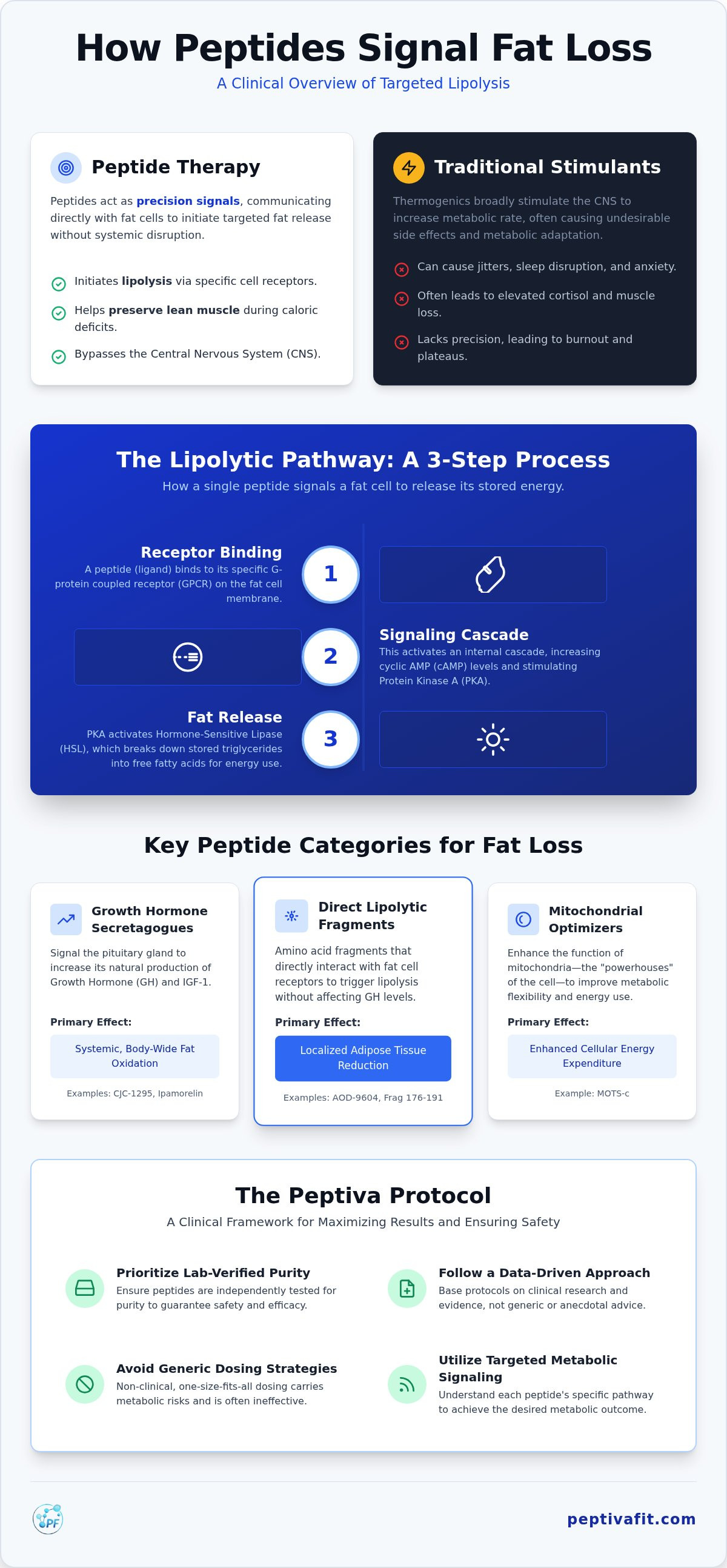
Peptides are defined as short-chain amino acid sequences, typically ranging from two to fifty molecules, which function as precision signaling ligands. Unlike bulk proteins, these molecules act as biochemical messengers that communicate with specific cell surface receptors. To understand how do peptides burn fat, it's essential to distinguish between systemic hormones and these targeted signaling agents. While traditional hormones may have broad, multi-organ effects, Peptide hormones and research fragments are often designed to interact with high specificity. This allows for localized metabolic responses without the collateral endocrine disruption often associated with full-length hormone therapy.
The lipolytic pathway begins when a peptide binds to its designated receptor on the adipocyte membrane. This binding initiates a complex biochemical sequence that moves from the cell surface into the internal lipid droplet. Unlike the general metabolic "upregulation" seen with over-the-counter supplements, peptide signaling is a disciplined, regulatory process. It focuses on the mobilization of stored energy rather than simply increasing systemic temperature through central nervous system stimulation.
Peptides vs. Traditional Fat Burners
Traditional thermogenic stimulants primarily target the central nervous system to increase heart rate and basal metabolic rate. This systemic approach often leads to undesirable side effects like jitters, sleep disruption, and elevated cortisol levels. Peptides operate through a different modality; they bypass the CNS and interact directly with cellular receptors to initiate the breakdown of stored triglycerides.
A critical component of this process is the activation of Hormone-Sensitive Lipase (HSL). This enzyme is responsible for the hydrolysis of triglycerides into free fatty acids and glycerol. By specifically upregulating this enzyme, peptides facilitate a more efficient mobilization of fat stores. This targeted approach is particularly valuable during calorie restriction, as it helps preserve lean muscle mass by ensuring the body prioritizes adipose tissue for energy expenditure.
The Adipocyte Receptor Interaction
The efficacy of peptide signaling depends on the interaction between the peptide and G-protein coupled receptors (GPCRs) located on the surface of adipocytes. Once the peptide binds to the receptor, it initiates a secondary messenger cascade within the cell. This process is far more precise than the broad action of GLP-1 agonists, which primarily influence appetite and insulin secretion.
Key steps in this signaling cascade include:
- Activation of adenylate cyclase: This increases levels of cyclic adenosine monophosphate (cAMP) within the cell.
- Stimulation of protein kinase A (PKA): PKA acts as a metabolic switch to prepare the cell for energy release.
- Enzymatic Phosphorylation: PKA moves HSL to the lipid droplet, where the actual breakdown of fat occurs.
This precise signaling pathway explains how do peptides burn fat by inducing a state of high metabolic efficiency at the cellular level. Lipolysis is the peptide-mediated biochemical process where triglycerides stored in adipocytes are hydrolyzed into free fatty acids and glycerol through the activation of specific intracellular signaling cascades.
Growth Hormone Secretagogues: CJC-1295 and Ipamorelin
The pituitary gland serves as the primary regulatory hub for endogenous growth hormone (GH) production. When analyzing how do peptides burn fat, it's essential to understand that secretagogues don't replace natural hormones; instead, they signal the pituitary to increase its own output. This elevation in GH levels triggers a secondary metabolic response in the liver, stimulating the release of Insulin-like Growth Factor 1 (IGF-1). Together, these molecules create an environment optimized for tissue repair and systemic fat oxidation. Unlike direct lipolytic fragments, the fat loss initiated by secretagogues is typically body-wide, addressing adipose tissue across multiple compartments simultaneously.
Maintaining a pulsatile release of GH is a critical requirement for metabolic health. Constant, non-pulsatile elevation of growth hormone can lead to pituitary desensitization and potential insulin resistance. Clinical frameworks prioritize sequences that mimic the body's natural rhythm, ensuring that receptors remain sensitive and the endocrine system stays balanced. Current clinical evidence for peptides suggests that this pulsatile approach is superior for long-term body composition management compared to older, less sophisticated methods of hormone replacement.
GHRH Mimetics: The Role of CJC-1295
CJC-1295 is a Growth Hormone Releasing Hormone (GHRH) analog that functions by increasing the amplitude of GH pulses. In clinical research, a distinction is made between CJC-1295 with and without DAC (Drug Affinity Complex). While DAC extends the half-life significantly, most disciplined protocols favor the version without DAC, often referred to as Mod GRF 1-29. This version provides a shorter, more natural burst of hormone release. By enhancing the strength of each pulse, CJC-1295 forces the body to prioritize fat stores for energy, facilitating a steady reduction in overall body fat percentage without the crash associated with CNS stimulants.
GHRP Synergy: Why Ipamorelin is the Clinical Standard
Ipamorelin belongs to the Growth Hormone Releasing Peptide (GHRP) class. It's often considered the clinical standard because it mimics the hormone ghrelin without the common side effects of increased hunger or cortisol elevation. When used in isolation, its effects are measurable; however, when combined with a GHRH like CJC-1295, the results are synergistic. This combination creates a much larger GH pulse than either peptide could achieve alone, maximizing the potential for fat mobilization. For a deeper dive into these pathways, refer to our guide on Peptides for Metabolism and Fat Loss: A Clinical Overview [2026].
Because these sequences interact with complex feedback loops, achieving optimal results requires more than just a generic dosing schedule. A personalized medical assessment ensures that the protocol is tailored to your specific hormonal baseline and metabolic objectives.
Direct Lipolysis: The Mechanism of AOD-9604 and Frag 176-191
While growth hormone secretagogues rely on the pituitary gland to initiate systemic changes, a more direct pathway exists through the use of specific molecular fragments. Researchers discovered that the C-terminal end of the Human Growth Hormone (hGH) molecule contains the specific domain responsible for fat metabolism. By isolating this section, known as Fragment 176-191, it's possible to trigger lipolysis without stimulating the growth-promoting or insulin-antagonizing effects of the full hGH protein. This distinction is vital for those seeking to understand how do peptides burn fat without compromising glucose stability or risking the side effects associated with elevated IGF-1.
These fragments primarily function by stimulating beta-3 adrenergic receptors located in white adipose tissue. This stimulation accelerates the breakdown of triglycerides into free fatty acids, specifically targeting stubborn visceral fat stores that are often resistant to traditional diet and exercise. While there are FDA-approved peptides for weight loss that focus on appetite suppression and insulin regulation, lipolytic fragments offer a unique mechanism of action focused purely on fat cell reduction. This specificity is central to the discussion of how do peptides burn fat, as it allows for the isolation of fat-burning benefits from the systemic risks of full-scale hormonal therapy.
AOD-9604: The Anti-Obesity Drug Legacy
AOD-9604 is a stabilized analog of the hGH C-terminal fragment, originally developed in Australia during the 1990s as a potential treatment for obesity. Its clinical history demonstrates a dual-action approach; it not only promotes the destruction of existing fat cells but also actively inhibits lipogenesis, the biochemical process of creating new fat cells. Unlike full-length growth hormone, AOD-9604 does not negatively impact insulin sensitivity or stimulate bone growth, making it a highly selective tool for metabolic optimization. This selectivity ensures that the primary metabolic focus remains on lipid mobilization rather than systemic growth.
HGH Frag 176-191: The Potency Leader
Fragment 176-191 is often regarded as the potency leader in research settings, with some studies suggesting it's up to twelve times more effective at inducing lipolysis than whole hGH. To observe maximal lipid mobilization, research conditions typically require a fasted state, as insulin can blunt the peptide's interaction with beta-3 receptors. This requirement highlights the need for a disciplined, structured framework rather than a casual application. Fragment 176-191 does not cause hyperglycemia because it lacks the specific molecular domain of the growth hormone molecule that interferes with carbohydrate metabolism and insulin signaling.
Mitochondrial Optimization: MOTS-c and Metabolic Flexibility
A sophisticated understanding of how do peptides burn fat requires looking inside the cell's power plant. Mitochondrial-derived peptides (MDPs) represent a class of signaling molecules encoded within the mitochondrial genome itself. Unlike the systemic signaling of secretagogues discussed earlier, MDPs like MOTS-c function as direct metabolic regulators. They act as intracellular sensors that coordinate nuclear gene expression with mitochondrial energy status. This unique mechanism allows the body to maintain metabolic flexibility, which is the essential ability to switch efficiently between carbohydrate and lipid oxidation based on energy demands.
Mitochondrial health is the cornerstone of systemic insulin sensitivity. When mitochondria become dysfunctional, they lose the capacity to oxidize fatty acids effectively, leading to lipid accumulation and metabolic stagnation. By optimizing mitochondrial function, certain sequences restore the cellular machinery required to utilize stored fat. This process provides a clear biological answer to how do peptides burn fat without the need for systemic stimulants. This cellular efficiency is a primary driver behind the sustained fat loss and improved body composition observed in clinical research frameworks.
MOTS-c and Glucose Utilization
MOTS-c is often described as an exercise mimetic because it activates the AMP-activated protein kinase (AMPK) pathway. This is the same metabolic master switch triggered by high-intensity physical activity. By activating AMPK, MOTS-c increases glucose uptake in skeletal muscle and significantly enhances fatty acid oxidation within the mitochondria. This dual action prevents the storage of new lipids while accelerating the clearance of existing ones. For a technical deep dive into these pathways, read our MOTS-C Peptide: A Comprehensive Reference on Mitochondrial-Derived Metabolic Regulation.
SS-31: Targeting Oxidative Stress and Efficiency
While MOTS-c focuses on signaling, the peptide SS-31 targets the structural integrity of the mitochondria. It works by stabilizing cardiolipin, a phospholipid located in the inner mitochondrial membrane that's essential for the electron transport chain. By protecting cardiolipin from oxidative damage, SS-31 reduces mitochondrial oxidative stress and improves the efficiency of ATP production. This structural stabilization ensures a higher basal metabolic rate (BMR), as the body requires more energy to maintain optimized cellular function. When the mitochondria operate without the drag of oxidative stress, the recovery from metabolic depletion is accelerated, allowing for more consistent progress during fat loss phases.
Restoring mitochondrial efficiency is a complex process that demands precise, individualized data. You can book a single consultation call to review your current metabolic markers and determine how these mitochondrial sequences fit into your performance strategy.
The Peptiva Protocol: A Clinical Framework for Fat Loss
Understanding the cellular signaling pathways of various sequences is only the first step in a successful metabolic intervention. While the biological mechanisms provide the technical answer to how do peptides burn fat, the practical application requires a disciplined, structured framework to ensure safety and efficacy. The Peptiva Protocol functions as this definitive clinical framework, moving beyond the fragmented information found in public forums. It prioritizes a high-level educational approach that integrates peptide signaling into a broader lifestyle of resistance training and precision nutrition. This ensures that the metabolic shifts initiated at the cellular level are supported by the necessary physiological inputs.
A central pillar of this protocol is the reliance on 1-on-1 coaching and continuous metabolic monitoring. Peptides are not "set and forget" solutions; they are precision instruments that require adjustment based on individual response. Professional oversight ensures that the subject maintains high levels of adherence and that the protocol is adjusted as body composition evolves. This level of individual attention is what separates a clinical research framework from generic, mass-market advice. It allows for a sophisticated level of control over one's own performance and wellness, grounded in data rather than speculation.
Exclusivity and Professional Oversight
The research peptide market is frequently compromised by unverified "gray market" supplies that lack transparency. In a field where purity determines the safety of the signaling response, lab testing is non-negotiable. Using unverified substances risks exposure to impurities or incorrect concentrations, which can lead to unpredictable endocrine feedback. Professional consultations are essential to prevent common errors, such as improper reconstitution or storage, which can denature the fragile peptide chains. For a comprehensive look at these safety standards, refer to The Peptiva Protocol: A Clinical Guide to Fat Loss. This resource outlines why a selective, restricted approach to sourcing is the only viable path for serious optimization.
Data-Driven Fat Loss Results
Effective metabolic optimization is inherently data-driven. The Peptiva Protocol utilizes baseline blood work and consistent metabolic tracking to refine peptide stacks over time. By monitoring markers such as fasting glucose, IGF-1 levels, and lipid profiles, the protocol can be adjusted to maintain peak efficiency. The long-term vision is never rapid, temporary weight loss; it's the development of a sustainable, high-performance body composition. This methodical process respects the body's natural regulatory boundaries while pushing the limits of metabolic capacity. To begin your own disciplined research phase, Secure the Peptiva Protocol and access lab-tested peptides today.
By focusing on the intersection of advanced self-optimization and academic research, the protocol provides a clear roadmap. It addresses the complexity of how do peptides burn fat by ensuring every signaling molecule is part of a larger, monitored, and verified strategy. This transition from curiosity to clinical-grade investigation is what defines the mature demographic of performance seekers.
Mastering Metabolic Signaling
Transitioning from systemic stimulants to precision peptide sequences represents a fundamental shift in metabolic management. You now understand that the answer to how do peptides burn fat lies in the activation of specific cellular receptors and the optimization of mitochondrial energy pathways. By utilizing targeted signals like growth hormone secretagogues and lipolytic fragments, you can mobilize adipose tissue while preserving lean muscle mass. This disciplined approach ensures that fat loss is a byproduct of enhanced physiological efficiency rather than metabolic depletion.
Success in this specialized field requires more than just biological knowledge; it demands a rigorous research framework. The Peptiva Protocol provides this structure through lab-verified peptide purity reports and personalized medical oversight from metabolic experts. Our exclusive 1-on-1 coaching ensures your protocol is constantly refined based on real-world data and metabolic tracking. This level of professional scrutiny is essential for maintaining the high standards required for elite performance optimization.
Access the Peptiva Protocol: Our Comprehensive Fat Loss Peptide Guide
Take the next step toward sophisticated control of your performance and health. Your journey to metabolic mastery begins with data-driven decisions and clinical-grade standards.
Frequently Asked Questions
Is peptide therapy for fat loss permanent?
Peptide therapy results aren't inherently permanent if the underlying lifestyle factors that led to fat accumulation aren't addressed. These sequences function by optimizing metabolic signaling and lipolytic pathways, essentially "resetting" the body's ability to mobilize stored energy. To maintain the body composition achieved through these protocols, subjects must continue disciplined nutritional and resistance training regimens to prevent the return of metabolic stagnation.
How long does it take to see fat loss results from peptides?
Measurable changes in body composition typically emerge within four to twelve weeks of consistent research. While cellular signaling shifts occur almost immediately upon administration, the physical manifestation of lipolysis requires time for the body to oxidize and clear released fatty acids. Understanding how do peptides burn fat involves recognizing that this is a gradual biological process rather than a rapid, stimulant-induced weight loss event.
Can I stack different fat-burning peptides together?
Stacking multiple sequences is a common practice in clinical research to target diverse metabolic pathways simultaneously. For example, combining a growth hormone secretagogue like Ipamorelin with a lipolytic fragment like AOD-9604 allows for both systemic metabolic upregulation and direct targeting of white adipose tissue. This synergistic approach often yields more comprehensive results than using a single peptide in isolation.
Do fat loss peptides have side effects like jitters or insomnia?
Fat loss peptides generally don't cause the central nervous system stimulation associated with traditional thermogenic supplements. Because they target specific cellular receptors rather than the adrenal system, subjects don't typically experience tremors, heart palpitations, or sleep disruption. Most reported side effects are localized to the injection site or involve mild, transient water retention as the endocrine system adjusts to new signaling levels.
What is the difference between peptides and SARMs for fat loss?
Peptides are short-chain amino acids that act as signaling ligands to influence natural hormone production or cellular efficiency. SARMs, or Selective Androgen Receptor Modulators, are synthetic ligands that bind to androgen receptors to mimic the effects of testosterone. Peptides generally offer a more favorable safety profile because they don't suppress natural testosterone production or carry the same risks of hepatotoxicity often associated with SARMs.
Do I need to follow a specific diet while using the Peptiva Protocol?
Nutritional discipline is a non-negotiable component of the Peptiva Protocol. While these sequences enhance the body's capacity for fat oxidation, they don't override the fundamental laws of thermodynamics or a significant caloric surplus. The protocol emphasizes a high-protein, nutrient-dense diet that supports lean muscle preservation and provides the necessary substrates for metabolic repair and energy expenditure.
Are fat loss peptides legal in the United States?
The legal status of these molecules is currently in a state of regulatory flux as of August 2026. While many sequences are under review by the FDA's Pharmacy Compounding Advisory Committee, they're only legal for human use when prescribed by a licensed healthcare provider and dispensed by a licensed compounding pharmacy. It's illegal to purchase these substances for human consumption from websites that market them as "research chemicals."
How do I know if my peptides are lab-tested and pure?
Verification of purity requires a third-party Certificate of Analysis (COA) for every specific batch of the peptide. A legitimate COA should confirm a purity level of at least 98% and verify the absence of heavy metals, bacterial endotoxins, and other contaminants. This data-driven approach is a core requirement for those seeking to understand how do peptides burn fat safely within a controlled, clinical-grade research framework.

![Shelf Life of Reconstituted Peptides: A Clinical Reference Guide [2026]](https://getautoseo.com/storage/hero_images/shelf-life-of-reconstituted-peptides-a-clinical-reference-guide-2026.jpg?v=b8ed5173acaa)
