A purity rating of 99% is often the threshold for failure in high-stakes research. While a 1% margin of error might seem negligible in standard supplements, when sourcing lab tested peptides, that variance represents a significant risk of lead contamination or bacterial endotoxins. You recognize that elite performance optimization demands clinical precision, yet the research sector remains saturated with conflicting data and opaque quality claims. It's frustrating to navigate a market where the difference between a successful fat loss protocol and a high-risk research experiment is buried in a complex laboratory report.
This guide establishes a professional framework for distinguishing laboratory-grade purity from substandard alternatives. You'll gain the technical expertise needed to interpret Certificates of Analysis (COAs) with the same rigor as a clinical researcher. We'll analyze the specific verification protocols required for safety in 2026, providing you with the sophisticated control necessary to manage your wellness data effectively. By the end of this analysis, you'll understand how to identify 99.9% purity markers and ensure your research materials meet the highest evidentiary standards.
Key Takeaways
- Define the technical threshold that separates industrial-grade compounds from laboratory-verified sequences through independent analytical chemistry.
- Identify the critical biological risks of unverified research, including endotoxin exposure and the presence of residual synthesis solvents like Trifluoroacetic Acid.
- Master the specific criteria for authenticating a Certificate of Analysis to ensure your research involves only legitimate lab tested peptides rather than forged documentation.
- Evaluate the necessity of third-party verification from US-based facilities to maintain the highest clinical standards for sequence identity and purity.
- Learn how to integrate verified sequences into a curated protocol that prioritizes data-driven safety and personalized performance optimization.
Defining Lab-Tested Peptides: Purity Beyond Marketing Claims
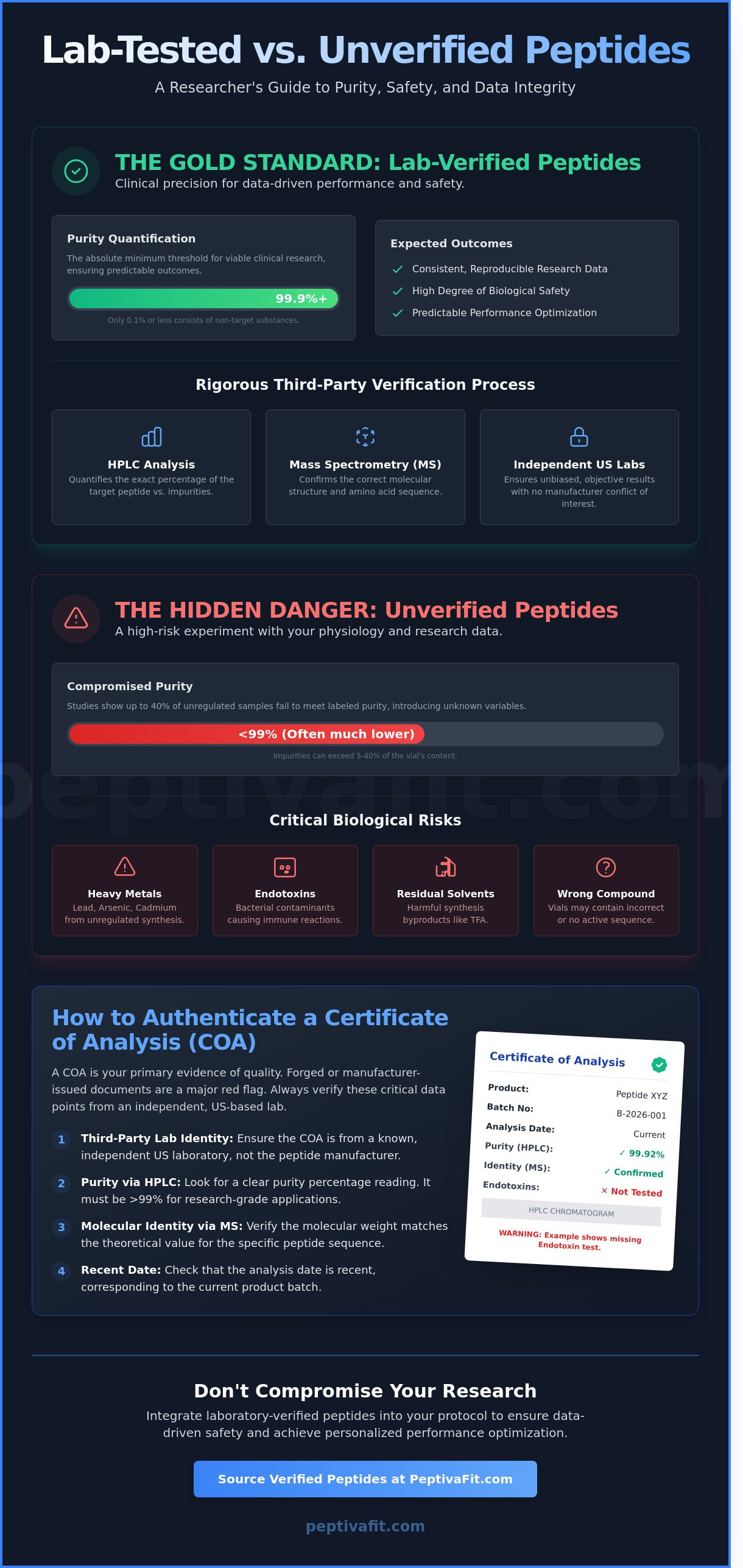
A lab-tested peptide isn't defined by a brand's claim or a glossy label. It's a sequence verified through independent analytical chemistry to confirm molecular identity and quantify exact purity levels. In the current market, a significant distinction exists between industrial grade and laboratory research grade standards. Industrial grade products often allow for 5% or more in impurities, which is a margin of error that can compromise sensitive data. For those engaged in disciplined performance optimization research, 99% purity is the absolute minimum threshold for clinical research viability. Anything less introduces unknown variables that can lead to inconsistent results or unexpected reactions.
Independent third-party laboratories act as the ultimate gatekeeper in this process. By removing the manufacturer from the verification stage, these labs eliminate inherent bias and provide an objective Certificate of Analysis (COA). This documentation is essential for maintaining a high-level, informed research protocol. When you source lab tested peptides, you aren't just buying a product; you're acquiring data that has been validated by a facility that has no financial stake in the manufacturing outcome.
The Role of HPLC in Purity Quantification
High-Performance Liquid Chromatography (HPLC) is a sophisticated process where a liquid solvent carries the peptide through a specialized column. The individual molecules separate based on their chemical properties, allowing researchers to see every component within a sample. When you look at a chromatogram, the area under the primary peak represents the purity percentage. A 99.2% reading means that only 0.8% of the sample consists of non-target substances. HPLC is the gold standard for peptide separation and purity analysis.
Mass Spectrometry: Confirming Molecular Identity
Purity alone is useless if you're holding the wrong molecule. Mass Spectrometry (MS) solves this by measuring the mass-to-charge ratio of ions to verify the exact peptide sequence. During the Peptide synthesis process, errors can occur where amino acids are skipped or incorrectly ordered. MS identifies these mismatched peptides that might show up as a single peak on an HPLC test but are biologically incorrect. Utilizing lab tested peptides ensures that the molecular weight matches the theoretical value of the target sequence to within 0.1 Daltons. This level of precision is mandatory for any serious, data-driven research program that values accuracy over convenience.
- Verification: Confirms the sequence matches the intended molecular structure.
- Quantification: Establishes the exact percentage of the target peptide versus contaminants.
- Objectivity: Removes manufacturer conflict of interest through third-party oversight.
The Hidden Risks of Unverified Research Peptides
Acquiring compounds from unverified sources introduces profound physiological hazards that compromise the integrity of any research environment. In a 2023 industry analysis of unregulated chemical suppliers, approximately 40% of tested samples failed to meet their labeled purity or concentration standards. High-quality lab tested peptides serve as the primary defense against systemic contamination. Without rigorous third-party verification, researchers risk exposing subjects to heavy metals like lead, cadmium, or arsenic. These elements often accumulate during large-scale synthesis in international facilities that operate without regulatory oversight.
Inaccurate dosing presents a secondary, equally critical failure. It's common for a vial labeled as 10mg to contain only 5mg of the active sequence, or in extreme cases, a completely different compound. This discrepancy invalidates research data and creates unpredictable biological outcomes. Current FDA Peptide Regulation highlights these risks, noting that unapproved products often bypass the stringent manufacturing controls required for clinical safety. Relying on unverified batches is a gamble that professional researchers cannot afford to take.
Understanding Endotoxin Contamination
Endotoxins are lipopolysaccharides found in the cell walls of Gram-negative bacteria. They remain present in the final product even after the bacteria themselves have been destroyed. If these contaminants enter a research subject, they trigger an immediate systemic inflammatory response. Laboratory safety standards require the Limulus Amebocyte Lysate (LAL) test to detect these toxins at the molecular level. Exposure to high-endotoxin batches results in acute symptoms, including high fever, chills, and hypotension. Maintaining a sterile environment is a fundamental requirement for experimental accuracy.
The Danger of Synthesis Byproducts
Chemical synthesis often produces truncated sequences, which are incomplete or "broken" peptide chains. These molecules can interfere with receptor binding, effectively blocking the intended biological pathway and skewing results. Long-term exposure to uncharacterized chemical impurities can lead to unpredictable metabolic shifts. Residual reagents like Trifluoroacetic Acid (TFA) are frequently left behind in non-purified batches. PeptivaFit maintains a zero-tolerance policy for these reagents to ensure that every sequence remains biologically precise and free of synthesis debris. For those seeking a more curated approach to research education, understanding these molecular nuances is essential for maintaining high standards.
Deciphering the Certificate of Analysis (COA): A Researcher’s Checklist
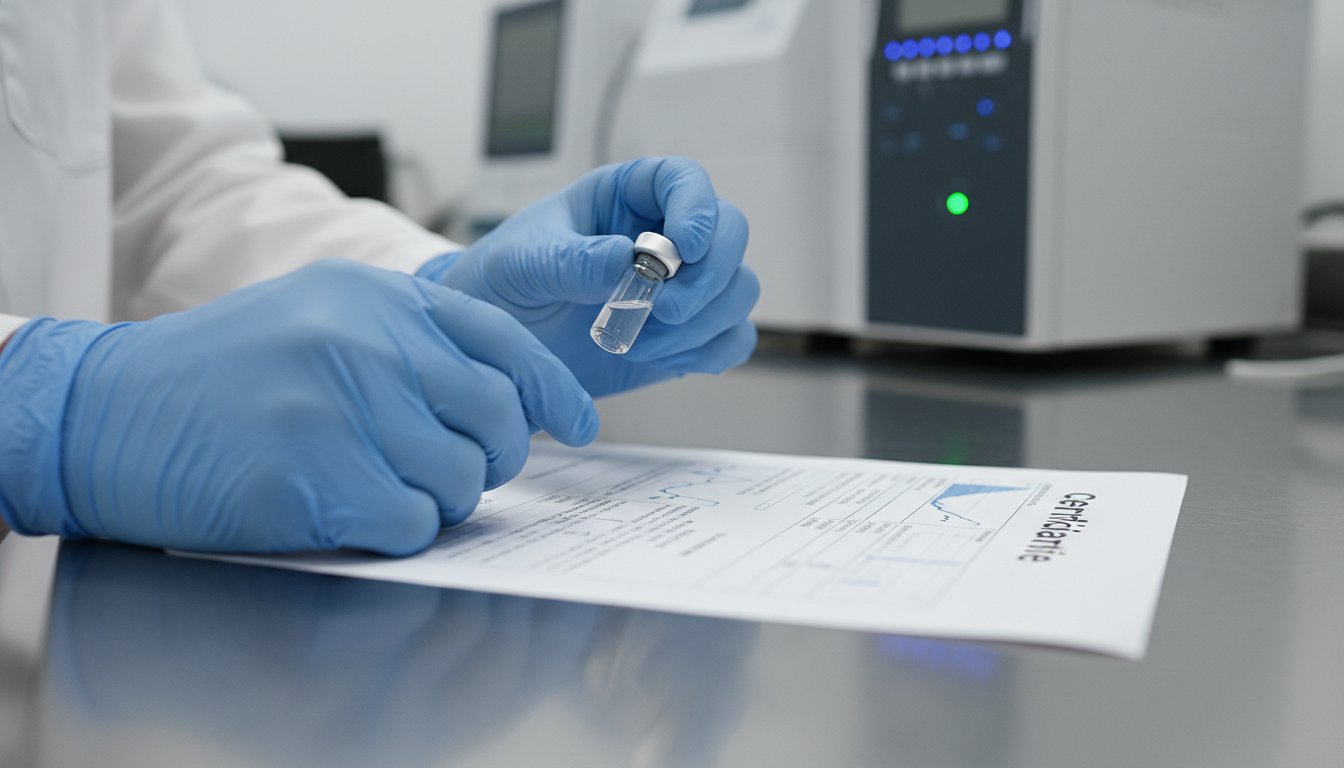
The Certificate of Analysis (COA) serves as the definitive scientific record for a specific batch of lab tested peptides. It isn't a marketing brochure; it's a legal verification of chemical integrity and molecular accuracy. Researchers must prioritize documents that offer granular detail over generic summaries. Every legitimate COA links back to a unique Batch Number. This identification code allows for precise tracking of a peptide lot from its synthesis in the laboratory to its final distribution point. If a vendor cannot provide a batch-specific report that matches the product in hand, the material's provenance remains unverified and potentially hazardous.
A comprehensive COA evaluates several critical metrics that define the quality of the research material:
- Purity: The percentage of the target peptide relative to impurities, with a standard research threshold of 98% or higher.
- Identity: Confirmation through Mass Spectrometry that the molecular structure matches the intended sequence.
- Appearance: A physical description of the compound, typically a lyophilized white powder, ensuring no visible contaminants are present.
- Solubility: The compound's ability to dissolve completely in a specific solvent, which is essential for accurate concentration during research.
Verifying the Testing Laboratory
Due diligence begins with the laboratory itself. Legitimate reports clearly list the facility's physical address, contact phone number, and a unique report ID. Reputable vendors encourage researchers to contact the testing facility directly to confirm the report's authenticity. Red flags include blurred logos, missing dates, or a suspicious lack of contact information. Be cautious of reports that claim a flat "99%" purity without providing the specific analytical data to support it. The FDA Guidance on Peptide Purity emphasizes the necessity of rigorous impurity controls; third-party validations are the only way to ensure these standards are met in a research setting.
Interpreting the Chromatogram and Mass Spec Graphs
A summary table is insufficient for high-level research verification. A legitimate COA must include the raw data graphs, not just a summary table. High Performance Liquid Chromatography (HPLC) results should display a single, sharp peak on the chromatogram. Multiple peaks or broad clusters indicate the presence of significant impurities or peptide degradation. Mass Spectrometry (MS) confirms the peptide's identity by measuring its molecular weight. You're looking for the "Found" molecular weight to match the "Expected" value within a narrow margin, typically within +/- 1 Dalton. Discrepancies in these values suggest the material is either mislabeled or improperly synthesized, rendering it useless for disciplined scientific inquiry.
Sourcing Standards: Why Third-Party Testing is Non-Negotiable
The distinction between in-house testing and third-party verification represents the line between marketing claims and scientific certainty. In-house testing occurs when a manufacturer analyzes their own product; this practice inherently lacks the objectivity required for rigorous safety standards. PeptivaFit mandates third-party verification through independent, ISO 17025 accredited facilities to ensure that every sequence of lab tested peptides meets a minimum purity threshold of 99%.
We prioritize laboratories that utilize US-based analytical facilities for their stringent adherence to High-Performance Liquid Chromatography (HPLC) and Mass Spectrometry (MS) protocols. These methods identify the exact molecular mass and purity of the compound. Beyond initial purity, the process of lyophilization, or freeze-drying, is critical. This 24 to 48 hour process removes moisture to prevent hydrolysis, which can degrade a peptide in days if left in an aqueous state. Even a verified sample can lose its integrity if storage conditions fail to account for light sensitivity and thermal fluctuations post-testing.
USA-Made vs. International Synthesis
The regulatory landscape of peptide synthesis is complex. While many raw materials are synthesized in high-capacity facilities in Europe or Asia, "USA-Made" often refers to the critical finishing stages. This includes the final purification, lyophilization, and rigorous testing conducted within United States borders. PeptivaFit maintains a protocol where every batch is re-tested upon arrival at the distribution facility. We don't rely on overseas certificates of analysis which may be outdated or forged. This secondary layer of domestic verification ensures that the research materials haven't been compromised during international transit.
Stability Testing and Expiration Protocols
Peptides are fragile chains of amino acids sensitive to environmental stressors. Lab testing must account for degradation over time, not just at the moment of synthesis. To preserve the lab-verified purity, we utilize vacuum sealing and nitrogen flushing. This process displaces oxygen within the vial, significantly reducing the risk of oxidation. Our commitment to data transparency means we provide the most recent batch data to clients; we never ship inventory that has sat on a shelf for more than 180 days without re-validation. This disciplined approach ensures that your research is based on stable, high-purity compounds.
Ensuring the integrity of your research requires access to verified data and clinical-grade materials. Explore our curated selection of lab-verified peptides to maintain the highest standards in your laboratory environment.
Integrating Verified Peptides into the PeptivaFit Protocol
Serious researchers recognize that acquiring lab tested peptides is only the beginning of a successful study. The PeptivaFit Protocol moves beyond the common practice of simply purchasing chemicals; it establishes a rigorous clinical framework. Within this structure, high-purity sequences serve as the essential foundation for fat loss research. By utilizing only verified sequences, the protocol eliminates the 15% to 25% purity variance often found in non-certified batches. This level of precision ensures that metabolic data remains consistent throughout the duration of the research period.
The transition from a casual approach to a structured framework is vital. It's the difference between guesswork and data-driven science. Our protocol emphasizes the synergy between chemical purity and physiological tracking. When researchers use verified materials, they can isolate variables with high accuracy, ensuring that any observed changes are a direct result of the peptide sequence rather than a contaminant or byproduct. Following a clinical framework means every step is measured, documented, and analyzed for long-term safety.
The Importance of Professional Oversight
Optimal research outcomes aren't achieved in a vacuum. They require a disciplined environment and expert guidance to interpret complex biological feedback. You can learn more about our 1-on-1 coaching packages to understand how professional oversight enhances safety. Medical consultations are integrated into our process to tailor research to individual metabolic profiles. These assessments help identify specific biomarkers that may influence how a research subject responds to a protocol. It's a personalized approach that replaces the "one-size-fits-all" mentality prevalent in less disciplined circles.
This disciplined mindset often extends beyond the laboratory; for instance, those focused on holistic performance optimization can discover Reformer Fitness Studio to explore how specialized Reformer Pilates and functional training complement a data-driven wellness strategy.
Similarly, for those who demand elite precision in their cognitive and reaction-time training, Apevie Simulators provides professional-grade hardware that translates the same rigor required for laboratory research into the world of high-performance simulation.
Securing Your Research Foundation
PeptivaFit stands as a curated resource for those who demand excellence in their laboratory work. The PeptivaFit Protocol is designed specifically to mitigate the risks associated with unverified peptide use. A 2023 analysis of online research chemical providers revealed that nearly 30% of samples tested contained significant impurities or incorrect dosages. Our system acts as a safeguard against these variables, providing a stable foundation for your work. Don't compromise the integrity of your data with inferior supplies. You can access the PeptivaFit Protocol and Lab-Tested Supplies to secure your research environment and ensure the highest standards of safety and efficacy.
Securing Research Integrity through Analytical Rigor
It's clear that the landscape of peptide research in 2026 demands a shift from passive trust to verified data. Relying on marketing claims is a liability. Every batch must be validated by independent third-party analytical laboratories to ensure it meets the 99% purity threshold required for credible results. Unverified supplies introduce contaminants that compromise both data and safety. Utilizing lab tested peptides is no longer optional for researchers who value precision and long term efficacy.
The Peptiva Protocol provides a curated framework where expert medical oversight meets rigorous sourcing standards. Every batch includes a comprehensive Certificate of Analysis (COA) to confirm identity and potency. This level of transparency allows you to focus on performance optimization without the variables of substandard materials. You're building a foundation of discipline and accuracy. Taking control of your research variables is the first step toward achieving precise, data-driven outcomes.
Secure the Peptiva Protocol and Access Lab-Verified Research Supplies
Frequently Asked Questions
Is 99% purity actually high enough for peptide research?
A 99% purity level is the standard threshold for high-grade research, but the remaining 1% of impurities can include residual solvents or truncated sequences. In a 10mg vial, 1% represents 100 micrograms of unknown substances that could interfere with data. Rigorous research environments demand this precision to ensure clinical integrity and minimize unexpected variables during longitudinal studies. High-performance protocols require 99.0% as a baseline.
Can I trust a COA provided by the peptide vendor themselves?
You shouldn't rely solely on a Certificate of Analysis (COA) produced in-house by a vendor. Authentic lab tested peptides require validation from an independent ISO 17025 accredited facility. Internal reports often lack the transparency of raw HPLC and MS data, which are necessary to confirm the absence of manufacturing byproducts. This curated approach to verification protects the integrity of your research environment.
What are the physical signs of a low-purity or contaminated peptide?
Visible particulates or a cloudy appearance after reconstitution with bacteriostatic water are primary indicators of contamination. While most impurities are microscopic, a cake that fails to dissolve within 30 seconds at a 1mg/mL concentration suggests structural instability. Discoloration or a persistent oily film indicates residual solvents from the synthesis process. These physical markers signal that the material isn't suitable for informed research protocols.
How do I verify if a third-party lab report is authentic?
Contact the testing facility directly using the report ID number found on the document's header to verify authenticity. Reputable labs like Janoshik or MZ Biolabs maintain digital databases where researchers can enter a specific batch code to view the original HPLC chromatogram. Ensure the date on the report is within the last 6 months to guarantee current batch relevance. Verification is a critical step in maintaining laboratory standards.
Does the color of the peptide powder indicate its purity level?
The color of the lyophilized powder isn't a reliable metric for purity, as most high-purity peptides appear as a white or off-white solid. Some specific compounds, such as copper peptides, naturally exhibit a blue hue due to their chemical structure. Relying on visual aesthetics rather than mass spectrometry leads to inaccurate safety assessments. Scientific data must always supersede subjective visual observations in a disciplined research setting.
Why do some peptides have different molecular weights on the COA than online?
Variations occur because vendors may list the base peptide weight, while the COA reflects the weight including the TFA or acetate salt. A 5% to 15% variance is common depending on the salt content used for stabilization. Accurate lab tested peptides will specify both the theoretical mass and the observed mass found during testing. This technical distinction is vital for precise dosage calculations and informed data tracking.
How often should a peptide batch be re-tested for purity?
A peptide batch should be re-tested every 12 months if stored at -20 degrees Celsius to monitor for degradation. If stored at room temperature, stability can drop by 20% in as little as 30 days. Regular testing cycles ensure that the peptide's primary sequence remains intact and hasn't fragmented into inactive components. Informed researchers track these timelines to ensure the continued viability of their curated materials.
What happens if I use a peptide that contains endotoxins?
Using peptides contaminated with endotoxins can trigger an immediate systemic inflammatory response or a high fever. Endotoxins are lipopolysaccharides from bacterial cell walls that are toxic at levels exceeding 0.5 EU/mg in clinical settings. These contaminants often cause persistent redness and swelling at the site of administration that lasts for 48 hours or more. Maintaining a sterile research environment is a non-negotiable safety requirement.

![Shelf Life of Reconstituted Peptides: A Clinical Reference Guide [2026]](https://getautoseo.com/storage/hero_images/shelf-life-of-reconstituted-peptides-a-clinical-reference-guide-2026.jpg?v=b8ed5173acaa)
