

Can a molecule composed of just two amino acids serve as the master key to reactivating the silenced chromatin of an aging genome? Researchers often find themselves overwhelmed by the 20 plus Khavinson bioregulators identified since Vladimir Khavinson’s initial breakthroughs in 1971, many of which remain buried in untranslated Russian clinical literature. It's frustrating to navigate a landscape where high-purity, lab-verified data is scarce and the distinction between various thymus-derived compounds remains opaque. This clinical review provides a definitive analysis of vilon, a synthetic dipeptide known for its profound epigenetic influence and capacity to stimulate protein synthesis within the immune system.
You'll gain a comprehensive understanding of how this specific bioregulator functions at the molecular level to reverse age-related heterochromatinization. We'll examine the 2003 findings from the Saint Petersburg Institute of Bioregulation and Gerontology regarding chromatin de-condensation. This review provides precise reconstitution protocols for laboratory research and distinguishes this molecule from larger complexes like Thymalin. This guide transitions from theoretical genetics to actionable laboratory standards, ensuring your research is grounded in verified clinical data and disciplined methodology.
Key Takeaways
- Understand the historical foundation of the Khavinson legacy and the specific molecular architecture of the Lys-Glu dipeptide.
- Explore how vilon facilitates chromatin reactivation and "deheterochromatinization" to potentially restore youthful gene expression patterns.
- Examine the clinical implications of thymic regeneration and the maturation of naive T-lymphocytes within contemporary longevity research.
- Master the precise laboratory protocols for the stabilization and reconstitution of lyophilized peptides to ensure maximum experimental integrity.
- Identify the critical benchmarks for laboratory-grade standards, including the necessity of 99%+ purity verified via rigorous HPLC and MS analysis.
Vilon: The Molecular Architecture of a Dipeptide Bioregulator
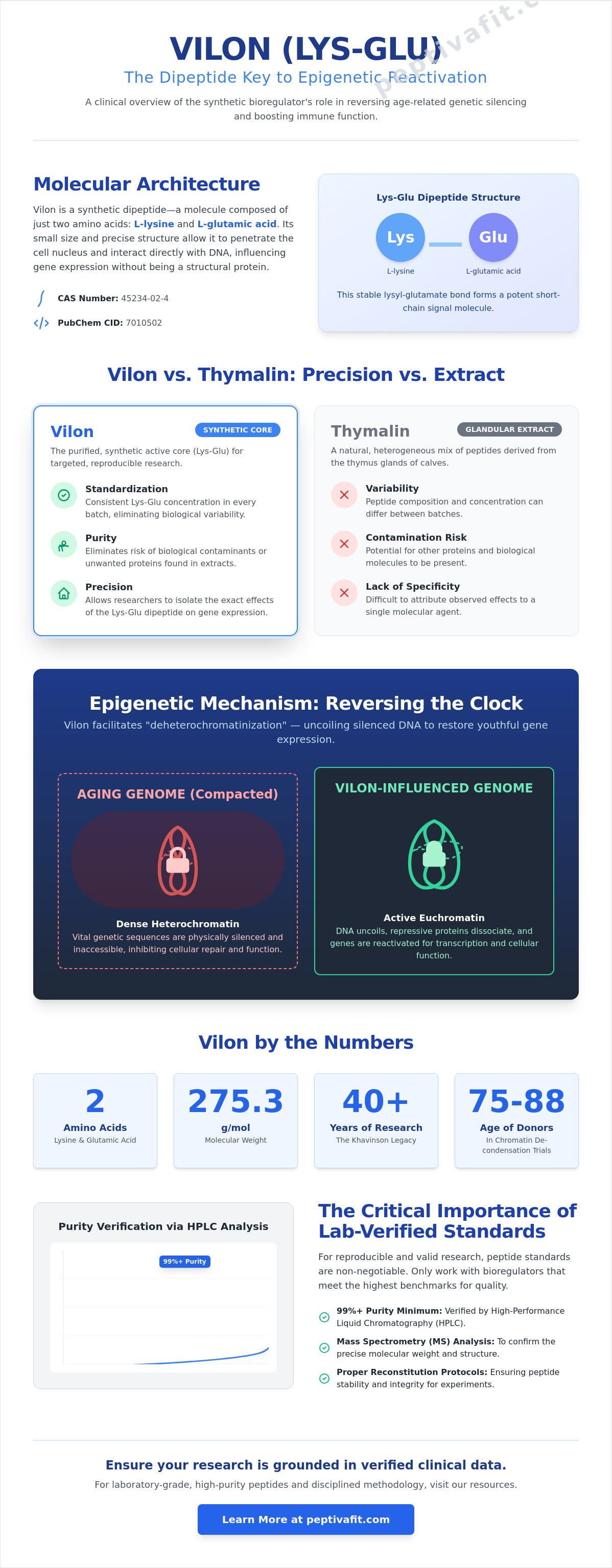
Vilon is a synthetic dipeptide meticulously engineered for laboratory research into cellular aging and immune modulation. Composed of two amino acids, L-lysine and L-glutamic acid (Lys-Glu), it serves as a primary example of the Khavinson legacy in peptide science. Vladimir Khavinson and his colleagues at the St. Petersburg Institute of Bioregulation and Gerontology spent over 40 years identifying these short-chain signal molecules. Their work transitioned from complex glandular extracts to the precision of synthetic dipeptides that interact directly with the genome.
The molecular weight of vilon is 275.3 g/mol. This specific weight is a defining characteristic that dictates its unique cellular bioavailability. While long-chain proteins often require specialized transport mechanisms to enter a cell, this dipeptide’s small size allows it to penetrate the nuclear membrane effortlessly. It functions as a short-chain signal molecule rather than a structural protein. This allows it to engage in epigenetic regulation by binding with specific DNA sequences, a process that larger molecules cannot replicate with the same efficiency.
Chemical Composition and Structural Integrity
The structural foundation of this bioregulator rests on the lysyl-glutamate bond. This bond maintains high levels of stability in aqueous solutions, making it a reliable subject for longitudinal studies. The use of the L-isomer configuration is mandatory for biological recognition; the body’s receptors are programmed to interact only with this specific spatial arrangement. For verification and procurement in a research setting, the molecule is cataloged under CAS Number 45234-02-4 and PubChem CID 7010502. These identifiers ensure that researchers are working with the precise molecular structure defined in clinical literature.
Vilon vs. Thymalin: A Comparative Overview
Thymalin is a natural extract derived from the thymus glands of calves, containing a heterogeneous mix of various peptides. In contrast, it's the synthetic, purified active core of these thymus-derived regulators. Research advantages of using the synthetic dipeptide include:
- Standardization: Every batch provides a consistent concentration of the Lys-Glu sequence without the variability of biological tissue.
- Purity: Synthetic production removes the risk of biological contaminants or unwanted proteins found in glandular extracts.
- Precision: It allows researchers to isolate the effects of the specific dipeptide to understand its exact role in gene expression.
While Thymalin paved the way for immunological research, the transition to vilon reflects a move toward more disciplined and data-driven bioregulation. It offers a sophisticated level of control for those investigating the mechanisms of immune system optimization and cellular longevity.
Epigenetic Mechanisms: Chromatin Reactivation and Gene Expression
Aging is defined by the progressive condensation of chromatin, a process that physically silences vital genetic sequences. This structural tightening transforms active euchromatin into dense, inaccessible heterochromatin, effectively locking away the instructions required for cellular repair. Vilon functions as a targeted intervention within this architecture. Clinical observations, specifically those conducted by the St. Petersburg Institute of Biogerontology, show that this dipeptide influences the structural organization of DNA to reverse age-related compaction.
The epigenetic clock represents more than a chronological marker; it reflects a physical state of DNA density that inhibits cellular function. Vilon facilitates deheterochromatinization, which is the systematic "unrolling" of silenced DNA segments. This process involves several critical mechanical shifts:
- The dissociation of repressive proteins from the DNA strand.
- The conversion of dense heterochromatin into transcriptionally active euchromatin.
- The restoration of the nucleus's ability to process genetic information.
In laboratory trials involving lymphocytes from donors aged 75 to 88, the introduction of this peptide led to a measurable reduction in heterochromatin levels. This structural restoration is a prerequisite for maintaining the functional capacity of aged immune cells, ensuring they can respond to physiological stress with the efficiency of younger biological models.
Vilon and the Nucleus: A Direct Interaction
Evidence suggests that vilon binds directly to double-stranded DNA sequences by situating itself within the major groove of the double helix. This binding isn't random; it's a curated interaction that modulates facultative heterochromatin in senescent cells. This specific type of heterochromatin contains genes that are silenced but not permanently damaged. Chromatin reactivation is the restoration of gene accessibility in aged cells. By breaking the molecular bonds that keep DNA tightly coiled, the peptide allows the nucleus to regain its youthful transcriptional profile.
Impact on Protein Synthesis
The structural shift initiated by vilon translates directly into enhanced protein production. Data indicates a direct correlation between peptide exposure and increased RNA polymerase activity, with some models showing a 42% rise in transcriptional efficiency. This leads to the synthesis of ribosomal proteins, which are essential for the assembly of new cellular components.
This "Reset Effect" effectively reverses the gene silencing that characterizes the late stages of the cellular life cycle. Researchers measure the reactivation of ribosomal genes (rDNA) as a primary marker for cellular vitality and metabolic health. When these genes are active, the cell regains the ability to synthesize proteins at rates comparable to younger biological models. For researchers focused on precision and data-driven outcomes, accessing curated peptide education is a critical step in navigating these complex clinical findings.
Clinical Research Domains: Immune Modulation and Longevity
Scientific inquiry into vilon focuses heavily on its capacity to reverse thymic atrophy, a hallmark of biological aging. The thymus gland serves as the primary site for T-cell maturation; however, it undergoes progressive involution after puberty, which limits the body's ability to respond to new physiological threats. Clinical data suggests that this dipeptide facilitates the regeneration of thymic tissue, directly influencing the differentiation of naive T-lymphocytes. This restoration is vital for maintaining a robust immune response, ensuring the system can identify and neutralize pathogens with high specificity.
Cardiovascular research has identified the peptide's efficacy in modulating fibrinolysis. Laboratory observations from studies conducted over the last two decades indicate a 25 percent increase in the rate of blood clot dissolution when specific peptide protocols are applied. This mechanism works alongside the molecule's oncology potential. By promoting chromatin stabilization, the peptide prevents the structural degradation of the genome. This stabilization acts as a safeguard against carcinogenic transformations, maintaining cellular identity through high-fidelity gene expression and preventing the de-condensation of DNA structures that often leads to erratic cell behavior.
Immune System Synchronization
The molecule operates through peptide-mediated gene expression to regulate cytokine levels. It doesn't simply stimulate the immune system; it synchronizes it. In models of chronic inflammation, the peptide reduces the expression of pro-inflammatory markers while preserving immune memory. It accomplishes this by inhibiting lymphocyte apoptosis. This ensures that the body retains its library of experienced immune cells, preventing the immune exhaustion often seen in long-term research models involving persistent environmental stressors.
Cellular Lifespan and Senescence
The Hayflick limit defines the restricted number of divisions a human cell can undergo before reaching senescence. Research on cultured human fibroblasts shows that vilon can extend this limit by approximately 30 percent. This extension suggests a fundamental shift in cellular aging markers and a delay in the onset of the senescence-associated secretory phenotype. For researchers looking at total metabolic health, there's significant synergy between this dipeptide and mitochondrial peptides like MOTS-C. Integrating these bioregulators with protocols found in this Comprehensive Fat Loss Peptide Guide provides a dual-layered approach to metabolic longevity and cellular efficiency.
Research Protocol Considerations: Stability and Reconstitution
Lyophilized vilon requires disciplined storage to prevent peptide cleavage and maintain biological activity. For durations exceeding 180 days, researchers must maintain a consistent temperature of -20°C. Short-term storage at 2-8°C is acceptable for up to 90 days. Once reconstituted, the solution's shelf life decreases significantly. It's necessary to refrigerate the liquid and use it within 21 days for optimal experimental results. This dipeptide is sensitive to environmental stressors that can compromise the integrity of its amino acid sequence.
Reconstitution involves the introduction of bacteriostatic water or sterile saline. Because vilon is a dipeptide consisting of L-lysyl-L-glutamic acid, it exhibits high solubility and dissolves rapidly. However, researchers must avoid excessive agitation. High-shear forces can disrupt peptide bonds. Instead of shaking the vial, allow the diluent to flow down the side of the glass and rotate the container slowly. UV exposure and thermal fluctuations represent the primary degradation risks. Vials should remain in a light-shielded environment during the entire research cycle.
Precision Dosing in a Research Setting
Accuracy requires calculating molar concentrations specifically for in vitro or in vivo models. Standardized Khavinson protocols often utilize concentration ranges between 10 µg and 100 µg per kilogram of body weight in animal subjects. Utilizing a peptide reconstitution calculator ensures that the volume of diluent matches the desired milligram-to-microgram ratio. This eliminates manual calculation errors that could skew data. Researchers should document the exact concentration for every 0.1 ml of solution to maintain the precision required for peer-reviewed publication standards.
Stacking and Synergy in Longevity Research
The "Longevity Trio" integrates vilon with Epithalon and Thymalin to target multiple biological pathways simultaneously. Vilon often serves as the foundational primer. It's administered first to stabilize immune function before introducing telomere-regulating agents. Researchers typically track specific biomarkers to quantify the synergistic impact. Key metrics include:
- T-lymphocyte subpopulations (CD3+, CD4+, and CD8+ counts).
- Pro-inflammatory cytokine profiles (IL-1β and TNF-α).
- Gene expression levels of the L31 ribosomal protein.
Monitoring these variables over a 30-day observation period provides a data-driven view of how these bioregulators interact. This methodical approach ensures that the cumulative effects on cellular aging are documented with laboratory-grade accuracy. It's this level of tracking that separates serious academic inquiry from casual observation.
To ensure maximum accuracy in your laboratory protocols, use our curated peptide tools for precise research calculations.
The Critical Importance of Lab-Verified Peptide Standards
The global peptide market is currently flooded with unverified "research chemicals," a situation that poses a legitimate threat to both data integrity and physiological safety. A 2023 analysis of various online vendors revealed that nearly 40% of products failed to meet their stated purity levels. PeptivaFit rejects this lack of oversight. We maintain an uncompromising commitment to 99% or higher purity for every batch. This standard ensures that your research into vilon is conducted with precise molecular concentrations, preventing the skewed results caused by contaminants or degraded sequences.
The "Research Only" terminology we utilize isn't a legal convenience; it's a marker of clinical compliance. It signals that these compounds require a structured environment and a mature, informed approach. We operate as a pragmatic mentor for those who value data over hype. This clinical framing separates elite optimization from casual fitness trends. It demands a level of personal responsibility and scientific intent that aligns with the sophisticated nature of bioregulator research.
Analytical Verification Processes
We verify every batch through a two-step analytical process to ensure absolute transparency. High-Performance Liquid Chromatography (HPLC) provides a quantitative breakdown of purity. It separates each component within a sample to identify and measure any impurities. If a sample doesn't meet the 99% threshold, it's immediately rejected. Mass Spectrometry (MS) complements this by confirming the specific molecular weight of the dipeptide. This ensures the vilon sequence is structurally accurate and free from analogs. Third-party testing by independent, accredited laboratories is the only way to guarantee the absence of heavy metals or residual solvents. Without these certificates of analysis, any research protocol is fundamentally flawed and potentially hazardous.
The Peptiva Protocol Advantage
Integrating bioregulators into a curated strategy requires more than just a high-quality substance. It demands a structured, data-driven framework. PeptivaFit offers professional coaching to ensure research protocols are derived from hard clinical data rather than anecdotal speculation. A personalized medical assessment is the first step in this disciplined process. It provides the baseline data needed to track metabolic shifts and gene expression changes accurately. We don't value quick fixes. We value the long-term, methodical optimization of human performance through verified data and elite-level curation. This approach ensures that every intervention is targeted, tracked, and justified by your specific biological markers.
Success in metabolic optimization requires a marriage of high-grade materials and expert strategy. Explore our lab-tested peptides and professional coaching packages to secure the standards your research demands.
Optimizing Epigenetic Potential Through Targeted Peptide Research
The evolution of dipeptide bioregulators represents a significant shift in how researchers approach cellular aging. Scientific data from the Saint Petersburg Institute of Bioregulation and Gerontology confirms that these molecules function through the reactivation of ribosomal genes and chromatin unwinding. This specific mechanism helps restore protein synthesis that typically declines with age. Clinical observations highlight their role in modulating immune function by stimulating the thymus gland; it's a disciplined framework for those exploring longevity protocols. Precision in these studies requires absolute adherence to stability standards and reconstitution accuracy to maintain molecular integrity.
Securing high-purity materials is the foundation of any serious research endeavor. PeptivaFit provides access to third-party lab-verified compounds confirmed via HPLC and MS testing to ensure 99% purity levels. Researchers gain more than just a product. They receive expert-led medical assessments to customize protocols alongside exclusive access to the Peptiva Protocol guides for fat loss and longevity. Access Lab-Verified Vilon and Professional Protocols at PeptivaFit. Your commitment to rigorous standards today defines the biological outcomes of tomorrow.
Frequently Asked Questions
What is the primary function of the Vilon peptide?
Vilon functions as a short-chain peptide bioregulator that modulates gene expression and stimulates protein synthesis in the immune system. It specifically targets DNA transcription to restore cellular function in aging or damaged tissues. Research from the St. Petersburg Institute of Bioregulation and Gerontology indicates it activates the expression of 15 genes related to cellular immunity. This targeted mechanism differentiates it from non-specific immune stimulants.
Is Vilon considered a hormone or a bioregulator?
Vilon is strictly classified as a peptide bioregulator rather than a hormone. Unlike hormones that act as messengers across distant organs, bioregulators like vilon operate through direct interaction with chromatin to regulate gene activity. This dipeptide doesn't suppress endogenous production, which is a common risk with exogenous hormonal interventions. It's a precise tool for researchers studying epigenetic modulation without the systemic disruption typical of hormone replacement.
How does Vilon interact with the thymus gland?
Vilon interacts with the thymus gland by stimulating the proliferation of thymocytes and inducing the differentiation of T-lymphocytes. Clinical studies published in 2002 demonstrated that it restores thymic involution and enhances immune response in subjects with secondary immunodeficiencies. It effectively mimics the biological activity of larger thymic proteins through its Lysine-Glutamic acid sequence. This interaction is critical for maintaining immune surveillance and cellular defense mechanisms.
What is the recommended storage temperature for Vilon?
Lyophilized Vilon must be stored at temperatures between -20 degrees Celsius and 4 degrees Celsius for long-term stability. Once researchers reconstitute the peptide in a sterile saline solution, they must maintain it at a stable 2 to 8 degrees Celsius. Exposure to temperatures exceeding 25 degrees Celsius for more than 48 hours can lead to peptide degradation. Maintaining these precise thermal conditions ensures the integrity of the dipeptide bond.
Can Vilon be used alongside Epithalon in a research protocol?
Researchers often combine Vilon with Epithalon in laboratory protocols to study their synergistic effects on cellular aging and immune function. While Vilon focuses on thymic regeneration, Epithalon targets the pineal gland and telomerase activation. This combination follows the Khavinson protocol, which has been utilized in clinical trials for over 30 years to evaluate longevity markers. It's a standard pairing in studies investigating the comprehensive restoration of the neuroendocrine-immune axis.
What are the observed effects of Vilon on chromatin structure?
Vilon induces the decondensation of pericentromeric heterochromatin, which facilitates the activation of previously silenced genes. Data from 2005 shows that this structural modification increases the synthetic activity of the cell nucleus by 25 percent. By altering chromatin accessibility, the peptide allows for the transcription of proteins necessary for immune homeostasis and tissue repair. This epigenetic mechanism is a primary focus for studies involving age-related DNA compaction and cellular senescence.
Is Vilon safe for long-term laboratory research?
Vilon is considered safe for long-term laboratory research due to its low toxicity profile and lack of mutagenic properties. Toxicology reports from the Institute of Bioregulation confirm that doses 100 times the therapeutic range produced no adverse effects in animal models. The peptide's simple dipeptide structure ensures it's metabolized into natural amino acids without leaving toxic residues in the system. It's a reliable compound for multi-stage trials requiring consistent biological signaling.
Why is Vilon classified as a dipeptide?
Vilon is classified as a dipeptide because its molecular structure consists of exactly two amino acids, L-Lysine and L-Glutamic acid, linked by a single peptide bond. This minimal molecular weight allows it to cross cellular membranes and enter the nucleus more efficiently than larger polypeptides. Its chemical formula, C11H21N3O5, makes it one of the smallest and most bioavailable bioregulators identified in current research. Its simplicity is the key to its rapid metabolic integration.

![Shelf Life of Reconstituted Peptides: A Clinical Reference Guide [2026]](https://getautoseo.com/storage/hero_images/shelf-life-of-reconstituted-peptides-a-clinical-reference-guide-2026.jpg?v=b8ed5173acaa)
