

Most women fear that peptide therapy is a biological gamble; in reality, adverse reactions are almost always the result of imprecise sourcing or undisciplined administration. You're likely concerned about how these signaling molecules interact with your endocrine system or if you'll face a hormonal rebound after a cycle. It's a valid anxiety, especially when the market is flooded with unregulated research chemicals that lack rigorous quality control. Understanding peptide side effects in women requires moving past the hype and focusing on clinical data, particularly as the FDA Pharmacy Compounding Advisory Committee prepares for its July 2026 review of newly reclassified compounds.
This clinical review provides a disciplined analysis of how these therapies affect female physiology and how to mitigate risks through professional oversight. We'll examine the distinction between common injection site reactions and rare systemic risks. You'll gain a clear protocol for safe administration and the confidence to prioritize lab-verified compounds over grey-market alternatives. We'll move from uncertainty to a framework of sophisticated, data-driven control.
Key Takeaways
- Learn why female physiology requires specific titration strategies and signaling adjustments to maintain endocrine stability compared to male counterparts.
- Identify common peptide side effects in women, such as subcutaneous irritation and water retention, while understanding the biological triggers behind these responses.
- Distinguish between true physiological reactions and pseudo-side effects caused by heavy metals or residual solvents found in unverified research-grade compounds.
- Implement "low and slow" administration protocols and strategic cycling to prevent receptor down-regulation and ensure long-term therapeutic efficacy.
- Discover how the Peptiva Protocol integrates lab-tested sourcing and professional coaching to optimize body composition without metabolic burnout.
The Female Endocrine Landscape and Peptide Signaling
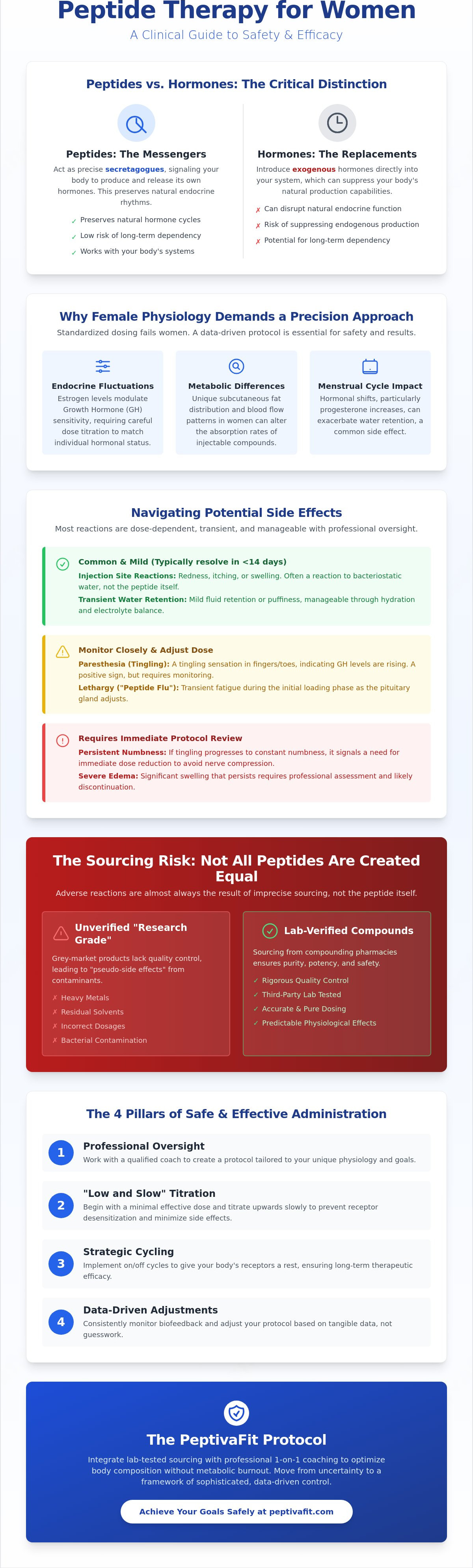
Peptides are short-chain amino acids that function as primary signaling messengers within the body. Unlike larger proteins, these sequences are designed to bind to specific receptors and initiate precise cellular responses. In the context of peptide therapeutics, this signaling capability allows for the optimization of metabolic and regenerative processes without the blunt force of exogenous hormone replacement. For women, this distinction is critical. Female physiology is governed by a complex, cyclical endocrine environment that requires a higher degree of titration precision than male counterparts. Standardized dosing often fails to account for these biological variables.
The role of estrogen is a primary factor in this equation. Estrogen modulates growth hormone (GH) sensitivity; specifically, higher levels of circulating estrogen can influence the liver's production of IGF-1 in response to GH pulses. This interplay means that a generic dose often results in suboptimal outcomes or increased peptide side effects in women if it's not adjusted for individual hormonal status. We address these nuances through the Peptiva Protocol. This framework prioritizes metabolic optimization through disciplined, data-driven assessment rather than the "one size fits all" approach common in mass-market wellness circles.
Peptides vs. Hormones: Understanding the Distinction
Peptides generally act as secretagogues. They signal the pituitary gland to release the body's own stored hormones rather than replacing them. This mechanism preserves the natural pulsatile rhythm of the endocrine system. It's inherently safer than direct hormone administration, which can suppress endogenous production and lead to long-term dependency. However, women must respect receptor saturation limits. Because receptors have a finite capacity, "more is not better" in this clinical context. Exceeding the saturation point doesn't improve results. It only increases the risk of systemic inflammation or receptor desensitization.
Gender-Specific Metabolic Responses
Women possess different subcutaneous fat distribution and blood flow patterns, which can alter the absorption rates of injectable compounds. These physiological markers often dictate how quickly a peptide enters systemic circulation. Additionally, the menstrual cycle introduces variables like fluctuating water retention. During the luteal phase, increased progesterone may exacerbate edema, a common observation when discussing peptide side effects in women. Managing these shifts requires professional 1-on-1 coaching to ensure that administration stays aligned with the user's biological clock. Peptides also play a significant role in enhancing insulin sensitivity, which is vital for long-term weight management and metabolic health.
Common Peptide Side Effects in Women: What the Data Shows
Clinical data suggests that most peptide side effects in women are dose-dependent and typically resolve within the first 14 days of administration. Localized reactions, such as erythema and subcutaneous pruritus at the injection site, are frequently observed but rarely necessitate discontinuation. These responses are often a reaction to the bacteriostatic water or the peptide sequence's specific acidity levels rather than a systemic allergy. Systemic indicators like paresthesia, which is a tingling sensation in the fingers or toes, signal that growth hormone levels are successfully elevating. However, persistent numbness demands an immediate review of the current titration to avoid nerve compression issues like carpal tunnel syndrome.
Some users experience a transient period of lethargy, colloquially termed "peptide flu," during the loading phase. This occurs as the pituitary gland adjusts to new signaling mandates. It's a sign of physiological shift, but it shouldn't be ignored if it persists beyond the initial week. Monitoring these signals is part of a disciplined approach to self-optimization. For women navigating these therapies, the intersection of peptide signaling and existing hormonal cycles creates a unique set of variables that mass-market guides often overlook.
Managing Water Retention and Edema
Peptides can trigger sodium retention by influencing the renal handling of electrolytes. For women, this effect is often amplified by the natural fluid shifts of the menstrual cycle or the declining estrogen levels found in menopause. Identifying the difference between transient edema and chronic systemic inflammation is essential for long-term health. Implementing a disciplined dietary sodium limit and increasing water intake can usually offset these peptide side effects in women. A thorough understanding of these risks and mitigation protocols prevents the discomfort of joint swelling and facial puffiness.
Appetite Dysregulation and Blood Sugar
The ghrelin response is a primary variable in appetite dysregulation. While Ipamorelin is known for its selective signaling, other growth hormone secretagogues can cause intense hunger spikes that undermine body composition goals. We suggest monitoring fasting blood glucose to ensure insulin sensitivity remains within healthy parameters throughout your cycle. Strategic timing, such as pre-sleep administration, helps bypass the most aggressive hunger signals and improves compliance. Obtaining a personalized medical assessment is the most reliable way to tailor these variables to your specific metabolic profile and avoid unnecessary complications.
The Sourcing Risk: Physiological Effects vs. Contamination
A critical distinction exists between the biological mechanism of a signaling molecule and the adverse reactions caused by impurities. Many reported peptide side effects in women aren't actually intrinsic to the peptide itself. Instead, they're "pseudo-side effects" triggered by residual solvents, heavy metals, or bacterial endotoxins found in low-grade supplies. Products labeled for "Research Use Only" frequently bypass the rigorous third-party testing required for human safety. This lack of oversight means a user might inadvertently inject lead, arsenic, or acetic acid alongside their intended compound, leading to systemic inflammation that masks as a hormonal reaction.
Utilizing lab tested peptides is the only viable path for women who prioritize long-term wellness over short-term savings. High-purity peptides, specifically those verified at 99% or greater, significantly reduce the risk of non-specific immune activation. When purity levels drop even to 95%, the remaining 5% of the vial contains unknown synthesis byproducts. In a sensitive female endocrine environment, these impurities can trigger mast cell responses or chronic low-grade fatigue, which are often misdiagnosed as simple "loading phase" symptoms. True molecular integrity ensures the body receives a clear signal without the noise of chemical contaminants.
Identifying Red Flags in Peptide Sourcing
Verifying a supplier requires more than a cursory glance at their website. Certificates of Analysis (COAs) must be current, lot-specific, and issued by an independent third-party laboratory. Many grey-market vendors reuse old reports for years or provide generic documents that don't match the vial in your hand. There's also the risk of "pro-drug" contamination, where cheaper, similar-acting chemicals are substituted for the actual peptide sequence to cut costs. Furthermore, even high-quality powder is compromised by improper peptide reconstitution. Using non-sterile water or aggressive mixing techniques can introduce bacteria or degrade the delicate amino acid chains, leading to localized infections that have nothing to do with the peptide's actual mechanism.
The Clinical Necessity of Purity
Truncated peptide sequences represent a significant sourcing hazard. If an amino acid chain is incomplete or improperly folded during synthesis, the body's immune system may flag it as a foreign invader rather than a signaling messenger. This often results in "flare-ups" or joint pain that users mistake for standard peptide side effects in women. There's a profound difference between a compound's synthetic purity and its actual biological activity. We prioritize molecular integrity to ensure that every sequence signals the target receptor with surgical precision, avoiding the collateral damage associated with inferior manufacturing standards.
Mitigation Protocols: Safe Administration for Women
Mitigation is not a suggestion; it's a prerequisite for anyone pursuing high-level physiological optimization. Implementing a "Low and Slow" titration strategy allows the female endocrine system to adapt to new signaling messengers without triggering acute peptide side effects in women. This methodical approach prevents receptor down-regulation, ensuring that cellular signaling remains effective over long-term cycles. By starting at the lowest therapeutic dose, users can identify their individual threshold for sensitivity before systemic inflammation or edema occurs.
Strategic cycling is equally vital for maintaining metabolic stability. Most disciplined protocols favor a "5 days on, 2 days off" schedule. This brief weekly cessation provides a necessary washout period, helping the pituitary gland maintain its natural pulsatile rhythm. While continuous administration might seem more efficient, it often leads to diminished returns and increased systemic fatigue in the female physiology. Success in this field is built on patience and the disciplined application of data rather than aggressive, unchecked escalation.
Dosage Precision and Frequency
Precision is measured in micrograms, not milliliters. Over-saturation of receptors often leads to the joint pain and water retention discussed in previous sections. Timing your administration to align with natural circadian growth hormone pulses, typically in the fasting state before sleep, maximizes biological efficacy while minimizing daytime lethargy. Women must reject the inflated "bodybuilding" dosages frequently promoted in unregulated online forums. Those levels are designed for different physiological objectives and often result in metabolic disturbances that are difficult to reverse without clinical intervention.
Blood Work and Clinical Monitoring
Data must always precede action. Establishing a baseline through personalized medical assessments is the only way to track progress with scientific accuracy. We recommend monitoring specific biomarkers to ensure the therapy remains within safe physiological boundaries. Key indicators include:
- IGF-1: To measure the direct activity and response of growth hormone secretagogues.
- HbA1c: To monitor long-term glucose metabolism and ensure insulin sensitivity isn't compromised.
- C-Reactive Protein (CRP): To track systemic inflammatory markers and detect early signs of "pseudo-side effects" from potential contamination.
Follow-up labs should be conducted every 90 days to verify that the protocol is functioning as intended. Immediate cessation is required if fasting blood glucose levels rise significantly or if paresthesia becomes persistent. To ensure your protocol is built on objective data rather than guesswork, schedule a personalized medical assessment to establish your baseline today.
The Peptiva Approach: Precision, Safety, and Results
PeptivaFit functions as a selective resource for individuals who prioritize clinical-grade standards over speculative wellness trends. Integrating the Peptiva Protocol ensures that fat loss objectives are met without the systemic burnout often associated with unmonitored cycles. Managing peptide side effects in women isn't a passive process. It requires active, real-time adjustments based on physiological feedback. This is why 1-on-1 coaching serves as the cornerstone of our methodology. A medical-first approach isn't optional for female performance; it's a mandatory safeguard against the complex endocrine variables analyzed throughout this review.
The risk-to-reward ratio in modern peptide therapy is highly favorable when the protocol is built on data. By neutralizing sourcing risks and implementing disciplined mitigation, women can access the regenerative benefits of these molecules with sophisticated control. We prioritize the preservation of metabolic integrity while driving measurable results in body composition and cellular health. This objective focus separates professional-grade optimization from the erratic outcomes of the unregulated market. Each individual's journey is unique, requiring constant vigilance and a commitment to scientific standards.
Beyond the Molecule: Lifestyle Integration
Chemical signaling doesn't exist in a vacuum. Sleep hygiene and stress management are critical for reducing the severity of potential side effects. High cortisol levels can blunt the effectiveness of growth hormone secretagogues and exacerbate water retention. There's a profound synergy between peptides for metabolism and consistent resistance training. While the peptides facilitate the signaling, the physical stimulus of training and the recovery provided by deep sleep solidify the results. Maintaining these gains after the protocol concludes depends on the metabolic foundation established during the active phase. You're not just taking a compound; you're optimizing an entire biological system.
Taking the Next Step Safely
Navigating the transition into peptide therapy requires expert guidance to avoid the pitfalls of the grey market. For those seeking immediate clarity on their specific physiological needs, scheduling a single consultation call provides a direct line to specialized expertise. This session allows for a focused review of your goals and any existing health markers. Accessing the full Peptiva Protocol offers a structured, long-term journey for those committed to metabolic health rather than temporary fixes. We expect a high level of personal responsibility from our clients, matching the clinical rigor of our educational resources. The path to optimized performance is a methodical process that rewards those who value data and safety above all else.
Establishing a Framework for Long-Term Metabolic Control
Achieving peak physiological performance requires moving beyond the grey market and adopting a disciplined, medical-first strategy. We've established that peptide side effects in women are not inevitable; they're manageable variables that respond to precise titration and lab-verified sourcing. By prioritizing molecular integrity and monitoring key biomarkers like IGF-1 and CRP, you replace speculative risks with sophisticated control. The path to fat loss and metabolic health doesn't have to be a biological gamble.
Success depends on the intersection of high-purity compounds and expert guidance tailored to the female endocrine cycle. You're now equipped with the clinical framework to distinguish between true signaling responses and avoidable contamination. It's time to transition from research-level uncertainty to data-driven metabolic optimization.
Secure your Personalized Medical Assessment and start the Peptiva Protocol today to access lab-verified peptide purity reports and expert medical oversight for every protocol. You have the tools to manage your wellness with authority and surgical precision. Take the first step toward a more disciplined and empowered version of yourself.
Frequently Asked Questions
Can peptides cause permanent hormonal damage in women?
Peptides generally don't cause permanent hormonal damage because they act as signaling messengers rather than exogenous hormone replacements. Unlike traditional hormone therapy, peptides like Ipamorelin stimulate the pituitary gland to release its own stored hormones. This mechanism preserves the natural feedback loops within the endocrine system. However, excessive dosages or a lack of cycling can lead to temporary receptor desensitization. Disciplined administration is a prerequisite for maintaining long-term hormonal health.
Will peptide therapy make me gain water weight?
Transient water retention is a documented observation when discussing peptide side effects in women. This occurs because certain growth hormone secretagogues can influence renal sodium handling, leading to mild edema in the extremities. This effect is usually dose-dependent and can be mitigated by managing dietary salt intake and ensuring proper hydration. If swelling persists, it typically indicates that the dosage exceeds the user's current physiological saturation point.
How do I know if my peptides are contaminated or causing side effects?
Contamination often manifests as "pseudo-side effects" like chronic fatigue, joint flare-ups, or unusual systemic inflammation that doesn't align with the peptide's known mechanism. True physiological side effects are predictable and dose-related. If you experience an immediate and aggressive immune response, it likely points to residual solvents or bacterial endotoxins. The only way to verify molecular integrity is through lot-specific, third-party lab testing and current Certificates of Analysis.
Are peptides safe to use during menopause or perimenopause?
Peptides are frequently utilized during perimenopause and menopause to support bone density and metabolic health. As estrogen levels decline, growth hormone sensitivity often shifts; this makes precise titration essential for this demographic. While compounds like GHK-Cu or certain secretagogues offer regenerative benefits, they must be integrated into a protocol that accounts for existing hormonal fluctuations. Professional oversight ensures these signaling molecules complement rather than disrupt your evolving endocrine landscape.
What should I do if I experience a skin rash at the injection site?
A localized skin rash or itching usually signals a reaction to the bacteriostatic water or an improper reconstitution technique rather than the peptide itself. Ensure you aren't using aggressive mixing methods that degrade the delicate amino acid chains. If the irritation persists, rotating injection sites and utilizing a fresh vial may resolve the issue. Persistent or spreading rashes require immediate cessation and a review of the compound's purity markers through lab-verified testing.
Can fat-loss peptides like AOD-9604 affect my thyroid function?
There is currently no clinical evidence suggesting that AOD-9604 or similar fat-loss peptides directly disrupt thyroid function. These molecules are designed to target adipocytes and stimulate lipolysis without affecting blood glucose or thyroid-stimulating hormone levels. However, because metabolic processes are interconnected, maintaining a baseline through a personalized medical assessment is recommended. This ensures that any changes in your metabolic rate are tracked against objective data rather than subjective assumptions.
Do I need to take a break or 'cycle' peptides to avoid side effects?
Strategic cycling is a fundamental component of safe administration. Implementing a "5 days on, 2 days off" schedule prevents receptor down-regulation and maintains the pituitary gland's sensitivity to signaling messengers. Continuous use without breaks increases the risk of systemic lethargy and diminished therapeutic returns. Disciplined cycling allows the body to maintain its natural pulsatile rhythm while benefiting from the optimized signaling provided by the protocol.
How long does it take for peptide side effects to disappear after stopping?
Most peptide side effects in women dissipate within 48 to 72 hours after the final administration. Because peptides possess relatively short half-lives, they are cleared from systemic circulation quickly once the signaling stops. Edema and tingling sensations typically resolve as sodium levels and growth hormone pulses return to their baseline state. If symptoms persist beyond one week, it may indicate a deeper metabolic imbalance or the presence of long-lasting contaminants from unverified sources.

![Shelf Life of Reconstituted Peptides: A Clinical Reference Guide [2026]](https://getautoseo.com/storage/hero_images/shelf-life-of-reconstituted-peptides-a-clinical-reference-guide-2026.jpg?v=b8ed5173acaa)
