
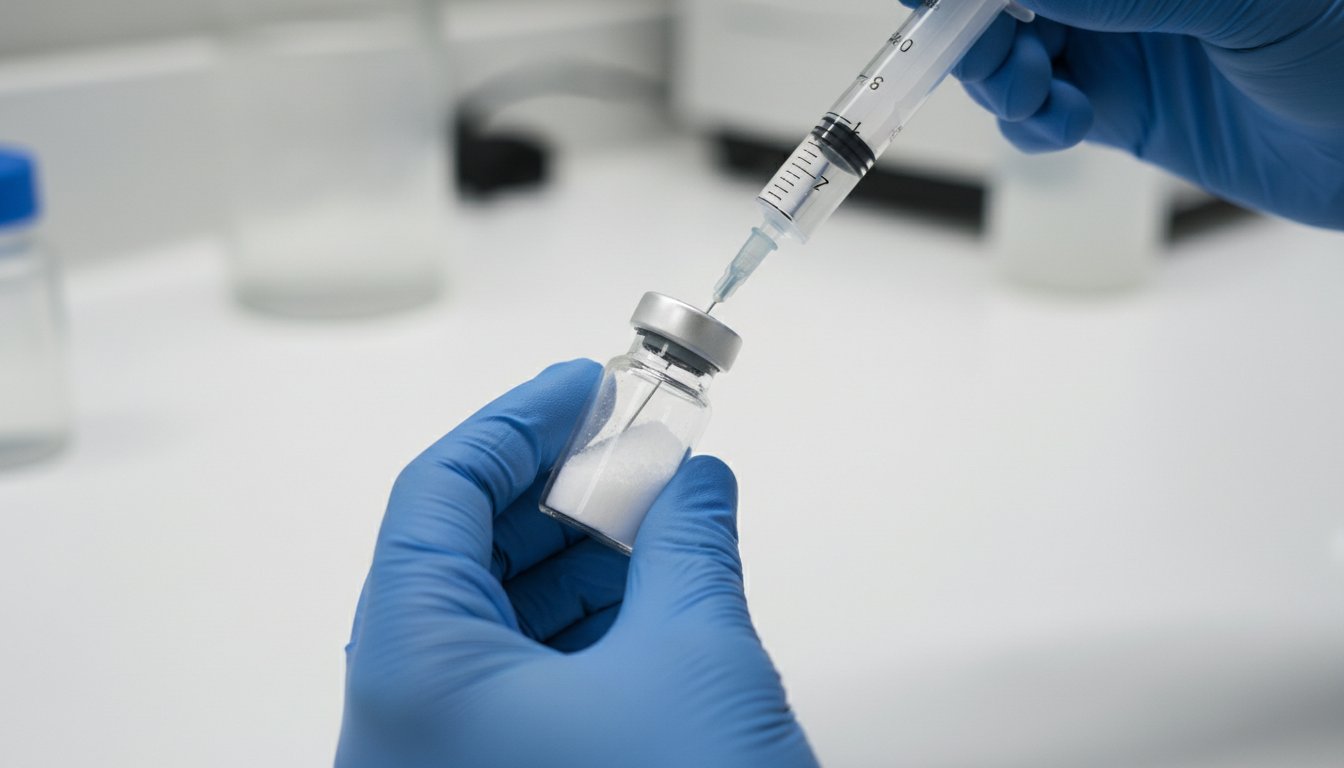
A single mechanical error during the reconstitution process can degrade up to 40% of a peptide's fragile molecular chain before it ever reaches the intended research environment. Mastering how to reconstitute peptides is not merely a matter of mixing liquid and powder; it's a high-stakes clinical exercise in maintaining structural integrity. You've likely felt the frustration of handled vials or the confusion surrounding which solvent preserves a specific sequence best. It's a valid concern when dealing with high-purity materials that demand exactness.
We've curated this protocol to eliminate the technical ambiguity that often compromises laboratory standards. You'll develop the discipline to handle lyophilized materials using a repeatable, data-driven methodology that ensures molecular stability. This guide provides a comprehensive analysis of vacuum-controlled saturation, the chemistry of bacteriostatic solvents, and the mathematical frameworks required for absolute dosage precision.
Key Takeaways
- Understand the lyophilization process and why moisture removal is critical for preserving the delicate molecular structure of research materials.
- Learn how to reconstitute peptides by selecting the appropriate solvent to extend the solution's functional lifespan and prevent bacterial growth.
- Manage the pre-existing vacuum within research vials to avoid high-pressure agitation that can shear or degrade fragile peptide chains.
- Adopt a clinical sanitization protocol that ensures every stage of the preparation remains free from environmental contaminants.
- Optimize storage conditions through precise temperature control and UV shielding to maintain the integrity and potency of the final solution.
Understanding the Science of Lyophilized Peptides
Peptide reconstitution is the restorative process of returning a lyophilized powder to its active liquid state. This transition is a critical phase where the researcher assumes responsibility for the compound's chemical stability. The process of Lyophilization (freeze-drying) removes moisture from the peptide through sublimation under a high vacuum, which locks the molecular structure in a state of suspended animation. This method ensures that high-purity research materials remain stable for months at room temperature, whereas a liquid solution might degrade within 48 hours if not handled with extreme care.
Understanding how to reconstitute peptides requires an appreciation for the vial's contents. Most research peptides consist of 2 to 50 amino acids linked by delicate covalent bonds. These bonds are the foundation of the peptide's biological signaling potential. When moisture is removed during manufacturing, these chains are protected from hydrolysis, the primary cause of premature degradation. However, the moment a solvent is introduced, the clock begins to tick on the solution's potency. High-level research demands a disciplined approach to this transition to prevent the loss of expensive materials.
The Molecular Vulnerability of Research Peptides
Amino acid chains are notoriously fragile. External stressors such as UV light, thermal fluctuations, and mechanical agitation can easily break the bonds that maintain a peptide's three-dimensional shape. If a researcher subjects a vial to vigorous shaking or high temperatures, the protein may undergo denaturation, or "unfolding." This structural collapse renders the compound biologically inactive. Maintaining a clinical standard of care during the liquid transition is the only way to preserve the solution's integrity. It's a process that rewards patience and precise physical handling over speed.
Why Precision Matters in Metabolic Optimization
In the context of the Peptiva Protocol, accuracy is the cornerstone of success. Reconstitution isn't just about making a powder disappear; it's about creating a predictable concentration for data-driven tracking. If a researcher uses 2.5ml of solvent instead of the intended 2.0ml, the resulting 20% variance in concentration leads to inconsistent outcomes and unreliable research data. Informed research relies on this mathematical exactness. At PeptivaFit, we view this technical proficiency as a pillar of performance optimization. Without a standardized dilution, the ability to monitor physiological responses with any degree of sophisticated control is lost. Accurate results require an uncompromising commitment to the protocol's specific measurements.
Selecting the Correct Solvent for Molecular Stability
Choosing a solvent is a foundational decision that dictates the solution's stability and safety profile. The liquid medium is not merely a carrier; it acts as the primary environment for the peptide's chemical interactions. Selecting an improper solvent can lead to immediate molecular degradation or promote microbial contamination within hours of the first puncture. For researchers focused on precision, understanding the chemical nuances of different solvents is a prerequisite for successful laboratory outcomes.
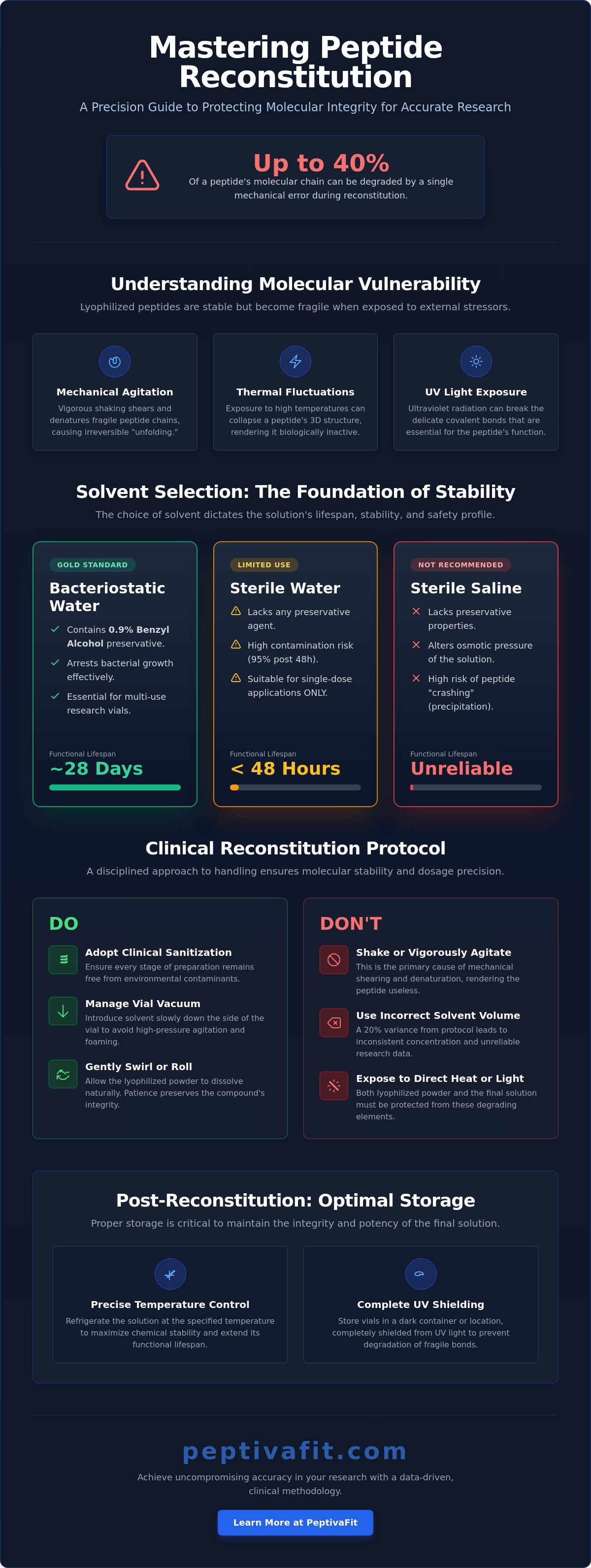
Sterile water is often used for single-dose applications, yet it lacks the preservative qualities necessary for multi-day research. In contrast, Bacteriostatic Water contains 0.9% benzyl alcohol. This additive serves as a critical antimicrobial agent, arresting the growth of bacteria that could otherwise thrive in a nutrient-rich peptide solution. While some sources suggest sterile saline as an alternative, saline lacks these protective properties and can alter the osmotic pressure of the solution, potentially leading to peptide "crashing" or precipitation. For those mastering how to reconstitute peptides for longitudinal tracking, the use of a preserved solvent is the only clinical standard that ensures long-term viability.
Bacteriostatic Water: The Gold Standard for Multi-Use Vials
The Bacteriostatic Water for Peptides: A Clinical Reference established by industry experts highlights why this medium is preferred. The 0.9% benzyl alcohol concentration works by disrupting bacterial cell membranes, effectively sterilizing the environment for approximately 28 days post-reconstitution. Without this preservative, the risk of solution contamination increases by nearly 95% within the first 48 hours. This 28-day window provides the timeframe required for most sophisticated research protocols while maintaining the compound's original potency.
Solubility Challenges and pH Considerations
Certain peptide sequences exhibit hydrophobic properties, which means they resist dissolving in neutral water. If a solution remains cloudy or opaque after 15 minutes of rest, the peptide has likely failed to reach a fully aqueous state. This often occurs when the pH of the solvent doesn't align with the peptide's isoelectric point. In rare instances, highly insoluble compounds may require a 0.6% acetic acid solution to achieve clarity. If you encounter persistent solubility issues, it's advisable to seek curated peptide education before attempting to adjust pH levels manually. Incorrect solvent manipulation can cause irreversible structural damage to the amino acid chain, rendering the research material useless. Precision in solvent selection is the first step in ensuring your data remains untainted by chemical instability.
The Mechanics of Reconstitution: Pressure and Agitation
The physical introduction of a solvent into a lyophilized environment is a high-stakes interaction where kinetic energy can either facilitate a perfect solution or destroy molecular bonds. Precision handling is required to manage the transition from a solid cake to an aqueous research compound. This stage of the protocol focuses on three primary variables: pressure equilibration, thermal management, and the mitigation of mechanical shear stress. Ignoring these variables often results in "foaming," a visible sign of protein denaturation that compromises the integrity of your research.
Thermal management is the first step in a disciplined protocol. Solvents should reach a stable room temperature, approximately 21°C, before they're introduced to the vial. Cold solvents can cause "cold shock" to the peptide chain, leading to poor solubility or immediate degradation. Once the solvent is prepared, the researcher must master how to reconstitute peptides by using the "drip method." This involves tilting the vial at a 45-degree angle and directing the solvent stream against the interior glass wall. This technique ensures the liquid slides gently into the powder rather than striking the lyophilized cake with high-velocity force.
Managing Vial Pressure for Precision
Research-grade vials are manufactured with an internal vacuum to preserve the compound's shelf life. If you don't manage this negative pressure, the vacuum will pull the solvent from the syringe with violent force, causing the liquid to "jet" into the powder. This high-pressure impact often leads to irreversible structural damage. To equalize the environment, follow this air-management technique:
- Draw a volume of air into your syringe equal to the amount of solvent you intend to use.
- Insert the needle and slowly inject the air into the vial to neutralize the vacuum.
- Control the plunger with a firm grip to ensure the solvent enters the vial at a measured, slow pace.
- If the solution begins to foam, it indicates that air is being trapped in the unfolding protein structures; stop immediately and allow the vial to settle.
Avoiding Mechanical Shear
The physics of protein handling dictates that amino acid chains are highly susceptible to "shear stress." This occurs when rapid movement or shaking creates enough kinetic energy to disrupt the hydrogen bonds holding the peptide's tertiary structure together. A shaken vial is often a ruined vial. Instead, the clinical standard is a gentle, horizontal swirl. Place the vial on a flat surface and move it in slow, circular motions for 15 to 30 seconds.
Patience is a required virtue when learning how to reconstitute peptides effectively. After the initial swirl, it's common for small particles to remain visible. Rather than increasing agitation, adopt a "wait-and-see" approach. Allow the vial to rest in a dark, temperature-controlled environment for 15 to 30 minutes. Natural diffusion is often more effective and significantly safer than mechanical intervention. This disciplined delay ensures a completely clear, fully integrated solution without risking the structural collapse of the research material.
The Clinical Step-by-Step Reconstitution Protocol
Executing a clinical protocol requires a transition from casual handling to laboratory-grade discipline. Adopting a standardized sequence ensures that every vial maintains its intended potency and remains free from environmental contaminants. This process begins with the establishment of a sterile field. Clear a dedicated workspace and sanitize the surface with 70% isopropyl alcohol. Precision in the early stages of preparation prevents the introduction of microscopic pathogens that could compromise a multi-dose research cycle.
Once the environment is secured, sanitize the rubber stoppers of both the solvent and the peptide vial. Research suggests that a simple 15-second "friction scrub" with a fresh alcohol swab eliminates 99% of surface-level bacteria. It's a non-negotiable step. After sanitizing, allow the stoppers to air dry completely to prevent alcohol from being dragged into the solution by the needle, which can cause localized protein denaturation.
Supply Checklist for Professional Research
Success in peptide research is often determined by the quality of the hardware. Researchers should utilize 20-22G needles for the initial solvent draw to ensure efficiency, while switching to 27-31G needles for precise research administration. Using single-use, medical-grade disposables is the only way to maintain a closed, sterile system. We recommend procuring these supplies only from vetted sources to avoid the risks associated with low-quality manufacturing. Always dispose of used needles in a puncture-resistant sharps container immediately after use.
Utilizing a Reconstitution Calculator
Mental math is a primary source of failure in performance optimization. A study of independent researchers found that manual calculations lead to dosage errors in approximately 85% of cases. To maintain molecular integrity, you must determine the exact volume of solvent required to reach your target concentration. For example, converting 5mg of lyophilized powder into a 250mcg dose requires precise liquid ratios that are difficult to track without assistance.
We advise Using a Peptide Reconstitution Calculator Correctly to eliminate these variables. This tool allows for the conversion of milligrams to micrograms with absolute certainty, ensuring your data remains consistent across the entire duration of the vial's lifespan. Once the volume is confirmed, proceed with the "wall-drip" method discussed previously, introducing the liquid with a slow, controlled plunger motion.
The final stage of how to reconstitute peptides involves a visual inspection. The solution should be clear and free of suspended particulates. If the vial appears cloudy after 30 minutes of rest, the structural integrity of the compound may be compromised. Finally, label the vial with the date of reconstitution and the specific concentration. This administrative discipline is what separates professional research from amateur experimentation. To refine your approach further, you can access our curated peptide education for advanced protocol tracking.
Post-Reconstitution: Storage, Stability, and Potency
Once you've finalized the physical steps of how to reconstitute peptides, the transition to environmental maintenance begins. A liquid solution is exponentially more sensitive to external variables than its lyophilized predecessor. Thermal stability and light protection are the two primary pillars of post-reconstitution care. Without a disciplined storage protocol, the molecular integrity you've worked to preserve during the mixing phase will degrade rapidly, leading to wasted materials and compromised research data.
Consistent refrigeration is a clinical requirement. Solutions must be maintained within a strict temperature range of 2°C to 8°C. Temperatures exceeding 10°C for even brief periods can increase molecular kinetic energy, leading to the gradual breakdown of the amino acid sequence. Conversely, freezing a reconstituted solution is equally detrimental; the formation of ice crystals can physically shear the delicate peptide bonds. A dedicated laboratory refrigerator, or a stable section of a standard unit away from the door, is the only acceptable storage location for these compounds.
Light sensitivity is a frequently overlooked variable in peptide stability. Ultraviolet (UV) radiation triggers photo-oxidation, a process that can alter the chemical composition of the solution in as little as 12 hours. While amber vials offer some protection, the professional standard is to store all research materials in a completely dark environment. Documentation is the final administrative step. Every vial must be marked with its 'Reconstitution Date' and a 'Discard Date,' typically 28 days thereafter when using bacteriostatic water. This ensures that no solution is used beyond its window of guaranteed antimicrobial protection.
Signs of Peptide Degradation
A researcher must remain vigilant for visual indicators of chemical failure. If a solution that was previously clear develops persistent cloudiness, a change in color, or visible particulates known as 'floaters,' the vial's integrity has been compromised. These changes often signal either bacterial contamination or advanced protein denaturation. In the clinical environment, the rule is absolute: when in doubt, discard the material. Attempting to salvage a degraded solution introduces variables that invalidate research outcomes and jeopardize safety standards. Mastering how to reconstitute peptides is pointless if the subsequent storage fails to protect the compound's potency.
Professional Oversight and Coaching
The complexity of these protocols highlights why sophisticated metabolic optimization requires more than just technical knowledge. It demands a structured, informed approach to data tracking and chemical handling. PeptivaFit provides 1-on-1 coaching to help researchers navigate these clinical standards with absolute confidence. A personalized assessment ensures that your concentrations, handling methods, and research goals align with the highest laboratory benchmarks. Engaging with a pragmatic expert allows for a level of control and precision that is impossible to achieve through solitary experimentation. True performance optimization is a disciplined process that rewards those who prioritize data accuracy and professional consultation.
Standardizing Your Research for Molecular Integrity
Mastering how to reconstitute peptides is the foundational skill required for high-level metabolic optimization. Success in the laboratory requires an uncompromising commitment to solvent selection, specifically the use of bacteriostatic water for its 28-day antimicrobial stability profile. You must also maintain strict mechanical discipline by avoiding high-velocity agitation and managing vial vacuum pressure to prevent protein denaturation. These laboratory standards ensure that your research compounds remain potent and your data remains accurate across the entire duration of your protocol.
PeptivaFit provides the elite tools and education necessary for this level of clinical precision. We offer access to lab-verified peptide supplies and clinical-grade metabolic optimization guides designed for the serious researcher. If you're ready to move beyond basic experimentation and adopt a professional standard of care, you can Access the Full Peptiva Protocol for Fat Loss. Our expert 1-on-1 medical consultations provide the personalized oversight required for sophisticated performance tracking and informed decision-making. Commit to a disciplined, data-driven approach and secure the integrity of your research today.
Frequently Asked Questions
Why is my peptide cloudy after I added the bacteriostatic water?
Persistent cloudiness typically indicates incomplete dissolution, an incorrect pH environment, or protein denaturation. If the vial remains opaque after 30 minutes of rest, the peptide has likely "crashed" out of the solution. This structural failure renders the compound biologically inactive and unsuitable for research purposes. It's a sign that the molecular bonds have been disrupted beyond recovery.
Can I use sterile water instead of bacteriostatic water for peptides?
You can use sterile water for immediate, single-use applications, but it's not recommended for multi-dose vials. Sterile water lacks the 0.9% benzyl alcohol required to arrest microbial growth. Research shows that without this preservative, bacterial contamination can increase by 95% within 48 hours of the first puncture. This risk compromises both the solution's safety and its chemical stability.
How long do peptides stay active after they have been reconstituted?
Most peptides remain stable for approximately 28 days when reconstituted with bacteriostatic water and stored between 2°C and 8°C. Beyond this four-week window, the potency begins to decline due to gradual hydrolysis. Discarding the solution after 30 days is a standard clinical protocol to ensure data integrity. Using expired solutions leads to inconsistent tracking and unreliable research outcomes.
What happens if I accidentally shake the peptide vial?
Shaking a vial introduces kinetic energy that can shear the delicate covalent bonds of the amino acid chain. This mechanical stress often leads to "foaming," which is a visible sign of protein unfolding or denaturation. While a single light shake might not destroy the entire batch, it significantly increases the risk of molecular degradation. Always use a gentle, horizontal swirling motion instead.
Do I need to keep my peptides in the freezer after mixing them?
No, you shouldn't freeze peptides after they've been reconstituted. The formation of ice crystals can physically damage the peptide's tertiary structure through mechanical shearing. Maintain a stable refrigerated environment between 2°C and 8°C. Freezing is only appropriate for the long-term storage of lyophilized powder before the reconstitution process has occurred.
How much bacteriostatic water should I add to a 5mg vial?
The volume of solvent depends on your target concentration, but 2ml is a standard research volume for a 5mg vial. This ratio creates a concentration of 2.5mg per ml. Understanding how to reconstitute peptides accurately requires using a digital calculator to avoid the 85% error rate associated with manual math. Precise measurement is the only way to ensure consistent data across your research cycle.
Can I mix two different peptides in the same syringe?
Mixing two different peptides in a single syringe is discouraged in a clinical research setting. Combining distinct chemical sequences can lead to unpredictable molecular interactions or cross-contamination. To maintain the integrity of your research data, each compound should be handled as a standalone solution. This discipline ensures that the observed metabolic responses are attributed to the correct specific peptide.
Is it normal to see a vacuum pull the water into the vial?
Yes, a pre-existing vacuum is a standard feature of high-purity vials used to prevent oxidation during storage. However, you must control this pull to prevent the solvent from "jetting" into the powder with violent force. Equalize the pressure by injecting a volume of air into the vial before introducing the liquid. This technique ensures a slow, gentle transition that protects the peptide's fragile structure.

![Shelf Life of Reconstituted Peptides: A Clinical Reference Guide [2026]](https://getautoseo.com/storage/hero_images/shelf-life-of-reconstituted-peptides-a-clinical-reference-guide-2026.jpg?v=b8ed5173acaa)
