
![Peptides for Metabolism and Fat Loss: A Clinical Overview [2026]](https://getautoseo.com/storage/hero_images/article_1224749_1778702925.jpg)
The plateau you've reached isn't a failure of willpower; it's a failure of molecular signaling. You've likely experienced the frustration of stalled progress despite adhering to a disciplined caloric deficit and rigorous training. This stagnation occurs when internal feedback loops prioritize homeostasis over fat oxidation. Utilizing peptides for metabolism and fat loss offers a clinical pathway to bypass these biological roadblocks by providing the precise instructions necessary to shift from energy storage to active lipolysis.
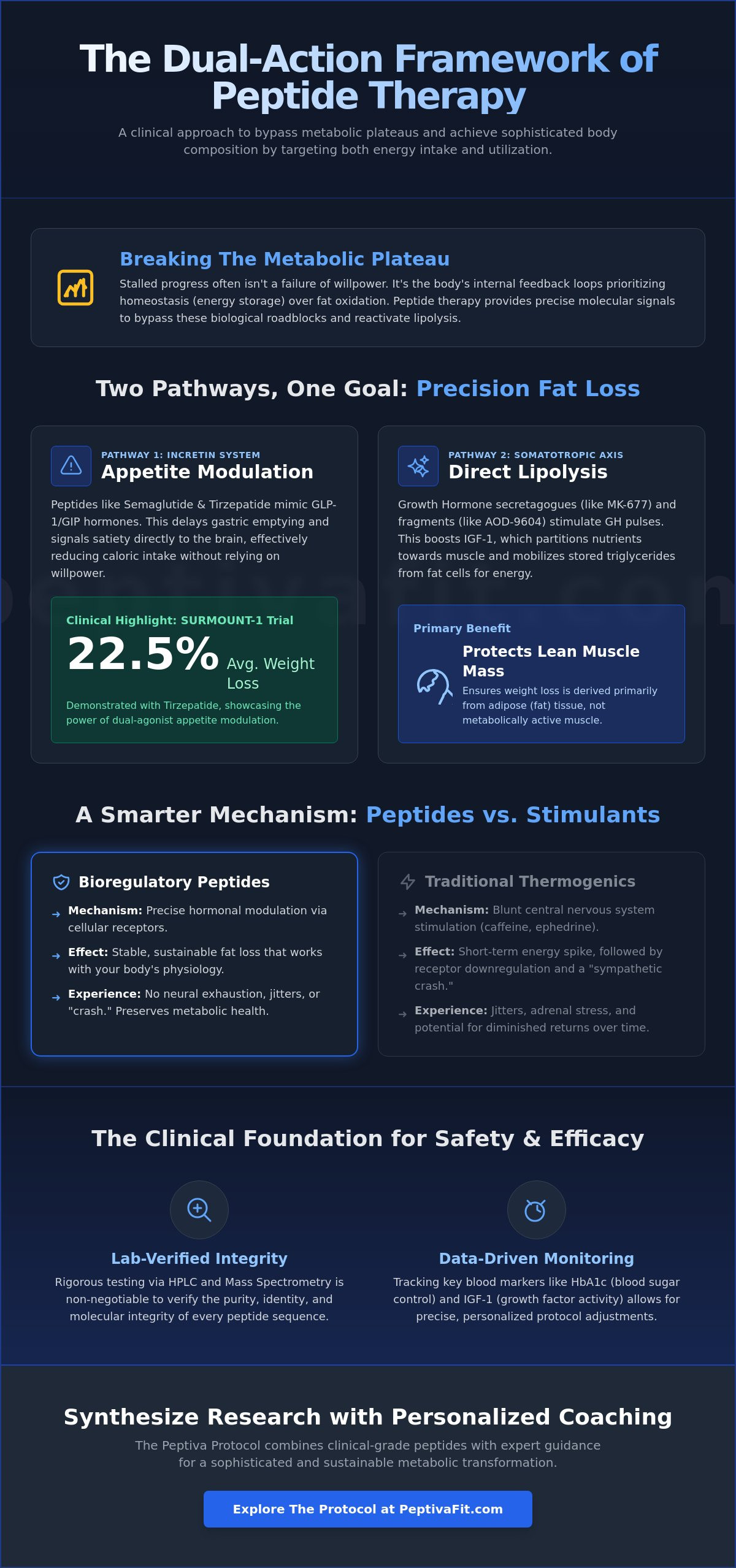
With the April 23, 2026, reclassification of sequences like AOD-9604 and BPC-157 into Category 1, the landscape of metabolic optimization has moved toward greater clinical transparency. This article provides a disciplined exploration of how specific peptide sequences modulate metabolic pathways to enhance body composition. You'll gain a clear understanding of the mechanical differences between GLP-1 agonists and growth hormone secretagogues. We'll examine the data behind agents like Tirzepatide, which demonstrated an average 22.5% weight loss in the SURMOUNT-1 trial, to help you establish a sophisticated strategy for long-term metabolic flexibility and lab-verified safety.
Key Takeaways
- Define the role of peptides as precision signaling molecules that bind to cellular receptors to upregulate your basal metabolic rate.
- Understand the dual-action framework of peptides for metabolism and fat loss, balancing appetite suppression with direct lipolysis to protect lean muscle mass.
- Identify the rigorous testing standards, such as HPLC and Mass Spectrometry, required to verify the integrity and safety of compounded sequences.
- Establish a clinical foundation for optimization by identifying the specific blood markers, including HbA1c and IGF-1, necessary for data-driven monitoring.
- Learn how the Peptiva Protocol synthesizes clinical research with personalized coaching to achieve a sophisticated metabolic transformation.
The Molecular Mechanism: How Peptides Regulate Metabolic Rate
Peptides act as biological ligands, serving as precision signaling molecules that bind to high-affinity cellular receptors, specifically G-protein coupled receptors. Unlike general supplementation, these sequences initiate specific intracellular cascades that modulate physiological states. By functioning as a synthetic peptide hormone, these compounds mimic endogenous signals to upregulate the basal metabolic rate (BMR). This isn't a blunt force approach. Instead, it involves a sophisticated recalibration of how the body prioritizes energy expenditure. Utilizing peptides for metabolism and fat loss allows for a distinction between systemic metabolic shifts, such as increased mitochondrial biogenesis, and localized lipolytic actions that target adipose tissue directly. The ultimate objective of this clinical intervention is the restoration of metabolic flexibility; the body’s ability to efficiently switch between fuel sources based on availability and demand.
The Endocrine Architecture of Fat Loss
Peptide therapy primarily interfaces with the hypothalamic-pituitary-somatotropic axis to influence body composition. By stimulating the release of endogenous growth hormone pulses, these sequences drive the liver to produce Insulin-Like Growth Factor 1 (IGF-1), which acts as a primary mediator for nutrient partitioning. This process ensures that amino acids are directed toward muscle protein synthesis while caloric deficits are satisfied through the mobilization of stored energy. Specifically, these signaling molecules trigger the activation of hormone-sensitive lipase through the cyclic adenosine monophosphate (cAMP) pathway, effectively catalyzing the breakdown of triglycerides into free fatty acids for systemic oxidation.
Peptides vs. Traditional Fat Burners
Traditional thermogenics rely on central nervous system stimulation, often utilizing caffeine or ephedrine to force an increase in heart rate and energy output. This often results in a sympathetic crash and eventual receptor downregulation. Bioregulatory peptide sequences operate through physiological pathways that avoid this neural exhaustion. Because they work via hormonal modulation rather than adrenal stress, the results are more stable and sustainable. However, the efficacy of this signaling depends entirely on molecular integrity; improper handling can denature the sequence and render the metabolic signal inert. Maintaining this integrity ensures that peptides for metabolism and fat loss remain a viable long-term solution for body composition optimization without the jittery side effects of low-grade stimulants.
Appetite Modulation vs. Direct Lipolysis: A Dual-Action Framework
Effective body composition management requires a bifurcated approach that addresses both energy intake and energy utilization. Many individuals rely solely on aggressive caloric restriction, which often triggers a counter-regulatory response that slows the basal metabolic rate. Utilizing peptides for metabolism and fat loss allows us to target two distinct physiological pathways: the incretin system for appetite regulation and the somatotropic axis for direct lipolysis. Relying on appetite suppression alone is a common clinical oversight. It often results in a significant loss of lean muscle mass, as the body enters a catabolic state to meet its energy demands. Integrating lipolytic agents preserves this metabolic currency, ensuring that weight loss is primarily derived from adipose tissue rather than skeletal muscle.
The Incretin Pathway: GLP-1 and GIP Agonists
Semaglutide and Tirzepatide function by mimicking glucagon-like peptide-1 (GLP-1) and glucose-dependent insulinotropic polypeptide (GIP). These molecules delay gastric emptying and signal satiety directly to the hypothalamus. While highly effective for weight reduction, chronic use can suppress the appetite to a degree where protein intake becomes insufficient for muscle maintenance. To counter-balance potential growth hormone suppression and support recovery, some sophisticated protocols incorporate MK 677. This growth hormone secretagogue helps maintain IGF-1 levels during periods of extreme caloric deficit. Constant monitoring of insulin sensitivity remains a clinical priority to ensure these molecular mechanisms of peptides in metabolism are functioning optimally within the patient's unique physiological profile.
The Lipolytic Pathway: GH Secretagogues and Fragments
Direct fat mobilization is achieved through growth hormone secretagogues and specific peptide fragments that bypass the hunger signaling pathway entirely. Tesamorelin is particularly valued for its ability to reduce visceral adipose tissue, which is often resistant to conventional diet and exercise interventions. Unlike systemic growth hormone, HGH Frag 176-191 specifically targets beta-3 adrenergic receptors on adipocytes to stimulate fat breakdown without elevating blood glucose levels. For those focused on cellular efficiency, MOTS-C provides an exercise mimesis effect by regulating mitochondrial gene expression and glucose uptake. This multi-layered approach ensures that the foundation of metabolic health and energy is maintained throughout the transformation process. If you require a more tailored strategy to identify which pathways require the most intervention, a personalized medical assessment can provide the necessary data for a targeted protocol.
The Clinical Necessity of Lab-Verified Peptide Integrity
The primary barrier to implementing peptides for metabolism and fat loss isn't a lack of efficacy, but the inherent risk of the unregulated research market. While the metabolic mechanisms are sound, your physiological outcomes depend entirely on the precision of the amino acid sequence. To ensure clinical efficacy, you must look beyond marketing claims and demand empirical verification through High-Performance Liquid Chromatography (HPLC) and Mass Spectrometry. HPLC measures the purity level by separating the components of the peptide mixture, while Mass Spectrometry confirms the molecular weight to ensure the sequence identity is accurate. For any metabolic protocol, a purity threshold of 99% or higher is the only acceptable standard. Anything less introduces the risk of lyophilized contaminants, such as residual solvents or bacterial endotoxins, which can trigger systemic inflammation and negate the desired lipolytic effects.
Decoding the Certificate of Analysis (COA)
A legitimate Certificate of Analysis must be issued by an independent third-party laboratory and include a clear timestamp. You're looking for two critical data points: the purity percentage and the mass-to-charge ratio that confirms the peptide's identity. Sophisticated users also prioritize "TFA-free" sequences. Trifluoroacetic acid is commonly used in peptide synthesis, but residual amounts can be hepatotoxic or interfere with systemic health when used long-term. Be wary of "research only" disclaimers that lack transparent testing data; these are often red flags for batches that haven't undergone rigorous quality control.
Storage and Molecular Stability Protocols
Peptides are inherently fragile. Their molecular stability is highly dependent on temperature and environment. While lyophilized (freeze-dried) vials are relatively stable at room temperature for short periods, they should be stored in a climate-controlled environment to prevent degradation. Once you introduce bacteriostatic water, the clock starts. This specialized water contains 0.9% benzyl alcohol, which prevents microbial growth and preserves the sequence for several weeks under refrigeration. Improper handling, such as vigorous shaking or exposure to direct UV light, can denature the peptide and render it biologically inert. For a deeper dive into proper handling, consult our BPC-157 guide, which outlines best practices for maintaining molecular integrity across all peptide types.
Implementing a Metabolic Optimization Protocol
The application of peptides for metabolism and fat loss is not a substitute for metabolic discipline; it is an advanced biological adjunct. Successful implementation requires a shift from passive consumption to active, data-driven management. Before initiating any sequence, you must establish a baseline through comprehensive blood work. Specifically, monitoring HbA1c, fasting insulin, and IGF-1 levels allows for a precise understanding of your current nutrient partitioning efficiency. Without these metrics, any intervention is merely speculative. Furthermore, the efficacy of these signaling molecules depends on maintaining receptor sensitivity. A disciplined cycling methodology—typically involving 5-day-on, 2-day-off patterns or 12-week cycles—is necessary to prevent receptor desensitization and ensure the biological signal remains potent.
Dietary architecture must also evolve to support the peptide signal. Implementing a protein-sparing modified fast (PSMF) during active cycles can significantly enhance results. By prioritizing high-quality protein—leveraging wellness-focused options like MATCHI for convenience—while strictly limiting fats and carbohydrates, you provide the body with the necessary amino acids for muscle preservation while the peptides for metabolism and fat loss force the mobilization of adipose tissue to meet energy demands. This synergy prevents the metabolic slowdown often associated with standard caloric restriction.
The Importance of a Personalized Medical Assessment
A "one-size-fits-all" approach is fundamentally incompatible with complex metabolic profiles. Individual levels of insulin resistance and baseline growth hormone secretion dictate which peptide sequences will be most effective. For instance, a patient with high fasting insulin requires a different protocol than one with low IGF-1. Professional oversight is vital for adjusting dosages based on clinical feedback and blood markers, ensuring the protocol remains both safe and effective. To establish your specific biological requirements, you should begin with a personalized medical assessment to guide your selection process.
Stacking for Synergistic Outcomes
Sophisticated protocols often utilize "stacks" to maximize endogenous hormone pulses. Combining a Growth Hormone Releasing Hormone (GHRH) with a Growth Hormone Releasing Peptide (GHRP) creates a synergistic effect that is significantly more powerful than using either alone. Beyond the somatotropic axis, other bioregulators can be integrated to address peripheral metabolic hurdles. Adding Bromantane can increase physical drive and metabolic output by modulating dopamine synthesis without the crash of traditional stimulants. Additionally, Selank serves as a critical tool for managing stress-induced cortisol spikes. Chronic cortisol elevation is a primary driver of visceral fat accumulation and can stall even the most rigorous fat loss efforts. By stabilizing the emotional response, you maintain the internal environment necessary for sustained metabolic transformation.
The Peptiva Protocol: Precision-Guided Metabolic Transformation
The Peptiva Protocol represents the definitive synthesis of clinical investigation and practical application. It's engineered for the individual who views body composition as a matter of biological engineering rather than a game of chance. While understanding the theory behind peptides for metabolism and fat loss is the first step, the transition to execution requires a structured, data-driven system. This protocol bridges that gap by integrating lab-verified supplies with expert-level guidance, removing the variables of uncertainty that often plague the specialized research landscape. Our platform is a restricted, high-end resource that prioritizes the privacy and security of our members, ensuring that your optimization journey remains a private and professional endeavor.
The protocol isn't a generic template. It's a disciplined framework that demands maturity and serious intent. By focusing on informed decision-making and scientific-grade standards, we provide a sense of sophisticated control over your own performance. This isn't about emotional hype or motivational rhetoric; it's about the cold, hard application of molecular data to achieve a superior physiological state. We expect a high level of personal responsibility from our participants, matching the clinical rigor of the information we provide.
Beyond the Guide: 1-on-1 Clinical Coaching
Optimization is a dynamic, multi-layered process that requires constant vigilance. Static guides often fail to account for the subtle shifts in metabolic rate or the early signs of receptor desensitization. Our 1-on-1 clinical coaching provides the necessary oversight to make real-time protocol adjustments based on your unique metabolic data. This professional intervention prevents common pitfalls like "peptide fatigue," where the body's response to a specific signal diminishes due to improper cycling or dosage. Your coach acts as a scientific mentor, ensuring that every aspect of the process—from molecular reconstitution to the timing of administration—is handled with clinical precision. This partnership offers a distinct psychological advantage, replacing the anxiety of the unknown with the confidence of expert verification.
Securing Your Metabolic Future
The path from informational awareness to transactional execution concludes with a commitment to quality and safety. You've examined the molecular mechanisms, the dual-action framework of lipolysis, and the clinical necessity of lab-verified integrity. Now, the focus must shift to the practical application of these principles. Substandard compounds and unmonitored protocols are a liability to your long-term health and metabolic flexibility. The Peptiva Protocol is the final step in ensuring your intervention is backed by empirical data and executed with authority. It's time to move beyond the noise of the mass market and secure your metabolic future through disciplined, science-backed protocols. Access the Peptiva Protocol and optimized fat loss guides today.
Securing Metabolic Sovereignty through Clinical Precision
Transitioning from general awareness to a specialized application requires a commitment to scientific-grade standards. You've explored how peptides for metabolism and fat loss provide the necessary molecular instructions to shift the body into a lipolytic state while preserving lean muscle mass. This transformation isn't achieved through mass-market products; it's the result of the rigorous application of lab-verified sequences and data-driven monitoring. Every successful protocol must be anchored by personalized medical assessments and supplies that have undergone independent HPLC and Mass Spectrometry testing to ensure 99% purity or higher. For those requiring direct oversight, exclusive 1-on-1 clinical coaching provides the real-time adjustments necessary to navigate complex physiological plateaus.
The path to optimization is a long-term process that rewards those who prioritize data over hype and safety over sensation. By adopting a disciplined approach to peptide therapy, you move beyond the limitations of standard dieting and enter a space of sophisticated biological control. Download the Peptiva Protocol: The Definitive Fat Loss Peptide Guide to begin your transition from speculation to clinical execution. Achieving a superior physiological state is within your reach when you operate with serious intent and professional guidance.
Frequently Asked Questions
Are peptides for metabolism and fat loss safe for long-term use?
Safety for long-term use depends entirely on the specific peptide sequence and the implementation of disciplined cycling protocols. Chronic administration without scheduled breaks can lead to receptor desensitization or potential hormonal imbalances. A structured approach, such as a 12-week cycle followed by a washout period, is necessary to maintain physiological homeostasis and ensure the biological signal remains effective over time.
How quickly can I expect results from a fat loss peptide protocol?
Initial metabolic shifts, such as improved satiety and altered energy utilization, typically manifest within the first two to four weeks. While clinical trials often track significant body composition changes over 48 to 72 weeks, the internal signaling begins immediately. You'll see the best results when the protocol is maintained consistently, allowing the peptides for metabolism and fat loss to recalibrate your internal nutrient partitioning pathways.
Do I need a prescription to access high-quality peptides in the United States?
Yes, a physician's prescription is required to legally access pharmaceutical-grade peptides through licensed compounding pharmacies. Following the April 23, 2026, regulatory updates, many sequences are now available through clinical channels. Attempting to bypass this requirement by purchasing "research-grade" substances from unregulated suppliers introduces significant risks, as these products lack the oversight necessary to guarantee human safety or molecular integrity.
Can I stack multiple peptides for faster fat loss results?
Stacking multiple peptides is a sophisticated clinical strategy used to target various metabolic pathways simultaneously. For example, combining a growth hormone secretagogue with a GLP-1 agonist addresses both direct lipolysis and appetite modulation. These combinations must be managed through professional oversight to ensure the cumulative physiological load remains within safe parameters. Indiscriminate stacking without data-driven guidance can lead to counter-productive results or increased side effects.
What is the difference between research-grade and pharmaceutical-grade peptides?
Pharmaceutical-grade peptides are produced in cGMP-compliant facilities and undergo rigorous testing for human administration. These compounds are verified for precise sequence identity and the absence of endotoxins. Research-grade peptides are intended strictly for laboratory investigation and often lack batch-specific purity verification. Using research-grade materials for personal optimization is a high-risk practice that can lead to systemic inflammation or sub-clinical toxicity due to residual solvents.
Will peptides for fat loss work without exercise or diet changes?
Peptides are biological accelerators but they don't negate the fundamental laws of thermodynamics. While these sequences can enhance the breakdown of adipose tissue, the body still requires a caloric deficit to oxidize the mobilized fatty acids. Without resistance training, aggressive weight loss can also lead to unfavorable muscle wasting. The most effective protocols treat these compounds as an adjunct to a high-protein diet and a disciplined training regimen.
How do I know if my peptides have been properly lab-tested?
Proper verification requires a batch-specific Certificate of Analysis (COA) from an independent, third-party laboratory. This document must show the results of High-Performance Liquid Chromatography and Mass Spectrometry to confirm a purity level of at least 99%. You should always verify that the COA is current and matches the specific batch number on your vial. Transparency in testing is a non-negotiable standard for any serious metabolic optimization protocol.
What are the most common side effects of metabolic peptides?
Common side effects vary by peptide class but frequently include transient nausea, water retention, or localized irritation at the injection site. GLP-1 agonists often cause gastrointestinal symptoms during the initial titration phase as the body adjusts to delayed gastric emptying. Growth hormone secretagogues can sometimes lead to increased hunger or mild lethargy. Most of these effects are manageable through precise dosage adjustments and professional monitoring within a clinical framework.

![Shelf Life of Reconstituted Peptides: A Clinical Reference Guide [2026]](https://getautoseo.com/storage/hero_images/shelf-life-of-reconstituted-peptides-a-clinical-reference-guide-2026.jpg?v=b8ed5173acaa)
