
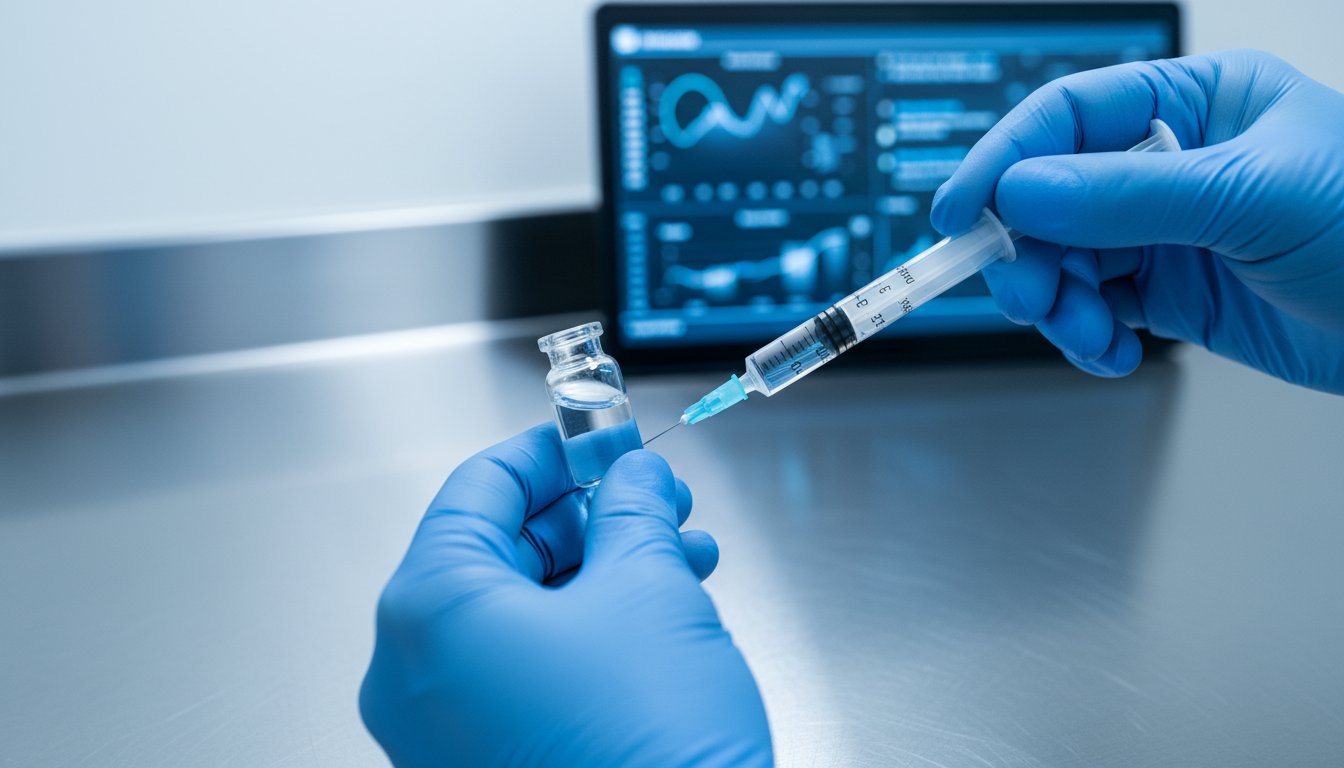
The difference between an elite physique and a standard one often resides in the management of deep-seated visceral adipose tissue, a layer of fat that resists traditional caloric deficits and intensive cardiovascular training. You've likely reached a stage where your discipline is absolute, yet your midsection lacks the clinical sharpness required for peak performance. It's frustrating to manage complex protocols when the transition from milligrams to insulin syringe units feels like an exercise in ambiguity. This article provides a sophisticated, data-driven framework for the precise tesamorelin dosage for bodybuilding to ensure your research yields measurable results. We'll move beyond the hype to establish a professional administration schedule based on the 2mg daily protocol utilized in clinical settings. You'll learn the exact methodology for reconstitution, the timing necessary to optimize endogenous growth hormone pulses, and the verification standards required to ensure your peptides meet laboratory-grade benchmarks. This is your definitive guide to mastering body composition through informed, scientific application.
Key Takeaways
- Understand the clinical mechanism that enables Tesamorelin to prioritize visceral adipose tissue reduction over standard subcutaneous fat loss.
- Establish a data-driven protocol for determining the optimal tesamorelin dosage for bodybuilding, including the rationale for the "5 days on, 2 days off" cycling strategy.
- Discover how to implement dual-pathway activation by stacking Tesamorelin with GHRPs like Ipamorelin to optimize muscle preservation during fat loss phases.
- Identify the essential markers for monitoring endocrine health, specifically managing insulin sensitivity and mitigating common side effects like joint discomfort.
- Learn the precise laboratory standards for reconstitution and quality control to ensure research integrity and safety throughout the protocol.
Understanding Tesamorelin: The Mechanism of Targeted Lipolysis
Tesamorelin represents a sophisticated advancement in peptide science, specifically engineered as a stabilized synthetic analogue of Growth Hormone-Releasing Factor (GRF). This 44-amino acid peptide incorporates a hexenoyl moiety, a structural modification that significantly increases its half-life and resistance to enzymatic degradation compared to natural GHRH. When researchers evaluate a tesamorelin dosage for bodybuilding purposes, they focus on its unique affinity for reducing visceral adipose tissue (VAT). Unlike many lipolytic agents that affect subcutaneous fat, Tesamorelin targets the deep, inflammatory fat surrounding internal organs. This specificity earned it FDA approval in November 2010 for the treatment of HIV-associated lipodystrophy, establishing its clinical pedigree in metabolic optimization.
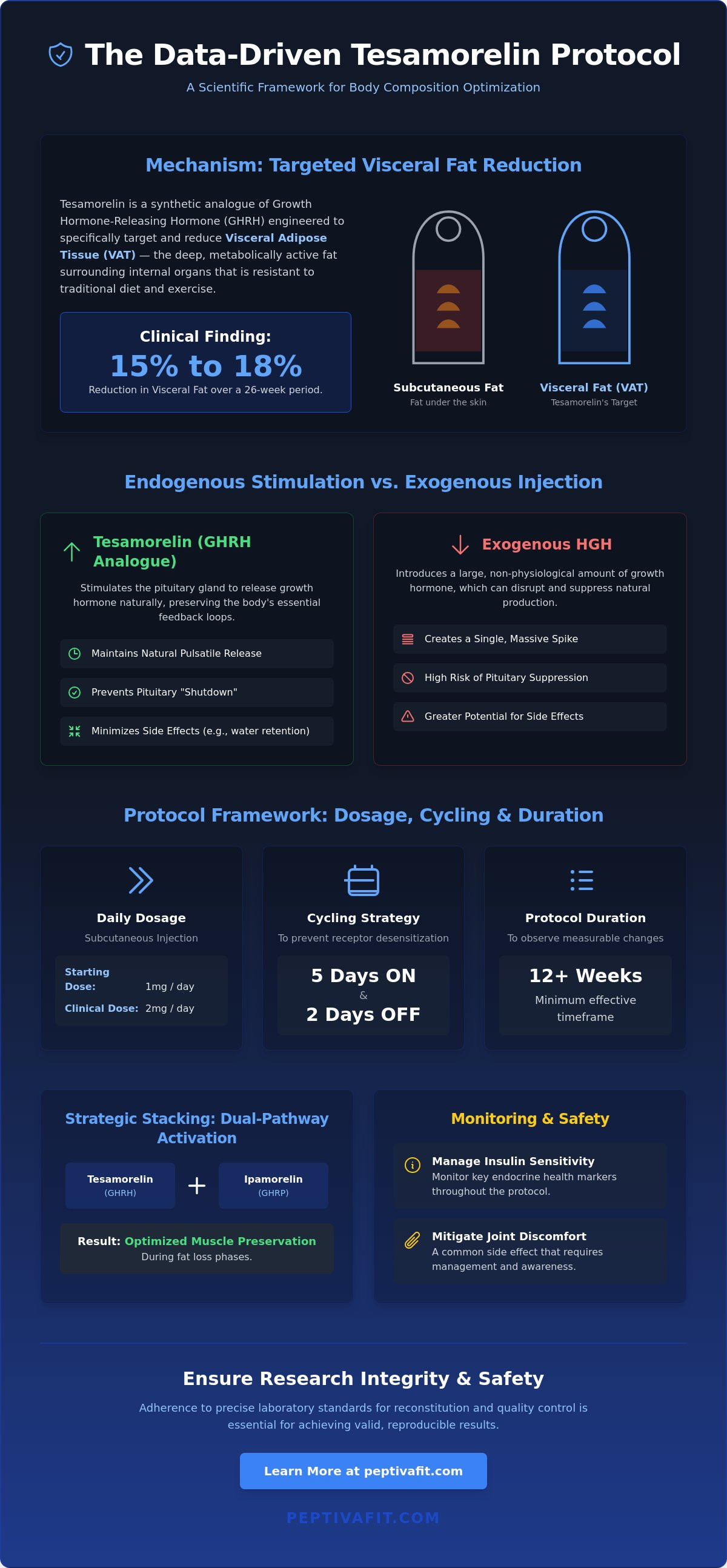
The mechanism of action centers on the stimulation of the anterior pituitary gland. By binding to GHRH receptors, Tesamorelin prompts the secretion of endogenous growth hormone in a manner that preserves the body's natural regulatory feedback loops. It's considered the gold standard for abdominal fat research because it addresses the metabolic "hard" fat that is often resistant to traditional diet and exercise. Data from clinical trials indicated that subjects experienced a 15% to 18% reduction in visceral fat over a 26-week period, a metric that remains unmatched by standard growth hormone protocols.
GHRH vs. GH: Why Endogenous Stimulation Matters
Administering Tesamorelin offers a distinct physiological advantage over exogenous human growth hormone (HGH). While HGH injections provide a massive, non-physiological spike that can shut down the pituitary gland, Tesamorelin maintains the natural pulsatile release patterns of the body. This prevents the "shut down" of the endocrine axis and minimizes the risk of side effects like carpal tunnel or severe water retention. The primary marker for tracking efficacy is the elevation of Insulin-like Growth Factor 1 (IGF-1). In controlled settings, a proper tesamorelin dosage for bodybuilding research typically results in a stable, manageable increase in IGF-1 levels, facilitating fat oxidation without the volatility of synthetic GH.
Clinical Origins and Performance Evolution
The transition of Tesamorelin from a clinical treatment for HIV-related metabolic complications to a tool for body composition optimization is rooted in its impact on somatotropes. These specialized cells in the pituitary gland are responsible for the synthesis and release of growth hormone. Tesamorelin sharpens the efficiency of these cells, even as natural production declines with age or intense physical stress. By optimizing the somatotropic axis, the peptide improves nutrient partitioning and metabolic rate. It's no longer just a therapeutic intervention; it's a precision instrument for those who require laboratory-grade standards in their performance data. The role of somatotropes in the fat-burning process is pivotal, as they regulate the lipase enzymes that break down stored triglycerides into free fatty acids for energy utilization.
Establishing the Protocol: Tesamorelin Dosage for Bodybuilding and Performance
The clinical standard for Tesamorelin involves a daily 2mg subcutaneous injection, a dosage originally established to treat lipodystrophy in HIV-infected patients. In laboratory research settings, however, many protocols initiate at a 1mg baseline to evaluate individual pituitary sensitivity. Establishing the correct tesamorelin dosage for bodybuilding purposes requires a disciplined adherence to physiological windows. A 5 days on, 2 days off cycling strategy is frequently employed to prevent receptor desensitization. This 48-hour recovery period allows the pituitary gland to maintain its responsiveness to Growth Hormone Releasing Hormone (GHRH) analogs, ensuring long-term efficacy without requiring dose escalation.
Research indicates that a 12-week framework is the minimum duration needed to observe measurable changes in body composition. Data from clinical trials involving GHRH analogs showed a 15.2% reduction in visceral adipose tissue over a 26-week period, but initial metabolic shifts become evident by the 90-day mark. For those seeking to optimize their laboratory research, utilizing a personalized tracking framework ensures every data point is captured during this critical window. A 12-week cycle provides a sufficient duration for the peptide to modulate fat metabolism while minimizing the risk of glucose intolerance or other metabolic adaptations.
Step-by-Step Administration Guide
Timing is the most critical variable in peptide research. To prevent insulin from blunting the growth hormone pulse, a 2-hour fasting rule is mandatory before administration. Researchers typically choose between an early morning fasted state or a pre-bedtime window. The evening window is often preferred because it aligns with the body's natural nocturnal GH secretion. Subcutaneous injections should be rotated across the abdominal region to prevent localized tissue irritation. For comprehensive safety details and handling instructions, refer to this Tesamorelin injection information resource. Consistency in timing ensures that the tesamorelin dosage for bodybuilding research remains stable within the systemic circulation.
Dosage Titration and Tolerance
Starting at 1mg allows for a controlled assessment of tolerance. If no significant edema or joint discomfort is present after 14 days, the dose can be titrated to the 2mg clinical maximum. Increasing the dose beyond 2mg rarely yields better results; it often leads to diminishing returns and increased side effects like carpal tunnel symptoms or water retention. If fat loss plateaus after 8 weeks at 2mg, it's more effective to reassess caloric intake and fasted cardio protocols rather than increasing the peptide volume. This pragmatic approach prioritizes endocrine health and data-driven results over high-dose experimentation.
Strategic Stacking: Enhancing Tesamorelin Efficacy with GHRHs and GHRPs
Optimization of the growth hormone axis requires a dual-pathway approach. Tesamorelin acts as a Growth Hormone Releasing Hormone (GHRH) by signaling the pituitary gland to produce GH. However, the body’s natural feedback loop uses somatostatin to halt this production. By introducing a Growth Hormone Releasing Peptide (GHRP), researchers suppress somatostatin, effectively removing the brake on the endocrine system. This results in a more robust GH pulse than either compound achieves in isolation. This synergy is a cornerstone of advanced metabolic research.
The Tesamorelin and Ipamorelin Synergy
Ipamorelin is the preferred GHRP for this protocol because of its high selectivity. It doesn't impact prolactin or cortisol levels, which is vital for maintaining a clean hormonal profile. It inhibits somatostatin, allowing the GHRH to exert its maximum effect. While Tesamorelin's approved medical use focuses on HIV-associated lipodystrophy, the tesamorelin dosage for bodybuilding often integrates 200mcg of Ipamorelin to maximize the pulse amplitude. Clinical observations suggest this "Power Stack" provides 20% to 30% greater efficacy in subcutaneous fat reduction compared to solo administration. Stacking requires precision; researchers often reduce the GHRP dose if receptor desensitization occurs after 8 weeks of continuous use.
Advanced Stacking for Bodybuilders
Advanced protocols often integrate Tesamorelin into a broader fat loss peptide guide to address multiple metabolic pathways simultaneously. Adding AOD-9604 to the stack targets the 176-191 fragment of the growth hormone molecule. This stimulates lipolysis without affecting blood glucose or insulin sensitivity. For recovery, researchers integrate BPC-157 or TB-500. These compounds focus on angiogenesis and tissue repair, complementing the systemic benefits of elevated GH. To maintain endocrine balance, follow these protocols:
- Cycle Duration: Limit the tesamorelin dosage for bodybuilding stack to 12-week research cycles followed by a 4-week washout period.
- Timing: Administer the stack in a fasted state, typically 30 minutes before bed or immediately upon waking, to avoid insulin interference.
- Monitoring: Track IGF-1 levels monthly. Aim for a target range of 250-350 ng/mL to ensure the protocol remains within safe physiological limits.
- Recovery Integration: Use 250mcg of BPC-157 twice daily if the goal is to repair connective tissue during a heavy training block.
The combination of Tesamorelin with CJC-1295 (No DAC) is another option for extending the GH release window. While Tesamorelin provides a sharp peak, CJC-1295 maintains a steady baseline. This methodical approach ensures that the endocrine system isn't over-saturated but is instead optimized for long-term fat loss and muscle preservation.
Monitoring and Safety: Managing Side Effects and Endocrine Health
Tesamorelin administration requires a disciplined approach to biometric tracking. While the compound is highly selective for visceral adipose tissue, its influence on the endocrine system necessitates regular laboratory oversight. Research subjects often report localized reactions or systemic shifts that require immediate protocol adjustments. Understanding the clinical profile of this peptide is essential for maintaining long-term health while pursuing body recomposition goals.
Common clinical observations include peripheral edema, arthralgia, and paresthesia, which can manifest as carpal tunnel symptoms. These effects are typically dose-dependent and result from the increase in growth hormone (GH) and insulin-like growth factor 1 (IGF-1) levels. In clinical trials involving 816 subjects, injection site reactions occurred in approximately 12% of participants. The "GH Flush," a transient sensation of warmth and redness, is a known physiological response to rapid growth hormone elevation and usually subsides within 20 minutes.
Metabolic health is the primary concern during an extended tesamorelin dosage for bodybuilding. Although tesamorelin has a more favorable safety profile than exogenous growth hormone, it can still influence glucose metabolism. Tracking HbA1c and IGF-1 levels every 8 to 12 weeks is a non-negotiable requirement to ensure the subject remains within safe therapeutic ranges. Elevated IGF-1 levels beyond 3 standard deviations from the mean may necessitate a reduction in dosage or a planned washout period.
Metabolic Monitoring Protocols
Maintaining metabolic health hinges on consistent data collection. Fasting blood glucose should be measured weekly during high-dose phases exceeding 2mg daily. To maintain insulin sensitivity, research indicates that integrating glucose disposal agents or strictly timed carbohydrate intake can be effective. A personalized medical assessment is the baseline requirement before initiating any sequence. This establishes the subject's metabolic floor and ensures the endocrine system isn't under undue stress.
Mitigating Common Side Effects
Edema management is critical for maintaining both aesthetic and functional performance. Reducing sodium intake while maintaining a water consumption rate of 3.5 to 4 liters daily helps regulate fluid balance. If joint stiffness becomes restrictive, adjusting the tesamorelin dosage for bodybuilding by splitting the daily 2mg dose into two 1mg administrations can reduce peak plasma concentrations. Red flags that mandate immediate cessation include severe persistent numbness in the extremities or fasting glucose readings consistently exceeding 100 mg/dL.
For those seeking to optimize their physiological data and refine their research protocols, access our curated peptide education resources for expert-level guidance.
Executing the Protocol: Laboratory Standards and Quality Control
The efficacy of a tesamorelin dosage for bodybuilding depends entirely on the chemical integrity of the compound and the precision of the administration protocol. In a market saturated with unverified research chemicals, the risk of immunological reactions or sub-therapeutic results is high. PeptivaFit operates under the principle that laboratory standards aren't suggestions; they're the foundation of all research outcomes. Maintaining a disciplined environment ensures that the data collected during a protocol remains valid and actionable.
Reconstitution and Precision
Tesamorelin is a delicate lyophilized powder. It requires careful reconstitution with bacteriostatic water to maintain its structural integrity. If you're utilizing a standard 2mg vial, adding 1ml (100 units) of bacteriostatic water creates a concentration where 10 units on a standard U-100 insulin syringe equals 200mcg. Precision is critical here. An error of just five units can alter the daily dose by 50 percent, potentially skewing the physiological response.
The physical handling of the peptide is equally important. Aggressive shaking of the vial can shear the delicate peptide chains, rendering the solution inactive. Researchers should allow the diluent to trickle down the internal side of the glass and let the powder dissolve naturally. Once reconstituted, the solution must be stored in a controlled environment between 2 and 8 degrees Celsius. Stability studies indicate that unrefrigerated peptides can degrade by 10 percent or more within 48 hours, depending on ambient temperatures.
Sourcing for Research Integrity
Professional-grade research requires third-party verification. A Certificate of Analysis (COA) must confirm a purity level of at least 98 percent and verify the absence of heavy metals or residual solvents. PeptivaFit prioritizes curated, professional-grade supplies because the margin for error in a tesamorelin dosage for bodybuilding is slim. Using inferior materials introduces variables that complicate the tracking of fat loss and recovery metrics.
Before initiating a protocol, verify your inventory against this final checklist:
- Batch Verification: Confirm the COA matches the current batch number of the peptide.
- Supply Chain: Ensure a sufficient supply of 31-gauge insulin syringes for subcutaneous administration.
- Thermal Control: Verify the refrigeration unit maintains a consistent temperature range.
- Data Logging: Establish a precise system for tracking daily administration and physiological markers.
Adhering to these laboratory standards ensures that your focus remains on performance optimization rather than troubleshooting contaminated or degraded materials. This methodical approach is what separates elite researchers from the casual market. When the tesamorelin dosage for bodybuilding is applied within a strictly controlled framework, the resulting data provides a clear path toward localized adiposity reduction and enhanced physical architecture.
Advancing Your Physiological Standards Through Precise Protocol Execution
Effective implementation of a tesamorelin dosage for bodybuilding requires a commitment to clinical precision and laboratory-grade standards. Data from the Journal of Clinical Endocrinology and Metabolism indicates that a standard 2mg daily administration can reduce visceral fat by 15% to 20% over a 26-week period. This specific mechanism focuses on the GHRH pathway to stimulate endogenous growth hormone without the volatility associated with exogenous GH. It's essential to maintain rigorous monitoring of IGF-1 levels while ensuring your research materials meet 99% purity benchmarks. Success isn't about guesswork; it's about the data-driven application of peptide science.
Achieving these elite results demands more than just a protocol. It requires verified resources and expert oversight to navigate the complexities of metabolic health. PeptivaFit provides the necessary infrastructure for this high-level pursuit through lab-verified peptide supplies and expert-led 1-on-1 coaching. Our comprehensive metabolic optimization guides help you manage every variable with scientific certainty. Optimize your fat loss with the Peptiva Protocol and lab-tested peptides. Your commitment to disciplined research will define your progress.
Frequently Asked Questions
Is Tesamorelin better than HGH for fat loss in bodybuilders?
Tesamorelin provides a more targeted approach to visceral fat loss than exogenous HGH while maintaining the body's natural pulsatile growth hormone release. Clinical data from a 2010 study published in the Journal of the American Medical Association showed an 18 percent reduction in visceral adipose tissue. Unlike HGH, it doesn't typically cause the same level of insulin resistance or shut down endogenous production.
How long does it take to see results from a Tesamorelin dosage protocol?
Measurable changes in body composition usually appear within 8 to 12 weeks of consistent administration. In landmark Phase 3 clinical trials involving 412 patients, the most significant visceral fat reductions were documented at the 26-week mark. Those utilizing a specific tesamorelin dosage for bodybuilding often report improved muscle hardness and vascularity earlier in the cycle, typically by day 30.
Can I take Tesamorelin and CJC-1295 together?
Researchers often combine Tesamorelin with CJC-1295 to maximize the amplitude and frequency of growth hormone pulses. While Tesamorelin acts as a potent GHRH analogue, adding 100mcg of CJC-1295 without DAC can extend the signaling window. This synergistic approach is frequently used in clinical research settings to optimize the pituitary response during fasted states or nocturnal sleep cycles.
Do I need to cycle off Tesamorelin, or can I use it year-round?
You must cycle this peptide to prevent pituitary desensitization and maintain receptor sensitivity over time. A standard disciplined protocol involves 5 days of administration followed by 2 days of rest each week. Many clinical researchers suggest a maximum duration of 6 months followed by a 60-day cessation period to ensure the endocrine system remains responsive and efficient.
What happens if I miss a dose of Tesamorelin?
If you miss an administration, skip the missed dose and resume your regular schedule at the next designated time. Don't double the dose to 4mg, as this increases the risk of localized site reactions without providing additional metabolic benefits. Consistency is vital because the peptide relies on maintaining a stable 24-hour rhythm to mimic natural physiological GH secretion patterns.
Will Tesamorelin increase my appetite like other GH-secretagogues?
Tesamorelin doesn't increase hunger because it lacks the ghrelin-mimetic properties found in peptides like GHRP-6 or Ipamorelin. It's highly selective for the GHRH receptor and doesn't trigger the gastric signals that lead to caloric cravings. This makes it an ideal tool for athletes who need to maintain a strict caloric deficit during a 12-week cutting phase.
Does Tesamorelin cause water retention like MK-677?
Peripheral edema is reported in only 3 percent to 6 percent of subjects, which is significantly lower than the 15 percent reported with MK-677. While a slight increase in extracellular water is possible due to elevated GH levels, it's rarely severe enough to obscure muscle definition. Monitoring your sodium intake and staying hydrated will typically manage any minor fluid shifts during the protocol.
Can women use Tesamorelin for fat loss and body composition?
Women can effectively use Tesamorelin for fat loss, though they may require different titration due to how estrogen influences GH sensitivity. Research in the Journal of Clinical Endocrinology and Metabolism indicates that female physiology responds well to GHRH analogues for adipose reduction. A conservative tesamorelin dosage for bodybuilding in female subjects often begins at 1mg daily to evaluate individual tolerance levels.

![Shelf Life of Reconstituted Peptides: A Clinical Reference Guide [2026]](https://getautoseo.com/storage/hero_images/shelf-life-of-reconstituted-peptides-a-clinical-reference-guide-2026.jpg?v=b8ed5173acaa)
