
Why would a peptide derived from human gastric juice trigger a massive regulatory reversal by the HHS on February 27, 2026? The answer lies in its role as a systemic bioregulator rather than a simple localized healer. You've likely seen conflicting reports about the bpc 157 peptide, from the 2023 Category 2 restriction to the April 15, 2026, shift back toward Category 1 status. This regulatory volatility creates legitimate concerns regarding laboratory purity and clinical safety for those who prioritize disciplined performance optimization.
We recognize that high-performance individuals require data-driven clarity rather than marketing hype. This guide delivers a technical analysis of the biological mechanisms and the laboratory standards essential for research efficacy. We'll examine the specific angiogenesis pathways the peptide initiates, the impact of the 2026 reclassification of 12 key peptides, and how to integrate these findings into a sophisticated, medical-grade recovery protocol.
Key Takeaways
- Understand the biological foundation of the bpc 157 peptide as a gastric-derived pentadecapeptide and its unique ability to upregulate Growth Hormone receptors in fibroblasts.
- Identify the specific pathways for systemic tissue repair, including nitric oxide modulation and its documented role in accelerating tendon-to-bone healing.
- Learn the rigorous laboratory standards necessary for research efficacy, specifically the requirement for 99%+ purity verified through High-Performance Liquid Chromatography (HPLC).
- Discover how to integrate these findings into a curated recovery protocol that utilizes a personalized medical assessment to ensure data-driven performance optimization.
- Navigate the updated 2026 regulatory landscape to ensure all research applications remain compliant with the latest FDA and HHS reclassification standards.
What is BPC-157 Peptide? Defining the Gastric Pentadecapeptide
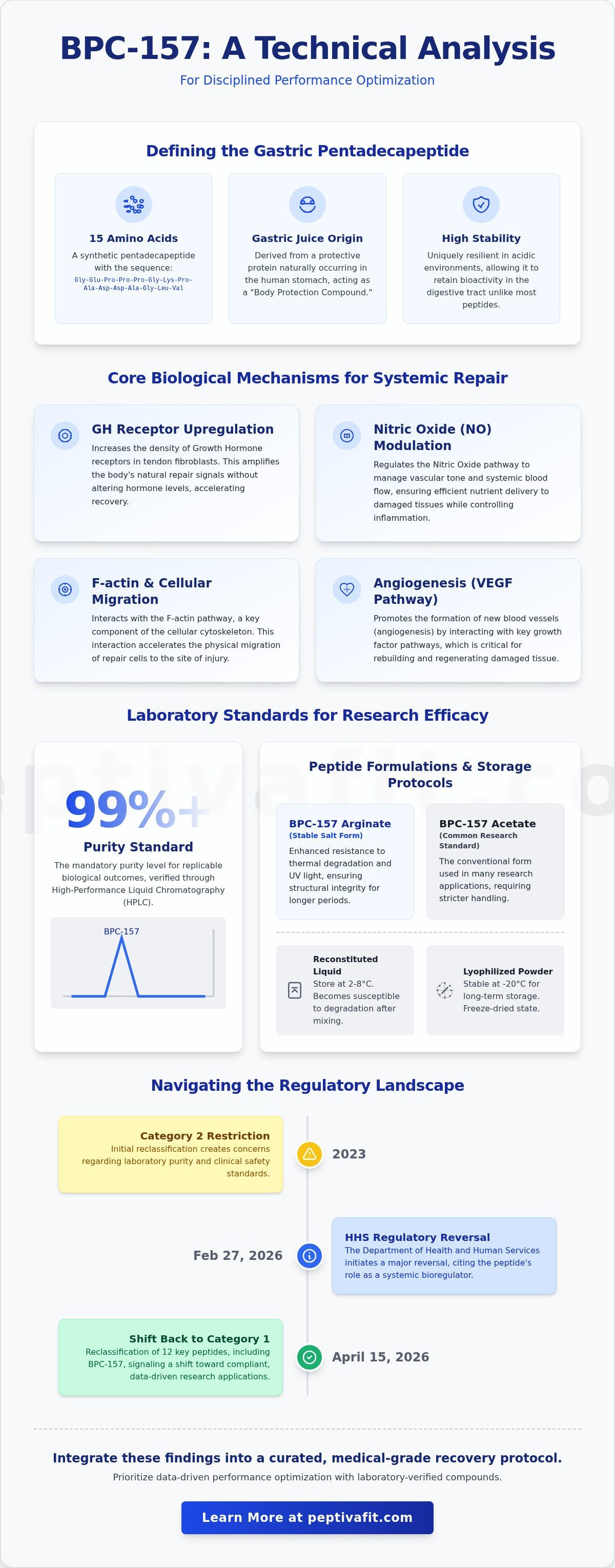
BPC-157 is a synthetic pentadecapeptide consisting of a sequence of 15 amino acids. Its molecular structure is derived from a protective protein naturally occurring in human gastric juice. Within the field of regenerative medicine, it's frequently classified as a "Body Protection Compound" due to its inherent role in maintaining mucosal integrity and accelerating tissue repair. Unlike standard growth factors that often degrade when exposed to low pH levels, the bpc 157 peptide remains exceptionally stable in acidic environments. This unique resilience allows the compound to retain its bioactivity even under the harsh conditions of the digestive tract, a characteristic that distinguishes it from most other signaling proteins.
For individuals engaged in laboratory research purposes, it's essential to distinguish between the various chemical formulations available. While the acetate version is a common research standard, the stable salt form, known as BPC-157 Arginate, provides enhanced resistance to thermal degradation and UV light. This distinction is critical because the salt form maintains its structural integrity longer, ensuring that the research outcomes aren't compromised by premature peptide breakdown.
The Discovery and Origin of Pentadecapeptide BPC-157
Scientific exploration of this compound dates back to the early 1990s. Initial research focused heavily on its potential for treating inflammatory bowel disease and gastric ulcers. Because the peptide is naturally synthesized in the gastric mucosa, it acts as a primary defense mechanism against the corrosive effects of stomach acid and bile. This BPC-157 Peptide Overview highlights that its resistance to gastric enzymes is what makes it a primary candidate for systemic repair studies. It doesn't require complex delivery systems to survive in the gut, which is a significant departure from the fragility of most peptide chains.
Chemical Structure and Molecular Stability
The precise amino acid sequence of BPC-157 is Gly-Glu-Pro-Pro-Pro-Gly-Lys-Pro-Ala-Asp-Asp-Ala-Gly-Leu-Val. With a molecular weight of approximately 1419.5 Daltons, the peptide is small enough to facilitate high bioavailability across different tissue types. Its stability is highly dependent on its physical state and storage conditions. Precision in these protocols is mandatory for maintaining laboratory standards:
- Lyophilized Powder: In its freeze-dried state, the peptide is stable at room temperature for short durations, though long-term storage requires temperatures of -20°C.
- Reconstituted Liquid: Once the peptide is mixed with bacteriostatic water, it becomes more susceptible to degradation and must be stored at 2°C to 8°C.
- Molecular Weight: Its compact size allows for efficient penetration of the blood-brain barrier and other physiological filters.
Understanding these chemical nuances is the first step toward informed decision-making. High-purity standards are the only way to ensure that the biological mechanisms described in clinical literature are replicable in a research setting.
Biological Mechanisms: How BPC-157 Facilitates Systemic Repair
The efficacy of the bpc 157 peptide stems from its ability to orchestrate complex cellular signaling rather than acting as a simple structural building block. One primary mechanism involves the significant upregulation of Growth Hormone (GH) receptors within tendon fibroblasts. By increasing receptor density, the peptide enhances the sensitivity of these cells to endogenous growth factors. This effectively amplifies the body's natural repair signals without requiring supra-physiological hormone levels. It's a sophisticated method of leveraging existing biological infrastructure to accelerate recovery.
Beyond hormonal sensitivity, the compound modulates the Nitric Oxide (NO) pathway. This regulation is crucial for managing vascular tone and systemic blood flow. By balancing NO production, it facilitates a controlled inflammatory response, ensuring that nutrients reach damaged tissues without the excessive edema often associated with acute injury. This process is further supported by the peptide's interaction with the F-actin pathway. F-actin serves as the primary structural component of the cellular cytoskeleton. When the bpc 157 peptide influences this pathway, it accelerates cellular migration, allowing repair cells to physically move toward the site of injury with greater efficiency.
Angiogenesis and the VEGF Pathway
Angiogenesis, or the formation of new blood vessels, is a cornerstone of the peptide's regenerative profile. It achieves this by promoting the expression of Vascular Endothelial Growth Factor (VEGF), which triggers the development of collateral circulation. This new vascular network is vital for ischemic tissue repair, where oxygen deprivation would otherwise lead to necrosis. Current research indicates that while it stimulates VEGF, the peptide functions as a modulator. It doesn't appear to promote the pathological angiogenesis associated with tumor growth, a critical distinction for those concerned with long-term safety. Understanding these nuances is part of a disciplined approach to performance optimization.
Fibroblast Activation and Collagen Synthesis
The transition from initial injury to functional recovery depends on the quality of collagen deposition. The peptide actively recruits fibroblasts and directs the remodeling of the extracellular matrix. Specifically, it facilitates the transition from Type III collagen, which is disorganized and weak, to the robust, structural Type I collagen found in healthy tendons. While GHK-Cu peptide is often utilized for skin-deep remodeling and cellular longevity, BPC-157 is superior for deep structural integrity. Despite its benefits, researchers must remain aware of the BPC-157 Regulatory Status, as it remains an unapproved drug and is currently on the WADA prohibited list.
Clinical Research Applications: Gut, Joint, and Neurological Support
Clinical research regarding the bpc 157 peptide has expanded into diverse therapeutic territories, moving far beyond the narrow scope of athletic injury management. While its reputation is grounded in musculoskeletal repair, its most significant biological utility is its cytoprotective profile. This systemic influence is highly visible in its ability to counteract organ damage caused by Non-Steroidal Anti-Inflammatory Drugs (NSAIDs). Specifically, studies show it can mitigate the toxic impact on the liver, stomach, and even the brain, providing a level of internal stabilization that few other compounds offer. It serves as a pharmacological buffer, maintaining homeostatic balance during high-stress physiological events. This protective capacity is why it remains a central focus of regenerative research in 2026.
Musculoskeletal Recovery and Tendon Healing
Structural repair requires more than passive rest. The bpc 157 peptide is exceptionally effective for injuries in "hypovascular" zones, such as the Achilles tendon or the rotator cuff, where natural blood flow is notoriously poor. By facilitating the "ligament-to-bone" attachment process, it creates a more resilient repair compared to the disorganized scar tissue typical of unassisted healing. Many researchers explore the synergy between this compound and TB-500, a combination frequently referred to as the "Wolverine Stack." This protocol combines the localized growth factor upregulation of BPC-157 with the systemic cellular migration capabilities of Thymosin Beta-4. It's a dual-action approach for complex, multi-tissue trauma that requires a high degree of precision.
Gastric Protection and the Gut-Brain Axis
The peptide's origin as a gastric pentadecapeptide makes it a primary tool for maintaining intestinal integrity. It demonstrates a profound ability to heal gastric ulcers and resolve the permeability issues associated with Leaky Gut Syndrome (LGS). This isn't merely a digestive benefit. The peptide modulates the gut-brain axis by interacting with the serotonergic and dopaminergic systems. By regulating neurotransmitter release, it exhibits neuroprotective effects that can mitigate systemic inflammation and cognitive fatigue. This bidirectional communication allows the peptide to support neurological health through the stabilizing influence of the enteric nervous system. It's a sophisticated mechanism that demands a personalized medical assessment for those seeking to optimize their systemic recovery environment. For those ready to move beyond generic advice, exploring private consultation options provides the necessary clinical oversight.
Laboratory Standards: Purity, Reconstitution, and Storage Protocols
Precision is the hallmark of any rigorous research environment. When dealing with the bpc 157 peptide, the difference between clinical-grade material and "gray market" supply often rests on the verification of its molecular profile. High-Performance Liquid Chromatography (HPLC) is the gold standard for this verification. It ensures that the compound possesses a purity level of 99% or higher. Anything less introduces unknown variables that can compromise the integrity of biological data. It's vital to remember that impurities aren't just inert; they can actively interfere with cellular signaling pathways.
Identifying Lab-Verified Peptide Quality
A legitimate Certificate of Analysis (COA) must include both HPLC and Mass Spectrometry (MS) data. Mass spectrometry confirms the exact molecular weight of the peptide, ensuring the sequence matches the 15 amino acid structure of BPC-157. High-purity standards are non-negotiable because low-quality supplies frequently contain residual heavy metals, TFA (Trifluoroacetic acid), or unspecified fillers that trigger localized inflammation. PeptivaFit exclusively utilizes lab tested peptides for its curated protocols to maintain these exacting standards. If a supplier can't provide a verifiable COA linked to the current batch number, the material is unsuitable for professional research.
Red flags in laboratory supplies often include a lack of batch-specific testing dates or the absence of a clear 99%+ purity threshold. Quality control is a continuous process, not a one-time event. Researchers should look for clear peaks in the HPLC chromatogram, as multiple peaks indicate the presence of degradation products or synthesis byproducts. These contaminants can alter the peptide's binding affinity to Growth Hormone receptors, which we discussed in the biological mechanisms section.
Reconstitution and Precision Handling
The physical transition from a lyophilized (freeze-dried) powder to a liquid solution requires meticulous care. Reconstitution must be performed using bacteriostatic water containing 0.9% benzyl alcohol to prevent bacterial growth. The process involves a slow, controlled drip of the diluent down the side of the glass vial. Don't agitate the vial. Mechanical agitation, such as vigorous shaking, can shear the delicate peptide chains and render the compound inactive. A gentle swirl is all that's required to achieve a clear solution.
Calculating the concentration is a vital step for precise research measurements. For instance, adding 2 mL of bacteriostatic water to a 5 mg vial creates a concentration of 2,500 mcg per mL. This allows for granular control over the application. Once reconstituted, the shelf-life of BPC-157 is limited. It typically remains stable for 14 to 28 days if handled with discipline and kept away from direct light.
Storage protocols are equally uncompromising. Lyophilized powder should be kept at -20°C for long-term stability. Once the peptide is in a liquid state, it must be stored at 2°C to 8°C. Exposure to direct UV light or temperatures exceeding 25°C will lead to rapid degradation. Maintaining these environmental variables ensures that the peptide's structural integrity remains intact for the duration of the research protocol.
Integrating BPC-157 into a Curated Performance Framework
Researching the bpc 157 peptide in isolation often leads to fragmented results and suboptimal outcomes. To move beyond basic tissue repair, the compound must be integrated into a disciplined, data-driven system. A personalized medical assessment serves as the essential baseline for any advanced research protocol. This assessment ensures that the biological environment is primed to respond to signaling peptides, rather than attempting to force a physiological response in a compromised system. True performance optimization requires a high degree of maturity and a commitment to clinical-grade standards.
The secondary metabolic benefits of this peptide shouldn't be overlooked. While its primary role is structural healing, it acts as a critical support mechanism for fat loss and body composition maintenance. During periods of injury, metabolic rates often plummet as activity levels decrease. By accelerating the return to functional training, the peptide prevents the metabolic drift associated with sedentary recovery phases. This philosophy is central to the Peptiva Protocol, which treats metabolic optimization as a long-term, methodical process rather than a quick fix for acute trauma. Utilizing 1-on-1 coaching allows for the precise tracking of biological feedback, ensuring that every research variable is adjusted based on empirical data.
The Synergistic Approach to Longevity
BPC-157 serves as the structural anchor within a broader longevity framework. When researchers pair it with mitochondrial peptides like MOTS-C or pineal bioregulators like Epitalon, they create a multi-layered approach to systemic health. While Epitalon addresses the cellular clock and MOTS-C enhances energy metabolism, BPC-157 ensures the physical infrastructure remains resilient enough to support these increased energy demands. This transition from acute repair to long-term performance maintenance is what separates elite protocols from standard biohacking trends. It's a sophisticated strategy that demands consistency and a deep understanding of peptide synergy.
Next Steps: Professional Consultation
Refining a complex research protocol requires expert oversight to ensure safety and efficacy. Moving beyond the information-gathering phase involves a shift toward professional accountability. A single consultation call provides an opportunity for protocol refinement and the clarification of laboratory-grade standards. This level of curated attention is designed for individuals who value privacy and demand high-stakes accuracy in their performance data. Final research success depends entirely on the quality of the material and the discipline of the researcher. Adhering to the 99%+ purity standards and strict storage requirements established in previous sections is a non-negotiable mandate for any serious practitioner in 2026.
Advancing Toward Systemic Optimization
The 2026 regulatory landscape has redefined the accessibility of the bpc 157 peptide, shifting the focus from simple injury recovery to a sophisticated model of systemic bioregulation. Effective research requires a disciplined adherence to 99% HPLC purity standards and a deep understanding of the VEGF-driven angiogenesis pathways. By transitioning from localized repair to a curated metabolic framework, you ensure that your physiological infrastructure supports high-level performance rather than just basic maintenance.
Success in this field depends on precision data and expert medical oversight. PeptivaFit provides the necessary clinical guidance to navigate these complex protocols with confidence and personal responsibility. Our private services offer the stability required for long-term wellness and performance tracking through lab-verified purity standards and curated private protocols. We prioritize informed decision-making over marketing hype, ensuring every step of your protocol is backed by technical validation.
Access the Peptiva Protocol and Lab-Tested Peptides to begin your journey toward informed, data-driven optimization. You're now equipped with the technical knowledge to take full control of your regenerative environment.
Frequently Asked Questions
Is BPC-157 legal for human consumption in the United States?
BPC-157 is currently classified as an unapproved drug and is not legal for over the counter human consumption or sale as a dietary supplement. However, following the HHS announcement on February 27, 2026, the peptide is being moved back to Category 1 status. This reclassification allows licensed compounding pharmacies to legally prepare the compound for patients who have a valid physician's prescription. You should always source materials from FDA registered facilities to ensure compliance with these updated 2026 standards.
What is the most effective way to store BPC-157 to prevent degradation?
Proper storage is essential to maintain the molecular integrity of the peptide chain. Lyophilized powder should be kept in a freezer at -20°C for long term stability. Once you reconstitute the bpc 157 peptide with bacteriostatic water, the solution must be stored in a refrigerator between 2°C and 8°C. Exposure to direct UV light or temperatures exceeding 25°C will lead to rapid degradation, rendering the compound inactive within hours.
How does BPC-157 differ from TB-500 in terms of tissue repair?
These two peptides operate through distinct biological pathways. BPC-157 focuses on the upregulation of growth hormone receptors and the modulation of the nitric oxide pathway to facilitate localized healing. In contrast, TB-500, or Thymosin Beta-4, promotes systemic cellular migration and actin sequestration. While BPC-157 is often superior for tendon to bone attachments, TB-500 is typically utilized for muscle tissue repair and broader cellular mobility across the body.
Can BPC-157 be taken orally, or is injection required for systemic effects?
The bpc 157 peptide is uniquely stable in human gastric juice, which allows for effective oral administration in gastrointestinal research. While oral ingestion is sufficient for treating gastric ulcers or inflammatory bowel issues, subcutaneous injection is generally preferred for musculoskeletal repair. Injection bypasses first pass metabolism and ensures higher bioavailability in hypovascular tissues like tendons and ligaments where blood flow is naturally restricted.
Are there any known side effects or drug interactions with BPC-157?
Human clinical data remains sparse since the primary trial initiated in 2015 was canceled before results were published. Reported observations in research settings include mild nausea, localized redness at the injection site, or slight fluctuations in blood pressure. Because the peptide modulates the serotonergic system, researchers should exercise caution when the subject is utilizing medications that affect serotonin levels to avoid potential neurological interference.
How long does it typically take to see results in a research setting?
Initial physiological responses, such as reduced localized edema, are often observed within 7 to 10 days of starting a disciplined protocol. Significant structural remodeling of connective tissue generally requires a longer duration of 6 to 12 weeks. This timeframe allows for the transition from disorganized Type III collagen to the more robust Type I collagen required for long term structural integrity and functional recovery.
What is the difference between BPC-157 Arginate and BPC-157 Acetate?
The primary difference lies in molecular stability and shelf life. BPC-157 Arginate is a stable salt version that resists degradation from heat and UV light much more effectively than the standard Acetate version. While Acetate is common in basic laboratory settings, the Arginate form is the preferred choice for advanced research because it maintains its potency even if refrigeration is briefly interrupted during transit or handling.
Does BPC-157 show up on standard athletic drug tests?
BPC-157 is explicitly included on the World Anti-Doping Agency (WADA) Prohibited List. It is detectable through sophisticated liquid chromatography mass spectrometry (LC-MS) testing used by major athletic organizations. The U.S. Anti-Doping Agency has issued warnings that its use can lead to sanctions. Athletes subject to professional testing protocols must avoid this compound to remain compliant with international anti doping regulations.

![Shelf Life of Reconstituted Peptides: A Clinical Reference Guide [2026]](https://getautoseo.com/storage/hero_images/shelf-life-of-reconstituted-peptides-a-clinical-reference-guide-2026.jpg?v=b8ed5173acaa)
