
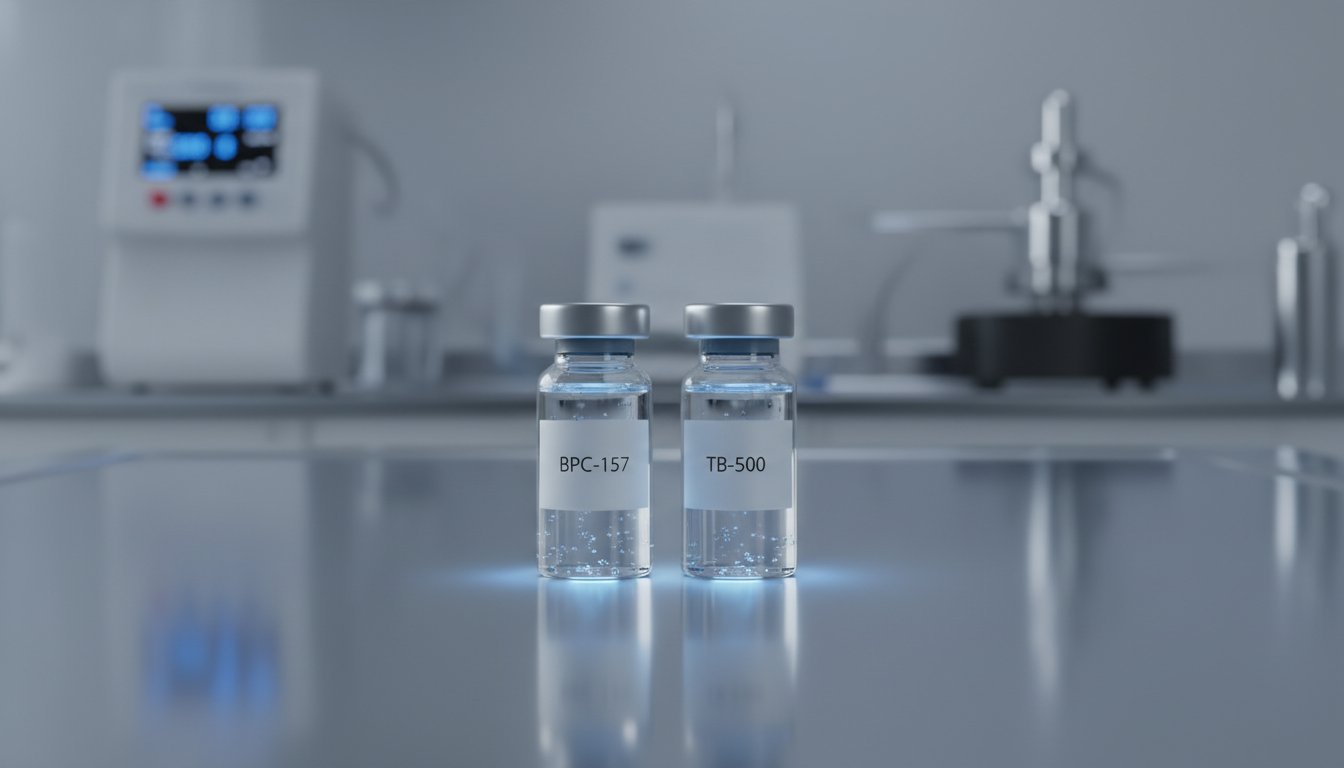
Why do conventional rehabilitation protocols often fail when the molecular architecture of a chronic injury requires a dual-pathway intervention? For researchers pursuing the upper limits of tissue regeneration, the wolverine stack represents the pinnacle of synergistic peptide application. This combination pairs BPC-157, a gastric pentadecapeptide known for its angiogenic properties, with TB-500, a synthetic version of Thymosin Beta-4 that facilitates systemic cellular migration. While the FDA currently maintains these substances in Category 2 due to a lack of human clinical trials, the HHS Secretary's February 2026 announcement suggests a shift toward Category 1 reclassification is imminent. Currently, researchers source these materials from analytical suppliers, with a 10mg blend priced at $115.00 for laboratory use.
You've likely experienced the frustration of chronic injury stagnation and the confusion surrounding unverified research materials. This guide will provide the clinical framework necessary to master the science of this regenerative combination while ensuring your protocols meet laboratory-grade standards. We'll examine the specific mechanisms of action, establish disciplined reconstitution protocols, and navigate the current regulatory landscape, including WADA's Category S0 prohibition, ahead of the July 23, 2026, FDA advisory meeting.
Key Takeaways
- Master the dual-pathway mechanism that differentiates localized tissue repair from systemic cellular recruitment in regenerative research.
- Learn why the wolverine stack offers a significant advantage over monotherapy by utilizing BPC-157 to prime receptors for TB-500.
- Establish a disciplined research protocol for reconstitution and storage to protect the structural integrity of your peptide samples.
- Navigate the 2026 regulatory environment and identify laboratory-grade sources that meet the strict standards of the Peptiva Protocol.
The Science of Accelerated Recovery: Defining the Wolverine Stack
The wolverine stack is a curated combination of two specific peptides, BPC-157 and TB-500, designed to address multi-tissue trauma through distinct biological pathways. Within the discipline of regenerative medicine, this stack represents a departure from single-agent protocols. It moves beyond the simplistic "quick fix" narrative found in casual fitness circles; instead, it demands a high level of research maturity and clinical precision. While the FDA placed these compounds on the Category 2 restricted list in 2023, the potential for reclassification following the July 23, 2026, advisory panel meeting has renewed interest in their synergistic application.
The "Wolverine" moniker serves as a functional metaphor for the rapid, comprehensive tissue repair observed in preclinical models. It isn't just about speed. It's about the precision of cellular signaling. By utilizing the wolverine stack, researchers attempt to mimic the high-efficiency recovery states required for elite performance optimization. Success in this area requires moving from anecdotal speculation to disciplined data tracking and laboratory-grade standards. Understanding the individual components is the first step in mastering this sophisticated protocol.
BPC-157: The Body Protection Compound
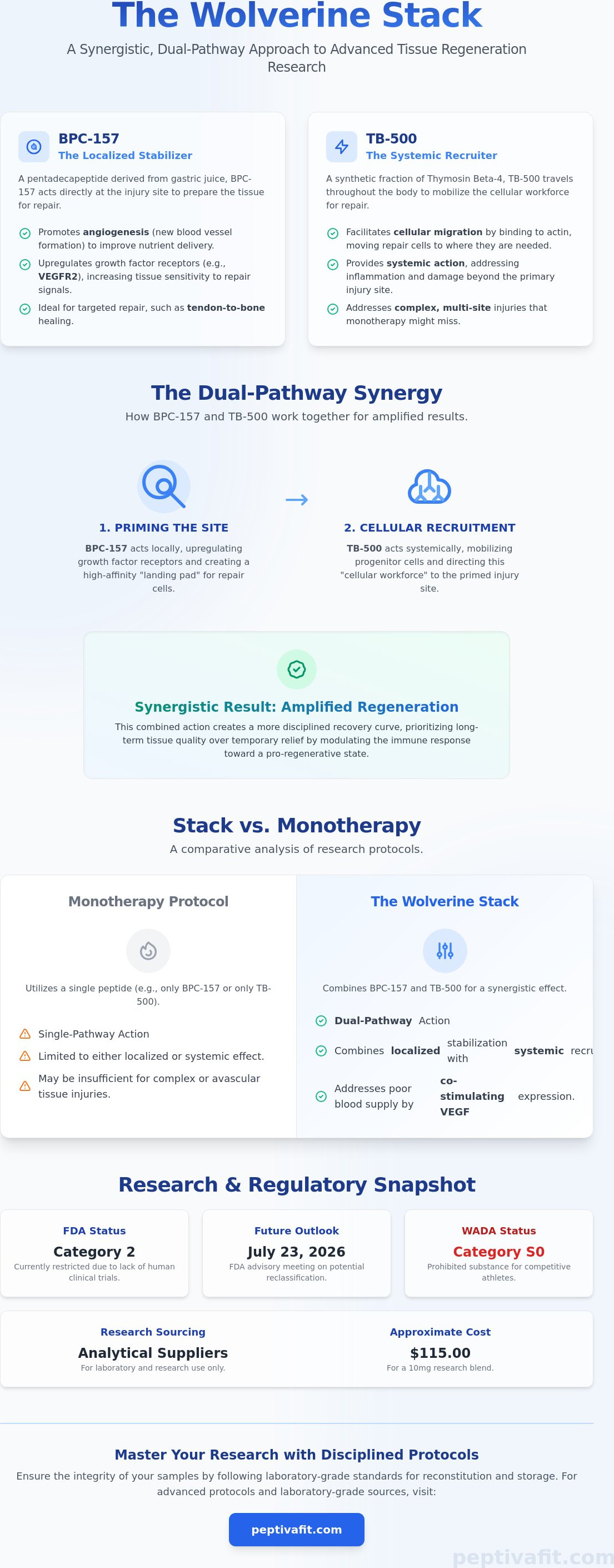
Derived from human gastric juice, BPC-157 is a pentadecapeptide composed of 15 amino acids. Its primary mechanism involves the upregulation of growth factor receptors and the promotion of angiogenesis, which is the formation of new blood vessels. This process is vital for delivering nutrients to hypoxic or damaged tissues. Current research focus typically centers on tendon-to-bone healing and the repair of the gastric mucosa. It acts as a localized stabilizer, creating the biological environment necessary for structural integrity at the specific site of injury.
TB-500: The Synthetic Derivative of Thymosin Beta-4
TB-500 is the active, synthetic fraction of the naturally occurring protein Thymosin Beta-4. Unlike localized agents, TB-500's primary function is actin-sequestering, a process that facilitates cellular migration to the site of injury. This allows the peptide to travel systemically through the body, identifying and addressing inflammation beyond the initial application site. While BPC-157 builds the biological scaffolding for repair, TB-500 recruits the cellular workforce needed to complete the reconstruction. This systemic reach is the defining difference that enables the wolverine stack to address complex, multi-site injuries that monotherapy might miss.
BPC-157 and TB-500: A Synergistic Mechanism of Action
The efficacy of the wolverine stack rests on a dual-pathway model that differentiates localized stabilization from systemic cellular recruitment. While BPC-157 remains classified as an unapproved drug by the FDA, its role in this synergy is to prime the injury site by increasing the density and sensitivity of growth factor receptors. It specifically targets the VEGFR2 pathway. This creates a high-affinity environment where repair signals are amplified rather than lost to metabolic noise. Once the site is sensitized, TB-500 acts as the mobilization agent. It utilizes actin-sequestering mechanisms to facilitate the migration of progenitor cells from the systemic circulation directly to the primed tissue.
This interaction doesn't merely mask symptoms. Traditional anti-inflammatory agents often suppress the immune response, which can inadvertently stall the healing process. The wolverine stack modulates this response instead. It directs the immune system toward a pro-regenerative phenotype. This ensures that the inflammatory phase of healing is efficient and transitions naturally into the proliferative phase. For researchers tracking these markers, the result is a more disciplined recovery curve that prioritizes long-term tissue quality over temporary relief.
Angiogenesis and Blood Flow Optimization
Avascular tissues, such as tendons and ligaments, naturally suffer from poor blood supply, which acts as the primary bottleneck in injury recovery. The stack addresses this by forcing the creation of new microvascular networks. BPC-157 and TB-500 co-stimulate VEGF expression, creating a compounding effect on endothelial cell proliferation and vascular tube formation. This increased perfusion ensures that repair cells have the oxygen and nutrients required for metabolic activity in areas that would otherwise remain stagnant.
Collagen Synthesis and Structural Integrity
Structural resilience depends heavily on the expression of Type I collagen, the primary building block of connective tissue. The combination of these peptides enhances the deposition of collagen fibers, ensuring they're aligned correctly for tensile strength. For researchers pursuing a more comprehensive regenerative framework, integrating this protocol with GHK-Cu peptide can further optimize cellular repair and skin remodeling. Establishing such a rigorous foundation is essential for preventing re-injury. To learn more about implementing these standards, you can explore the Peptiva Protocol for advanced research.
Wolverine Stack vs. Monotherapy: A Comparative Analysis
The decision to utilize the wolverine stack over monotherapy hinges on the complexity of the research objective. While BPC-157 isolated protocols often provide sufficient localized stabilization for minor gastric or ligamentous research, they frequently encounter a metabolic plateau when addressing severe tissue degradation. Monotherapy lacks the dual-pathway recruitment necessary for deep cellular remodeling. TB-500, when used alone, facilitates systemic migration but lacks the site-specific "anchor" that BPC-157 provides through receptor upregulation. Combining these agents creates a compounding effect that justifies the increased research investment.
Data from April 2026 indicates that a 10mg wolverine stack blend typically costs approximately $115.00, whereas individual 5mg vials of BPC-157 range from $52.00 to $92.00. For researchers, the $23.00 to $63.00 price differential represents a strategic allocation of resources toward superior biological synergy. This is particularly relevant for chronic joint degradation where standard interventions have failed. However, researchers must remain cognizant of the FDA Safety Risks for Compounded Peptides, which highlights the lack of human clinical data and the current Category 2 restricted status of these substances.
Recovery Timelines: What Research Suggests
Preclinical models suggest that the stack achieves structural milestones 30% faster than monotherapy groups. This isn't an overnight miracle. It's a methodical acceleration of the body's innate repair cycles. Single-peptide use often results in a "plateau effect" around week four of a protocol, where the rate of repair slows as the initial signaling pathways become saturated. The stack overcomes this by providing two distinct stimuli, maintaining a steady rate of regeneration throughout the research duration. Researchers should expect a disciplined, long-term process rather than an immediate fix.
Complementary Metabolic Protocols
Regenerative potential is inextricably linked to metabolic health. High systemic inflammation can blunt the effectiveness of any peptide protocol, making the management of metabolic markers essential. Integrating the stack with fat loss research agents like AOD 9604 can optimize the environment for tissue repair by reducing the inflammatory load associated with adipose tissue. A lean metabolic state ensures that the signaling pathways activated by BPC-157 and TB-500 aren't inhibited by insulin resistance or chronic systemic stress. Mastery of the stack requires this holistic, data-driven approach to the research subject's overall physiology.
Research Protocols: Reconstitution, Storage, and Safety
Maintaining the structural integrity of the wolverine stack requires strict adherence to laboratory-grade handling procedures. Peptides are fragile sequences of amino acids held together by delicate peptide bonds; improper handling can lead to immediate denaturing and loss of biological activity. Bacteriostatic water containing 0.9% benzyl alcohol is the only acceptable solvent for this process. It inhibits bacterial growth within the vial for up to 28 days, ensuring the stability of the research material. Using sterile water or saline without a preservative agent is a common error that compromises the sample within hours of reconstitution.
The reconstitution process must be performed with deliberate care. Researchers should never inject the solvent directly onto the lyophilized powder. Instead, aim the needle at the inner wall of the vial, allowing the bacteriostatic water to flow slowly down the side. Shaking the vial is strictly prohibited. You should gently swirl the vial until the solution is clear and free of particulate matter. Once reconstituted, the peptides must be stored in a controlled environment between 2°C and 8°C. Exposure to direct UV light or temperatures exceeding 25°C for more than 48 hours can result in a 15% reduction in potency, according to stability data from 2024.
Precision Dosing and Reconstitution Math
Accuracy in research depends on precise concentration calculations. For example, if a researcher reconstitutes a 5mg vial of BPC-157 with 2ml of bacteriostatic water, the resulting concentration is 2,500mcg per ml. This translates to 250mcg per 0.1ml (10 units on a standard U-100 syringe). In clinical research settings, "drops" are never a valid unit of measurement because they lack the volumetric consistency required for data tracking. Maintaining a sterile field through the consistent use of 70% isopropyl alcohol swabs is a non-negotiable requirement for preventing sample contamination during the reconstitution phase.
Risk Mitigation and Side Effect Monitoring
Tracking biological responses is a core pillar of the Peptiva Protocol. While the wolverine stack is designed for regenerative synergy, researchers must monitor for potential adverse reactions such as localized erythema at the application site or transient fatigue. If unexpected inflammatory markers appear, the protocol should be paused immediately to re-evaluate the purity of the research material. A disciplined researcher documents every variable to ensure the integrity of the study. To access our full range of curated research frameworks, visit the PeptivaFit digital catalog.
Optimizing Your Research: The PeptivaFit Advantage
The wolverine stack is only as effective as the purity of its components. In the current 2026 research climate, the "grey market" is saturated with vendors who fail to provide batch-specific Certificates of Analysis (COAs). Research conducted with sub-standard materials doesn't just produce unreliable data; it introduces variables that can compromise the safety of the entire protocol. PeptivaFit operates as a gatekeeper, demanding 99% purity levels verified through High-Performance Liquid Chromatography (HPLC) and Mass Spectrometry. This clinical-grade standard is the only acceptable baseline for researchers who prioritize data integrity over cost-cutting.
Transitioning from a transactional mindset to a curated metabolic strategy is the hallmark of a serious researcher. It's no longer about merely "buying peptides." It's about executing a disciplined framework that accounts for individual metabolic baselines and specific recovery goals. Personalized medical assessments eliminate the guesswork that often plagues the biohacking community. By establishing a data-driven foundation, you ensure that the synergistic effects of BPC-157 and TB-500 are fully realized within a controlled environment. This methodical approach separates clinical research from casual experimentation.
Beyond the Stack: The Peptiva Protocol
The Peptiva Protocol extends beyond simple tissue repair. We integrate the regenerative power of the wolverine stack into a broader systemic framework, often pairing it with our comprehensive fat loss peptide guide. This multi-layered approach ensures that metabolic health supports the regeneration process. Our private, curated platform provides access to lab-tested supplies that meet the highest industry standards. Additionally, expert 1-on-1 coaching offers the technical oversight necessary to refine your research variables and optimize performance outcomes.
Next Steps for Serious Researchers
Initiating a professional consultation for metabolic optimization is the definitive step toward research excellence. This process requires a high level of personal responsibility and a commitment to informed decision-making. You're entering a space that demands maturity and compliance with all current regulatory mandates, including the evolving FDA Category 2 status. As the July 23, 2026, advisory meeting approaches, the need for clinical-grade standards has never been more critical. Elevate your research by moving away from anecdotal methods and toward a verified, structured protocol. Your pursuit of performance optimization deserves the precision of a scientific mentor.
Advancing Toward Clinical-Grade Recovery Standards
Mastering the wolverine stack requires more than a basic understanding of peptide sequences; it demands a total commitment to laboratory-grade standards and precise data tracking. You've explored how the dual-pathway mechanism of BPC-157 and TB-500 creates a synergistic effect that monotherapy cannot replicate. As the July 23, 2026, FDA advisory meeting approaches, the distinction between casual experimentation and disciplined research has never been more critical. Success in regenerative research depends on maintaining the structural integrity of your materials through sterile reconstitution and strict temperature control at 2°C to 8°C.
PeptivaFit provides the infrastructure necessary for this level of performance optimization. Our platform offers lab-verified purity reports and expert medical assessments to ensure your protocol is both safe and effective. Every research material is curated for serious metabolic optimization, removing the risks associated with unverified sources. It's time to transition from speculative biohacking to a structured, data-driven methodology. Access Lab-Verified Peptides and the Peptiva Protocol to elevate your research standards today. Your commitment to excellence is the foundation of your recovery.
Frequently Asked Questions
Is the Wolverine Stack safe for long-term use?
Long-term safety for the wolverine stack hasn't been established through human clinical trials. The FDA's 2023 Category 2 classification is based on this specific absence of longitudinal data. Researchers typically limit protocols to 8 or 12 weeks to mitigate potential risks associated with prolonged exposure to growth factor stimulating agents. This disciplined approach ensures that the signaling pathways remain responsive without inducing metabolic fatigue.
How long does it take to see results from the Wolverine Stack?
Initial physiological markers of repair often emerge within 14 to 21 days of starting a disciplined research protocol. Structural regeneration in avascular tissues like tendons generally requires a minimum of 6 to 8 weeks for measurable improvements. This timeline is a methodical process that depends on the research subject's metabolic baseline and the severity of the tissue degradation. It's not an overnight fix but a structured acceleration of biological repair.
Do I need a prescription to buy BPC-157 and TB-500?
No prescription is required for peptides sold strictly for research, laboratory, or analytical purposes. These substances are currently available from specialized suppliers as non-human use chemicals. However, if the FDA reclassifies these peptides to Category 1 following the July 2026 meeting, a physician's prescription would be necessary for legal compounding. Current procurement remains restricted to laboratory use only.
Can I mix BPC-157 and TB-500 in the same syringe?
Mixing BPC-157 and TB-500 in the same syringe is common in laboratory settings once both have been properly reconstituted. This practice reduces the frequency of application without compromising the structural integrity of the amino acid chains. You must ensure that both vials remain sterile and that the combined volume doesn't exceed the capacity of the research equipment. Precision in volume measurement is essential for maintaining data integrity.
What is the difference between research-grade and pharmaceutical-grade peptides?
Research-grade peptides are intended for laboratory use and lack FDA approval for human consumption. Pharmaceutical-grade peptides are manufactured in CGMP-certified facilities and undergo rigorous clinical testing to ensure safety for patients. The primary difference lies in the regulatory oversight and the legal intended use. Researchers must rely on batch-specific HPLC reports to verify the purity of materials sourced for analytical purposes.
What happens if I don’t refrigerate my Wolverine Stack peptides?
Failure to refrigerate the wolverine stack leads to rapid molecular degradation and a loss of biological potency. If the reconstituted solution remains at room temperature above 25°C for more than 48 hours, the peptide bonds begin to break down. This results in a solution that is biologically inactive and incapable of producing the desired signaling effects. Constant temperature control between 2°C and 8°C is a non-negotiable requirement.
Can the Wolverine Stack help with systemic inflammation or only local injuries?
The wolverine stack addresses both systemic inflammation and localized injuries through its dual-peptide mechanism. While BPC-157 provides site-specific stabilization, the TB-500 component travels systemically to identify and modulate inflammation throughout the body. This combination is particularly effective for complex cases where localized trauma is compounded by chronic, body-wide inflammatory markers. It provides a comprehensive approach to metabolic and structural recovery.
Is the Wolverine Stack legal for use in competitive sports?
No, both BPC-157 and TB-500 are strictly prohibited by the World Anti-Doping Agency under the S0 category. This classification covers non-approved substances that have no current approval by any governmental health authority for human therapeutic use. Athletes subject to WADA testing face significant sanctions if these peptides are detected. The use of these compounds is restricted to private, non-competitive research environments.

![Shelf Life of Reconstituted Peptides: A Clinical Reference Guide [2026]](https://getautoseo.com/storage/hero_images/shelf-life-of-reconstituted-peptides-a-clinical-reference-guide-2026.jpg?v=b8ed5173acaa)
