
![How to Lose Love Handles with Peptides: A Clinical Approach to Stubborn Fat [2026]](https://getautoseo.com/storage/hero_images/article_1525561_1780890164.jpg)
Your persistent struggle with midsection adiposity is likely not a failure of discipline, but a physiological stalemate between hormonal signaling and metabolic resistance. You've likely spent months on rigorous cardio only to find your flank fat remains entirely unchanged. It's a common frustration for those seeking a refined physique, yet the solution lies in cellular communication rather than just caloric deficits. Understanding how to lose love handles with peptides requires moving beyond mass-market fitness advice and into the realm of clinical lipolysis. This article provides a technical framework for using specific peptide sequences to address stubborn fat through systemic metabolic optimization and hormonal regulation.
We will examine the scientific mechanisms of growth hormone secretagogues like Tesamorelin, which demonstrated a 15 to 18 percent reduction in visceral adipose tissue in clinical trials. We'll also address the critical distinction between subcutaneous and visceral fat, the regulatory shifts following the July 2026 PCAC reviews, and the precise protocols required for disciplined, data-driven results. Discover how to transition from common guesswork to a professional-grade approach to body composition through the Peptiva Protocol.
Key Takeaways
- Identify the physiological resistance of lateral abdominal fat caused by high alpha-2 adrenergic receptor density and restricted localized blood flow.
- Discover how to lose love handles with peptides like Tesamorelin and HGH Fragment 176-191, which trigger lipolysis without the metabolic risks of traditional growth hormones.
- Learn to implement advanced stacking strategies, such as combining lipolytic signals with muscle-preserving secretagogues for a refined body composition.
- Understand the clinical reality of subcutaneous administration and why systemic signaling is superior to the myth of localized spot reduction.
- Recognize the critical importance of professional oversight and lab-verified purity through the Peptiva Protocol to ensure safety and protocol efficacy.
The Physiology of Love Handles: Why Some Fat is Stubborn
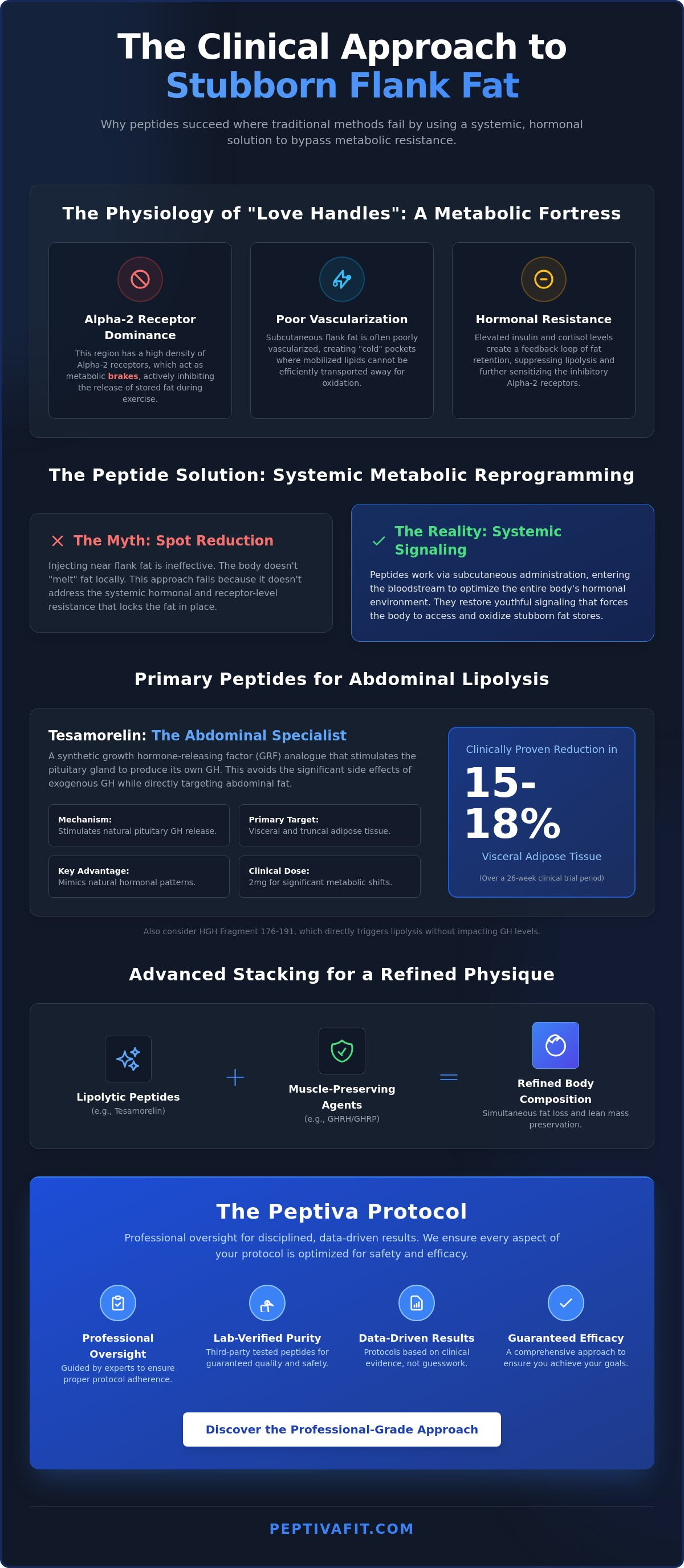
The lateral abdominal region, commonly known as love handles, represents a physiological fortress. This area contains a disproportionately high density of alpha-2 adrenergic receptors compared to beta-2 receptors. While beta-receptors facilitate the breakdown of stored lipids, alpha-2 receptors act as metabolic brakes that inhibit fat release. When your body releases catecholamines like adrenaline during exercise, they bind to both receptor types. In the flanks, the inhibitory signal from alpha-2 receptors often overrides the stimulatory signal, making these deposits remarkably resistant to traditional weight loss methods. This explains why an individual can achieve a lean upper body while the midsection remains largely unchanged.
Understanding how to lose love handles with peptides requires a clinical appreciation of the distinction between subcutaneous and visceral fat. Subcutaneous fat is the "pinchable" layer residing directly beneath the skin. Visceral fat is the metabolically active, deep-seated tissue surrounding internal organs. While both respond to hormonal signals, subcutaneous flank fat is often poorly vascularized. This lack of blood flow creates a "cold" fat pocket where mobilized lipids cannot be efficiently transported for oxidation. Peptides offer a sophisticated solution by bypassing these localized barriers through systemic hormonal modulation.
Receptor Density and Fat Mobilization
Insulin sensitivity is a primary determinant of fat storage in the lateral abdominal region. When insulin levels remain chronically elevated, the body prioritizes fat storage and suppresses the metabolic process of lipolysis. This hormonal environment further sensitizes alpha-2 receptors, creating a feedback loop of fat retention. The "blood flow barrier" in the flanks means that even when you're in a caloric deficit, the nutrients and hormones required to trigger fat release struggle to reach the target tissue. For a comprehensive analysis of these metabolic pathways, review our technical guide on Peptides for Metabolism and Fat Loss: A Clinical Overview [2026].
The Hormonal Signal Breakdown
Natural growth hormone (GH) production serves as a master regulator for body composition. As GH levels decline with age, the body loses its primary signal for maintaining lean tissue and mobilizing fat stores. This deficiency often manifests as "middle-age spread," where fat accumulates despite no significant changes in diet or activity. Cortisol plays a secondary but critical role here. Chronic stress elevations in cortisol specifically promote fat deposition in the lateral and visceral abdominal regions. Clinical markers such as low IGF-1 levels or elevated fasted insulin often indicate that the body's internal signaling is insufficient to overcome the resistance of stubborn fat. Learning how to lose love handles with peptides involves restoring these signals to a youthful, optimized state that forces the body to prioritize lipid oxidation.
Primary Peptides for Targeted Abdominal Lipolysis
While many modern weight loss strategies rely on GLP-1 agonists to reduce total body mass, these tools often fail to address the specific receptor density of the flanks. Understanding how to lose love handles with peptides requires a shift toward growth hormone (GH) secretagogues and specific lipolytic fragments. Unlike clinical trials on semaglutide for obesity, which focus on systemic appetite suppression, the following peptides directly influence the metabolic signaling required to mobilize stubborn abdominal tissue. These compounds are designed to target the cellular mechanisms of fat storage rather than just reducing caloric intake.
Tesamorelin: The Abdominal Specialist
Tesamorelin remains the gold standard for reducing truncal and abdominal adiposity. It's a synthetic growth hormone-releasing factor (GRF) analogue that stimulates the pituitary gland without the significant side effects associated with exogenous GH. Clinical data demonstrates a 15 to 18 percent reduction in visceral adipose tissue over a 26-week period. For those investigating how to lose love handles with peptides, the 2mg clinical dose is the threshold for significant metabolic shifts. You can find detailed administration protocols in our guide on Tesamorelin Dosage: A Clinical Guide to Metabolic Optimization Protocols.
HGH Frag 176-191: Pure Fat Burning
HGH Fragment 176-191 is a modified form of the amino acids 176-191 of the human growth hormone polypeptide. This specific sequence is responsible for the fat-burning effects of GH but lacks the sequences that cause IGF-1 elevation or insulin resistance. It mimics the natural signals that trigger fat breakdown in the lateral abdominal region. To maximize efficacy, this peptide must be administered in a fasted state; any spike in insulin will effectively negate its lipolytic signal. It's a precise tool for those who have reached a plateau with traditional diet and exercise.
Metabolic Foundations: CJC-1295, Ipamorelin, and AOD-9604
CJC-1295 and Ipamorelin are frequently utilized in tandem to create a sustained, natural GH pulse. This combination supports overall metabolic health and lean muscle preservation during a fat loss phase. Additionally, AOD-9604, a peptide originally developed as an anti-obesity drug, provides a similar lipolytic mechanism to HGH Fragment but with a distinct clinical history in addressing stubborn subcutaneous fat. These tools are most effective when integrated into a structured, professional-grade regimen. If you require personalized guidance on selecting the correct sequence, consider a Personalized medical assessment to refine your protocol.
Stacking Strategies for Love Handle Elimination
Analyzing how to lose love handles with peptides requires moving beyond single-compound theories toward sophisticated, synergistic stacks. Stacking involves combining multiple peptide sequences to trigger different metabolic pathways simultaneously. The most effective clinical combination is the "Lipolytic Stack," which pairs HGH Fragment 176-191 with Tesamorelin. While the Fragment initiates the rapid breakdown of triglycerides in subcutaneous tissue, Tesamorelin addresses the deeper truncal fat and optimizes the overall hormonal environment. Expert clinical perspectives on peptides for fat loss suggest that these compounds provide the most predictable results when used to correct specific age-related signaling declines.
A "Metabolic Foundation" is often established by adding Ipamorelin to the regimen. This ghrelin mimetic ensures that the body remains in an anabolic state regarding lean muscle mass even while in a significant caloric deficit. Clinical protocols for these stacks typically utilize a 5-days-on, 2-days-off pulsing schedule. This deliberate interruption prevents pituitary fatigue and ensures that your receptors don't become desensitized to the exogenous signals. It's a disciplined, long-term strategy rather than a temporary fix.
Monitoring your progress is as critical as the administration itself. Standard bathroom scales are notoriously unreliable for tracking body composition changes. You might experience significant fat loss while maintaining or gaining muscle, resulting in a stagnant weight. Instead, utilize DEXA scans and frequent waist-to-hip ratio measurements. These data points provide a high-resolution view of how to lose love handles with peptides by documenting the actual migration of adipose tissue away from the flanks.
Designing the Clinical Protocol
Timing determines the success of any stack. Administer HGH Fragment 176-191 in the morning, ideally 30 to 60 minutes before fasted activity, to leverage low insulin levels. Tesamorelin is best suited for evening administration to synchronize with the body's natural nocturnal growth hormone pulses. A standard cycle typically lasts 12 weeks, followed by a mandatory washout period of four weeks to maintain endocrine health. This structured approach is a core component of the Peptiva Protocol: Fat Loss Peptide Guide. Never initiate such a complex sequence without a personalized medical assessment to establish your biological baseline.
Dietary Synergy: Enhancing the Peptide Signal
Peptides function as high-level signals, but they require a supportive environment to be effective. A high-protein diet or a protein-sparing modified fast provides the necessary substrate to protect lean tissue while the peptides mobilize fat stores. Fasted cardio acts as the mechanical catalyst that oxidizes the fatty acids released into the bloodstream. You must avoid late-night carbohydrate consumption. A spike in insulin before sleep will effectively blunt the secretagogue signal and stall your progress in the lateral abdominal region.
Administration and Injection Sites: Can You Spot Reduce?
A frequent misconception in the field of performance optimization is that localized injections yield localized results. While your objective is learning how to lose love handles with peptides, the physiological reality is that these compounds function through systemic circulation rather than topical melting. Injecting directly into the lateral abdominal fat does not accelerate fat loss in that specific area more than an injection in the thigh or upper arm. Subcutaneous tissue serves as a reservoir, allowing the peptide to diffuse into the capillary network and bind to adrenergic receptors globally. The focus should remain on systemic saturation and consistent hormonal signaling rather than the proximity of the needle to the target tissue.
Proper administration requires a disciplined approach to subcutaneous technique. You should use a 29 to 31-gauge insulin syringe, inserting the needle at a 45 to 90-degree angle depending on the depth of your adipose layer. Safety and molecular stability are paramount. You must reconstitute lyophilized peptides using bacteriostatic water, introducing the solvent slowly against the vial wall to avoid shearing the delicate peptide bonds. Once reconstituted, these compounds are highly sensitive to temperature and light; store them at 2 to 8 degrees Celsius to maintain their clinical potency throughout the cycle.
The Science of Subcutaneous Absorption
Peptides enter the bloodstream through the subcutaneous fat layer, where they are gradually absorbed without the rapid "peak and trough" effect of intramuscular injections. Maintaining the structural stability of the compound during this process is essential for efficacy. For a technical breakdown of this process, consult our guide on How to Reconstitute Peptides: A Clinical Guide to Molecular Integrity. To ensure optimal absorption and safety, utilize only FDA-approved injection sites, which include the periumbilical region of the abdomen, the outer aspect of the thighs, and the posterior surface of the upper arms.
Sterile Technique and Precision
A rigorous sterile protocol prevents complications and ensures the integrity of your fat loss program. Observe this preparation checklist for every administration:
- Sanitize your workspace and wash hands thoroughly.
- Cleanse the vial stopper with a fresh 70% isopropyl alcohol swab.
- Utilize a new, single-use needle for every injection to prevent contamination.
- Swab the injection site and allow it to air dry completely before penetration.
When using the abdomen, follow the "2-inch radius" rule by staying at least two inches away from the navel to avoid the dense network of blood vessels in that area. Lipohypertrophy is the accumulation of extra fat or scar tissue at the site of frequent subcutaneous injections; rotating your injection site by at least one inch daily is the only effective way to prevent this localized tissue trauma. Access The Peptiva Protocol: Fat Loss Peptide Guide to ensure your administration technique meets professional-grade standards for safety and efficacy.
The Peptiva Protocol: Professional Oversight for Fat Loss
Achieving a refined physique through hormonal modulation is a high-stakes endeavor that demands clinical precision. While the previous sections detailed the specific mechanisms of action and stacking strategies, the final pillar of success is the quality of the compounds themselves. The "research peptide" market is currently saturated with unregulated entities often referred to as basement labs. These sources frequently bypass the rigorous analytical testing required to ensure molecular stability and safety. Relying on unverified supplies is a significant risk that can lead to suboptimal results or adverse biological reactions. Understanding how to lose love handles with peptides is as much about procurement as it is about administration.
The Peptiva Protocol: Fat Loss Peptide Guide prioritizes data-driven safety by integrating only lab-tested peptides into its frameworks. This methodology ensures that every sequence utilized is free from the structural degradations or contaminants that hinder metabolic progress. Without a clinical-grade foundation, even the most advanced dosing schedule will fail to overcome the physiological resistance of stubborn abdominal tissue. Professional oversight ensures that your protocol remains effective, safe, and aligned with your long-term wellness objectives.
Identifying Quality Research Supplies
A legitimate Certificate of Analysis (COA) is the non-negotiable standard for any peptide protocol. This document must provide verified data on purity, mass spectrometry, and total volume. High-purity standards, typically exceeding 98 percent, are essential to prevent the immune responses and systemic inflammation associated with manufacturing byproducts. PeptivaFit remains committed to these molecular standards, providing a level of transparency that separates serious practitioners from casual consumers. Impurities don't just blunt the lipolytic signal; they can also disrupt the very endocrine pathways you're attempting to optimize.
Next Steps: Consultation and Customization
The transition from active fat loss to long-term metabolic maintenance requires a nuanced understanding of your individual biology. A single consultation call serves as a critical diagnostic tool to clarify your specific metabolic needs and refine your stack. 1-on-1 coaching provides the necessary oversight to navigate plateau phases, where the body’s homeostatic mechanisms attempt to halt further fat oxidation. These adjustments ensure that your progress in the lateral abdominal region is sustained rather than temporary. To move beyond general advice and into a tailored, professional-grade regimen, you should Secure your Personalized Medical Assessment with PeptivaFit.
Mastering Metabolic Precision for Body Composition
The persistence of lateral abdominal fat is a physiological reality driven by receptor density and hormonal signaling gaps. You've now identified that successful reduction requires more than standard exercise; it demands a clinical approach to lipid mobilization. By leveraging specific sequences like Tesamorelin and HGH Fragment 176-191, you're providing the cellular instructions necessary to bypass stubborn metabolic barriers. This transition from general fitness to advanced self-optimization is most effective when guided by high-purity standards and rigorous data monitoring.
Mastering how to lose love handles with peptides is a disciplined process that prioritizes safety and long-term endocrine health. Precision is essential. We provide the necessary infrastructure through lab-verified peptide supplies and personalized medical oversight. Our data-driven metabolic coaching ensures that your progress remains steady and your results are sustainable. You're now equipped with the technical knowledge to move beyond mass-market limitations. Reclaiming your physique is a long-term investment in your performance and wellness.
Access the Peptiva Protocol: Your Clinical Path to Fat Loss
Frequently Asked Questions
How long does it take to see results in love handles with peptides?
Visible results typically manifest within 8 to 12 weeks of consistent administration and protocol adherence. While cellular lipolysis begins immediately, the measurable reduction of subcutaneous fat in the lateral abdominal region requires a sustained metabolic signal. Clinical data from Tesamorelin studies indicates that the most significant reductions in truncal adiposity occur at the 26-week mark. Your specific timeline depends on your baseline body composition and metabolic rate.
Can I use peptides for fat loss without exercising?
Peptides function as physiological signals rather than passive fat-burners; therefore, exercise remains a non-negotiable component of the protocol. These compounds mobilize fatty acids from stubborn deposits into the bloodstream, but physical activity is required to oxidize those lipids for energy. Without a mechanical demand for fuel, the mobilized fat may simply be re-esterified and stored again. Integrating resistance training or fasted cardio ensures the signals sent by the peptides lead to actual tissue reduction.
Are there specific side effects of Tesamorelin or HGH Frag 176-191?
Tesamorelin and HGH Fragment 176-191 are generally well-tolerated when administered under professional oversight. Tesamorelin may occasionally cause localized injection site reactions, arthralgia, or mild peripheral edema. Unlike full-sequence growth hormone, HGH Fragment 176-191 is specifically engineered to avoid impacting blood glucose levels or insulin sensitivity. It is essential to monitor your biological markers throughout the cycle to ensure your endocrine system maintains optimal homeostasis.
Is it better to inject peptides in the morning or at night for fat loss?
The optimal timing for administration is determined by the specific peptide’s mechanism and your daily insulin spikes. HGH Fragment 176-191 is most effective when injected in the morning during a fasted state to leverage low insulin levels for maximum lipolytic signaling. Tesamorelin is typically administered in the evening to synchronize with the body’s natural nocturnal growth hormone pulses. Aligning these injections with your circadian rhythm is a core principle of advanced body composition protocols.
Do I need to stay on peptides forever to keep the love handles off?
You don't need to remain on these compounds indefinitely once you achieve your target body composition. Peptides are utilized to correct signaling deficiencies and address fat deposits that are resistant to traditional methods. Once the lateral abdominal fat is reduced, transitioning to a metabolic maintenance phase focused on nutrition and lifestyle is the standard clinical objective. Some individuals utilize periodic, short-term maintenance cycles to preserve their results over the long term.
Can I stack fat loss peptides with GLP-1 medications like Tirzepatide?
Stacking fat loss peptides with GLP-1 receptor agonists is a common clinical strategy for comprehensive body recomposition. GLP-1 medications like Tirzepatide facilitate systemic weight loss through appetite regulation and improved glucose disposal. Adding secretagogues or fragments allows for a more targeted approach to stubborn adipose tissue. Understanding how to lose love handles with peptides within a multi-hormonal stack requires a personalized medical assessment to ensure the signals are synergistic rather than redundant.
What is the best peptide for stubborn visceral fat specifically?
Tesamorelin is the gold standard for the targeted reduction of visceral adipose tissue. Clinical trials demonstrated a 15 to 18 percent reduction in this deep-seated abdominal fat over a 26-week period. While it's a primary tool for those learning how to lose love handles with peptides, its ability to address the metabolically active fat surrounding the organs makes it unique. This dual benefit supports both aesthetic refinement and the reduction of systemic inflammation.
How do I know if my peptides are high quality and pure?
High-quality peptides must be supported by a third-party Certificate of Analysis (COA) that verifies a purity level of at least 98 percent. This documentation should include mass spectrometry and high-performance liquid chromatography (HPLC) data to confirm the molecular identity and concentration of the compound. You must avoid unregulated research supplies that lack these transparency markers. PeptivaFit utilizes only lab-verified peptides to ensure your protocol is free from the contaminants and degradations found in lower-grade alternatives.

![Shelf Life of Reconstituted Peptides: A Clinical Reference Guide [2026]](https://getautoseo.com/storage/hero_images/shelf-life-of-reconstituted-peptides-a-clinical-reference-guide-2026.jpg?v=b8ed5173acaa)
