
Most individuals treat fat loss as a battle of willpower, but in 2026, we recognize it as a precise manipulation of metabolic signaling. Knowing how to start peptide therapy for fat loss requires moving past the noise of unregulated forums and into a structured, clinical framework. You've likely encountered a sea of conflicting advice and questionable sources that leave you more concerned about substance purity than excited about metabolic results. This hesitation is a rational response to an industry that often prioritizes hype over rigorous scientific standards.
This guide provides the disciplined, step-by-step roadmap you need to initiate therapy safely. It focuses on essential metabolic assessment, lab-verified materials, and the precision dosing necessary for high-level performance. We'll preview the clinical sequence starting with diagnostic verification and moving through to the implementation of USP-standard protocols. By the end of this protocol, you'll have a sophisticated sense of control over your metabolic health, grounded in data rather than guesswork.
Key Takeaways
- Learn how to start peptide therapy for fat loss by shifting from generic weight reduction to a clinical framework targeting specific metabolic signaling pathways.
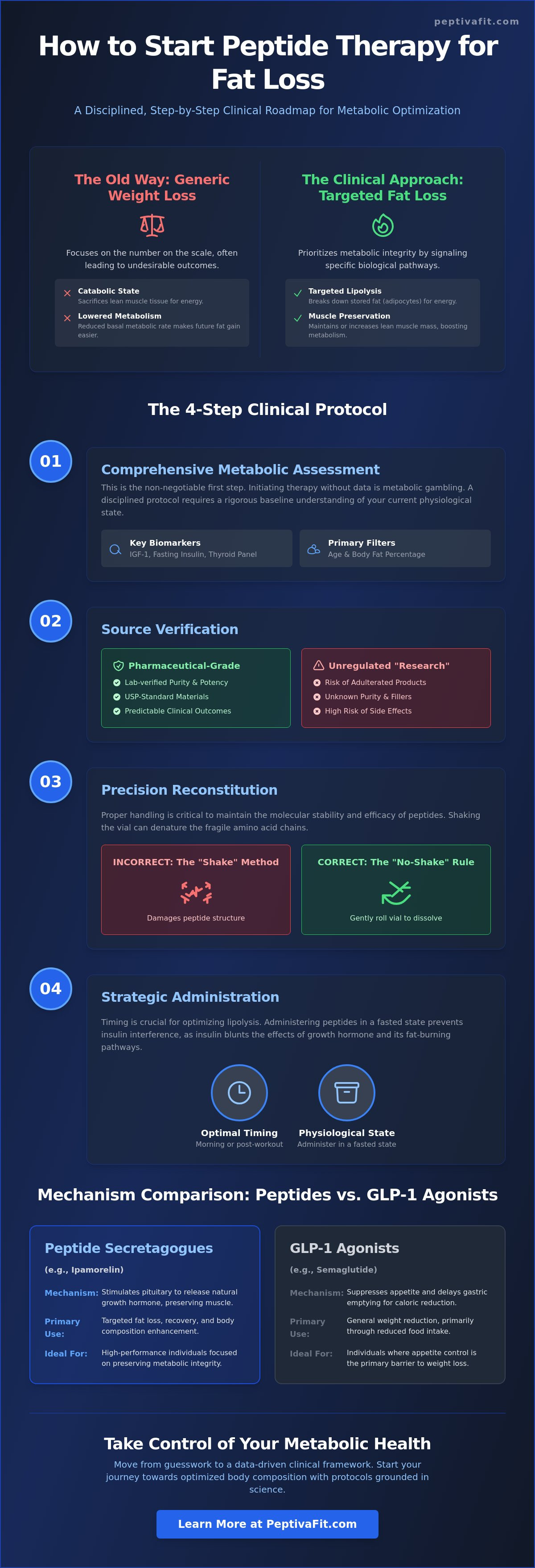
- Understand why a comprehensive metabolic assessment involving biomarkers like IGF-1 and fasting insulin is the non-negotiable first step in any safe protocol.
- Identify the critical distinctions between pharmaceutical-grade materials and adulterated products to ensure the integrity of your investigative research.
- Master the technical requirements of peptide reconstitution, including the "no-shake" rule to maintain molecular stability during preparation.
- Discover how the Peptiva Protocol optimizes lipolysis through strategic timing and fasted-state administration to prevent insulin interference.
Establishing the Clinical Framework for Metabolic Optimization
Peptide therapy represents the clinical application of short-chain amino acids designed to function as signaling molecules within the body. Unlike broad-spectrum pharmaceuticals that often create systemic side effects, Peptide therapeutics involve precise interactions with cellular receptors to modulate specific metabolic pathways. This targeted approach allows for the optimization of biological functions that have become sluggish due to age, stress, or metabolic dysfunction. It's a disciplined methodology that requires a shift in perspective. We don't view this as a temporary intervention, but as a long-term recalibration of your internal chemistry.
A fundamental error in standard dieting is the failure to differentiate between weight loss and fat loss. Traditional caloric restriction is often catabolic, meaning the body sacrifices lean muscle tissue to meet energy demands. This results in a "skinny fat" physique and a lowered basal metabolic rate. True fat loss focuses on targeted lipolysis, which is the breakdown of lipids within adipocytes while preserving muscle mass. Understanding how to start peptide therapy for fat loss begins with this distinction. We prioritize the preservation of metabolic integrity over the number on a scale.
The pituitary-growth hormone axis serves as the primary regulator of adult body composition. As we age, the natural pulse of growth hormone (GH) diminishes. This decline leads to increased visceral adiposity and reduced muscular density. Peptides act as secretagogues, encouraging the pituitary gland to resume a more youthful rhythm of hormone secretion. This isn't a quick fix. It's a sophisticated sequence that restores the body's natural ability to partition nutrients effectively, moving energy away from fat storage and toward cellular repair and muscle maintenance.
The Science of Targeted Lipolysis
Specific compounds, such as HGH Frag 176-191, are engineered to mimic the fat-burning portion of the growth hormone molecule. They target adipose tissue directly without affecting blood glucose levels or insulin sensitivity. When combined with GH secretagogues, these peptides increase the basal metabolic rate by facilitating the mobilization of fatty acids. Lipolysis is the biochemical pathway through which stored triacylglycerols are hydrolyzed into free fatty acids and glycerol for energy use.
Peptides vs. Traditional GLP-1 Agonists
While GLP-1 agonists like Semaglutide are effective for weight reduction, they function primarily through appetite suppression and delayed gastric emptying. High-performance individuals often prefer the tissue-selective nature of peptides like Ipamorelin. These secretagogues support recovery and muscle preservation rather than just reducing caloric intake. This distinction is a core component of peptides for metabolism and fat loss in the current 2026 health landscape. Success in how to start peptide therapy for fat loss requires choosing the right mechanism for your specific metabolic profile.
The Necessity of a Comprehensive Metabolic Assessment
Safety in any clinical protocol isn't an afterthought; it is the foundational requirement. Understanding how to start peptide therapy for fat loss requires more than just purchasing a vial. It demands a rigorous baseline understanding of your current physiological state. Initiating therapy without data is essentially metabolic gambling. A disciplined approach ensures that the chosen signaling molecules align with your specific biological needs rather than working against them. This data collection phase is what separates high-level optimization from reckless experimentation.
Your current age and body fat percentage serve as the primary filters for molecule selection. For example, an individual with higher visceral adiposity may require different secretagogues than a leaner subject looking to break a plateau. Without a personalized medical assessment, users often experience avoidable side effects like significant peripheral edema or carpal tunnel symptoms. These issues usually stem from incorrect dosing or choosing a molecule that your current metabolic state isn't prepared to handle. Precision starts with blood work.
Research continues to evolve regarding how these substances interact with human physiology. In a recent GLP-1 Receptor Agonist clinical trial, investigators highlighted the necessity of monitoring metabolic response to ensure both safety and long-term efficacy. This same level of scrutiny must be applied to peptide protocols. You cannot manage what you do not measure. Establishing these metrics early allows for the fine-tuning of dosages as your body composition shifts.
Critical Biomarkers for Peptide Success
IGF-1 (Insulin-like Growth Factor 1) levels are the gold standard for monitoring the efficacy of growth hormone secretagogues. This marker provides a stable reflection of your GH activity over time. Additionally, fasting insulin and HbA1c levels are vital. High insulin levels can blunted the fat-burning effects of peptides like Tesamorelin. We require our clients to maintain a clinical log of these metrics to track progress and ensure the protocol remains within safe physiological ranges.
Screening for Contraindications
The objective of safety requires an uncompromising look at contraindications. Active malignancy is an absolute contraindication, as growth-promoting signaling molecules could theoretically impact tumor progression. Professional oversight is mandatory for interpreting complex blood work and identifying underlying thyroid dysfunctions or glucose irregularities. Self-prescribing without this data is a direct violation of clinical best practices and puts your long-term health at risk. Before moving forward, consider scheduling a single consultation call to review your baseline data with an expert.
Identifying and Verifying Research-Grade Peptide Sources
Procuring high-quality materials is the most significant hurdle when learning how to start peptide therapy for fat loss. The market is saturated with various tiers of quality, ranging from pharmaceutical-grade compounds to dangerous, adulterated substances. Pharmaceutical-grade products are manufactured in regulated facilities and intended for clinical use, whereas research-grade peptides are designated for laboratory investigation. Adulterated products, often found on anonymous marketplaces, may contain fillers, heavy metals, or incorrect sequences entirely. Identifying these distinctions is a mandatory skill for any disciplined researcher.
Transparency serves as the primary indicator of quality. Any supplier failing to provide batch numbers or detailed company information should be dismissed immediately. The molecular structure of these compounds is also inherently volatile. Exposure to extreme temperatures during transit can degrade the peptide, rendering it biologically inactive. This is why cold-chain shipping and stabilized lyophilization are critical components of the supply chain. Utilizing lab tested peptides is the only way to ensure that your investigative efforts aren't compromised by degraded or contaminated materials.
The current literature on peptides for weight loss emphasizes that while several molecules show promise, their efficacy is entirely dependent on purity. Without analytical verification, you're operating in a data vacuum. Success in how to start peptide therapy for fat loss requires an uncompromising commitment to substance integrity. You aren't just buying a product; you're investing in the accuracy of your metabolic data.
How to Read a Certificate of Analysis (COA)
A Certificate of Analysis is your only defense against fraud. You must verify the High-Performance Liquid Chromatography (HPLC) results, which measure purity. For a protocol to be considered safe, purity must exceed 98%. Anything lower suggests the presence of synthesis byproducts that could cause localized irritation or systemic immune responses. You also need to confirm the Mass Spectrometry (MS) data. This test verifies the molecular mass of the substance, ensuring the vial actually contains the intended peptide sequence rather than a cheaper substitute.
The Dangers of the "Grey Market"
The temptation of lower price points often leads researchers toward the grey market. These unregulated sources frequently bypass third-party verification to reduce overhead. This lack of oversight introduces the risk of heavy metal contamination, such as lead or arsenic, which can cause systemic toxicity. Cheap peptides are a hallmark of compromised safety. PeptivaFit remains committed to providing access to only lab-verified supplies, ensuring that every molecule meets the highest clinical standards of integrity. We don't compromise on purity because your metabolic health depends on precision.
Mastering Reconstitution and Precision Dosage Protocols
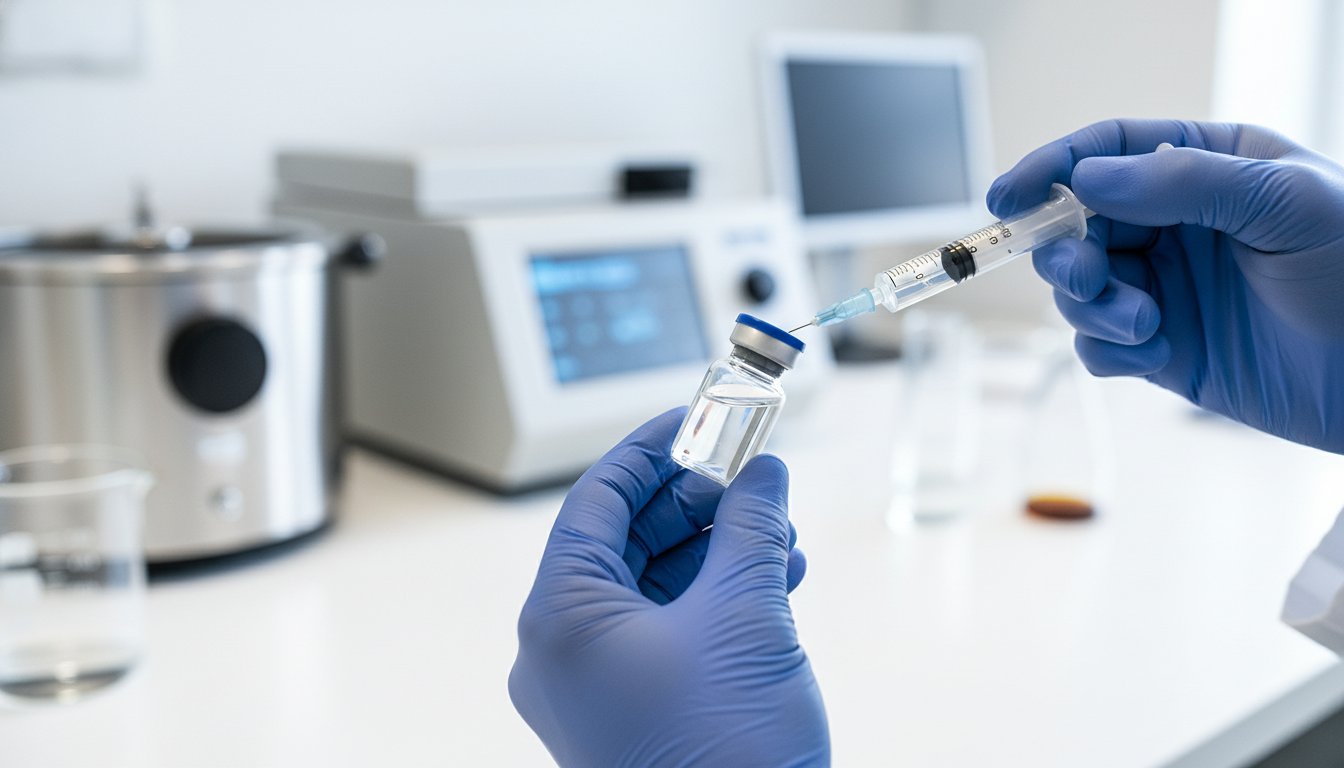
Precision in preparation is as vital as the quality of the substance itself. When you analyze how to start peptide therapy for fat loss, the technical act of reconstitution represents the most common point of failure for the uninitiated. Lyophilized peptides are delivered in a stable, freeze-dried state, but they remain highly susceptible to mechanical and thermal degradation. Preserving molecular integrity requires a methodical approach to adding bacteriostatic water. You must allow the diluent to trickle slowly down the inside wall of the glass vial. This prevents the rapid pressure change from damaging the fragile peptide chains.
The "no-shake" rule is an absolute mandate in clinical practice. Peptides are held together by delicate bonds that can easily denature through aggressive agitation. Instead of shaking, gently rotate the vial between your palms until the solution is clear. For a detailed visual breakdown of this process, refer to our masterclass on how to reconstitute peptides. Mastering these technical skills is a prerequisite for anyone serious about how to start peptide therapy for fat loss with clinical-grade results.
The Mathematics of Micro-Dosing
Precision dosing is the hallmark of a disciplined protocol. We utilize insulin syringes not only for minimal tissue trauma but for the granular control they provide over micro-dosing. The standard calculation to determine your concentration is: (Vial mg / mL of water) x 1000 = mcg per unit. For example, if you have a 5mg vial of CJC-1295 and reconstitute it with 2mL of bacteriostatic water, your concentration is 2,500mcg per mL. In a standard 100-unit syringe, this equates to 25mcg per unit. This level of accuracy ensures you're hitting specific physiological targets without guessing.
Storage and Molecular Integrity
Once reconstituted, peptides must be stored in a controlled environment between 2°C and 8°C. Exposure to UV light or fluctuating temperatures will rapidly shorten the peptide's half-life and reduce its potency. It's also critical to understand the "saturation point" of your receptors. Increasing the dose beyond clinical recommendations doesn't accelerate fat loss. Instead, it often leads to receptor downregulation or unnecessary systemic stress. To ensure your dosing strategy is optimized for your specific biomarkers, consider applying for 1-on-1 coaching to refine your protocol.
Molecular stability is the silent partner in metabolic success. A vial that has been improperly stored or aggressively handled is a wasted resource. By maintaining a strict cold chain and adhering to precise mathematical frameworks, you ensure that every administration delivers the intended signaling message to your cells.
Optimizing Outcomes with the Peptiva Protocol
The final stage of metabolic optimization is the synthesis of data, sourcing, and timing into a single, cohesive framework. Having established the clinical foundations and mastered the technical aspects of preparation, you must now focus on the execution of the protocol itself. The Peptiva Protocol isn't a suggestion; it is a disciplined sequence designed to maximize signaling efficiency while minimizing receptor desensitization. Success in how to start peptide therapy for fat loss culminates in the precise application of these advanced variables.
A critical, often overlooked requirement for growth hormone secretagogues is the maintenance of a strict fasted state. Insulin is the primary physiological antagonist to growth hormone secretion. Administering these peptides in the presence of elevated blood glucose or insulin levels renders the protocol largely ineffective. This biological reality dictates the rhythm of your daily schedule. By controlling the metabolic environment during administration, you ensure that the pituitary response is uninhibited and potent.
Biological feedback loops are unique to every individual, and high-performance subjects require more than a static plan. Engaging in 1-on-1 coaching provides the necessary oversight to adjust your protocol based on real-time data. Whether it's subtle changes in fasting glucose or shifts in sleep quality, professional guidance ensures that your journey remains productive and safe. This level of individual attention is what separates our clients from those following generic, mass-market advice.
The Synergy of Diet and Peptide Timing
A 2-3 hour fast before and after peptide administration is a non-negotiable mandate within our framework. This window ensures that somatostatin, the hormone that inhibits GH release, is at its baseline. We aim to mimic the body's natural "pulsatile" release of growth hormone, which typically occurs during deep sleep or intense physical exertion. The Peptiva Protocol further integrates these timing requirements with specific macronutrient targets, ensuring that your nutritional intake supports rather than hinders the lipolytic signaling process.
Transitioning from Researcher to Client
Moving from the research phase to active implementation requires a high degree of personal responsibility and clinical verification. We recommend a single consultation call to review your baseline biomarkers and verify your reconstitution math before the first administration. This final check ensures that your strategy is flawless. The PeptivaFit platform is an exclusive space for those who prioritize data over hype. To finalize your onboarding, accessing the Comprehensive Fat Loss Peptide Guide provides the exhaustive technical details required for long-term metabolic control. This document serves as the definitive roadmap for your transition into high-level metabolic optimization.
Strategic Implementation of Your Metabolic Roadmap
Navigating the complexities of how to start peptide therapy for fat loss requires a transition from passive observation to active, data-driven management. You've established the necessity of baseline biomarkers and mastered the technical precision of molecular reconstitution. These steps aren't merely suggestions; they're the clinical gatekeepers of your success. By prioritizing investigative integrity and adhering to a disciplined dosing schedule, you ensure that your metabolic environment remains optimized for targeted lipolysis rather than generic weight reduction.
The path toward metabolic mastery is best traveled with professional support and access to lab-verified peptide supplies. Our selective, high-performance community relies on personalized medical oversight to refine every variable of their protocol. If you're ready to move beyond the limitations of unregulated advice and claim sophisticated control over your health, it's time to take the final step. Access the Peptiva Protocol: Your Clinical Guide to Fat Loss and begin your journey toward precision-based results. You've done the research; now it's time to execute with confidence.
Frequently Asked Questions
Is peptide therapy for fat loss legal in the United States?
Peptide therapy for fat loss is legal in the United States when obtained through a licensed compounding pharmacy with a valid physician's prescription. As of April 23, 2026, the FDA reclassified several key peptides into Category 1, permitting their preparation by specialized pharmacies. It's essential to understand that these substances are often classified for investigational use rather than being "FDA approved" for specific weight loss indications.
How long does it take to see visible results from fat loss peptides?
Visible changes in body composition typically manifest within 8 to 12 weeks of consistent protocol adherence. While initial metabolic shifts occur immediately at the cellular level, the visible reduction of adipose tissue requires a sustained signaling environment. Factors such as baseline body fat percentage and metabolic flexibility will influence the speed of your results. This is a long-term recalibration rather than an overnight transformation.
Can I stack multiple peptides like CJC-1295 and Ipamorelin together?
Stacking CJC-1295 and Ipamorelin is a common clinical practice because they target different receptors to create a synergistic release of growth hormone. CJC-1295 acts as a GHRH analog, while Ipamorelin functions as a ghrelin mimetic. Combining them provides a more robust and sustained GH pulse than either molecule used in isolation. This synergy is a core component for those learning how to start peptide therapy for fat loss effectively.
What happens if I forget to refrigerate my reconstituted peptides?
Forgetting to refrigerate reconstituted peptides for more than a few hours can lead to rapid molecular degradation and loss of potency. These delicate amino acid chains are highly sensitive to thermal stress once they've been mixed with bacteriostatic water. If a vial has been left at room temperature for an extended period, it's safer to discard it. Using degraded peptides can lead to unpredictable biological responses or localized irritation.
Are there any long-term side effects of using GH secretagogues?
Long-term use of GH secretagogues requires careful monitoring of insulin sensitivity and IGF-1 levels to mitigate potential risks. While these peptides are generally well-tolerated, prolonged elevation of growth hormone signaling can theoretically impact glucose metabolism or lead to joint discomfort. This is why we emphasize the importance of cycling and continuous biomarker assessment. Maintaining a disciplined protocol prevents the downregulation of your natural endocrine pathways.
How do I know if the peptides I bought online are actually pure?
Verification of purity requires a third-party Certificate of Analysis (COA) containing both HPLC and Mass Spectrometry data. You should never rely on a company's internal claims without independent laboratory confirmation. A legitimate COA must show a purity level of 98% or higher and a batch number that matches the vial in your possession. This level of scrutiny is vital when determining how to start peptide therapy for fat loss safely.
Do I need to cycle off fat loss peptides, or can I use them indefinitely?
We mandate specific rest periods or "off-cycles" to prevent receptor desensitization and maintain the body's natural signaling capacity. A typical protocol may involve 12 to 16 weeks of active administration followed by a 4-week break. Using these molecules indefinitely without pause can lead to diminishing returns as the pituitary gland adjusts to the exogenous stimulus. Cycling ensures that your metabolic response remains sharp and efficient over the long term.

![Shelf Life of Reconstituted Peptides: A Clinical Reference Guide [2026]](https://getautoseo.com/storage/hero_images/shelf-life-of-reconstituted-peptides-a-clinical-reference-guide-2026.jpg?v=b8ed5173acaa)
