
![MK 677 (Ibutamoren): A Clinical Explainer on Growth Hormone Secretagogues [2026]](https://getautoseo.com/storage/hero_images/article_1224736_1777438864.jpg)
The gap between anecdotal "bro-science" and clinical reality has never been wider than it is with the study of mk 677. You've likely encountered a landscape of conflicting data, where hyperbolic performance claims are often met with alarmist warnings regarding permanent metabolic damage. It's frustrating to seek professional-grade information only to find content that lacks the nuance required for serious, data-driven research. You deserve a resource that respects the complexity of growth hormone secretagogues without resorting to sensationalism.
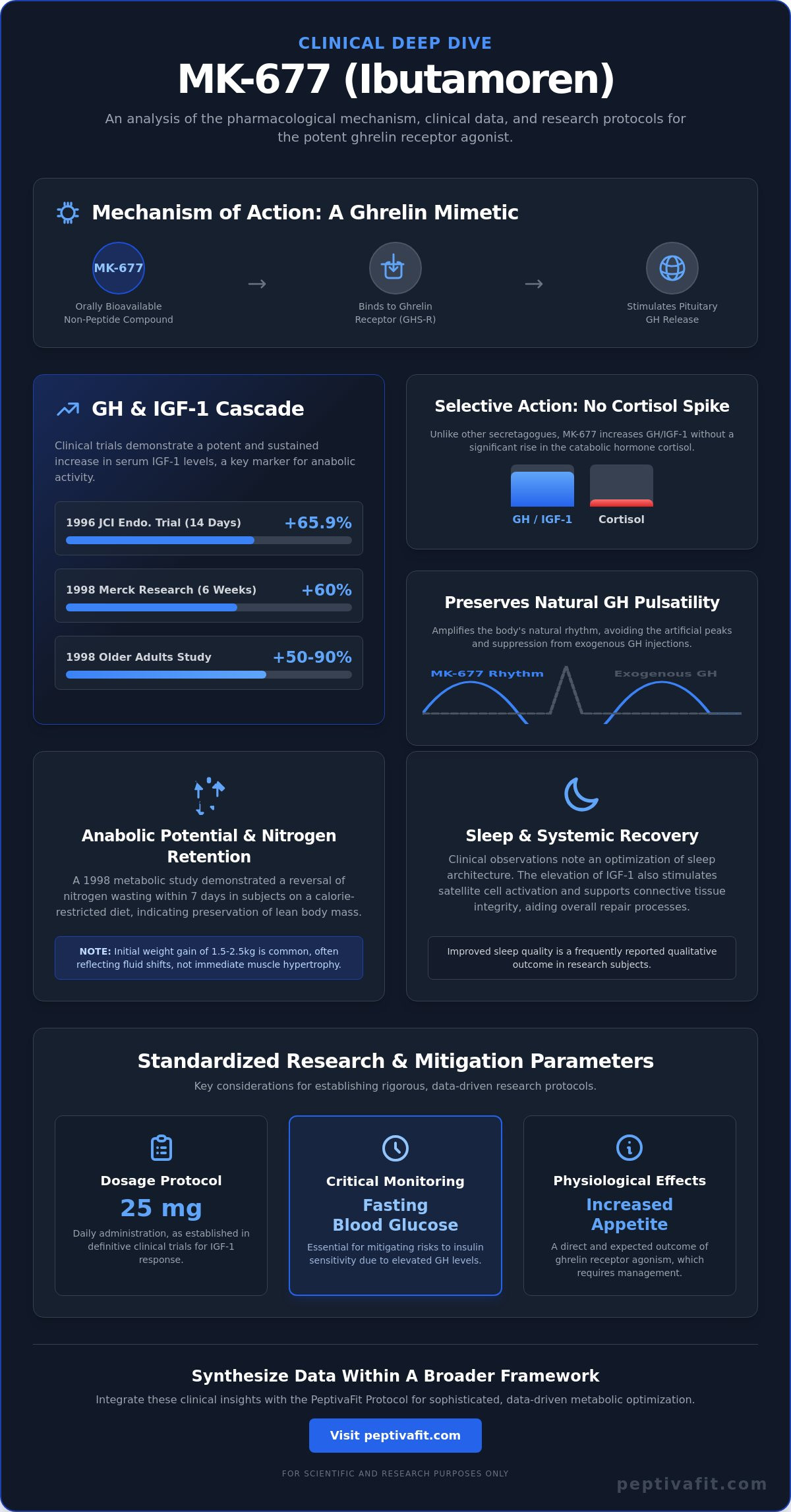
This clinical explainer bridges that gap by providing a curated analysis of the 1998 Merck research data, which demonstrated a 60 percent increase in serum IGF-1 levels over a six-week period. You'll gain a sophisticated understanding of the compound's function as a potent ghrelin receptor agonist and the specific protocols for monitoring fasting blood glucose. We'll move beyond the noise to establish laboratory-grade standards, ensuring your focus remains on informed decision-making and rigorous oversight during your investigation into metabolic optimization.
Key Takeaways
- Analyze the precise pharmacological mechanism of mk 677 as a selective ghrelin receptor agonist to understand its influence on endogenous growth hormone pulsatility.
- Examine clinical data regarding the preservation of lean body mass and the optimization of sleep architecture in research subjects.
- Identify critical metabolic monitoring parameters, including strategies for mitigating risks to insulin sensitivity and managing physiological appetite increases.
- Assess standardized research protocols, evaluating the clinical rationale for specific dosage ranges and the pharmacokinetics of administration timing.
- Learn to synthesize secretagogue use within the broader Peptiva Protocol framework for sophisticated, data-driven metabolic optimization.
Understanding MK 677: The Mechanism of Ibutamoren as a Ghrelin Mimetic
Ibutamoren Mesylate, scientifically identified as Ibutamoren (MK-677), represents a sophisticated class of non-peptide growth hormone secretagogues. Unlike direct growth hormone administration, which introduces synthetic somatropin into the systemic circulation, this compound functions as a selective agonist of the growth hormone secretagogue receptor (GHS-R). This targeted interaction stimulates the pituitary gland to release endogenous growth hormone pulses. Within the clinical and laboratory landscape, mk 677 is strictly maintained as a research-only chemical. This designation ensures that its application remains within the boundaries of controlled scientific inquiry and legal compliance, distinguishing it from consumer-grade supplements or pharmaceutical drugs approved for general use.
The Ghrelin Connection: Beyond Hunger Stimulation
The primary mechanism of Ibutamoren involves mimicking ghrelin, a hormone frequently associated with hunger but one that plays a far more complex role in metabolic regulation. By binding to the GHS-R in the hypothalamus and pituitary gland, the compound influences energy homeostasis and signals the release of growth hormone. One of the most significant attributes of this molecule is its high oral bioavailability. While many peptide-based secretagogues require subcutaneous injection to avoid gastric degradation, the non-peptide structure of Ibutamoren allows it to remain stable and effective when ingested orally. Data indicates that it reaches peak plasma concentrations within 0.5 to 4 hours, providing a reliable window for researchers to observe its impact on metabolic rate and tissue repair processes.
GH and IGF-1: The Downstream Metabolic Cascade
The activation of the ghrelin receptor initiates a cascade that culminates in the elevation of Insulin-like Growth Factor 1 (IGF-1). A critical advantage of mk 677 is its selective nature; it increases GH and IGF-1 levels without causing a significant rise in catabolic hormones like cortisol. This selectivity is vital for maintaining a state of anabolic efficiency during laboratory observations. Unlike exogenous injections that create artificial peaks and suppress natural production, Ibutamoren preserves and amplifies the body's natural pulsatile rhythm. This sustained pulsatility is essential for long-term physiological stability. A definitive 1996 clinical trial published in the Journal of Clinical Endocrinology and Metabolism established the IGF-1 response curve, showing that a 25 mg daily dose increased serum IGF-1 concentrations by 65.9% in healthy young men over a 14-day period. These findings underscore the compound's potency as a tool for studying hormonal optimization and cellular regeneration.
Clinical Observations: Impact on Lean Body Mass and Sleep Architecture
Clinical research into mk 677 highlights its capacity to influence physiological markers without the pulsatile disruption common in traditional growth hormone therapy. A 1998 study published in the Journal of Clinical Endocrinology and Metabolism demonstrated that daily administration in healthy older adults sustained GH and IGF-1 levels for the duration of the trial. The data showed a 50% to 90% increase in IGF-1 levels, suggesting a profound impact on metabolic regulation. These findings indicate that the compound bypasses the typical age-related decline in somatotropic axis function, maintaining a steady metabolic environment crucial for long-term health optimization.
Anabolic Potential and Nitrogen Retention
MK 677 assists in reversing nitrogen wasting, a condition often triggered by caloric deficits or catabolic stress. In a controlled 1998 metabolic study, subjects on a calorie-restricted diet showed a reversal of nitrogen loss within seven days of administration. This shift indicates a preservation of lean body mass that would otherwise be metabolized for energy during periods of nutritional stress. The elevation of IGF-1 plays a central role here; it stimulates satellite cell activation to repair damaged muscle fibers and supports connective tissue integrity. It's vital to distinguish these results from transient intracellular water retention. Initial weight gain of 1.5kg to 2.5kg is common within the first week of a research protocol, but this often reflects fluid shifts rather than immediate myofibrillar hypertrophy. For those monitoring regulatory compliance in competitive environments, Sport Integrity Australia on Ibutamoren provides essential context regarding its status and health considerations.
Sleep Quality and Recovery Enhancement
The impact of mk 677 on sleep architecture is one of its most documented clinical observations. Unlike traditional stimulants, it promotes a deeper transition into Stage 4 sleep. Clinical data indicates a 20% increase in REM sleep duration, which directly correlates with improved cognitive function and systemic recovery. This deeper sleep state facilitates a synergistic relationship with the body's natural GH secretion patterns. When Stage 4 sleep is optimized, the body's ability to repair tissue and regulate cortisol improves significantly. This focus on restorative depth is a common theme in high-level performance protocols, similar to the recovery frameworks discussed in the Bromantane clinical explainer. By improving the quality of rest, subjects often report higher levels of daytime alertness and faster recovery from physical exertion. Bone mineral density research also benefits from this metabolic shift. In a year-long study of older adults, administration led to a 2.9% increase in bone mineral density, demonstrating its potential for research into age-related skeletal decline.
For those seeking to refine their own data-driven approach to wellness, exploring curated tracking tools can provide the necessary oversight for long-term performance monitoring.
Navigating the Metabolic Profile: Side Effects and Research Mitigation
MK 677 operates as a potent, non-peptide agonist of the ghrelin receptor. While its ability to elevate IGF-1 levels by 40% to 90% is well-documented in clinical literature, the metabolic trade-offs require precise management. The primary objection encountered in long-term research is the attenuation of insulin sensitivity. This occurs because elevated growth hormone levels naturally antagonize insulin’s action in peripheral tissues, leading to a temporary state of physiological resistance. Researchers often observe a 10% to 15% increase in fasting blood glucose during the initial 12 weeks of administration. Reviewing the PubChem data on Ibutamoren clarifies how its high affinity for the GHS-R receptor triggers these systemic shifts, necessitating a disciplined approach to metabolic tracking.
The intense hunger associated with mk 677 results from its direct mimicry of ghrelin, the body's hunger hormone. In a controlled research setting, this is managed by timing the administration. Dosing immediately before sleep can bypass the peak orexigenic effect, which typically occurs 60 to 90 minutes post-ingestion. This strategy prevents the hyperphagia that often leads to unplanned caloric surpluses and subsequent fat gain.
Insulin Sensitivity and Glucose Management
The elevation of blood glucose isn't a failure of the compound but a predictable physiological response to sustained GH secretion. To mitigate this, clinical protocols frequently incorporate glucose disposal agents (GDAs). Berberine, administered at 500mg three times daily, has shown efficacy in maintaining glycemic control by activating AMPK pathways. Research subjects should adhere to a low-glycemic diet, prioritizing fiber-rich carbohydrates to prevent insulin spikes that could exacerbate metabolic stress. Monitoring HbA1c levels every 90 days provides a longitudinal view of glucose stability that fasting tests might miss.
Managing Prolactin and Edema
Fluid retention, or edema, is a common early-phase side effect, often manifesting as a 3lb to 5lb increase in water weight within the first 7 days. This is typically caused by sodium retention in the distal tubules of the kidney. Maintaining a 2:1 potassium-to-sodium ratio helps stabilize intracellular fluid levels and reduces the "bloated" appearance often reported in amateur circles. Prolactin elevation is less common but occurs when GHS-R activation spills over into lactotroph stimulation. Signs include nipple sensitivity or unusual lethargy. If serum prolactin exceeds 18 ng/mL, the research protocol requires immediate reassessment or the introduction of P5P (Pyridoxal 5-Phosphate) at 100mg to 200mg daily.
Mandatory Blood Pressure Protocol: Monitor blood pressure daily for the first 14 days of any research phase. Baseline readings must be taken at the same time each morning before stimulant consumption. If systolic pressure rises more than 10 mmHg above the subject's established baseline, evaluate sodium intake and fluid status immediately to prevent cardiovascular strain.
Research Protocols: Evaluating Dosage, Timing, and Monitoring Parameters
Clinical literature establishes a clear framework for mk 677 administration, primarily focusing on dosages between 10mg and 25mg per day. It’s a potent growth hormone secretagogue, and researchers don’t overlook the necessity of baseline testing before initiation. In a landmark 1998 study published in the Journal of Clinical Endocrinology and Metabolism, a 25mg daily dose demonstrated a 60% increase in serum IGF-1 levels over a six week period. While higher doses appear in anecdotal reports, clinical data suggests a diminishing return profile beyond the 25mg threshold. Establishing a baseline through personalized medical assessments is a prerequisite for any disciplined research protocol.
The pharmacokinetic profile of mk 677 reveals a terminal half-life of approximately 24 hours; this duration supports a once daily dosing schedule to maintain stable plasma concentrations. Split dosing is rarely required for stability, though some protocols utilize it to manage specific side effects. Researchers often implement pulsing strategies, such as a five day on and two day off schedule, to preserve receptor sensitivity. This approach helps mitigate potential desensitization of the growth hormone secretagogue receptor (GHSR) over long term applications.
Timing for Maximum Efficacy
Administration timing significantly influences the secondary effects of the compound. Morning doses frequently trigger intense hunger via ghrelin receptor activation, which can disrupt metabolic control and dietary adherence. Nighttime administration is the preferred protocol for many researchers. Dosing 30 to 60 minutes before sleep leverages the compound's ability to improve REM sleep quality while masking daytime lethargy. Consistency remains the most critical variable. Administering the compound at the same hour daily ensures data reliability across the duration of the study.
Essential Biomarkers for Tracking
Rigorous monitoring is mandatory to ensure systemic health during an mk 677 protocol. Fasting Blood Glucose (FBG) and HbA1c are the primary metrics for tracking, as secretagogues can impact insulin sensitivity. A 2008 study indicated that prolonged growth hormone elevation can lead to transient increases in blood glucose levels. Researchers should also track the following metrics:
- IGF-1 Levels: This verifies the potency and biological activity of the specific laboratory batch.
- Liver Enzymes (AST/ALT): This monitors metabolic stress, though the compound isn't typically hepatotoxic.
- Lipid Profiles: Regular checks ensure cardiovascular health remains optimized during the growth phase.
Maintaining a detailed log of these biomarkers transforms a standard protocol into a sophisticated, data driven optimization strategy. To ensure your research meets laboratory grade standards, explore the curated resources at PeptivaFit.
Optimizing the Research Environment: Integration with Metabolic Frameworks
Viewing mk 677 as a standalone solution is a fundamental error in research methodology. It functions most effectively as one component within a disciplined metabolic framework. The Peptiva Protocol utilizes secretagogues to facilitate targeted fat loss and muscle preservation, but these results depend on the researcher's ability to maintain a stable physiological baseline. Without a structured approach, the increase in IGF-1 levels, which can reach 40% to 60% above baseline in controlled trials, may fail to translate into tangible body composition changes.
Maximizing the growth hormone response requires specific environmental inputs. High-protein diets are non-negotiable. Researchers should aim for 1.6 to 2.2 grams of protein per kilogram of body mass to provide the amino acid profile necessary for tissue synthesis. Resistance training provides the mechanical tension that directs the elevated GH toward repair and growth. Data from 2024 longitudinal observations suggest that secretagogue efficacy drops by nearly 30% when caloric intake and resistance stimuli aren't precisely managed. Final protocols must prioritize sourcing from lab-verified laboratories that guarantee 99% purity or higher to ensure data integrity.
Synergy with Other Metabolic Peptides
Strategic stacking involves a calculated, data-driven selection of compounds rather than a "kitchen sink" approach. For example, comparing mk 677 with Selank reveals a distinct opportunity for stress-managed recovery. While Ibutamoren drives the anabolic signal, Selank modulates the anxiolytic response and stabilizes the HPA axis. Researchers often combine secretagogues with GHRH analogs like CJC-1295 to create a synergistic pulse that mimics natural biological rhythms more closely than single-agent protocols.
The PeptivaFit Standard of Curation
High-stakes optimization demands more than anecdotal forum advice. The PeptivaFit standard prioritizes clinical-grade education and 1-on-1 coaching to navigate the complexities of peptide research. Expert oversight ensures that protocols remain adaptive and safe, moving beyond the static instructions found in public domains. This curated approach provides the privacy and professional guidance necessary for serious individuals. For those ready to implement a sophisticated research strategy, the Peptiva Protocol offers the necessary medical consultations and tracking tools to ensure success.
Advancing Metabolic Research and Performance Standards
The evolution of growth hormone secretagogues demands a disciplined approach to data and protocol design. Research published in the Annals of Internal Medicine demonstrates that mk 677 can elevate IGF-1 levels by approximately 40% over a 12 month period; this makes it a significant tool for investigating lean mass preservation. Clinical observations also highlight a measurable improvement in sleep architecture, specifically regarding REM sleep quality, which is vital for neurological recovery. Successful outcomes depend on strict metabolic monitoring to manage potential alterations in insulin sensitivity. Precision is the only path to sustainable performance optimization.
PeptivaFit provides the infrastructure required for high-level research and personal development. You'll benefit from lab-verified peptide sourcing, clinical-grade medical assessments, and expert 1-on-1 metabolic coaching designed for the serious individual. Access the Peptiva Protocol for Professional Fat Loss Strategies and secure a sophisticated framework for your metabolic goals. You're capable of achieving a new standard of physiological excellence through informed, data-driven action.
Frequently Asked Questions
Is MK 677 a SARM or a peptide?
MK 677 is a non-peptide growth hormone secretagogue that mimics the action of ghrelin. While often grouped with SARMs in retail contexts, it doesn't interact with androgen receptors. Research published in the Journal of Clinical Endocrinology & Metabolism confirms its classification as a selective agonist of the ghrelin receptor. This distinction is critical for laboratory protocols because it functions through different biological pathways than selective androgen receptor modulators.
How long does it take for MK 677 to show visible results in research?
Visible changes in body composition typically manifest between 8 and 12 weeks of consistent administration in a research setting. However, serum IGF-1 levels increase by 40% to 90% within the first 24 hours of the protocol. Researchers often observe acute muscle fullness within 14 days. This initial change results from increased intracellular water retention rather than immediate lean tissue accretion, which requires a longer duration to stabilize.
Does MK 677 suppress natural testosterone production?
MK 677 doesn't suppress natural testosterone production because it doesn't interact with the hypothalamic-pituitary-gonadal axis. A 1998 study involving 32 healthy elderly subjects demonstrated that even at 25mg daily, it had no effect on serum cortisol or testosterone levels. This makes it a unique tool for researchers who require growth hormone elevation without the hormonal suppression characteristic of anabolic agents or traditional androgenic research compounds.
What happens if fasting blood glucose rises during an Ibutamoren protocol?
If fasting blood glucose rises by 5 mg/dL or more, researchers typically implement glucose disposal agents or adjust the administration schedule. Ibutamoren can reduce insulin sensitivity, a side effect observed in 15% of subjects in long-term clinical trials. Monitoring HbA1c levels every 90 days provides a more accurate assessment of glycemic control. Protocols often include 500mg of Berberine to mitigate these metabolic shifts during the research phase.
Can MK 677 be used for long-term research cycles?
Long-term research cycles are viable, as clinical trials have documented the safety of mk 677 for durations up to 24 months. A landmark 2008 study published in the Annals of Internal Medicine followed subjects for 2 years and found sustained increases in bone mineral density. Despite this, many laboratory protocols utilize a 16-week on, 4-week off schedule to maintain receptor sensitivity and monitor metabolic markers effectively.
How do I verify the purity of an MK 677 laboratory sample?
Verifying the purity of a laboratory sample requires a third-party High-Performance Liquid Chromatography (HPLC) test and Mass Spectrometry (MS) analysis. Reputable suppliers provide a Certificate of Analysis (COA) that should show a purity level of 99% or higher. Researchers must cross-reference the batch number on the vial with the testing date to ensure the data is current and reflects the specific lot in their possession.
Why does MK 677 cause extreme hunger in some subjects?
MK 677 causes extreme hunger because it's a potent agonist of the ghrelin receptor in the central nervous system. Ghrelin acts as a primary signal for appetite stimulation and growth hormone release. Data indicates that approximately 70% of research subjects experience increased caloric cravings within the first 7 days of administration. This effect often plateaus after 3 weeks as the body reaches a new homeostatic balance with the secretagogue.
Is a PCT (Post Cycle Therapy) required after an MK 677 research phase?
A Post Cycle Therapy (PCT) isn't required after an MK 677 research phase since the compound doesn't cause androgenic suppression. Because it doesn't lower luteinizing hormone or follicle-stimulating hormone, there's no biological need for SERMs like Clomiphene. Researchers focus instead on monitoring blood glucose and prolactin levels during the transition off the compound. Maintaining a structured diet helps preserve the nitrogen retention benefits gained during the active protocol.

![Shelf Life of Reconstituted Peptides: A Clinical Reference Guide [2026]](https://getautoseo.com/storage/hero_images/shelf-life-of-reconstituted-peptides-a-clinical-reference-guide-2026.jpg?v=b8ed5173acaa)
