

The traditional scientific consensus viewing mitochondria solely as cellular power plants became obsolete in 2015 when researchers at the University of Southern California identified a 16-amino acid signaling molecule encoded within the mitochondrial genome. This discovery of the mots c peptide revealed a sophisticated intra-cellular communication system that directly regulates systemic insulin sensitivity and metabolic flexibility. For the serious researcher or performance enthusiast, this represents a critical shift from passive energy production to active metabolic orchestration.
It's well understood that metabolic inflexibility and mitochondrial decline are the primary obstacles to achieving a truly optimized physique. You've likely experienced the plateau where traditional caloric restriction fails because the cellular machinery is no longer responding to signals. This reference provides the technical clarity you require, focusing on the peptide's ability to enhance glucose uptake and fatty acid oxidation. We'll analyze the latest research data, establish rigorous criteria for evaluating laboratory standards, and define the specific role of MOTS-c in a comprehensive metabolic strategy.
Key Takeaways
- Gain a clinical understanding of the Mitochondrial-Derived Peptide (MDP) paradigm and the distinct signaling role of the 16-amino acid MOTS-c sequence.
- Analyze the metabolic mechanisms through which AMPK activation mimics the physiological effects of physical exertion at the cellular level.
- Evaluate the research applications of mots c peptide as a biomarker for biological aging and its role in preserving skeletal muscle integrity.
- Review critical regulatory protocols, including the "Research Use Only" (RUO) classification and the specific prohibitions established by WADA and USADA.
- Discover how to facilitate metabolic optimization by precisely timing and dosing MOTS-c in conjunction with established secretagogues like Tesamorelin.
Understanding MOTS-c: The Mitochondrial-Derived Peptide (MDP) Paradigm
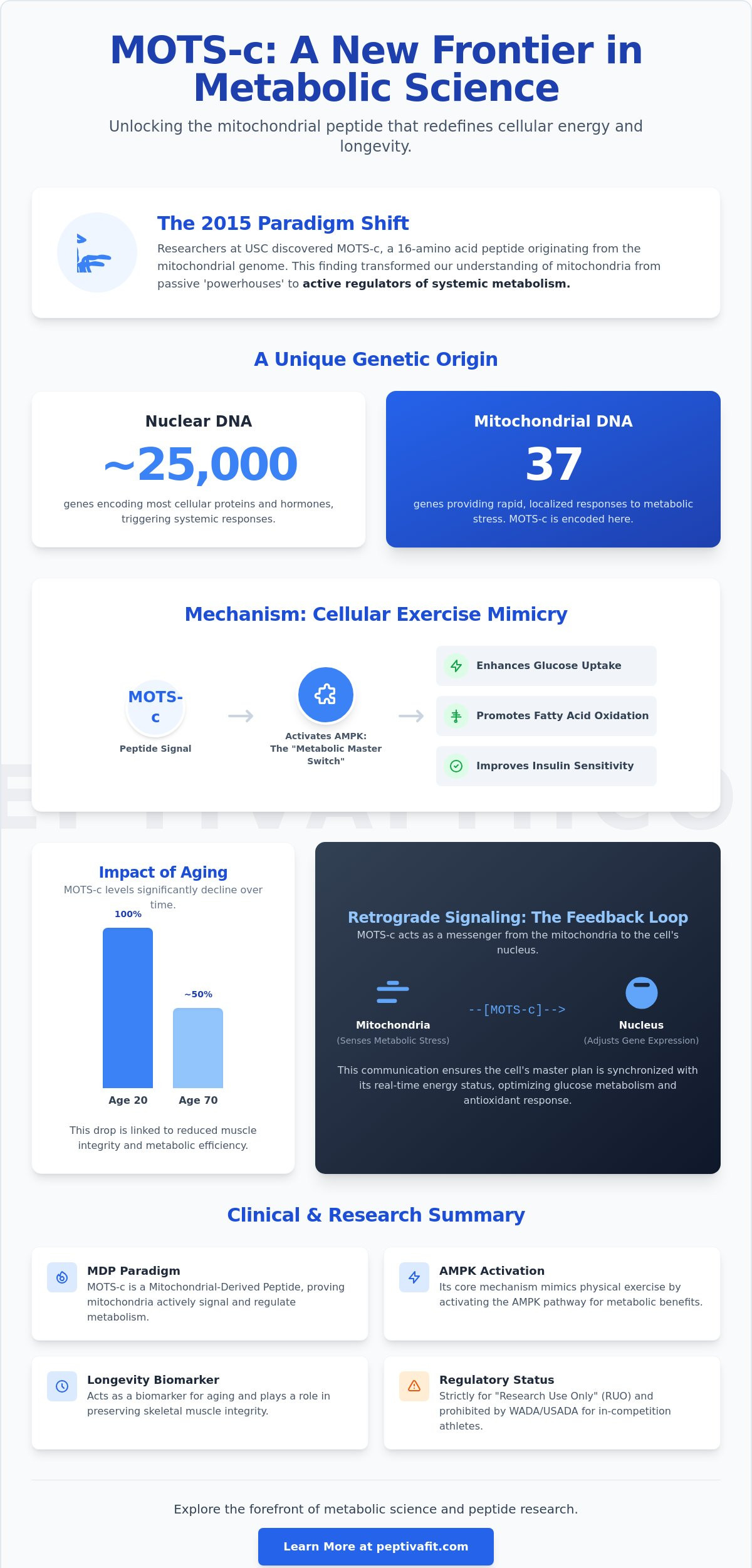
In 2015, researchers at the University of Southern California (USC) fundamentally altered the scientific understanding of cellular communication. Led by Dr. Pinchas Cohen, the team identified a 16-amino acid peptide, MOTS-c (mitochondrial open reading frame of the 12S rRNA-c), which originates from the mitochondrial genome rather than the cell's nucleus. This discovery established a new category of signaling molecules known as mitochondrial-derived peptides (MDPs). These molecules act as critical messengers that allow mitochondria to communicate their energetic status to the rest of the cell, shifting the view of mitochondria from passive "powerhouses" to active regulators of systemic metabolism.
The mots c peptide represents a significant departure from traditional endocrinology. Most signaling proteins are encoded by nuclear DNA, translated in the cytoplasm, and then sent to various organelles. MOTS-c bypasses this standard route. It's produced directly within the mitochondria, providing a localized and immediate response to metabolic shifts. This unique origin makes it a primary subject of interest in gerontology, as researchers look for ways to address the progressive decline in metabolic efficiency that characterizes aging.
The Mitochondrial Genome vs. Nuclear DNA
While the human genome contains approximately 20,000 to 25,000 genes within the nucleus, mitochondria maintain a small, autonomous set of 37 genes. The mots c peptide is one of the few functional proteins expressed from this circular mitochondrial DNA, specifically within the 12S ribosomal RNA region. This genetic autonomy allows mitochondria to generate rapid responses to metabolic stress without waiting for nuclear transcription. Unlike nuclear-encoded hormones that rely on systemic triggers, MOTS-c levels fluctuate dynamically based on exercise intensity and cellular demands. Research indicates that MOTS-c concentrations in skeletal muscle and plasma can decline by nearly 50% between the ages of 20 and 70. This peptide belongs to a specialized class of MDPs, which includes Humanin and Small Humanin-Like Peptides (SHLPs), all of which play roles in cellular protection and longevity.
MOTS-c as a Retrograde Signaling Molecule
The primary biological role of MOTS-c involves retrograde signaling, a process where the mitochondria send instructions "back" to the nucleus to influence gene expression. During periods of metabolic demand or physical stress, MOTS-c translocates from the mitochondria into the nucleus. Once there, it binds to specific promoter regions to regulate the expression of genes involved in glucose metabolism and the antioxidant response. This mechanism ensures that the cell's nuclear activity remains synchronized with its mitochondrial capacity. MOTS-c is a mitochondrial-encoded regulator of metabolic homeostasis. By controlling these pathways, the peptide helps maintain insulin sensitivity and energy balance, serving as a vital link between mitochondrial health and systemic wellness.
The Metabolic Mechanism: AMPK Activation and Exercise Mimicry
The mots c peptide operates through a sophisticated signaling cascade that mirrors the physiological response to high-intensity physical exertion. Its primary mechanism of action involves the activation of the AMP-activated protein kinase (AMPK) pathway. This enzyme acts as the body's metabolic master switch. When cellular energy is low, AMPK stimulates pathways that generate ATP while inhibiting those that consume it. Research published in Cell Metabolism in 2015 demonstrated that MOTS-c levels increase significantly during exercise, suggesting its role as an endogenous regulator of the adaptive response to physical stress.
AMPK: The Metabolic Master Switch
MOTS-c stimulates AMPK by increasing the intracellular levels of AICAR (5-aminoimidazole-4-carboxamide ribonucleotide). This accumulation triggers a shift in lipid metabolism, favoring fatty acid oxidation over synthesis. Unlike Tesamorelin, which primarily reduces visceral adiposity through growth hormone secretion, the mots c peptide works at the cellular level to enhance systemic insulin sensitivity. This makes it a unique subject of study for those exploring the MOTS-c and metabolic flexibility relationship. By optimizing mitochondrial efficiency, the peptide helps maintain metabolic homeostasis even during periods of caloric surplus or physical inactivity.
Glucose Metabolism and Insulin Sensitivity
A critical function of MOTS-c is its ability to promote glucose uptake in skeletal muscle. It achieves this by facilitating the translocation of GLUT4 transporters to the cell membrane. This process is often independent of the traditional insulin signaling pathway. In animal models, MOTS-c administration resulted in a 50% improvement in glucose clearance rates compared to control groups. While human data is still emerging from 2021 clinical trials, the preliminary results align with the peptide's role in reversing diet-induced insulin resistance. For researchers integrating these findings into broader protocols, the Comprehensive Fat Loss Peptide Guide provides additional context on how metabolic modulators function in tandem.
The peptide also accelerates beta-oxidation, the process by which the body breaks down fatty acids into usable energy. This dual action on glucose and lipids positions MOTS-c as a potent tool for metabolic optimization. Clinical researchers can monitor these metabolic shifts and track research progress through the curated tools available at peptivafit.com. By enhancing the mitochondria's ability to switch between fuel sources, MOTS-c effectively combats the metabolic rigidity often seen in aging and sedentary populations. It doesn't just provide energy; it reorganizes how the cell perceives and utilizes fuel.
Clinical Research on Longevity and Skeletal Muscle Health
The mots c peptide serves as a primary biomarker for biological aging and physical frailty. Clinical data suggests that endogenous levels of this mitochondrial-derived peptide decline significantly with age, often dropping by 50% between early adulthood and the seventh decade of life. This depletion is closely linked to the onset of sarcopenia, the progressive loss of skeletal muscle mass and strength. By maintaining systemic MOTS-c levels, researchers aim to preserve metabolic homeostasis and extend the period of physical independence in aging populations. Laboratory observations indicate that restoring these levels can improve grip strength and gait speed, which are two critical indicators of biological vitality.
Combating Age-Related Mitochondrial Decay
Mitochondrial dysfunction is a primary driver of cellular senescence. Supplementation with the mots c peptide restores mitochondrial capacity in aging models by activating the AMPK pathway and promoting mitochondrial biogenesis. This process increases the production of adenosine triphosphate (ATP), the fundamental unit of cellular energy. The MOTS-c Therapeutic Potential is particularly evident in its ability to modulate nuclear gene expression in response to mitochondrial stress. For researchers investigating holistic cellular longevity, MOTS-c provides a unique synergy with Vilon Peptide, which targets dipeptide-regulated gene expression to optimize protein synthesis and immune function within a curated longevity protocol.
Skeletal Muscle Adaptation and Performance
Skeletal muscle serves as the largest metabolic organ in the body. The mots c peptide regulates muscle-specific gene expression during periods of high metabolic demand. It directly influences myostatin levels, effectively reducing the signals that trigger muscle atrophy. Beyond muscle preservation, the peptide shows protective effects against diet-induced obesity. Data from a 2021 study demonstrated that MOTS-c administration prevented weight gain in subjects on a high-fat diet by increasing fatty acid oxidation and heat production. This mechanism involves the upregulation of GLUT4, which enhances glucose disposal even in the absence of insulin. MOTS-c preserves lean muscle mass during periods of caloric restriction by shifting metabolic reliance toward lipid utilization. This metabolic flexibility ensures that ATP production remains stable even when nutrient availability is limited, providing a laboratory-grade solution for analyzing performance optimization and metabolic resilience.
Regulatory Status and Laboratory Standards for Research Peptides
The legal framework surrounding the mots c peptide is strictly defined by the "Research Use Only" (RUO) designation. In the United States, this classification restricts the distribution of the peptide exclusively to laboratory environments and academic institutions. It's not intended for human diagnostic or therapeutic applications. Compliance with these standards isn't optional; it's a foundational requirement for maintaining the integrity of mitochondrial research. Vendors who bypass these labels often operate outside the regulatory oversight of the FDA, which creates significant risks for data accuracy and researcher safety.
WADA Prohibition and Anti-Doping Context
The World Anti-Doping Agency (WADA) classifies MOTS-c under Section S4: Hormone and Metabolic Modulators. This placement is due to the peptide's ability to activate the AMPK pathway, effectively mimicking the physiological responses of intense physical exertion. For competitive athletes, use results in a mandatory ban. The rationale is clear. MOTS-c enhances metabolic efficiency and endurance performance, providing an artificial advantage that contradicts the spirit of fair competition. Since the 2024 update to the Prohibited List, USADA has increased its focus on mitochondrial-derived peptides to ensure athletic transparency.
Ensuring Laboratory Grade Quality
Reliable research requires high-purity materials. Every batch of mots c peptide must undergo rigorous verification through High-Performance Liquid Chromatography (HPLC) and Mass Spectrometry (MS). HPLC measures the chemical purity, while MS confirms the molecular weight and identity of the peptide sequence. Purity levels below 98% are unacceptable in a professional setting. These contaminants, often residual TFA (trifluoroacetic acid) or truncated sequences, can skew metabolic data points during observation. Consistency is the hallmark of professional-grade sourcing.
You'll find that many claims regarding "compounding pharmacy" availability are legally tenuous. Because MOTS-c hasn't been added to the FDA’s 503A or 503B lists for bulk compounding, its production remains largely restricted to specialized research labs. Navigating these complexities requires a disciplined approach to sourcing. Identifying red flags is critical for any serious researcher:
- Absence of batch-specific, third-party COAs (Certificates of Analysis).
- Lack of ISO 17025 accreditation from the testing facility.
- Opaque manufacturing origins or lack of chain-of-custody documentation.
- Pricing that significantly deviates from the market average for high-purity synthesis.
True optimization requires more than just high-grade materials; it demands a structured, data-driven methodology. Integrating personalized medical assessments into your protocol ensures that research remains safe, compliant, and scientifically valid. Professionals don't guess; they track and verify every variable to maintain the highest standards of laboratory conduct.
Advance your understanding of mitochondrial regulation with precision. Access our curated educational resources to master the science of peptide tracking and research compliance.
Strategic Integration within a Metabolic Optimization Framework
The integration of mots c peptide into a research protocol isn't a matter of simple supplementation. It's a calculated intervention in mitochondrial signaling that requires a disciplined approach to timing and biological context. Precision matters. Most successful research models utilize a 4 to 6 week observation window to assess changes in metabolic flexibility, ensuring that the cellular response to the peptide is documented with clinical accuracy. It's not enough to merely introduce the molecule; researchers must synchronize its administration with the subject's natural metabolic peaks to maximize mitochondrial biogenesis.
Synergistic Peptide Stacking in Research
Combining mitochondrial ligands with growth hormone secretagogues creates a potent environment for metabolic recalibration. Researchers often look to Tesamorelin to drive lipolysis and reduce visceral adiposity through increased growth hormone secretion. While Tesamorelin facilitates the breakdown of lipids, the mots c peptide ensures the mitochondria are prepared to oxidize these fatty acids for energy rather than allowing them to return to storage. This synergy prevents the metabolic "bottleneck" often seen in isolated fat-loss protocols. MOTS-c acts as a foundation for metabolic flexibility by signaling the cell to shift between fuel sources based on energy availability.
Professional Oversight and Protocol Design
Subjective feeling isn't a metric. Data is. Professional oversight requires tracking biomarkers like C-reactive protein, HbA1c, and fasting glucose every 90 days to maintain a laboratory-grade standard of health. This level of scrutiny ensures that the research remains within safe physiological boundaries while optimizing for performance. Utilizing 1-on-1 coaching to interpret these metabolic markers is essential for those who value precision over guesswork. A coach provides the objective lens necessary to adjust dosages based on real-time physiological feedback, transforming a standard protocol into a curated performance strategy.
The future of mitochondrial-targeted therapies is moving toward a highly personalized model of molecular medicine. By 2030, the focus will likely shift from broad metabolic support to gene-encoded peptide therapies that can be adjusted based on an individual's specific mitochondrial DNA sequence. Current research into these pathways provides a significant advantage for those looking to stay ahead of the curve in performance optimization. It's a long-term, methodical process that rewards the disciplined researcher who prioritizes data-driven decisions over anecdotal hype.
To move beyond basic education and begin a structured, data-centric journey, consider the Peptiva Protocol. This curated framework is designed for individuals who demand high levels of personal responsibility and clinical precision in their pursuit of metabolic excellence. It's time to stop guessing and start tracking with the Peptiva Protocol.
Advancing Metabolic Efficiency Through Mitochondrial Precision
Achieving metabolic optimization requires moving beyond general fitness advice toward precise mitochondrial signaling. The mots c peptide functions as a potent metabolic trigger, with studies from the University of Southern California demonstrating its ability to enhance glucose uptake during exercise. This 16-amino acid chain acts as a cellular messenger, activating the AMPK pathway to improve insulin sensitivity and support skeletal muscle integrity.
Professional implementation depends on utilizing laboratory-grade materials that maintain a 99% purity standard, as verified by high-performance liquid chromatography. Effective protocols aren't built on guesswork; they're the result of disciplined data tracking and clinical-grade design. By focusing on lab-verified sourcing and personalized medical oversight, you can refine your biological performance with confidence. Mastering these pathways is a long-term commitment to excellence that rewards the informed and disciplined individual.
Access the Peptiva Protocol: Fat Loss Peptide Guide for professional metabolic optimization strategies.
Frequently Asked Questions
What is the primary function of MOTS-c in the human body?
MOTS-c functions as a signaling molecule that regulates metabolic homeostasis by targeting skeletal muscle and enhancing glucose metabolism. This 16-amino acid mitochondrial-derived peptide activates the AMPK pathway, which serves as a master metabolic switch. Research published in 2015 by Lee et al. demonstrated its role in preventing insulin resistance. It maintains cellular energy balance by facilitating communication between mitochondrial DNA and the nuclear genome.
How does MOTS-c differ from traditional growth hormone peptides?
MOTS-c differs from traditional growth hormone peptides because it originates from the mitochondrial genome rather than the nuclear genome. While growth hormone secretagogues like Ipamorelin target the pituitary gland to stimulate systemic hormone release, MOTS-c acts directly on cellular metabolic pathways. It specifically influences lipid metabolism and insulin sensitivity at the intracellular level. This distinction makes it a unique class of mitochondrial-derived peptides (MDPs).
Is MOTS-c approved by the FDA for human use?
The FDA hasn't approved MOTS-c for human consumption or clinical use in the United States. It remains classified as a research chemical intended for laboratory settings and in vitro studies. Clinical trials, such as those registered under NCT04799860 in 2021, are ongoing to evaluate its safety and efficacy. Researchers must adhere to strict regulatory guidelines when sourcing this compound for investigational purposes only.
Why is MOTS-c often called an exercise mimetic?
MOTS-c is classified as an exercise mimetic because it activates the 5' adenosine monophosphate-activated protein kinase (AMPK) pathway, similar to physical exertion. A 2015 study in Cell Metabolism reported that MOTS-c levels in skeletal muscle increase significantly during exercise. By stimulating glucose uptake and fatty acid oxidation, the mots c peptide induces metabolic shifts typically observed during high-intensity training. It replicates the physiological signaling that occurs during muscle contraction.
What are the potential benefits of MOTS-c for metabolic health?
MOTS-c enhances metabolic health by improving systemic insulin sensitivity and reducing weight gain associated with high-fat diets. Data from the University of Southern California indicates that it prevents metabolic dysfunction by promoting the thermogenic activity of brown adipose tissue. It specifically targets the folate cycle and de novo purine synthesis to optimize energy expenditure. These mechanisms help maintain a stable metabolic profile even under conditions of caloric excess.
Can MOTS-c be used for fat loss in a research context?
In a research context, MOTS-c has shown the capacity to reduce fat mass by 10 percent in murine models without a reduction in caloric intake. It achieves this by promoting fatty acid oxidation and increasing the metabolic rate of white adipose tissue. The mots c peptide prevents the accumulation of ectopic fat in the liver and skeletal muscle. These findings are documented in several 2018 peer-reviewed publications focusing on diet-induced obesity.
How do you verify the purity of MOTS-c research supplies?
Verification of MOTS-c purity requires High-Performance Liquid Chromatography (HPLC) and Mass Spectrometry (MS) testing from an independent third-party laboratory. A reputable research supply should provide a Certificate of Analysis (COA) showing a purity level of 98 percent or higher. Researchers should confirm the batch number on the COA matches the physical vial. This rigorous testing ensures the absence of residual solvents, heavy metals, or truncated peptide sequences.
Is MOTS-c legal for use by professional athletes?
MOTS-c is prohibited for use by professional athletes under the World Anti-Doping Agency (WADA) Prohibited List. It falls under the S4 category of Hormone and Metabolic Modulators due to its ability to alter metabolic pathways and enhance performance. Athletes who test positive for this peptide face a standard 4-year ban from competition. Compliance with WADA regulations is mandatory for all individuals participating in sanctioned professional sports.

![Shelf Life of Reconstituted Peptides: A Clinical Reference Guide [2026]](https://getautoseo.com/storage/hero_images/shelf-life-of-reconstituted-peptides-a-clinical-reference-guide-2026.jpg?v=b8ed5173acaa)
