

Aggressive caloric restriction often triggers a biological paradox: the body sacrifices lean muscle mass while desperately clinging to adipose tissue. You've likely experienced the plateau where traditional dieting fails due to metabolic adaptation and hormonal downregulation. Implementing a sophisticated peptide diet plan for cutting is not merely about adding injections to a standard deficit; it's about synchronizing biochemical signals with nutritional intake to force a shift in fuel utilization. This clinical approach ensures that fat oxidation remains high while skeletal muscle is shielded from catabolism.
This article provides a rigorous framework for mastering the intersection of peptide therapy and macronutrient architecture. You'll learn how to align injection windows with meal frequency to maximize the lipolytic effects of compounds like CJC-1295 and Ipamorelin, which are returning to Category 1 status in 2026. We will detail the specific protocols required to break through fat loss plateaus and achieve a level of metabolic precision previously reserved for elite performance environments. By the end of this guide, you'll possess a data-driven strategy to optimize body composition without the typical metabolic fallout of aggressive cutting.
Key Takeaways
- Understand how specific peptides override metabolic adaptation to prevent the metabolic slowdown typically encountered during aggressive caloric deficits.
- Master the macronutrient architecture required for a peptide diet plan for cutting, utilizing protein-sparing frameworks and carbohydrate cycling to preserve insulin sensitivity.
- Implement the 2026 clinical protocol for injection timing, including the 3-hour fasting rule to maximize endogenous growth hormone pulses.
- Synchronize peptide administration with precise nutrient timing to catalyze systemic fat oxidation while shielding lean skeletal muscle from catabolic processes.
- Establish the necessity of lab-verified precision and professional oversight to mitigate metabolic risks and ensure individualized protocol efficacy.
Beyond the Caloric Deficit: Why Peptides Require a Specialized Cutting Diet
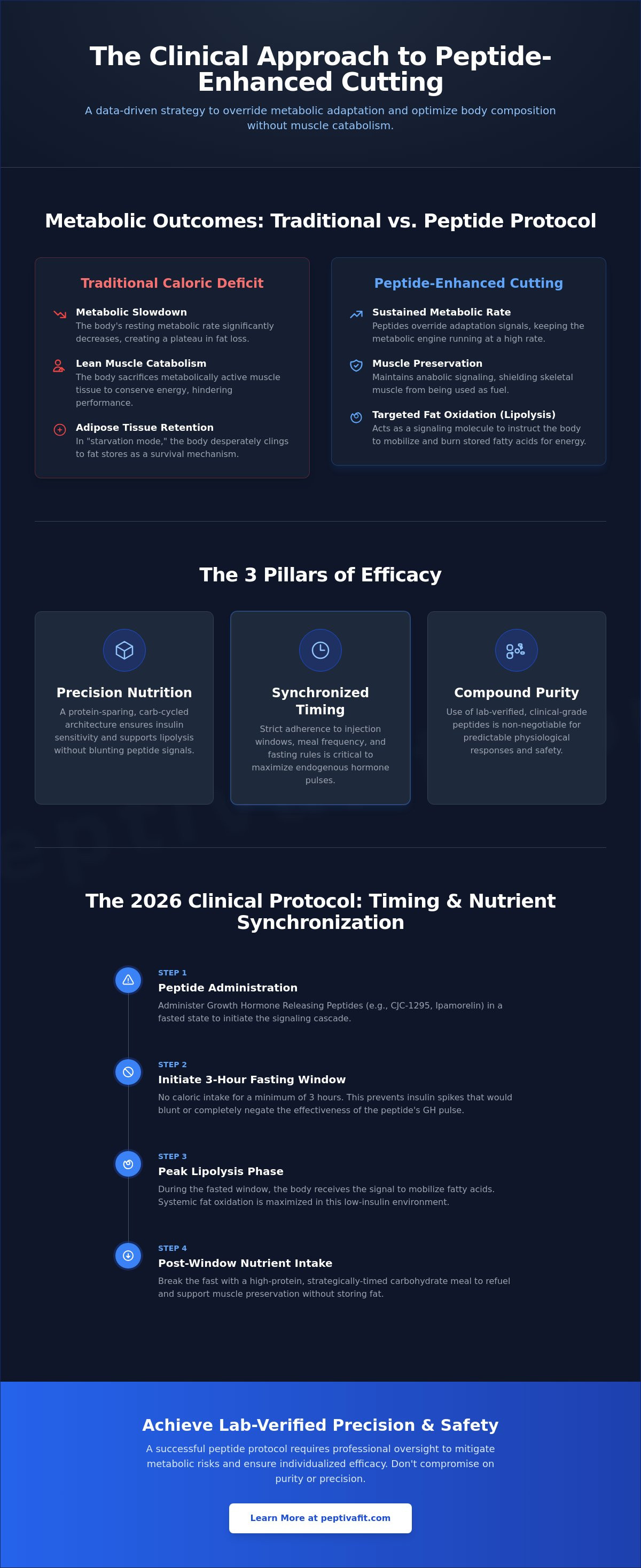
Traditional fat loss protocols generally rely on a fundamental energy balance equation. While thermodynamics remain a constant, the human body responds to prolonged deficits by initiating a series of protective metabolic adaptations. A specialized peptide diet plan for cutting transforms the standard restriction phase into a period of targeted metabolic re-engineering. This clinical framework is designed to override the "starvation mode" that often halts progress, allowing for continuous fat oxidation even as caloric intake remains restricted. By integrating these specific biochemical tools, you move beyond mere weight loss into the territory of body composition optimization.
Standard bodybuilding diets often conflict with growth hormone signaling due to their reliance on high-frequency feeding. Frequent insulin spikes, while useful for bulking, can blunt the efficacy of growth hormone secretagogues. Peptides require specific physiological windows to operate effectively. If your meal timing is undisciplined, you risk inhibiting the very signals you are attempting to amplify. Maintaining molecular integrity through high-quality laboratory standards is the final piece of this equation. Without clinical-grade purity, the physiological response becomes unpredictable, undermining the precision required for a successful cutting phase.
The Problem with Traditional Cutting Strategies
Standard dieting inevitably leads to a predictable decline in Insulin-Like Growth Factor 1 (IGF-1) and a significant reduction in the resting metabolic rate. This physiological downshift creates a "metabolic gap" where fat loss stalls and muscle catabolism increases. Peptides serve to close this gap by maintaining anabolic signaling even in the absence of surplus energy. Success in this phase rests on three non-negotiable pillars: precision in macronutrient ratios, strict adherence to injection timing, and the absolute purity of the compounds utilized. Integrating a peptide diet plan for cutting allows for the maintenance of high-level performance metrics while the body is in a state of energy deprivation.
Peptides as Metabolic Signaling Molecules
Peptides function as biological messengers rather than direct fuel sources. They provide the specific instructions required to mobilize fatty acids, a process deeply rooted in The Science of Lipolysis. To ensure these signals are interpreted correctly by the body, the use of lab tested peptides is essential. Standard market products often lack the molecular integrity required for predictable physiological responses. A disciplined, clinical approach treats body composition as a data-driven objective. This requires moving away from industry hype and focusing on the metabolic pathways that govern fat oxidation and tissue preservation. When peptides are viewed as signaling molecules, the necessity of a structured diet becomes clear; the message is only as effective as the environment in which it is received.
The Science of Lipolysis: How Specific Peptides Re-Engineer Your Metabolism
Peptides represent a sophisticated shift from generalized caloric restriction to targeted metabolic manipulation. While standard fat loss relies on systemic deficits, specific compounds allow for the precision-guided destruction of adipose tissue. This distinction is critical. Systemic hormone elevation often carries side effects that targeted fat oxidation avoids. Achieving this level of metabolic optimization requires a strict peptide diet plan for cutting that respects the delicate interplay between exogenous signals and endogenous insulin. Professional clinical oversight is mandatory to ensure these metabolic pathways are monitored with scientific-grade rigor.
The efficacy of these compounds is not universal; it's contingent upon the nutritional environment. A well-structured peptide diet plan for cutting prioritizes protein intake while carefully timing carbohydrate consumption to avoid interfering with these lipolytic signals. Different peptides interact with insulin and blood glucose levels in unique ways. Some improve insulin sensitivity, while others require a low-insulin environment to function. Understanding these interactions is the difference between a successful transformation and a stalled protocol.
Growth Hormone Secretagogues (GHRHs and GHRPs)
Growth hormone secretagogues function by mimicking the body's natural signaling molecules to trigger a pulse from the pituitary gland. A specific tesamorelin dosage is often utilized in clinical settings to target stubborn visceral adipose tissue, which is notoriously resistant to traditional dieting. When combining Ipamorelin and CJC-1295, the resulting synergy creates a potent nocturnal GH pulse. This pulse is highly sensitive to the blood glucose environment. If insulin levels are elevated due to late-night carbohydrate consumption, the pituitary response is effectively blunted. Maintaining a stable, low-glucose state during the administration window is essential for maximizing the secretagogue's metabolic impact.
Direct Lipolytics: HGH Frag 176-191 and AOD-9604
Direct lipolytics offer a more localized mechanism of action. HGH Frag 176-191 is a truncated piece of the growth hormone molecule that isolates the fat-burning effects without influencing systemic IGF-1 levels or insulin sensitivity. This makes it an ideal candidate for those prioritizing fat cell destruction without the risks of hyperglycemia. These peptides are strictly diet dependent. They require a fasted state to facilitate the mobilization of fatty acids. Comparing these metabolic pathways to secretagogues reveals a fundamental truth: while secretagogues optimize the whole hormonal environment, direct fragments act as surgical tools for lipid mobilization. For those seeking to refine their strategy, a personalized medical assessment provides the necessary data to select the correct compound for your metabolic profile.
Macronutrient Architecture for Peptide-Enhanced Cutting
A successful peptide diet plan for cutting hinges on more than just a caloric deficit; it requires a precise macronutrient architecture designed to support specific biochemical signals. We define this as the Peptide Protein Factor (PPF). During aggressive cutting phases, the interaction between exogenous peptides and endogenous hormones dictates how the body partitions nutrients. Unlike standard dieting where macros are static, a peptide-enhanced protocol must be dynamic. It must account for the insulin-blunting effects required by growth hormone secretagogues and the direct oxidative requirements of lipolytic fragments. This level of precision prevents the metabolic adaptation typically seen in unassisted deficits.
Fat intake during this phase serves a dual purpose. It must remain high enough to support lipid-based hormonal health but low enough to avoid slowing gastric emptying. Rapid digestion is essential when timing meals around peptide administration windows. High-fat meals consumed too close to a secretagogue pulse can interfere with the signaling of compounds like Ipamorelin. We prioritize medium-chain triglycerides and monounsaturated fats that provide fuel without the digestive lag associated with heavy saturated fats.
The Protein-Sparing Protocol
Protein requirements increase significantly during a peptide-assisted cut. Because peptides like CJC-1295 and Tesamorelin amplify anabolic signaling, the body requires a higher concentration of amino acids to repair and preserve skeletal muscle. We recommend a protein-sparing framework targeting 1.2g to 1.5g of protein per pound of lean body mass. This aggressive intake ensures that the body remains in a positive nitrogen balance despite the caloric restriction. Selecting high-bioavailability sources, such as isolated whey, egg whites, and lean white fish, is necessary to minimize digestive inflammation and ensure rapid amino acid delivery to the tissues.
Carbohydrate Management and Insulin Sensitivity
The "Insulin Window" is the most critical variable in a peptide diet plan for cutting. High blood sugar levels effectively halt peptide-induced fat oxidation by suppressing growth hormone release from the pituitary gland. Strategic carbohydrate placement is non-negotiable. Carbs should be concentrated around training sessions when insulin sensitivity is at its peak and the body can utilize the glucose for glycogen replenishment. Conversely, carbohydrates must be strictly avoided for at least two to three hours surrounding injection times. Using high-fiber vegetable sources helps manage the slowed gastric emptying common with certain protocols, ensuring that blood glucose remains stable and does not interfere with the nocturnal growth hormone pulse.
The 2026 Cutting Protocol: Timing, Dosage, and Meal Frequency
The 2026 cutting protocol demands a level of discipline that exceeds standard fitness regimens. In this framework, the timing of administration is just as critical as the selection of the compounds themselves. A precise peptide diet plan for cutting requires a strict adherence to metabolic windows where insulin levels are at their nadir. This ensures that the exogenous signals sent to the pituitary or the adipose tissue aren't obstructed by circulating glucose. Precision starts with peptide reconstitution. Maintaining molecular integrity through accurate dilution is the only way to guarantee that the dosage remains consistent throughout the cycle.
During periods of rapid lipolysis, hydration and electrolyte management become paramount. As fatty acids are mobilized and oxidized, the body must process metabolic byproducts more efficiently. We recommend a structured intake of sodium, potassium, and magnesium to maintain cellular hydration and prevent the fatigue often associated with aggressive fat loss. This methodical approach to fluid balance supports the kidneys and ensures that systemic inflammation remains low during the caloric deficit.
The Fasted Injection Window
The 3-hour Fasting Rule is the cornerstone of metabolic synchronization. To maximize the endogenous pulse, you must follow a three-step protocol. First, establish a minimum two-hour fast before any injection. This clears residual insulin from the bloodstream. Second, maintain a 30 to 60-minute fast post-injection. This allows the signaling molecules to bind to their receptors without interference. Finally, break the fast with a specific amino acid profile, focusing on essential aminos rather than whole food proteins to ensure rapid absorption without a massive insulin spike. If you are serious about these results, you should schedule a single consultation call to verify your timing protocols.
Intra-Workout and Recovery Fueling
Optimizing the training window involves more than just pre-workout stimulants. For those utilizing mitochondrial-targeted compounds, our MOTS-C peptide guide details how to enhance cellular energy output. MOTS-C and SS-31 function by regulating mitochondrial gene expression, which increases fat oxidation during high-intensity sessions. Using these tools within a peptide diet plan for cutting allows for sustained performance even when glycogen stores are low.
Recovery nutrition for those on the "Wolverine Stack"—a combination of BPC-157 and TB-500—requires a different approach. These peptides facilitate systemic repair, meaning the diet must provide a steady stream of collagen-building blocks and micronutrients like Vitamin C and Zinc. This ensures that while you are cutting fat, your connective tissues and joints remain resilient under the stress of heavy training.
Implementing the Peptiva Protocol: Professional Oversight and Lab-Verified Precision
Execution is the final barrier between theoretical knowledge and physiological transformation. While the preceding sections detailed the biochemical requirements of a peptide diet plan for cutting, the practical application necessitates a higher level of clinical rigor. The Peptiva Protocol: Fat Loss Peptide Guide serves as the definitive roadmap for this transition, providing the structure required to navigate complex metabolic pathways. Before initiating any protocol, a personalized medical assessment is required to establish your baseline health markers and identify potential contraindications. This ensures that the intervention is tailored to your specific metabolic profile, rather than a generic template. This assessment acts as the foundation for a disciplined cutting phase, allowing for the precise calibration of dosages and nutrient timing.
The transition from theory to clinical execution requires a commitment to data over hype. A peptide diet plan for cutting is only as effective as the reliability of the compounds being utilized. Without professional oversight, the risk of metabolic mismanagement increases, particularly when trying to balance aggressive caloric deficits with exogenous signaling molecules. Our framework emphasizes a methodical approach, moving away from the "guesswork" often found in fitness forums and toward a regulated, scientific standard of care.
The Necessity of Lab Verification
Purity is non-negotiable in performance optimization. The market for research chemicals is saturated with unverified products that often contain residual solvents, heavy metals, or truncated peptide sequences. These impurities frequently manifest as systemic inflammation or excessive subcutaneous water retention, which directly counters the objectives of a cutting phase. PeptivaFit prioritizes molecular integrity by providing only lab tested peptides. This commitment to quality ensures that the physiological response remains predictable and that the metabolic signals are not diluted by contaminants. Selecting lower-grade alternatives often leads to stalled progress and adverse reactions that compromise long-term health. When you're operating in a caloric deficit, your body's resilience is already tested; introducing unverified chemicals is a risk that serious practitioners don't take.
Professional Coaching and Consultations
Bridging the gap between clinical data and individual results requires expert interpretation. 1-on-1 Coaching provides the oversight necessary to make real-time adjustments to your macronutrient architecture and injection timing. If you encounter a fat loss plateau, a single consultation call serves as a critical troubleshooting tool to identify the precise variables requiring recalibration. We continuously refine our approach based on the latest research, such as the data found in our overview of peptides for metabolism and fat loss. Finalizing your cutting strategy involves moving from passive education to active, clinical execution. By joining the elite ranks of those utilizing the Peptiva Protocol, you are choosing a path of disciplined optimization. This is not a mass-market solution; it's a restricted and selective service for those who demand the highest standards of performance and privacy.
Mastering Metabolic Precision
Transitioning from a standard caloric deficit to a high-precision metabolic protocol requires more than just willpower. It demands a sophisticated understanding of how signaling molecules interact with your nutritional environment. You've learned that a successful peptide diet plan for cutting relies on the 3-hour fasting rule, protein-sparing architecture, and the absolute molecular integrity of your compounds. By synchronizing these variables, you can override metabolic adaptation and preserve lean tissue during even the most aggressive fat loss phases. This clinical approach ensures that your efforts result in fat oxidation rather than muscle catabolism.
The path to elite body composition is paved with data, not guesswork. Relying on doctor-designed fat loss protocols and lab-verified molecular integrity ensures that every intervention is both safe and effective. If you are ready to move beyond the limitations of traditional dieting, our exclusive 1-on-1 metabolic coaching provides the professional oversight needed to navigate these clinical complexities. You possess the framework; now it's time to execute with the rigor your performance demands.
Access the Peptiva Protocol and Optimize Your Cut Today
Frequently Asked Questions
What is the best peptide stack for cutting without losing muscle?
The most effective protocol for muscle preservation during a deficit typically involves a combination of Ipamorelin and CJC-1295. This synergy maintains a positive nitrogen balance while amplifying growth hormone pulses that protect skeletal muscle. Tesamorelin is another primary clinical choice for targeting visceral fat specifically without inducing significant muscle catabolism during a restricted phase.
Do I need to eat a ketogenic diet while using peptides for fat loss?
A ketogenic diet is not a clinical requirement, though managing insulin sensitivity is non-negotiable for success. While high-fat intake can support hormonal health, the primary objective is maintaining low blood glucose during administration windows. A protein-sparing modified framework with strategic carbohydrate cycling often yields superior body composition results compared to strict ketosis by supporting training intensity.
How long does it take to see results from a peptide diet plan for cutting?
Initial physiological shifts in metabolic rate and sleep quality are often observed within 14 to 21 days of starting the protocol. Significant changes in body composition typically require a 6 to 12-week commitment to a structured peptide diet plan for cutting. Consistency in nutrient timing and injection protocols is the primary determinant of how quickly subcutaneous fat levels decrease in a clinical setting.
Can I use peptides for cutting if I have a high-stress lifestyle?
Peptides can be utilized in high-stress environments, but elevated cortisol levels may blunt the efficacy of growth hormone secretagogues. Managing systemic inflammation through diet and recovery is essential to ensure the exogenous signals aren't overridden by stress hormones. Clinical oversight helps adjust the protocol to account for lifestyle-induced metabolic resistance and ensures the plan remains effective under pressure.
Why do some peptides cause water retention, and how do I fix it through diet?
Water retention is frequently a result of sodium-potassium imbalances or the use of lower-purity compounds that trigger an inflammatory response. To mitigate this, practitioners should increase potassium-rich whole foods and strictly regulate sodium intake during the cutting cycle. Ensuring you are using lab-verified peptides also reduces the risk of inflammatory responses that manifest as subcutaneous edema or bloating.
Is it necessary to fast before injecting peptides for fat loss?
Fasting is a mandatory requirement for growth hormone secretagogues to ensure a maximal pituitary response. Circulating blood glucose and insulin effectively inhibit the release of endogenous growth hormone from the pituitary gland. A minimum two-hour pre-injection fast is necessary to create the required biochemical environment for the peptide to function at its peak lipolytic capacity.
What happens if I eat immediately after a GH secretagogue injection?
Consuming food, particularly carbohydrates or fats, immediately following an injection will prematurely terminate the growth hormone pulse. This significantly reduces the lipolytic efficacy of the protocol by triggering an insulin response that counters the GH signal. It is clinically recommended to wait at least 30 to 60 minutes before breaking the post-injection fast to allow for proper cellular signaling.
How do I adjust my macros if I am using a GLP-1 agonist?
When utilizing GLP-1 agonists, the primary adjustment is a significant increase in protein density to prevent skeletal muscle loss during rapid weight reduction. Because appetite is suppressed, every calorie must be nutrient-dense and focused on amino acid delivery to the tissues. You should prioritize lean protein sources and essential micronutrients to maintain metabolic health while in a severe caloric deficit.

![Shelf Life of Reconstituted Peptides: A Clinical Reference Guide [2026]](https://getautoseo.com/storage/hero_images/shelf-life-of-reconstituted-peptides-a-clinical-reference-guide-2026.jpg?v=b8ed5173acaa)
