
![Best GLP-1 Injection Timing: Clinical Guide to Dosing Schedules [2026]](https://getautoseo.com/storage/hero_images/best-glp-1-injection-timing-clinical-guide-to-dosing-schedules-2026.jpg?v=6c4976b4e457)
The difference between a transformative metabolic intervention and a week of debilitating nausea often comes down to a 48 hour window of pharmacokinetic precision. While many patients select their administration day based on convenience, a scientifically optimized glp-1 dosing schedule for fat loss requires a deeper understanding of plasma concentration peaks. You likely started this journey to regain control over your physiology, yet you're currently navigating unpredictable appetite suppression and disruptive gastrointestinal distress that interferes with your professional obligations.
This guide provides the clinical framework necessary to master the PeptivaFit Protocol through strategic timing. You'll learn how to align your dosing with your body's metabolic rhythms to maintain steady-state levels and eliminate the mid-week fade common with standard protocols. We'll examine the latest 2026 data on Tmax for high-dose injectables and new oral formulations like Foundayo, ensuring your therapy integrates seamlessly with a high-performance lifestyle. By applying these rigorous standards, you can achieve a predictable side-effect profile and consistent metabolic optimization.
Key Takeaways
- Understand the pharmacokinetic necessity of reaching a steady-state plasma level over a four to five week period to ensure consistent metabolic stability.
- Evaluate the clinical advantages of morning versus evening administration to either maximize immediate satiety or mitigate peak-related nausea through nocturnal dosing.
- Optimize your glp-1 dosing schedule for fat loss by strategically aligning injection days with your personal high-performance work and exercise requirements.
- Learn to synchronize peptide concentration peaks with specific lifestyle events and high-intensity training protocols to maintain peak physiological performance.
- Utilize the Peptiva Protocol to transition from standardized administration to a sophisticated, data-driven framework tailored to your individual drug clearance rates.
Understanding GLP-1 Pharmacokinetics and Dosing Consistency
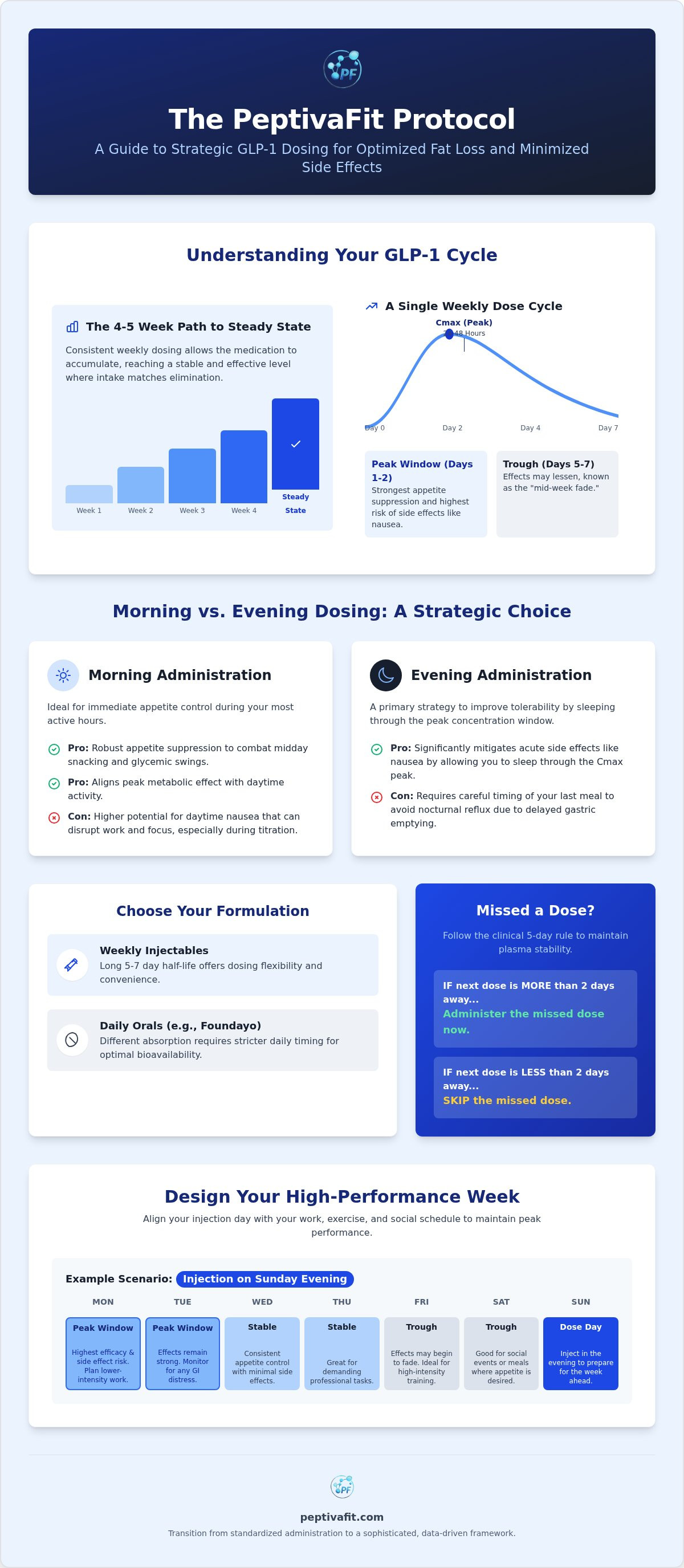
GLP-1 receptor agonists function as sophisticated, long-acting metabolic regulators that mimic endogenous hormones to modulate appetite and glucose metabolism. These peptides are characterized by extended half-lives, allowing for infrequent administration while maintaining therapeutic efficacy. Pharmacokinetics is the clinical study of how the body absorbs, distributes, and eliminates these peptides. Achieving a glp-1 dosing schedule for fat loss that yields predictable results requires reaching a state of physiological equilibrium known as steady state. This process typically requires four to five weeks of consistent administration, as the drug accumulates in the system until the rate of intake matches the rate of elimination.
The 24 to 48 hour window following an injection represents the period of maximum plasma concentration, often referred to as Cmax. During this peak, the peptide's interaction with the central nervous system is most intense. This window dictates both the period of strongest appetite suppression and the highest risk for gastrointestinal distress. Understanding this peak is vital for anyone managing a high-performance schedule, as it allows for the strategic placement of doses to avoid peak side effects during critical professional or physical engagements.
The Significance of Half-Life in Weekly Dosing
The half-life of a compound determines how long it remains active within the bloodstream before half of the dose is metabolized. For weekly injectables like semaglutide or tirzepatide, the half-life ranges from five to seven days. This slow-release mechanism is engineered through molecular modifications that allow the peptide to resist rapid enzymatic degradation. In contrast, the newer oral options available in 2026, such as Foundayo, require daily administration due to different absorption profiles. While injectables offer a wider window for administration, oral formulations demand stricter morning timing to ensure optimal bioavailability and metabolic synchronization.
Why Consistency Trumps Exact Hour-to-Hour Timing
Maintaining a regular glp-1 dosing schedule for fat loss is essential for stable glycemic control and consistent satiety. Irregular intervals cause troughs in plasma levels, leading to the "mid-week fade" where appetite suppression diminishes prematurely. If a dose is missed, the clinical protocol suggests the five-day rule: if the next scheduled dose is more than two days away, the missed dose should be administered immediately. If it's less than two days away, the dose should be skipped to prevent excessive accumulation. Predictable half-lives rely entirely on molecular integrity, which is why Why Lab-Tested Peptides Are Essential for Safety remains a cornerstone of any disciplined protocol. Compromised compounds lead to erratic absorption and unpredictable metabolic responses.
Morning vs. Evening Administration: Balancing Bioavailability and Tolerability
Selecting an optimal glp-1 dosing schedule for fat loss involves a strategic calculation of your metabolic needs against your gastrointestinal tolerance. A morning administration provides immediate receptor activation, offering robust appetite suppression during your most active hours. This is particularly advantageous for individuals who struggle with midday snacking or midday glycemic fluctuations. However, for those sensitive to the initial titration phase, morning dosing can lead to daytime nausea that compromises professional productivity and cognitive focus.
Evening administration serves as a primary strategy to mitigate acute side effects by allowing the patient to sleep through the initial plasma concentration peak. Because GLP-1 receptor agonists significantly delay gastric emptying, the timing of your last meal relative to an evening dose is critical. Administering the peptide too close to a heavy dinner can result in nocturnal reflux or significant morning-after digestive discomfort. If you are unsure which window aligns with your physiological profile, a personalized medical assessment can provide the necessary data for a refined protocol.
The Case for Nighttime Injections
The physiological rationale for nighttime dosing centers on tolerability. By injecting before sleep, the most intense phase of gastrointestinal distress occurs while the body is in a state of rest. While effective for nausea management, some patients report vivid dreams or minor sleep fragmentation during the first 24 hours post-injection. To reduce the risk of morning lethargy or the "GLP-1 hangover," you must follow a rigorous pre-injection hydration protocol. Consuming 16 to 20 ounces of water with added electrolytes before bed helps maintain blood pressure stability and reduces the fatigue often associated with peak concentration levels.
Morning Administration for Daytime Performance
Morning timing is essential for those who experience late-day binge-eating tendencies or "food noise" that intensifies in the evening. By dosing early, you ensure that receptor saturation is at its highest when these cravings typically emerge. This window is also non-negotiable for the 2026 oral GLP-1 variants. For instance, the oral version of Wegovy requires administration on an empty stomach, 30 minutes before any food or drink, to ensure molecular absorption. For injectables, the morning window remains the gold standard for individuals who prioritize daytime satiety over side-effect avoidance. You can find more advanced administration techniques in the Peptiva Protocol, which details how to synchronize these windows with your specific metabolic rate.
The Weekly Strategic Window: Choosing Your Injection Day
The selection of a weekly administration day is a tactical decision in pharmacokinetic management. While the half-life of most peptides allows for flexibility, your choice determines when you will experience the most profound satiety and the highest risk of gastrointestinal distress. Data from 2026 clinical observations suggests that appetite suppression is typically strongest during Days 2 through 4 post-injection. Consequently, a glp-1 dosing schedule for fat loss must be synchronized with your weekly caloric expenditure and professional demands to ensure maximum compliance and efficacy.
Shifting your injection day is a common requirement for travel or schedule optimization. To maintain physiological equilibrium, you should never move your dose by more than 24 hours in a single week. For example, if you currently dose on Tuesday and wish to transition to Friday, you must move to Wednesday the first week, Thursday the second, and Friday the third. This incremental approach prevents the dramatic fluctuations in plasma levels that often trigger acute nausea or early-trough hunger.
The Friday Night Protocol for Professionals
The Friday night protocol, often called the Weekend Recovery strategy, is the preferred choice for high-stakes professionals. By administering the dose on Friday evening, the peak plasma concentration occurs during non-working hours. This allows you to manage any acute side effects, such as lethargy or nausea, during the weekend when cognitive demands are lower. This ensures that you return to the office on Monday morning with stable energy levels and established satiety.
However, this strategy involves a specific trade-off. Because appetite suppression is most aggressive on Days 2 and 3, your ability to participate in social dining over the weekend will be significantly diminished. For many, this is a beneficial guardrail. For high-performance athletes who require significant caloric intake for weekend endurance sessions, this peak may actually be counterproductive. These individuals must weigh the benefit of weekend side-effect management against the need for metabolic fuel during intense training windows.
Mid-Week Dosing for Constant Control
Mid-week dosing, specifically on Tuesday or Wednesday, is a superior alternative for individuals whose primary challenge is work-week stress eating. This schedule ensures that the strongest satiety signals are active from Wednesday through Saturday, covering the period when professional pressure and office-based food triggers are most prevalent. This approach effectively mitigates the "mid-week fade" that often occurs when a weekend dose begins to lose potency by Thursday afternoon.
The primary risk of mid-week dosing is the trough effect on Days 6 and 7, which would fall on Monday and Tuesday. If your appetite returns aggressively during these days, you may need to implement specific nutritional strategies to maintain your deficit. If you are struggling to identify which window aligns with your metabolic rhythm, 1-on-1 coaching provides the oversight necessary to analyze your lifestyle data and refine your schedule for peak performance.
Synergizing GLP-1 Timing with Metabolic and Lifestyle Protocols
Achieving the full potential of a glp-1 dosing schedule for fat loss requires more than just administration consistency. It demands the precise integration of peptide kinetics with your physiological activity and nutritional windows. Using high-purity, lab-verified compounds is essential to ensure predictable metabolic responses, as molecular impurities can cause erratic absorption rates and unexpected side-effect profiles. You can explore the broader implications of these substances in our clinical overview of Peptides for Metabolism and Fat Loss.
The synergy between peptide therapy and lifestyle protocols is most evident when managing major nutritional events such as holidays or international travel. Because these medications significantly alter your response to caloric intake, you must plan your injection day to ensure the 24 to 48 hour peak doesn't coincide with heavy social dining. This foresight prevents the acute discomfort that often occurs when the strongest satiety signals meet high-density food environments.
Exercise Timing and Injection Peaks
During the 24 hour post-injection window, your body is managing significant endocrine shifts and peak plasma concentrations. Engaging in high-intensity interval training (HIIT) or heavy leg and core sessions during this Cmax phase often triggers acute nausea or lightheadedness. This happens because intense physical exertion requires significant blood flow to the muscles, which can compete with the gastrointestinal slowing effects of the peptide. For endurance athletes, GLP-1 receptor agonists can influence glycogen storage patterns, potentially delaying the mobilization of glucose during prolonged exertion.
To maintain your training volume without compromising safety, schedule your most demanding metabolic sessions at least 48 to 72 hours after your injection. The days immediately following administration are best suited for low-intensity steady-state (LISS) exercise or active recovery. This allows you to maintain consistent movement while your system stabilizes during the initial peak concentration period.
Integrating with Fasting and Nutritional Windows
The delayed gastric emptying inherent in this therapy naturally extends the physiological benefits of intermittent fasting. By slowing the rate at which food leaves the stomach, the peptide maintains a state of satiety that mimics a longer fasted state, even if your actual fasting window remains standard. This makes a 16:8 or 18:6 fasting protocol significantly easier to maintain, as "food noise" is suppressed during the critical morning or late-evening hours. However, you must never dose immediately before a large, high-fat meal. The combination of high lipid content and slowed motility is a primary driver of severe indigestion and nocturnal reflux.
If you're planning for a significant event, adjust your injection day according to the 24 hour shift rule to ensure you aren't at peak concentration during the meal. For those interested in advanced metabolic stacking, our Tesamorelin Dosage guide provides further insight into how growth hormone secretagogues can be timed alongside GLP-1s. To ensure your protocol is optimized for your specific high-performance demands, consider a Single Consultation Call to review your metabolic timing strategy.
Implementing the Peptiva Protocol for Tailored Timing and Safety
The transition from a standard medical prescription to a high-performance metabolic strategy requires a move toward radical individualization. The Peptiva Protocol serves as this definitive framework, offering a disciplined approach to metabolic optimization and sustained weight management. Central to this methodology is the personalized medical assessment, which identifies your specific drug clearance rates and metabolic baseline. Without this data, a glp-1 dosing schedule for fat loss remains a game of statistical averages rather than a targeted clinical intervention. Professional oversight becomes particularly vital during the titration phase, where escalating dosages create the most volatile timing requirements and physiological responses.
The Role of Professional Oversight
Generic advice often fails to account for the unique stress-profiles and metabolic demands of high-achieving individuals. A single consultation call frequently resolves persistent timing issues that lead to disruptive side effects or inconsistent appetite suppression. During the first 90 days of the protocol, we emphasize the rigorous monitoring of bio-markers to ensure your system is adapting to the peptide load without undue metabolic stress. This creates a functional feedback loop between the practitioner and the coach. By analyzing real-time metabolic data and subjective response scores, we can dial in the optimal injection hour to maximize satiety while protecting your cognitive focus and physical output during the work week.
Safety and Purity: The Foundation of Timing
For those utilizing research-grade compounds, the foundation of any timing strategy is absolute molecular purity. In 2026, the prevalence of inconsistent concentrations in the marketplace makes lab-verified testing a non-negotiable requirement for safety. If a peptide vial contains a higher concentration than labeled, your carefully planned glp-1 dosing schedule for fat loss will result in unexpected side-effect spikes that can derail your professional schedule. Conversely, under-concentrated batches lead to premature hunger troughs and stalled progress. Every batch must be verified for molecular integrity to ensure that the pharmacokinetic peaks align perfectly with your lifestyle demands. The Peptiva Protocol provides the ultimate resource for serious practitioners who demand clinical-grade results through scientific-grade standards and precise protocol management.
Mastering Your Metabolic Precision
Strategic administration is the catalyst that transforms a standard therapeutic regimen into a high-performance protocol. By understanding pharmacokinetic peaks and aligning your glp-1 dosing schedule for fat loss with your metabolic rhythms, you move beyond the limitations of generic advice. You've learned how nocturnal dosing can mitigate acute nausea and how the Friday night window protects your professional focus during the work week. These deliberate adjustments ensure that your journey toward physiological optimization remains both predictable and sustainable throughout the 2026 landscape.
True metabolic mastery requires more than just timing; it demands the highest standards of data and purity. You can optimize your metabolic journey with the Peptiva Protocol today. Our framework provides exclusive access to lab-verified, high-purity peptides and personalized medical assessments designed for precision dosing. Through expert 1-on-1 coaching, we help you navigate the complexities of pharmacokinetic responses with authoritative oversight. You have the tools to reclaim control over your wellness through disciplined, data-driven action. Your path to a more efficient, optimized version of yourself starts with this clinical commitment.
Frequently Asked Questions
Should I take my GLP-1 injection on an empty stomach?
Injectable GLP-1 medications do not require an empty stomach for clinical efficacy. However, the 2026 oral formulations, such as Foundayo or the oral version of Wegovy, have strict fasting protocols. Oral Wegovy must be taken 30 minutes before your first meal to ensure molecular absorption. For injectables, the focus remains on pharmacokinetic peaks rather than digestive state. Individuals sensitive to nausea may actually prefer a small, protein-rich snack before administration to stabilize the stomach.
What is the best time to take GLP-1 for weight loss specifically?
The optimal glp-1 dosing schedule for fat loss is one that aligns the 24-to-48-hour peak concentration with your period of highest caloric temptation. For many, this means a Friday evening injection to suppress weekend food noise. This timing ensures that receptor saturation is at its maximum when social and environmental triggers are most prevalent. Achieving this level of precision often requires a personalized medical assessment to identify your specific drug clearance rates and metabolic baseline.
Can I change the time of day I take my GLP-1 injection every week?
You can fluctuate the hour of administration without compromising the long-term steady-state plasma levels. While the specific hour is less critical for weekly injectables, maintaining a consistent day of the week is essential for glycemic stability. If you need to shift your schedule, utilize the 24-hour incremental rule discussed in the Peptiva Protocol. Frequent, radical shifts in timing can lead to unpredictable troughs in appetite suppression and increased gastrointestinal volatility.
Does taking GLP-1 at night help with nausea and vomiting?
Administering your dose in the evening is a primary clinical strategy to sleep through the initial peak-related nausea. This nocturnal approach allows the most acute phase of gastrointestinal distress to occur while the body is at rest. To ensure success, you should avoid heavy, high-fat meals in the hours preceding your injection. Combining evening dosing with a rigorous hydration protocol significantly reduces the risk of the morning-after fatigue often associated with peak concentration.
What should I do if I miss my scheduled GLP-1 dose by more than two days?
If you miss your scheduled dose by more than 48 hours, you should still administer it as soon as possible, provided the next scheduled dose is at least two days away. If your next dose is less than 48 hours away, clinical guidelines suggest skipping the missed dose entirely to prevent excessive accumulation. Resuming your regular glp-1 dosing schedule for fat loss immediately afterward maintains the steady-state equilibrium necessary for consistent metabolic optimization and weight management.
How does exercise timing affect my GLP-1 injection schedule?
You should avoid high-intensity interval training or heavy core sessions during the 24-hour window following an injection. The peak plasma concentration can trigger acute lightheadedness or nausea when combined with extreme physical exertion. It's more effective to schedule demanding metabolic work 48 to 72 hours post-injection. During the initial peak, focus on low-intensity steady-state movement or active recovery to maintain your activity levels without compromising your gastrointestinal comfort.
Is there a difference in timing for Semaglutide vs. Tirzepatide?
Both medications share a similar weekly administration requirement due to their extended half-lives, but their pharmacokinetic profiles differ slightly. Tirzepatide, as a dual GIP and GLP-1 agonist, may reach peak concentration at a different rate than semaglutide. While the general rules for weekend recovery protocols apply to both, individual responses vary significantly. Utilizing 1-on-1 coaching can help you identify the subtle differences in how your body processes these specific peptides to refine your timing.
Can I take my GLP-1 injection right before a large meal?
Taking a GLP-1 injection immediately before a large or high-fat meal is clinically ill-advised. The medication's primary mechanism involves significantly slowing gastric emptying, which can cause food to remain in the stomach for an extended period. This combination often leads to severe indigestion, nocturnal reflux, and acute vomiting. For optimal results and comfort, ensure your stomach is relatively settled and avoid large caloric loads during the 24-hour peak concentration window.

![Shelf Life of Reconstituted Peptides: A Clinical Reference Guide [2026]](https://getautoseo.com/storage/hero_images/shelf-life-of-reconstituted-peptides-a-clinical-reference-guide-2026.jpg?v=b8ed5173acaa)
