
![What to Eat on GLP-1 Peptides: A Clinical Nutrition Protocol [2026]](https://getautoseo.com/storage/hero_images/what-to-eat-on-glp-1-peptides-a-clinical-nutrition-protocol-2026.jpg?v=1b64eccfaf46)
Rapid weight loss is a biological failure if it occurs at the expense of your metabolic engine. While GLP-1 agonists like semaglutide and the newly approved Foundayo offer unprecedented control over appetite, they don't automatically preserve your lean tissue. Understanding what to eat on glp-1 peptides has transitioned from a casual suggestion to a mandatory clinical requirement for anyone serious about body recomposition. You've likely noticed the scale moving, but perhaps you're also experiencing the muscle softness or gastrointestinal fatigue that suggests your current intake is insufficient.
The Peptiva Protocol serves as the definitive framework for integrating these advanced therapeutics with a precise clinical nutrition strategy. We'll move beyond basic calorie counting to focus on the 2026 clinical standards, including the critical 1.2 to 1.6 grams of protein per kilogram of body weight. This guide previews the exact nutrient density strategies and hydration markers needed to eliminate GI distress and ensure your metabolic rate remains optimized throughout your peptide therapy.
Key Takeaways
- Understand the biological impact of delayed gastric emptying and why reduced hunger often leads to metabolic stalling without a clinical nutrition strategy.
- Learn exactly what to eat on glp-1 peptides to establish a mandatory protein floor that prevents muscle wasting and "skinny fat" outcomes.
- Identify the specific relationship between high-fat intake and acute nausea to eliminate gastrointestinal side effects and inflammatory triggers.
- Implement the "Stop Before Full" rule and transition to nutrient-dense bolus feedings to prevent stomach over-distension and optimize absorption.
- Discover why molecular purity in lab-tested peptides is a non-negotiable component for ensuring the integrity of the Peptiva Protocol.
How GLP-1 Peptides Alter Your Biological Nutritional Requirements
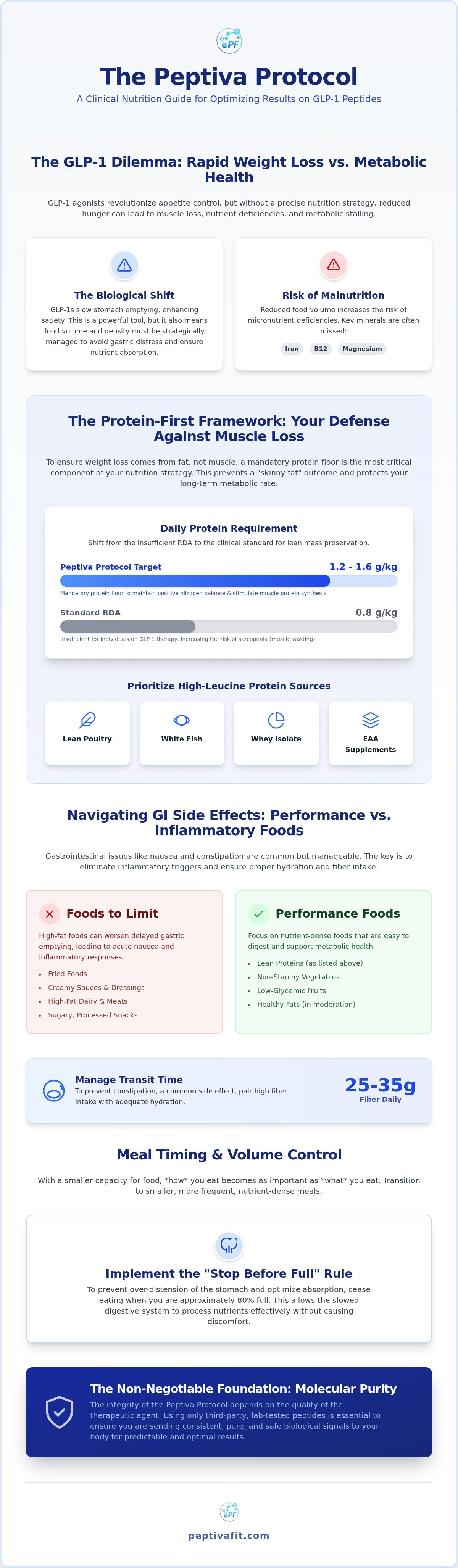
Utilizing GLP-1 receptor agonists represents a significant shift in metabolic management. These agents don't simply "turn off" hunger; they re-engineer the gastrointestinal timeline. For the high-performance individual, understanding the biological shifts in digestion is the difference between sustainable fat loss and metabolic degradation. When you reduce your intake by the typical 16-39% observed in clinical settings, the margin for nutritional error disappears.
The Mechanism of Delayed Gastric Emptying
The primary function of GLP-1 peptides involves slowing the rate at which the stomach contents move into the small intestine. This deceleration enhances satiety and stabilizes post-prandial blood glucose, preventing the sharp insulin spikes that drive fat storage. However, this altered transit time requires a strategic approach to food volume and density. Gastric stasis is the clinical term for the significant slowing or cessation of stomach motility, which can occur if dosing and dietary choices aren't strictly aligned.
The Risk of Accidental Malnutrition
The common advice to "eat whatever you want in smaller portions" is a dangerous oversimplification. Because your total volume of food is significantly lower, you face a heightened risk of micronutrient depletion. Deficiencies in Iron, B12, and Magnesium are frequently documented in patients who prioritize convenience over nutrient density. Deciding what to eat on glp-1 peptides requires a shift from calorie counting to molecular optimization. The Peptiva Protocol addresses these gaps by prioritizing bioavailable nutrients that support mitochondrial health while the body is in a deficit.
Metabolic stalling often occurs when the body perceives a state of starvation rather than a controlled reduction. Without enough high-quality protein and essential minerals, the thyroid and metabolic rate can downregulate to compensate for the lack of fuel. Achieving a 5-18% weight reduction requires more than just the medication; it demands the use of lab tested peptides to ensure the biological signals you're sending are consistent and safe. Clinical oversight ensures that these altered requirements are met through precise, data-driven nutrition rather than guesswork.
The Peptiva Protein-First Framework: Preserving Lean Mass
Preserving lean muscle mass is the most critical metric of success in any clinical weight loss intervention. When hunger signals are chemically suppressed, the risk of sarcopenia, or accelerated muscle wasting, increases significantly. Losing muscle doesn't just lower your strength; it compromises your long-term metabolic health and hormonal balance. To avoid a "skinny fat" outcome, your strategy for what to eat on glp-1 peptides must be built upon a foundation of high-quality amino acids and metabolic discipline.
Calculating Your Daily Protein Minimum
The standard Recommended Dietary Allowance (RDA) of 0.8g per kilogram is insufficient for individuals utilizing peptides for metabolism and fat loss. We mandate a protein floor of 1.2g to 1.6g per kilogram of body weight to maintain a positive nitrogen balance. This requirement ensures that weight loss is derived primarily from adipose tissue rather than skeletal muscle. We prioritize high-leucine protein sources, such as whey isolate, white fish, and lean poultry, because leucine acts as the primary molecular switch for muscle protein synthesis. On days when appetite is at its lowest, utilizing Essential Amino Acid (EAA) supplements can help you meet these biological requirements without the discomfort of a large meal.
Fiber and Transit Time Management
Metabolic optimization is impossible if the body's waste elimination systems are stalled. Because GLP-1 peptides slow the digestive process, many users experience significant constipation. You must target a daily fiber intake of 25 to 35 grams to maintain intestinal motility. Soluble fiber is excellent for glucose management, while insoluble fiber provides the structural bulk needed for regular transit. Non-starchy vegetables like kale, peppers, and cruciferous greens should be your primary sources. These foods offer high micronutrient density and essential volume while minimizing the caloric load. Proper hydration is also a requirement here; fiber without adequate water can worsen gastric distress. If you find these targets difficult to hit on your own, a personalized medical assessment can help refine your specific nutritional needs and ensure your protocol remains optimized.
Navigating GI Side Effects: Performance Foods vs. Inflammatory Triggers
Gastrointestinal distress is the primary reason for protocol non-compliance. When determining what to eat on glp-1 peptides, you must recognize that your digestive system is operating on a delayed timeline. High-fat intake, which might be tolerated in a standard caloric deficit, becomes a biological liability here. Because fats naturally slow gastric emptying, greasy meals remain in the stomach for excessive periods. This leads to acute nausea and significant acid reflux that can derail your progress.
Ultra-processed carbohydrates present a distinct metabolic conflict. These foods trigger blood sugar fluctuations that the peptide therapy is actively trying to stabilize. Consuming refined sugars often results in "dumping syndrome" or intense lethargy as the body struggles to process the glucose load. A 3-liter daily hydration baseline is a mandatory metabolic catalyst. Water assists in nutrient transport and prevents the dizziness often associated with hemoconcentration during rapid fat loss.
Strategic meal planning is the only way to manage the reduction in "food noise" effectively. While the medication eliminates the urge to snack, relying on spontaneous eating often leads to accidental malnutrition. Scheduled, nutrient-dense feedings ensure you meet your biological requirements without overwhelming your slowed digestive capacity.
Foods to Prioritize for Metabolic Resilience
Low-glycemic fruits, specifically berries and citrus, provide essential antioxidant support without disrupting insulin sensitivity. These fruits offer a high micronutrient-to-calorie ratio, which is vital when total volume is restricted. Fermented foods like kefir or unpasteurized sauerkraut are necessary for maintaining gut microbiome diversity during therapy. While total fat intake must be lower, healthy options like avocado and MCT oil provide stable energy in small, manageable boluses that don't trigger nausea.
The "Avoid" List: Mitigating Nausea and Reflux
Greasy and fried foods are the primary triggers for gastric distress and must be strictly avoided. These substances demand significant enzymatic activity that is often compromised when transit time is slowed. High-sugar beverages are equally detrimental, as they compromise the insulin-sensitizing benefits of the therapy. Minimizing alcohol consumption is a requirement, particularly during tesamorelin dosage protocols. Alcohol can inhibit the growth hormone-releasing effects of the peptide and place unnecessary strain on liver clearance pathways.
Meal Timing and Hydration Protocols for Optimization
Achieving metabolic optimization requires a departure from the traditional three-meal-a-day paradigm. Because gastric motility is significantly reduced, consuming large volumes of food in a single sitting creates mechanical stress on the stomach lining. When considering what to eat on glp-1 peptides, the structural timing of your intake is as important as the macronutrient profile. You must transition to a strategy that prioritizes nutrient density over volume to maintain metabolic momentum.
The Bolus Feeding Strategy
The Peptiva Protocol utilizes 5 to 6 nutrient-dense bolus feedings daily, each containing approximately 300 to 400 calories. This frequency ensures a steady supply of amino acids for muscle protein synthesis without overwhelming the digestive tract. Liquid nutrition, such as high-quality whey isolate shakes, serves as a vital tool during phases where appetite is severely suppressed. These liquid boluses are easier to process and help you meet your protein floor when solid food feels unappealing. You must also implement the "Stop Before Full" rule. This involves ending a meal at the first sign of satiety to prevent the over-distension of the stomach, which is a primary cause of nausea. To mitigate nocturnal acid reflux, your final feeding should occur at least three hours before sleep.
Hydration and Electrolyte Criticality
Subclinical dehydration is a frequent complication during peptide therapy, often mistaken for medication-induced fatigue. GLP-1 peptides can increase renal sodium excretion, making electrolyte replenishment a biological requirement rather than an option. Active individuals should target 3,000 to 5,000 mg of sodium, 3,000 to 4,000 mg of potassium, and 400 to 600 mg of magnesium daily. These minerals maintain cellular membrane potential and support the nervous system during rapid fat loss. Optimal cellular hydration is a prerequisite for the molecular signaling required for peptide therapy to achieve peak efficacy. For those requiring precision in their nutrient timing and mineral balance, 1-on-1 coaching provides the necessary data monitoring to prevent metabolic stalls. Maintaining these levels ensures your performance remains high while your body undergoes significant recomposition. Without these specific targets, you risk the "peptide flu" symptoms that often lead to premature discontinuation of therapy.
Integrating Nutrition into the Peptiva Protocol
The implementation of a clinical nutrition strategy is a single, albeit vital, component of a successful body recomposition journey. While mastering what to eat on glp-1 peptides provides the necessary biological fuel, the Peptiva Protocol integrates this with pharmaceutical precision and data-driven monitoring. Success requires more than just dietary compliance; it demands the use of lab tested peptides to ensure that the molecular signals entering your system are pure and predictable. Without verified molecular integrity, even the most rigorous nutritional plan can be undermined by inconsistent peptide concentrations or contaminants.
1-on-1 coaching serves as the bridge between theoretical data and daily execution. As your body transitions toward a new metabolic set point, your requirements for micronutrients and protein will shift based on your activity levels and lean mass retention. A coach monitors these variables in real-time, preventing the common plateau that occurs when a protocol becomes stagnant. This disciplined approach ensures that fat loss is sustainable rather than a temporary weight fluctuation that inevitably rebounds.
The Role of Professional Oversight
Elite performance optimization is not a "DIY" endeavor. We believe personalized medical assessments are non-negotiable for anyone serious about their long-term health. These evaluations provide the baseline data needed to adjust your protocol based on metabolic bio-feedback, such as blood glucose stability and hormonal markers. Operating without this framework increases the risk of metabolic downregulation or unnecessary cardiovascular strain. A structured protocol provides the safety boundaries necessary for high-stakes wellness interventions, ensuring your body remains resilient throughout the fat loss phase.
Next Steps: Maximizing Your Results
Your commitment to long-term metabolic resilience begins with a structured plan that ignores the noise of mass-market advice. Accessing the full Peptiva Protocol fat loss guide provides the granular details required for total body optimization. For those who require immediate, individualized clarity on their nutritional strategy, booking a single consultation call is the most efficient path forward. This session allows for a direct analysis of your current bio-markers and lifestyle variables. We don't offer generic suggestions; we provide the clinical framework for individuals who demand sophisticated control over their biological outcomes. Achieving a permanent shift in your metabolic health requires a transition from short-term fat loss to a permanent state of high-performance maintenance.
Mastering Your Metabolic Evolution
Achieving a significant weight reduction is a clinical milestone, but the quality of that loss defines your long-term health. Success depends on moving beyond simple caloric deficits to a disciplined focus on nutrient density and skeletal muscle preservation. By establishing a protein floor of 1.2 to 1.6 grams per kilogram and utilizing structured bolus feedings, you protect your metabolic engine from the risks of sarcopenia and digestive stasis. Understanding exactly what to eat on glp-1 peptides is the final step in transforming a temporary intervention into a permanent physiological shift.
The Peptiva Protocol provides the definitive framework for this transition, combining lab-verified peptide purity with expert medical consultations. Our approach ensures that every metabolic signal is backed by data and professional oversight. To secure your results and optimize your performance through comprehensive metabolic coaching, you are invited to Download the Peptiva Protocol: The Definitive Fat Loss Peptide Guide. It's time to take sophisticated control of your wellness journey with a protocol designed for the serious individual. You have the tools to redefine your biological potential.
Frequently Asked Questions
Can I drink alcohol while taking GLP-1 peptides?
Alcohol consumption should be strictly minimized during therapy. Ethanol is a gastric irritant that exacerbates the nausea and reflux associated with delayed gastric emptying. It also places additional metabolic strain on the liver, which is already processing the hormonal signals of the peptide. Clinical observation suggests that even moderate intake can stall fat loss by prioritizing acetate metabolism over adipose oxidation, potentially compromising your long-term results.
How much protein do I actually need to prevent muscle loss?
A protein floor of 1.2 to 1.6 grams per kilogram of body weight is the 2026 clinical standard for those determining what to eat on glp-1 peptides. This level ensures a positive nitrogen balance, which is necessary to signal muscle preservation while the body is in a significant caloric deficit. Falling below this threshold often results in sarcopenia, leading to a "skinny fat" physique and a permanently lowered basal metabolic rate.
What happens if I don't eat enough calories on GLP-1s?
Chronic undereating triggers a protective starvation response, where the body downregulates thyroid function and preserves fat stores at the expense of skeletal muscle. This metabolic adaptation makes future weight maintenance nearly impossible once the therapy concludes. You must consume enough nutrient-dense boluses to support basic physiological functions, ensuring that the weight loss is derived from adipose tissue rather than vital structural proteins or organ mass.
Are there specific supplements I should take with my peptides?
Supplementation should focus on addressing the "nutrient gap" created by reduced food volume. We recommend high-purity Essential Amino Acids (EAAs) to support muscle protein synthesis on low-appetite days. Additionally, clinical-grade electrolytes like Sodium, Potassium, and Magnesium are mandatory to prevent dehydration. Vitamin B12 is also frequently required, as this micronutrient is often depleted during rapid fat loss and altered digestive transit times.
Why do I feel nauseous after eating healthy fats?
Nausea following fat consumption occurs because lipids significantly slow gastric emptying even further than the peptides alone. When you consume fats like avocado or oils, they remain in the stomach for an extended duration, leading to fermentation and gastric pressure. While these are healthy fats, their volume must be strictly controlled and distributed into small bolus feedings throughout the day to avoid overwhelming your slowed digestive capacity.
Is intermittent fasting recommended while on GLP-1 therapy?
Intermittent fasting is generally not recommended for individuals on this protocol. The primary challenge when deciding what to eat on glp-1 peptides is meeting your mandatory protein and micronutrient targets within a reduced appetite window. Compressing your intake into a short timeframe often leads to inadequate protein absorption and increased gastrointestinal distress. A strategy of 5 to 6 small, nutrient-dense feedings is superior for maintaining stable blood glucose.
Can I eat spicy foods while on semaglutide or tirzepatide?
Spicy foods should be approached with extreme caution, as they are primary triggers for esophageal irritation and acid reflux. Because peptides delay the transit of food out of the stomach, capsaicin-heavy meals remain in contact with the gastric lining for much longer than usual. This prolonged exposure can cause significant discomfort and acute nausea. We advise prioritizing mild, anti-inflammatory seasonings to maintain digestive comfort during your fat loss journey.
How do I manage constipation caused by GLP-1 peptides?
Managing constipation requires a disciplined combination of fiber intake and aggressive hydration. You must target 25 to 35 grams of total fiber daily, balanced between soluble and insoluble sources. This fiber must be accompanied by a minimum of 3 liters of water to ensure the bulk moves through the slowed digestive tract. Without sufficient water, supplemental fiber can actually worsen the blockage, leading to severe discomfort and metabolic stagnation.

![Shelf Life of Reconstituted Peptides: A Clinical Reference Guide [2026]](https://getautoseo.com/storage/hero_images/shelf-life-of-reconstituted-peptides-a-clinical-reference-guide-2026.jpg?v=b8ed5173acaa)
