
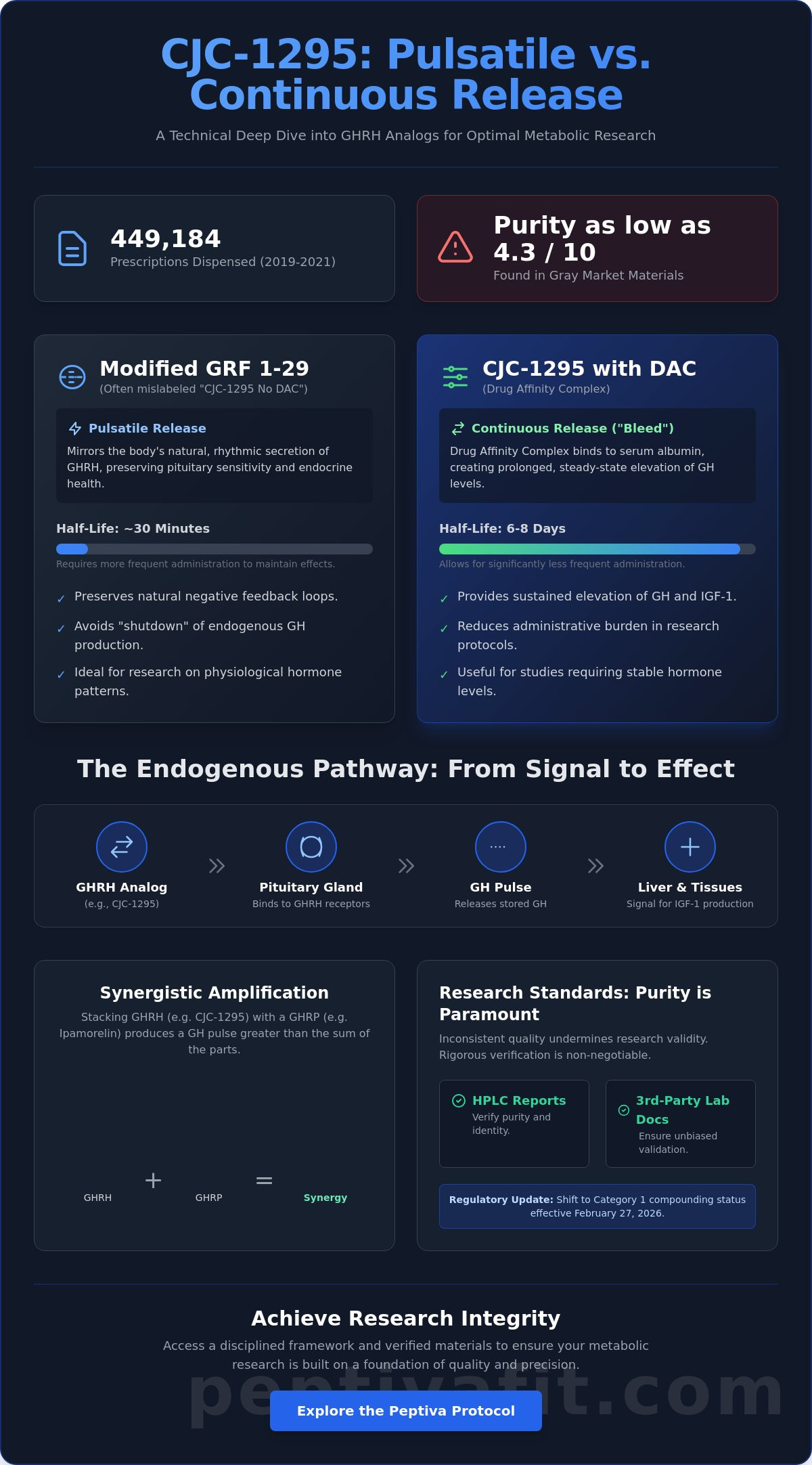
The common assumption that all growth hormone secretagogues function identically ignores the critical biochemical distinction between pulsatile and continuous release. Between 2019 and 2021, pharmacies dispensed 449,184 prescriptions involving CJC-1295; however, independent testing of gray market materials has revealed purity scores as low as 4.3 out of 10. This discrepancy highlights a significant gap between clinical intent and research reality. You're likely aware that nomenclature in the peptide industry is often intentionally opaque, making it difficult to differentiate between Modified GRF 1-29 and versions containing the Drug Affinity Complex.
It's frustrating to encounter inconsistent dosing protocols and low-purity materials when you're focused on high-level metabolic regulation. This technical reference provides a comprehensive analysis of CJC-1295 mechanisms, clarifying how specific variants influence growth hormone optimization. We'll examine the structural differences between DAC and No DAC configurations, the regulatory shift to Category 1 compounding status effective February 27, 2026, and the protocols required to maintain molecular integrity during research.
Key Takeaways
- Master the physiological distinction between pituitary stimulation and direct hormone replacement to ensure endogenous optimization.
- Learn to differentiate between the extended half-life of cjc-1295 with DAC and the pulsatile nature of Modified GRF 1-29 for precise research applications.
- Identify how specific GHRH analogs facilitate targeted lipolysis and enhance collagen synthesis to support metabolic efficiency and tissue recovery.
- Explore the biochemical rationale for stacking GHRH analogs with secretagogues to achieve a synergistic effect that exceeds individual compound use.
- Establish rigorous verification standards by identifying critical quality markers in HPLC reports and third-party laboratory documentation.
What is CJC-1295? Understanding GHRH Analogs
CJC-1295 is a synthetic analog of Growth Hormone-Releasing Hormone (GHRH), specifically engineered to enhance metabolic signaling through endogenous pathways. Unlike exogenous human growth hormone (HGH) which replaces natural levels, this peptide functions as an "upstream" stimulator. It leverages the shortest functional sequence of GHRH, known as Growth Hormone-Releasing Factor (GRF) 1-29, which contains the essential 29 amino acids required for biological activity. CJC-1295 is a metabolic signaling tool utilized for laboratory research to optimize the secretion of growth-promoting hormones.
The primary advantage of using a GHRH analog over direct hormone replacement lies in the preservation of the body's natural regulatory systems. When researchers introduce exogenous HGH, the pituitary gland often ceases its own production due to high systemic levels. In contrast, secretagogues like this analog encourage the gland to release its own stored supply. This distinction is critical for maintaining long-term endocrine health and avoiding the "shutdown" effects associated with traditional replacement therapies. By stimulating the pituitary rather than bypassing it, researchers can observe more natural hormonal fluctuations.
The Mechanism of Action: Pituitary Stimulation
The biological efficacy of this peptide depends on its ability to bind specifically to GHRH receptors (GHRHR) located on somatotroph cells within the anterior pituitary. This binding triggers a cascade of intracellular signaling that results in the secretion of growth hormone. Because the peptide mimics a natural signaling molecule, it respects the body's negative feedback loop. If systemic levels of growth hormone or its secondary metabolites become too high, the pituitary naturally modulates its response. This self-regulating mechanism ensures that hormone levels remain within a physiological range, reducing the risk of complications related to excessive growth hormone exposure.
Metabolic Signaling and IGF-1 Production
Once the pituitary releases a pulse of growth hormone, the signal travels to the liver to initiate the production of Insulin-like Growth Factor 1 (IGF-1). This secondary hormone mediates most of the growth-promoting and metabolic effects attributed to growth hormone. The liver acts as the primary processing hub, converting short-lived GH pulses into a more stable systemic signal. Maintaining physiological pulse patterns is essential for metabolic health. Research indicates that continuous, non-pulsatile elevation of growth hormone can lead to insulin resistance. By stimulating natural pulses rather than providing a constant flood of hormone, GHRH analogs like this one support lipolysis and tissue repair without disrupting glucose metabolism.
CJC-1295 with DAC vs. No DAC (Modified GRF 1-29)
The peptide market is saturated with confusing nomenclature that often obscures the biochemical reality of these compounds. Specifically, the term "CJC-1295 No DAC" is a misnomer frequently used to describe Modified GRF 1-29. The original development of cjc-1295 involved the addition of a Drug Affinity Complex (DAC) to the GRF 1-29 sequence. This complex allows the peptide to bind covalently to serum albumin, a protein with a significant lifespan in the bloodstream. Without this complex, the peptide is simply a modified version of the natural growth hormone-releasing factor. Understanding this distinction is vital for researchers aiming to control the timing and magnitude of growth hormone secretion.
The primary functional difference between these two variants lies in their pharmacokinetic profiles. Modified GRF 1-29 possesses a half-life of approximately 30 minutes, necessitating frequent administration to mirror natural physiological patterns. Conversely, the version with DAC maintains a half-life of 6 to 8 days. This leads to a fundamental shift in how the pituitary responds. While Modified GRF 1-29 produces a sharp, rhythmic "pulse" of hormone, the DAC version creates a continuous "bleed," resulting in a prolonged stimulation of growth hormone. Researchers should select the variant that aligns with their specific metabolic objectives, whether that involves mimicking natural rhythms or achieving steady-state elevation. For those seeking structured guidance on these protocols, the Peptiva Protocol offers a disciplined framework for informed decision-making.
Modified GRF 1-29: The Pulse Optimizer
Native GHRH is extremely unstable and degrades in the blood within minutes. To solve this, chemists substituted four specific amino acids at positions 2, 8, 15, and 27 to create a tetrasubstituted peptide that resists rapid enzymatic breakdown. This modification allows the peptide to reach the pituitary effectively and trigger a natural GH peak without suppressing the body's internal rhythms. It's the ideal choice for research focused on acute metabolic spikes and preserving the natural pulsatile nature of the endocrine system. These shorter pulses prevent the chronic elevation that often leads to side effects like water retention or joint pain.
CJC-1295 with DAC: Sustained Elevation
The inclusion of the Drug Affinity Complex fundamentally alters the peptide’s behavior by ensuring it remains in systemic circulation for 144 to 192 hours. This engineering results in a steady-state elevation of both growth hormone and IGF-1 levels. While this is effective for long-term tissue repair research, it carries a higher risk of pituitary desensitization. Researchers must carefully monitor the duration of these studies to prevent the downregulation of GHRH receptors, as the constant signal doesn't allow the pituitary time to recover between pulses. Long-term studies using cjc-1295 with DAC require strict adherence to cycling protocols to maintain receptor sensitivity.
Clinical Applications: Metabolism, Composition, and Repair
The clinical utility of GHRH analogs extends beyond simple hormone elevation; it encompasses a systemic shift in metabolic priority. By enhancing the amplitude of growth hormone pulses, compounds like cjc-1295 stimulate lipolysis, the process of breaking down stored triglycerides into free fatty acids. This lipid mobilization is a primary driver for researchers focused on body composition. While this peptide offers broad metabolic support, researchers specifically targeting abdominal adiposity often compare these effects to the tesamorelin dosage protocols designed for visceral fat reduction. Beyond fat loss, optimized GH levels correlate with improved slow-wave sleep architecture, which is the phase responsible for physical restoration and cognitive clearing.
Metabolic Optimization and Fat Loss
Elevated growth hormone levels induce a metabolic state where the body prioritizes fat oxidation over glucose consumption. This glucose-sparing effect preserves glycogen stores and lean muscle mass during periods of caloric deficit. By increasing the presence of hormone-sensitive lipase, GHRH analogs facilitate the release of lipids from adipose tissue into the bloodstream for energy use. CJC-1295 supports a leaner phenotype through endogenous signaling by modulating the body's primary metabolic set points. It's a sophisticated alternative to traditional weight loss methods that often result in muscle catabolism.
Recovery and Cellular Longevity
The downstream production of IGF-1 serves as a master regulator for cellular repair and structural integrity. Research indicates that GHRH analogs play a significant role in collagen synthesis, which is essential for skin elasticity, tendon strength, and ligament repair. In clinical models, this signaling has shown the capacity to restore physiological functions; for example, evidence suggests it normalizes growth in the GHRH knockout mouse. These systemic improvements extend to bone mineral density, offering a potential protective effect against age-related skeletal degradation. For researchers focused on comprehensive recovery protocols, combining GHRH analogs with a BPC-157 peptide stack can target both systemic hormonal optimization and localized tissue healing simultaneously. This multi-layered approach ensures that the laboratory environment reflects a disciplined, data-driven strategy for cellular longevity.
The Synergy of Stacking: CJC-1295 and Ipamorelin
Combining growth hormone secretagogues requires a precise understanding of receptor pathways to avoid redundant signaling. While cjc-1295 targets the GHRH receptor to stimulate the production of growth hormone, Ipamorelin acts on the ghrelin receptor (GHS-R1a) to trigger an immediate release pulse. This dual-pathway stimulation creates a "double pulse" effect that bypasses the limitations of using a single compound. Ipamorelin is particularly valued in clinical research for its high level of selectivity. Unlike older generation secretagogues such as GHRP-2 or GHRP-6, it doesn't cause significant elevations in cortisol or prolactin, allowing for a cleaner metabolic signal. When managing these multi-peptide stacks, researchers must understand how to reconstitute peptides to ensure molecular stability isn't compromised during the preparation process.
GHRH and GHS: The Metabolic One-Two Punch
The relationship between these two compounds is often described through the "Spark and Sustain" analogy. Ipamorelin acts as the spark, initiating the pulse by suppressing somatostatin, which is the hormone that inhibits growth hormone release. CJC-1295 then amplifies and sustains that pulse by providing a direct stimulatory signal to the pituitary. Data from clinical observations suggest that this combination can lead to an exponential increase in GH output compared to the additive results of each peptide used in isolation. For optimal research outcomes, timing is essential. Administering the stack during fasted states or before nocturnal sleep cycles aligns the exogenous signal with the body's natural circadian rhythms. To begin your own journey with data-driven optimization, consider a personalized medical assessment today.
Comparing CJC Stacks to Tesamorelin
Choosing between a CJC/Ipamorelin stack and a specific tesamorelin dosage for bodybuilding depends on the research objective. Tesamorelin is a more potent GHRH analog specifically designed for reducing visceral adipose tissue. In a performance context, it's used for its extreme specificity in targeting "stubborn" midsection fat. Conversely, the CJC-1295 and Ipamorelin combination is often more cost-efficient, with vials ranging from $45 to $85, and provides a broader range of metabolic benefits. These benefits include improved sleep architecture and systemic recovery. While Tesamorelin offers clinical specificity for fat loss, the CJC stack serves as a versatile foundation for general metabolic health and performance optimization. Researchers must weigh the clinical precision of high-end analogs against the synergistic flexibility of secretagogue combinations.
Research Standards: Purity, Verification, and Safety
The integrity of metabolic research depends entirely on the chemical purity of the compounds utilized. While cjc-1295 is increasingly accessible through various digital channels, third-party testing has exposed critical quality control failures in the gray market. In one documented instance, a supplier's material scored a dismal 4.3 out of 10 in independent quality testing. This indicates the presence of significant contaminants or massive under-dosing that can compromise research data. Researchers must demand a Certificate of Analysis (COA) for every batch. This document should verify purity through High-Performance Liquid Chromatography (HPLC) and confirm molecular mass via Mass Spectrometry (MS). Without these laboratory-grade verifications, the risk of introducing residual solvents, acetates, or unverified fillers into a research environment is unacceptably high.
Safety protocols in growth hormone research extend beyond chemical purity to include the management of physiological responses. Extended use of GHRH analogs can influence glucose metabolism and insulin sensitivity, particularly when using long-acting variants. Professional oversight ensures that these variables are monitored through consistent data tracking and blood work. Managing the risk of "GH bleed" from the DAC variant requires a disciplined approach to research duration and frequency. It's essential to recognize that while side effects like flushing or injection site irritation are common, the most significant risks are often silent. These include the gradual elevation of fasting blood glucose or the desensitization of pituitary receptors over time.
Laboratory Grade vs. Commercial Grade
A purity level of 99% or higher is the non-negotiable baseline for legitimate metabolic research. Commercial-grade peptides often contain manufacturing byproducts that can trigger immune responses or alter the expected metabolic outcome. These impurities often include truncated peptide sequences or residual trifluoroacetic acid (TFA) from the synthesis process. PeptivaFit only advocates for lab-verified research supplies that meet these stringent criteria. High-purity materials ensure that the observed results in a laboratory setting are a direct consequence of the peptide's mechanism, not a reaction to unidentified contaminants. This level of precision is what separates professional-grade research from casual experimentation.
The Peptiva Approach to Metabolic Oversight
Mitigating long-term research risks requires more than just high-quality materials; it demands a structured framework for observation. Personalized medical assessments allow for the establishment of baseline biomarkers before beginning any protocol. Monitoring blood markers such as HbA1c and IGF-1 is vital during extended research phases to track systemic impact and ensure metabolic safety. This data-driven methodology prevents the guesswork often associated with online peptide communities. To refine your methodology and ensure clinical-grade standards, you can optimize your research with the Peptiva Protocol fat loss guide. Professional guidance remains the most effective tool for navigating the complexities of advanced endocrine signaling while maintaining long-term wellness.
Advancing Metabolic Precision through Endocrine Signaling
Effective metabolic research requires a disciplined distinction between pulsatile and sustained signaling. Selecting the appropriate variant of cjc-1295 depends on whether your data targets acute metabolic spikes or steady-state IGF-1 elevation. As established, the transition to Category 1 compounding status on February 27, 2026, emphasizes the shift toward verified medical channels and away from unverified research materials. Success in this field demands more than just access to compounds; it requires a curated framework of laboratory-verified sourcing and clinical-grade medical assessments to mitigate the purity risks found in unauthorized materials.
By prioritizing data over hype, you ensure that every intervention is both informed and precise. Professional oversight remains the most effective tool for navigating the complexities of advanced endocrine signaling while maintaining long-term wellness and performance. Access the Peptiva Protocol: The Definitive Fat Loss Peptide Guide to integrate expert 1-on-1 metabolic coaching and personalized assessments into your optimization strategy. Take control of your metabolic future with a methodology built on transparency and scientific rigor.
Frequently Asked Questions
What is the difference between CJC-1295 and Ipamorelin?
CJC-1295 functions as a Growth Hormone-Releasing Hormone (GHRH) analog that binds to the GHRH receptor in the anterior pituitary. Ipamorelin is a selective Growth Hormone Secretagogue (GHS) that mimics ghrelin by binding to the GHS-R1a receptor. While both stimulate the secretion of endogenous growth hormone, they use distinct biochemical pathways. Combining them leverages these different mechanisms to produce a synergistic effect that exceeds the results of individual compound use.
Does CJC-1295 with DAC cause growth hormone "bleed"?
The version of CJC-1295 containing the Drug Affinity Complex (DAC) results in a continuous elevation of growth hormone levels, often referred to as a "bleed." This occurs because the DAC complex binds to serum albumin, extending the peptide's half-life to 6 to 8 days. Unlike the pulsatile release seen with Modified GRF 1-29, this sustained signal provides a steady-state elevation of both GH and IGF-1. Researchers must monitor for pituitary desensitization during long-term studies.
How long does it take for CJC-1295 to show metabolic results in a research setting?
Measurable increases in systemic IGF-1 levels are typically observed within 7 to 10 days of consistent administration. Visible metabolic shifts, such as changes in lipid metabolism and body composition, generally require a research duration of 8 to 12 weeks. These timelines depend on the specific variant used and the researcher's adherence to a disciplined protocol. Maintaining a steady physiological signal is essential for observing significant improvements in tissue repair and fat oxidation.
Is CJC-1295 legal for human consumption in the United States?
As of February 27, 2026, CJC-1295 is classified as a Category 1 substance for pharmacy compounding, which allows licensed pharmacies to prepare the compound while the FDA continues its review. It's not currently FDA approved for general human consumption. Pharmaceutical-grade material requires a prescription from a licensed clinician for specific medical use. Most digital vendors sell these peptides strictly for laboratory research purposes to remain compliant with federal regulations.
Can CJC-1295 be used without Ipamorelin?
CJC-1295 is highly effective as a standalone metabolic signaling tool without the addition of Ipamorelin. It independently stimulates the pituitary gland to increase endogenous growth hormone production. While stacking with a secretagogue provides a synergistic "double pulse" effect, the GHRH analog alone is sufficient for researchers focusing on sustained IGF-1 elevation or lipid mobilization. The choice to use it as a monotherapy depends on the specific metabolic goals and the desired pulse frequency.
What are the most common side effects observed in CJC-1295 research?
The most frequently documented side effects include transient facial flushing and mild irritation at the injection site. Some research models also report water retention or joint sensitivity, particularly with the DAC variant due to sustained hormone elevation. These responses are typically dose-dependent and often resolve as the biological system adapts to the signaling. Researchers should monitor fasting blood glucose levels to ensure that extended protocols don't negatively impact insulin sensitivity.
How should CJC-1295 be stored to maintain molecular integrity?
Lyophilized peptide powder should be stored in a freezer at -20 degrees Celsius to ensure long-term stability. Once the peptide is reconstituted with bacteriostatic water, it must be kept in a refrigerator between 2 and 8 degrees Celsius. Exposure to direct sunlight, high temperatures, or vigorous agitation can lead to molecular degradation. Maintaining these strict storage conditions is vital for preserving the potency and purity required for accurate laboratory results.
Does CJC-1295 impact natural testosterone production?
CJC-1295 does not negatively impact natural testosterone production or the hypothalamic-pituitary-testicular axis (HPTA). Its mechanism of action is specific to the growth hormone-releasing hormone receptor in the pituitary gland. Because it doesn't involve gonadotropins or androgen receptors, it doesn't cause the hormonal suppression associated with anabolic steroids. This specificity allows researchers to isolate metabolic and growth-promoting effects without disrupting the body's primary sex hormone balance.

![Shelf Life of Reconstituted Peptides: A Clinical Reference Guide [2026]](https://getautoseo.com/storage/hero_images/shelf-life-of-reconstituted-peptides-a-clinical-reference-guide-2026.jpg?v=b8ed5173acaa)
