
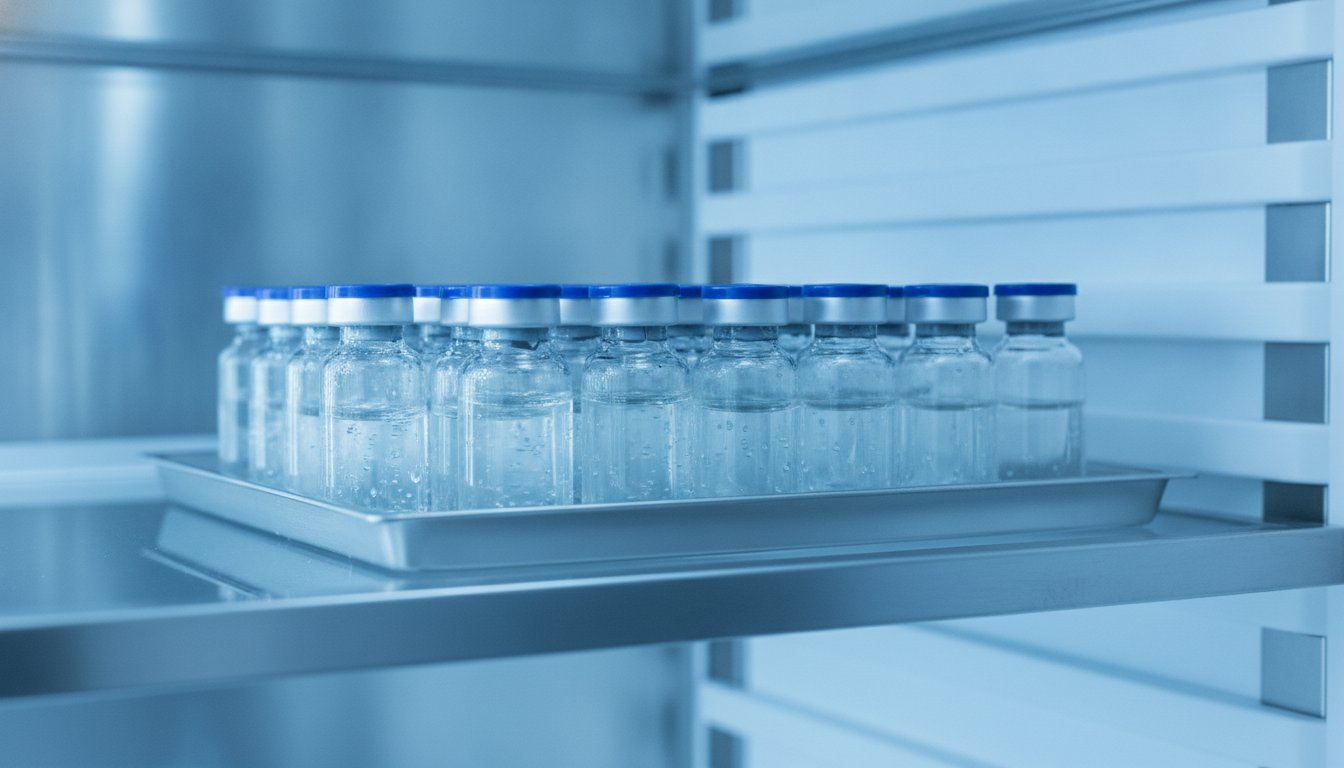
The moment a lyophilized powder transitions into a liquid solution, a relentless countdown toward molecular degradation begins. You've likely invested significant resources into your performance protocol, and the anxiety of wasting that investment on a degraded, ineffective compound is a reality for many serious practitioners. It's common to feel frustrated by conflicting advice on temperature settings or the fear of microscopic bacterial growth within your vials.
Mastering how to store peptides after mixing is not a suggestion; it's a fundamental requirement for maintaining the potency and safety of your metabolic tools. This article serves as your clinical directive for preserving molecular integrity. You'll gain a clear understanding of why the 2-8°C refrigeration range is non-negotiable and why the freezer is often the enemy of a reconstituted peptide. We will outline the precise 28-day shelf-life window for multi-dose vials and provide the diagnostic markers needed to identify if a solution has been compromised by heat, light, or contamination. By the end of this guide, you'll possess the disciplined storage protocols necessary to ensure every administration delivers the data-driven results your body demands.
Key Takeaways
- Understand the biological risks associated with reconstitution and why the introduction of a solvent initiates a countdown for molecular potency.
- Discover the precise clinical standards for how to store peptides after mixing, including the requirement for a stable 2°C to 8°C environment.
- Avoid the common error of freezing reconstituted compounds, as ice crystal formation can lead to mechanical shear and the physical destruction of delicate peptide structures.
- Master visual diagnostic techniques like the Swirl Test to identify precipitation or contamination before it compromises your metabolic results.
Understanding Peptide Stability: The Science of Post-Mixing Degradation
Peptide stability refers to the preservation of a molecule's specific amino acid sequence and its functional three-dimensional arrangement. In its lyophilized state, a peptide is relatively inert and stable. However, the introduction of a solvent initiates the "potency clock." This process, often referred to as The Science of Post-Mixing Degradation, determines whether the compound will successfully bind to its target receptors or become a biologically useless string of amino acids. Understanding how to store peptides after mixing is the only way to mitigate the immediate risk of hydrolysis, where water molecules chemically break the peptide bonds and render the solution ineffective.
The choice of solvent is the first line of defense in maintaining molecular integrity. Bacteriostatic water, which contains 0.9% benzyl alcohol, serves a dual purpose. It inhibits microbial proliferation while helping to maintain a stable pH environment. Without this preservative, a reconstituted solution becomes a breeding ground for bacteria within hours. Additionally, the complexity of the peptide sequence dictates its fragility. Larger molecules with intricate folding patterns are significantly more susceptible to environmental stressors than shorter, linear chains. If you don't respect these chemical boundaries, the metabolic results you seek will remain out of reach.
The Three Enemies of Reconstituted Peptides
Three primary vectors drive the degradation of a liquid peptide solution. Thermal stress is the most prevalent. As temperature rises, molecular vibration increases, leading to the unfolding or denaturation of the peptide chain. Photo-oxidation occurs when UV light strikes sensitive residues like Tryptophan or Tyrosine, causing irreversible chemical changes. Finally, mechanical shear represents a physical threat. Aggressive shaking of a vial can physically shred the delicate bonds of the molecule. This is why a gentle swirling motion is the clinical standard for mixing. Protecting the vial from these three factors is the core of any high-level optimization protocol.
Potency vs. Safety: The Dual Purpose of Storage
Effective storage protocols serve two distinct masters: biological activity and user safety. For a peptide to yield metabolic results, it must retain its active conformation to fit into cellular receptors like a key into a lock. Once this shape is lost, the peptide is effectively dead. Simultaneously, rigorous storage prevents the proliferation of microscopic contaminants that might have been introduced during the initial draw. Establishing a baseline for how to reconstitute peptides ensures that the storage phase begins with a sterile, high-integrity solution. Mastery of how to store peptides after mixing ensures that your protocol remains both effective and safe for the duration of the vial's lifecycle.
The Cold Chain Protocol: Optimal Refrigeration Standards
Mastering the logistics of how to store peptides after mixing begins with establishing a rigid cold chain protocol. The clinical gold standard for reconstituted peptides is a constant environment maintained between 2°C and 8°C (36°F - 46°F). This specific temperature range slows the kinetic energy within the solution, effectively stalling the hydrolysis process discussed in previous sections. While lyophilized powder is resilient, the liquid form is fragile. Deviating from this thermal window for even a few hours can compromise the structural integrity of the compound, leading to diminished metabolic results and wasted investment.
When considering how to store peptides after mixing for maximum longevity, the center shelf of a refrigerator is the only acceptable location. Never store vials in the refrigerator door. The door is subject to constant temperature spikes every time the unit is opened, creating a volatile environment that accelerates degradation. By placing your vials in the center, you leverage the stability of the unit's thermal mass. Under these precise conditions, most reconstituted peptides remain viable for 21 to 30 days. Beyond this window, even with perfect refrigeration, the cumulative effects of molecular vibration typically result in a loss of potency that exceeds clinical thresholds.
Managing Temperature Fluctuations
Modern consumer refrigerators often utilize an auto-defrost cycle that causes internal temperatures to swing outside the required 2°C to 8°C range. For individuals committed to high-value protocols, a dedicated medical-grade refrigerator or the use of a secondary digital thermometer with data-logging capabilities is recommended. This allows for the monitoring of thermal consistency over time. If travel is necessary, you must use insulated cold-packs. Ensure there is a protective barrier between the vial and the frozen pack to prevent accidental freezing, which can be just as damaging as excessive heat. A single consultation call can provide the necessary oversight to ensure your storage environment meets these exacting standards.
UV Protection and Oxidation Control
Temperature is not the only variable in the cold chain; light exposure is equally critical. Photons from standard fluorescent kitchen lights can be as damaging as direct sunlight over time, acting as a catalyst for oxidation. You should store your vials in their original boxes, amber glass containers, or wrap them in aluminum foil to block all light ingress. Minimizing "headspace," or the volume of air inside the vial, also reduces the risk of oxygen-induced degradation. Amber vials or opaque storage containers are a clinical necessity because they act as a physical filter against the specific wavelengths of light that trigger the degradation of sensitive amino acid sequences.
The Freeze-Thaw Dilemma: Should You Ever Freeze Mixed Peptides?
The clinical consensus regarding the freezing of reconstituted compounds is uncompromising. While decentralized forums often debate the viability of sub-zero storage, scientific evidence confirms that freezing mixed peptides is fundamentally destructive. The primary threat is mechanical shear. Unlike the shear caused by aggressive shaking discussed in earlier sections, ice crystal formation creates microscopic, sharp-edged structures that physically disrupt the three-dimensional architecture of the peptide. When determining how to store peptides after mixing, you must distinguish between the preservation of a dry powder and the preservation of a liquid solution. Freezing a liquid peptide effectively shreds the molecular bonds required for receptor binding.
The damage caused by freezing is not merely a risk; it's a statistical certainty for most sequences. As the solvent transitions from liquid to solid, the expansion of water molecules creates immense physical pressure within the vial. This process forces the peptide molecules into the narrow interstitial spaces between ice crystals, leading to irreversible denaturation. If you subject a reconstituted vial to repeated freeze-thaw cycles, you're essentially ensuring a total loss of biological activity. Each cycle compounds the structural damage, leaving you with a solution that is metabolically inert and a waste of resources.
Molecular Stress During Phase Changes
Phase changes introduce significant physical pressure that alters concentration gradients within the vial. Peptides are forced into high-concentration pockets, which frequently leads to aggregation. This is a state where the molecules clump together, losing the specific "active" shape necessary for efficacy. It's vital to remember that lyophilized powder remains exceptionally stable at -20°C for years because the absence of water prevents crystal formation. Once you add a solvent, that stability vanishes. The reconstituted form cannot survive the same sub-zero temperatures without significant molecular degradation.
Long-Term Storage Strategy
A disciplined protocol relies on accurate planning rather than reactive storage. You should only reconstitute the specific volume of peptide you intend to use within a 21-day window. This ensures the compound remains within its peak potency phase while stored in the refrigerator. Any unmixed vials should remain in the freezer at -20°C to preserve their long-term integrity until they are needed. Aligning your procurement and reconstitution schedule with your fat loss peptide guide timeline prevents the need for emergency freezing. If a single-freeze event is absolutely unavoidable, it must be performed as a "flash-freeze" to minimize ice crystal size, though this remains a sub-optimal deviation from clinical standards. Mastering how to store peptides after mixing is an exercise in managing these phase-change risks to protect your physiological investment.

Identifying Degradation: How to Know If Your Peptide Has Failed
Visual inspection represents the final checkpoint in your quality control protocol. While previous sections detailed the rigorous environmental requirements for maintenance, you must also develop the clinical eye necessary to detect when those protocols have failed. A common misconception is that a clear vial is always a potent vial. In reality, molecular degradation often occurs at a level invisible to the naked eye. However, certain physical indicators provide undeniable evidence of a compromised solution that should no longer be used. Mastery of how to store peptides after mixing reduces these occurrences, but it doesn't eliminate the need for constant vigilance.
The "Swirl Test" is a primary diagnostic tool for the serious practitioner. By gently rotating the vial between your fingers under a bright light, you can observe changes in viscosity or the presence of particulates. You're looking for a perfectly homogenous liquid. If you see "floaters" or persistent cloudiness that doesn't resolve after the vial has been allowed to sit, the peptide's structural integrity has likely been breached. Even if you understand how to store peptides after mixing, time and sequence complexity eventually win. You must also monitor subjective markers. If a peptide that previously caused a distinct physiological response, such as the characteristic flushing associated with certain GHRPs, suddenly produces no effect, the molecule has likely denatured.
Physical Signs of Instability
Precipitation is a frequent marker of instability. This occurs when the peptide "falls out" of the solution, appearing as solid flakes or powder at the bottom of the vial. This is often triggered by sudden pH shifts or extreme cold stress. Discoloration is another red flag; a slight yellowing of the liquid typically indicates oxidation from light exposure or air ingress. You must understand that any vial showing signs of bacterial cloudiness must be discarded immediately without exception. These physical shifts are the biological warning that the compound is no longer fit for administration.
The Risk of Using Degraded Peptides
Administering a failed compound is more than a financial loss; it's a strategic setback. Denatured proteins can trigger localized irritation or an unwanted immune response, as the body no longer recognizes the sequence as a functional signaling molecule. More commonly, you'll experience diminished metabolic returns. If your compound is inactive, your fat loss progress will stall regardless of your diet or training intensity. Starting with lab tested peptides provides the high baseline of purity required to ensure that any later degradation is a result of handling errors rather than initial contamination. If you're unsure about the status of your current supply, a personalized medical assessment can help identify where your storage or administration protocols may be failing.
Integrating Storage Protocols into The Peptiva Protocol
A sophisticated metabolic strategy is only as effective as the molecular integrity of the compounds utilized. While the preceding sections have established the technical foundations of how to store peptides after mixing, the transition from theory to metabolic execution requires a disciplined, professional framework. The Peptiva Protocol integrates these clinical storage standards into a broader system of performance optimization. We ensure that every variable, from the initial reconstitution to the final administration, is managed with the precision required to protect your physiological investment.
Specific fat loss peptides demand varying levels of vigilance due to their unique sequence complexities. For instance, Tesamorelin, a large 44-amino acid GHRH analog, is exceptionally fragile. Even minor deviations in refrigeration can cause rapid denaturation of its intricate structure. Conversely, fragments like AOD-9604 are shorter but remain highly sensitive to the pH shifts discussed in section four. High-purity, lab-verified peptides are inherently more resilient because they lack the residual salts and trifluoroacetic acid (TFA) often found in generic alternatives. These impurities act as catalysts for degradation, accelerating the "potency clock" regardless of how well you manage your cold chain.
The Peptiva Advantage: Beyond the Vial
Our approach moves beyond basic instructions to provide a comprehensive oversight system. Through personalized medical assessments, we help you determine the exact quantities to reconstitute, ensuring you never exceed the 30-day window of peak potency. This prevents the "Freeze-Thaw Dilemma" by aligning your inventory with your actual metabolic needs. If you're uncertain about your current environment, a single consultation call serves as a critical audit of your home storage setup. This level of 1-on-1 coaching allows for the immediate troubleshooting of handling errors before they compromise your results. The Peptiva Protocol prioritizes safety and molecular integrity because we understand that data-driven wellness requires stable, high-performance tools.
Final Checklist for Success
To maintain the highest standards of performance, you must treat your storage environment as an extension of your laboratory. Use this checklist to verify your compliance with the protocols established in this guide:
- Thermal Verification: Confirm your refrigerator maintains a stable 2-8°C using a secondary digital thermometer.
- Photon Blockade: Ensure vials are stored in amber glass or wrapped in foil to achieve zero light exposure.
- Temporal Tracking: Clearly label every vial with the "Date of Reconstitution" to enforce a strict 30-day disposal policy.
- Placement Audit: Verify that all mixed vials are positioned in the center of the fridge, away from the door or the cooling elements.
Successful optimization isn't a product of chance; it's the result of rigorous adherence to clinical standards. By mastering how to store peptides after mixing, you secure the foundation of your metabolic journey. Move forward with the confidence that your compounds are as potent and effective as the day they were synthesized.
Achieving Peak Potency Through Environmental Control
Maintaining the structural integrity of your compounds requires more than just basic refrigeration; it demands a disciplined adherence to the cold chain and light protection standards outlined today. By respecting the 2-8°C thermal window and strictly observing the 30-day potency clock, you ensure that every administration remains biologically active. Mastering how to store peptides after mixing is the essential safeguard that prevents molecular degradation from stalling your metabolic progress or compromising your safety.
Access the Peptiva Protocol and secure lab-tested peptides here. Our system provides lab-verified purity reports and expert 1-on-1 medical coaching to ensure your journey is rooted in scientific data rather than guesswork. This protocol is specifically engineered for metabolic optimization, offering you sophisticated control over your performance and wellness through every stage of the process. Your commitment to these rigorous clinical standards reflects a serious intent toward self-optimization. Move forward with the precision and personal responsibility that your biological goals deserve.
Clinical Storage Standards: Frequently Asked Questions
How long do peptides last in the fridge after mixing?
Most reconstituted peptides remain viable for 21 to 30 days when stored at a constant temperature of 2-8°C (36-46°F). Beyond this 28-day window, the risk of molecular degradation and potential microbial growth increases significantly. It's imperative to label each vial with the date of reconstitution to ensure you're following these strict clinical timelines for maximum potency. Understanding how to store peptides after mixing is the only way to ensure your protocol remains effective for the duration of the vial.
Can I store mixed peptides at room temperature if I use them quickly?
No, you shouldn't store mixed peptides at room temperature under any circumstances. Thermal energy at ambient temperatures accelerates the hydrolysis process, which chemically breaks the peptide bonds and renders the solution inert. Even a few hours of exposure to heat can initiate a decline in potency that compromises your metabolic results. Professional standards require immediate refrigeration following the reconstitution process to stall this degradation.
What happens if I accidentally leave my reconstituted peptide out overnight?
Leaving a reconstituted peptide out overnight results in a significant potency hit due to sustained thermal stress. While the solution may not be inherently dangerous, its biological activity is likely diminished, meaning it won't yield the same data-driven results. If the ambient temperature exceeded 25°C (77°F), the risk of molecular denaturation is high, and the vial should be replaced to maintain protocol consistency.
Is it okay to store mixed peptides in the freezer to make them last longer?
Freezing reconstituted peptides is not a recommended practice because the formation of ice crystals causes mechanical shear. This physical stress can shred the delicate amino acid chains and lead to aggregation, where the molecules clump together and lose their receptor-binding capability. While lyophilized powder is stable in sub-zero temperatures, the liquid form requires the stable, non-freezing environment of a refrigerator.
Why has my peptide solution turned cloudy after a week in the fridge?
Cloudiness is typically a definitive sign of peptide precipitation or microbial contamination within the vial. If the solution is no longer homogenous and clear, the molecular integrity has been compromised by pH shifts or improper handling. Any vial showing persistent cloudiness or visible particulates must be discarded immediately without exception to prevent localized irritation or an unwanted immune response.
Do I need to protect my peptide vials from the light inside the refrigerator?
Yes, protecting vials from light is a clinical necessity to prevent photo-oxidation of the amino acid sequence. Standard refrigerator lights can emit UV wavelengths that damage sensitive residues like Tryptophan or Tyrosine over time. You should keep your vials in their original boxes or wrap them in aluminum foil to ensure a complete photon blockade is maintained during storage.
Can I travel with reconstituted peptides in a standard cooler bag?
You can travel with mixed peptides using an insulated cooler bag and cold packs, provided the internal environment stays within the 2-8°C range. When considering how to store peptides after mixing during transit, you must ensure the vial doesn't come into direct contact with the ice pack. Direct contact can cause localized freezing and mechanical damage, so using a protective barrier or a dedicated travel case is the professional standard.
How can I tell if my peptides have lost their potency?
Identifying lost potency requires a combination of visual diagnostic techniques and subjective monitoring of your physiological response. Visually, look for discoloration, particulates, or changes in viscosity using the Swirl Test mentioned in earlier sections. Subjectively, if a peptide that previously produced a distinct response, such as a flushing sensation, suddenly yields no effect, the molecule has likely denatured and lost its efficacy.

![Shelf Life of Reconstituted Peptides: A Clinical Reference Guide [2026]](https://getautoseo.com/storage/hero_images/shelf-life-of-reconstituted-peptides-a-clinical-reference-guide-2026.jpg?v=b8ed5173acaa)
