
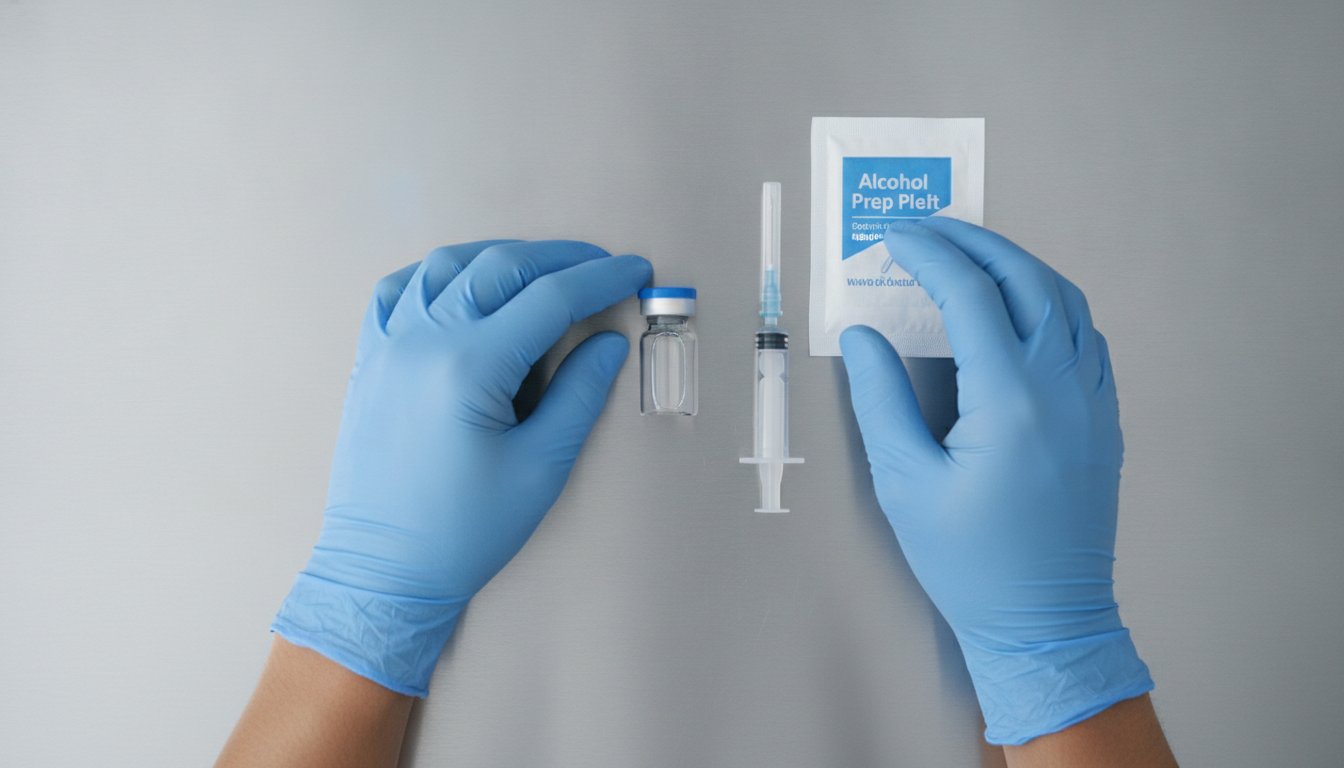
A localized skin response is not a random occurrence; it is a specific biological signal that demands a technical adjustment to your administration strategy. You likely feel a sense of frustration when an unsightly nodule or persistent itching disrupts your focus. It's common to question whether you're experiencing a normal histamine response or a sign of poor peptide quality. Mastering the process of troubleshooting peptide injection site reactions is essential for any serious individual committed to high-level performance and data-driven wellness.
This article establishes a disciplined protocol to identify, manage, and prevent these localized issues. You'll gain the confidence to distinguish between benign irritation and clinical concerns while optimizing your use of bacteriostatic water and injection mechanics. We'll move from immediate symptom management to the long-term refinement of your research technique to ensure your protocol remains uninterrupted and effective.
Key Takeaways
- Differentiate between normal localized erythema and systemic hypersensitivity to maintain the clinical integrity of your research.
- Execute a systematic approach to troubleshooting peptide injection site reactions by identifying issues with osmolarity or solvent concentrations.
- Manage common localized symptoms like subcutaneous nodules and persistent redness with precise topical and thermal protocols.
- Establish a disciplined 1-inch site rotation grid across abdominal or lateral thigh fat pads to prevent tissue trauma and ensure consistent absorption.
- Leverage lab-verified materials and personalized medical assessments to eliminate variables related to product purity and individual skin sensitivity.
Clinical Classification of Peptide Injection Site Reactions
The body's response to exogenous peptide administration is rarely silent. Precise Injection site reactions (ISRs) serve as physiological data points that reflect the interaction between a specific molecular structure and your unique immune profile. You must distinguish between a localized irritant dermatitis, which is a chemical response to the solution's pH or osmolarity, and systemic hypersensitivity, which involves a broader immune cascade. When you're troubleshooting peptide injection site reactions, the first step is always identifying the specific mechanism of action behind the irritation.
Normal vs. Pathological: When to Intervene
Healthy inflammation is a controlled, localized event. It shouldn't spread beyond the immediate area of administration. You need to be vigilant for signs that the reaction has moved from a simple irritation to a clinical concern. Warning signs of cellulitis or localized infection include:
- Spreading heat or redness that extends beyond a 2-inch radius.
- Systemic symptoms such as fever, chills, or sudden fatigue.
- Hard, painful red streaks extending from the site, known as lymphangitis.
- Deep, persistent throbbing that doesn't respond to standard cold therapy.
Another concern for the experienced researcher is the Arthus reaction. This is a localized Type III hypersensitivity that occurs when high levels of antibodies react with the injected antigen. It presents as severe pain, swelling, and potential tissue necrosis within a few hours. It's often the result of failing to rotate sites, leading to a localized accumulation of immune complexes.
Peptide-Specific Reaction Profiles
Different molecules present unique challenges based on their chemical composition. GHK-Cu is notoriously acidic; its low pH often causes an immediate stinging sensation and localized bruising that can last for several days. Growth Hormone Releasing Peptides like Ipamorelin frequently trigger a localized histamine release. This results in intense, short-lived itching that usually subsides within thirty minutes. Tesamorelin is known for causing specific tissue-tightening effects or firmer nodules at the site. These aren't necessarily signs of failure but are inherent to the molecule's interaction with subcutaneous fat. Recognizing these specific profiles prevents unnecessary anxiety and allows for targeted protocol adjustments.
Mechanisms of Irritation: Reconstitution and Molecular Factors
The chemical environment of the subcutaneous space is highly sensitive to shifts in pH and osmolarity. Troubleshooting peptide injection site reactions requires a granular understanding of how concentrated solutions interact with cellular fluid. When a solution is too concentrated, it becomes hypertonic. This draws water out of the surrounding cells and triggers a painful inflammatory response. It's a biological demand for equilibrium that manifests as localized swelling and discomfort. Balancing the ratio of your solute to your solvent is a clinical necessity for long-term protocol adherence.
Solvent sensitivities are often overlooked in standard research settings. Bacteriostatic water typically contains 0.9% benzyl alcohol as a preservative. While this is standard, some individuals possess a lower threshold for this specific solvent. This sensitivity results in localized pruritus or redness that can be mistaken for a peptide allergy. Molecular integrity also plays a significant role. Residual Trifluoroacetic Acid (TFA), a common byproduct of peptide synthesis, can significantly lower the pH of the reconstituted solution. This acidity leads to a sharp, localized burn upon administration.
Temperature shock is another mechanical factor that researchers must account for. Injecting a solution directly from a 4-degree Celsius refrigerator into 37-degree Celsius tissue causes immediate vasoconstriction and localized trauma. This often results in a lingering ache at the site. Referencing the Medical Management of Vaccine Reactions protocol, adopting a room-temperature approach or implementing gentle warming of the syringe can mitigate this specific physiological response. Small mechanical adjustments often yield significant improvements in site comfort.
The Role of Reconstitution Volume
Correctly identifying how to reconstitute peptides is your primary defense against tissue displacement. Increasing the volume of the diluent can buffer the pH and reduce the osmolarity of the final solution. This balance is critical. A solution that is too dilute requires a larger injection volume, which can cause mechanical trauma. Conversely, a solution that is too concentrated creates chemical irritation. You must calculate the optimal dilution ratio to minimize tissue displacement while maintaining molecular stability.
Solvent Quality and pH Buffering
Effective troubleshooting peptide injection site reactions involves verifying the quality of both the solute and the solvent. Using medical-grade solvents is a non-negotiable standard for disciplined research. Only lab tested peptides provide the necessary transparency regarding residual TFA levels and overall purity. If you continue to experience unexplained site reactions despite proper technique, a personalized medical assessment can help isolate individual biological variables and refine your approach.
Troubleshooting Protocols for Common Localized Symptoms
Persistent erythema and pruritus are the most frequent challenges in clinical research. When you're troubleshooting peptide injection site reactions, you must decide between suppressing the immune response or managing the physical discomfort. Topical antihistamines are effective for surface-level itching, whereas cold thermotherapy, specifically ice application for 10 minutes post-injection, constricts blood vessels and limits the spread of the solution. For researchers with heightened sensitivity, the "Zyrtec Protocol" can be utilized. This involves administering a second-generation H1 antagonist 60 minutes prior to administration to preemptively stabilize mast cells. This approach targets the immunological mechanisms behind adverse reactions by reducing the recruitment of inflammatory mediators at the site.
Subcutaneous nodules, or "peptide lumps," often result from the depot effect, where the solution remains localized in the adipose tissue rather than dispersing. You must distinguish these from sterile abscesses, which are characterized by intense pain and fluctuating fluid beneath the skin. Effective troubleshooting peptide injection site reactions also requires addressing mechanical failures like bruising. Utilizing a 31-gauge needle instead of a 27-gauge significantly reduces vascular trauma. Additionally, maintaining a 90-degree angle for 5/16" needles or a 45-degree angle for 1/2" needles ensures the needle tip reaches the appropriate depth without shearing the dermis.
The Nodule Resolution Strategy
Lumps typically form when tissue saturation occurs at a single site. Manual lymphatic drainage, involving gentle circular pressure around the nodule for two minutes twice daily, can facilitate dispersion. If nodules persist or become fibrotic, it indicates the subcutaneous space is overwhelmed. In such cases, transitioning to a shallow intramuscular (IM) injection using a 1/2" needle in the deltoid or vastus lateralis may be necessary. This bypasses the adipose layer and utilizes the higher blood flow of muscle tissue for faster absorption.
Immediate Post-Injection Mitigation
Prevention is more efficient than resolution. Implementing the 30-second pressure rule, which involves applying firm and steady pressure with a sterile gauze immediately after needle withdrawal, prevents the solution from tracking back into the dermal layers where sensory nerves are most dense. Ensure the alcohol used for sterilization has completely evaporated before penetration. This prevents alcohol sting, where the solvent is dragged into the wound. Selecting the correct needle depth is also vital. A 5/16" (8mm) needle is standard, but individuals with higher adiposity may require a 1/2" (12.7mm) needle to ensure the peptide reaches the deep subcutaneous layer rather than the skin itself.

Advanced Preventative Strategies for Metabolic Research
Establishing a disciplined site rotation grid is the cornerstone of long-term tissue health and molecular efficacy. Most researchers fail because they rely on random injections, which leads to localized tissue exhaustion. You must implement the 1-inch rule, ensuring that no two injections occur within a one-inch radius of each other inside a 14-day window. This methodical approach is the most effective way of troubleshooting peptide injection site reactions before they manifest as chronic inflammation. High-absorption zones like the abdominal fat pads offer the most consistent systemic delivery, but the lateral thighs and gluteal regions are vital secondary sites for maintaining dermal integrity.
The air lock technique is a clinical refinement that prevents peptide tracking. By drawing a small volume of air (approximately 0.1cc) into the syringe after the peptide dose, you create a pressurized seal. This air bubble follows the liquid through the needle, clearing the "dead space" and locking the solution deep within the subcutaneous layer. This prevents the peptide from leaking back into the sensitive dermal layers where most irritations occur. Additionally, temperature normalization is mandatory. Cold peptides cause localized vasoconstriction; allow the vial to sit at room temperature for five minutes prior to administration to ensure physiological compatibility.
Systematic Site Rotation Framework
Visualizing the abdomen as a four-quadrant grid is essential for those utilizing peptides for metabolism and fat loss. You should rotate clockwise through these quadrants, moving at least one inch from the previous site within each section. Failure to follow this framework leads to lipohypertrophy, a condition where fat cells swell and harden due to repeated mechanical trauma. If a specific quadrant shows signs of persistent redness, you must pause all administration in that zone for a minimum of 14 days to allow for complete cellular recovery.
Optimizing Reconstitution for Comfort
Precision in your initial setup dictates the success of your protocol. Using a peptide reconstitution calculator ensures you achieve the exact concentration required for stability without excessive volume. Implement the slow-drip method by allowing the bacteriostatic water to run down the side of the glass vial rather than spraying it directly onto the lyophilized powder. This preserves the delicate molecular structure and prevents the formation of irritant degradation products. To further refine your research standards and eliminate variables, consider a personalized medical assessment to tailor your protocol to your specific metabolic profile.
Ensuring Molecular Integrity and Expert Oversight with PeptivaFit
PeptivaFit operates on the principle that the most effective method for troubleshooting peptide injection site reactions is to eliminate the variable of impure materials. Many researchers struggle with persistent irritation because they utilize unverified sources that lack transparency. PeptivaFit provides lab tested peptides that undergo rigorous screening to ensure molecular integrity. By eliminating synthesis-related contaminants like excess Trifluoroacetic Acid (TFA) or residual solvents, you significantly lower the probability of a localized immune cascade. High-purity materials are the foundational requirement for any disciplined research protocol.
Transitioning from a DIY approach to a structured framework is essential for those committed to elite-level optimization. A personalized medical assessment allows for the identification of underlying skin sensitivities or systemic predispositions before they compromise your research. When localized issues persist despite perfect technique and high-purity materials, it's time to seek expert oversight. Professional 1-on-1 coaching provides the granular protocol adjustments needed to maintain tissue health while pursuing aggressive metabolic goals. This level of individual attention separates serious researchers from the general market.
The Peptiva Protocol: Fat Loss Peptide Guide serves as the definitive roadmap for those prioritizing both efficacy and comfort. It integrates the mechanical and chemical strategies discussed in previous sections into a cohesive, high-performance system. This holistic approach ensures that your focus remains on metabolic data rather than managing avoidable side effects. A reaction-free protocol isn't just about comfort; it's about maintaining the integrity of the subcutaneous tissue for long-term molecular absorption.
The Value of Clinical-Grade Research Supplies
PeptivaFit sets a standard that prioritizes purity over mass-market accessibility. Every batch is supported by a Certificate of Analysis (COA) that quantifies TFA levels and solvent residue. High TFA concentrations are a primary driver of localized burning and tissue trauma. By ensuring these levels remain at a clinical minimum, PeptivaFit removes the "mystery" from site reactions. Consistent sourcing is not just a preference; it's a scientific requirement for reproducible results. Eliminating impurities at the source is the ultimate troubleshooting tool.
Professional Consultation for Persistent Issues
If your protocol continues to trigger irritation despite following best practices, a Single Consultation Call offers a direct line to expert troubleshooting. This session focuses on refining your specific administration mechanics, reconstitution ratios, and site rotation discipline. You can further customize your fat loss peptide guide to account for individual tolerance thresholds. A data-driven research protocol must be reaction-free to be sustainable. Expert oversight ensures you don't just troubleshoot symptoms but master the underlying biological variables of your performance journey.
Mastering Protocol Integrity and Long-Term Tissue Health
Transitioning from reactive frustration to proactive site management is the hallmark of a disciplined researcher. You now possess the framework for troubleshooting peptide injection site reactions by analyzing physiological data rather than guessing at symptoms. By mastering reconstitution ratios, implementing systematic site rotation, and utilizing the air lock technique, you protect the subcutaneous environment for optimal molecular absorption. These clinical refinements ensure that your research remains focused on performance outcomes rather than localized complications.
The highest level of optimization requires a complete elimination of variables. PeptivaFit supports this mission by providing third-party lab-verified purity for every batch to minimize synthesis-related irritants. Our framework includes personalized medical assessments and expert 1-on-1 coaching for those who demand precise protocol adjustments. Optimize your metabolic research with The Peptiva Protocol and Lab-Tested Peptides. Your commitment to disciplined standards is the most reliable path to sophisticated wellness and lasting results.
Frequently Asked Questions
Is it normal for a peptide injection site to itch for several hours?
Localized pruritus is a common physiological response to exogenous molecular introduction. It often indicates a transient histamine release from mast cells in the subcutaneous layer. While this is typical for growth hormone secretagogues, persistent itching beyond two hours suggests a sensitivity to the benzyl alcohol solvent. If the sensation remains localized and doesn't spread, it's considered a benign irritant response rather than a systemic allergy.
Can I use a hydrocortisone cream on a peptide injection site reaction?
Topical corticosteroids like hydrocortisone are effective interventions for localized irritant dermatitis. They stabilize the dermal environment by suppressing the inflammatory cascade at the point of administration. You should apply a thin layer only after the injection site has closed to prevent the cream from entering the wound track. If the reaction requires repeated steroid application, you must re-evaluate your reconstitution ratios or solvent purity.
Why did I develop a hard lump under the skin after my BPC-157 injection?
Hard nodules or "peptide lumps" typically signify localized tissue saturation or the depot effect. This occurs when the solution remains trapped in the adipose tissue instead of dispersing into the systemic circulation. BPC-157 is often administered in higher volumes, which can overwhelm a single site. Utilizing manual lymphatic drainage or transitioning to a slightly deeper injection depth can facilitate the dispersion of the molecular load.
How can I tell if my peptide injection site is infected or just irritated?
Differentiation relies on the monitoring of localized heat and systemic symptoms. A standard reaction remains static and resolves within 48 hours. In contrast, an infection like cellulitis presents with spreading redness, intense throbbing, and a palpable increase in skin temperature. If you experience a fever or observe red streaks extending from the site, you must seek clinical evaluation immediately to address potential bacterial contamination.
Does a site reaction mean the peptide is working or that it is low quality?
A localized response is not a reliable indicator of peptide efficacy or product failure. Even lab-tested peptides can trigger reactions due to acidic pH levels or improper administration technique. However, consistent and severe reactions across multiple sites may indicate high levels of residual Trifluoroacetic Acid (TFA). In these cases, troubleshooting peptide injection site reactions requires verifying the Certificate of Analysis to ensure the molecular purity meets clinical standards.
Can I inject peptides into the same spot if there is no visible reaction?
You must adhere to a disciplined rotation grid regardless of visible surface markers. Internal tissue trauma, such as lipohypertrophy, often develops beneath the skin before any external irritation is apparent. Repeatedly utilizing the same site compromises the absorption rate and leads to the formation of scar tissue. Maintain a minimum distance of one inch between injection points and allow each site to recover for at least 14 days.
What should I do if I see a "bruise" forming immediately after injecting?
Immediate ecchymosis, or bruising, indicates the needle has compromised a small capillary in the subcutaneous layer. You should apply firm, steady pressure with a sterile gauze for at least 60 seconds to minimize blood spread. To prevent future occurrences, verify your needle angle and consider switching to a 31-gauge needle. Mechanical precision is essential for maintaining the integrity of the dermal tissue during long-term research protocols.
Will diluting my peptide with more bacteriostatic water stop the burning sensation?
Increasing the volume of your diluent is a primary strategy for neutralizing localized burning. Higher dilution ratios lower the osmolarity of the solution, making it more isotonic and compatible with cellular fluids. This adjustment is particularly useful for acidic molecules like GHK-Cu. When troubleshooting peptide injection site reactions, balancing the concentration ensures the solution doesn't trigger the painful fluid shifts associated with hypertonic injections.

![Shelf Life of Reconstituted Peptides: A Clinical Reference Guide [2026]](https://getautoseo.com/storage/hero_images/shelf-life-of-reconstituted-peptides-a-clinical-reference-guide-2026.jpg?v=b8ed5173acaa)
