
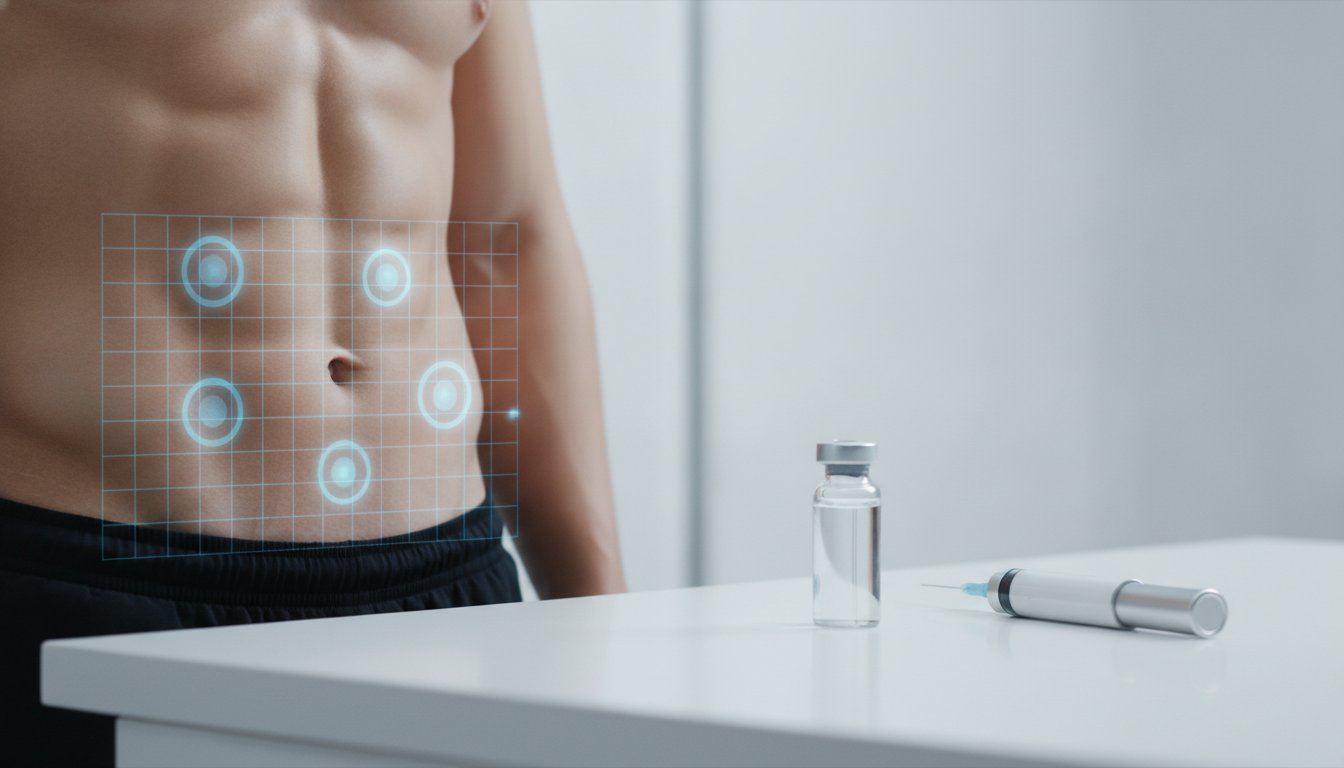
While many assume that targeting the abdominal region will melt fat in that specific area, the reality of peptide injection sites for fat loss is grounded in systemic signaling rather than localized spot reduction. This distinction is critical for anyone serious about performance optimization. You likely understand that improper technique doesn't just cause temporary bruising; it can lead to permanent tissue damage like lipohypertrophy. It's standard to feel cautious about the transition from research to clinical-grade administration, especially when tissue integrity and metabolic results are at stake.
This guide provides the professional protocols you need to master site selection and rotation with scientific precision. You'll learn how to implement a repeatable administration strategy that protects your skin while ensuring the highest level of compound bioavailability. We'll analyze the anatomical zones best suited for subcutaneous delivery and the disciplined rotation schedules used by experts to maintain long-term tissue health. By the end of this clinical overview, you'll have the confidence to manage your own metabolic protocols with the rigor of a trained practitioner.
Key Takeaways
- Identify optimal peptide injection sites for fat loss across the abdominal and femoral regions to ensure consistent metabolic absorption and compound bioavailability.
- Distinguish between systemic hormonal signaling and localized lipolysis to align your administration strategy with clinical evidence rather than marketing myths.
- Master the discipline of site rotation to prevent lipohypertrophy and preserve dermal tissue integrity during long-term subcutaneous protocols.
- Implement professional-grade aseptic techniques and precise supply selection to maintain compound purity and minimize the risk of adverse site reactions.
- Transition from generic administration to the structured Peptiva Protocol to integrate your injection schedule with lab-tested standards and professional oversight.
Understanding Subcutaneous Administration for Metabolic Peptides
The efficacy of metabolic optimization depends as much on the delivery method as it does on the compound itself. Subcutaneous administration is the clinical standard for delivering peptides designed to influence lipid metabolism. Unlike intravenous or intramuscular routes, which provide rapid access to the systemic circulation, the subcutaneous method utilizes the fatty layer located just beneath the skin. This layer serves as a biological reservoir. For those identifying peptide injection sites for fat loss, understanding this tissue's role is the first step toward achieving professional-grade results.
Metabolic peptides, particularly those targeting growth hormone pathways, require a slow and steady release. Adipose tissue is less vascularized than muscle tissue. This lower density of blood vessels ensures that the peptide is absorbed gradually over several hours rather than minutes. If these compounds were injected into muscle, the high blood flow would cause rapid clearance by the kidneys, effectively shortening the half-life of the peptide and reducing its lipolytic potential.
The distinction between subcutaneous (Sub-Q) and intramuscular (IM) delivery is foundational to metabolic therapy. While IM injections are necessary for some anabolic agents, they are generally counterproductive for fat loss peptides. Consider these differences:
- Sub-Q: Lower vascularization leads to slower absorption and a longer half-life for the peptide.
- IM: High blood flow causes rapid systemic entry and faster clearance by the liver and kidneys.
- Sub-Q: Minimal risk of hitting major nerves or arteries in the adipose layer.
- IM: Higher potential for localized inflammation and tissue trauma in the muscle belly.
Adipose Tissue as a Metabolic Signaling Target
Subcutaneous delivery for lipolytic peptides involves the precise introduction of a compound into the adipose layer between the dermis and muscle to facilitate steady metabolic signaling. This specific targeting allows growth hormone secretagogues to mimic the body's natural pulsatile rhythm. By avoiding the muscle tissue, you prevent the "spike and crash" phenomenon that often leads to desensitization of hormone receptors. Adipose tissue acts as a controlled-release matrix, maintaining the metabolic pressure necessary to trigger fat oxidation over a sustained period.
The Clinical Advantage of Sub-Q for Fat Loss
The primary advantage of this administration route is the maintenance of stable plasma levels without the risks associated with deeper injections. Subcutaneous tissue contains fewer large blood vessels and nerves than the musculoskeletal system, which significantly improves the safety profile for self-administration protocols. This steady-state absorption is essential for compounds like AOD-9604 or CJC-1295, which rely on cumulative signaling to alter body composition. For a more comprehensive look at how these compounds interact with your biology, consult our Peptides for Metabolism and Fat Loss overview. Selecting the correct peptide injection sites for fat loss ensures that you are utilizing the adipose layer's unique physiology to maximize bioavailability while minimizing systemic side effects.
Primary Peptide Injection Sites for Fat Loss
Selecting appropriate peptide injection sites for fat loss requires an understanding of anatomical landmarks to ensure compound efficacy. While the subcutaneous layer is distributed across the body, certain regions offer more consistent metabolic absorption. The abdomen is the primary choice for most clinical protocols because its adipose tissue remains relatively stable in depth and density. Identifying the correct peptide injection sites for fat loss is the first step in a disciplined rotation strategy, which is the only way to avoid localized tissue damage over time.
Practitioners must understand how to give a subcutaneous injection with precision to ensure the peptide reaches the intended fatty layer rather than the muscle. The upper-outer thigh, or the vastus lateralis area, provides a dense enough fat pad for most individuals to safely administer their protocol. While the lower back and gluteal regions are also viable, they often require more flexibility or assistance to reach. For those who want to move beyond generic advice, the Peptiva Protocol provides the clinical structure necessary for advanced self-optimization.
The Abdominal Region: Anatomical Precision
The abdomen is the gold standard for peptides like Tesamorelin, which demand predictable absorption to manage visceral fat effectively. To ensure safety, you should always stay at least two inches away from the umbilicus. This navel-clearance rule prevents the needle from interfering with the complex vascular structures located at the center of the abdomen. By gently pinching the adipose tissue, you create a stable target that ensures the needle stays within the Sub-Q layer. If you don't maintain this distance, you risk hitting sensitive connective tissue that can lead to unnecessary bruising.
Alternative Sites: Thighs and Outer Arms
The thighs are the most practical alternative for self-administration because they allow for easy visualization and needle control. Targeting the outer portion of the thigh ensures you remain in the subcutaneous space and away from the femoral artery. The upper arms are also effective, though they present a mechanical challenge. Reaching the posterior fat pad of the tricep often requires a caregiver to ensure the proper 90-degree angle. It's essential to incorporate these sites into your routine to allow your primary abdominal zones to recover. This recovery period is a critical step in preventing lipohypertrophy and ensuring long-term metabolic responsiveness.
Localized Lipolysis vs. Systemic Effects: The Site Selection Debate
Many individuals begin their metabolic protocols with the hope that injecting directly into abdominal fat will accelerate localized lipolysis. This concept of "spot reduction" is a common misconception that persists despite clinical evidence to the contrary. While it is intuitive to assume that proximity to a specific fat deposit increases efficacy, the pharmacological reality of peptide injection sites for fat loss is governed by systemic circulation. The compound's primary role is to enter the bloodstream and signal hormone receptors throughout the entire body.
Peptides such as AOD-9604 and Fragment 176-191 are engineered to mimic the lipolytic domain of human growth hormone. Once these peptides are administered into the subcutaneous layer, they don't simply sit in the local tissue until the fat is gone. Instead, they are absorbed into the systemic blood supply. From there, they initiate a global signaling cascade that triggers the release of stored triglycerides from adipose cells, regardless of their location. Selecting peptide injection sites for fat loss should therefore be based on absorption consistency and tissue health rather than a desire to target a specific "trouble spot."
The Mechanism of Systemic Lipolysis
Sustained metabolic changes rely on the peptide's ability to reach hormone receptors globally via the GH-axis. When you administer a dose, the goal is to achieve high systemic bioavailability. This process ensures that body composition changes occur holistically rather than in isolated patches. Because the effect is systemic, prioritizing a disciplined rotation schedule is far more effective for long-term results than repeatedly targeting a single area. Overusing one site can lead to localized inflammation, which actually hinders the peptide's ability to enter the circulation and perform its metabolic function.
Factors Influencing Site-Specific Absorption
Localized variables like capillary density and skin temperature do influence how quickly a peptide enters the bloodstream. Higher blood flow in a specific area can lead to faster uptake, but it doesn't change the systemic nature of the fat loss. For a deeper understanding of administration timing and how it relates to metabolic signaling, consult our Tesamorelin Dosage Guide. Following a professional Subcutaneous Injection Guide is essential for maintaining the integrity of the adipose layer. If you develop lipohypertrophy, which is the accumulation of rubbery scar tissue from repeated injections, the resulting decrease in local blood flow will stall your progress. Maintaining healthy tissue through rotation is the only way to ensure the metabolic pressure remains consistent.

The Clinical Protocol for Safe Self-Administration
Aseptic technique is a non-negotiable component of any metabolic protocol. You must use 70% isopropyl alcohol to sanitize both the vial stopper and the injection site before every administration. Once the site is prepared, the "Pinch and Inject" method allows you to isolate the adipose tissue from the underlying muscle. For standard 5/16-inch needles, a 90-degree angle is appropriate, while longer needles may require a 45-degree angle to remain within the subcutaneous layer. After the injection, avoid massaging the area. Applying firm, steady pressure for several seconds is sufficient to manage sensitivity and prevent minor bruising. To ensure your technique aligns with clinical standards, you can access the full Peptiva Protocol for a structured approach to metabolic optimization.
Preparation and Reconstitution
The molecular integrity of your peptides is fragile and can be compromised by aggressive handling. When drawing the solution, you must move slowly to avoid creating vacuum pressure that can damage the peptide chains. Maintaining proper Peptide Reconstitution standards ensures that the compound remains stable and effective. You should also eliminate all air bubbles from the syringe barrel by gently tapping the side before administration. This step isn't just for safety; it's essential for ensuring dosage precision, as even a small air gap can result in an incomplete metabolic dose.
The Site Rotation Strategy
A structured rotation strategy is the only way to maintain the health of your peptide injection sites for fat loss over a long-term cycle. Many practitioners utilize the "Clock Method," which involves visualizing a clock face around the umbilicus and moving the injection point from 12 to 3, 6, and 9 o'clock over successive days. You should always maintain at least a 1-inch distance from any previous injection point to allow the tissue to recover fully. Disciplined site rotation is the only safeguard against the development of subcutaneous scar tissue that can permanently compromise peptide absorption. Without this variety, you risk developing lipohypertrophy, a condition where the fat tissue hardens and becomes unresponsive to hormonal signaling.
Professional Oversight: Integrating Protocols into the Peptiva Protocol
Mastering the mechanical selection of peptide injection sites for fat loss is a necessary skill, yet it represents only one facet of a successful metabolic strategy. Without a structured framework, individual administration often lacks the precision required for long-term physiological changes. Moving beyond generic internet guides is essential for those who demand clinical-grade results. The Peptiva Protocol provides this missing structure, transforming a collection of isolated techniques into a disciplined, data-driven system. This integration ensures that every variable, from compound selection to site rotation, is optimized for your specific metabolic profile.
A professional approach also necessitates a move away from the "gray market" of unverified suppliers. While understanding peptide injection sites for fat loss protects your tissue, only lab-tested peptides can protect your internal health. Personalized medical assessments are the cornerstone of this process. They allow for the refinement of your injection strategy based on actual biomarkers rather than guesswork. When administration issues arise, such as persistent site sensitivity or stalled fat loss, 1-on-1 coaching provides the troubleshooting expertise needed to adjust protocols in real-time. This level of oversight ensures that your journey toward body optimization is both safe and efficient.
Accessing Lab-Verified Research Supplies
The risks associated with "basement labs" and unverified peptide sources cannot be overstated. These entities often bypass the rigorous purification processes required to remove endotoxins and residual solvents, which can lead to severe localized reactions at your chosen peptide injection sites for fat loss. PeptivaFit operates with an uncompromising commitment to clinical-grade purity. For research purposes, third-party testing remains the only acceptable standard for metabolic optimization. Every batch must undergo high-performance liquid chromatography (HPLC) and mass spectrometry to verify both identity and purity. This transparency is what separates professional-grade compounds from the unpredictable offerings found in standard consumer markets.
Optimizing Results with Professional Guidance
Tailoring your injection frequency and dosage is not a static process; it requires constant refinement based on your body's feedback and metabolic data. A single misplaced injection or an incorrect dosage can disrupt the GH-axis signaling you've worked to establish. For those seeking immediate protocol refinement, a Single Consultation Call offers a direct line to expert analysis. This targeted session can resolve confusion regarding site rotation or compound stability, ensuring you maintain the momentum of your protocol. Ultimately, the Peptiva Protocol is designed for the mature individual who understands that performance optimization is a long-term investment. By combining lab-verified supplies with professional oversight, you gain sophisticated control over your wellness and body composition.
Advancing Your Metabolic Optimization Protocol
Mastering the mechanical nuances of peptide injection sites for fat loss is a fundamental step toward achieving a refined body composition. You now understand that systemic signaling, rather than localized spot reduction, is the primary catalyst for metabolic change. By prioritizing disciplined site rotation and aseptic technique, you protect your dermal integrity and ensure the long-term viability of your protocol. Technical proficiency at the injection site is only truly effective when it's paired with high-purity compounds and personalized data monitoring.
To move beyond general guidance and implement a scientifically rigorous strategy, you can Optimize your metabolic journey with the Peptiva Protocol. This exclusive framework provides access to lab-verified peptide purity, personalized medical assessments, and expert 1-on-1 metabolic coaching. Taking full responsibility for your wellness requires a commitment to these high-level standards. With the right tools and professional oversight, you can achieve a level of sophisticated control over your performance that ensures lasting metabolic results.
Frequently Asked Questions
Where is the best place to inject peptides for fat loss?
The abdominal region is clinically recognized as the gold standard for metabolic compound delivery due to its consistent adipose depth. This area provides the most predictable absorption rates for growth hormone secretagogues and lipolytic fragments. While other areas like the upper-outer thigh are viable, the abdomen remains the primary choice for practitioners seeking stable systemic bioavailability and ease of self-administration.
Do I need to rotate my peptide injection sites every day?
Daily rotation is a mandatory requirement for maintaining tissue integrity during long-term protocols. Repeated administration into the same localized area leads to lipohypertrophy, which is the development of rubbery scar tissue that significantly impairs peptide absorption. Utilizing a "clock method" around the umbilicus ensures each site has sufficient time to recover, preserving the health of your peptide injection sites for fat loss.
Can I inject peptides into my stomach fat?
Injecting into the subcutaneous fat of the stomach is the standard practice for metabolic peptides. You must ensure the needle enters the adipose layer rather than the skin or underlying muscle. This is achieved by gently pinching a fold of fat and inserting the needle at a 90-degree angle. While this targets "stomach fat" physically, the resulting lipolysis is a systemic process signaling fat cells globally.
What happens if I accidentally inject into muscle instead of fat?
Accidental intramuscular injection typically results in a more rapid systemic entry of the peptide than intended. Because muscle tissue is highly vascularized, the compound is cleared by the kidneys faster, which may reduce the duration of its metabolic effect. While usually not dangerous, it can cause localized muscle soreness and inconsistent signaling. Precision in needle depth is essential to maintain the slow-release benefits of subcutaneous delivery.
Is it normal to have a small bump or bruise at the injection site?
Transient bruising or a small, firm bump at the administration site is a common occurrence in subcutaneous protocols. These reactions often result from minor capillary disruption or localized sensitivity to the peptide solution's pH level. If the bump persists for more than 48 hours or is accompanied by excessive heat and redness, it may indicate improper technique or a reaction to a low-purity compound.
What is the best needle size for subcutaneous peptide injections?
A 31-gauge insulin syringe with a 5/16-inch needle is the clinical preference for subcutaneous administration. This ultra-fine gauge minimizes dermal trauma and allows for a nearly painless experience while ensuring the compound reaches the adipose layer. Larger needles increase the risk of bruising and accidental muscle penetration, which can compromise the stability of your metabolic signaling and lead to unnecessary tissue irritation.
Should I inject peptides on an empty stomach for better fat loss?
Administering lipolytic peptides in a fasted state is often recommended to maximize the growth hormone response. Elevated blood glucose and insulin levels can blunt the efficacy of secretagogues like Ipamorelin or Tesamorelin. Performing the injection at least two to three hours after your last meal ensures that the metabolic signaling occurs when the body is primed for fat oxidation rather than nutrient storage.
How do I dispose of used peptide syringes safely?
Safe disposal requires the use of a dedicated, puncture-resistant sharps container immediately after use. You should never dispose of used syringes in standard household trash or recycling bins, as this poses a significant needle-stick risk to sanitation workers. Once the container is full, follow your local regulatory guidelines for hazardous waste disposal. Many jurisdictions offer designated drop-off locations at pharmacies to ensure environmental and public safety.

![Shelf Life of Reconstituted Peptides: A Clinical Reference Guide [2026]](https://getautoseo.com/storage/hero_images/shelf-life-of-reconstituted-peptides-a-clinical-reference-guide-2026.jpg?v=b8ed5173acaa)
