

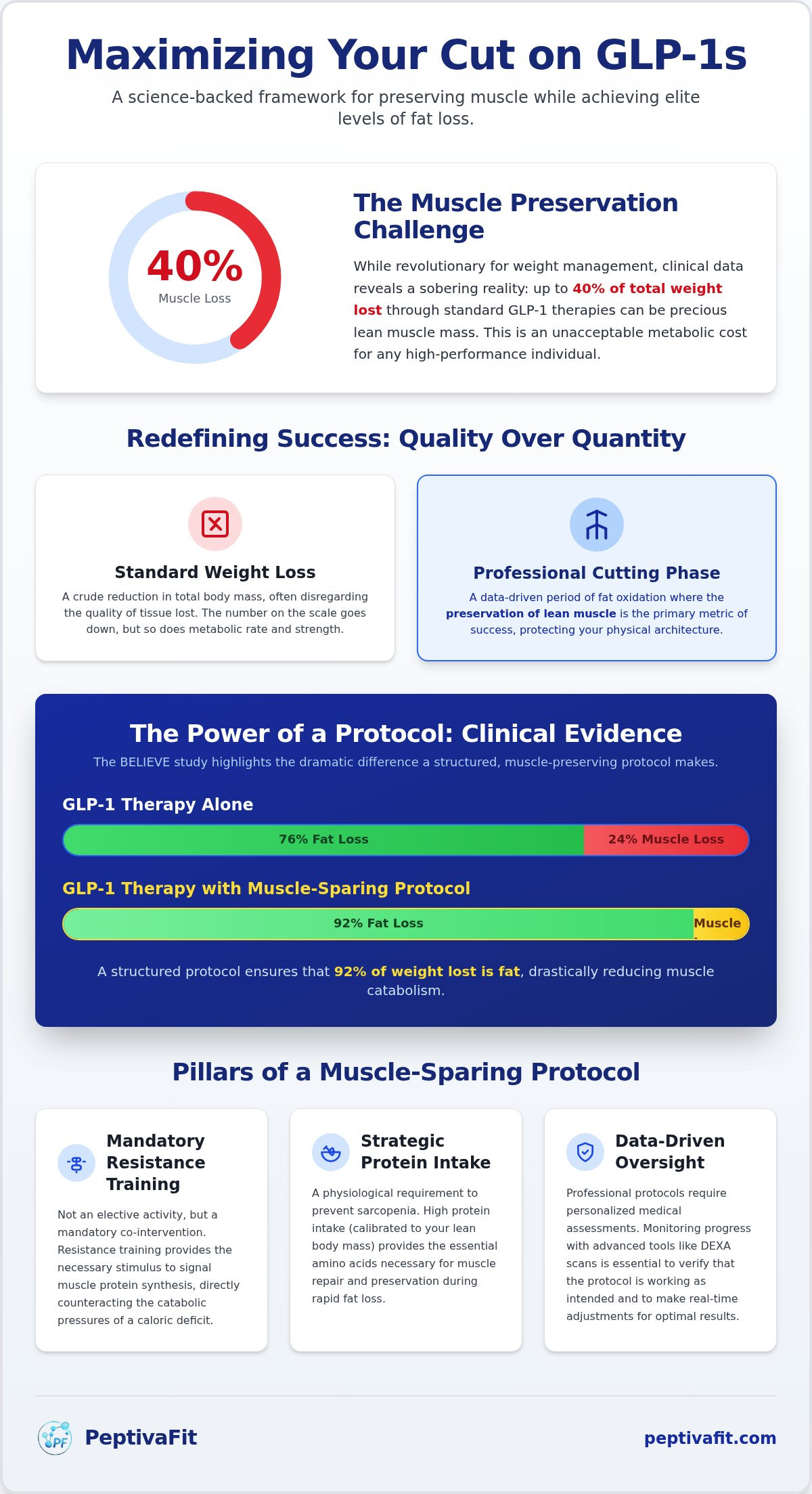
While GLP-1 agonists are revolutionary for weight management, current clinical data reveals a sobering reality: up to 40% of the weight lost through these therapies can be lean muscle mass. For the high-performance individual, this represents an unacceptable metabolic cost when utilizing a glp-1 for cutting phase. You likely recognize that a successful cut is defined by the quality of tissue preserved, not merely the number on the scale. We understand the frustration of battling intense hunger pangs while simultaneously fearing the sarcopenic risks of a strict caloric deficit.
This article provides a comprehensive framework for success through the Peptiva Protocol, ensuring that fat loss is achieved without sacrificing structural integrity. You will discover how to implement professional-grade clinical protocols that prioritize muscle retention, leverage data-driven metabolic optimization, and utilize specific protein-sparing strategies. We will also examine the emerging research on combination therapies and the necessity of medical oversight to ensure your performance goals are met with scientific precision and safety. This guide moves beyond general advice, offering the technical depth required for those serious about their physical architecture.
Key Takeaways
- Identify the metabolic mechanics of incretin-based therapies and their evolving role as precision tools for advanced body composition.
- Analyze clinical data regarding lean mass loss to implement strategies that mitigate the risk of sarcopenia during rapid fat reduction.
- Compare the specific physiological impacts of semaglutide versus tirzepatide when utilizing a glp-1 for cutting phase to optimize muscle retention.
- Establish the foundational requirements of a professional protocol, including the necessity of personalized medical assessments and calibrated caloric deficits.
- Discover how the Peptiva Protocol integrates lab-tested peptides and expert coaching to ensure molecular integrity and superior metabolic outcomes.
The Role of GLP-1 Agonists in a Professional Cutting Phase
GLP-1 receptor agonists are synthetic analogs of the human incretin hormone, primarily engineered to regulate metabolic signaling through the GLP-1 receptor. While these agents were initially developed for glycemic control, their application in a glp-1 for cutting phase has become a focal point for high-performance individuals who prioritize metabolic efficiency. The fitness industry is pivoting toward these incretin-based therapies because they offer a level of physiological control that traditional caloric restriction cannot replicate. By modulating appetite and slowing gastric emptying, these peptides provide a clinical solution to the psychological and physiological barriers of extreme fat loss.
It's vital to distinguish between standard weight loss and a clinical cutting phase. Weight loss is a crude reduction in total body mass that often disregards the quality of the tissue lost. In contrast, a clinical cutting phase is a data-driven period of fat oxidation where the preservation of lean muscle mass is the primary metric of success. GLP-1s facilitate this precision by stabilizing postprandial glucose and suppressing the intense hunger pangs that usually lead to dietary failure. This allows for a more disciplined adherence to a strict caloric deficit without the systemic fatigue associated with traditional methods.
Mechanism of Action: Beyond Appetite Suppression
These peptides interact with the pancreas to enhance insulin secretion in a glucose-dependent manner while simultaneously acting on the hypothalamus to induce prolonged satiety. During a caloric deficit, incretin mimetics improve insulin sensitivity, which helps ensure that nutrient partitioning remains favorable toward lean tissue. The physiological environment transitions from a state of glucose dependency to an efficient period of lipid oxidation. This hormonal shift is what separates a glp-1 for cutting phase from a standard diet, as it targets the underlying metabolic pathways that govern fat storage and energy expenditure.
GLP-1 vs. Traditional Cutting Supplements
Traditional cutting agents often rely on thermogenics or sympathomimetics that aggressively stimulate the central nervous system. These methods frequently result in side effects like tachycardia, sleep disruption, and rapid metabolic adaptation. Peptide-based fat loss represents a sophisticated shift from CNS stimulation to hormonal metabolic regulation. By utilizing GLP-1s, you establish a more stable metabolic environment that maintains resting energy expenditure without the "crash" associated with stimulants. This transition to a more clinical, peptide-centric approach allows for a sustainable and disciplined path toward achieving single-digit body fat while maintaining systemic health and muscle integrity.
The Muscle Preservation Challenge: Avoiding Sarcopenia
Rapid fat loss is biologically expensive. Clinical observations indicate that 15% to 40% of total weight lost through GLP-1 therapy can be lean tissue. For an athlete or performance-driven individual, this isn't a successful outcome; it's a metabolic setback. When utilizing a glp-1 for cutting phase, the primary objective is to manipulate the "Quality of Weight Loss," ensuring the deficit targets adipose tissue while sparing the contractile proteins of the musculature. High-protein intake isn't a suggestion in this context; it's a physiological requirement to prevent iatrogenic sarcopenia.
A GLP-1 and muscle mass study suggests that while relative strength can improve, the absolute reduction in lean mass requires aggressive mitigation. Without a structured protocol, the body naturally enters a catabolic state to meet energy demands. This is especially true when the rate of weight loss exceeds 1% of total body weight per week, a common occurrence with incretin mimetics.
The BELIEVE Study and Muscle Mass Preservation
Recent clinical data provides a roadmap for this mitigation. The BELIEVE trial, published in March 2026, demonstrated that combining semaglutide with muscle-preserving agents resulted in 92% of weight loss being fat mass. This contrasts sharply with the 76% fat loss seen with semaglutide alone. To achieve these metrics, resistance training must be treated as a mandatory co-intervention, not an elective activity. Monitoring your progress through DEXA scans or advanced muscle preservation sensors is essential to verify that your glp-1 for cutting phase is working as intended without compromising your structural integrity.
Protein-Sparing Protocols for Performance
Maintaining an anabolic environment requires precise nutrient delivery. We recommend calculating protein requirements at 1.2g to 1.5g per pound of lean body mass. This ensures a sufficient amino acid pool to support muscle protein synthesis during periods of deep caloric restriction. Timing is equally critical; distributing protein intake evenly across the day helps maintain nitrogen balance. For a deeper analysis of these mechanisms, review our resource on peptides for metabolism and fat loss. If you require a more tailored approach, our professional coaching provides the necessary oversight to manage these variables effectively.
Semaglutide vs. Tirzepatide for Body Composition
Selecting the appropriate pharmacological agent for a glp-1 for cutting phase requires a nuanced understanding of incretin biology. The choice between a GLP-1 mono-agonist and a dual GLP-1/GIP agonist isn't merely a matter of potency. It's a strategic decision based on individual metabolic response and the specific requirements of the cutting protocol. While both classes of medication facilitate significant adiposity reduction, their molecular pathways influence body composition and systemic tolerance differently. Choosing the wrong molecule can lead to unnecessary side effects that compromise training consistency.
Semaglutide: The Gold Standard for Appetite Control
Semaglutide serves as the clinical benchmark for sustained appetite suppression. By exclusively targeting the GLP-1 receptor, it effectively signals satiety to the brain and slows gastric emptying. This is paramount when maintaining a strict caloric deficit. For research purposes, titration usually begins at 0.25 mg weekly. We then see incremental increases over several months to mitigate gastrointestinal side effects like nausea or dyspepsia. In a professional cutting context, semaglutide's primary value lies in its ability to eliminate the psychological friction of hunger. This allows for a disciplined adherence to macronutrient targets without the mental fatigue of traditional dieting.
Tirzepatide: The Dual Incretin Advantage
Tirzepatide represents a technological evolution in metabolic regulation by activating both GLP-1 and Glucose-dependent Insulinotropic Polypeptide (GIP) receptors. This dual-action approach enhances lipid metabolism and energy expenditure beyond what mono-agonists typically achieve. Data from the SURMOUNT-1 clinical trial demonstrated weight loss of up to 20.9% at the 15 mg dose over 72 weeks. These results showcase its superior efficacy in mass reduction. The GIP component is theorized to play a role in protecting lean tissue by improving insulin sensitivity in white adipose tissue. This potentially makes it the preferred choice for those targeting elite body composition.
Selecting between these molecules involves balancing the desired rate of fat oxidation against the individual side effect profile. Tirzepatide's higher potency often correlates with a more pronounced metabolic shift. However, it may also present a steeper learning curve for systemic tolerance. A successful glp-1 for cutting phase hinges on choosing the molecule that allows the individual to maintain peak training intensity while achieving the necessary caloric deficit. Personalized medical assessments are essential to determine which peptide aligns with your specific physiological architecture and performance objectives. This isn't a one-size-fits-all application; it's a precision-guided intervention.
Integrating GLP-1 into a Professional Cutting Protocol
Successful implementation of a glp-1 for cutting phase is a methodical operation that requires more than simple administration. It demands a five-step integration process to ensure fat oxidation occurs without compromising performance or metabolic health. This structured framework prevents the common pitfalls of unguided peptide use.
- Step 1: Baseline Assessment. Establish a personalized medical assessment including comprehensive blood panels for glucose, lipids, and hormonal markers. This data serves as the foundation for all future adjustments.
- Step 2: Deficit Calibration. Avoid the starvation trap where extreme appetite suppression leads to chronic under-fueling. Aim for a deficit that targets 0.5% to 1% body weight loss per week to protect lean tissue.
- Step 3: Periodized Training. Implement a resistance training program with high intensity to provide the necessary stimulus for muscle retention. Volume should be managed to prevent systemic overreaching.
- Step 4: Data Monitoring. Track metabolic markers and body composition weekly. Dosage adjustments must be based on clinical response and objective data rather than arbitrary schedules.
- Step 5: Metabolic Stabilization. Plan a controlled transition out of the cutting phase. This involves a gradual increase in calories to stabilize the new body composition and prevent metabolic rebound.
Dosing Logic and Titration for Athletes
We advocate for a "Minimum Effective Dose" philosophy throughout the glp-1 for cutting phase. When muscle preservation is the primary objective, more peptide is not better. Excessively high doses can lead to extreme caloric deficits that trigger the catabolic pathways discussed in previous sections. Precision in administration is paramount for maintaining molecular integrity. Refer to our clinical guide on how to reconstitute peptides to ensure accurate dosing. For those seeking professional oversight during this process, our 1-on-1 coaching provides the specialized guidance necessary for high-stakes body composition goals.
Managing Side Effects in the Gym
Maintaining workout intensity is the primary challenge during GLP-1 therapy. Some individuals experience lethargy or a sense of "flatness" due to altered glucose metabolism or dehydration. Electrolyte management is non-negotiable; prioritize sodium, potassium, and magnesium intake to maintain cellular hydration and nerve conduction. Ensure your nutritional intake remains micronutrient dense to support systemic recovery. If fatigue persists, it often indicates an overly aggressive caloric deficit rather than a direct side effect of the peptide. Consistent monitoring allows for real-time adjustments to keep your performance at its peak.
The Peptiva Protocol: Science-Backed Fat Loss
The Peptiva Protocol serves as the definitive bridge between clinical research and practical body composition results. While previous sections of this guide established the physiological risks of muscle wasting, this framework provides the technical solution. It's a transition from the "guesswork" of a standard diet to a clinical metabolic optimization journey. Utilizing a glp-1 for cutting phase requires this level of structural discipline to ensure that every gram of weight lost is adiposity, not contractile tissue. We don't view these peptides as shortcuts, but as precision instruments that require expert calibration to function effectively within a high-performance lifestyle.
The Importance of Lab Verification
In the current landscape, the peptide supply chain is often opaque and fraught with risk. Red flags include a lack of accessible third-party COAs (Certificates of Analysis), vague descriptions of molecular purity, or suspiciously low pricing. PeptivaFit prioritizes transparency through rigorous batch testing, ensuring that every compound meets scientific-grade standards for molecular integrity. Using unverified compounds in a performance setting introduces unacceptable variables that can compromise your health and your results. Purity isn't just about safety; it's about the precision of the metabolic response. Without lab-verified agents, you cannot guarantee the stability of the hormonal environment you're attempting to create.
Next Steps: Your Personalized Assessment
Navigating complex metabolic shifts requires more than a manual; it demands professional oversight. As you implement a glp-1 for cutting phase, your body will undergo significant adaptations in insulin sensitivity and energy expenditure. Our 1-on-1 coaching offers the data-driven monitoring necessary to adjust protocols in real-time. This includes interpreting feedback from advanced muscle preservation sensors, a technology that has become a clinical standard in 2026 for monitoring tissue quality during rapid fat loss. We expect our clients to maintain the same level of discipline in their data tracking as we do in our clinical recommendations.
For those ready to begin, we provide a comprehensive fat loss peptide guide that outlines our core methodologies and research-backed strategies. However, the most critical step for the serious athlete is the personalized medical assessment. This consultation ensures your baseline markers are analyzed and your goals are vetted before you initiate the protocol. This is an elite, insider service designed for individuals who demand high-level expertise and absolute privacy in their pursuit of physical excellence. The path to single-digit body fat is a long-term process; ensure you have a serious guide to navigate the complexities of your metabolic architecture.
Mastering Your Metabolic Architecture
Executing a glp-1 for cutting phase isn't a simple caloric adjustment; it's a sophisticated intervention in your metabolic architecture. You've learned that preventing sarcopenia requires clinical discipline, specifically through high-protein sparing protocols and mandatory resistance training. Whether you utilize the dual-action potency of tirzepatide or the established efficacy of semaglutide, your success depends on the purity of your compounds and the precision of your dosing logic.
Elite performance demands more than generic advice. You need the structural integrity provided by lab-verified supplies and the security of personalized medical oversight to navigate these complex physiological shifts. We provide the technical framework for individuals who refuse to compromise their lean mass while pursuing extreme adiposity reduction.
Secure your access to the Peptiva Protocol and lab-tested peptides today.
By prioritizing data over hype and safety over sensation, you ensure your physical evolution is both clinical and sustainable. Your peak physique is achievable when you apply these scientific-grade standards to your optimization journey.
Frequently Asked Questions
Can I use GLP-1 for a cutting phase if I am already lean?
Yes, but it requires extreme caution and professional oversight. In lean individuals, the risk of catabolizing muscle tissue is significantly higher because adipose stores are limited. Utilizing a glp-1 for cutting phase at low body fat percentages should only be done under a strict protocol that prioritizes protein-sparing. This ensures you maintain a minimal caloric deficit to avoid metabolic damage while achieving the desired level of vascularity and definition.
How much muscle will I lose while using GLP-1 agonists?
Clinical data suggests that lean mass can account for up to 40% of total weight loss without specific interventions. However, by following a structured clinical protocol that includes high protein intake and resistance training, you can significantly reduce this figure. Monitoring tissue quality through biosensors or DEXA scans is essential to ensure that weight loss is primarily derived from fat stores rather than contractile muscle tissue.
Is it necessary to lift weights while on a GLP-1 cutting protocol?
Resistance training is a mandatory co-intervention for anyone using these peptides to preserve muscle. Lifting weights provides the mechanical stimulus necessary to signal muscle protein synthesis, which counteracts the catabolic environment created by a caloric deficit. Without consistent high-intensity training, the body is far more likely to utilize lean tissue for energy, negating the aesthetic and performance goals of the clinical cutting phase.
What is the best GLP-1 for a cutting phase: Semaglutide or Tirzepatide?
The choice depends on your specific metabolic profile and tolerance. Tirzepatide often provides superior fat oxidation and potentially better muscle retention due to its dual-agonist action on GLP-1 and GIP receptors. Semaglutide remains the gold standard for pure appetite suppression and may be preferable for those who prioritize strict dietary adherence. A glp-1 for cutting phase is most effective when the molecule is selected based on individual clinical data and performance objectives.
How do I manage the fatigue associated with GLP-1s during my workouts?
Fatigue is often a result of hypoglycemia or dehydration rather than the peptide itself. You can manage this by prioritizing electrolyte intake, specifically sodium and potassium, to maintain cellular hydration and nerve conduction. Ensuring you consume adequate carbohydrates around your training window can also help maintain intensity. If lethargy persists, it often indicates that your caloric deficit is too aggressive and needs recalibration to support your training volume.
What happens to my metabolism after I stop using GLP-1 for cutting?
Your metabolism will stabilize based on your new body composition, provided you follow a controlled transition phase. Stopping abruptly without a plan can lead to rapid weight regain if your caloric intake isn't gradually adjusted. The Peptiva Protocol includes a metabolic stabilization period to help lock in your results. Maintaining high protein intake and resistance training post-protocol is vital for preserving the metabolic rate you've achieved during the optimization journey.
Can I stack GLP-1s with other peptides like BPC-157 for recovery?
Stacking is possible, but it must be handled with scientific precision. BPC-157 is often utilized for its systemic healing properties and can support recovery during the increased physical stress of a cutting phase. However, each addition to your protocol increases the complexity of your metabolic response. Any stack should be vetted through a professional medical assessment to ensure that the compounds are synergistic and don't introduce unnecessary systemic risks to your health.
How do I ensure the peptides I am using are lab-tested and safe?
You must demand third-party Certificates of Analysis (COAs) for every batch you acquire. These reports should verify the identity and purity of the compound, typically aiming for 99% or higher. Avoid suppliers that don't provide transparent, batch-specific testing data. PeptivaFit provides access to lab-verified supplies as part of our protocol to ensure that the molecular integrity of your peptides is never a variable in your performance journey.

![Shelf Life of Reconstituted Peptides: A Clinical Reference Guide [2026]](https://getautoseo.com/storage/hero_images/shelf-life-of-reconstituted-peptides-a-clinical-reference-guide-2026.jpg?v=b8ed5173acaa)
