

The most sophisticated metabolic intervention is fundamentally useless if the chemical signaling is compromised by substandard purity or erratic administration protocols. You've likely experienced the profound frustration of metabolic resistance, where even the most disciplined caloric deficit fails to impact your body composition. This stagnation isn't a failure of will; it's often a failure of cellular communication. Our specialized peptide therapy weight loss coaching is designed to rectify these internal imbalances by integrating high-grade, lab-verified materials with rigorous clinical oversight. We don't offer mass-market shortcuts. Instead, we provide a disciplined framework for individuals who demand scientific-grade standards for their performance and wellness.
In this guide, you'll discover how to navigate the 2026 regulatory environment to secure authentic materials and implement the Peptiva Protocol for sustainable fat loss. We'll examine the critical role of 1-on-1 expert guidance in adjusting dosing based on real-time biofeedback and sophisticated data monitoring. By the end of this article, you'll understand the exact clinical steps required to master your metabolism and achieve a level of physical optimization that standard dieting simply cannot reach. It's time to replace metabolic anxiety with a structured, medically-informed roadmap.
Key Takeaways
- Understand how Growth Hormone Secretagogues bypass metabolic plateaus by prioritizing hormonal signaling over simple caloric restriction.
- Learn why professional peptide therapy weight loss coaching is vital for translating complex biofeedback into precise dosing adjustments.
- Identify the critical laboratory standards, such as HPLC and MS testing, required to verify the purity and safety of research materials.
- Discover the structure of the Peptiva Protocol, a comprehensive framework that balances lipid mobilization with mitochondrial health.
- Recognize the metabolic risks associated with unguided reconstitution and the necessity of personalized medical oversight.
Beyond Traditional Dieting: The Role of Peptide Therapy in 2026
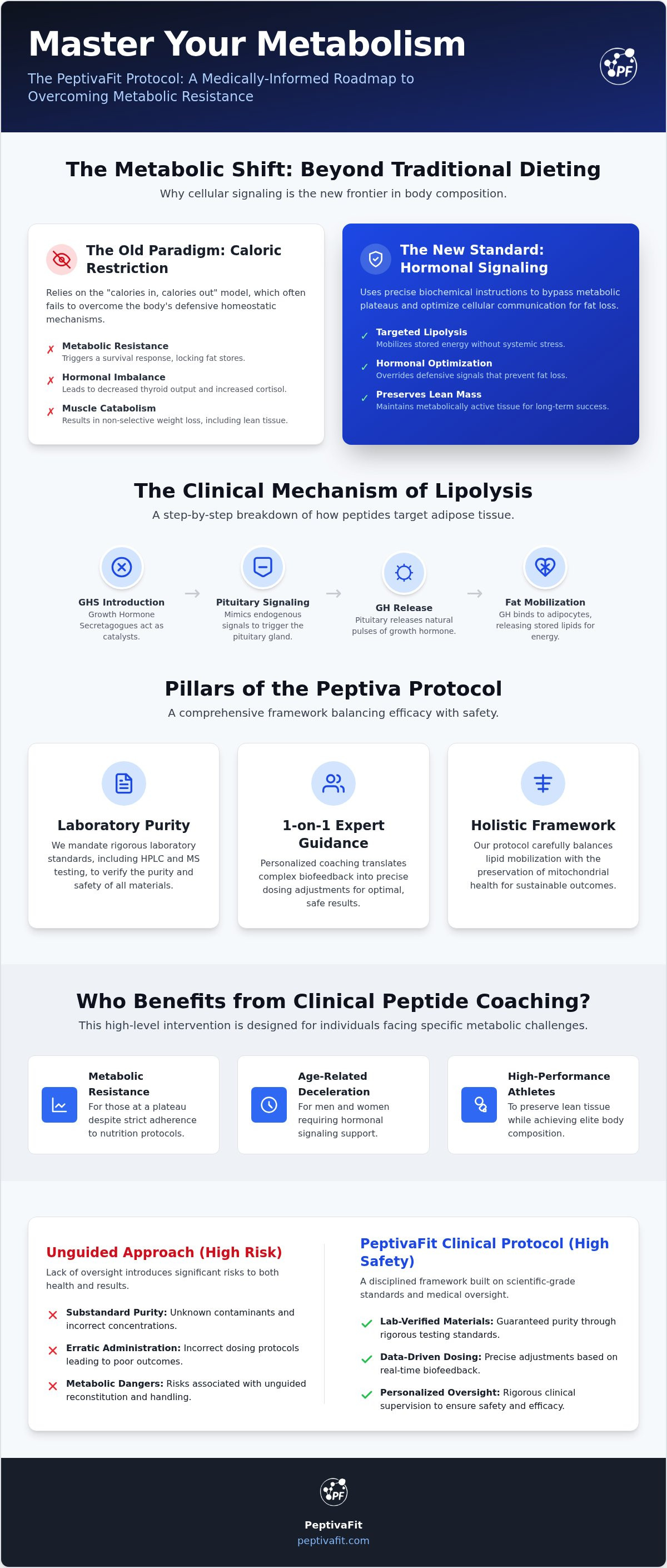
Traditional weight loss methodologies rely almost exclusively on the primitive logic of caloric restriction. While the "calories in, calories out" model remains a fundamental law of thermodynamics, it frequently fails to account for the complex homeostatic mechanisms that defend a body's weight set point. By 2026, the clinical standard has shifted toward hormonal signaling optimization. This paradigm acknowledges that metabolic rate and fat distribution are governed by precise biochemical instructions rather than just energy volume. When these signals are compromised, the body enters a state of metabolic resistance that no amount of dieting can easily overcome.
Refractory visceral fat often persists because the body perceives prolonged caloric deficits as a survival threat. This triggers a cascade of protective responses, including decreased thyroid output and increased cortisol, which effectively lock adipose tissue in place. Peptide therapy bypasses this metabolic plateau by introducing specific signaling molecules that override these defensive signals. This facilitates the mobilization of stored energy without the systemic stress often associated with traditional stimulants. It represents a move away from blunt force metabolic tactics toward a more refined, data-driven strategy.
The Science of Metabolic Signaling
To understand this shift, one must define What are peptides at a molecular level. These are short chains of amino acids that serve as precise biological messengers. Unlike systemic hormones, which often produce broad physiological effects, targeted peptide sequences interact with specific receptors to trigger localized responses like cellular repair or selective fat oxidation. The year 2026 marks a critical juncture where the synthesis of these molecules has reached a level of precision that allows for highly individualized metabolic intervention. This accessibility, combined with stricter regulatory oversight, has made lab-verified signaling a cornerstone of modern performance medicine.
Who Benefits from Clinical Peptide Coaching?
This high-level intervention isn't intended for the casual dieter. It's designed for those facing documented metabolic resistance or age-related endocrine decline. Professional peptide therapy weight loss coaching is essential for candidates who prioritize the preservation of lean muscle mass while aggressively targeting fat stores. The objective is a total transition from the reductive goal of "weight loss" to the sophisticated standard of metabolic optimization. Candidates who benefit most from this exclusive approach include:
- Individuals experiencing homeostatic resistance despite strict adherence to nutritional protocols.
- Men and women facing age-related metabolic deceleration who require hormonal signaling support.
- High-performance individuals seeking to preserve lean tissue while achieving elite levels of body composition.
Through 1-on-1 coaching, individuals learn to interpret biofeedback and adjust their protocol to maintain a state of anabolic efficiency. This ensures that the body remains in a fat-burning state while protecting the metabolic machinery required for long-term maintenance.
Targeting Adipose Tissue: The Clinical Mechanism of Lipolysis
Peptide-driven lipolysis is the biochemical process where specific amino acid sequences stimulate cellular receptors to initiate the breakdown of triglycerides into glycerol and free fatty acids. This mechanism utilizes targeted signaling to prioritize the mobilization of adipose tissue while preserving lean muscle mass, distinguishing it from the non-selective weight loss typical of simple caloric restriction. While traditional dieting often results in the catabolism of metabolically active tissue, peptides provide a protective signal that maintains nitrogen balance and protein synthesis.
Growth Hormone Secretagogues (GHS) act as the primary catalysts in this process. By mimicking endogenous signaling, these molecules trigger the pituitary gland to release natural pulses of growth hormone. This hormone then binds directly to adipocytes, stimulating hormone-sensitive lipase to release stored lipids into the bloodstream for oxidation. In the context of peptide therapy weight loss coaching, we focus on this precise mobilization to ensure that the body prioritizes fat stores as its primary fuel source. This prevents the "skinny fat" phenomenon often seen with standard weight loss drugs that lack tissue-protective signaling.
Mitochondrial health remains the final gatekeeper of this metabolic cycle. Once fatty acids are mobilized, they must be transported into the mitochondria to be oxidized and converted into energy. If mitochondrial function is compromised, these lipids may simply be re-esterified and returned to storage. Effective coaching protocols often integrate metabolic co-factors to ensure that cellular oxidation keeps pace with lipid mobilization, preventing metabolic logjams.
Tesamorelin and Targeted Fat Loss
Tesamorelin is a Growth Hormone-Releasing Hormone (GHRH) analog specifically engineered to target visceral adipose tissue (VAT). This refractory fat, which surrounds internal organs, is often resistant to traditional exercise and dietary changes. By augmenting the body's natural pulsatile GH rhythm, Tesamorelin facilitates significant reductions in deep abdominal fat without negatively impacting insulin sensitivity. For detailed administration standards, refer to our Tesamorelin Dosage: A Clinical Guide. Achieving this level of biochemical precision requires a personalized medical assessment to ensure the protocol aligns with your unique metabolic baseline.
HGH Frag 176-191: The Lipolytic Powerhouse
HGH Frag 176-191 represents the C-terminal end of the human growth hormone molecule, isolated specifically for its potent lipolytic properties. It's frequently utilized because it mimics the fat-shredding effects of full-spectrum GH without influencing blood glucose levels or inducing insulin resistance. This makes it an ideal tool for individuals sensitive to the hyperglycemic effects of larger GH sequences. Professional peptide therapy weight loss coaching ensures these sequences are timed correctly, typically in a fasted state, to maximize the mobilization of lipids during peak metabolic windows.
Why Coaching is Essential for Peptide Therapy Success
The administrative complexity of advanced metabolic signaling demands more than casual interest; it requires a systematic approach to data management and physiological monitoring. Self-directed experimentation often leads to receptor desensitization or dosage errors that can stall metabolic progress for months. Without a disciplined framework, individuals frequently misinterpret biofeedback, leading to erratic adjustments that compromise long-term endocrine health. Professional peptide therapy weight loss coaching provides the necessary clinical distance to evaluate progress objectively and ensure every intervention remains within safe, effective parameters.
Effective coaching functions as a critical filter, translating raw data into actionable protocol adjustments. We don't just look at the scale; we monitor sleep architecture, nocturnal recovery patterns, and glycemic stability to refine your stack in real time. This level of oversight ensures that the signaling molecules are working in synergy with your lifestyle rather than against it. Our objective isn't to create a permanent dependency on these tools but to educate you on the nuances of your own metabolic architecture, fostering a state of sustainable autonomy.
The Value of Personalized Medical Assessments
A personalized medical assessment is the non-negotiable prerequisite for any intervention. This baseline evaluation allows us to identify potential contraindications, such as active malignancies or specific endocrine disorders, before any protocol begins. By analyzing your unique genetic and lifestyle markers, we can customize the Peptiva Protocol to suit your specific metabolic needs. This ensures that the selected peptides target your refractory fat stores without inducing unnecessary systemic stress or hormonal imbalances.
Single Consultation vs. Ongoing Coaching
The choice between a single consultation call and ongoing oversight depends entirely on your experience level and the complexity of your objectives. For researchers who possess a foundational understanding of reconstitution and dosing, a one-time strategy session may be sufficient to refine a specific stack. However, for those pursuing significant body composition changes or navigating metabolic resistance, ongoing peptide therapy weight loss coaching provides the iterative feedback loop required for success. You can explore the differences in our guide on Peptide Coaching: Maximizing Your Metabolic Results. Continuous oversight allows for the subtle recalibrations that prevent plateaus and ensure that the lipolytic signals remain potent throughout the duration of your protocol.
Laboratory Standards: Navigating the Peptide Research Landscape
The efficacy of any metabolic protocol is fundamentally limited by the chemical integrity of the compounds utilized. In the current research market, the surge in demand for metabolic optimization has resulted in a proliferation of vendors operating with minimal oversight. Substandard materials often present two primary risks: under-dosing and the presence of harmful contaminants. Under-dosed vials compromise the precision of your protocol, while contaminants like heavy metals or residual solvents pose significant systemic risks. High-level peptide therapy weight loss coaching requires a commitment to sourcing only materials that have undergone rigorous third-party validation.
Verification is not a matter of trust; it's a matter of data. High-Performance Liquid Chromatography (HPLC) and Mass Spectrometry (MS) represent the clinical gold standards for assessing molecular quality. HPLC measures the purity of the sample, ensuring the active peptide concentration matches the label. Mass Spectrometry confirms the identity of the molecule by analyzing its molecular weight, ensuring you aren't receiving a different, potentially cheaper sequence. PeptivaFit prioritizes these lab-verified standards to ensure that every clinical protocol is built on a foundation of absolute purity and safety.
Molecular integrity also depends on environmental factors during transit and storage. Peptides are fragile chains of amino acids that can denature if exposed to excessive heat or vigorous agitation. Maintaining a cold chain during shipping and utilizing climate-controlled storage are essential steps in preserving the biological activity of the sequence. If the molecular structure is compromised before it reaches the researcher, the metabolic signaling will be ineffective regardless of the dosage used.
The Science of Molecular Purity
A purity rating of 99% or higher is the baseline for clinical-grade research. Anything lower suggests the presence of unknown impurities or manufacturing byproducts. One of the most significant risks in low-grade products is the presence of Trifluoroacetic acid (TFA) or acetate residues. These salts are used during the synthesis process but must be meticulously removed to prevent localized irritation or systemic toxicity. Understanding Why Lab-Tested Peptides Are Essential for Safety is the first step in protecting your metabolic health from substandard manufacturing practices.
Reconstitution and Storage Protocols
Once a lyophilized peptide is received, the reconstitution process must be handled with clinical precision. The use of bacteriostatic water, which contains 0.9% benzyl alcohol, is mandatory to prevent microbial growth within the vial. Researchers must avoid direct contact between the diluent and the lyophilized powder, allowing the liquid to flow gently down the side of the glass to prevent mechanical degradation of the molecules. After reconstitution, peptides must be stored in a refrigerated environment between 2 and 8 degrees Celsius. Secure your access to verified materials and professional oversight by enrolling in a personalized medical assessment today.
The Peptiva Protocol: A Comprehensive Framework for Fat Loss
The Peptiva Protocol represents the culmination of advanced metabolic signaling research, providing a definitive roadmap for individuals who demand more than rudimentary weight loss programs. While standard clinics often stop at basic caloric tracking, our framework integrates "The Peptiva Protocol: Fat Loss Peptide Guide" with rigorous, personalized medical oversight. This dual approach ensures that every metabolic signal is calibrated to your specific physiological baseline. By prioritizing cellular communication over blunt-force restriction, we facilitate a metabolic environment where fat loss is both aggressive and sustainable.
Success in 2026 requires a focus on the "Peptiva" approach: the deliberate balance between lipolysis and mitochondrial optimization. It's not enough to simply mobilize fatty acids; the body must possess the cellular machinery to oxidize them efficiently. Our 1-on-1 peptide therapy weight loss coaching ensures that your protocol accounts for this synergy, preventing the metabolic logjams that occur when lipid release outpaces mitochondrial capacity. This level of tailoring is what separates elite performance optimization from generic consumer products.
Mitochondrial Health and MOTS-C
Mitochondrial-derived peptides like MOTS-C have revolutionized our understanding of metabolic regulation. Often described as exercise mimetics, these sequences enhance insulin sensitivity and promote fatty acid oxidation by signaling the body to behave as if it's in a high-energy expenditure state. Integrating MOTS-C into a broader lipolytic protocol creates a powerful synergy, ensuring that cellular energy production remains high as body composition shifts. For an exhaustive analysis of these mechanisms, refer to our MOTS-C Peptide: Reference on Metabolic Regulation. This focus on mitochondrial health ensures that your metabolism remains robust even as you reach lower body fat percentages.
Getting Started with Your Professional Assessment
The transition from metabolic resistance to optimization begins with a structured intake process. Joining the PeptivaFit platform involves a multi-stage evaluation designed to ensure maximum safety and efficacy. First, you'll complete a comprehensive intake form detailing your metabolic history and current performance objectives. This is followed by a personalized medical assessment, where our experts review your data to identify any contraindications and establish your physiological baseline.
Once cleared, you'll receive your customized protocol, which includes access to lab-tested peptides and ongoing 1-on-1 peptide therapy weight loss coaching. This isn't a static plan; it's an evolving strategy that adapts as your biofeedback changes. As you reach your target composition, we transition your focus toward a long-term maintenance phase, ensuring your metabolic set point remains stable and your results are permanent. If you're ready to bypass the limitations of traditional dieting, Apply for the Peptiva Protocol and Coaching to begin your clinical transformation.
Mastering the Future of Metabolic Optimization
The integration of targeted signaling molecules represents a definitive departure from the blunt force trauma of traditional dieting. By prioritizing hormonal signaling over simple caloric deficits, you've learned how to address refractory visceral fat at its molecular source. The success of this clinical intervention depends entirely on the synergy between lab-verified material and rigorous oversight. Every protocol must be anchored in data, utilizing HPLC and MS documentation to ensure absolute purity before administration.
Professional peptide therapy weight loss coaching serves as the essential bridge between raw research data and sustainable body composition changes. It ensures that your metabolic rate remains protected while lipolytic signals are maximized. Through personalized medical assessments and iterative feedback loops, we provide the sophisticated control required for elite performance. You're no longer guessing at dosages or risking your health with unverified supplies; you're following a disciplined roadmap to biological autonomy.
Access the Peptiva Protocol and Lab-Tested Peptides to secure your future in metabolic health. It's time to take command of your physiology with scientific precision.
Frequently Asked Questions
Is peptide therapy safe for long-term weight management?
Safety depends on the specific peptide sequence, dosage precision, and the presence of clinical oversight. While some peptides can be used for extended cycles to support metabolic health, others require periodic cessation to prevent receptor desensitization. Long-term efficacy is maximized when these tools are used as signaling agents rather than permanent crutches. Following a disciplined protocol that includes scheduled breaks and laboratory verification is essential for maintaining systemic safety over multiple years.
How long does it take to see results from peptide coaching?
Measurable changes in body composition typically manifest within four to eight weeks of initiating a structured protocol. However, cellular signaling begins immediately upon administration. Initial improvements often include enhanced sleep quality and nocturnal recovery, followed by visible reductions in visceral adipose tissue. Professional peptide therapy weight loss coaching ensures that these early physiological markers are monitored correctly, allowing for real-time adjustments that accelerate the transition from lipid mobilization to visible fat oxidation.
Do I need to follow a specific diet while on the Peptiva Protocol?
The Peptiva Protocol requires a nutritional framework that prioritizes protein sparing and glycemic stability to maximize the lipolytic signal. While peptides facilitate fat oxidation, they don't override the fundamental laws of thermodynamics. A diet rich in bioavailable micronutrients and adequate amino acids is necessary to preserve lean muscle mass while the body targets stored adipose tissue. Coaching provides the data-driven guidance needed to align your macronutrient intake with your specific peptide stack.
What is the difference between research peptides and clinical grade?
Clinical-grade peptides are manufactured under strict Good Manufacturing Practice standards, whereas research peptides are often produced for laboratory investigation. The primary differentiator is the level of third-party verification, specifically HPLC and MS testing to confirm 99% purity. Many research chemicals on the market contain acetate residues or TFA contaminants. Our approach emphasizes the necessity of lab-verified materials to ensure that the chemical signaling is both precise and free from manufacturing byproducts.
Can I combine different peptides for better fat loss results?
Combining peptides, often referred to as stacking, can create a synergistic effect that addresses multiple metabolic pathways simultaneously. Pairing a growth hormone secretagogue with a mitochondrial-derived peptide can enhance both lipid mobilization and cellular oxidation. However, stacking increases the complexity of the protocol and requires precise dosage adjustments to avoid homeostatic resistance. Professional oversight is mandatory when combining sequences to ensure that the cumulative signal remains within safe physiological boundaries.
How do I know if my peptides require reconstitution?
Most high-purity peptides are provided in a lyophilized powder form to ensure molecular stability during transit and storage. If the vial contains a solid white puck or crystalline powder, it requires reconstitution with bacteriostatic water before administration. This process must be performed with clinical precision to avoid mechanical degradation of the delicate amino acid chains. Once the diluent is added, the solution must be refrigerated and handled with care to maintain its biological activity.
What happens if I stop the peptide protocol abruptly?
Stopping a protocol abruptly does not typically cause the rebound weight gain associated with stimulant-based fat burners, as peptides work through natural signaling pathways. However, the accelerated rate of lipolysis and cellular repair will return to your baseline metabolic state. To maintain your results, we recommend a structured transition into a maintenance phase. This involves gradually adjusting the signaling frequency while reinforcing the metabolic habits established during your period of active peptide therapy weight loss coaching.
Is a medical assessment required for all PeptivaFit clients?
A personalized medical assessment is a mandatory prerequisite for all clients entering the PeptivaFit platform. This rigorous screening process allows us to identify potential contraindications and establish a baseline for your unique metabolic architecture. We prioritize safety and efficacy over mass-market accessibility; therefore, we don't provide protocols or coaching to individuals who haven't undergone a full clinical review. This gatekeeper function ensures that our high-level interventions are reserved for suitable candidates.

![Shelf Life of Reconstituted Peptides: A Clinical Reference Guide [2026]](https://getautoseo.com/storage/hero_images/shelf-life-of-reconstituted-peptides-a-clinical-reference-guide-2026.jpg?v=b8ed5173acaa)
