

The most expensive peptide protocol in the world is functionally worthless if your cellular receptors have stopped responding to the signal. You've likely experienced the frustration of a recovery or fat loss cycle that starts with significant momentum only to stall out after several weeks. This plateau often leads to the dangerous and expensive habit of increasing dosages to chase the initial effect, yet the issue isn't the peptide's purity; it's receptor downregulation. Understanding how to avoid peptide tolerance is the primary difference between sustainable biological optimization and wasting high-quality resources on deaf cells.
We agree that the conflicting advice found in public forums often lacks the clinical rigor necessary for long-term safety and efficacy. This guide provides a professional framework for maintaining receptor sensitivity through strategic, pulsatile dosing and planned metabolic rest. You'll learn to identify the specific biomarkers that signal internal resistance and how to implement cycling protocols that maximize the return on your investment in lab-tested peptides. With the 2026 regulatory shift toward legal, prescribed access to compounds like BPC-157 and TB-500, mastering these disciplined administration schedules is now more critical than ever for the serious practitioner.
Key Takeaways
- Identify the cellular mechanisms of receptor internalization and tachyphylaxis that trigger a progressive loss of physiological response.
- Recognize the subtle biomarkers and plateaus that signal when it's necessary to pause administration to restore sensitivity.
- Master professional cycling schedules, such as the 5/2 and 3/1 methods, to establish a clinical framework for how to avoid peptide tolerance.
- Discover how metabolic priming and insulin management act as natural sensitizers to maximize the efficacy of your lab tested peptides.
- Learn to integrate personalized medical assessments to move from speculative forum advice to a disciplined, data-driven protocol.
Understanding the Mechanism of Peptide Tolerance and Tachyphylaxis
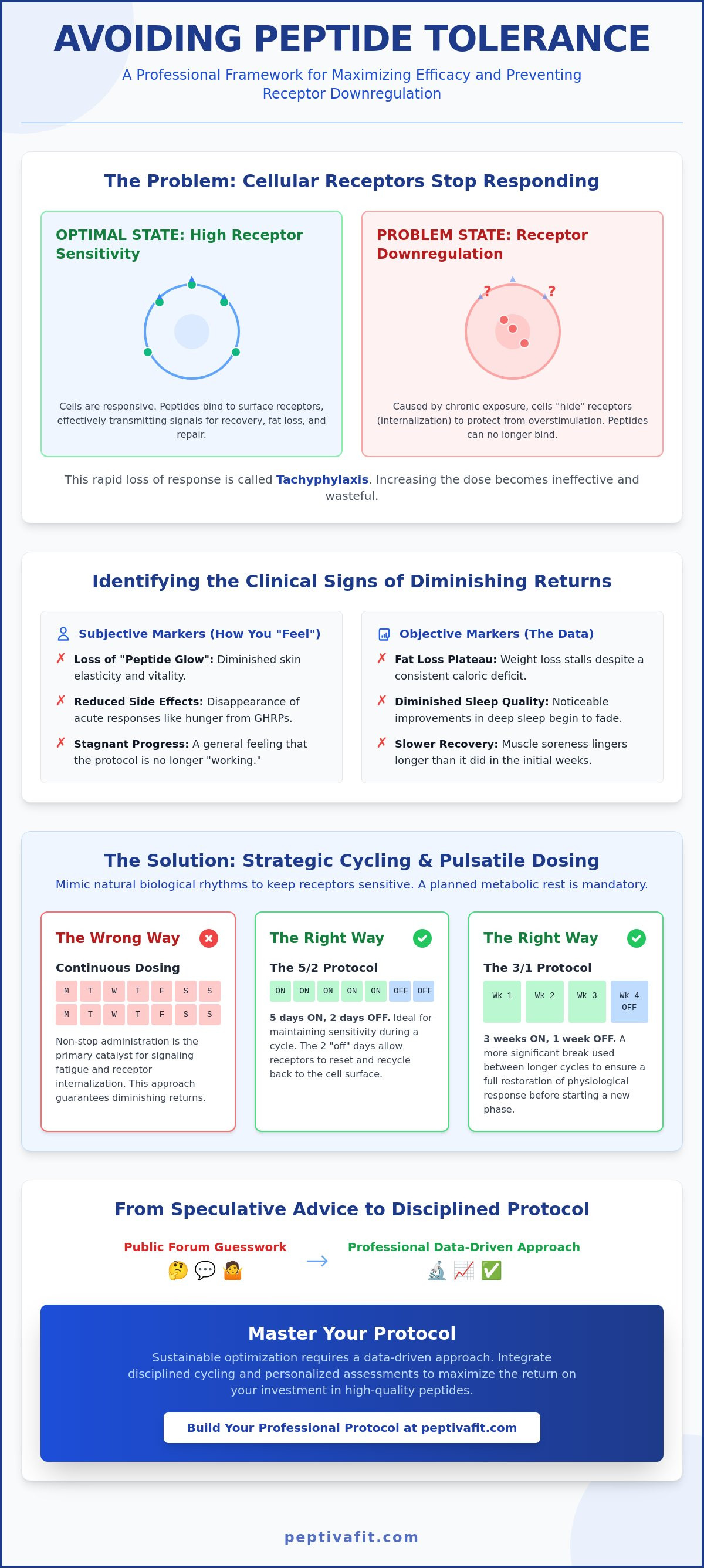
Peptide tolerance is a biological safeguard where the physiological response to a specific compound diminishes over time. It's not a failure of the peptide itself, but a calculated adjustment by cellular systems to maintain homeostasis. When you're investigating how to avoid peptide tolerance, you must first accept that more is not better; once receptors are saturated or internalized, increasing the dosage merely increases metabolic waste and potential side effects without improving the clinical outcome. Tachyphylaxis is the rapid onset of drug tolerance following repeated administration.
It's vital to distinguish between metabolic adaptation and true receptor desensitization. Metabolic adaptation occurs when the body becomes more efficient at processing a substance, often through enzymatic changes. In contrast, desensitization involves a physical change in the receptor's ability to transmit a signal, rendering the peptide's presence irrelevant to the cell's interior. This distinction is critical for those utilizing high-quality, lab-tested peptides, as it dictates whether a protocol needs a dosage adjustment or a complete period of cessation.
Receptor Internalization and Signaling Fatigue
Cells protect themselves from overstimulation through a process called internalization. This mechanism essentially "hides" receptors from the cell surface, pulling them into the cytoplasm where they can't interact with circulating peptides. Chronic, non-stop exposure to a peptide signal acts as the primary catalyst for this signaling fatigue. Unlike pulsatile signaling, which mimics natural biological rhythms and preserves molecular integrity, continuous exposure is the primary enemy of long-term efficacy. By allowing receptors time to recycle back to the surface, you ensure the cell remains "open" to the intended signal.
The Biological Feedback Loop
The human body operates within a narrow range of hormonal balance, governed by complex negative feedback loops. In the context of Growth Hormone (GH) secretagogues, the body monitors elevated GH levels and responds by releasing somatostatin. This inhibitory hormone effectively blunts the action of both GHRHs and GHRPs to prevent a state of chronic elevation. Understanding these feedback loops is essential for effective protocol design. Without planned metabolic rest, the body's natural defense mechanisms will eventually override the exogenous signal. This is why a disciplined approach to how to avoid peptide tolerance focuses on working with these loops rather than attempting to bypass them through sheer volume of administration.
Identifying the Clinical Signs of Diminishing Returns
Recognizing the early indicators of homeostatic resistance is essential for maintaining a high ROI on your protocol. While the molecular mechanisms of receptor internalization remain invisible to the naked eye, the physiological results are clearly observable through diligent tracking. Many practitioners rely solely on subjective "feel," yet a disciplined approach requires a synthesis of anecdotal evidence and objective data. If you are researching how to avoid peptide tolerance, you must move beyond the "more is better" fallacy and begin auditing your body's specific response to the signal.
Subjective markers often provide the first warning. This includes the loss of the "peptide glow," a term describing the improved skin elasticity and vitality often seen in the initial weeks of GH-related therapy. Additionally, a sudden reduction in acute side effects, such as the transient hunger response associated with GHRPs, can indicate that receptors are no longer reacting with the same intensity. However, these signs must be validated by objective markers. A fat loss plateau that persists despite a strictly maintained caloric deficit is a primary indicator of diminished returns. Establishing baseline data through a fat loss peptide guide before initiating any protocol is mandatory for accurate comparison.
Tracking sleep quality and recovery speed provides further insight into your status. Peptides designed for tissue repair or metabolic enhancement typically produce a noticeable improvement in deep sleep cycles and reduced muscle soreness. When these benefits begin to recede despite consistent administration, it's a clear signal that the biological response is tapering. You aren't just looking for progress; you're looking for the rate of progress to remain stable.
Biomarker Tracking for Long-term Users
Relying on physical sensation is insufficient for high-level optimization. Monitoring IGF-1 levels provides a clinical window into the efficacy of Growth Hormone secretagogues. If IGF-1 levels remain stagnant or decline despite consistent administration, receptor desensitization is likely occurring. Fasting glucose and insulin sensitivity also play critical roles; elevated blood sugar can blunt the growth hormone response, creating a feedback loop that mimics tolerance. A comprehensive blood panel is the only definitive way to confirm if your receptors are still sensitive or if the system requires a period of metabolic rest.
Physical Symptoms of Saturation
To truly master how to avoid peptide tolerance, you must treat your body as a laboratory where every symptom is a data point. Saturation often manifests through paradoxical physical symptoms. Increased water retention and sudden joint discomfort are frequent signs of systemic fatigue and overstimulation of the GH pathways. Instead of indicating "more is working," these symptoms suggest the body is struggling to manage the exogenous signal. Lethargy is another common marker, signaling that the central nervous system or metabolic pathways are overburdened. In these instances, a strategic break is significantly more effective than a dose escalation. For those seeking precision, a personalized medical assessment can help identify these saturation points before they lead to a total protocol stall.
Strategic Cycling Protocols by Peptide Class
The application of a universal cycling schedule is a common error in amateur protocols. Effective administration requires a nuanced understanding of how different peptide classes interact with their specific receptor sites. To master how to avoid peptide tolerance, you must move beyond the "5 days on, 2 days off" dogma and align your schedule with the biological half-life and mechanism of the compound in use. This disciplined approach ensures that the signal remains potent without overwhelming the target tissue's capacity for response.
The "5/2" Protocol serves as the industry standard for Growth Hormone Releasing Hormones (GHRHs). By providing a 48-hour cessation period every week, you allow the pituitary gland to clear accumulated somatostatin and restore the sensitivity of the GH receptors. For those focused on long-term metabolic optimization, a "3/1" Month Protocol is often superior; this involves three months of disciplined administration followed by a full four-week washout period. GHRP-2 and Ipamorelin require strict timing to avoid prolactin or cortisol spikes. Implementing pulsatile dosing that mimics natural circadian rhythms is the most effective way to maintain this delicate balance.
Healing compounds like BPC-157 peptide function through different pathways than secretagogues. While secretagogues trigger a hormonal pulse, healing peptides often work through angiogenic and regenerative signaling. Consequently, these require a different consideration for cycling, typically focused on the resolution of the target injury rather than pituitary rest. Using the same schedule for a recovery peptide as you would for a fat loss agent is an inefficient use of resources.
Growth Hormone Secretagogue Protocols (GHRH + GHRP)
Optimizing tesamorelin dosage is particularly effective for visceral fat loss, but it requires strict adherence to a pulsatile framework to prevent receptor saturation. Combining CJC-1295 with Ipamorelin creates a synergistic effect that mimics natural growth hormone bursts. Saturation doses, while powerful for acute fat loss, should be used sparingly rather than as a daily baseline to preserve long-term receptor health. If you're unsure about how to avoid peptide tolerance during a complex stack, prioritize the rest periods over the administration days.
Recovery and Longevity Peptide Schedules
Cycling BPC-157 and TB-500 varies significantly between acute injury management and chronic maintenance protocols. Mitochondrial peptides like MOTS-C peptide demand specialized schedules that prioritize metabolic flexibility over daily stimulation. A true washout period typically requires 14 to 30 days of total cessation, depending on the cumulative duration of the previous cycle and the specific biomarkers of the individual. This period of metabolic rest allows the receptors to reset their baseline, ensuring the next cycle is as effective as the first.
Metabolic Priming: Restoring Sensitivity Through Lifestyle
The biological environment dictates the success of any exogenous signal. If your metabolic foundation is compromised, even the most sophisticated protocol will fail to produce results. Mastering how to avoid peptide tolerance requires more than just scheduled "off-days"; it demands a physiological state where receptors are primed to receive and process the signal without interference. Systemic factors like insulin sensitivity and chronic inflammation determine whether a cell responds to a peptide or enters a state of defensive downregulation.
Insulin and Growth Hormone exist in a reciprocal relationship. Chronic hyperinsulinemia, often driven by high-carbohydrate diets or frequent feeding, creates a biological environment that effectively drowns out the GH signal. By improving insulin sensitivity, you reduce this metabolic "noise," allowing for lower dosages to achieve superior physiological effects. Intermittent fasting acts as a natural sensitizer by providing extended periods of low insulin, which helps upregulate receptor density and restores the cellular "hunger" for the peptide signal. Without this priming, you're essentially shouting at a cell that has already closed its doors.
Nutrition and Fasting Strategies
Injecting secretagogues in a fasted state is a non-negotiable requirement for clinical efficacy. Food intake, particularly carbohydrates and fats, triggers the release of somatostatin, a hormone that immediately blunts the pituitary response. To further enhance metabolic priming, some practitioners utilize Glucose Disposal Agents (GDAs) to maintain stable blood glucose levels and prevent the insulin spikes that lead to receptor desensitization. However, a periodic "Refeed" strategy is also essential. This signals metabolic safety to the body, preventing the systemic slowdown that can occur during prolonged caloric restriction and ensuring the endocrine system remains responsive to the protocol.
Circadian Rhythm and Hormonal Pulsatility
Sleep hygiene is the ultimate endocrine reset. Natural Growth Hormone spikes occur during the initial stages of deep, slow-wave sleep. Aligning your peptide administration with these natural pulses preserves the body's circadian rhythm and prevents the signaling fatigue caused by ill-timed, non-pulsatile administration. Managing cortisol levels and minimizing blue light exposure are not merely lifestyle suggestions; they're clinical requirements for maintaining receptor sensitivity. Chronic systemic inflammation acts as a persistent barrier to peptide signaling pathways, making it nearly impossible to maintain long-term efficacy. For those committed to professional-grade results, securing lab tested peptides is only the first step; the second is maintaining the metabolic environment necessary for them to function.
The Peptiva Approach: Professional Protocol Design and Oversight
Transitioning from theoretical knowledge to practical application requires a level of precision that unguided protocols cannot provide. While understanding how to avoid peptide tolerance is essential, the execution of these strategies depends entirely on the quality of the compounds and the accuracy of the data being monitored. The Peptiva Protocol serves as a clinical framework for fat loss, prioritizing long-term health and receptor integrity over the reckless mentalities often found in unregulated digital communities. By integrating a personalized medical assessment, we identify the early signals of homeostatic resistance before they manifest as a total protocol stall.
Professional 1-on-1 coaching represents the most efficient path to metabolic optimization. It eliminates the guesswork inherent in self-administration and provides a disciplined structure for your biological journey. A single consultation call can often identify the specific lifestyle or dosing error causing a plateau, saving both time and financial resources. For those seeking a comprehensive roadmap, our Fat Loss Peptide Guide offers the structural foundation necessary to navigate complex cycles with confidence and regulatory awareness.
The Importance of Molecular Purity
The use of lab tested peptides is a fundamental requirement for maintaining receptor sensitivity. Impurities in research-grade products can trigger systemic immune responses, leading to a state of "pseudo-tolerance" where the body's inflammatory reaction blunts the intended signal. Molecular integrity also depends heavily on correct preparation; understanding how to reconstitute peptides is vital to prevent compound degradation before administration. Third-party testing remains the only reliable method to verify that the concentration and purity of a compound match the clinical requirements of your specific protocol.
Professional Oversight and Data Monitoring
Expert guidance transforms peptide use from a series of experiments into a methodical biological upgrade. We customize the "off-cycle" duration based on your individual metabolic data rather than generic industry averages. This level of oversight is crucial for determining how to avoid peptide tolerance in high-stakes environments where performance cannot be compromised. By monitoring specific biomarkers and adjusting pulsatile schedules in real-time, we ensure your receptors remain responsive. This transition from speculative research to documented results defines the elite practitioner who values data over hype.
Advancing Toward Sustainable Biological Optimization
Mastering how to avoid peptide tolerance marks the transition from speculative experimentation to disciplined clinical application. You've learned that receptor sensitivity is a finite resource requiring strategic pulsatile dosing and rigorous metabolic rest. By prioritizing insulin sensitivity and aligning administration with natural circadian rhythms, you protect the molecular integrity of your endocrine system.
Success in performance optimization depends on the intersection of data and purity. Our approach ensures you aren't guessing with unverified research chemicals; we provide lab-verified peptide purity of 99%+ and personalized medical assessments to monitor your specific biomarkers. This level of oversight turns a protocol into a long-term asset rather than a temporary fix.
Access the Peptiva Protocol for Expert-Led Metabolic Optimization
Your journey toward peak physiological performance deserves the precision of professional-grade oversight. It's time to take control of your cellular response.
Frequently Asked Questions
What is the most common sign that I have developed peptide tolerance?
The primary indicator is the cessation of acute side effects that previously accompanied administration. For secretagogues, this often manifests as a lack of the transient hunger response or a stabilization of water retention levels. When these subjective markers vanish alongside a stall in objective progress, it's a clear signal regarding how to avoid peptide tolerance by initiating a washout period.
How long does it take for receptors to reset after stopping a peptide cycle?
A standard receptor reset typically requires a cessation period of 14 to 30 days. This duration allows internal feedback loops to return to baseline and for internalized receptors to recycle to the cell surface. The specific timeframe depends on the cumulative duration of your previous cycle and the biological half-life of the compounds used. Monitoring IGF-1 levels during this period provides clinical confirmation of the reset.
Can I avoid tolerance by simply switching between different peptides?
Switching peptides only prevents tolerance if the new compound targets a distinct biological pathway. If you transition from one Growth Hormone Releasing Peptide to another, you're still stimulating the same receptors, which does nothing to alleviate signaling fatigue. True rotation involves moving between different classes, such as transitioning from a metabolic secretagogue to a tissue repair agent like BPC-157.
Is the "5 days on, 2 days off" schedule really necessary for all peptides?
The "5/2" schedule is a clinical standard for pituitary-stimulating peptides but isn't a universal rule. Healing peptides intended for acute injury repair, such as TB-500, often require daily administration to maintain steady-state concentrations in the systemic circulation. Applying a secretagogue rest schedule to a recovery protocol can actually impede the regenerative process by breaking the necessary signaling continuity.
Does increasing the dosage help overcome a plateau in peptide efficacy?
Increasing the dosage during a plateau is a counterproductive strategy that accelerates receptor downregulation. When receptors are saturated or internalized, adding more exogenous signal merely increases metabolic stress and potential side effects without improving the physiological response. A disciplined practitioner understands that the solution to a plateau is metabolic rest, not dose escalation, to restore the system's sensitivity.
Are there specific supplements that can help maintain peptide receptor sensitivity?
Supplements categorized as Glucose Disposal Agents (GDAs) are the most effective for maintaining sensitivity. Compounds such as Berberine or Alpha-Lipoic Acid help manage blood glucose levels, which reduces the insulin spikes that otherwise trigger somatostatin release. By keeping insulin levels low, these agents ensure the environment remains optimal for secretagogue performance and help refine how to avoid peptide tolerance through metabolic priming.
How does insulin resistance affect my body’s response to peptide therapy?
Insulin resistance creates a biological environment that is fundamentally hostile to peptide signaling. Elevated baseline insulin levels promote the release of somatostatin, a powerful inhibitory hormone that blunts the body's response to growth hormone secretagogues. Correcting your metabolic health through diet and lifestyle is a prerequisite for ensuring that your receptors remain responsive to exogenous peptide signals over the long term.
Can antibody formation cause me to stop responding to peptides permanently?
Permanent non-responsiveness due to antibody formation is rare but can occur with low-purity research chemicals. These impurities can trigger the immune system to develop neutralizing antibodies that bind to the peptide and render it inactive. While this is usually a temporary immune response that resolves after a long period of cessation, it highlights the absolute necessity of using only lab-tested, high-purity compounds.

![Shelf Life of Reconstituted Peptides: A Clinical Reference Guide [2026]](https://getautoseo.com/storage/hero_images/shelf-life-of-reconstituted-peptides-a-clinical-reference-guide-2026.jpg?v=b8ed5173acaa)
