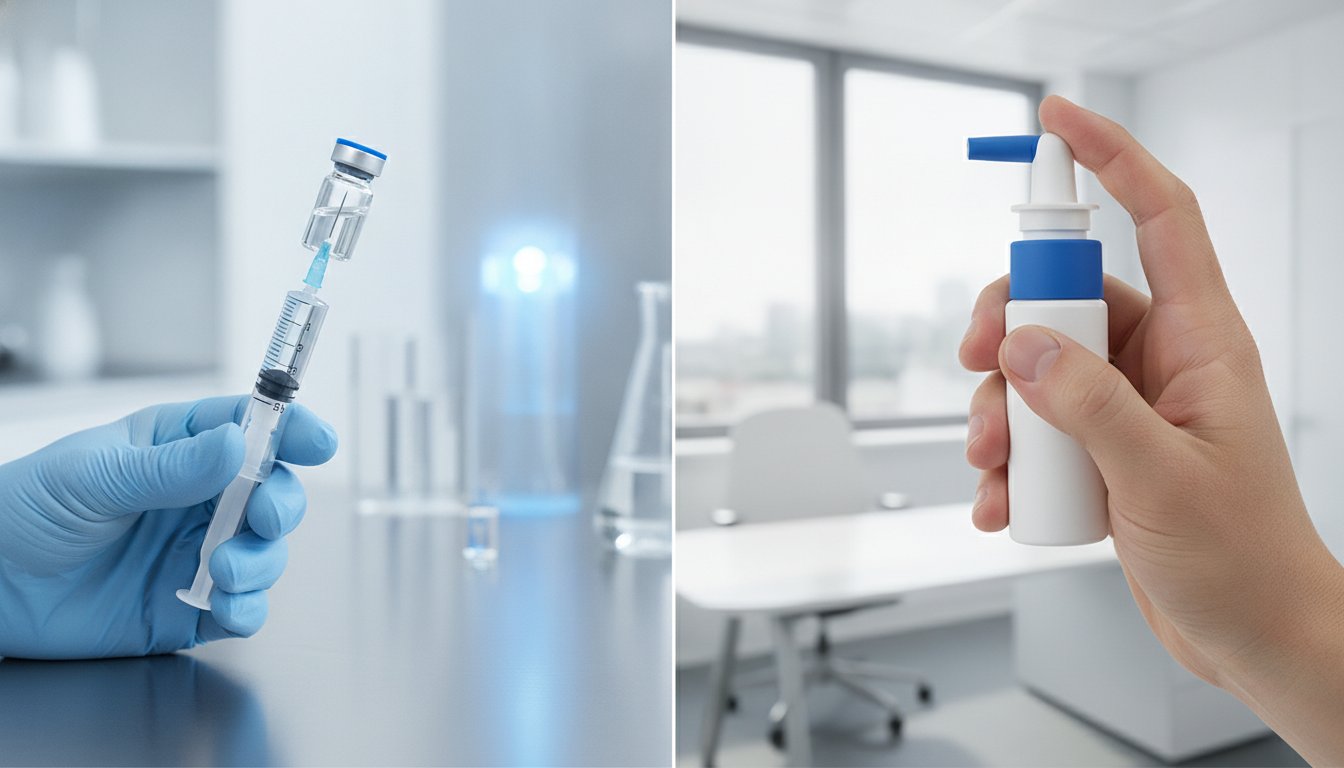
With over 33% of adults experiencing a significant fear of needles, the search for non-invasive metabolic optimization has led many to question the efficacy of injectable vs nasal peptides for weight loss. While the convenience of a nasal spray is enticing, the physiological reality in 2026 often tells a different story. Subcutaneous injection remains the clinical gold standard because it offers near-100% bioavailability; conversely, most nasal formulations achieve less than 5% systemic absorption for peptides targeting fat loss. Choosing a delivery method based on convenience rather than molecular weight can lead to wasted investment and stalled progress.
You likely value the precision of lab-verified protocols but feel hesitant about the discomfort of injection site reactions or the psychological hurdle of self-administration. This article provides a rigorous analysis of bioavailability and metabolic efficacy to help you determine the optimal delivery method for your specific protocol. We will examine the science behind peptide absorption and provide a clear framework for selecting high-grade supplies that match your physiological goals. By the end of this comparison, you'll understand whether nasal delivery can truly support your fat loss objectives or if the injectable route is a non-negotiable requirement for systemic results.
Key Takeaways
- Understand the critical impact of bioavailability on systemic circulation and why professional protocols prioritize subcutaneous delivery for maximal metabolic efficacy.
- Evaluate the clinical trade-offs of injectable vs nasal peptides for weight loss through a rigorous comparison of their pharmacokinetics and target tissues.
- Explore the unique "nose-to-brain" pathway and its capacity to bypass the blood-brain barrier for targeted neurological satiety signaling.
- Learn to identify the structural risks of unverified nasal sprays and why lab-verified molecular integrity is the primary determinant of protocol success.
Bioavailability and Pharmacokinetics: The Foundation of Peptide Delivery
Bioavailability serves as the definitive metric for clinical efficacy. It represents the exact fraction of an administered dose that reaches systemic circulation in its unchanged, active state. In the rigorous field of peptide therapeutics, oral delivery is rarely considered a viable option due to the first-pass effect. This process involves the rapid degradation of amino acid chains by gastric enzymes and hepatic metabolism, which renders the compound inert before it can exert any metabolic influence. Consequently, the debate regarding injectable vs nasal peptides for weight loss centers on two distinct physiological gateways: the subcutaneous adipose layer and the nasal mucosa.
The subcutaneous route utilizes the body's fat stores as a stable reservoir for gradual absorption. In contrast, the nasal mucosa is a highly vascularized but restrictive surface. While the nasal cavity offers a shorter path to the bloodstream, it lacks the surface area and permeability required for many specialized molecules. Choosing between these methods is not merely a matter of comfort; it's a decision based on the pharmacokinetic requirements of the specific peptide in your protocol.
The 500-Dalton Rule: Why Size Matters
Molecular size dictates the viability of the nasal route. The 500-Dalton Rule is a pharmacokinetic principle stating that molecules exceeding this weight struggle to permeate the nasal epithelium without aggressive chemical enhancers. Most fat-loss peptides are significantly larger than this threshold. Consider these common molecular weights:
- AOD-9604: Approximately 1,800 Daltons
- Tesamorelin: Approximately 5,000 Daltons
- Semaglutide: Approximately 4,100 Daltons
Large-chain peptides are fundamentally suboptimal for nasal delivery because their physical dimensions prevent efficient passage through the mucosal barrier.
Mucosal vs. Systemic Absorption Kinetics
Nasal delivery is characterized by a rapid onset of action. Because the mucosa provides direct access to the venous system, small molecules can reach peak plasma concentrations quickly. This makes the nasal route useful for peptides targeting the central nervous system. However, this speed often comes at the cost of stability and duration.
Subcutaneous injections create a "depot effect," where the peptide is slowly absorbed from the injection site into the bloodstream. This ensures sustained metabolic signaling over several hours, which is vital for peptides that mimic long-acting hormones. Furthermore, peptides in a nasal spray are exposed to local aminopeptidases. These enzymes can break down the molecular structure before absorption occurs. Subcutaneous delivery bypasses these local environmental stressors, ensuring the integrity of the peptide remains intact until it enters the blood. This distinction is a primary reason why serious researchers prioritize injections when evaluating injectable vs nasal peptides for weight loss.
Subcutaneous Injections: The Clinical Gold Standard for Fat Loss
Subcutaneous (SubQ) administration serves as the benchmark for research-grade protocols because it guarantees near-100% bioavailability. When analyzing the efficacy of injectable vs nasal peptides for weight loss, the SubQ route ensures the compound reaches systemic circulation without the degradation risks inherent to mucosal surfaces. This delivery method provides a predictable pharmacokinetic profile, which is essential for sophisticated metabolic management. A deep dive into the pharmacokinetics of therapeutic peptides reveals that SubQ absorption facilitates a steady release into the bloodstream. This enables the peptide to interact with adipose tissue receptors globally, rather than being localized to a specific entry point.
For Growth Hormone Secretagogues (GHS) like Ipamorelin and CJC-1295, SubQ injection is often mandatory. These peptides rely on specific pulsatile signaling to stimulate the pituitary gland effectively. Nasal delivery cannot replicate this precision. Maintaining this efficacy requires strict adherence to proper reconstitution protocols. Without preserving molecular integrity during the mixing phase, the bioavailability of even an injectable peptide will plummet. If you require a structured approach to these variables, our 1-on-1 Coaching provides the necessary oversight for advanced protocols.
Precision Dosing and Metabolic Consistency
Injectable protocols eliminate the variables associated with nasal administration, such as sneezing, mucosal congestion, or the "nasal drip" that diverts active compounds to the digestive tract. SubQ delivery allows for exact micro-dosing in micrograms (mcg), ensuring the intended dose is the exact dose received. This level of control is vital for compounds like Tesamorelin, which require a steady-state concentration to effectively target visceral adipose tissue. You can find specific administration parameters in our Tesamorelin Dosage Guide.
Mitigating Injection Site Reactions
The primary objection to the injectable route is the discomfort associated with needles. However, modern 31-gauge insulin syringes are engineered for minimal tissue disruption. This makes the process virtually painless for most users. Clinical best practices, such as rotating injection sites across the abdomen or thighs, prevent localized skin irritation and lipohypertrophy. Using a strict aseptic technique ensures the subcutaneous layer remains healthy and receptive to the peptide solution. While the psychological hurdle of a needle exists, the physiological rewards of 100% absorption usually outweigh the temporary inconvenience.
Nasal Peptide Delivery: Bypassing the Blood-Brain Barrier for Appetite Control
While subcutaneous injections target systemic receptors, nasal delivery utilizes a specialized "nose-to-brain" pathway to bypass the blood-brain barrier. This route leverages the olfactory and trigeminal nerves, providing direct access to the central nervous system without requiring high systemic concentrations. When evaluating injectable vs nasal peptides for weight loss, it's essential to recognize that the nasal route is optimized for neurological signaling rather than peripheral tissue modification. By influencing the hypothalamus directly, certain peptides can modulate appetite and metabolic set-points with greater precision than systemic alternatives.
This direct pathway is particularly effective for peptides targeting the Melanocortin system, which governs satiety and energy expenditure. A detailed clinical analysis of Peptide Nasal Spray vs Injection suggests that the nasal route provides a unique advantage for compounds that would otherwise be excluded from the brain by the blood-brain barrier. Neuro-peptides such as Semax and Selank are frequently employed via this method to manage the psychological stressors of a caloric deficit. These compounds don't burn fat directly; instead, they enhance cognitive focus and emotional stability, reducing the mental fatigue that often leads to protocol abandonment.
Neurological Signaling and Satiety Regulation
Nasal peptides excel at influencing the "hunger center" within the brain. By delivering active sequences directly to the hypothalamus, these sprays can effectively silence "food noise" and persistent cravings. This neurological intervention creates a supportive environment for fat loss, though it functions through a different mechanism than the direct lipolytic action of an injectable. While an injection might stimulate growth hormone release to mobilize fatty acids, a nasal spray works to ensure the user remains compliant with their nutritional boundaries. This makes the nasal route a sophisticated tool for behavioral regulation during a fat loss phase.
The Limitations of Nasal Lipolysis
A nasal spray is unlikely to trigger significant systemic fat oxidation in the lower body or midsection. The primary limitation lies in the localized nature of the absorption and the presence of nasal peptidases. These enzymes rapidly degrade large-chain peptides before they can enter the bloodstream in therapeutic quantities. Nasal delivery represents a strategic trade-off where one prioritizes brain-centered appetite regulation over the body-wide metabolic signaling provided by subcutaneous injections. Consequently, those seeking aggressive body recomposition often find that nasal sprays are best used as adjuncts to a primary injectable protocol rather than as a standalone solution for adipose tissue reduction.

Critical Comparison: Efficacy, Convenience, and Molecular Suitability
Determining the superiority of injectable vs nasal peptides for weight loss requires a multi-dimensional analysis of four clinical pillars: bioavailability, onset of action, target tissue, and user compliance. As established in previous sections, subcutaneous injections provide near-total bioavailability, ensuring that the full dose reaches systemic adipose tissue. Nasal delivery, while offering a rapid onset of action for neurological pathways, suffers from significant molecular waste. From a cost-efficiency perspective, the higher initial effort of injection is often justified by the predictable results. You are paying for active compounds that actually reach their destination rather than being degraded by nasal enzymes or diverted via the digestive tract.
A significant but often overlooked factor is the "Storage Paradox." Nasal sprays typically have shorter shelf lives once reconstituted because the delivery mechanism exposes the solution to more environmental stressors than a sealed, refrigerated vial. This instability can lead to rapid peptide degradation, further reducing the effective dose. For those prioritizing visceral fat loss, the injection remains the only logical choice. Conversely, if your primary obstacle is psychological hunger or "food noise," a nasal spray targeting the central nervous system may be the more appropriate tactical tool.
Peptide-Specific Delivery Requirements
Molecular architecture dictates the delivery method. For instance, Fragment 176-191 is strictly an injection-only peptide; its large size and specific lipolytic mechanism require systemic circulation to reach stubborn fat stores. In contrast, Semax is preferred in a nasal format to leverage the "nose-to-brain" pathway for cognitive enhancement and satiety. Some compounds, like BPC-157, are effective in both formats but serve different clinical objectives. An injection of BPC-157 provides systemic healing and metabolic support, while a nasal spray offers neuro-protective benefits and CNS modulation. Many advanced researchers now utilize a "Hybrid Protocol," combining systemic injectables for fat oxidation with nasal neuro-peptides for behavioral control.
User Compliance and Lifestyle Logistics
Long-term success depends on sustainability. "Needle fatigue" is a documented psychological barrier that can lead to missed doses in extended protocols. Nasal sprays offer a discreet and convenient alternative for those with active travel schedules, though they are less stable in fluctuating temperatures. However, convenience should never supersede clinical necessity. A personalized medical assessment is the most reliable way to determine which delivery method aligns with your physiological profile and lifestyle constraints. If you are ready to move beyond generic advice, you can secure a Single Consultation Call to refine your delivery strategy with professional oversight.
Optimizing Your Metabolic Protocol with Professional Oversight
The technical nuances of injectable vs nasal peptides for weight loss are irrelevant if the underlying compound lacks molecular purity. While delivery methods dictate absorption rates, the chemical integrity of the peptide determines the safety and ultimate success of the intervention. The "black market" for research peptides is frequently saturated with products that fail to meet clinical standards. Nasal sprays are particularly susceptible to this issue; they often contain negligible amounts of active peptides due to poor stabilization or degradation during transit. Professional oversight isn't merely a recommendation; it's a structural requirement for anyone serious about disciplined metabolic optimization.
1-on-1 coaching bridges the gap between abstract scientific theory and the practical realities of fat loss. A sophisticated protocol requires more than just a delivery device. It demands consistent monitoring of metabolic markers and an analytical approach to dosage adjustments. The Peptiva Protocol functions as a restricted framework for those who demand scientific-grade standards, ensuring that your investment in performance isn't compromised by substandard materials or unverified data.
The Necessity of Lab-Verified Peptide Integrity
Stringent 3rd-party testing is mandatory for both injectables and nasal sprays. High-Performance Liquid Chromatography (HPLC) and Mass Spectrometry (MS) are the only reliable methods to verify purity and sequence identity. Non-verified supplies frequently contain fillers, residual solvents, or contaminants that can trigger adverse immune responses. When selecting a research laboratory, you must prioritize entities that provide transparent, batch-specific Certificates of Analysis. A high-quality laboratory should demonstrate:
- Purity levels exceeding 99% as verified by HPLC.
- Precise molecular weight confirmation via Mass Spectrometry.
- Documented absence of bacterial endotoxins and heavy metals.
- Stabilized formulations that resist degradation in varying environments.
The Peptiva Protocol: A Data-Driven Approach
PeptivaFit integrates personalized assessments to identify the delivery method that matches your unique biological profile. This data-driven approach removes the guesswork from the injectable vs nasal peptides for weight loss debate. By monitoring metabolic markers throughout the process, professional oversight ensures that the chosen delivery route, whether systemic or neurological, is yielding the intended results. This level of scrutiny allows for real-time optimization and protocol safety. You can Book a Single Consultation Call to refine your delivery strategy and ensure your protocol is built on a foundation of scientific-grade integrity.
Strategic Selection for Long-Term Metabolic Success
The clinical selection of injectable vs nasal peptides for weight loss depends on your specific metabolic target and the molecular weight of the chosen sequence. Subcutaneous delivery provides the near-total bioavailability required for systemic fat oxidation; conversely, nasal sprays offer unique access to the central nervous system for appetite regulation. This distinction is critical for individuals who demand elite-level results from their optimization protocols.
Effective optimization requires lab-verified peptide integrity and data-driven metabolic protocols that prioritize physiological reality over user convenience. Personalized medical oversight ensures your strategy remains safe and efficient throughout the duration of your fat loss phase. You don't need to navigate these clinical complexities alone. Access the Peptiva Protocol and Optimize Your Metabolic Strategy today to implement a high-level framework tailored to your performance goals. Your path to a leaner physique is a methodical process that rewards precision and scientific discipline.
Clinical Intelligence: Frequently Asked Questions
Are nasal peptides as effective as injections for fat loss?
Nasal peptides are generally less effective than injections for systemic fat loss because they achieve significantly lower bioavailability. While subcutaneous injections provide near-100% absorption, nasal sprays often deliver less than 5% of the active compound to the bloodstream. This discrepancy makes injections the clinical benchmark for lipolytic sequences. Nasal delivery is better suited for neurological signaling rather than the body-wide adipose tissue reduction required for significant weight loss results.
Can I turn my injectable peptides into a nasal spray?
Attempting to convert injectable peptides into a nasal spray is scientifically unsound and potentially dangerous. Nasal formulations require specific pH balancing, osmotic adjustments, and specialized preservatives to ensure mucosal absorption and prevent bacterial growth. Simply placing a reconstituted injectable solution into a spray bottle ignores the molecular requirements for crossing the nasal epithelium. This improvised approach often results in rapid peptide degradation and zero metabolic efficacy due to improper molecular stabilization.
How do I know if my nasal peptide is actually being absorbed?
Verifying absorption for nasal peptides is challenging without specialized laboratory testing. Users typically monitor subjective biomarkers, such as a reduction in hunger or improved cognitive focus, depending on the specific peptide's target. However, these markers are imprecise. The most reliable method to ensure absorption when comparing injectable vs nasal peptides for weight loss is to utilize lab-verified formulations designed specifically for the nasal pathway with documented pharmacokinetic data and integrity.
Is it painful to inject peptides for weight loss?
Subcutaneous injections are virtually painless for most individuals when performed with modern 31-gauge insulin syringes. These needles are extremely thin and designed for minimal tissue disruption. Most users describe the sensation as a minor pinch rather than significant pain. Proper site rotation and aseptic technique further minimize the risk of localized irritation or skin reactions. The psychological hurdle of self-administration is usually far greater than the physical sensation of the process itself.
What happens if I miss a dose of my injectable peptide protocol?
If you miss a scheduled dose, you should resume your protocol at the next planned interval rather than doubling the dosage. Doubling a dose can lead to unpredictable plasma concentrations and an increased risk of adverse side effects. Consistency is the primary driver of metabolic results in any peptide strategy. While a single missed dose won't derail your long-term progress, maintaining a disciplined schedule ensures the steady-state concentration required for optimal fat oxidation and hormonal signaling.
How long does it take for nasal peptides to reach the brain?
Nasal peptides typically reach the brain within 15 to 30 minutes of administration. This rapid onset occurs because the "nose-to-brain" pathway bypasses the blood-brain barrier via the olfactory and trigeminal nerves. This speed makes nasal delivery highly effective for peptides targeting satiety or cognitive function. However, this rapid entry into the central nervous system doesn't translate to systemic fat loss, which requires the sustained circulation and higher bioavailability provided by subcutaneous injections.
Are there more side effects with injectable vs nasal peptides?
The side effect profile for injectable vs nasal peptides for weight loss varies based on the delivery site rather than the peptide itself. Injectables may cause localized site reactions like redness, bruising, or minor swelling. Nasal sprays can lead to mucosal irritation, congestion, or occasional nosebleeds. Systemic side effects, such as lethargy or water retention, depend on the specific peptide's mechanism of action and remain consistent across both delivery methods once the compound enters circulation.
Do I need a prescription for lab-tested peptides in the US?
In the United States, obtaining peptides for therapeutic use legally requires a prescription from a licensed healthcare provider and fulfillment by a licensed compounding pharmacy. While "research use only" peptides are sold online, they are unregulated and lack the quality control necessary for human safety. Professional protocols prioritize lab-tested supplies and personalized medical assessments to ensure both legal compliance and the molecular integrity of the compounds used in a metabolic strategy.

![Shelf Life of Reconstituted Peptides: A Clinical Reference Guide [2026]](https://getautoseo.com/storage/hero_images/shelf-life-of-reconstituted-peptides-a-clinical-reference-guide-2026.jpg?v=b8ed5173acaa)
