

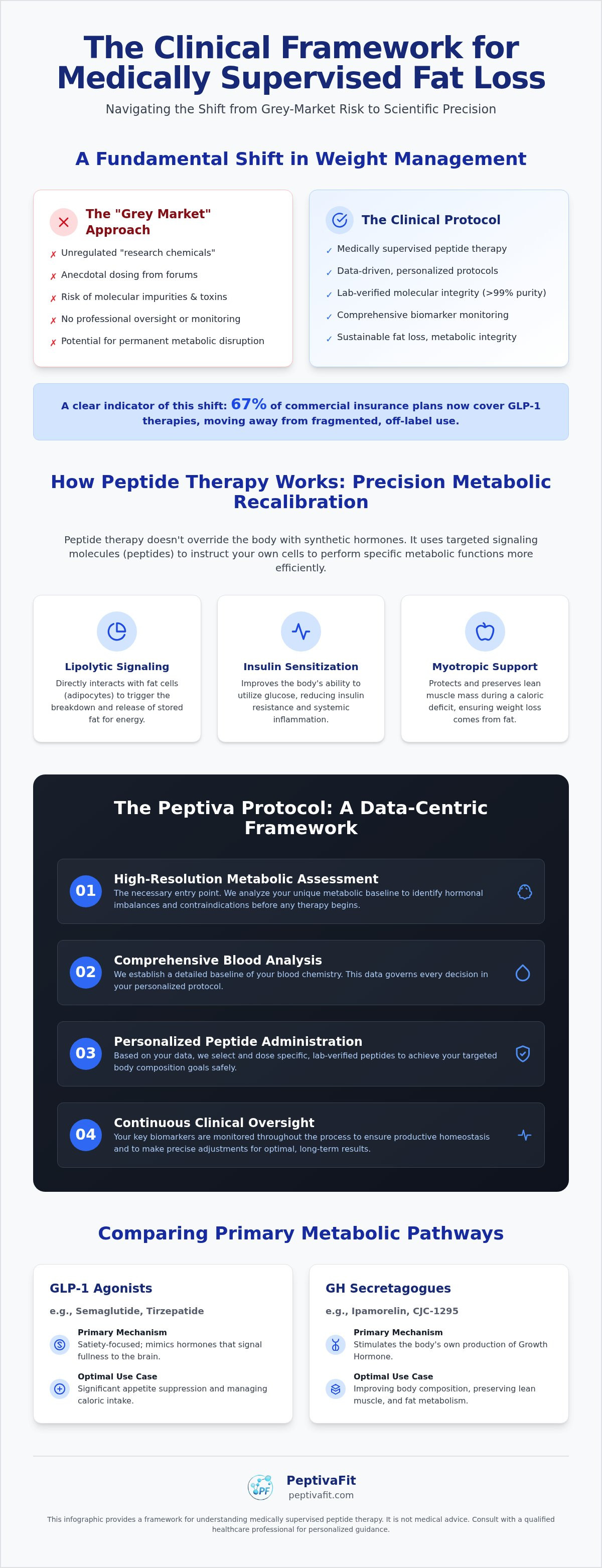
Why are 67% of commercial insurance plans now covering GLP-1 therapies when the clinical environment was previously defined by fragmented, off-label use and grey-market risks? You've likely realized that the era of "research chemicals" and anecdotal dosing from fitness forums has reached its limit. As you consider medically supervised peptide therapy for weight loss, the Department of Health and Human Services' 2026 reclassification of 14 peptides signals a shift toward clinical excellence. You understand that sustainable fat loss isn't about shortcuts; it's about metabolic integrity and professional oversight.
This article provides the definitive clinical framework, centered on the Peptiva Protocol, for those serious about professional-grade fat loss. We'll strip away the noise of conflicting online dosages to provide a structured, data-driven protocol rooted in the latest regulatory standards. You'll master the safety requirements for high-dose semaglutide, understand the emerging role of triple agonists like retatrutide, and learn how to secure lab-verified supplies. We'll preview how a personalized medical assessment serves as the necessary entry point for metabolic optimization, ensuring your journey is governed by scientific-grade precision rather than guesswork.
Key Takeaways
- Define the physiological shift from exogenous replacement to endogenous signaling through targeted peptide administration for superior metabolic control.
- Mitigate systemic risk by establishing a mandate for lab-verified molecular integrity and professional clinical oversight to avoid unregulated substances.
- Evaluate the functional differences between satiety-focused GLP-1 agonists and growth hormone secretagogues to determine the optimal pathway for body composition.
- Navigate the clinical requirements of medically supervised peptide therapy for weight loss, beginning with a high-resolution metabolic assessment and comprehensive blood analysis.
- Adopt the Peptiva Protocol as a rigorous, data-centric framework designed for individuals who prioritize long-term metabolic health and scientific precision.
The Science of Peptide Therapy in Metabolic Optimization
Medically supervised peptide therapy for weight loss represents a sophisticated shift from general pharmacology to precision endogenous signaling. Unlike traditional exogenous hormone replacement, which introduces synthetic hormones to replace deficient levels, peptide therapy utilizes short chains of amino acids to act as signaling ligands. These molecules bind to specific cell receptors, instructing the body to initiate its own physiological processes. This distinction is critical; you aren't overriding the endocrine system, but rather recalibrating its efficiency through targeted molecular communication.
The primary metabolic targets of this clinical approach include the acceleration of lipolysis, the enhancement of insulin sensitivity, and the regulation of satiety pathways. While standard caloric restriction often leads to a catabolic state where the body consumes its own muscle tissue, specific peptide sequences prioritize the preservation of lean muscle mass. This protective mechanism ensures that weight reduction is derived from adipose tissue, maintaining the metabolic rate and structural integrity of the individual.
Beyond Appetite Suppression: The Cellular Mechanism
Specific peptides target receptors within adipose tissue to facilitate the liberation of stored fatty acids for energy. This process is often augmented by mitochondrial-derived peptides, which influence energy expenditure at the cellular level. By optimizing mitochondrial function, these sequences improve metabolic flexibility, which is the body's ability to transition efficiently between burning carbohydrates and lipids. This cellular recalibration addresses the root causes of metabolic stasis rather than merely masking hunger signals.
- Lipolytic Signaling: Direct interaction with adipocytes to trigger fat breakdown.
- Insulin Sensitization: Improving glucose uptake and reducing systemic inflammation.
- Myotropic Support: Maintaining nitrogen balance to protect skeletal muscle during deficits.
The 2026 Clinical Landscape for Weight Loss
The transition of peptide research from niche performance circles to mainstream clinical medicine has been accelerated by rigorous data and regulatory updates. In 2026, the distinction between FDA-approved medications, such as Semaglutide, and unregulated research-grade compounds is the primary focus of safety protocols. Clinical grade peptides must meet strict molecular integrity standards to ensure predictable biological outcomes. Within this framework, metabolic optimization is defined as the intentional calibration of cellular pathways to achieve peak physiological function and long-term weight stability.
Professional oversight ensures that these compounds are integrated into a broader protocol that accounts for individual blood chemistry and metabolic baselines. It's a disciplined approach that values data over anecdotal evidence, providing a controlled environment for significant body composition changes.
Why Clinical Oversight is Non-Negotiable for Safety
The proliferation of unregulated "grey market" vendors has created a precarious environment for those seeking metabolic optimization. Engaging in medically supervised peptide therapy for weight loss is the only method to ensure that the biological signals sent to your cells are both accurate and pure. Self-prescribing based on forum anecdotes ignores the critical need for a baseline metabolic assessment, which identifies pre-existing hormonal imbalances or contraindications. Without this data, you're essentially conducting an uncontrolled experiment on your own physiology, risking permanent metabolic disruption.
A clinical supervisor acts as a gatekeeper, monitoring key biomarkers to ensure the body remains in a state of productive homeostasis. This oversight is particularly vital in 2026, as the FDA has increased its focus on compounding pharmacies to ensure safety and quality. Without professional monitoring, subtle signs of systemic stress can go unnoticed, leading to complications that far outweigh any potential fat loss benefits.
The Danger of Molecular Impurities
In the clinical space, "lab-tested" isn't a marketing claim; it's a verification of molecular integrity. A valid Certificate of Analysis (COA) must confirm the peptide's purity, often exceeding 99%, and the absence of heavy metals or bacterial endotoxins. Low-grade supplies often contain trifluoroacetic acid (TFA) salts or residual solvents that can cause systemic inflammation or localized site reactions. Utilizing lab tested peptides is fundamental to the Peptiva Protocol, ensuring that the metabolic response is driven by the peptide itself rather than an unintended contaminant.
Titration and Dosage Precision
Metabolic therapy requires a granular approach to dosing that accounts for individual receptor sensitivity. A "one-size-fits-all" model fails because it ignores the unique metabolic baselines found during professional assessments. Clinical supervisors utilize gradual titration to minimize gastrointestinal distress or other common side effects associated with the best peptides for weight loss. Ongoing medical consultations allow for the real-time adjustment of protocols based on fluctuating biomarkers. This ensures that the therapy remains both effective and sustainable over a long-term horizon. If you're seeking a structured path, a personalized medical assessment is the necessary first step to ensure your protocol is built on data rather than guesswork.
Comparing GLP-1 Agonists and GH Secretagogues for Fat Loss
Selecting the appropriate molecular pathway is a critical component of medically supervised peptide therapy for weight loss. Clinicians generally categorize these compounds into two primary classes based on their mode of action: incretin mimetics and growth hormone secretagogues. While both facilitate fat loss, they utilize distinct biological levers to achieve metabolic recalibration. Understanding these differences allows for a more disciplined application of therapy tailored to specific body composition goals rather than just a reduction in scale weight.
GLP-1 Agonists: Managing the Incretin System
Glucagon-like peptide-1 (GLP-1) agonists function by mimicking endogenous incretin hormones. These molecules bind to GLP-1 receptors to delay gastric emptying and signal the brain's satiety centers, effectively reducing caloric intake. Beyond appetite suppression, they play a vital role in long-term insulin regulation by enhancing glucose-dependent insulin secretion. This helps stabilize blood sugar and improves pancreatic health over time.
A significant concern with GLP-1 monotherapy is the risk of catabolic muscle wasting. Because the weight loss is often rapid and driven by a substantial caloric deficit, the body may sacrifice lean tissue alongside adipose stores. This is why professional oversight focuses on maintaining protein synthesis and incorporating resistance training to protect metabolic rate. Without this clinical balance, the individual risks achieving a "thin-obese" phenotype characterized by low muscle mass and poor metabolic flexibility.
Secretagogues: Stimulating Endogenous Production
Growth Hormone (GH) secretagogues, such as Ipamorelin and CJC-1295, operate through a different mechanism. Instead of suppressing appetite, they stimulate the pituitary gland to release natural pulses of growth hormone. This increase in GH levels accelerates lipolysis, specifically targeting stored fat for energy while simultaneously supporting nitrogen retention in muscle cells. The clinical rationale for optimizing tesamorelin dosage often centers on its specific efficacy in reducing visceral adipose tissue, which is the deep, metabolically active fat surrounding internal organs.
Secretagogues are frequently preferred for individuals who prioritize body composition and performance over pure weight loss. By enhancing the body's own production cycles, these peptides support a more youthful metabolic profile. Ipamorelin and CJC-1295 are often utilized in combination to maximize the GH pulse duration and intensity. For a deeper analysis of these mechanisms, you should review the clinical overview of peptides for metabolism.
Modern clinical frameworks often utilize "stacking" strategies that combine both classes. This dual-pathway approach leverages the satiety and insulin-sensitizing effects of GLP-1 agonists with the muscle-protective and lipolytic properties of secretagogues. This synergy ensures that fat loss is maximized while the structural integrity of the skeletal muscle is preserved, leading to a more sustainable and high-performance metabolic outcome.
The Step-by-Step Journey of Supervised Therapy
Transitioning from theoretical knowledge to active metabolic optimization requires a structured clinical pathway. Medically supervised peptide therapy for weight loss is not a simple transaction; it's a phased, disciplined engagement with your own biology. This journey ensures that every molecular signal is calibrated to your current physiological state, minimizing risk while maximizing the efficiency of adipose tissue reduction.
The process moves through four distinct stages. Phase 1 centers on an exhaustive data collection to establish your metabolic starting point. Phase 2 involves the design of a protocol that aligns with your specific molecular baselines. During Phase 3, implementation begins, requiring you to master technical skills such as how to reconstitute peptides to preserve their delicate molecular integrity. Finally, Phase 4 establishes a continuous monitoring loop where dosages are adjusted based on your body's real-time feedback.
The Importance of Baseline Blood Panels
A personalized medical assessment is anchored by a high-resolution blood panel that goes beyond standard wellness checks. We require specific data points to ensure your system is prepared for the metabolic shift. This includes analyzing HbA1c and fasting insulin to evaluate glucose regulation, along with TSH and Free T4 to assess thyroid-driven thermogenesis. Liver enzymes (ALT/AST) and kidney function markers (GFR) are equally critical, as these organs are responsible for the metabolic processing and clearance of peptide compounds. Continuous glucose monitoring often supplements this data, providing a granular view of how therapy influences your glycemic stability throughout the day.
Ongoing Coaching and Protocol Adherence
Data is only as valuable as its interpretation. 1-on-1 coaching is essential for translating physiological signals into actionable protocol adjustments. Your coach helps you distinguish between normal titration side effects and signals that require a shift in strategy. This professional oversight ensures that peptide use is always paired with the foundational pillars of resistance training and precision nutrition. If you encounter hurdles or require a strategic pivot, a single consultation call provides a focused troubleshooting session to keep your progress on track. Clinical success is built on the consistency of the Peptiva Protocol rather than isolated, unmonitored efforts. Secure your baseline by scheduling a personalized medical assessment to begin your clinical journey.
The Peptiva Protocol: Precision Fat Loss Through Data
The Peptiva Protocol is not a retail product or a standard weight loss program; it's a disciplined, elite framework designed for those who demand molecular precision. This approach represents the culmination of medically supervised peptide therapy for weight loss by merging lab-verified molecular integrity with rigorous expert oversight. We don't offer mass-market solutions. Instead, we provide a restricted environment for individuals who view their biology through the lens of high-performance engineering. Every aspect of the protocol is structured to ensure that fat loss is achieved without compromising the body's underlying metabolic health.
This framework functions as a long-term investment in your metabolic capital rather than a temporary fix. By combining lab-tested peptides with professional 1-on-1 coaching, the protocol ensures that your journey is governed by data rather than anecdotes. We maintain a high standard of exclusivity and privacy, creating a secure space for high-level optimization. This clinical environment is necessary for managing the complexities of 2026's regulatory landscape and ensuring that every intervention is both safe and effective.
Data-Driven Decision Making
Our fat loss peptide guide serves as the foundational document for this process. It removes the dangerous guesswork of forum-based experimentation by providing peer-reviewed, data-backed protocols. Having a central clinical authority for protocol questions ensures that your progress is never stalled by conflicting information. We focus heavily on cellular health and systemic longevity, recognizing that sustainable body composition changes require a healthy physiological foundation. Every dose adjustment and protocol shift is rooted in the biomarkers identified during your assessment phase.
Accessing Selective Metabolic Support
Joining the PeptivaFit platform requires a commitment to maturity and personal responsibility. We do not appeal to a general audience, but rather to a specific demographic that understands the complexities of performance optimization. The entry point for this exclusive support is a personalized medical assessment, where your baseline data is scrutinized to ensure protocol compatibility. This selective process maintains the integrity of our clinical environment and ensures that every participant receives the individual attention required for success.
If you are prepared to move beyond standard consumer wellness and embrace a space of clinical-grade precision, the Peptiva Protocol provides the necessary structure. You'll gain access to lab-verified supplies and the expert guidance needed to master your metabolic signaling. The time for guesswork has passed. You can secure your clinical-grade optimization today by scheduling a personalized medical assessment and initiating your professional protocol.
Securing Your Metabolic Future Through Clinical Precision
The era of trial and error in performance optimization has transitioned into a period of rigorous scientific investigation. You've recognized that medically supervised peptide therapy for weight loss requires more than just access to compounds; it demands a structured framework of molecular integrity and physiological data. By prioritizing lab-verified molecular integrity reports and expert clinical oversight by metabolic specialists, you ensure that your fat loss protocol remains sustainable and scientifically sound.
Sustainable body composition changes result from disciplined endogenous signaling and professional feedback loops. You understand the functional distinction between incretin mimetics and growth hormone secretagogues, and how their synergy defines modern metabolic excellence. The Peptiva Protocol offers an exclusive 1-on-1 coaching framework designed for individuals who value precision over trend-driven shortcuts. This isn't merely a weight reduction strategy; it's an investment in your long-term cellular health and metabolic flexibility.
Take the definitive step toward professional-grade optimization. We invite you to Apply for the Peptiva Protocol and Professional Assessment to begin your structured journey. Your path to a recalibrated metabolic baseline is ready for activation.
Frequently Asked Questions
Is medically supervised peptide therapy safer than doing it alone?
Clinical supervision is significantly safer because it eliminates the high risks associated with unregulated grey-market substances. A professional framework ensures that your protocol is based on a personalized medical assessment rather than anecdotal forum advice. Supervisors monitor your systemic response through regular blood panels, allowing for immediate protocol adjustments if biomarkers deviate from healthy ranges. This disciplined approach protects your metabolic integrity while ensuring the compounds used meet strict molecular purity standards.
How long does it typically take to see results from a peptide weight loss protocol?
Initial physiological changes, such as improved satiety or energy levels, often manifest within the first 14 to 21 days of a structured protocol. Significant changes in body composition typically become measurable after 8 to 12 weeks of consistent adherence. It's important to remember that medically supervised peptide therapy for weight loss is a long-term metabolic investment. Rapid, unsustainable drops are avoided to prioritize the preservation of lean muscle mass and structural metabolic health.
What are the most common side effects of weight loss peptides?
Gastrointestinal symptoms, including nausea, delayed gastric emptying, and occasional constipation, are the most frequently reported side effects, particularly with GLP-1 agonists. Some individuals may experience localized redness or irritation at the injection site. These effects are typically managed through precise titration and professional dose adjustments. A clinical supervisor uses your real-time feedback to refine the protocol, ensuring that side effects remain minimal while the metabolic benefits are maximized throughout the journey.
Can I use peptides for fat loss if I am already on other medications?
The safety of combining peptides with existing medications can only be determined through a personalized medical assessment. Certain drugs, particularly those influencing blood glucose or thyroid function, may interact with peptide signaling pathways. A metabolic specialist must review your current pharmaceutical profile to identify potential contraindications. This clinical gatekeeping ensures that your weight loss protocol doesn't interfere with existing treatments, maintaining your overall physiological stability while pursuing body composition goals.
Do I need to follow a specific diet while on peptide therapy?
Peptide therapy functions as a biological lever that is most effective when paired with a disciplined nutritional framework. The Peptiva Protocol emphasizes high protein intake to protect skeletal muscle mass and a nutrient-dense diet to support cellular health. While peptides manage hunger and metabolic signaling, they don't replace the need for a caloric deficit. Integrating precision nutrition ensures that the liberated fatty acids are utilized efficiently for energy, leading to superior fat loss outcomes.
What happens if I stop the peptide protocol abruptly?
Abruptly ceasing a protocol can lead to a rapid return of previous hunger levels and a potential rebound in weight if metabolic habits aren't solidified. Professional oversight includes a structured exit or maintenance strategy to prevent these issues. Gradually tapering the dosage allows your endogenous signaling to recalibrate without sudden systemic shocks. This controlled transition is vital for maintaining the fat loss achieved during the active phase of your medically supervised peptide therapy for weight loss.
How are peptides for weight loss typically administered?
Most metabolic peptides are administered via subcutaneous injection using a fine-gauge needle, typically in the abdominal region or thigh. This method ensures maximum bioavailability and stable blood concentrations compared to oral alternatives. Proper administration also requires understanding how to reconstitute the compounds correctly to maintain their delicate molecular structure. Your coaching framework includes detailed instruction on these technical aspects to ensure every dose is delivered with clinical-grade precision and safety.
Why is lab-testing so important for research peptides?
Lab-testing is the only way to verify the molecular purity and integrity of the peptides you introduce into your body. High-grade supplies must be accompanied by a Certificate of Analysis (COA) confirming a purity level of 99% or higher. Testing ensures the absence of heavy metals, bacterial endotoxins, and residual solvents. Without these verified reports, you risk systemic inflammation or toxic exposure, which can permanently damage your metabolic health and compromise your results.

![Shelf Life of Reconstituted Peptides: A Clinical Reference Guide [2026]](https://getautoseo.com/storage/hero_images/shelf-life-of-reconstituted-peptides-a-clinical-reference-guide-2026.jpg?v=b8ed5173acaa)
