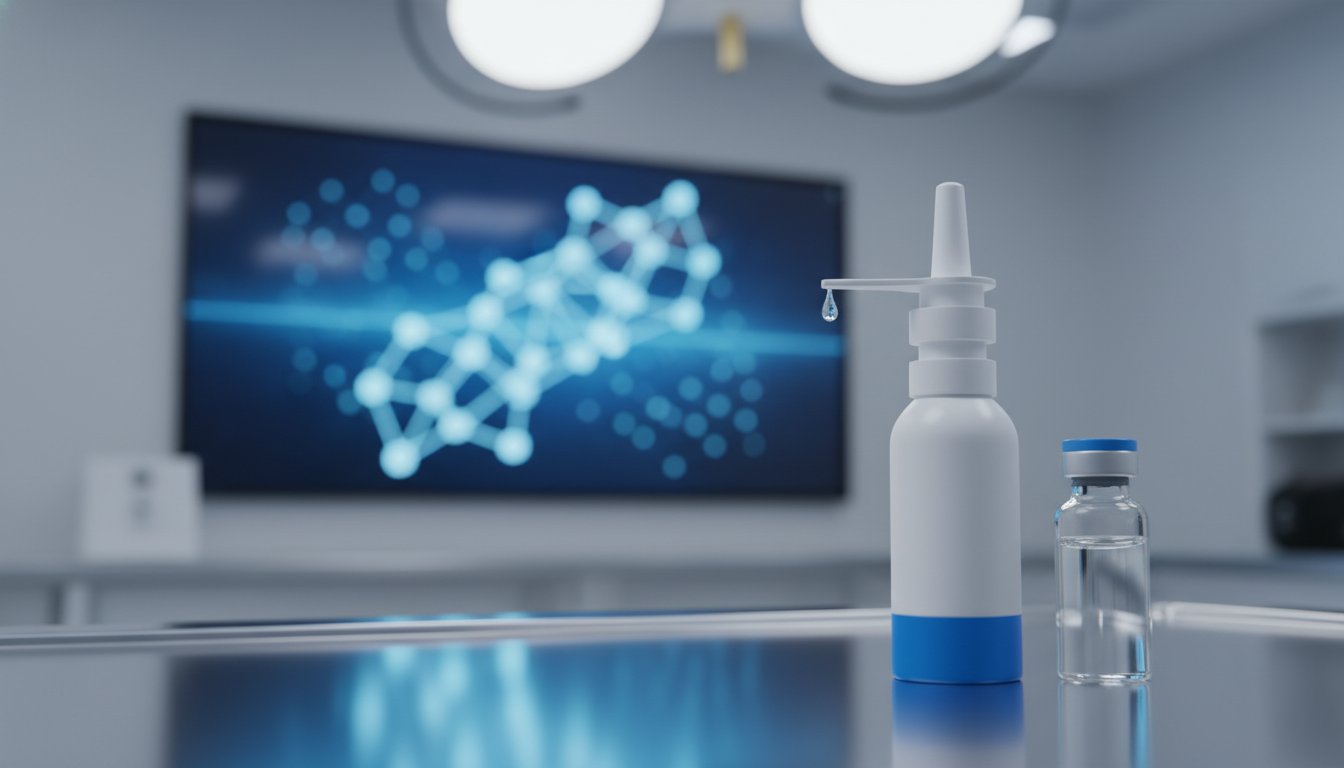
The systemic bioavailability of intranasal peptides often plateaus at a mere 0.5% to 5%, raising a critical question for the disciplined optimizer: are you investing in metabolic transformation or simply expensive saline? While the convenience of a non-injectable route is undeniable for those with needle phobia, the physics of mucosal absorption remains a rigid gatekeeper. You understand that performance optimization requires precision, yet the "gray market" of research chemicals offers little more than uncertainty and risk.
This clinical review explores the scientific reality of intranasal delivery to identify the most effective peptides for fat loss that successfully navigate the nasal membrane. We'll analyze why molecular weight is the primary determinant of success and how the April 2026 removal of compounds like CJC-1295 from the FDA’s Category 2 list changes your access to high-purity options. You'll gain a clear ranking of specific peptides by their absorption efficacy, an understanding of the July 2026 compounding re-evaluation, and a rigorous protocol for ensuring the integrity of your selected compounds through the Peptiva Protocol.
- Evaluate the "500 Dalton Rule" and the specific role of pH buffers in facilitating the systemic absorption of metabolic peptides through the nasal mucosa.
- Identify the most effective peptides for fat loss in non-injectable formats, with a focus on the lipolytic efficacy of Tesamorelin and HGH Frag 176-191.
- Master the technical protocols for nasal spray administration, including precise priming and mg-per-spray dosage calculations for consistent results.
- Understand the necessity of a personalized medical assessment to establish a metabolic baseline before initiating any advanced peptide protocol.
- Implement the Peptiva Protocol to ensure 99%+ purity through laboratory verification, avoiding the risks associated with unverified research chemicals.
Intranasal vs. Subcutaneous: The Landscape of Fat Loss Peptides
The paradigm of metabolic optimization is undergoing a disciplined shift. For years, subcutaneous injection was the singular standard for peptide delivery, often creating a barrier for those who prioritized convenience or had aversions to needles. By 2026, intranasal peptide therapy has emerged as a scientifically valid, non-invasive alternative. This transition is driven by the refinement of nasal drug administration, which utilizes the highly vascularized nasal mucosa to bypass the digestive system and enter systemic circulation. While traditionalists argue that injections provide superior saturation, the rise of high-purity research peptides demonstrates that bioactivity is not exclusive to the needle. The recent April 2026 regulatory shifts, which saw several key compounds removed from restrictive lists, have further accelerated the adoption of these sophisticated delivery systems.
A common misconception persists that peptides lose their integrity unless they're injected. While it's true that peptides are fragile large molecules, the nasal pathway provides a direct route that avoids the first-pass metabolism of the liver. This ensures that the compound remains bioactive upon entry. The most effective peptides for fat loss are those engineered to survive this mucosal crossing while maintaining their structural sequence. Success in this landscape depends on moving beyond the "needle or nothing" binary and understanding how molecular weight dictates the efficiency of these non-invasive protocols.
The Shift Toward Non-Invasive Metabolic Optimization
Market data from early 2026 indicates a growing preference for needle-free protocols among high-performance individuals. Removing the psychological barrier of the needle increases protocol adherence, which is the primary failure point in long-term fat loss journeys. Consistent daily administration is more achievable when the method is as simple as a metered spray. This evolution reflects a broader interest in peptides for metabolism and fat loss, where the focus has moved from aggressive intervention to sustainable, data-driven optimization. The privacy and ease of a nasal spray allow for a level of discretion that traditional vials and syringes cannot match.
Primary Mechanisms of Peptide-Induced Lipolysis
Understanding the most effective peptides for fat loss requires a clear distinction between how these compounds interact with human physiology. Growth hormone secretagogues, such as Ipamorelin, signal the pituitary gland to release endogenous growth hormone, which indirectly initiates fat oxidation. In contrast, direct lipolytic fragments like HGH Frag 176-191 bypass the pituitary entirely and target adipose tissue directly. The choice of delivery method impacts the kinetics of these signals. Subcutaneous injections provide a slow-release depot effect, but nasal sprays offer a rapid pathway to the bloodstream. This makes them highly efficient for peptides with short half-lives that require frequent, precise pulses to mimic natural biological rhythms.
The Science of Mucosal Absorption: Why Molecular Weight Matters
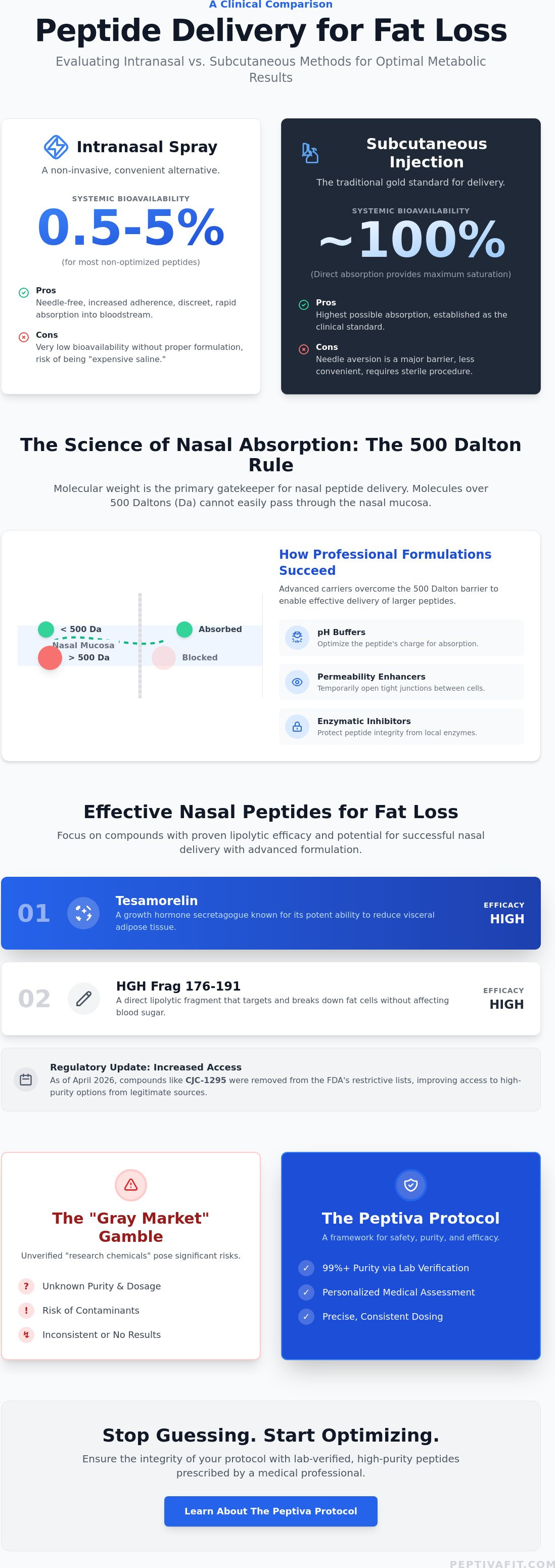
The efficiency of the most effective peptides for fat loss is fundamentally governed by the "500 Dalton Rule." This pharmacological principle states that molecules with a molecular weight exceeding 500 Daltons face significant resistance when attempting to pass through the nasal mucosa via passive diffusion. Since many metabolic peptides are larger than this threshold, successful intranasal delivery requires more than just a simple solution. Precision engineering is mandatory. Formulations must be designed to manage the tight junctions between epithelial cells to allow for systemic entry.
To overcome these physical constraints, professional-grade nasal sprays utilize specific surfactants and pH buffers. These components temporarily increase mucosal permeability and ensure the peptide remains in an uncharged state, which is optimal for absorption. Without these stabilizers, the peptide often remains trapped on the mucosal surface, where it's eventually cleared by the nose's natural defense mechanisms. Advanced formulations also address the presence of local peptidases. These enzymes are designed to degrade foreign proteins, but they can be circumvented through the use of enzymatic inhibitors that protect the peptide's amino acid sequence until it reaches systemic circulation.
Bioavailability Realities for Intranasal Compounds
It's vital to maintain a realistic perspective on absorption rates. While subcutaneous injections offer a bioavailability often exceeding 90%, intranasal delivery typically ranges between 5% and 20%. This disparity doesn't render the nasal route ineffective; rather, it necessitates a recalibration of the dosage. When the concentration is adjusted to account for this lower absorption rate, the physiological outcome can mirror that of an injection. For instance, mots c peptide is frequently cited for its role in mitochondrial-derived metabolic regulation, yet its effectiveness depends entirely on maintaining stability within the delivery medium. Those seeking a structured approach to these variables may benefit from a personalized medical assessment to determine their specific metabolic requirements.
Formulation Integrity: Stabilizers and Preservatives
Molecular integrity is the preservation of the peptide's amino acid sequence against enzymatic cleavage. Achieving this requires more than standard bacteriostatic water, which only prevents bacterial growth and does nothing to protect the fragile peptide bonds. High-end protocols mandate the use of specific stabilizers and, crucially, chilled storage to prevent thermal degradation. If the molecular structure is compromised by heat or improper pH, the peptide becomes biologically inert. This is why verifying the purity and structural integrity of your source is a non-negotiable step in any serious optimization protocol. Using unverified research chemicals often leads to degraded products that fail to trigger the desired lipolytic response.
Ranking the Most Effective Nasal Spray Peptides for Fat Loss
Identifying the most effective peptides for fat loss in an intranasal format requires a clinical hierarchy based on lipolytic potency and mucosal compatibility. Not all compounds possess the structural integrity to survive the nasal crossing while maintaining high receptor affinity. This ranking prioritizes peptides that demonstrate the highest systemic bioactivity when the traditional subcutaneous route is bypassed. The following compounds represent the current gold standard for non-invasive metabolic optimization in 2026.
- Tesamorelin: The premier choice for visceral adipose tissue (VAT) reduction and metabolic syndrome management.
- HGH Frag 176-191: A targeted lipolytic fragment that isolates the fat-burning benefits of growth hormone without systemic side effects.
- AOD-9604: A stabilized fragment of the human growth hormone C-terminus, noted for its high mucosal stability.
- Ipamorelin/CJC-1295: A synergistic secretagogue pair that amplifies endogenous growth hormone pulses for body recomposition.
Tesamorelin: Targeting Visceral Fat and Metabolic Syndrome
Tesamorelin stands as the most potent GHRH (Growth Hormone Releasing Hormone) mimetic for reducing deep abdominal fat. It operates by stimulating the pituitary gland to release growth hormone in a manner that mimics natural pulsatile rhythms. Its molecular structure is uniquely suited for intranasal transport because it maintains high stability in the pH-buffered environments required for mucosal absorption. To achieve measurable VAT reduction, adhering to a precise tesamorelin dosage is essential. The nasal route requires a calculated increase in concentration to account for the absorption plateau discussed in previous sections. This ensures that the compound reaches the pituitary with enough signal strength to trigger significant lipolysis.
HGH Frag 176-191 and AOD-9604: The Lipolytic Directives
These fragments are highly valued for their ability to target stubborn subcutaneous fat without the metabolic risks associated with full-length growth hormone. They don't negatively impact blood glucose levels or insulin sensitivity, which is a critical advantage for long-term protocols. While AOD-9604 remains on the FDA's Category 2 restricted list as of May 2026, its structural stability makes it a primary focus for researchers exploring non-injectable delivery. HGH Frag 176-191 works by mimicking the way natural GH regulates fat metabolism, but it lacks the sections of the molecule that cause water retention or bone growth. These peptides are often stacked with mitochondrial optimizers to ensure that the fatty acids liberated from adipose tissue are effectively oxidized for energy rather than being re-stored. This synergy is a cornerstone of the Peptiva Protocol, ensuring that metabolic signaling is matched by cellular capacity.
The regulatory landscape for these compounds is evolving rapidly. On April 23, 2026, Ipamorelin and CJC-1295 were removed from the FDA's Category 2 restricted list, potentially expanding the clinical pathways for their use in compounded formulations. When these two are combined in a nasal spray, they create a powerful pulse that supports lean muscle preservation during a fat loss phase. This combination provides a sophisticated level of control for individuals who demand high-level performance without the inconvenience of multiple daily injections.
Protocol Optimization: Dosage Precision and Administration
Protocol integrity begins with data. Before initiating any metabolic intervention, establishing a baseline through a personalized medical assessment is mandatory. This data ensures that your hormonal profile can support the increased lipolytic demand. Implementing the most effective peptides for fat loss requires a rigorous framework of administration to ensure that the compound's bioactivity translates into measurable body recomposition. Nasal spray delivery systems require 'priming' before the first use. This involves discharging the pump into the air until a consistent mist is produced. This step is critical; without it, the initial sprays may contain an inconsistent mg-per-spray concentration, leading to sub-therapeutic dosing or unexpected side effects.
Timing and cycling are the two pillars of receptor sensitivity. Administering peptides in a fasted state, typically 30 to 60 minutes before a high-intensity training session, maximizes the lipolytic signal by leveraging the body's natural growth hormone pulses. Conversely, post-prandial administration can blunt the effectiveness of secretagogues like Ipamorelin due to insulin's inhibitory effect on growth hormone release. Protocols must be disciplined. Pituitary desensitization is a real clinical risk when secretagogues are used without breaks. A common research standard involves a "5 days on, 2 days off" cycle to maintain the responsiveness of the GHRH receptors. This methodical approach separates serious optimization from reckless experimentation.
Mastering Intranasal Delivery Technique
Effective delivery requires more than a casual spray. The 'sniff' technique is foundational. You must aim for a shallow inhalation that coats the nasal mucosa. Avoid a deep, aggressive sniff that sends the solution into the throat. If you experience a 'throat hit' or taste the peptide, the dose has bypassed the mucosal membrane and will be degraded by stomach acid. Alternating nostrils is mandatory. This practice prevents localized irritation and maximizes the available surface area for absorption. Storage is equally vital. Peptides are fragile amino acid chains; heat is their primary enemy. Once reconstituted, nasal sprays must be kept in chilled storage to prevent molecular breakdown. A degraded peptide is biologically inert and won't trigger the desired metabolic response.
The Role of Reconstitution in Nasal Formulations
Precise reconstitution is the foundation of any measurable peptide protocol. When preparing a nasal spray, the choice of solvent determines the stability and shelf-life of the compound. You must understand how to reconstitute peptides using sterile saline or specific pH-balanced buffers rather than tap or distilled water. Sterile saline is preferred for nasal applications as it mimics the body's natural fluids and reduces the risk of mucosal stinging. Using unverified water sources introduces the risk of microbial contamination and enzymatic degradation. For those who require elite-level oversight to ensure their protocol remains strictly compliant, the Peptiva Protocol offers a comprehensive framework for metabolic optimization through lab-tested standards and 1-on-1 coaching.
The Peptiva Protocol: Integrating Lab-Tested Peptides for Superior Outcomes
Successful metabolic optimization isn't just about selecting the most effective peptides for fat loss; it's about the analytical rigor applied to their implementation. The Peptiva Protocol serves as a restricted framework for individuals who demand clinical precision in their health journey. Generic weight loss plans often fail because they ignore the unique hormonal and mitochondrial nuances of the individual. Our approach replaces guesswork with a personalized medical assessment, creating a metabolic blueprint that identifies the exact pathways requiring intervention. This data-driven foundation ensures that the peptide's lipolytic signal isn't wasted on a system that isn't prepared to receive it.
1-on-1 coaching is the critical factor in this process. While a nasal spray provides the delivery mechanism, the interpretation of bio-data determines the outcome. Our coaches monitor your progress and adjust dosages to prevent the pituitary desensitization discussed in previous sections. This level of oversight ensures that your protocol remains both safe and effective over the long term. It's a partnership rooted in high-level expertise rather than mass-market advice. We prioritize informed decision-making and scientific-grade standards to help you maintain sophisticated control over your physiology.
Why Lab-Verified Purity is Non-Negotiable
The prevalence of "basement labs" in the peptide industry introduces significant risks. Contaminated or under-dosed products aren't just ineffective; they can be dangerous. Under-dosed fragments fail to reach the threshold required for mucosal crossing, while impurities can cause localized inflammation in the nasal passages. PeptivaFit ensures molecular integrity by requiring 3rd party lab verification for all constituents, maintaining a purity standard of 99% or higher. For a deeper dive into product sourcing and pharmaceutical standards, refer to our fat loss peptide guide. This transparency is essential for maintaining the high-stakes accuracy required for elite performance.
Next Steps: Your Personalized Metabolic Roadmap
Transitioning from academic interest to measurable results requires a shift in strategy. You can book a single consultation call to evaluate your specific fat loss goals and review your metabolic history. This session allows us to determine the most appropriate entry point into the protocol. We don't appeal to a general audience, but rather to those who are serious about their wellness and understand the complexities of peptide science. Join the Peptiva Protocol today to secure your metabolic future through lab-tested peptides and expert-led oversight. This is your opportunity to move beyond research and into a state of optimized performance.
Securing Your Metabolic Future Through Clinical Precision
The evolution of intranasal delivery represents a significant advancement in non-invasive performance optimization. You now understand that identifying the most effective peptides for fat loss is only the first step. The true challenge lies in maintaining molecular integrity through precise stabilization. Protocol integrity is non-negotiable. Success in this field requires moving beyond the unregulated gray market. It's about adopting a framework built on clinical oversight and rigorous data monitoring. Data replaces guesswork. By prioritizing lab-verified purity and personalized assessments, you ensure that every administration translates into a targeted metabolic signal.
Mastering your physiology is a long-term process that demands personal responsibility and elite guidance. The Peptiva Protocol provides the structured environment necessary to navigate these complexities through expert medical oversight and data-driven optimization. You don't have to rely on anecdotal evidence when scientific-grade standards are accessible. Take the next step in your metabolic journey with a partner that values accuracy over hype.
Apply for the Peptiva Protocol and access lab-tested fat loss peptides today.
Your commitment to high-level expertise is the foundation of your physical transformation.
Frequently Asked Questions
Is a nasal spray peptide as effective as an injection for fat loss?
Nasal sprays can achieve comparable physiological outcomes if the dosage is adjusted to account for lower bioavailability. While injections offer absorption often exceeding 90%, nasal routes typically range from 5% to 20%. To reach therapeutic levels, the concentration in the spray must be increased. When formulated with proper pH buffers and surfactants, these are among the most effective peptides for fat loss for those prioritizing non-invasive administration.
How long does it take to see results with nasal spray peptides?
Measurable changes in body composition typically manifest within 8 to 12 weeks of consistent protocol adherence. Initial metabolic signaling begins shortly after administration, but visible fat loss requires sustained lipolytic activity. Results are highly dependent on the baseline established during a personalized medical assessment. Those who follow a disciplined cycling schedule generally observe more significant visceral fat reduction than those with inconsistent administration habits.
Do nasal spray peptides for fat loss have side effects?
Potential side effects include localized nasal irritation, dryness, or minor congestion at the administration site. Systemic effects are rare but can include mild lethargy or increased hunger, depending on the specific secretagogue used. Utilizing lab-tested peptides with 99%+ purity minimizes the risk of reactions caused by contaminants. If you experience persistent mucosal discomfort, alternating nostrils or adjusting the spray technique is often the first corrective step.
Can I stack different nasal spray peptides together?
Stacking is a standard practice in advanced metabolic optimization to target multiple lipolytic pathways simultaneously. A common example involves combining a GHRH mimetic like Tesamorelin with a direct fat-burning fragment like HGH Frag 176-191. This approach addresses both systemic growth hormone pulses and localized adipose tissue. However, stacks should only be implemented under expert oversight to ensure receptor sensitivity and prevent pituitary fatigue over long-term use.
What is the best time of day to use a fat loss nasal spray?
Administration is most effective when performed in a fasted state, typically early in the morning or 30 minutes before high-intensity training. This timing leverages the body's natural growth hormone secretion and ensures that insulin levels are low. High insulin can inhibit the fat-mobilizing effects of the most effective peptides for fat loss. Consistency in timing is essential for maintaining stable systemic concentrations and ensuring predictable metabolic signaling throughout the day.
Why do some peptides come as a powder instead of a ready-made spray?
Peptides are shipped in a lyophilized powder form to ensure long-term molecular stability during transit. Pre-mixed liquid solutions are highly susceptible to thermal degradation and enzymatic breakdown before they reach the user. Reconstituting the powder immediately before use preserves the amino acid sequence's integrity. Following a professional protocol for reconstitution ensures that the resulting nasal spray maintains its full biological potency for the duration of the cycle.
How should I store my nasal spray peptides to keep them effective?
Reconstituted nasal sprays must be kept in chilled storage, ideally between 2°C and 8°C. Exposure to heat or direct sunlight causes rapid molecular fragmentation, rendering the peptide biologically inert. While lyophilized powder is more resilient, it should also be stored in a cool, dark environment. Proper storage is a non-negotiable requirement for anyone serious about achieving measurable results from their metabolic optimization protocol and maintaining molecular integrity.
Is a prescription required for fat loss peptides in the United States?
As of May 2026, many of these compounds require a valid prescription from a licensed physician for legal use. The FDA has scheduled a Pharmacy Compounding Advisory Committee meeting for July 23-24, 2026, to review the status of several key peptides for pharmacy compounding. While the regulatory landscape is shifting, obtaining a personalized medical assessment is the only compliant way to access high-purity, lab-verified peptides under professional medical oversight.

![Shelf Life of Reconstituted Peptides: A Clinical Reference Guide [2026]](https://getautoseo.com/storage/hero_images/shelf-life-of-reconstituted-peptides-a-clinical-reference-guide-2026.jpg?v=b8ed5173acaa)
