

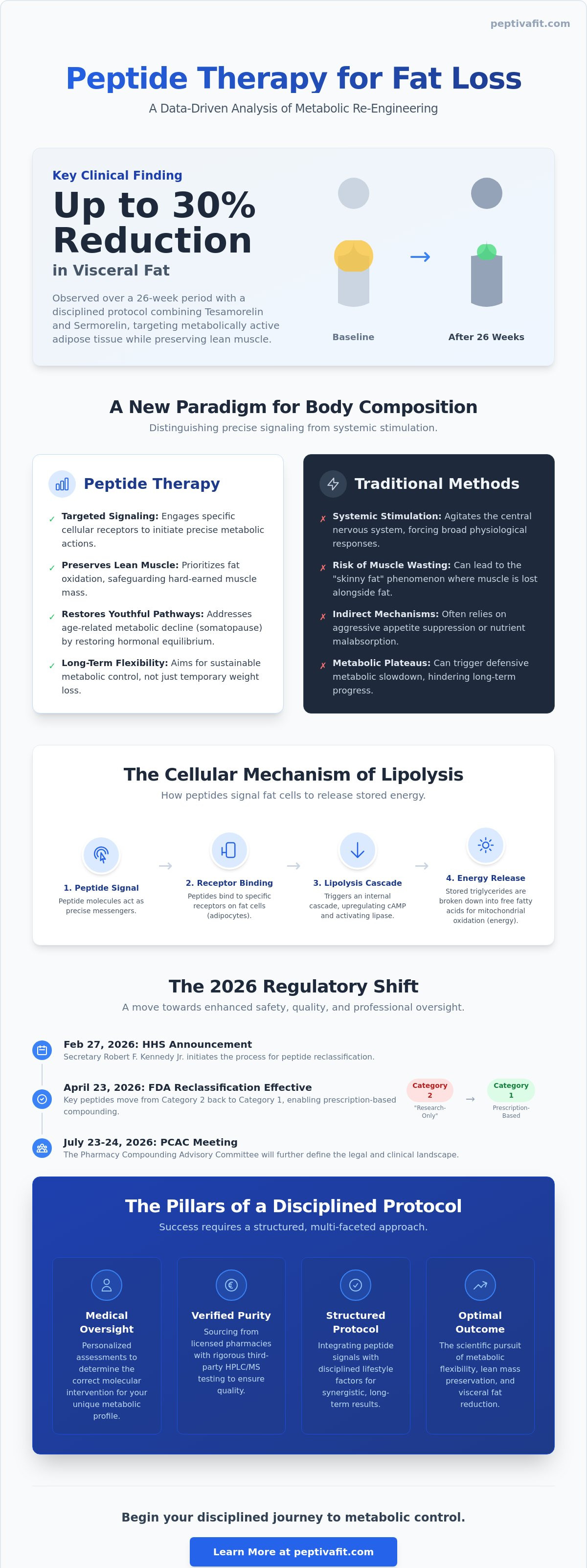
Clinical data indicates that a combination of Tesamorelin and Sermorelin can facilitate up to a 30% reduction in visceral fat over a 26-week period. For the disciplined individual, this represents a significant shift from the blunt force of traditional stimulants to the precision of metabolic signaling. You likely recognize that standard weight loss protocols often lead to frustrating plateaus or the sacrifice of hard-earned muscle mass. These metabolic adaptations make long-term body composition goals feel increasingly unsustainable, especially when concerns about pharmaceutical side effects remain high.
This article provides a rigorous, data-driven analysis of how peptide therapy for fat loss modulates lipid metabolism at a cellular level. You'll learn how these molecules restore youthful communication pathways to prioritize fat oxidation while preserving lean tissue. We'll examine the clinical evidence behind specific signaling fragments, the implications of the April 23, 2026, FDA reclassifications, and the necessity of professional oversight in establishing a sophisticated metabolic protocol. This is not about rapid, temporary weight loss; it's about the scientific pursuit of metabolic flexibility and long-term physiological control.
Key Takeaways
- Analyze the distinction between systemic stimulants and targeted signaling molecules to understand how they re-engineer metabolic pathways at a cellular level.
- Differentiate between Growth Hormone secretagogues and lipolytic fragments to select the most effective category for specific adipose tissue reduction.
- Identify the rigorous safety standards required for peptide therapy for fat loss, including the role of third-party lab verification and personalized medical assessments.
- Understand the importance of a disciplined, structured protocol that integrates signaling interventions with lifestyle factors to ensure long-term metabolic flexibility.
- Discover methods for optimizing body composition that prioritize the preservation of lean muscle mass while targeting visceral fat deposits.
Defining Peptide Therapy for Fat Loss in 2026
Peptides are defined as short-chain amino acids, typically consisting of fewer than 50 monomers, that function as precise signaling molecules within the human body. Unlike systemic stimulants that force physiological responses through central nervous system agitation, peptides engage specific cellular receptors to initiate targeted metabolic cascades. The year 2026 represents a critical juncture in this field. Following the February 27, 2026, announcement by HHS Secretary Robert F. Kennedy Jr., the FDA began the process of reclassifying approximately 14 key peptides from Category 2 back to Category 1. This shift became effective on April 23, 2026. It allows licensed compounding pharmacies to prepare these substances under a valid prescription, moving the clinical framework for peptide therapy for fat loss away from unregulated "research-only" labels toward a disciplined, medical standard. The upcoming Pharmacy Compounding Advisory Committee (PCAC) meeting on July 23-24, 2026, will further define the legal landscape for these compounded substances.
The distinction between therapeutic application and "research-only" designations is vital for informed decision-making. Research-grade compounds often bypass the rigorous HPLC/MS testing required for clinical use. Professional protocols demand a higher standard of purity to ensure that the signaling intent of the molecule isn't compromised by contaminants or incorrect amino acid sequences. True optimization requires a personalized medical assessment to determine the appropriate molecular intervention based on an individual's unique metabolic data.
The Biological Role of Peptides in Body Composition
Endogenous peptides serve as the primary regulators of energy homeostasis, influencing everything from hunger and satiety to the rate of mitochondrial fat oxidation. As individuals age, they often enter a phase known as somatopause, characterized by a progressive decline in growth hormone production and a subsequent loss of metabolic efficiency. Peptide intervention aims to restore hormonal equilibrium rather than achieving supra-physiological dosing. This restorative approach addresses the root causes of metabolic slowing, providing a sophisticated path toward body composition optimization that aligns with the body's natural architecture. It's about restoring youthful communication pathways that dictate how the body stores and utilizes energy.
Peptides vs. Traditional Weight Loss Pharmaceuticals
Traditional weight loss pharmaceuticals often rely on aggressive appetite suppression or malabsorption, which can lead to unintended muscle wasting. This results in the "skinny fat" phenomenon, where a lower scale weight masks a poor muscle-to-fat ratio. While medications like Semaglutide have revolutionized weight management by targeting the GLP-1 receptor, peptide therapy for fat loss often utilizes a broader spectrum of signaling. This includes direct lipolytic fragments that specifically target adipose tissue without compromising lean mass. It's a biologically harmonious method that prioritizes long-term metabolic flexibility over mere caloric restriction. By focusing on direct lipolysis and muscle preservation, these protocols offer a more disciplined alternative to standard pharmaceutical interventions.
The Cellular Mechanism: How Peptides Re-Engineer Metabolism
Metabolic optimization is not a matter of sheer willpower or caloric deficit; it's a consequence of biochemical signaling. Peptide therapy for fat loss functions by interfacing with specific cellular receptors to alter the way the body partitions energy. At the core of this process is the modulation of the growth hormone (GH) axis. While traditional weight loss methods often trigger a defensive metabolic slowdown, peptides can maintain or even enhance the basal metabolic rate by signaling the body to prioritize the oxidation of stored lipids. This approach moves beyond the blunt instrument of calorie restriction into the realm of precise metabolic engineering.
The primary mechanism for adipose reduction is lipolysis, the biochemical process of breaking down stored triglycerides into free fatty acids. Peptides initiate this by upregulating cyclic adenosine monophosphate (cAMP) levels within the adipocyte. This activation of hormone-sensitive lipase facilitates the mobilization of fat stores, which are then transported to the mitochondria for oxidation. Clinical data for combinations like Tesamorelin and Sermorelin has demonstrated a 20-30% reduction in visceral fat over 26 weeks. Individuals seeking peptide therapy for weight loss often find that these cellular shifts provide a more sustainable foundation than traditional dieting because they address the underlying hormonal environment.
Growth Hormone Secretagogues (GHS) and Fat Oxidation
Growth hormone secretagogues work by stimulating the pituitary gland to release endogenous GH in a pulsatile manner. This pulsatility is vital. It mimics the body's natural circadian rhythm and maintains receptor sensitivity, which avoids the metabolic down-regulation often seen with synthetic HGH administration. The resulting surge in IGF-1 assists in body recomposition by promoting protein synthesis while simultaneously inhibiting lipid storage. This creates a physiological environment where muscle is preserved and fat is utilized as the primary fuel source. For those requiring a precise roadmap, a personalized medical assessment is the essential first step in identifying these cellular inefficiencies.
Mitochondrial Signaling and Energy Expenditure
Mitochondrial health is the final frontier of fat oxidation. Without efficient mitochondria, mobilized fatty acids remain unused in the bloodstream. The MOTS-c peptide acts as a mitochondrial-derived transcript that regulates metabolic homeostasis. It promotes mitochondrial biogenesis, effectively increasing the number of cellular power plants available to burn fuel. This is often described as an "exercise mimetic" effect. It allows for increased energy expenditure and improved glucose disposal without the central nervous system fatigue associated with overtraining. By improving insulin sensitivity at the mitochondrial level, these peptides ensure that nutrients are partitioned toward muscle tissue rather than being diverted to adipose depots.
Primary Peptide Categories for Body Composition Optimization
Precision in peptide therapy for fat loss requires a granular understanding of different molecular classes. These substances are not interchangeable; they target distinct pathways within the metabolic architecture. A sophisticated protocol often categorizes these signaling molecules into three primary groups based on their physiological intent. Growth Hormone Secretagogues (GHS), such as CJC-1295 and Ipamorelin, focus on restoring endogenous pulsatile release. Lipolytic fragments like AOD-9604 isolate fat-burning effects, while metabolic regulators like Tesamorelin and MOTS-c address systemic energy homeostasis and mitochondrial health. Selecting the appropriate category depends on whether the objective is systemic metabolic restoration or targeted adipose reduction.
The complexity of these pathways means that multi-pathway "stacking" is a clinical decision, not a consumer choice. Combining secretagogues with lipolytic fragments can provide synergistic results, but it also increases the need for rigorous data monitoring. Utilizing clinically reviewed peptides for weight loss ensures that the intervention remains within a validated framework. Professional oversight is necessary to navigate the nuances of receptor saturation and hormonal feedback loops, ensuring the protocol remains both effective and safe.
The Gold Standard: Tesamorelin and Visceral Fat
Tesamorelin stands apart as a highly specific GHRH analogue. Clinical data has demonstrated that it can facilitate a 20-30% reduction in visceral adipose tissue over a 26-week period. Unlike other secretagogues that may slightly impact insulin sensitivity, Tesamorelin is favored for its relative neutrality regarding blood glucose levels. This makes it a primary choice for individuals focused on reducing deep abdominal fat without disrupting glucose disposal. Establishing the correct Tesamorelin dosage is critical for maximizing these lipolytic effects while minimizing the potential for peripheral edema or joint sensitivity. Its precision makes it a superior option for pure adipose targeting compared to broader GHS protocols.
Targeted Lipolysis: HGH Frag 176-191 and AOD-9604
Lipolytic fragments represent a focused approach to fat oxidation. HGH Frag 176-191 is a stabilized analogue of the C-terminal fragment of human growth hormone, which is the specific portion responsible for fat breakdown. By isolating this fragment, researchers can trigger lipolysis without the growth-promoting effects or insulin resistance associated with the full HGH molecule. AOD-9604, a further refined version of this fragment, has shown a specific mechanism in preventing adipogenesis, the formation of new fat cells. These fragments are ideal for individuals who require targeted fat loss but do not need the systemic anabolic benefits of secretagogues. They provide a disciplined, non-systemic intervention that prioritizes adipose tissue reduction through the upregulation of beta-3 adrenergic receptors.
Clinical Implementation: Safety, Sourcing, and Protocols
Successful implementation of peptide therapy for fat loss requires more than selecting a molecule; it demands a rigorous clinical framework. The process begins with personalized medical assessments to establish baseline biomarkers and identify specific metabolic deficiencies. Without this data, therapy is speculative. Monitoring IGF-1 levels, fasting insulin, and glycemic markers ensures that the intervention remains within safe physiological parameters. This disciplined approach separates clinical-grade optimization from the haphazard methods found in unregulated markets. It's about precision, not guesswork.
Molecular stability is a non-negotiable requirement for efficacy. Peptides are fragile chains. Improper handling or exposure to temperature fluctuations can lead to rapid degradation. Following precise protocols for peptide reconstitution is essential to maintain the structural integrity of the signaling molecule. Using bacteriostatic water and employing gentle swirling rather than vigorous agitation prevents the mechanical shearing of the amino acid bonds. To ensure your protocol is built on a foundation of scientific accuracy, you may choose to schedule a single consultation call with a qualified specialist.
Identifying High-Quality Peptide Sources
The shift toward regulated compounding after the April 23, 2026, FDA reclassification underscores the absolute necessity of verified sourcing. High-quality vendors must provide batch-specific third-party lab verification, specifically High-Performance Liquid Chromatography (HPLC) and Mass Spectrometry (MS). These tests confirm both molecular purity and exact concentration. Red flags include a lack of transparent testing or labels that omit batch numbers. Cheap peptides often contain residual solvents or truncated sequences that can trigger unwanted immune responses or systemic inflammation. Peptiva maintains a strict commitment to lab-tested peptides to ensure every signaling molecule meets scientific-grade standards for our selective clientele.
Managing Side Effects and Tolerance
Even with high-purity compounds, side effects can occur if dosing is imprecise. Common issues like peripheral edema, joint sensitivity, or mild tingling are often dose-dependent. These are typically mitigated by adjusting the administration frequency or refining the dosage. Peptide therapy follows a bell-shaped dose-response curve. Exceeding the saturation point does not improve fat oxidation; it only increases the risk of receptor desensitization. Strategic cycling is necessary to maintain receptor sensitivity and prevent the body from down-regulating its own natural hormone production. This methodical rotation ensures long-term efficacy and avoids the plateaus associated with metabolic adaptation.
The Peptiva Protocol: A Disciplined Approach to Fat Loss
Metabolic optimization isn't a casual pursuit; it's a rigorous discipline that requires a shift from speculative "buy and try" experimentation to a structured clinical framework. The Peptiva Protocol is designed for the elite researcher who values data over hype and physiological precision over marketing noise. Effective peptide therapy for fat loss is never a standalone intervention. It's a sophisticated signaling strategy that must be synchronized with specific environmental variables to yield predictable results. By moving away from unregulated, gray-market sources and adopting a methodical approach, you ensure that your biology is being optimized rather than merely stimulated.
The synergy between biological signaling and lifestyle variables is the foundation of our methodology. Our analysis of peptides for metabolism and fat loss indicates that molecular precision must be met with environmental discipline to achieve long-term metabolic flexibility. 1-on-1 coaching provides the necessary oversight to interpret complex biomarkers and adjust protocols in real time. This high-level guidance ensures you maximize the return on your investment while maintaining the highest standards of safety and compliance. It's about maintaining sophisticated control through education and data monitoring.
Integrating Nutrition and Resistance Training
Peptides are precision tools, not crutches for poor habits. A protein-sparing diet is a non-negotiable component of the Peptiva Protocol. High protein intake ensures that the metabolic shift toward fat oxidation doesn't result in the catabolism of lean muscle tissue. Resistance training acts as a mechanical catalyst that amplifies the effects of GH secretagogues. Lifting heavy loads increases the density of IGF-1 receptors and enhances the pulsatile release of endogenous growth hormone. This holistic view ensures that body recomposition is the primary outcome, avoiding the muscle wasting often associated with mainstream pharmaceuticals.
Your Next Steps in Metabolic Optimization
Entry into this level of performance optimization requires a commitment to scientific-grade standards. Your first step is to access "The Peptiva Protocol: Fat Loss Peptide Guide," which serves as the technical manual for your intervention. For those who require granular refinement of their strategy, a single consultation call provides a direct line to expert analysis. We mandate a relentless focus on safety and molecular integrity. You must prioritize a personalized medical assessment and only utilize lab-tested peptides with batch-specific HPLC/MS verification. The path to elite body composition is built on data, maturity, and a serious intent to master your own physiology.
Mastering Your Metabolic Architecture
Achieving a refined body composition requires a departure from generic weight loss tactics toward a precise, data-driven methodology. You now understand that peptide therapy for fat loss is not a temporary fix but a sophisticated signaling intervention designed to restore youthful metabolic communication. By prioritizing clinical-grade sourcing and understanding the biochemical nuances of the growth hormone axis, you can target visceral adipose tissue while strictly preserving lean muscle mass. This disciplined approach ensures that your physiological optimization is both sustainable and scientifically sound.
True transformation demands a commitment to rigorous standards. Peptiva provides the framework for this journey through lab-verified peptide supplies and personalized medical assessments. Our expert 1-on-1 coaching ensures your protocol is refined based on your unique metabolic data. You don't have to navigate these complexities alone. Access the Peptiva Protocol: The Definitive Guide to Fat Loss Peptides and take command of your metabolic future. Your pursuit of excellence deserves a protocol that is as disciplined as you are.
Frequently Asked Questions
Is peptide therapy for fat loss safe for long-term use?
Peptide safety depends on strategic cycling rather than chronic administration. Continuous use can lead to receptor desensitization or the down-regulation of your endogenous hormone production. Most clinical protocols mandate a "time on vs. time off" approach to maintain physiological sensitivity. Professional monitoring of IGF-1 and glycemic markers is necessary to ensure the intervention remains within safe parameters. It's about maintaining long-term metabolic flexibility rather than relying on a permanent pharmacological crutch.
How quickly can I expect to see results from fat loss peptides?
Visible changes in body composition typically manifest within 12 to 26 weeks of consistent protocol adherence. While cellular signaling shifts occur immediately, the mobilization of deep adipose tissue is a gradual physiological process. Clinical data for growth hormone secretagogues has demonstrated a 20-30% reduction in visceral fat over a 26-week period. Your specific timeline depends on individual metabolic data, nutritional discipline, and the precision of your peptide therapy for fat loss.
Do I need a prescription for peptide therapy in the United States?
Prescription requirements are mandatory for all clinically prepared peptides following the FDA reclassification that became effective on April 23, 2026. This regulatory shift moved approximately 14 peptides back to Category 1, allowing licensed compounding pharmacies to prepare them legally. Accessing these substances requires a valid prescription from a qualified healthcare provider. This ensures that the compounds are sourced from regulated facilities rather than unregulated, research-only online entities that lack professional oversight.
Can I stack fat loss peptides with GLP-1 medications like Ozempic?
Stacking fat loss peptides with GLP-1 receptor agonists is a growing trend for comprehensive metabolic support. Combining these molecules can target different pathways, such as appetite suppression and direct lipolysis. However, this level of multi-pathway intervention demands a personalized medical assessment to manage potential synergies and side effects. You shouldn't attempt to stack these compounds without 1-on-1 coaching to ensure each signaling molecule is used at its optimal physiological threshold.
What is the best way to store reconstituted peptides to maintain potency?
Reconstituted peptides must be stored in a controlled environment between 2°C and 8°C to prevent molecular degradation. These fragile amino acid chains are highly sensitive to temperature fluctuations and light exposure. Keeping the vials in a dark, stable refrigerated space is essential for maintaining their signaling potency. You should also avoid vigorous agitation or shaking of the vials, as mechanical stress can shear the delicate peptide bonds and render the compound ineffective.
How do I know if my peptides are real and lab-tested?
Laboratory verification is only confirmed through batch-specific High-Performance Liquid Chromatography (HPLC) and Mass Spectrometry (MS) reports. These documents provide objective data on both the purity and the exact concentration of the compound. You should never accept generic or outdated reports. Real, lab-tested peptides will always have a verifiable certificate of analysis that matches the specific batch number on your vial, ensuring the substance meets scientific-grade standards for safety and efficacy.
Will I regain the weight once I stop peptide therapy?
Weight regain is not a guaranteed outcome of stopping peptide therapy for fat loss, provided you've established a stable metabolic foundation. The goal of these protocols is to restore youthful signaling and improve insulin sensitivity. If you maintain a protein-sparing diet and consistent resistance training, your body will be better equipped to preserve its new composition. Regain typically occurs when an individual treats the therapy as a temporary fix rather than a tool for long-term metabolic optimization.

![Shelf Life of Reconstituted Peptides: A Clinical Reference Guide [2026]](https://getautoseo.com/storage/hero_images/shelf-life-of-reconstituted-peptides-a-clinical-reference-guide-2026.jpg?v=b8ed5173acaa)
