

Your persistent abdominal fat is a signaling failure, not a lack of discipline. You've likely maintained a rigorous caloric deficit only to find that deep visceral adiposity remains unchanged, a frustration rooted in hormonal resistance rather than simple thermodynamics. This bottleneck requires a more sophisticated intervention. The clinical application of peptides for visceral fat reduction offers a pathway to bypass these hurdles by directly modulating growth hormone pathways and mitochondrial efficiency.
We'll explore how specific compounds like Tesamorelin and the recently reclassified AOD-9604 target deep adipose tissue while preserving the lean muscle mass essential for metabolic health. In this guide, we detail the precise mechanisms behind these signaling molecules and provide a framework for implementing a lab-verified protocol. You'll learn the critical distinctions between regulated compounded options and high-risk research chemicals; this ensures your approach to metabolic remodeling is both data-driven and uncompromisingly safe.
Key Takeaways
- Distinguish between subcutaneous fat and visceral adipose tissue (VAT) to understand why traditional caloric deficits often fail to address deep abdominal adiposity.
- Analyze the physiological mechanisms of peptides for visceral fat reduction, specifically how they modulate the growth hormone axis to stimulate lipolysis.
- Evaluate the clinical profiles of Tesamorelin, AOD-9604, and MOTS-c to determine which signaling molecules align with your metabolic remodeling goals.
- Identify the rigorous verification standards, including third-party HPLC and mass spectrometry testing, required to eliminate risks associated with unverified research chemicals.
- Discover how to integrate these compounds into a structured framework via the Peptiva Protocol, starting with a personalized medical assessment.
Understanding Visceral Fat: Why Conventional Weight Loss Often Fails
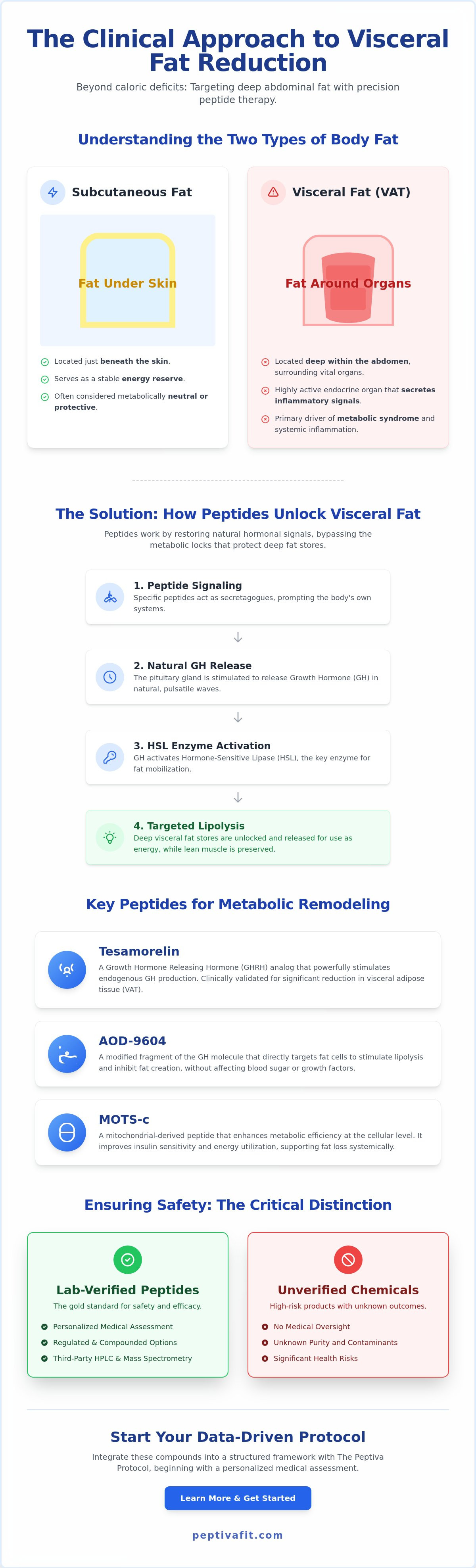
Visceral adipose tissue (VAT) isn't just a passive storage site for excess energy. It's a highly active endocrine organ that infiltrates the spaces between your vital organs, including the liver, pancreas, and intestines. Unlike subcutaneous fat, which resides just beneath the skin and serves as a relatively stable energy reserve, VAT is located deep within the peritoneal cavity. This anatomical positioning is critical because VAT secretes inflammatory cytokines, known as adipokines, directly into the portal vein. This constant flood of inflammatory markers triggers systemic metabolic dysfunction. Even if your Body Mass Index (BMI) remains within a healthy range, you can still harbor dangerous levels of internal fat, a condition commonly known as the "skinny fat" phenomenon. This internal accumulation creates a hormonal lock; in insulin-resistant states, elevated insulin levels effectively paralyze the lipolytic process, making it physiologically impossible for the body to mobilize these deep fat stores regardless of caloric restriction.
The Biological Difference Between Subcutaneous and Visceral Fat
Subcutaneous fat is often considered metabolically neutral or even protective in some clinical contexts. Visceral fat, however, is inherently toxic to the systemic environment. VAT possesses a significantly higher density of androgen receptors and a more robust blood supply than the fat found directly under your skin. This high vascularity allows it to export free fatty acids and inflammatory signals throughout the body with alarming efficiency. This biological profile explains why VAT is the primary driver of metabolic syndrome, hypertension, and chronic systemic inflammation. It's not just the volume of fat that matters, but its specific metabolic activity and its ability to disrupt hormonal signaling across the entire body.
Why Caloric Restriction Alone May Not Trigger Deep Lipolysis
Relying solely on aggressive caloric restriction often fails to address the root of the problem. The human body perceives a significant energy deficit as a survival threat, initiating a metabolic adaptation known as the starvation response. This mechanism downregulates the metabolic rate and prioritizes the preservation of visceral fat at the expense of lean muscle tissue. Chronic over-exercising can exacerbate this issue by keeping cortisol levels chronically elevated. High cortisol acts as a signal to the body to protect visceral depots while encouraging muscle wasting, further damaging the metabolic baseline. Breaking this cycle requires a shift from a model of caloric deprivation to one of precise hormonal signaling. While therapies like Glucagon-like peptide-1 (GLP-1) agonists have revolutionized appetite management, peptides for visceral fat reduction offer a more targeted approach. By utilizing peptides for metabolism and fat loss, it's possible to bypass the metabolic adaptations that keep VAT sequestered. This clinical intervention provides a necessary physiological signal to unlock these fat stores, making the use of peptides for visceral fat reduction a fundamental component of a successful metabolic remodeling strategy.
The Clinical Mechanism of Peptide Therapy for Targeted Adipose Reduction
The efficacy of peptides for visceral fat reduction lies in their ability to manipulate the Growth Hormone (GH) axis, a primary regulator of systemic lipid metabolism. Unlike exogenous GH administration, which can lead to desensitization and side effects, peptide therapy utilizes secretagogues to stimulate endogenous, pulsatile releases from the pituitary gland. This physiological approach mimics the body's natural rhythm. Once GH is released, it initiates a cascade that activates hormone-sensitive lipase (HSL) within the adipocyte. HSL is the rate-limiting enzyme responsible for mobilizing stored energy. While traditional fat burners rely on central nervous system stimulants to increase heart rate and metabolic rate, peptides operate through specific cellular signaling. This distinction is vital for long-term metabolic health. The clinical mechanism of peptide therapy focuses on biological efficiency rather than systemic stress. By avoiding the jittery side effects and potential cardiovascular strain of stimulants, peptides provide a sustainable method for metabolic remodeling.
Growth Hormone Secretagogues and the GH-IGF-1 Axis
The signaling cascade begins at the hypothalamus and moves through the pituitary gland to the liver. This pathway is often referred to as the GH-IGF-1 axis. Adhering to a precise tesamorelin dosage allows for the specific targeting of the Growth Hormone Releasing Hormone (GHRH) receptor. This stimulation prompts the liver to synthesize Insulin-like Growth Factor 1 (IGF-1). Elevated IGF-1 levels are strongly correlated with the mobilization of visceral fat. It acts as a systemic signal that prioritizes the use of adipose tissue for energy while preserving lean muscle mass. This high-level coordination is why peptides for visceral fat reduction are superior to non-specific metabolic interventions. The precision of these secretagogues ensures that the body maintains its natural feedback loops, preventing the suppression of internal hormone production.
Direct Lipolytic Action via Beta-3 Adrenergic Receptors
Certain compounds, such as HGH Fragment 176-191, target the beta-3 adrenergic receptors found on fat cells. This specific binding triggers the breakdown of fat without the peripheral effects associated with the full growth hormone molecule. These peptides don't negatively impact blood glucose levels or insulin sensitivity; they remain metabolically neutral in terms of carbohydrate metabolism. Lipolysis is the metabolic process of breaking down triglycerides into free fatty acids. By isolating the lipolytic domain of the GH molecule, these peptides offer a surgical approach to fat loss. This selective action avoids the hyperinsulinemia often associated with direct growth hormone use. For those seeking a rigorous, data-backed strategy, a personalized medical assessment is the necessary first step toward achieving clinical-grade results and long-term metabolic stability.
Comparing Top Peptides for Visceral Fat: Tesamorelin, AOD-9604, and MOTS-c
Selecting the most effective peptides for visceral fat reduction requires a nuanced understanding of your specific metabolic resistance. Not all signaling molecules serve the same purpose; while some prioritize the direct breakdown of fat cells, others focus on systemic mitochondrial efficiency and insulin sensitivity. Matching the right compound to your hormonal profile is essential for achieving clinical-grade results. A rigorous approach involves analyzing how these peptides interact with your baseline physiology to unlock sequestered fat stores that have remained resistant to traditional interventions.
Tesamorelin: The Gold Standard for Abdominal Adiposity
Tesamorelin stands as a premier option in metabolic remodeling. It remains the only FDA-approved peptide specifically indicated for the reduction of excess abdominal fat in patients with HIV-associated lipodystrophy. Clinical data demonstrate that it can reduce visceral adipose tissue (VAT) by approximately 15% to 18% over a 26-week period. Beyond its primary indication, research suggests it's highly effective at reducing hepatic fat, offering a dual benefit for those managing non-alcoholic fatty liver disease. A standardized tesamorelin dosage is typically administered as a daily subcutaneous injection, providing a sustained stimulus to the GHRH receptors without the systemic disruption often seen with direct growth hormone therapy.
For those seeking a non-hormonal entry point, AOD-9604 offers a high safety profile. This peptide is a stabilized analog of the lipolytic fragment of the human growth hormone molecule. It facilitates the breakdown of fat without impacting blood glucose levels or IGF-1 production. Its specificity makes it an ideal choice for individuals who prioritize metabolic neutrality while targeting stubborn adipose depots. It doesn't stimulate the appetite-increasing pathways sometimes associated with other secretagogues, making it a disciplined tool for fat loss.
MOTS-c: Enhancing Mitochondrial Metabolism
While secretagogues focus on the growth hormone axis, the mots c peptide functions as a mitochondrial-derived signaling molecule that regulates glucose metabolism at the cellular level. Often referred to as an "exercise mimetic," MOTS-c enhances insulin sensitivity by activating the AMPK pathway. This mechanism is critical for individuals with "metabolic inflexibility," a state where the body can't efficiently switch between burning carbohydrates and stored fats. By improving mitochondrial health, MOTS-c ensures that the fatty acids released during lipolysis are actually oxidized for energy rather than being re-esterified into storage.
The strategic use of peptides for visceral fat reduction often involves stacking these compounds to exploit their biological synergies. Combining a GH secretagogue like Tesamorelin with a mitochondrial enhancer like MOTS-c addresses both the hormonal signal to release fat and the cellular capacity to burn it. This multi-pathway approach ensures that your metabolic remodeling is comprehensive, targeting the root causes of adipose accumulation from several clinical angles.
Ensuring Safety and Efficacy with Lab-Tested Peptides
The pursuit of metabolic remodeling through peptides for visceral fat reduction requires more than just biological knowledge; it demands a rigorous standard for the substances introduced into your physiology. The market is currently saturated with "research chemicals" that often bypass the stringent quality controls required for human application. Sourcing from unverified gray-market suppliers carries significant risks, including exposure to heavy metal contamination, residual solvents, and microbial impurities. Analytical verification is the only way to mitigate these hazards. High-Performance Liquid Chromatography (HPLC) must be used to determine the exact purity levels, while Mass Spectrometry (MS) verifies the molecular identity of the compound. Without this data, you are essentially engaging in an uncontrolled experiment with your health. Utilizing lab tested peptides is a non-negotiable prerequisite for any serious protocol, as it prevents adverse immune reactions triggered by truncated peptide chains or synthetic byproducts.
Identifying Red Flags in Research Chemical Suppliers
A disciplined approach to sourcing involves a critical evaluation of supplier transparency. You should immediately disqualify any provider that does not offer downloadable, batch-specific Certificates of Analysis (COAs). Many companies post "representative" COAs that are several years old; this practice is a significant red flag indicating a lack of current testing. Molecular integrity also depends heavily on environmental factors. Peptides are fragile signaling molecules that require proper storage and cold-chain shipping to prevent degradation. If a supplier offers pricing that seems significantly lower than the clinical average, it usually suggests under-dosing or the presence of fillers. A transparent laboratory will provide a clear checklist of their testing protocols, including:
- Third-party verification from an independent, accredited facility.
- Clear identification of the batch number matching the product received.
- Purity levels exceeding 99% with minimal acetate content.
- Verification of the lyophilization process to ensure long-term stability.
The Critical Role of Molecular Integrity
Even a high-purity peptide can become a liability if handled incorrectly. Degraded peptides don't just lose their efficacy; they can lead to painful injection site reactions or systemic inflammation. This is why understanding how to reconstitute peptides is as important as the sourcing itself. Maintaining molecular stability requires precise ratios of bacteriostatic water and gentle handling to avoid shearing the delicate peptide bonds. Clinical results are only achievable when the molecule remains intact and biologically active. If you're ready to move beyond the uncertainty of unverified chemicals, you can secure high-purity, lab-tested materials through a professional framework that prioritizes your safety and metabolic outcomes.
The Peptiva Protocol: A Comprehensive Strategy for Metabolic Optimization
The application of peptides for visceral fat reduction is most effective when managed within a structured, clinical framework. Isolated experimentation often yields sub-optimal results because it ignores the systemic nature of metabolic health. The Peptiva Protocol serves as the definitive fat loss peptide guide, moving beyond the "cycle" mentality toward a sustainable model of metabolic optimization. This protocol is designed for the serious individual who understands that performance and wellness are governed by data and disciplined intervention. It shifts the focus from temporary weight loss to long-term metabolic remodeling.
Personalized Medical Assessments for Targeted Results
Before initiating any peptide therapy, a comprehensive baseline is required. Mandatory blood work must include IGF-1, HbA1c, and fasting insulin levels to establish your unique metabolic starting point. This data is critical. It allows for the identification of underlying insulin resistance that might otherwise hinder the efficacy of secretagogues. A personalized medical assessment ensures that the protocol is tailored to your specific hormonal environment. This professional oversight is the only reliable way to prevent common pitfalls, such as growth hormone-induced insulin resistance, which can occur when dosages aren't precisely calibrated to individual biofeedback. Our approach remains restricted to those who prioritize clinical precision over generic advice.
Maximizing Results Through Professional Coaching
Peptides are powerful signaling molecules, but they don't operate in a vacuum. To achieve the desired outcomes of visceral adipose tissue reduction and lean muscle preservation, 1-on-1 coaching is utilized to interpret real-time biofeedback and adjust protocols accordingly. Coaching provides the necessary accountability for dosage precision and progress tracking. In this framework, specialized nutrition and resistance training are viewed as force multipliers that enhance the lipolytic signals sent by the peptides. This integrated strategy ensures that the metabolic shift is permanent. You are encouraged to schedule a single consultation call to evaluate your current markers and determine the most effective path forward within this exclusive system.
Advancing Toward Clinical Metabolic Remodeling
Mastering the reduction of visceral adipose tissue requires moving beyond the limitations of general fitness advice. You've seen how specific signaling molecules like Tesamorelin and MOTS-c bypass metabolic resistance by targeting the growth hormone axis and mitochondrial efficiency. This clinical approach ensures that fat loss is targeted and muscle mass is preserved, provided the intervention is guided by data rather than guesswork. Success in this specialized field depends on an uncompromising commitment to molecular integrity and precise protocol management.
The use of peptides for visceral fat reduction is only effective when the compounds meet a 99%+ purity standard verified by rigorous third-party testing. Without expert medical oversight and personalized assessments, you risk the metabolic pitfalls common in unregulated cycles. The Peptiva Protocol provides the disciplined framework necessary for this level of optimization. By combining lab-verified materials with comprehensive 1-on-1 coaching, we offer a pathway to sophisticated metabolic control. Access the Peptiva Protocol and secure lab-tested peptides today to begin your transition toward a more efficient metabolic state. You're now equipped with the clinical data to make an informed, high-stakes decision for your long-term health.
Frequently Asked Questions
Which peptide is most effective specifically for visceral fat reduction?
Tesamorelin is currently considered the gold standard in this clinical category. It remains the only peptide with FDA validation for the specific reduction of excess abdominal fat in clinical populations. While other compounds like AOD-9604 show promise for general lipolysis, Tesamorelin's ability to target the growth hormone releasing hormone receptor makes it the most documented choice for deep adipose tissue.
How long does it take to see results from peptides targeting belly fat?
Measurable changes in visceral adipose tissue typically require a commitment of 24 to 26 weeks. Clinical trials for Tesamorelin demonstrated significant results at the six month mark, though some individuals may notice improvements in metabolic markers and waist circumference sooner. This is a process of structural remodeling rather than a rapid weight loss solution; it demands patience and consistency.
Can I stack Tesamorelin with other peptides like Ipamorelin or MOTS-c?
Stacking is a common and effective strategy for addressing multiple metabolic pathways at once. Combining a secretagogue like Tesamorelin with MOTS-c is particularly effective because it addresses both the hormonal signal to release fat and the mitochondrial capacity to burn it. This synergy ensures that mobilized fatty acids are oxidized for energy rather than remaining in circulation or being redeposited elsewhere.
Are there any side effects associated with peptides used for fat loss?
Potential side effects include injection site reactions, peripheral edema, and joint pain. It's also critical to monitor fasting insulin and HbA1c levels during therapy. Because growth hormone secretagogues can impact glucose metabolism, professional oversight is necessary to adjust dosages if insulin sensitivity begins to shift. Most side effects are dose-dependent and resolve once the protocol is calibrated to the individual's baseline.
Do peptides for visceral fat reduction require a specific diet to work?
Nutritional discipline is essential because peptides for visceral fat reduction function as signaling molecules, not magic fat burners. They provide the biological "green light" to release stored energy, but you must maintain a caloric environment that encourages the body to use that energy. High protein intake and controlled carbohydrate consumption are necessary to prevent the interference of high insulin levels during the lipolytic process.
How do I know if the peptides I am using are high-purity and lab-tested?
You must verify the quality of your materials by requesting a batch-specific Certificate of Analysis (COA). This document should include High-Performance Liquid Chromatography (HPLC) and Mass Spectrometry (MS) data from an independent, third-party laboratory. Purity levels should exceed 99%. Avoid any supplier that only offers "representative" or outdated testing results, as molecular integrity is non-negotiable for safety and efficacy.
What happens to the fat once it is mobilized by peptide therapy?
Once peptides trigger lipolysis, triglycerides within the fat cells are broken down into free fatty acids and glycerol. These components are released into the bloodstream to be used as fuel. If you are in a metabolic state that supports oxidation, such as during aerobic exercise or a caloric deficit, these fatty acids are burned in the mitochondria. Without proper energy demand, these lipids can be re-esterified back into storage.
Is a medical assessment necessary before starting the Peptiva Protocol?
A personalized medical assessment is a mandatory first step for anyone entering the Peptiva Protocol. This assessment uses baseline blood work to evaluate your current IGF-1, fasting insulin, and cardiovascular markers. Calibrating peptides for visceral fat reduction to your specific physiological needs is the only way to ensure the protocol is safe and effective. We prioritize data-driven decisions to avoid the common pitfalls of unmonitored experimentation.

![Shelf Life of Reconstituted Peptides: A Clinical Reference Guide [2026]](https://getautoseo.com/storage/hero_images/shelf-life-of-reconstituted-peptides-a-clinical-reference-guide-2026.jpg?v=b8ed5173acaa)
