The immediate potency of synthetic human growth hormone might be its greatest metabolic liability. While many individuals pursue rapid body composition changes, the clinical debate surrounding peptides vs hgh for fat loss often overlooks the physiological cost of exogenous administration. You're likely concerned about the risk of suppressing your natural hormone production or developing insulin resistance from high-dose synthetics. These aren't just theoretical anxieties; they're documented clinical outcomes that demand a more disciplined, data-driven approach to endocrine optimization.
It's understandable to feel overwhelmed by the shifting regulatory landscape and the complex variety of available secretagogues. This analysis provides a rigorous comparison between synthetic growth hormone and secretagogues like Ipamorelin or CJC-1295, which were reclassified by the FDA in early 2026 for legal compounding. You'll learn how to leverage the pituitary's natural pulsatile rhythm to achieve sustainable fat loss without the hormonal crashes associated with traditional HGH. We'll examine the specific metabolic advantages of preserving internal feedback loops through lab-verified protocols and personalized medical assessments designed for long-term performance.
Key Takeaways
- Understand how peptide secretagogues maintain the pituitary's natural pulsatile rhythm while synthetic HGH risks long-term suppression and pituitary atrophy.
- Evaluate the clinical profiles of specific agents such as Tesamorelin for visceral adipose reduction and HGH Fragment 176-191 for its isolated lipolytic properties.
- Analyze the distinct metabolic outcomes of peptides vs hgh for fat loss to determine which approach best preserves insulin sensitivity and endocrine health.
- Identify the necessity of lab-verified purity standards exceeding 99% to ensure the safety and efficacy of any exogenous optimization protocol.
- Learn to implement the PeptivaFit Protocol as a strategic tool within a broader framework of professional medical assessment and disciplined resistance training.
Defining Growth Hormone Optimization: Peptides vs. Synthetic HGH
Human Growth Hormone (HGH) serves as the primary endocrine architect of lipolysis. It's the master regulator responsible for the mobilization and oxidation of stored triacylglycerols within adipose tissue. While popular fitness narratives often prioritize caloric deficits, sustainable body composition changes require precise hormonal signaling. Without the appropriate GH environment, the body frequently resists fat loss, opting instead to preserve energy stores at the expense of metabolic rate. Achieving a refined physique isn't just about eating less; it's about optimizing the chemical environment that dictates how energy is used.
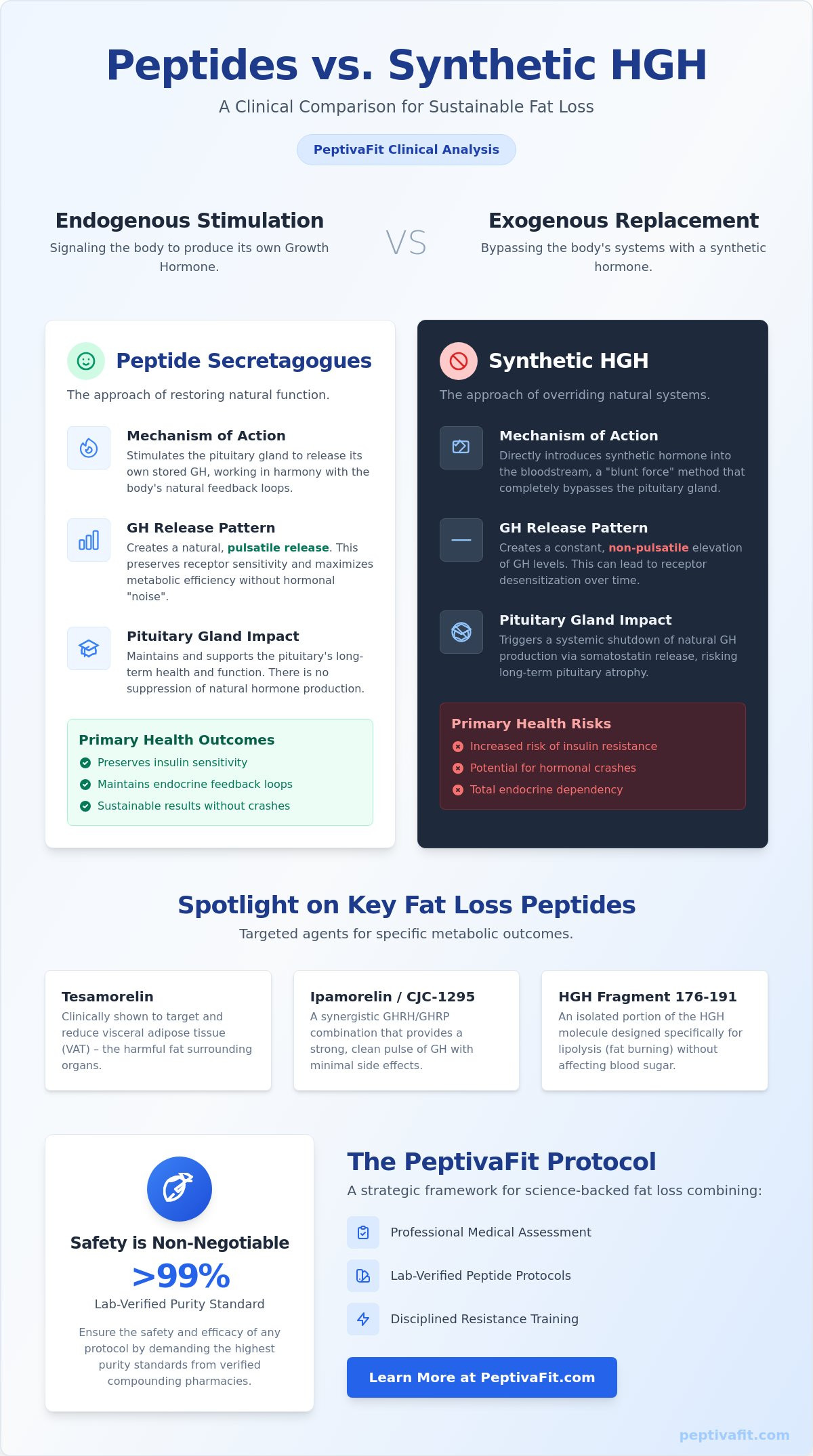
The clinical challenge many face is "somatopause," the progressive, age-related decline in natural growth hormone production. This decline often results in increased visceral fat and reduced muscle mass. When considering peptides vs hgh for fat loss, patients must distinguish between two fundamentally different strategies: exogenous replacement and endogenous stimulation. Synthetic HGH involves the direct administration of the hormone, essentially bypassing the body's internal production. In contrast, peptide secretagogues act as signaling agents that prompt the pituitary gland to release its own stored GH. This distinction is the difference between overriding a system and restoring its function.
The Role of the Pituitary Gland in Fat Metabolism
The pituitary gland doesn't release growth hormone in a steady, linear fashion. Instead, it operates through a rhythmic, pulsatile mechanism, primarily during deep sleep cycles. These pulses are vital for maintaining receptor sensitivity. Synthetic HGH administration creates a constant, non-pulsatile stream in the blood. This prolonged elevation often leads to receptor desensitization and may increase the risk of insulin resistance. Maintaining the natural rhythm through stimulation ensures that the body's feedback loops remain intact, allowing for more efficient fat metabolism without the metabolic "noise" of high-dose synthetics. It's a more disciplined approach to endocrine health.
Secretagogues: Signaling the Body to Heal Itself
Sophisticated molecular signaling is the foundation of modern endocrine optimization. Growth hormone secretagogues (GHSs) are categorized into two primary groups: Growth Hormone Releasing Hormones (GHRHs) and Growth Hormone Releasing Peptides (GHRPs). These molecules work in synergy to maximize the pituitary's output. While some describe this as a "natural" approach, it's more accurately defined as a targeted pharmacological intervention. By using these signaling molecules, you're not just replacing a missing hormone; you're restoring a functional biological pathway. This distinction is critical for those seeking lab-verified protocols that prioritize long-term metabolic health over the immediate, often volatile, results of synthetic HGH.
Mechanism of Action: Exogenous HGH vs. Endogenous Peptide Stimulation
The administration of synthetic human growth hormone introduces a physiological paradox. While it provides an immediate increase in circulating somatotropin, it simultaneously triggers a systemic shutdown of the body's internal production. In the clinical evaluation of peptides vs hgh for fat loss, the preservation of the pituitary's functional integrity is a primary differentiator. Exogenous HGH operates through a blunt force mechanism that ignores the body's delicate regulatory checks, often leading to a state of total endocrine dependency.
The Pituitary Feedback Loop and Hormonal Shutdown
When high concentrations of synthetic HGH enter the bloodstream, the hypothalamus detects the surplus and responds by releasing somatostatin. This inhibitory hormone signals the pituitary gland to cease all endogenous production. Chronic reliance on exogenous HGH can lead to pituitary atrophy, a condition where the gland loses its capacity to resume normal function after the cycle ends. Peptide secretagogues avoid this total suppression by working through the mechanism of GHS for fat loss, which mimics natural signaling pathways to encourage, rather than replace, internal output. This approach ensures that the endocrine system remains active and responsive throughout the protocol.
Insulin Resistance: The Hidden Cost of Synthetic HGH
Synthetic HGH is known to antagonize the actions of insulin, which can lead to impaired glucose tolerance and HGH-induced hyperglycemia. This metabolic shift often forces the pancreas to overproduce insulin to maintain stable blood sugar levels, potentially leading to long-term insulin resistance. Comparing peptides vs hgh for fat loss reveals that stimulation is often safer than replacement for long-term metabolic health. Clinical data suggests that secretagogues like Ipamorelin have a negligible impact on blood glucose levels because they don't cause the extreme, non-physiological spikes seen with synthetic injections. By maintaining IGF-1 levels within a controlled range, peptides promote fat oxidation without the excessive cellular proliferation or glucose instability associated with traditional HGH therapy. For those seeking a disciplined path to optimization, the Peptiva Protocol offers a framework for metabolic health through lab-verified standards.
Clinical Profiles for Fat Loss: Tesamorelin, Ipamorelin, and HGH Fragment
Selecting the appropriate agent requires a disciplined understanding of tissue-specific metabolic pathways. While synthetic HGH provides a broad anabolic stimulus that prioritizes muscle hypertrophy, the clinical debate of peptides vs hgh for fat loss centers on the ability to target specific adipose depots. Synthetic HGH promotes systemic growth through high IGF-1 elevation, but certain peptides offer a more surgical approach to lipolysis. This distinction is vital for individuals who prioritize metabolic health and body composition over sheer mass.
Tesamorelin and Visceral Fat Reduction
Tesamorelin stands as the clinical gold standard for reducing visceral adipose tissue (VAT). Unlike subcutaneous fat, which sits directly beneath the skin, VAT surrounds internal organs and serves as a primary driver of systemic inflammation and metabolic dysfunction. It's often the most resistant fat depot to lose through traditional caloric restriction. While some industry sources mislabel Tesamorelin as a general anti-aging tool, its primary clinical value lies in its FDA-approved capacity to reduce organ fat. Professionals seeking precise administration protocols should consult the Tesamorelin Dosage Guide to understand the requirements for metabolic optimization. This peptide offers a targeted solution that synthetic HGH often lacks due to its more generalized systemic effects.
HGH Frag 176-191: Targeted Lipolysis Without Growth
HGH Fragment 176-191 isolates the C-terminus portion of the human growth hormone molecule. This specific sequence is responsible for the hormone's lipolytic effects but lacks the sequences that promote systemic growth or significant IGF-1 elevation. Consequently, users can achieve targeted fat oxidation without the risks of excessive cellular proliferation or the glucose instability often associated with synthetic HGH. It's widely considered the most "pure" fat loss peptide because it eliminates the anabolic side effects that complicate standard hormone therapy. This fragment allows for a focused metabolic intervention that respects the body's existing growth boundaries.
The Ipamorelin and CJC-1295 Synergy
The combination of Ipamorelin and CJC-1295 represents a sophisticated synergy for baseline metabolic elevation. By pairing a Growth Hormone Releasing Hormone (CJC-1295) with a Growth Hormone Releasing Peptide (Ipamorelin), the protocol maximizes the pituitary's total output through dual signaling pathways. This stack is often preferred for long-term maintenance because it preserves the natural feedback loops discussed in previous sections. Success with this combination depends heavily on timing, specifically nocturnal or fasted administration to align with natural circadian rhythms. For a comprehensive analysis of these signaling molecules, review our Pillar Article on Metabolic Peptides. This stack provides a sustainable alternative in the peptides vs hgh for fat loss comparison, offering metabolic enhancement without the blunt force of synthetic hormones.
Safety and Regulatory Landscape: Lab Verification and Medical Oversight
The acquisition of growth hormone secretagogues requires a level of diligence that many casual consumers overlook. When evaluating peptides vs hgh for fat loss, the primary risk isn't just the hormone itself, but the source from which it is procured. Synthetic HGH is a strictly regulated controlled substance. This regulation has created a robust black market filled with counterfeit pens and degraded biological products. Conversely, the peptide market has historically operated under a "research only" designation. While the February 27, 2026, announcement reclassified several key peptides back to Category 1 for compounding, many online suppliers still bypass these clinical standards. This landscape places the entire burden of safety on the individual, making lab verification a non-negotiable requirement for anyone serious about their health.
The Necessity of Molecular Integrity
Purity standards for clinical-grade peptides must exceed 99%. Anything less introduces the risk of lipopolysaccharides (LPS), heavy metals, or residual solvents from the manufacturing process. A Certificate of Analysis (COA) is the only objective proof of a product's integrity, yet many online suppliers provide outdated or forged documents. Professionals must learn to interpret high-performance liquid chromatography (HPLC) data to verify that the molecular sequence matches the intended compound. Once purity is established, maintaining that integrity is equally vital. Improper handling can lead to immediate peptide degradation, rendering the protocol useless. For detailed instructions on maintaining stability after acquisition, refer to our guide on Peptide Reconstitution.
Clinical Oversight vs. Self-Experimentation
Self-experimentation in the context of peptides vs hgh for fat loss is a high-stakes gamble. Comprehensive blood work is essential before initiating any protocol. Baseline measurements of IGF-1, fasting insulin, and glucose levels provide the data necessary to monitor for adverse metabolic shifts. Without professional oversight, users often miss the early warning signs of glucose intolerance or systemic inflammation. Data-driven adjustments to dosage and timing are what separate a successful optimization from a metabolic crash. We provide a personalized medical assessment to ensure every protocol is grounded in your specific biological data rather than generic internet advice. Professional coaching facilitates the interpretation of ongoing lab results, allowing for a disciplined and safe approach to fat loss that respects your long-term wellness.
The Peptiva Protocol: Implementing a Science-Backed Fat Loss Journey
Success in growth hormone optimization requires a fundamental shift in perspective. Peptides function as high-precision biological catalysts, not as substitutes for foundational lifestyle discipline. When evaluating peptides vs hgh for fat loss, the most significant advantage is the ability to integrate these signaling tools into a long-term metabolic optimization strategy. Unlike the blunt force of synthetic HGH, which often creates a temporary and volatile metabolic state, the Peptiva Protocol focuses on sustainable shifts in body composition through targeted signaling and rigorous data monitoring.
True optimization occurs at the intersection of pharmacology, nutrition, and resistance training. Peptides provide the signaling, but your metabolic environment provides the raw materials. Resistance training is essential to maximize the anabolic signaling of IGF-1, while specific nutritional interventions prevent the glucose instability often associated with growth hormone elevation. This holistic approach moves beyond the simplistic metric of "weight loss" and targets the more critical objective of metabolic reset. This ensures that fat loss is both visceral and permanent, rather than a transient change in scale weight.
Synergistic Protocols for Maximum Efficacy
A comprehensive strategy often requires more than a single signaling molecule. To address the cellular foundations of fat oxidation, we frequently examine the role of mitochondrial health. Integrating the MOTS-C Peptide Guide into your framework can enhance metabolic flexibility and energy expenditure at the cellular level. Additionally, managing systemic inflammation and physical recovery is vital for maintaining the intensity of your training. Utilizing a BPC-157 Protocol ensures that connective tissues and systemic repair mechanisms keep pace with your metabolic changes. Most successful transformations follow a structured 12-week cycle designed to reset the pituitary axis while maximizing lipolysis.
Securing Expert Guidance
The complexity of these protocols demands a level of precision that self-experimentation cannot provide. 1-on-1 coaching offers the accountability and technical expertise required to navigate dosage adjustments and interpret ongoing lab data. This professional oversight ensures that your protocol remains aligned with your unique biological response. If you're ready to move beyond generic advice, you can book a single consultation call to evaluate your candidacy for these advanced interventions. Begin your journey with a foundation of data and security by choosing to Access the Peptiva Protocol and Lab-Tested Peptides. Every successful optimization starts with a personalized medical assessment and a commitment to lab-verified standards.
Securing Your Metabolic Future Through Precision Signaling
The clinical choice between peptides vs hgh for fat loss represents a decision between biological replacement and functional restoration. While synthetic HGH offers immediate but volatile results, peptide secretagogues provide a disciplined pathway to metabolic optimization by preserving the pituitary's natural pulsatile rhythm. You've seen how targeted agents like Tesamorelin and Ipamorelin offer a surgical approach to adipose reduction without the systemic risks of insulin resistance or hormonal shutdown.
Achieving these outcomes requires more than just access to molecules; it demands rigorous standards of purity and professional oversight. Every successful protocol must be grounded in data, ensuring that your endocrine system remains responsive and resilient. We provide the tools and expertise necessary to navigate this complex landscape with confidence.
Optimize Your Metabolism with the Peptiva Protocol and gain access to lab-verified peptide purity exceeding 99%, personalized medical assessments, and expert 1-on-1 metabolic coaching. Take control of your body composition through a protocol that respects your long-term health and performance.
Frequently Asked Questions
Are peptides safer than HGH for long-term fat loss?
Peptides are generally considered safer for long-term metabolic optimization because they stimulate endogenous production rather than replacing it. This preservation of the natural feedback loop minimizes the risk of pituitary atrophy. It avoids permanent hormonal shutdown. When comparing peptides vs hgh for fat loss, the reduced impact on insulin sensitivity makes secretagogues a more sustainable choice for those prioritizing metabolic health over the long term.
How long does it take to see results from fat loss peptides?
Visible changes in body composition typically manifest within 4 to 12 weeks of consistent administration. Initial metabolic shifts occur immediately. However, the mobilization of deep visceral fat is a cumulative process. The timeline depends heavily on adherence to a disciplined nutrition and resistance training framework. Using lab-tested peptides ensures that the biological signaling remains potent throughout the duration of the 12-week cycle.
Do peptides for fat loss cause hair loss or other hormonal side effects?
Growth hormone secretagogues do not interact with androgenic pathways. They don't cause hair loss or virilization. Side effects are typically limited to transient water retention or mild lethargy if dosages are not properly calibrated. These molecules respect the body's natural regulatory boundaries. This avoids the severe hormonal imbalances often associated with synthetic HGH. Personalized medical assessments help mitigate individual sensitivities through data-driven adjustments.
Can I stack Tesamorelin and Ipamorelin for better results?
Stacking Tesamorelin and Ipamorelin is a common clinical strategy because they target different receptors to maximize pituitary output. Tesamorelin acts as a GHRH agonist. Ipamorelin mimics ghrelin to inhibit somatostatin. This dual-action approach provides a more robust signal for lipolysis than a single agent alone. These protocols should be managed through 1-on-1 coaching to ensure administration timing aligns with your specific circadian rhythm.
Will peptides shut down my natural growth hormone production like HGH does?
Peptides do not cause the systemic shutdown characteristic of exogenous HGH administration. Instead of overriding the system, secretagogues encourage the pituitary gland to release its own stored hormone. This maintains the functional integrity of the hypothalamus-pituitary axis. In the debate of peptides vs hgh for fat loss, this lack of suppression is why clinical professionals prefer stimulation for long-term wellness. It protects your natural production capacity.
What is the best peptide for losing stubborn belly fat?
Tesamorelin is the most effective peptide for targeting stubborn visceral adipose tissue. This is often referred to as organ fat. It has been clinically validated to reduce abdominal fat in patients with metabolic dysfunction. For subcutaneous fat, HGH Fragment 176-191 is frequently utilized. It isolates the lipolytic portion of the growth hormone molecule. Selection depends on your specific fat distribution identified during a personalized medical assessment.
Do I need a prescription for lab-tested peptides in the US?
Legal acquisition of medical-grade peptides requires a physician's prescription for preparation by a licensed compounding pharmacy. Research-grade chemicals available online lack regulatory oversight. They don't have purity guarantees. The February 2026 reclassification allows physicians to prescribe several key peptides legally. Professionals should always prioritize lab-verified purity of 99% or higher. This ensures safety and protocol efficacy for those seeking serious metabolic results.
What happens if I stop taking peptides after reaching my fat loss goal?
Discontinuing a peptide protocol does not result in a fat gain rebound if the underlying metabolic discipline remains intact. Peptides restore natural function. They don't create a dependency. Your body maintains its own production levels once the secretagogues are removed. The goal of the Peptiva Protocol is to achieve a metabolic reset. This ensures body composition improvements are sustainable through continued nutrition and resistance training.

![Shelf Life of Reconstituted Peptides: A Clinical Reference Guide [2026]](https://getautoseo.com/storage/hero_images/shelf-life-of-reconstituted-peptides-a-clinical-reference-guide-2026.jpg?v=b8ed5173acaa)
