
![The Clinical Guide to Peptide Stacks for Cutting: Strategic Metabolic Optimization [2026]](https://getautoseo.com/storage/hero_images/article_1293923_1779506326.jpg)
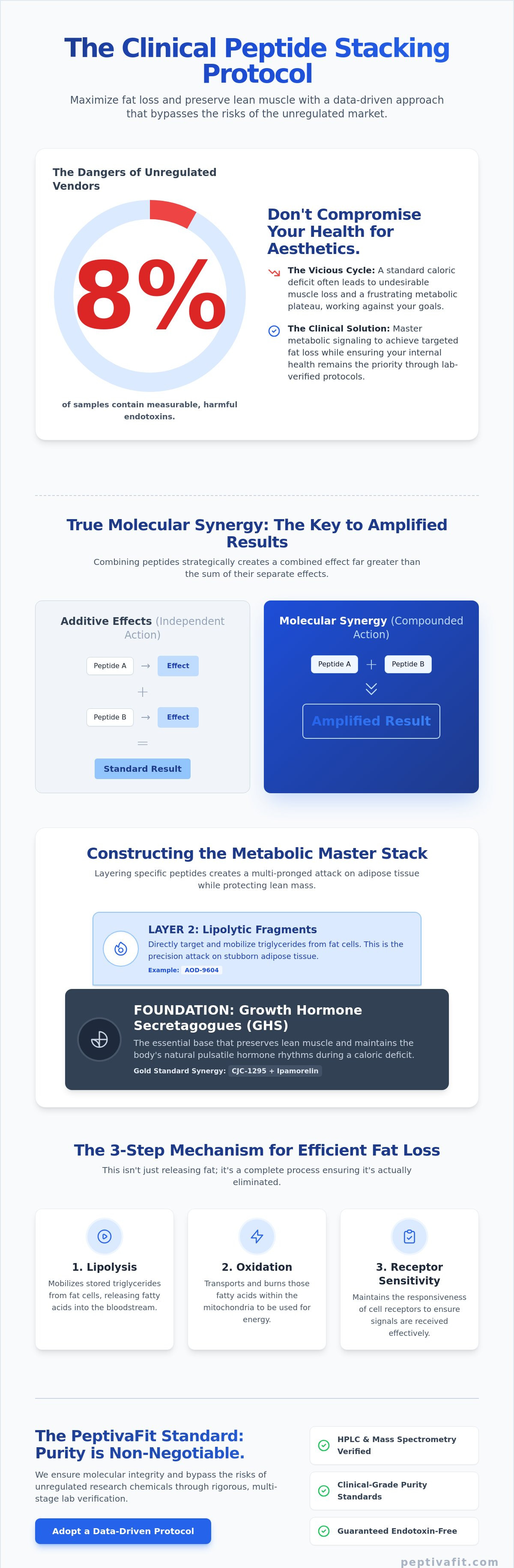
Independent lab testing of unregulated peptide vendors reveals that 8% of samples contain measurable endotoxins. This data highlights a critical risk for those seeking a peptide stack for cutting without rigorous oversight. You recognize that a standard caloric deficit often results in the undesirable loss of lean muscle mass and a subsequent metabolic plateau. It's a frustrating cycle where the body's defense mechanisms work against your aesthetic and performance goals.
This article clarifies how to master metabolic signaling to maximize fat loss while maintaining nitrogen balance through lab-verified, clinical-grade protocols. We'll analyze the 2026 regulatory updates, including the upcoming July 23-24 FDA Advisory Committee meeting, which may shift the availability of compounded peptides like AOD-9604 and CJC-1295. You'll gain a comprehensive understanding of the "Metabolic Master" stack and the precise standards for mitochondrial optimization. By moving beyond the gray market and adopting a data-driven approach, you can achieve targeted visceral fat loss while ensuring your internal health remains the priority.
Key Takeaways
- Distinguish between additive effects and true molecular synergy to optimize adipose tissue reduction through precise metabolic signaling.
- Identify why Growth Hormone Secretagogues serve as the necessary foundation for maintaining natural pulsatile rhythms during a caloric deficit.
- Learn to layer lipolytic fragments over a secretagogue base to construct a sophisticated peptide stack for cutting that preserves lean muscle mass.
- Master the clinical standards for HPLC and Mass Spectrometry verification to ensure molecular integrity and bypass the risks of unregulated research chemicals.
- Understand how to integrate these sequences into the broader Peptiva Protocol through personalized medical assessments and data-driven coaching.
The Science of Peptide Stacking for Body Composition
Effective body composition optimization requires more than a singular approach. Peptide stacking involves the strategic combination of multiple amino acid chains to target divergent metabolic pathways simultaneously. While monotherapy might yield initial results, it often fails during aggressive cutting cycles. This failure usually stems from metabolic adaptation, where the body downregulates energy expenditure and hormonal signaling to survive a caloric deficit. A sophisticated peptide stack for cutting bypasses these biological safeguards by maintaining metabolic flexibility and ensuring the body remains in an anabolic state regarding muscle tissue.
Synergy vs. Additive Effects in Metabolic Signaling
Additive effects occur when two compounds work independently. True molecular synergy is different. Metabolic synergy is the interaction of two or more peptides to produce a combined effect greater than the sum of their separate effects. For example, combining Growth Hormone Secretagogues (GHS) with lipolytic fragments creates a multi-pronged attack on adipose tissue. This strategy addresses several metabolic requirements:
- Lipolysis: The mobilization of stored triglycerides from fat cells into the bloodstream.
- Oxidation: The transport and burning of those fatty acids within the mitochondria for energy.
- Receptor Sensitivity: Maintaining the responsiveness of cell receptors to hormonal signals during periods of low energy availability.
By layering these mechanisms, you ensure you aren't just releasing fat into the bloodstream but are also facilitating its actual destruction. This prevents the "rebound" effect often seen when fat is mobilized but not oxidized. It's a disciplined approach that values biochemical efficiency over excessive dosing.
Preserving Lean Tissue: The "Cutting" Imperative
The primary risk during any fat loss phase is muscle catabolism. When the body enters a caloric deficit, it often prioritizes the breakdown of muscle tissue to spare adipose stores. This biological survival mechanism destroys the hard-earned lean mass of the high-performance individual. To maintain performance during these periods, you may explore Creatine Monohydrate as a natural way to support muscle cell hydration and strength. Specific peptides also function as signaling molecules that command the body to prioritize fat stores for energy over amino acids. This biochemical shift is essential for maintaining a positive nitrogen balance, which is the clinical hallmark of muscle preservation.
Establishing this foundation allows for aggressive fat loss without the metabolic cost of muscle wasting. These concepts are detailed extensively in our Peptides for Metabolism and Fat Loss: A Clinical Overview [2026]. Unlike traditional methods that rely on sheer willpower, a clinical peptide stack for cutting provides the biochemical advantage necessary to override primitive survival adaptations. It's about data-driven precision and maintaining physiological integrity throughout the optimization process.
Growth Hormone Secretagogues (GHS): The Foundation of a Cutting Stack
The pituitary axis serves as the primary regulator of lipid metabolism through the secretion of endogenous growth hormone. While exogenous HGH provides a steady state of the hormone, it often suppresses the body's natural feedback loops and can lead to decreased insulin sensitivity. Growth Hormone Secretagogues (GHS) are preferred for a sophisticated peptide stack for cutting because they maintain natural pulsatile rhythms. This ensures the body continues its own regulatory processes while enhancing fat mobilization. Selecting the correct GHS depends heavily on half-life; shorter-acting peptides allow for acute metabolic control during fasted windows, whereas longer-acting analogs provide a sustained lipolytic signal across the day. These secretagogues act as the physiological "base" that prepares the metabolic environment for more aggressive fat-burning compounds.
In the context of FDA-approved peptides for weight loss, the clinical focus often lands on GLP-1 agonists, yet GHS remain the structural foundation for body composition refinement. They facilitate an environment where lean tissue is preserved even as caloric intake drops. By stimulating the natural release of growth hormone, these peptides signal the body to utilize stored adipose tissue for energy rather than catabolizing muscle protein.
CJC-1295 and Ipamorelin: The Gold Standard Synergy
The mechanism of action for this pairing involves GHRH mimetics paired with GHRPs for amplified GH secretion. CJC-1295 and Ipamorelin represent the gold standard in molecular synergy. This pairing creates a massive GH pulse by simultaneously stimulating the release and inhibiting the suppression of growth hormone through somatostatin inhibition. This combination is essential for preserving muscle density while dropping body fat, as GH directly signals for the maintenance of lean tissue. Clinical protocols often utilize a "5 days on, 2 days off" schedule to prevent receptor desensitization. Administration must occur in a fasted state, typically before sleep or post-workout, because even minor elevations in blood glucose can blunt the intended GH spike.
Tesamorelin: The Specialist for Visceral Adipose Tissue
Tesamorelin stands apart as a specialist for visceral adipose tissue. It's uniquely engineered to target the deep fat surrounding the organs, which is often the most metabolically active and dangerous fat in the body. In a 12-week cutting protocol, Tesamorelin demonstrates superior efficacy in abdominal reduction compared to broader GHS options. While other peptides provide a general systemic benefit, Tesamorelin acts as the specialist's tool for refining the midsection. For precise implementation and timing of these sequences, practitioners should refer to the Tesamorelin Dosage: A Clinical Guide to Metabolic Optimization Protocols.
For those seeking to bypass the trial-and-error of self-administration, a personalized medical assessment is the most efficient path toward a verified and secure protocol.
Advanced Synergistic Stacks for Targeted Lipolysis
Maximizing fat loss requires a distinction between generalized metabolic elevation and targeted adipose tissue destruction. Building upon the GHS foundation established in the previous section, the introduction of the "Fragment" class of peptides allows for direct lipolysis without systemic hormonal disruption. These sequences isolate the specific C-terminal region of the growth hormone molecule responsible for fat breakdown. By layering these fragments over a GHS base, you create a sophisticated peptide stack for cutting that facilitates fat mobilization at a rate exceeding standard physiological limits.
The "stubborn fat" phenomenon isn't a myth; it's a consequence of poor regional blood flow and a high density of alpha-2 adrenergic receptors. These receptors actively inhibit fat release, particularly in the abdominal and gluteofemoral regions. Fragments help overcome this resistance by directly stimulating the lipolytic pathway. However, released fatty acids must still be oxidized within the mitochondria. Without high-functioning mitochondria, these lipids are simply re-esterified and returned to adipose tissue, rendering the lipolytic signal ineffective.
The Lipolytic Powerhouse: HGH Frag 176-191 and AOD-9604
HGH Frag 176-191 is a specific sequence that bypasses the insulin-resistance issues often associated with full-length GH. It focuses exclusively on fat reduction without affecting blood glucose or IGF-1 levels. AOD-9604 acts as a refined analog, offering systemic fat loss with a high safety profile. When designing a peptide stack for cutting, these fragments are typically administered in a fasted state to ensure no insulin is present to blunt the lipolytic effect. Consistency in dosing and maintaining a caloric deficit remain mandatory, as these peptides enhance the fat-burning process rather than replacing the need for metabolic demand.
The Mitochondrial Catalyst: MOTS-c and SS-31
Fat loss often stalls when mitochondrial efficiency declines due to age or prolonged caloric restriction. MOTS-c functions as an exercise mimetic, encoded within the mitochondrial genome, that enhances glucose metabolism and fatty acid oxidation. It forces the body to utilize fatty acids for fuel more effectively, preventing the metabolic slowdown common during cutting cycles. Integrating the MOTS-C Peptide: A Comprehensive Reference on Mitochondrial-Derived Metabolic Regulation into your protocol ensures that the fat released by fragments is actually burned. This mitochondrial support is the final link in a truly synergistic cutting sequence.
Clinical Precision: Lab Verification and Dosage Protocols
The transition from biochemical theory to physiological application requires absolute certainty in sourcing. A peptide stack for cutting is only as effective as the molecular integrity of its components. Many individuals mistakenly rely on the "gray market," where research chemicals are sold without medical oversight or quality control. This poses significant safety risks. Unregulated products often contain impurities, endotoxins, or incorrect concentrations that can trigger systemic inflammation or allergic responses. Establishing a clinical monitoring framework is essential. This includes baseline and mid-cycle bloodwork, daily glucose monitoring, and the meticulous tracking of subjective feedback. These data points ensure the protocol remains both safe and effective throughout the duration of the cycle.
Identifying High-Purity Research Peptides
High-purity peptides are a clinical requirement, not a marketing suggestion. A Certificate of Analysis (CoA) must be scrutinized for more than just a headline number. You should look for purity percentages exceeding 99% and low Trifluoroacetic acid (TFA) content. TFA is a common byproduct of the synthesis process that can cause localized irritation if it's not properly removed. HPLC testing is the gold standard for verifying peptide sequence and purity. Mass Spectrometry should also be present to confirm the molecular weight and identity of the compound. Professional oversight prevents common pitfalls like pituitary desensitization. This condition occurs when the endocrine system is overstimulated without adequate recovery periods, leading to a diminished response to the peptide signal and stalling your progress.
Reconstitution and Administration Standards
Reconstitution is a delicate process where molecular integrity can be compromised by aggressive handling or improper solvents. Use only bacteriostatic water to prevent microbial growth and ensure the solution remains sterile for multiple uses. For a detailed breakdown of the sterile procedures required, consult our guide on How to Reconstitute Peptides: A Clinical Guide to Molecular Integrity. Proper storage is equally vital. Peptides are fragile amino acid chains. They must be kept at specific temperatures, typically between 2 and 8 degrees Celsius, to prevent degradation throughout your cutting cycle. Avoid shaking the vial; gentle swirling is the only acceptable method for mixing. It's a disciplined approach that separates serious practitioners from those who prioritize convenience over results.
Secure your results by starting with a personalized medical assessment to ensure your protocol is built on a foundation of data and safety.
The Peptiva Protocol: Integrating Stacks into a Comprehensive Strategy
A sophisticated peptide stack for cutting functions as a precision instrument, yet its efficacy depends entirely on the broader physiological context. Isolated chemical intervention without a structured framework often leads to suboptimal results or metabolic instability. This is why the stack is positioned as a single component within The Peptiva Protocol: A Clinical Guide to Fat Loss. A comprehensive strategy requires the synchronization of hormonal signaling, nutritional intake, and cellular recovery. Precision demands data. Transitioning from an intensive fat loss phase to a maintenance or "bridge" protocol is equally critical. This transition prevents the metabolic rebound that commonly occurs when a stimulatory signal is abruptly removed without stabilizing the new physiological set point.
Personalized Medical Assessments for Safety
Clinical safety begins with an exhaustive evaluation of your baseline metabolic health. We analyze insulin sensitivity, lipid profiles, and specific hormonal markers to identify potential contraindications before any protocol begins. Customizing peptide selection based on individual fat distribution and specific performance goals is a requirement for success. A "one size fits all" peptide stack for cutting is clinically irresponsible; it ignores the unique epigenetic and biochemical variances between individuals. Data-driven customization ensures that the chosen sequences align with your internal landscape. This maximizes safety while accelerating visceral fat loss.
1-On-1 Coaching for Metabolic Optimization
Professional oversight provides the necessary guardrails for advanced performance optimization. Through 1-on-1 coaching, we adjust your stack based on real-time physiological data and subjective feedback. This ensures side effects are managed proactively and results are compounded through precise adjustments. Total body recomposition isn't achieved through peptides alone. It requires the integration of therapy with disciplined nutrition and resistance training. This holistic approach transforms a temporary phase into a permanent metabolic upgrade. It's about sophisticated control over your own biology. To begin your journey with a data-backed approach, consult with PeptivaFit for a personalized peptide strategy.
Advancing Toward Clinical Metabolic Mastery
Strategic fat loss in 2026 demands a shift from aggressive caloric restriction to precise molecular signaling. You've seen that the most effective peptide stack for cutting relies on the synergy between Growth Hormone Secretagogues and lipolytic fragments, supported by optimized mitochondrial function. This dual-action approach ensures that fatty acids are not only mobilized but effectively oxidized while your lean muscle mass remains protected. Success is predicated on clinical precision; only lab-verified compounds with HPLC and Mass Spectrometry certification provide the safety required for high-level performance optimization.
The transition from theory to results requires professional oversight to navigate the complexities of pituitary sensitivity and metabolic adaptation. Through comprehensive medical assessments and expert 1-on-1 metabolic coaching, you can bypass the risks of the unregulated gray market. This disciplined methodology ensures that your physiological transformation is both sustainable and data-driven. To secure your metabolic future and begin a verified journey toward elite body composition, Access the Peptiva Protocol and Professional Medical Assessments. You possess the tools to master your biology; now is the time to apply them with scientific rigor.
Frequently Asked Questions
What is the best peptide stack for cutting fat while maintaining muscle?
The combination of CJC-1295, Ipamorelin, and AOD-9604 is currently considered the most effective sequence. This specific peptide stack for cutting maximizes endogenous growth hormone pulses while directly targeting adipose tissue. By layering these compounds, you bypass the muscle-wasting side effects often associated with extreme caloric deficits. This protocol ensures your body prioritizes stored fat for energy while maintaining the positive nitrogen balance necessary for muscle density.
Can I stack peptides like CJC-1295 and Ipamorelin with HGH Frag 176-191?
Yes, layering Growth Hormone Secretagogues with lipolytic fragments like HGH Frag 176-191 is a standard clinical practice. This strategy ensures you are both stimulating a natural GH pulse and isolating the specific fat-burning sequence of the growth hormone molecule. This multi-pronged approach enhances the rate of fat mobilization without the insulin resistance issues often seen with full-length GH. It provides a more targeted signal for adipose tissue reduction.
How long should a typical cutting peptide cycle last?
A standard cycle usually lasts between 8 and 12 weeks to achieve measurable improvements in body composition. This timeframe allows the body to adapt to the metabolic signals without inducing receptor desensitization. Many practitioners utilize a "5 days on, 2 days off" administration schedule to maintain pituitary responsiveness. Following the cycle, a maintenance phase is often required to stabilize the metabolic rate and preserve the newly acquired lean mass.
Are there side effects to stacking multiple peptides for weight loss?
Side effects are generally mild and manageable but can include localized irritation at the injection site, transient water retention, or minor fluctuations in blood glucose. Utilizing clinical-grade compounds minimizes these risks by ensuring molecular purity and avoiding the systemic suppression associated with exogenous growth hormone. Regular monitoring of fasting insulin and subjective feedback allows for protocol adjustments that mitigate these minor physiological responses, ensuring your safety remains the priority.
Do I need a caloric deficit for a cutting peptide stack to work?
A caloric deficit is essential for any peptide protocol to yield fat loss results. Peptides function as signaling molecules that mobilize fatty acids and preserve muscle tissue, but the body must still require more energy than it consumes to oxidize those released lipids. Without a deficit, the mobilized fat may simply be re-esterified and returned to storage. Peptides make the deficit more efficient and significantly less catabolic.
How do I know if my peptides are lab-tested and pure?
Verification requires a Certificate of Analysis (CoA) that includes both High-Performance Liquid Chromatography (HPLC) and Mass Spectrometry. These tests confirm the peptide's identity and ensure a purity level of 99% or higher. Independent research shows that 8% of unregulated online samples contain measurable endotoxins. Relying on lab-verified sources is the only way to guarantee you are not introducing bacterial fragments or impure sequences into your system.
What happens if I stop a peptide stack abruptly?
Stopping a peptide stack abruptly does not cause a hormonal crash, but it will result in the loss of the enhanced metabolic signaling. Your body will return to its baseline rate of fat mobilization and muscle protein synthesis. To prevent a rebound in body fat, it's advisable to transition into a structured maintenance protocol. This helps stabilize your new weight and ensures the metabolic gains made during the cycle are preserved.
Is a medical assessment required before starting a peptide stack?
A personalized medical assessment is a non-negotiable requirement for safe and effective optimization. This evaluation identifies specific contraindications and establishes baseline biomarkers such as IGF-1 and fasting insulin. Without this data, a peptide stack for cutting is being applied blindly, which is clinically irresponsible. Professional oversight ensures your protocol is customized to your unique metabolic profile, maximizing fat loss while safeguarding your long-term endocrine health.

![Shelf Life of Reconstituted Peptides: A Clinical Reference Guide [2026]](https://getautoseo.com/storage/hero_images/shelf-life-of-reconstituted-peptides-a-clinical-reference-guide-2026.jpg?v=b8ed5173acaa)
