

Most individuals treat laboratory diagnostics as a bureaucratic hurdle rather than the primary tool for metabolic precision. This oversight often leads to a cycle of wasted investment and unnecessary physiological risk when managing blood work for peptide therapy. It's natural to feel concerned about silent side effects like elevated hematocrit or fluctuating liver enzymes, especially when the correlation between specific markers and compounds like Tesamorelin or BPC-157 remains unclear. A successful protocol demands data-driven oversight rather than guesswork.
This guide provides the clinical framework required to master your diagnostic data, ensuring your pursuit of body composition goals remains anchored in safety. We will provide a definitive checklist of required laboratory tests, explain how to interpret markers for maximum efficacy, and establish a monitoring schedule that protects your long-term health. By the end of this analysis, you'll understand how to adjust your dosages based on objective physiological feedback, transforming a generic routine into a sophisticated clinical strategy.
Key Takeaways
- Transition from experimentation to professional optimization by understanding the clinical divide between "research" and data-driven protocols.
- Identify the specific biomarkers, including IGF-1 and HbA1c, required when conducting blood work for peptide therapy to ensure metabolic safety.
- Establish a rigorous monitoring schedule that utilizes baseline panels and acute response checks to track early hormonal shifts.
- Learn how to interpret laboratory data to manage common side effects like elevated hematocrit or estradiol fluctuations with clinical precision.
- Discover how a personalized medical assessment serves as the foundation for integrating these diagnostics into a high-performance fat loss strategy.
The Clinical Necessity of Blood Work for Peptide Therapy
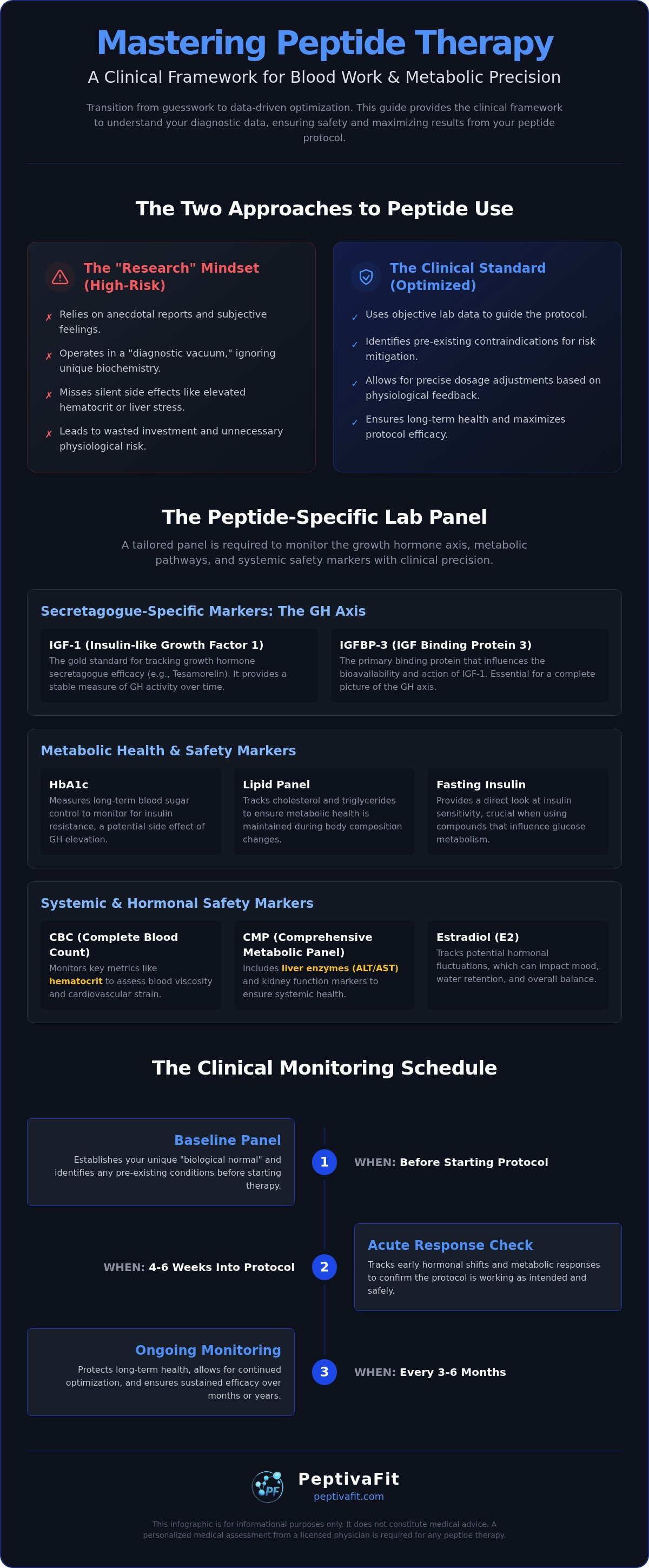
Clinical blood work is the quantitative assessment of hormonal, metabolic, and systemic health markers conducted before and during peptide administration. This diagnostic process isn't a mere formality; it's the essential bridge between reckless experimentation and high-level optimization. Within the broader field of peptide therapeutics, the distinction between a "research" mindset and a "clinical" standard is defined entirely by the presence of data. Without rigorous blood work for peptide therapy, an individual is operating in a diagnostic vacuum, relying on anecdotal reports rather than their own unique biochemistry to guide their protocol.
Professional protocols prioritize risk mitigation through the identification of pre-existing contraindications. Chronic metabolic dysfunction, such as undiagnosed insulin resistance or elevated systemic inflammation, can significantly alter how the body responds to exogenous signals. Establishing a baseline calibration allows you to define your "biological normal." This reference point is vital for determining if a specific peptide is driving the desired metabolic shift or if it's pushing systemic markers into a pathological range that could compromise long-term health. Precision requires a departure from the "one size fits all" approach common in mass-market wellness circles.
Why Subjective Feeling is a Poor Metric for Safety
Relying solely on how you feel is a dangerous strategy in the context of performance optimization. Many systemic shifts are entirely silent. Elevated hematocrit, for instance, often occurs without immediate physical symptoms but increases cardiovascular strain and blood viscosity. There is also a significant lag time between hormonal adjustments and visible changes in body composition, meaning your mirror might not reflect internal stress for weeks. Biological feedback is the disciplined integration of subjective physical sensations and objective laboratory data. Without the objective half of that equation, your assessment of progress is incomplete and potentially hazardous.
Legal and Regulatory Standards in 2026
The regulatory environment in 2026 demands a higher level of compliance and personal responsibility. Following significant shifts in early 2026, the FDA restored legal access for compounding pharmacies to prepare several popular peptides, provided the patient has a valid prescription from a licensed physician. This action, effective as of April 23, 2026, emphasizes the necessity of professional oversight when conducting blood work for peptide therapy. Documented lab work serves as the cornerstone of the "medical necessity" framework required for legal therapy. It differentiates professional, clinical-grade monitoring from the unregulated "research-grade" practices that often bypass safety protocols in favor of convenience. High-performance wellness requires the same level of scrutiny as any other specialized scientific investigation.
Essential Biomarkers: The Peptide-Specific Lab Panel
Generic health screenings often fail to capture the nuances required for advanced metabolic optimization. When conducting blood work for peptide therapy, the laboratory panel must be tailored to the specific mechanisms of the compounds in use. This specialized approach ensures that the growth hormone axis, metabolic pathways, and systemic safety markers are monitored with clinical precision. Establishing these specific variables allows for the transition from generalized advice to a personalized, data-driven protocol. Establishing a rigorous schedule for blood work for peptide therapy prevents the silent accumulation of metabolic stress while maximizing the efficiency of your chosen protocol.
Secretagogue-Specific Markers: Monitoring the GH Axis
For those utilizing growth hormone secretagogues, Insulin-like Growth Factor 1 (IGF-1) serves as the gold standard for tracking efficacy. It provides a stable measurement of growth hormone activity over time, allowing for precise adjustments to Tesamorelin dosage and other secretagogue schedules. Clinicians often utilize Z-score analysis to compare your levels against an age-matched population, ensuring you remain within an optimal rather than merely "normal" range. This high-level diagnostic oversight is necessary to confirm that the endocrine system is responding as intended without overstimulation.
Monitoring must also account for IGFBP-3, the primary binding protein that influences peptide bioavailability. In some cases, certain GHRP protocols can lead to unintended prolactin elevation, which necessitates specific monitoring to prevent side effects like lethargy or mood fluctuations. Detailed oversight is the only way to confirm that your endocrine system is responding as intended. Proper data interpretation ensures that you are not just taking a supplement, but managing a sophisticated biological signal.
Metabolic and Lipid Panels for Fat Loss Peptides
Lipolytic peptides can significantly alter your metabolic profile, making Hemoglobin A1c, fasting insulin, and glucose monitoring essential. These markers detect early shifts in insulin sensitivity, a critical factor highlighted in Harvard Health on peptide safety discussions. A comprehensive lipid panel tracking LDL, HDL, and Triglycerides provides a clear picture of how fat loss agents are impacting your cardiovascular health and lipid metabolism over time.
Systemic safety is further assessed through a Complete Blood Count (CBC) and a Comprehensive Metabolic Panel (CMP). We focus on hematocrit and hemoglobin levels to manage blood viscosity, while ALT, AST, and GFR levels provide insight into liver and kidney function. High-sensitivity C-reactive protein (hs-CRP) is another vital marker, as it identifies systemic inflammation that could hinder your results. Evaluating how thyroid markers like TSH and Free T3/T4 interact with your protocol completes the diagnostic picture. To ensure your data is interpreted with clinical precision, a personalized medical assessment should be the foundational step of any advanced protocol.
The Monitoring Schedule: Timing Your Lab Draws
Timing is the variable that transforms a static data point into a clinical trend. To manage blood work for peptide therapy with professional rigor, you must adhere to a structured four-phase monitoring schedule. This chronological approach ensures that every metabolic shift is documented, allowing for proactive adjustments rather than reactive corrections. Relying on a single draw is insufficient; true optimization requires a longitudinal view of your biochemistry.
- Phase 1: The Baseline Panel (Pre-Protocol): Conducted before the first administration to identify existing metabolic dysfunction and establish your biological starting point.
- Phase 2: The Acute Response Check (Weeks 4-6): A targeted draw to monitor early hormonal shifts and systemic tolerance to new exogenous signals.
- Phase 3: The Mid-Cycle Review (Month 3): A comprehensive assessment used for protocol refinement and precise dosage titration based on actual physiological response.
- Phase 4: Post-Protocol Assessment (4-6 weeks after cessation): A final check to ensure the body has successfully returned to homeostasis and maintained metabolic gains.
The Baseline Panel: Your Pre-Flight Checklist
A baseline assessment is the only way to identify "red flag" markers that require resolution before you begin using peptides for metabolism and fat loss. This phase is about establishing your natural IGF-1 ceiling and confirming that your kidney and liver health can manage the increased metabolic demand of a new protocol. Referring to Essential Lab Work for Peptide Therapy reveals that skipping this step makes it impossible to distinguish between therapy-induced changes and pre-existing pathologies. You can't optimize what you haven't first measured at rest.
Mid-Protocol Adjustments: Data-Driven Titration
Optimization is a dynamic process that depends on objective feedback rather than subjective feeling. During the mid-cycle review, the data dictates whether to increase or decrease a dosage. If IGF-1 levels haven't moved despite adherence, the blood work identifies "non-responders" early, preventing wasted investment. Conversely, if insulin sensitivity markers begin to drift, the protocol can be adjusted to prioritize metabolic health over aggressive fat loss. This transition from active reduction to maintenance is a delicate shift that requires precise blood work for peptide therapy to execute safely. Data-driven titration ensures the protocol remains effective without crossing into the range of diminished returns or systemic stress.
Interpreting Results: Managing Side Effects and Optimization
Interpreting blood work for peptide therapy requires more than a cursory glance at standard reference ranges. You must view these values as dynamic indicators of systemic stress and metabolic efficiency. For instance, an elevation in hematocrit or hemoglobin suggests increased blood viscosity. This shift may necessitate increased hydration, therapeutic phlebotomy, or a strategic reduction in dosage to prevent cardiovascular strain. Similarly, certain secretagogues can indirectly influence the aromatase pathway, leading to estradiol fluctuations that impact mood and water retention. Managing these shifts through data ensures that your protocol remains a tool for optimization rather than a source of pathology.
GH-heavy protocols often induce a temporary rise in fasting glucose as the body prioritizes fatty acid mobilization. Monitoring fasting insulin and HbA1c alongside glucose provides a clearer picture of your glycemic control. If CMP markers like ALT or AST begin to trend upward, it signals a need for hepatic assistance or a scheduled washout period to restore liver function. This disciplined approach to monitoring transforms raw data into a sophisticated safety mechanism. To bridge the gap between complex data and actionable results, you should secure a personalized medical assessment to refine your strategy.
The IGF-1 vs. Growth Hormone Debate
Growth hormone is released in unpredictable pulses. This makes a single blood draw an inaccurate representation of systemic levels. IGF-1 serves as a far more stable proxy for long-term GH exposure. By tracking IGF-1 over several months, you can identify the refractory period, a phase where the pituitary response may diminish due to overstimulation. Recognizing this through blood work for peptide therapy allows you to implement strategic breaks, maintaining sensitivity to the exogenous signal. Data prevents the wasted investment of continued administration during a period of diminished returns.
Recognizing Metabolic Adaptation
The body possesses a series of defensive mechanisms designed to resist rapid fat loss. Shifts in leptin and ghrelin levels often reveal when the metabolism is fighting back before you hit a visual plateau. When insulin resistance begins to climb, it may be necessary to adjust the Peptiva Protocol to prioritize metabolic flexibility. It's critical to remember that 'optimal' levels are age-dependent and must be viewed through a clinical lens. This perspective ensures that your markers are evaluated against high-performance standards rather than the averages of a sedentary population. Precision is the only path to long-term health preservation while achieving aggressive body composition goals.
Integrating Laboratory Data into the Peptiva Protocol
The Peptiva Protocol functions as a high-performance fat loss guide that mandates a personalized medical assessment before any administration begins. This requirement ensures that your pursuit of metabolic optimization is grounded in objective data rather than industry hype. By integrating blood work for peptide therapy into a structured framework, we move beyond the superficial tracking of results to a state of clinical oversight. This rigorous process uses your unique baseline markers to customize peptide selection and dosage, aligning exogenous signals with your body's current physiological state.
True mastery of your metabolism requires a synergy between lab-tested peptides and professional 1-on-1 coaching. While raw laboratory data provides the map, expert interpretation provides the direction. Coaching allows for the nuanced adjustment of protocols as your biology adapts to therapy, ensuring that you maintain progress without hitting the metabolic plateaus discussed in earlier sections. This transition from isolated data points to a comprehensive lifestyle strategy is what defines the elite tier of performance wellness.
The Personalized Medical Assessment Process
The 'one-size-fits-all' approach is a primary cause of wasted investment in the wellness industry. Our personalized medical assessment analyzes your unique metabolic signature to identify hidden roadblocks that often stall fat loss, such as subclinical thyroid dysfunction or chronic systemic inflammation. A professional consultation provides the intellectualized register required to interpret complex biomarkers with accuracy. This disciplined investigation ensures that your protocol is built on a foundation of safety and high-stakes precision, allowing for the identification of issues that a standard screening would likely overlook.
Next Steps: From Labs to Action
Transitioning from theory to application requires the selection of specific laboratory panels tailored to your body composition goals. Once your blood work for peptide therapy is complete, the next phase involves scheduling a single consultation call to review your results with an expert. This session transforms a PDF of numbers into a structured, data-backed health strategy. Commitment to the Peptiva Protocol represents a long-term investment in your longevity and metabolic mastery, ensuring every intervention is justified by your own internal biological data.
Advancing Toward Metabolic Mastery
Transitioning from general wellness advice to a clinical-grade protocol requires a commitment to objective data. Implementing a rigorous schedule for blood work for peptide therapy isn't merely a safety precaution; it's the primary mechanism for ensuring your biochemistry aligns with your high-performance goals. By establishing a clear baseline and monitoring acute responses through the phases we've discussed, you eliminate the guesswork that leads to wasted investment and unnecessary physiological stress.
True metabolic mastery depends on the integration of high-quality diagnostics and expert oversight. Secure your Personalized Medical Assessment and start the Peptiva Protocol today to gain access to expert interpretation of complex biomarkers and lab-verified peptide supplies. Our 1-on-1 coaching ensures your diagnostic data is translated into a precise, actionable strategy for metabolic optimization. Taking control of your biological data is the final step in achieving a sophisticated, sustainable lifestyle. Your physical transformation is waiting for the clinical precision that only objective data can provide.
Frequently Asked Questions
What is the single most important blood test for peptide therapy?
IGF-1 (Insulin-like Growth Factor 1) is the primary marker for assessing growth hormone secretagogue efficacy with clinical precision. It provides a stable measurement of systemic growth hormone activity, unlike direct GH testing which is subject to unpredictable pulsatile fluctuations. Monitoring this marker during your blood work for peptide therapy allows for precise dosage titration and helps identify the development of receptor desensitization or pituitary fatigue early in the protocol.
Can I do blood work at home for peptide monitoring?
Professional monitoring requires clinical venous blood draws rather than at-home capillary finger-prick tests. While home kits offer convenience, they often lack the diagnostic precision and comprehensive scope needed for a specialized metabolic panel. High-performance optimization demands the accuracy of a certified laboratory to ensure that systemic safety markers, such as liver enzymes and hematocrit, are measured with scientific-grade reliability and regulatory compliance.
How often should I test my IGF-1 levels while on a secretagogue?
Monitoring IGF-1 levels is generally required every 3 to 6 months, though many clinical standards recommend an initial check 8 to 12 weeks after starting a new protocol. This timeframe allows the endocrine system to reach a steady state, providing a more accurate reflection of the exogenous signal's impact. Consistent tracking ensures that you remain within the optimal physiological range for your age while avoiding the risks of overstimulation.
Do I need to fast before my peptide blood work?
Yes, an 8 to 12 hour fast is mandatory for accurate metabolic and lipid results. Consuming food before a draw can artificially elevate glucose and insulin levels, leading to an incorrect assessment of your metabolic health and insulin sensitivity. For the most reliable data, schedule your blood work for peptide therapy in the early morning and avoid all caloric intake until the sample has been successfully collected by the technician.
What should I do if my liver enzymes are elevated on peptides?
If liver enzymes like ALT or AST appear elevated, the immediate priority is to cease administration and consult with a medical professional. Elevated markers suggest hepatic stress that may be caused by the peptide protocol, concurrent medications, or unrelated lifestyle factors. A structured washout period and a subsequent re-test are usually necessary to determine if the therapy can be safely resumed at a modified and monitored dosage.
Will peptides show up on a standard employee drug test?
Peptides are not included in standard 5-panel or 10-panel employee drug screenings. These tests are specifically designed to detect narcotics, amphetamines, and other controlled substances rather than amino acid chains. However, individuals in professional sports or high-stakes regulatory environments should be aware that specialized testing, such as those performed by WADA, can identify specific performance-enhancing peptides through advanced mass spectrometry techniques.
How much does a full peptide blood panel typically cost in 2026?
A comprehensive baseline or follow-up blood panel in 2026 typically costs between $150 and $400. This price range usually covers essential markers like the comprehensive metabolic panel, lipid profile, HbA1c, and thyroid function. Specialized tests, such as IGF-1 monitoring or high-sensitivity CRP, can add an additional $50 to $150 per draw depending on the laboratory facility and the specific depth of the clinical investigation required.
Is a medical assessment required before starting the Peptiva Protocol?
Yes, a personalized medical assessment is a mandatory requirement for entering the Peptiva Protocol. This assessment ensures that your current metabolic state is thoroughly analyzed and any contraindications are identified before any protocol is recommended. By grounding the program in objective laboratory data, we maintain a strictly compliant and safe environment for individuals who are serious about achieving their body composition and performance goals.

![Shelf Life of Reconstituted Peptides: A Clinical Reference Guide [2026]](https://getautoseo.com/storage/hero_images/shelf-life-of-reconstituted-peptides-a-clinical-reference-guide-2026.jpg?v=b8ed5173acaa)
