
![Peptide Weight Loss Results: Clinical Data, Timelines, and Metabolic Expectations [2026]](https://getautoseo.com/storage/hero_images/peptide-weight-loss-results-clinical-data-timelines-and-metabolic-expectations-2026.jpg?v=92a82ededf0a)
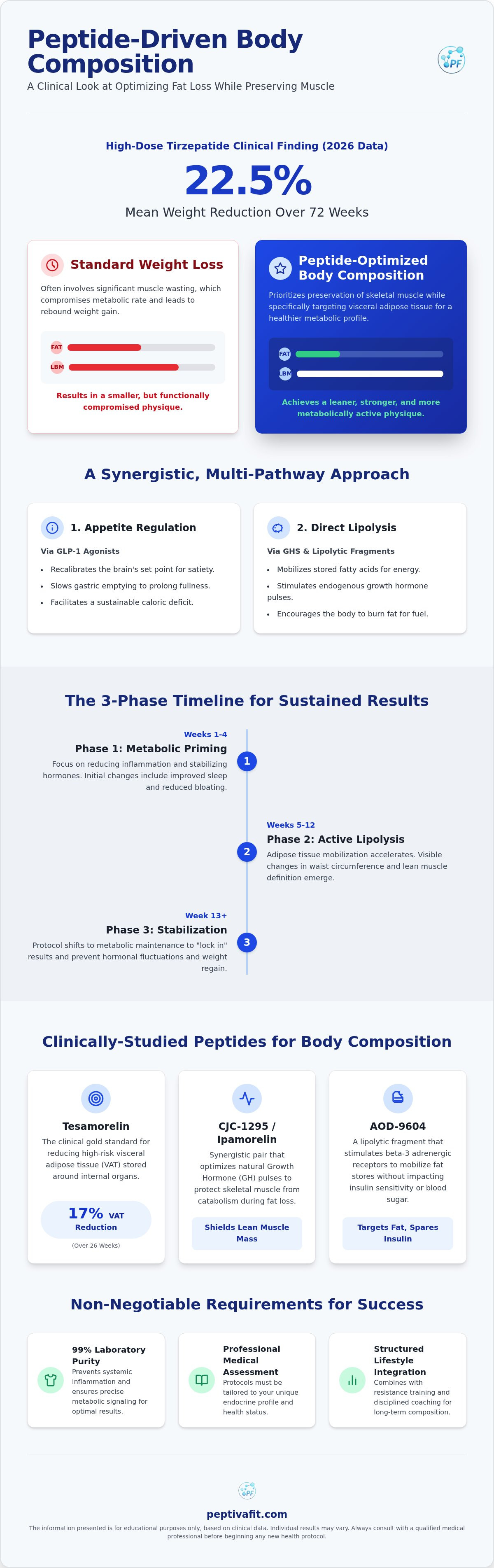
Clinical data from 2026 indicates that participants utilizing high-dose tirzepatide achieved a mean weight reduction of 22.5% over 72 weeks, a figure that fundamentally shifts the conversation around metabolic intervention. For many high-performance individuals, the primary frustration isn't a lack of discipline; it's a metabolic plateau that refuses to budge despite strict caloric control. You likely recognize that standard weight loss often comes at the cost of lean muscle mass, creating a physique that's smaller but functionally compromised. This professional analysis explores the reality of peptide weight loss results by comparing rigorous clinical trial data with real-world protocols designed for sophisticated body composition optimization.
We'll move past the noise of unverified research chemicals to examine the precise lipolytic pathways of GLP-1 agonists and growth hormone secretagogues. You'll learn how to calibrate your expectations based on the latest 2026 regulatory environment and verified clinical outcomes. This guide previews the structured approach required to reduce visceral adipose tissue while aggressively protecting your metabolic rate through professional medical assessment and disciplined coaching protocols.
Key Takeaways
- Understand the critical distinction between total weight reduction and targeted fat mass loss to accurately benchmark your peptide weight loss results.
- Evaluate the clinical synergy of Tesamorelin and CJC-1295 for optimizing growth hormone pulses and reducing stubborn visceral adipose tissue.
- Discover how targeted lipolytic fragments like AOD-9604 stimulate beta-3 adrenergic receptors to mobilize fat stores without disrupting insulin sensitivity.
- Learn why 99% laboratory purity is non-negotiable for preventing systemic inflammation and ensuring precise metabolic signaling during a fat loss phase.
- Identify the structured requirements for integrating the Peptiva Protocol with medical assessments and resistance training for long-term body composition.
Understanding Peptide Weight Loss Results: Clinical Expectations vs. Reality
Achieving optimal peptide weight loss results requires a departure from the simplistic metrics of the bathroom scale. In a clinical environment, success isn't defined by total mass reduction, but by the favorable shift in body composition. Standard weight loss often involves a significant percentage of lean muscle wasting, which compromises the metabolic rate and leads to weight regain. Professional protocols prioritize the preservation of skeletal muscle while specifically targeting visceral adipose tissue. This distinction is vital because muscle is your primary metabolic engine; losing it is a failure of the protocol, regardless of what the scale indicates.
Individual response to these therapies is dictated by molecular integrity and bioavailability. If a peptide lacks 99% purity, the resulting systemic inflammation can paradoxically inhibit fat loss. High-level optimization demands a focus on how these sequences interact with your unique endocrine profile rather than chasing a generic number.
Appetite Regulation vs. Direct Lipolysis
Modern anti-obesity medications, specifically GLP-1 agonists, function primarily by recalibrating the neurological set point for satiety and hunger. They slow gastric emptying and signal the brain that the body is in a fed state, which facilitates a sustainable caloric deficit. However, appetite suppression is only one side of the equation. Growth Hormone Secretagogues (GHS) like Ipamorelin or CJC-1295 operate through a different mechanism: they mobilize stored fatty acids by stimulating endogenous growth hormone pulses. A multi-pathway approach that combines satiety signaling with direct lipolytic action typically yields superior body composition results compared to monotherapy. This synergy ensures you aren't just eating less, but that your body is actively choosing to burn fat for fuel.
The Realistic Timeline for Fat Loss
Patience is a prerequisite for clinical-grade results. The process follows a predictable physiological sequence that cannot be rushed without risking metabolic rebound.
- Phase 1: Metabolic Priming (Weeks 1-4). The initial month focuses on inflammatory reduction and hormonal stabilization. You'll likely notice improved sleep quality and reduced systemic bloating before significant fat loss occurs.
- Phase 2: Active Lipolysis (Weeks 5-12). This is the window where adipose tissue mobilization accelerates. During this phase, the body effectively utilizes fatty acids as a primary energy source, leading to visible changes in waist circumference and lean definition.
- Phase 3: Stabilization and Maintenance (Week 13+). Once you reach your target composition, the protocol shifts toward metabolic maintenance. This phase is critical for "locking in" the results and preventing the hormonal fluctuations that lead to weight regain.
Individual timelines vary based on baseline metabolic health and adherence to the Peptiva Protocol. Success is a long-term investment in cellular efficiency, not a temporary fix for a lifestyle imbalance.
Metabolic Optimization: Clinical Data on Growth Hormone Secretagogues
While GLP-1 agonists dominate headlines for total mass reduction, Growth Hormone Secretagogues (GHS) represent the sophisticated choice for body composition. These peptides don't simply reduce caloric intake; they optimize the body's endocrine environment to prioritize fat oxidation while shielding skeletal muscle from catabolism. For individuals focused on performance, the goal isn't just a lower number on the scale. It's the strategic elimination of fat without compromising the structural integrity of the physique. This metabolic shift is what defines high-tier peptide weight loss results in a clinical setting.
Tesamorelin and Visceral Adipose Tissue (VAT)
Tesamorelin remains the clinical gold standard for addressing visceral adipose tissue, the high-risk fat stored around internal organs. Clinical findings demonstrate a significant 17% reduction in visceral fat over a 26-week period. Unlike systemic weight loss that often pulls from subcutaneous stores first, these results focus on the most metabolically damaging fat. Beyond direct lipolysis, participants frequently experience improved lipid profiles and enhanced insulin sensitivity, creating a healthier metabolic baseline. For precise administration details and protocol timing, you should consult our Tesamorelin Dosage guide.
The Ipamorelin/CJC-1295 Synergy
Maximizing growth hormone output requires a dual-signal approach. Combining a Growth Hormone Releasing Hormone (GHRH) like CJC-1295 with a Growth Hormone Releasing Peptide (GHRP) like Ipamorelin mimics the natural physiological pulses of the human body. This synergy produces more robust peptide weight loss results than either compound used in isolation. By stimulating the pituitary gland from two different angles, this protocol increases the amplitude of growth hormone pulses without the desensitization risks associated with older generations of secretagogues.
The primary advantage of this combination is muscle nitrogen retention. During a caloric deficit, the body naturally tends to break down muscle tissue for energy. GHS peptides counteract this by maintaining a positive nitrogen balance. Performance-focused individuals favor this protocol because it preserves or even enhances the Basal Metabolic Rate (BMR). By protecting lean mass, you ensure that long-term caloric expenditure remains high even as fat mass decreases. To ensure your protocol is calibrated for your specific metabolic data, we recommend a single consultation call to review your objectives. This disciplined approach ensures that every metabolic signal is directed toward your specific performance goals.
Targeted Lipolysis: Results from AOD-9604 and HGH Frag 176-191
The distinction between systemic metabolic acceleration and targeted lipolysis is a critical factor in optimizing peptide weight loss results. While secretagogues increase overall growth hormone production, lipolytic fragments focus exclusively on the fat-burning domain of the GH molecule. Specifically, HGH Fragment 176-191 and its stabilized analog, AOD-9604, isolate the C-terminal end of human growth hormone. This specific molecular architecture allows for the stimulation of beta-3 adrenergic receptors in adipose tissue without triggering the 'GH bleed' associated with systemic secretagogues. Unlike full-spectrum GH, these fragments don't elevate IGF-1 levels or interfere with glucose metabolism, making them a precise tool for targeted fat reduction.
Clinical data suggests that Fragment 176-191 possesses approximately 12.5 times the lipolytic potency of standard HGH regarding fat oxidation. This efficiency allows for significant adipose tissue mobilization without the water retention or joint discomfort often reported with higher doses of exogenous growth hormone. Because these sequences lack the growth-promoting portion of the GH molecule, they offer a safer profile for those concerned with systemic cellular proliferation.
Non-Systemic Fat Loss Mechanisms
AOD-9604 was engineered to mimic the lipolytic effects of natural growth hormone while eliminating its diabetogenic properties. By targeting the C-terminal end, it facilitates the breakdown of fats and inhibits the transformation of non-fatty foods into body fat. This mechanism is particularly advantageous for insulin-resistant individuals; it maintains metabolic activity without negatively impacting blood sugar levels. Human obesity trials for AOD-9604 conducted in the 2000s didn't show a statistically significant difference in weight loss compared to a placebo, though it maintained an exceptional safety and tolerability profile throughout the investigation.
Clinical Markers of Successful Lipolysis
To verify the efficacy of a lipolytic protocol, you must monitor specific markers of fatty acid mobilization. Successful administration results in the release of glycerol and free fatty acids into the bloodstream, indicating that stored triglycerides are being successfully broken down. Achieving peak peptide weight loss results with these fragments requires strict adherence to fasted administration. Because insulin is a potent inhibitor of lipolysis, the presence of circulating glucose can effectively neutralize the peptide's signaling capability. For a broader perspective on how these sequences integrate into a comprehensive regimen, review our Peptides for Metabolism and Fat Loss overview. This methodical approach ensures the lipolytic signal remains unencumbered by competing metabolic processes.
Maximizing Efficacy: The Critical Role of Lab Purity and Medical Oversight
The difference between 90% and 99% purity isn't merely a matter of regulatory compliance; it's the difference between targeted fat oxidation and systemic inflammatory stress. When you introduce low-quality compounds into your system, the body's immune response often prioritizes neutralizing impurities over metabolic signaling. This immune activation can effectively stall peptide weight loss results by elevating cortisol and promoting cellular water retention. Achieving a clinical-grade outcome requires molecular precision that only lab-verified sequences can provide, ensuring that every microgram is directed toward its intended physiological pathway.
Beyond the compounds themselves, maintaining the structural integrity of the peptide is paramount. Improper handling or aggressive mixing can denature these fragile amino acid chains, rendering them biologically inactive or, worse, immunogenic. Following a protocol for professional peptide reconstitution ensures that the molecular bonds remain intact. This allows the sequence to interact correctly with its intended receptors, preserving the potency required for significant metabolic shifts.
The Science of Lab-Verified Peptides
Rigorous verification utilizes High-Performance Liquid Chromatography (HPLC) and Mass Spectrometry (MS) to confirm both the purity and the exact amino acid sequence. A significant risk in lower-tier research peptides is the presence of residual Trifluoroacetic acid (TFA). High TFA levels are known to trigger localized inflammation and can negatively impact cellular health, which directly inhibits the lipolytic signal. PeptivaFit maintains an uncompromising standard by supplying only lab-tested research compounds that meet or exceed 99% purity thresholds, eliminating the metabolic noise that compromises your progress.
Why One-Size-Fits-All Protocols Fail
Metabolic responsiveness is highly individual and depends on baseline markers such as IGF-1 and fasting insulin levels. A protocol that works for an insulin-sensitive individual may yield negligible peptide weight loss results for someone with significant metabolic resistance. Personalized medical assessments are required to calibrate the dosage and timing to your specific biology. 1-on-1 coaching provides the necessary oversight to monitor real-time metabolic stress markers and adjust the protocol as your body composition shifts. This level of scrutiny separates high-end optimization from generic, mass-market advice. To ensure your protocol is built on a foundation of scientific accuracy, you should secure a personalized medical assessment to establish your physiological baseline.
Implementing the Peptiva Protocol for Sustained Body Composition
Achieving elite body composition requires more than just high-purity sequences; it demands a rigorous environment where nutrition and mechanical tension work in concert with hormonal signaling. The Peptiva Protocol provides this necessary structure. While the previous sections established the specific mechanisms of lipolysis and the non-negotiable requirement for lab-verified purity, this final phase focuses on the integration of these tools into a sustainable framework. To maintain superior peptide weight loss results, you must prioritize resistance training. This provides the stimulus for muscle preservation, ensuring your metabolic rate remains elevated even as your body fat percentage drops.
A single consultation call serves as the diagnostic gateway to identify metabolic roadblocks that often sabotage even the most disciplined efforts. Whether it's sub-optimal thyroid function, chronic cortisol elevation, or micronutrient deficiencies, these variables must be addressed to ensure the peptide signal isn't lost in physiological noise. Transitioning from an active fat loss phase to long-term longevity requires a methodical down-regulation of the protocol, shifting the focus toward metabolic flexibility and hormonal homeostasis. This isn't a temporary fix; it's a recalibration of your biological baseline.
The Peptiva Protocol Framework
The framework of the Peptiva Protocol moves beyond generic industry advice, offering a structured path from initial molecular mechanism to precise daily administration. This guide ensures your approach is data-driven and medically sound, eliminating the guesswork that leads to sub-optimal peptide weight loss results. You can access the foundational elements of this strategy through our Comprehensive Fat Loss Peptide Guide pillar, which serves as the definitive resource for high-performance metabolic optimization. This guide facilitates the integration of personalized medical assessments into your daily routine, ensuring every decision is backed by your unique physiological data.
Professional Oversight and Coaching
Professional oversight is the final component of the optimization equation. 1-on-1 coaching ensures your adherence remains high and your performance data is used to fine-tune the protocol in real-time. This level of individual attention allows for the early identification and mitigation of potential side effects, such as minor lethargy or appetite fluctuations, before they derail your progress. Success in body composition is a long-term discipline that requires both scientific precision and expert guidance. If you're ready to move past the trial-and-error of unregulated research and enter a space of clinical precision, you should Apply for the Peptiva Protocol and Consultation to begin your personalized assessment.
Mastering Your Metabolic Architecture
Elite peptide weight loss results are the predictable outcome of matching specific lipolytic pathways to your unique biological data. You now understand that success requires more than just appetite suppression; it demands the preservation of lean muscle and the strategic reduction of visceral fat through verified, high-purity sequences. By moving past unregulated research chemicals and embracing a structured clinical framework, you ensure that every metabolic signal is directed toward long-term body composition and health.
The path to optimization is exclusive and demands a commitment to scientific-grade standards. We provide lab-verified peptide supplies to protect molecular integrity and offer the expert medical oversight necessary for a safe, efficient transition. Our selective, high-level coaching is reserved for individuals who are serious about their performance and longevity. Secure Your Personalized Medical Assessment and the Peptiva Protocol to begin your disciplined evolution toward a more resilient physique. You have the data; now it's time to implement the protocol.
Clinical Insights: Frequently Asked Questions
How long does it take to see weight loss results from peptides?
Physiological changes manifest in distinct phases, with the initial 1 to 4 weeks dedicated to metabolic priming and inflammatory reduction. Significant peptide weight loss results regarding adipose tissue mobilization typically become visible between weeks 5 and 12. Clinical data from 2026 indicates that the most profound shifts in body composition are realized after 24 weeks of consistent, protocol-aligned administration.
Are peptide weight loss results permanent after stopping the protocol?
Sustainability is contingent upon the successful recalibration of your metabolic set point and hormonal baseline. While peptides facilitate the mobilization of stored fat, maintaining those results requires a disciplined transition into a maintenance phase. If you stop the protocol without integrating the strategic nutrition and resistance training outlined in the Peptiva Protocol, your body may eventually return to its previous weight equilibrium.
Which peptide is most effective for targeted belly fat loss?
Tesamorelin remains the gold standard for the reduction of visceral adipose tissue, showing a 17% decrease in clinical trials over 26 weeks. For those focusing on subcutaneous abdominal fat, HGH Fragment 176-191 is often preferred due to its specific stimulation of beta-3 adrenergic receptors. These compounds allow for targeted lipolysis without the systemic side effects associated with full-molecule growth hormone therapy.
Can I combine different peptides for better fat loss results?
Synergistic stacking is a standard practice in clinical optimization to address multiple metabolic pathways simultaneously. Combining a GLP-1 agonist for appetite regulation with a Growth Hormone Secretagogue stack, such as CJC-1295 and Ipamorelin, often yields superior peptide weight loss results. This multi-pathway approach ensures that fat loss is maximized while lean muscle mass is aggressively protected from catabolism during caloric deficits.
How do peptide results compare to traditional GLP-1 medications like Wegovy?
Traditional GLP-1 medications focus primarily on appetite suppression and gastric emptying, with Wegovy showing a 14.9% average weight loss in STEP 1 trials. In contrast, multi-receptor agonists like Tirzepatide have demonstrated results up to 22.5% in the SURMOUNT-1 study. Peptides like Tesamorelin or Ipamorelin offer an additional advantage by specifically targeting fat oxidation and muscle preservation, which standard GLP-1 monotherapy often lacks.
Do I need to diet and exercise to see results with the Peptiva Protocol?
Resistance training and precise nutritional intake are non-negotiable requirements for optimizing your metabolic response. Peptides function as signal amplifiers; they require the mechanical stimulus of exercise to signal the body to preserve skeletal muscle. Without these foundational inputs, the weight lost will likely include a higher percentage of lean mass, which ultimately compromises your long-term basal metabolic rate.
What are the common side effects that could hinder my results?
Potential side effects such as localized irritation at the injection site, transient water retention, or minor glycemic fluctuations can occur if a protocol isn't properly calibrated. In some cases, mild lethargy may manifest as the body adjusts to altered growth hormone pulses. These issues are typically mitigated through professional medical assessment and real-time dosage adjustments provided during 1-on-1 coaching sessions.
How does lab purity affect the speed of my fat loss?
Purity levels below 99% introduce laboratory impurities and truncated sequences that can trigger systemic inflammation. This immune activation elevates cortisol levels, a hormone that is fundamentally antithetical to lipolysis and muscle preservation. Utilizing only lab-verified, high-purity compounds ensures that your endocrine system receives a clean signal, preventing the metabolic stalls common with lower-grade research chemicals.

![Shelf Life of Reconstituted Peptides: A Clinical Reference Guide [2026]](https://getautoseo.com/storage/hero_images/shelf-life-of-reconstituted-peptides-a-clinical-reference-guide-2026.jpg?v=b8ed5173acaa)
