

The physiological mandate to choose between muscle accretion and fat loss is a metabolic limitation that modern science has effectively bypassed. You shouldn't have to sacrifice lean tissue to achieve a shredded aesthetic, yet most conventional protocols leave you depleted and metabolically stalled. Utilizing specific peptides for body recomposition allows for the precise orchestration of molecular signals, enabling the body to prioritize fat oxidation while maintaining a strictly anabolic environment.
You're right to be cautious about the purity of research-grade substances and the shifting 2026 FDA regulatory landscape. This article provides a clinical roadmap to master the simultaneous gain of muscle and loss of fat through lab-verified protocols and professional metabolic oversight. We will analyze the latest data on growth hormone secretagogues, the July 2026 PCAC reviews, and the essential safety standards required to transition from frustrated effort to sophisticated physical optimization. This is not about rapid, unsustainable changes; it's about the disciplined application of data to refine your metabolic efficiency and recovery.
Key Takeaways
- Understand the metabolic shift required to bypass the 'Anabolic-Catabolic Paradox' and trigger simultaneous muscle synthesis and fat oxidation.
- Identify how specific combinations of GHRH and GHRP molecules, known as peptides for body recomposition, create a synergistic effect for superior physical outcomes.
- Evaluate the mechanisms of clinical-grade agents like Tesamorelin and Ipamorelin in targeting stubborn visceral fat while preserving lean tissue.
- Learn to navigate the risks of unverified substances by requiring HPLC and Mass Spec verification for all molecular protocols.
- Discover how the Peptiva Protocol integrates personalized medical assessments and coaching to ensure metabolic safety and procedural precision.
The Molecular Mechanics of Body Recomposition
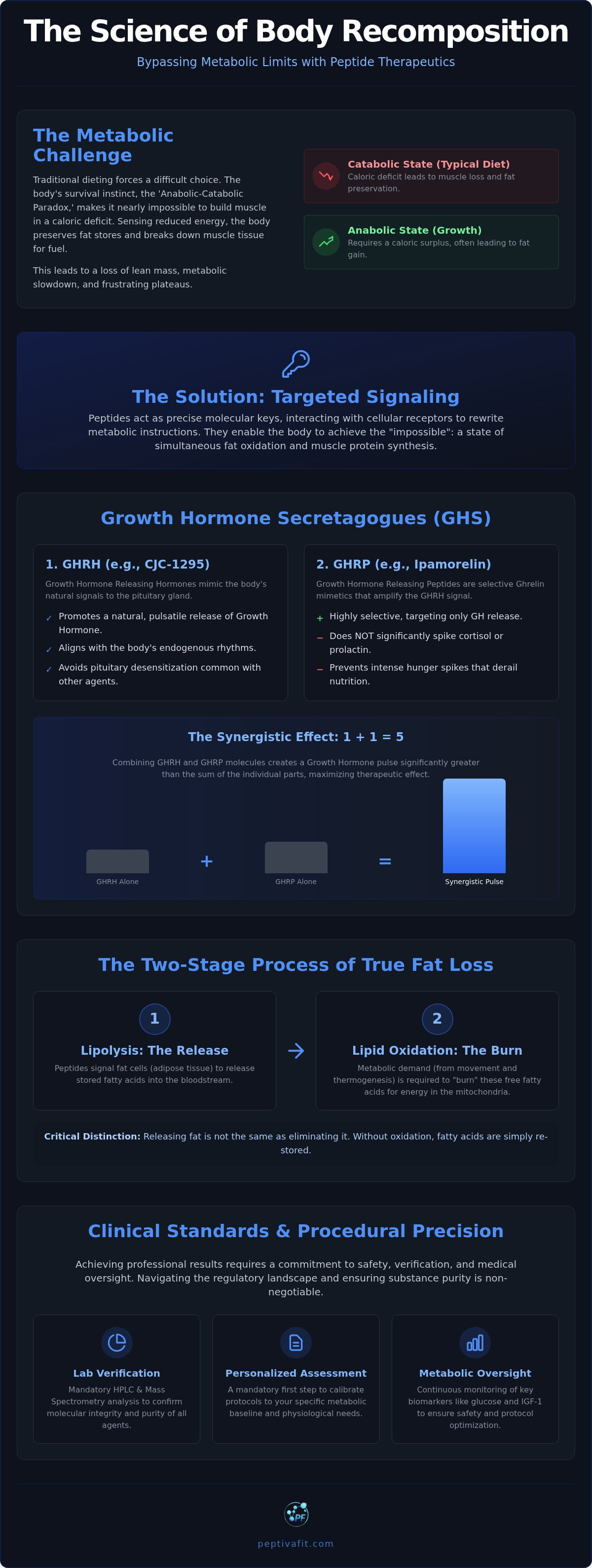
Body recomposition is a metabolic state where the body utilizes stored adipose tissue for energy while maintaining a positive nitrogen balance. Achieving this state requires the simultaneous orchestration of lipolysis and muscle protein synthesis, a feat that is biologically difficult to sustain through diet alone. Most individuals encounter the "Anabolic-Catabolic Paradox," where the body, sensing a caloric deficit, prioritizes the preservation of fat stores and catabolizes muscle tissue for survival. This biological survival mechanism is the primary reason traditional dieting often fails to preserve lean mass.
To bypass this paradox, one must utilize targeted signaling molecules. In the field of Peptide Therapeutics, these short chains of amino acids act as precise keys for cellular receptors. They instruct the body to shift its fuel preference, making peptides for body recomposition an essential tool for those seeking a clinical-grade physical transformation. By modulating hormonal output, these molecules allow for muscle preservation even when energy intake is restricted.
The Role of Nitrogen Balance in Muscle Preservation
A positive nitrogen balance is the absolute prerequisite for muscle accretion. Nitrogen is a core component of amino acids, and when the body excretes more nitrogen than it takes in, it enters a catabolic state. Caloric deficits typically trigger this muscle wasting because the body seeks to reduce its high-energy demand tissues. Specialized peptides protect lean tissue by enhancing growth hormone signaling and insulin-like growth factor (IGF-1) expression. This ensures that even in a restricted state, the cellular machinery remains focused on repair and retention rather than degradation. It's the difference between looking "thin" and looking "athletic."
Lipolysis vs. Lipid Oxidation: A Critical Distinction
True fat loss is a two-stage process that many enthusiasts misunderstand. Peptides facilitate lipolysis, which is the chemical release of fatty acids from adipose tissue into the bloodstream. However, releasing fat isn't the same as eliminating it. Lipid oxidation, the actual "burning" of that fat for energy, requires metabolic demand through movement and thermogenesis. Without this demand, released fatty acids simply re-esterify back into fat cells. Understanding peptides for metabolism and fat loss provides the foundation for this process. It ensures that the liberated energy is actually utilized by the mitochondria. This dual-pathway approach is what separates professional peptides for body recomposition protocols from standard weight loss attempts.
Growth Hormone Secretagogues and Lipolytic Fragments
The pharmacological landscape of peptides for body recomposition is primarily defined by Growth Hormone Secretagogues (GHS). These compounds are categorized into two distinct classes: Growth Hormone Releasing Hormones (GHRH) and Growth Hormone Releasing Peptides (GHRP). While both aim to elevate systemic GH levels, they utilize different pathways to achieve pituitary stimulation. A Clinical Review of Growth Hormone Secretagogues highlights how these agents can effectively increase lean body mass while simultaneously facilitating the reduction of adipose tissue.
CJC-1295 (without DAC) represents the standard for GHRH analogs. By mimicking the body's natural signaling, it promotes a pulsatile release of growth hormone that aligns with endogenous rhythms. This avoids the risks of pituitary desensitization often seen with long-acting variants. When combined with a GHRP, the resulting synergy creates a significantly higher GH pulse than either compound could achieve in isolation. To ensure these signals are calibrated to your specific metabolic baseline, a personalized medical assessment is the mandatory first step.
Ipamorelin: The Selective Secretagogue
Ipamorelin is widely regarded as the gold standard for GHRPs due to its extreme selectivity. It functions as a ghrelin-mimetic, yet it lacks the side effects common in earlier generations like GHRP-2 or GHRP-6. Most notably, it doesn't trigger significant prolactin or cortisol spikes. This selectivity is critical during recomposition because it prevents the intense "hunger spikes" that can compromise a strictly managed nutritional protocol. Clinical observation usually focuses on glucose monitoring and IGF-1 levels to ensure the protocol remains within optimal physiological boundaries.
Tesamorelin: Targeting Visceral Adipose Tissue
Tesamorelin stands apart for its specific affinity for reducing visceral adipose tissue (VAT), the deep abdominal fat associated with metabolic dysfunction. This makes it a cornerstone in advanced protocols using peptides for body recomposition. Beyond its lipolytic capabilities, it's highly effective at elevating IGF-1 levels, which are essential for muscle tissue repair and recovery after high-intensity training. Because of its potency, following a precise Tesamorelin dosage guide is necessary to maximize fat loss while minimizing potential insulin resistance.
For individuals seeking fat loss without the broader hormonal impact of secretagogues, lipolytic fragments like HGH Frag 176-191 and AOD-9604 offer a targeted alternative. These molecules isolate the C-terminal end of the growth hormone molecule, which is responsible for fat metabolism, without affecting growth or insulin sensitivity. They provide a non-hormonal pathway to accelerate lipolysis, making them versatile additions to a sophisticated recomposition stack.
Synergistic Stacks for Muscle Accretion and Fat Loss
The efficacy of peptides for body recomposition is significantly amplified when multiple signaling pathways are engaged simultaneously. This "1+1=3" effect occurs because GHRH and GHRP molecules stimulate the pituitary gland through distinct, non-competing receptors. By utilizing a multi-modal approach, you prevent receptor saturation and create a more robust physiological response. This methodology is the cornerstone of advanced metabolic optimization, where the goal isn't just weight loss, but a fundamental shift in tissue composition.
The "Metabolic Power Stack" represents a sophisticated triad of Tesamorelin, Ipamorelin, and AOD-9604. This combination targets visceral fat, elevates systemic growth hormone levels, and activates non-hormonal lipolysis. Achieving professional-grade results requires more than just the right molecules. It demands precise timing. Aligning peptide administration with natural circadian GH pulses, particularly before sleep, ensures that the body's endogenous repair mechanisms are fully supported and enhanced.
The GHRH + GHRP Synergy
Combining CJC-1295 with Ipamorelin creates a synergistic pulse that far exceeds the sum of their individual effects. While CJC-1295 extends the duration of the GH release, Ipamorelin increases the amplitude of the pulse itself. Dosing frequency is a critical variable in this equation. Most clinical observations suggest a twice-daily administration to maintain steady-state metabolic benefits. Fasted administration is non-negotiable for these secretagogues. Elevated blood glucose or insulin levels will effectively blunt the pituitary's response, rendering the protocol inefficient. For those seeking maximum precision, peptides for body recomposition must be managed with strict adherence to nutritional windows.
Integrating Recovery Peptides
Recomposition requires high-intensity training, which inevitably places stress on connective tissues and the central nervous system. The "Wolverine Stack" addresses this by integrating BPC-157 and TB-500. Utilizing BPC-157 peptide is essential for maintaining gastric health and accelerating the repair of tendons and ligaments. It acts as a systemic safeguard against the wear and tear of aggressive training cycles.
TB-500 complements this by promoting cellular migration and systemic tissue repair. It works on a molecular level to maintain muscle fiber health and manage systemic inflammation. By controlling the inflammatory response, you support the metabolic flexibility required to build muscle while burning fat. This recovery-driven approach ensures that your body remains in a state of readiness, allowing for the consistent, high-output training sessions that drive physical transformation.
Clinical Standards: Lab Verification and Molecular Integrity
The efficacy of any protocol using peptides for body recomposition is entirely dependent on molecular integrity. Many enthusiasts source materials through the "Research Chemical" loophole, a regulatory gray zone where vendors bypass human-grade safety standards by labeling products as "not for human consumption." This lack of oversight introduces significant risks, including the presence of heavy metals, residual solvents, or incorrect peptide sequences. To ensure safety and physiological results, you must demand rigorous verification through High-Performance Liquid Chromatography (HPLC) and Mass Spectrometry.
HPLC is used to determine the purity of the peptide, while Mass Spectrometry confirms the molecular weight and identity of the substance. Without both tests, there's no guarantee that the vial contains the advertised molecule. A common issue with low-tier suppliers is the presence of Trifluoroacetic acid (TFA), a synthesis byproduct. High concentrations of TFA can cause localized inflammation or systemic immune responses, which actively work against your recomposition goals. At PeptivaFit, we maintain a standard of only providing lab tested peptides that have cleared these stringent analytical hurdles.
How to Read a COA (Certificate of Analysis)
A Certificate of Analysis is your only objective proof of quality. Purity percentages are the first metric to examine; 99% or higher is the clinical requirement for any serious protocol. Anything less indicates the presence of unknown synthesis byproducts that could be bioactive or toxic. You must also verify that the batch number on the COA matches the vial in your possession and that the third-party testing date is recent. Be wary of marketing that uses "house" testing, as an independent, accredited laboratory must perform the verification to ensure unbiased data.
The Importance of Reconstitution Precision
Peptides are inherently fragile molecules that require precise handling to maintain their structural stability. Reconstitution must be performed with bacteriostatic water, which contains 0.9% benzyl alcohol to inhibit bacterial growth and maintain an appropriate pH balance. Using sterile water without a preservative can lead to rapid degradation or infection at the injection site. For a detailed technical walkthrough, refer to our guide on how to reconstitute peptides.
Storage is equally critical. Once reconstituted, these molecules are highly sensitive to temperature fluctuations and UV light. Most peptides for body recomposition must be stored in a refrigerated environment between 2 and 8 degrees Celsius. Exposure to direct sunlight or room temperatures for extended periods will cause the peptide bonds to break, rendering the solution biologically inert. Maintaining this chain of integrity from the lab to your refrigerator is the only way to ensure the metabolic signals you're sending are accurate and effective.
Implementing the Peptiva Protocol for Professional Results
Transitioning from theoretical molecular biology to practical application requires a structured framework that prioritizes safety and objective data. The Peptiva Protocol serves as the definitive fat loss peptide guide, moving beyond the haphazard experimentation often found in unregulated forums. True optimization is a longitudinal process. It demands a sophisticated understanding of how peptides for body recomposition interact with your unique hormonal profile. Central to this process is the necessity of a Personalized medical assessment. Attempting to manipulate growth hormone pathways without a baseline understanding of your systemic health is a high-risk endeavor. For those seeking immediate refinement of an existing strategy, a Single Consultation Call provides the necessary professional oversight to correct common errors in timing or dosage. However, for sustained transformation, 1-on-1 Coaching ensures that every protocol adjustment is driven by real-world biofeedback and metabolic data.
Phase 1: The Metabolic Assessment
The initial phase focuses on risk mitigation and data collection. Screening for contraindications, such as a history of malignancy or acute glucose insensitivity, is mandatory before introducing any secretagogue. We establish baseline blood markers, including IGF-1, HbA1c, and fasted insulin, to track the physiological impact of the intervention accurately. This data allows for the customization of peptide selection based on individual body fat distribution. For instance, an individual with high visceral adipose tissue requires a different approach than someone focused primarily on lean tissue accretion in a slight caloric surplus. We also evaluate lifestyle factors like sleep architecture and stress levels, as these variables can either amplify or blunt the signaling efficacy of peptides for body recomposition.
Phase 2: Protocol Execution and Coaching
Execution is where the '1+1=3' synergy discussed in previous sections is realized. We structure cycles with deliberate breaks to prevent receptor desensitization, ensuring the pituitary remains responsive to signaling over the long term. Peptides don't operate in a vacuum. Their efficacy is maximized when integrated with specific resistance training and nutritional timing that matches the peak of the GH pulse. Coaching involves monitoring for side effects, such as water retention or changes in blood glucose, and making real-time dosage adjustments. This disciplined approach transforms peptides from experimental chemicals into a controlled, clinical strategy. By focusing on biofeedback, we ensure that the protocol remains safe, effective, and tailored to your evolving physical state.
Mastering Your Metabolic Architecture
True body transformation requires more than generic advice. It demands the precise orchestration of molecular signals. We've established that the synergy between GHRH and GHRP secretagogues is the foundation of effective protocols using peptides for body recomposition. By bypassing the "Anabolic-Catabolic Paradox," you can finally prioritize fat oxidation without sacrificing the lean tissue you've worked to build. However, these results are only achievable when you prioritize lab-verified molecular integrity and professional medical oversight.
Navigating the 2026 regulatory landscape and the risks of unverified suppliers requires a disciplined, data-driven partner. The Peptiva Protocol provides a specialized framework for those who refuse to settle for "research-grade" uncertainty. This methodology ensures your biology is optimized through clinical standards rather than guesswork. Secure the Peptiva Protocol and access lab-verified peptides today. Your physical evolution is a methodical process that deserves scientific precision.
Clinical Guidance and Frequently Asked Questions
Are peptides for body recomposition legal in the United States?
The legal status of these molecules is currently in a complex regulatory state. As of August 2026, many substances like BPC-157 and CJC-1295 exist in a regulatory "gray zone" after being removed from the FDA's restricted Category 2 list in April 2026. While they aren't yet affirmatively cleared for compounding, other peptides such as Semaglutide and Tesamorelin are fully FDA-approved for specific medical indications. It's essential to consult with a professional who understands the shifting 2026 PCAC recommendations to ensure your protocol remains compliant.
How long does it take to see results from a body recomposition peptide protocol?
Visible changes in tissue composition typically manifest within 8 to 12 weeks of consistent administration and metabolic adherence. While cellular signaling shifts happen immediately, the physical manifestation of fat loss and muscle accretion requires a sustained anabolic environment. Clinical data from recent retatrutide trials demonstrated that significant weight loss, reaching up to 24%, was observed over a 48-week period. Your specific timeline will depend on your baseline body fat and the precision of your protocol execution.
Can I use peptides for fat loss without exercising?
Utilizing peptides without a structured exercise regimen is highly inefficient and scientifically counterproductive. Peptides facilitate lipolysis, which is the release of fatty acids into the bloodstream, but you must create metabolic demand to oxidize that fat. Without resistance training, you also miss the essential signaling required for peptides for body recomposition to protect and build lean muscle tissue. True transformation is a product of molecular signaling combined with physical mechanical tension.
What are the most common side effects of growth hormone secretagogues?
Commonly reported side effects include transient water retention, slight joint discomfort, and increased lethargy if dosages aren't calibrated correctly. Some individuals may also experience tingling in the extremities or changes in glucose sensitivity. Non-selective secretagogues can trigger intense hunger spikes, which is why we prioritize selective agents like Ipamorelin. Professional monitoring is necessary to track these markers and ensure the protocol doesn't negatively impact your systemic metabolic health.
Do I need a prescription to access lab-tested peptides?
Yes, obtaining clinical-grade peptides through a compounding pharmacy requires a valid prescription from a licensed medical professional. While "research chemicals" are available online without a prescription, they are strictly not intended for human consumption and lack the rigorous oversight of medical-grade supplies. Accessing lab-verified peptides through a professional assessment ensures that you're receiving pure, accurately dosed molecules rather than potentially contaminated research-grade substances.
Can women use the same peptide stacks for body recomposition as men?
Women can effectively utilize growth hormone secretagogues because these molecules are non-androgenic and don't cause virilization. The underlying mechanisms for fat oxidation and protein synthesis remain consistent across genders. However, peptides for body recomposition must be dosed differently for women to account for lower baseline body mass and distinct hormonal fluctuations. A customized approach ensures that IGF-1 levels remain within a safe, optimized physiological range without disrupting the endocrine system.
What happens if I stop using peptides? Will I lose my results?
Your results won't immediately vanish upon cessation, provided you maintain the nutritional and training foundations established during the protocol. Peptides function by enhancing your natural signaling; once stopped, your endogenous growth hormone production will gradually return to its baseline level. The muscle mass gained and the metabolic efficiency developed can be preserved through disciplined lifestyle management. You don't become dependent on the molecules, but you must continue to provide the body with a reason to retain its leaner composition.
How do I know if my peptides are actually pure and lab-verified?
Verification requires a third-party Certificate of Analysis (COA) that includes both HPLC and Mass Spectrometry testing. You must verify that the batch number on the report matches your vial and that the purity rating is 99% or higher. Any report that is missing these specific analytical benchmarks or is outdated should be considered a red flag. Lab verification is the only objective way to ensure you're not introducing synthesis byproducts or residual solvents into your system.

![Shelf Life of Reconstituted Peptides: A Clinical Reference Guide [2026]](https://getautoseo.com/storage/hero_images/shelf-life-of-reconstituted-peptides-a-clinical-reference-guide-2026.jpg?v=b8ed5173acaa)
