

In an industry where a vial of BPC-157 is often sold without a single shred of verifiable data, your research is only as credible as the molecular integrity of your source material. You likely understand the frustration of vetting an overwhelming number of "peptide cowboy" vendors who offer zero accountability and even less transparency regarding heavy metal contamination or under-dosed vials. Finding a reliable source shouldn't feel like a gamble with your biological data. Learning how to find lab-tested peptides in the US requires moving beyond marketing claims and into the realm of rigorous, third-party clinical verification. It's about establishing a disciplined protocol that prioritizes data over hype.
This guide provides the rigorous scientific standards necessary to identify high-purity research peptides while avoiding the significant risks associated with unverified suppliers. We'll establish a repeatable framework for analyzing complex HPLC and mass spectrometry reports; we'll also explain why clinical oversight and ISO 17025 accreditation are non-negotiable for serious practitioners. By the end of this analysis, you'll have the confidence to select reputable US-based suppliers that meet the 95% to 98% purity thresholds required for legitimate scientific investigation. True optimization demands precision, and precision begins with verified chemistry.
Key Takeaways
- Understand the critical regulatory distinctions between research-grade and pharmaceutical-grade peptides to ensure your procurement meets 2026 compliance standards.
- Master the technical verification process for certificates of analysis to learn exactly how to find lab-tested peptides in the US that meet strict molecular benchmarks.
- Identify the primary red flags of unreliable suppliers, including the use of recycled lot numbers and the absence of a verifiable physical laboratory presence.
- Recognize why molecular purity is only one component of metabolic success and how baseline bloodwork provides the necessary context for effective peptide application.
- Discover how the Peptiva Protocol integrates third-party lab verification with personalized medical assessments to eliminate the variables of unguided self-optimization.
The Landscape of Research Peptides in the US (2026)
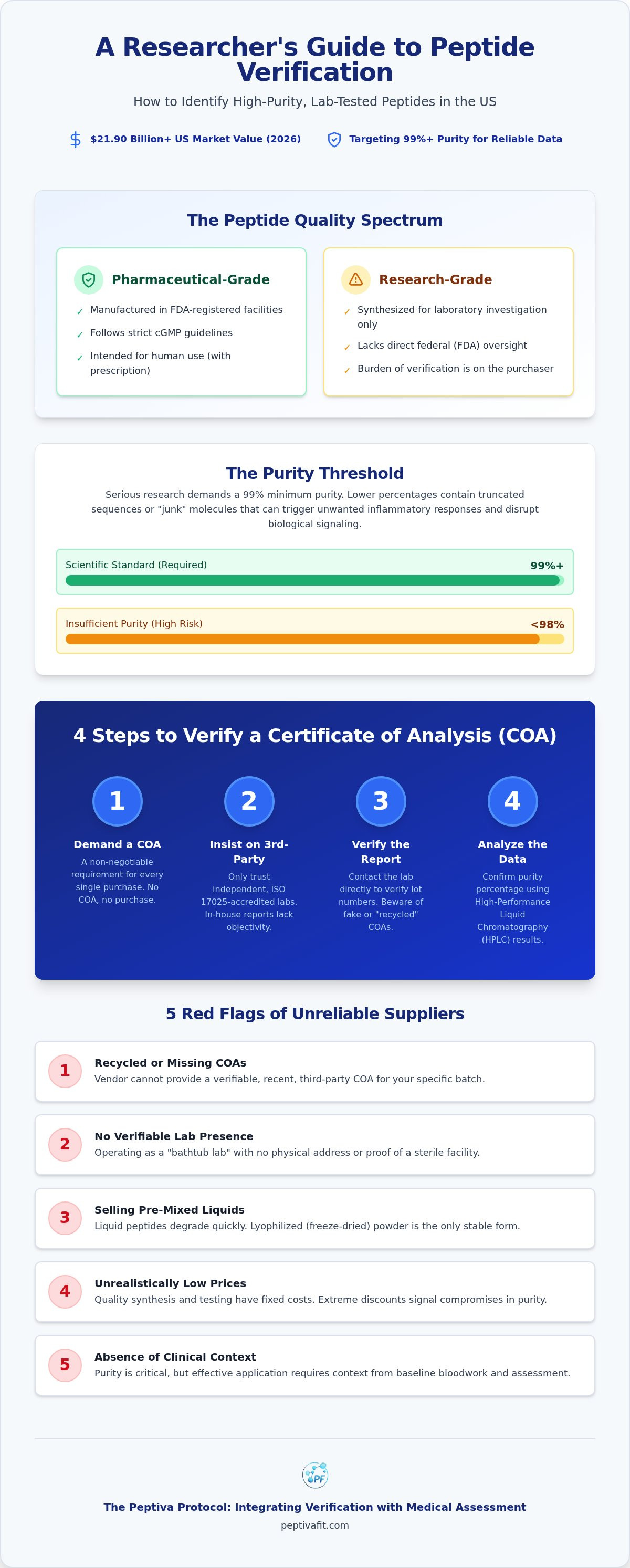
The domestic peptide market has undergone a significant transformation. As of 2026, the U.S. peptide therapeutics market is valued at over $21.90 billion, driven by a surge in metabolic research and the recent HHS reclassification of 14 key peptides to Category 1. While this regulatory shift allows for broader compounding with a prescription, the "research-grade" market remains a complex, often opaque territory. Understanding how to find lab-tested peptides in the US begins with a clear distinction between research-grade and pharmaceutical-grade materials. Pharmaceutical-grade products are manufactured in FDA-registered facilities under strict cGMP guidelines for human use. Research-grade peptides, however, are synthesized for laboratory investigation; they lack the same federal oversight, placing the burden of verification entirely on the purchaser.
A "Made in the USA" label is a starting point, but it's never a guarantee of molecular purity. Domestic synthesis doesn't inherently prevent impurities if the facility lacks ISO 17025 accreditation or fails to implement rigorous batch-to-batch monitoring. For long-term metabolic protocols, consistency is the ultimate priority. Even minor variations in peptide sequence or residual salt content can alter biological signaling, leading to unpredictable results in a research setting. True quality is found in the data, not the origin of the shipping label.
The Reality of the Unregulated Peptide Market
Unvetted vendors, frequently called "bathtub labs," operate with minimal clinical hygiene. These entities often bypass the expensive filtration processes required to prevent cross-contamination with heavy metals or bacterial endotoxins. The physical state of the product is another critical factor. Peptides in liquid form are highly susceptible to molecular degradation during transit, especially when exposed to heat. Lyophilization, or freeze-drying, is the only acceptable industry standard for maintaining stability. If a supplier offers pre-mixed liquid peptides at a low price, it's usually an inverse indicator of molecular integrity. High-quality synthesis has fixed costs; low prices generally signal that the vendor has sacrificed testing or purity to maintain margins.
Defining Scientific-Grade Standards
Precision in peptide synthesis relies on Solid-Phase Peptide Synthesis (SPPS). This methodical process ensures each amino acid is correctly sequenced to create the target molecule. While some vendors claim 95% purity is sufficient, serious research demands a 99% minimum threshold. Any percentage below this represents truncated sequences or "junk" molecules that can trigger unwanted inflammatory responses. When you are determining how to find lab-tested peptides in the US, you must prioritize suppliers that provide verifiable evidence of this 99% benchmark. Impurities aren't just inert fillers; they are active disruptions to the delicate biological signaling you intend to study.
Decoding the Certificate of Analysis (COA)
A Certificate of Analysis (COA) serves as the primary scientific safeguard for any researcher prioritizing molecular integrity. It isn't merely a supplementary document; it's a non-negotiable requirement for every purchase. While many vendors claim to perform in-house testing, these internal reports lack the objectivity required for true clinical verification. Independent third-party testing by ISO 17025-accredited laboratories is the only way to ensure the data hasn't been manipulated. High-Performance Liquid Chromatography (HPLC) is the gold standard for determining peptide purity. Understanding these reports is a core skill when learning how to find lab-tested peptides in the US, as it separates disciplined practitioners from those relying on vendor marketing.
Authenticity verification is a critical step often overlooked by researchers. You shouldn't accept a PDF at face value. Reputable laboratories, such as Apollo Analytical or Prodigy Labs, allow you to verify report numbers and lot IDs directly through their portals or via a brief inquiry. This step is essential because "recycled" COAs are a common tactic among lower-tier suppliers. Using unverified materials negates the purpose of the research, as highlighted by Harvard Health on peptide safety regarding the risks of unregulated products. If a vendor cannot or will not provide a verifiable, recent COA for the specific batch you are purchasing, the material should be considered compromised.
Understanding HPLC (High-Performance Liquid Chromatography)
The HPLC chromatogram is a visual representation of a peptide's purity. When you examine the graph, you're looking for a single, sharp primary peak that dominates the timeline. This peak represents the target molecule. Any smaller secondary peaks appearing before or after the main spike reveal the presence of impurities, such as residual solvents or truncated peptide sequences. The "Area %" listed in the report is the mathematical integration of that primary peak relative to the total area of all peaks detected. For research purposes, this value must exceed 99% to ensure the biological signaling remains precise and predictable.
Mass Spectrometry (MS) and Molecular Identity
While HPLC confirms purity, Mass Spectrometry (MS) confirms identity. It's possible to have a 99% pure substance that is the wrong molecule entirely. MS measures the mass-to-charge ratio of the sample. You must compare the "observed mass" in the report to the "theoretical mass" of the specific peptide sequence. A discrepancy here indicates a synthesis error. Additionally, MS helps identify salt content. Most peptides are synthesized as acetate or TFA salts, which can account for 10% to 20% of the total vial weight. Mastering these technical details is essential for anyone determining how to find lab-tested peptides in the US that meet rigorous scientific standards. Understanding these nuances is part of the Peptiva Protocol for ensuring maximum data accuracy in your metabolic research.
5 Red Flags of Unreliable Peptide Suppliers
Identifying how to find lab-tested peptides in the US requires a systematic vetting process that prioritizes empirical evidence over marketing narratives. The most prominent red flag is the existence of "ghost" laboratories. These entities operate without a verifiable physical address or a registered domestic business footprint. If a supplier provides only a vague PO box and refuses to disclose their synthesis or distribution location, they operate without the accountability required for scientific research. This lack of transparency often extends to their synthesis methods. Serious suppliers are transparent about utilizing Solid-Phase Peptide Synthesis (SPPS) and maintaining climate-controlled storage to prevent molecular degradation. If a vendor is evasive about their storage protocols, it's a sign the product's integrity is already compromised.
Recycled Certificates of Analysis (COAs) represent a high-stakes risk for any researcher. You must verify that the test date aligns perfectly with the current lot number. A COA from two years ago is irrelevant for a purchase made in 2026. When you engage with customer support, pay close attention to the quality of their responses. Technical evasiveness is a hallmark of "peptide cowboy" vendors. A reputable supplier provides scientific transparency, answering specific inquiries about peptide sequences or salt content with precision. If the support staff relies on anecdotal testimonials or defensive rhetoric rather than data, the source is likely unreliable. Disciplined practitioners don't accept marketing hype as a substitute for molecular verification.
Warning Signs in Digital Presence
A supplier's digital interface often reveals their underlying operational philosophy. Red flags include a heavy reliance on aggressive lifestyle marketing rather than technical specifications. Every research compound must be accompanied by a Safety Data Sheet (SDS), which outlines handling protocols and chemical properties. The absence of these documents indicates a lack of regulatory compliance. Additionally, professional communication and secure, established payment methods are mandatory. Vendors requesting payment via unsecured, non-reversible channels often do so to avoid the financial accountability required by established US banking regulations.
Product Packaging and Physical Integrity
The physical state of the vial provides the final layer of verification before research begins. Lyophilized powder should appear as a solid, uniform "cake" or a consistent granular powder. Any visible particulates, discoloration, or moisture indicate contamination or improper handling during the lyophilization process. Oxidation is a constant threat to molecular integrity; therefore, vials must be vacuum-sealed with tight-fitting caps. Loose or compromised seals allow oxygen and moisture to enter, which can render the peptide useless for precise research. Finally, check the labeling for concentration and expiration. Inadequate or handwritten labels are unacceptable for any substance requiring clinical-grade precision. Understanding these physical cues is essential when determining how to find lab-tested peptides in the US that are actually safe for your research environment.
Beyond the Vial: The Necessity of Clinical Oversight
Securing a 99% pure vial is only the first step in a disciplined research process. While understanding how to find lab-tested peptides in the US ensures molecular integrity, it doesn't guarantee biological success. Metabolic optimization is a data-driven endeavor that requires baseline bloodwork and personalized medical assessments before the first vial is even opened. Without this clinical context, you're operating blindly, unable to distinguish between the intended effects of a peptide and the noise of your own underlying physiology. Monitoring for side effects isn't a passive activity; it requires a professional feedback loop to interpret data and adjust protocols in real time.
The gap between "buying a vial" and "running a safe protocol" is where most researchers fail. High-purity peptides are precise tools, and like any tool, their efficacy depends on the skill of the operator. Relying solely on anonymous forum advice or anecdotal reports introduces variables that can compromise your data and your health. True expertise involves moving beyond the transaction and into a structured environment where every adjustment is backed by clinical evidence. If you're serious about your research, you must prioritize the oversight necessary to manage the complexities of human biology.
The Risks of 'Solo' Research
Individual researchers often fall into the "more is better" trap, leading to significant dosing errors that can cause systemic inflammation or receptor desensitization. Even the purest compound can be rendered useless through poor laboratory habits. For instance, improper technique during the process of how to reconstitute peptides can degrade delicate molecular bonds, effectively wasting your investment in high-purity materials. Maintaining a sterile technique is mandatory to avoid introducing bacterial endotoxins into your research environment, a risk that persists even with verified suppliers. This is why learning how to find lab-tested peptides in the US is only the beginning of the safety journey.
Integrating Peptides into a Comprehensive Protocol
Peptides don't function in isolation. Certain compounds, such as Tesamorelin, require specific metabolic contexts and hormonal baselines to be effective. The interaction between different peptides can be synergistic or antagonistic, depending on your unique biological profile. This is where 1-on-1 coaching becomes invaluable. It provides the necessary oversight to make data-driven adjustments based on your body's specific response rather than following generic online templates. True optimization is a long-term commitment to precision, not a quick fix found in a single vial. To move beyond guesswork and establish a scientifically sound foundation for your research, consider a personalized medical assessment to define your specific metabolic requirements.
Securing Quality with the Peptiva Protocol
The transition from understanding how to find lab-tested peptides in the US to implementing a successful metabolic strategy requires more than just a verified vial. It demands a clinical infrastructure that connects high-purity supply with expert guidance. PeptivaFit bridges this gap by offering a disciplined, systematic approach to performance optimization. We move beyond the transactional nature of standard vendors to provide a comprehensive framework that prioritizes safety and molecular integrity. By integrating personalized medical assessments with access to verified compounds, PeptivaFit removes the variables that typically lead to failed protocols or biological setbacks. This isn't mass-market advice; it's an exclusive service for individuals who demand scientific-grade precision in their wellness journey.
The Peptiva Protocol functions as a roadmap for fat loss and metabolic health, ensuring that every intervention is supported by data. We recognize that even the highest purity peptides are ineffective if the underlying metabolic context is ignored. Our approach emphasizes the necessity of 1-on-1 coaching to monitor progress and make the subtle adjustments required for long-term success. This feedback loop is essential for optimizing recovery and performance, transforming a simple research project into a sophisticated process of self-optimization. Data is the only currency we value, and our protocol is designed to maximize its accuracy.
The Peptiva Standard for Lab Verification
Our selection process for third-party lab partners is exceptionally rigorous. We don't settle for generic or outdated reports. PeptivaFit prioritizes lot-matched COAs for every client protocol, ensuring that the specific batch you receive has been independently verified for purity and identity. This level of transparency is the foundation of our community. We believe that researchers deserve absolute certainty regarding the molecular integrity of their compounds. By maintaining these high standards, we act as a gatekeeper, protecting our clients from the inconsistencies and risks prevalent in the broader unregulated market.
Taking the Next Step in Your Optimization Journey
Professional insight is the most valuable asset in any metabolic research environment. To move beyond the noise of unguided self-experimentation, you can schedule a single consultation call to gain clarity on your specific needs. This initial step provides the foundation for the Peptiva Protocol, which offers a long-term strategy for sustained metabolic health. Success in this field is a methodical process, not a quick fix. It requires maturity, compliance, and a commitment to rigorous standards. Apply for the Peptiva Protocol and secure your metabolic future.
Establishing Your Standard of Molecular Excellence
The pursuit of metabolic optimization is a high-stakes endeavor that leaves no room for unverified chemistry or anecdotal protocols. You now possess the technical framework required for identifying high-purity compounds, from decoding HPLC chromatograms to recognizing the operational red flags of substandard vendors. Mastering how to find lab-tested peptides in the US is the first step toward a disciplined, data-driven wellness strategy. However, pure molecules are only effective when integrated into a structured clinical environment that accounts for your unique biological profile.
PeptivaFit provides the professional infrastructure necessary to bridge the gap between raw data and tangible results. Our system prioritizes access to third-party lab-verified peptides and includes personalized medical assessments to define your baseline. With elite 1-on-1 coaching for high-performers, you can move beyond the unregulated market and into a space of sophisticated control. Precision is a choice that demands accountability. It's time to transition from a consumer of hype to a practitioner of science. Secure your metabolic future with the Peptiva Protocol and begin your journey toward optimized performance today.
Frequently Asked Questions
How do I know if a peptide lab report is fake?
You can verify a report's authenticity by contacting the issuing laboratory directly or using their official online verification portal. Fake reports often feature recycled lot numbers or dates that don't align with the current year. A legitimate Certificate of Analysis (COA) must be batch-specific and include a verifiable report ID. If the lab cannot confirm the document, the data is fraudulent. This verification process is a critical component of how to find lab-tested peptides in the US that are safe for research.
What is the difference between 98% and 99% purity in peptides?
While a 1% difference appears negligible, it represents the presence of truncated sequences or residual solvents that can trigger inflammatory responses. In a 10mg vial, 2% impurity equals 200mcg of unknown material. Pharmaceutical standards typically demand 98% or higher, but research-grade materials should target a 99% threshold to ensure that biological signaling remains precise. High-purity synthesis is essential for maintaining molecular integrity during long-term metabolic protocols and preventing unpredictable biological reactions.
Are US-made peptides better than those from overseas?
Domestic synthesis offers a higher level of accountability and faster shipping times, but geographic origin is secondary to third-party verification. US-based labs must adhere to domestic banking and business regulations, which provides a layer of protection against "ghost" entities. However, an overseas product with a verifiable ISO 17025 COA is superior to a US product with no data. Quality is defined by the laboratory report, not the country of origin. Always prioritize empirical data over domestic marketing claims.
What should I look for on a third-party HPLC report?
Your primary focus should be the HPLC chromatogram and the "Area %" calculation. The graph must show a single, sharp primary peak with minimal "noise" or secondary spikes. Additionally, ensure the report includes Mass Spectrometry to confirm the observed mass matches the theoretical molecular weight of the peptide. Without MS data, you have no confirmation that the substance is actually the intended molecule. Batch-specific testing is the only way to ensure molecular consistency.
Why is a personalized medical assessment necessary for peptide research?
Peptides are potent biological signaling agents that interact with your unique endocrine and metabolic systems. A personalized medical assessment establishes your baseline bloodwork, ensuring that specific interventions like the Peptiva Protocol are appropriate for your physiology. Operating without this oversight increases the risk of side effects or receptor desensitization. Professional guidance transforms unguided experimentation into a disciplined research process, allowing for data-driven adjustments based on your body's specific response to the compounds.
Can I trust peptide reviews on forums like Reddit?
Forum reviews are anecdotal and often lack the scientific rigor required for clinical verification. Many "vetted" lists are influenced by affiliate incentives or "shill" accounts rather than laboratory data. Relying on anonymous testimonials is a high-stakes gamble with your biological integrity. When researching how to find lab-tested peptides in the US, prioritize verifiable HPLC and MS reports from accredited laboratories over community consensus. Data-driven decisions are the only way to ensure research safety and accuracy.
What happens if a peptide is under-dosed or impure?
Under-dosed vials compromise the accuracy of your research data, leading to failed protocols and wasted resources. Impure peptides pose a more significant threat, as residual heavy metals or bacterial endotoxins can cause systemic inflammation or acute toxicity. These contaminants are often a byproduct of low-cost synthesis in unvetted facilities. Using materials that lack third-party verification introduces unnecessary variables that can damage your metabolic health and invalidate your performance results during long-term optimization journeys.
How do I store lab-tested peptides to maintain their integrity?
Lyophilized peptide powder should be stored in a freezer at -20°C for long-term stability. Once reconstituted, the solution must be kept in a refrigerator between 2°C and 8°C to prevent molecular degradation. Peptides are highly sensitive to temperature fluctuations and UV light, so they should remain in their original vials within an opaque container. Maintaining these strict storage protocols is vital for preserving the molecular integrity of the high-purity compounds you have secured for your research.

![Shelf Life of Reconstituted Peptides: A Clinical Reference Guide [2026]](https://getautoseo.com/storage/hero_images/shelf-life-of-reconstituted-peptides-a-clinical-reference-guide-2026.jpg?v=b8ed5173acaa)
