
![Common Mistakes in Peptide Fat Loss Protocols: A Clinical Critique [2026]](https://getautoseo.com/storage/hero_images/common-mistakes-in-peptide-fat-loss-protocols-a-clinical-critique-2026.jpg?v=f6a9323e9c61)
Most peptide users are inadvertently sabotaging their metabolic machinery through forum-sourced guesswork rather than clinical precision. You've likely felt the frustration of a stalled fat loss phase despite meticulous administration and significant investment in research chemicals. Identifying common mistakes in peptide fat loss protocols is essential when you're struggling with the persistent anxiety of unknown purity or complex reconstitution math. If you've found yourself questioning the integrity of your molecules or the logic of your dosing schedule, you're certainly not alone in this specialized field.
This clinical critique provides a disciplined, data-driven strategy to help you rectify errors that compromise metabolic safety and protocol efficacy. We'll move beyond the noise of anecdotal evidence to address the current 2026 regulatory environment. You'll gain a clear understanding of the latest PCAC recommendations for substances like BPC-157 and Tesamorelin. We'll also preview the Peptiva Protocol; this is a professional framework designed to deliver clinical-grade fat loss through molecular integrity and specialized oversight.
Key Takeaways
- Understand why escalating dosages frequently leads to receptor desensitization and increased side effects without providing additional metabolic benefits.
- Discover how to ensure molecular integrity by prioritizing lab-verified sequences over the inherent risks of unverified research-grade chemicals.
- Learn to apply the "Insulin Interference" rule to optimize the timing of your administration relative to blood glucose levels for maximum efficacy.
- Identify and correct common mistakes in peptide fat loss protocols by treating these molecules as metabolic amplifiers rather than replacements for nutritional discipline.
- Transition from unregulated forum-based guesswork to a structured, clinically verified framework such as The Peptiva Protocol for professional-grade results.
The "More is Better" Fallacy: Overdosing and Receptor Desensitization
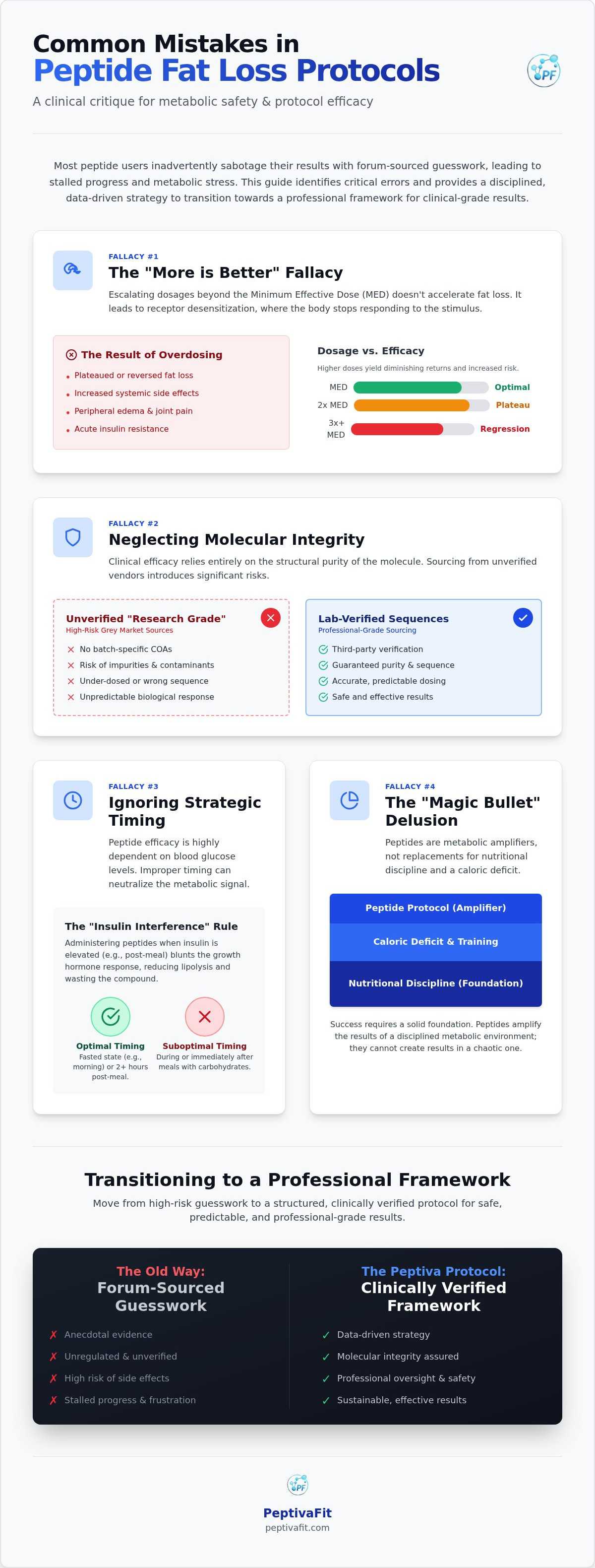
The assumption that higher dosages equate to accelerated results is one of the most pervasive common mistakes in peptide fat loss protocols. In a clinical context, peptides function as precise signaling molecules; they require specific receptor sensitivity to initiate metabolic cascades. When an individual exceeds the physiological saturation point, the body responds through receptor desensitization. This process involves the downregulation of receptors to protect the cell from overstimulation. Instead of achieving enhanced lipolysis, the user encounters a plateau where the biological machinery simply stops responding to the stimulus. It's a self-correcting mechanism that many fail to account for when designing their research cycles.
Unlike traditional anti-obesity medications that may have broader therapeutic windows, growth hormone secretagogues operate within strict biological limits. Megadosing often results in systemic side effects like peripheral edema, joint pain, and acute insulin resistance without providing any additional reduction in adipose tissue. The body has a finite capacity for fatty acid oxidation. Forcing a signal beyond this capacity isn't just counterproductive; it's metabolically taxing. You don't get double the fat loss by doubling the dose; you only get double the stress on your endocrine system.
The Dangers of Chronic GHRH Saturation
Improper administration frequency often leads to what clinicians term the "GH bleed." This occurs when non-pulsatile, chronic stimulation of the pituitary gland disrupts the natural rhythm of growth hormone secretion. Rather than distinct, powerful pulses, the gland enters a state of constant, low-level release. This saturation prevents the receptor recovery necessary for the next signaling event. You'll want to monitor for signs of receptor downregulation, which typically manifest as sudden lethargy, increased water retention, and a noticeable cessation of body composition changes despite a caloric deficit.
Balancing Efficacy with Systemic Safety
Successful optimization requires establishing a Minimum Effective Dose (MED). This is the lowest amount of a compound required to trigger the desired physiological response without inducing systemic pushback. Maintaining long-term sensitivity requires the strategic use of "washout periods," which allow the endocrine system to reset and prevent permanent desensitization. Professionals use bio-feedback and data monitoring to adjust these variables. The Peptiva Protocol serves as a rigorous framework for establishing these metabolic baselines, ensuring that every microgram administered serves a specific, documented purpose rather than relying on forum-based guesswork.
Neglecting Molecular Integrity: Sourcing and Reconstitution Errors
The clinical efficacy of any metabolic intervention relies entirely on the structural integrity of the signaling molecule. Sourcing from unverified "research grade" vendors remains one of the most hazardous common mistakes in peptide fat loss protocols. These grey-market entities often bypass rigorous quality control, resulting in vials that are either under-dosed or contain structural impurities that trigger systemic inflammation. While the 2026 regulatory landscape has begun to clarify the status of certain compounds, the prevalence of mislabeled sequences in the unregulated market continues to pose a significant risk to the individual researcher. Precision in sourcing is the only way to ensure that the amino acid sequence you intend to administer is the one that actually reaches your receptors.
The High Cost of Cheap Sourcing
Online peptide vendors often utilize deceptive marketing to mask a lack of third-party verification. Red flags include the absence of batch-specific COAs (Certificates of Analysis) and prices that fall significantly below the cost of high-purity synthesis. Harvard Health on peptide safety emphasizes the potential dangers of using unregulated products, which can lead to unpredictable biological responses. Establishing a baseline through a personalized medical assessment is a necessary prerequisite for anyone serious about safety. This professional oversight ensures that the chosen compounds align with your specific metabolic profile and that they are sourced through verified channels that guarantee 99% purity or higher.
Reconstitution Failures: pH and Solvent Precision
Peptides are notoriously fragile. The mechanical handling of these delicate chains is where many protocols fail before the first administration. Improper peptide reconstitution can denature the compound instantly, rendering it biologically inert. Using standard sterile water instead of high-quality bacteriostatic water in multi-use vials is a frequent error that invites bacterial growth and molecular degradation.
- Mechanical Stress: Rapidly injecting solvent directly onto the lyophilized cake can break the fragile peptide bonds.
- Aggressive Agitation: Swirling or shaking the vial vigorously often destroys the molecular sequence.
- Environmental Degradation: Exposure to UV light and fluctuating temperatures during the reconstitution process significantly reduces the half-life of the compound.
Maintaining molecular stability requires a disciplined approach to storage and handling. To ensure your protocol remains effective, you must treat every vial with the same rigor found in a clinical laboratory. If you're uncertain about your current handling procedures, a single consultation call can provide the technical clarity needed to preserve your investment. Protecting the molecular integrity of your stack is not a suggestion; it's a fundamental requirement for metabolic optimization.
Strategic Timing and Synergistic Interference in Fat Loss Stacks
Precision in administration timing is as critical as molecular purity. Even the most sophisticated peptide stack will fail if the internal metabolic environment is hostile to the intended signaling. Many individuals treat these compounds like standard supplements, but peptides are high-precision signaling agents that require specific hormonal windows to function. One of the most frequent common mistakes in peptide fat loss protocols is neglecting the glycemic state of the user during administration. When blood glucose is elevated, the resulting insulin spike acts as a powerful biochemical antagonist to lipolytic signaling. Insulin is an anabolic storage hormone; it directly opposes the mobilization of fatty acids, effectively muting the signal of peptides like Frag 176-191 or GHRHs.
Circadian synchronization also plays a vital role in protocol efficacy. The body's natural growth hormone production follows a pulsatile rhythm, largely governed by the sleep-wake cycle. Failing to align exogenous administration with these natural windows creates "metabolic noise." This interference doesn't just reduce the fat loss effect; it can lead to systemic desensitization as the body struggles to interpret conflicting signals. Professional-grade results require a disciplined adherence to timing that respects these biological boundaries.
The Fasted State Requirement for Lipolytic Peptides
The biochemical reason insulin blunts the effects of a specific Tesamorelin dosage is rooted in the somatotropic axis. High insulin levels stimulate the release of somatostatin, the "growth hormone-inhibiting hormone." To avoid this, administration must occur in a deep fasted state, typically in the morning or immediately before bed. A common failure point is "grazing" or late-night snacking, which keeps insulin levels high enough to invalidate an expensive protocol. You must ensure a minimum window of two to three hours of fasting both before and after administration to allow the lipolytic cascade to complete without interference.
Identifying Synergistic vs. Antagonistic Stacks
Stacking requires a sophisticated understanding of mechanism overlap. A frequent error is the redundant stacking of two different GHRPs, such as Ipamorelin and GHRP-6. This doesn't double the result; it simply increases the risk of side effects like elevated prolactin or cortisol. Instead, the focus should be on layering compounds with complementary pathways. For instance, correctly layering MOTS-C peptide with lipolytic agents targets mitochondrial efficiency alongside fatty acid mobilization. This synergy addresses fat loss from two distinct biological angles. Managing the half-life of each compound ensures that signals don't overlap in a way that causes receptor exhaustion or metabolic confusion.
The "Magic Bullet" Delusion: Ignoring Metabolic Foundations
Peptides are high-precision biological amplifiers, not foundational replacements. One of the most frequent common mistakes in peptide fat loss protocols involves treating these signaling molecules as a shortcut that bypasses the laws of thermodynamics. While compounds like AOD-9604 are specifically engineered to stimulate lipolysis, they cannot override a chronic caloric surplus. If the systemic environment is characterized by high energy availability, the liberated fatty acids will simply be re-esterified into adipose tissue. You can't out-protocol a poor nutritional strategy; the molecular signal will be lost in the noise of metabolic excess.
Efficacy is also contingent upon your internal biochemical status. Chronic systemic inflammation and poor sleep hygiene act as potent inhibitors of peptide signaling. Sleep deprivation, in particular, elevates ghrelin and suppresses the natural pulses of growth hormone that exogenous peptides are designed to enhance. Without adequate recovery, the receptors become less responsive to the signal. Similarly, micronutrient deficiencies can stall progress. Zinc, magnesium, and vitamin D function as essential cofactors in peptide-mediated pathways; if these are depleted, the metabolic cascade remains incomplete.
Nutrient Partitioning and the Peptide Environment
To maximize the results of any fat loss stack, you must optimize your nutrient partitioning. High-protein intake is a mandatory requirement to preserve lean tissue while the peptides accelerate fat oxidation. Furthermore, your glucose management, specifically your HbA1c levels, dictates how well GHRHs will perform. If your blood sugar is chronically elevated, the somatotropic axis remains suppressed. It's also vital to monitor your training load. Excessive cortisol from overtraining creates a catabolic environment that can negate the muscle-sparing benefits of your stack, leading to a "skinny-fat" outcome rather than a lean, athletic physique.
Mitochondrial Health as a Prerequisite
The mitochondria are the ultimate destination for liberated fatty acids. If your mitochondrial density is low or their function is impaired, the fat mobilized by peptides won't be oxidized for energy. Exercise serves as the primary mechanical trigger to increase mitochondrial biogenesis and maximize the efficacy of your protocol. A sedentary lifestyle effectively caps the potential of even the most advanced stack. If you're struggling to see the expected results, a single consultation call can help identify these specific lifestyle bottlenecks. Addressing these foundational variables ensures that your protocol functions as intended, delivering clinical-grade results rather than expensive disappointment.
Implementing a Clinically Verified Protocol for Sustainable Results
The transition from anecdotal forum advice to a structured clinical framework is the defining moment in a successful metabolic optimization journey. Relying on crowdsourced guesswork is one of the primary common mistakes in peptide fat loss protocols; it lacks the regulatory precision and individualization required for high-level performance. The Peptiva Protocol replaces this chaotic approach with a disciplined, data-driven methodology. By integrating professional oversight with lab-tested peptides, we ensure that every administration is backed by molecular integrity and clinical logic. This systematic approach is designed for the mature demographic that understands that sustainable fat loss is a product of biological synergy rather than aggressive, unmonitored experimentation.
Professional 1-on-1 coaching serves as a critical safeguard against the "user-error" side effects that often derail independent researchers. When you operate within a restricted, expert-led environment, you gain access to a level of sophisticated control that mass-market advice cannot provide. Our commitment to safety is uncompromising; we prioritize the molecular stability of the compounds and the metabolic health of the individual above all else. This isn't a quick fix; it's a long-term process of refinement and data monitoring.
Phase 1: Assessment and Priming
Before the first vial is even reconstituted, a personalized medical assessment is mandatory to establish your metabolic starting point. We utilize baseline blood work to identify systemic inflammation or hormonal imbalances that might blunt your lipolytic response. This priming phase ensures that your receptors are available and sensitive to the incoming signals. Selecting the right compound is a highly individual process; we match the peptide's specific mechanism of action to your unique adipose tissue distribution and metabolic profile. Attempting to skip this assessment phase is a fundamental error that often leads to stalled results and wasted resources.
Phase 2: Precision Execution and Monitoring
Execution follows the "Start Low, Go Slow" mandate to avoid systemic shock and maintain long-term sensitivity. During this phase, we track specific bio-markers as protocol KPIs, including resting heart rate, fasting glucose, and sleep quality. These data points provide an objective look at how your biology is responding to the stack. If a compound isn't the right fit for your specific physiology, the protocol dictates a strategic pivot rather than a blind increase in dosage. This level of monitoring allows for real-time adjustments, ensuring that you remain in the optimal window for fat oxidation while maintaining total metabolic safety. Through The Peptiva Protocol, you move from the uncertainty of the grey market into a space defined by clinical precision and professional accountability.
Transitioning to Clinical-Grade Metabolic Optimization
Achieving superior body composition requires more than just access to signaling molecules; it demands a disciplined, scientific approach to administration. We've identified that common mistakes in peptide fat loss protocols, such as chronic overdosing and neglecting molecular integrity, often stem from a lack of professional oversight. By prioritizing lab-verified purity and aligning your protocol with your natural circadian rhythms, you can move past the plateaus that stall most independent researchers. Precision is the difference between a wasted cycle and a transformative result.
Metabolic optimization is a high-stakes endeavor that rewards precision and punishes guesswork. Your success depends on expert medical oversight and data-driven fat loss strategies that prioritize your long-term safety. It's time to replace anecdotal forum advice with a structured framework that respects your unique biology. You don't have to navigate these complexities alone.
Take the definitive step toward sophisticated control of your wellness. Access the Peptiva Protocol and Professional Lab-Tested Peptides to ensure your metabolic signals are clear, pure, and effective. You've already committed to the process; now ensure your execution matches your ambition.
Frequently Asked Questions
What is the most common mistake when stacking peptides for fat loss?
One of the most frequent common mistakes in peptide fat loss protocols is the redundant stacking of compounds with identical mechanisms of action. For example, combining two different growth hormone releasing peptides like Ipamorelin and GHRP-2 doesn't double the lipolytic effect. Instead, it unnecessarily increases the risk of side effects like elevated prolactin or acute water retention. A disciplined approach requires layering synergistic compounds that target fat loss from distinct biological pathways.
Can I eat immediately after taking fat loss peptides like Frag 176-191?
You shouldn't consume food immediately after administration. Insulin is a potent antagonist to lipolytic signaling; even a small glucose spike can halt the fatty acid mobilization process initiated by Frag 176-191. To ensure protocol efficacy, you must maintain a fasted state for at least two to three hours before and one hour after injection. This metabolic window allows the peptide to complete its signaling cascade without hormonal interference from nutrient intake.
Why do my peptides seem to stop working after 4-6 weeks?
This cessation of results is typically caused by receptor desensitization or downregulation. Chronic, high-frequency stimulation of the pituitary or adipose receptors leads the body to reduce receptor density as a protective measure. When this occurs, the signal is ignored regardless of the dose volume. Implementing strategic washout periods and adhering to a Minimum Effective Dose are essential practices to preserve long-term metabolic sensitivity and prevent protocol stagnation.
Is it dangerous to mix different peptides in the same syringe?
While many researchers mix peptides in a single syringe for convenience, it's not always clinically advisable. The primary concern is the potential for cross-reaction or pH imbalances that could denature the delicate amino acid chains before injection. If you choose to combine them, you must ensure both compounds share similar solvent requirements and are administered immediately. However, keeping them separate is the most disciplined way to guarantee the molecular integrity of each sequence.
How much bacteriostatic water should I use for reconstitution?
The volume of bacteriostatic water depends entirely on your required concentration and the total milligram count of the vial. A standard approach involves using 1ml to 3ml of solvent to ensure the solution is stable and the dosing math remains manageable. It's vital to use enough volume to allow for precise measurement in a standard insulin syringe. Over-dilution or under-dilution can lead to common mistakes in peptide fat loss protocols regarding dosing accuracy.
What happens if I forget to refrigerate my peptides?
Peptides are highly sensitive to thermal stress. If left at room temperature after reconstitution, the molecular bonds begin to break down, leading to rapid degradation and a total loss of potency. While a few hours might not render the vial useless, prolonged exposure to heat or UV light will denature the peptide chains. You should always store reconstituted vials at a stable temperature between 2 and 8 degrees Celsius to maintain structural integrity.
Do I really need blood work before starting a peptide protocol?
Baseline blood work is a non-negotiable requirement for any serious protocol. You need to understand your current metabolic environment, including HbA1c, IGF-1 levels, and systemic inflammation markers, before introducing exogenous signaling molecules. Without this data, you're operating on guesswork, which significantly increases the risk of side effects. A personalized medical assessment allows for a disciplined strategy that aligns with your specific biological needs and ensures metabolic safety.
Can peptides cause permanent damage if the protocol is wrong?
Improper protocols can lead to long-term endocrine disruption. For example, chronic overstimulation of the growth hormone axis may result in persistent pituitary suppression or insulin resistance. While peptides are generally considered safer than traditional hormones, they're still powerful biological agents. Using unverified research chemicals without professional oversight or a structured framework carries inherent risks. Discipline and clinical data are your primary defenses against systemic metabolic damage.

![Shelf Life of Reconstituted Peptides: A Clinical Reference Guide [2026]](https://getautoseo.com/storage/hero_images/shelf-life-of-reconstituted-peptides-a-clinical-reference-guide-2026.jpg?v=b8ed5173acaa)
