

Peptides are not fat burners in the traditional sense; they are biological signaling molecules that reprogram the body's metabolic priority from energy storage to adipose oxidation. You likely understand the frustration of hitting a metabolic plateau where the body refuses to release adipose stores despite disciplined adherence to a strict regimen. Understanding how do fat burning peptides work requires moving beyond the concept of stimulants and focusing on cellular communication. These sequences act as precise keys for metabolic locks, signaling the body to mobilize stored energy while actively protecting lean muscle tissue.
This clinical overview defines the precise mechanisms by which peptide sequences trigger lipolysis, regulate satiety, and optimize metabolic efficiency. We will examine the distinctions between different classes, such as Growth Hormone Secretagogues and GLP-1 agonists, while reviewing the latest 2025 data on mitochondrial-derived peptides like MOTS-c. You will gain a clear understanding of peptide signaling and the ability to differentiate between systemic and targeted fat loss. This knowledge provides the foundation for an informed approach to metabolic optimization, ensuring you maintain structural integrity while oxidizing fat.
Key Takeaways
- Identify the transition from traditional stimulant-based weight loss to biological signaling, where peptides act as precise cellular messengers to trigger endogenous responses.
- Evaluate the distinct mechanisms of the Somatotropic axis and GLP-1 receptors to clarify how do fat burning peptides work to modulate both lipolysis and satiety.
- Differentiate between systemic metabolic shifts and targeted adipose reduction to select the protocol best suited for your specific performance and aesthetic objectives.
- Establish rigorous standards for clinical integrity by prioritizing lab-verified purity and understanding the degradation risks associated with improper handling.
- Discover the framework of the Peptiva Protocol and the essential role of a personalized medical assessment in achieving disciplined, data-driven metabolic results.
Defining Peptides as Biological Signaling Molecules
Peptides represent a sophisticated class of biological signaling molecules. Unlike broad-spectrum stimulants that force systemic heart rate elevation, peptides consist of short chains containing 2 to 50 amino acids. They function as precise cellular messengers, binding to specific receptors to initiate targeted endogenous responses. In the context of metabolic engineering, Peptide hormones serve as the primary regulators of energy expenditure and substrate utilization. While the body produces these sequences naturally, exogenous administration allows for the restoration of signaling pathways that have become attenuated due to environmental stress or the physiological decline associated with aging.
To understand how do fat burning peptides work, one must view the endocrine system as a network of complex communication. When these signals diminish, the body's ability to mobilize stored energy becomes compromised. This often results in metabolic resistance, where adipose tissue remains sequestered despite caloric restriction. Strategic intervention via peptide signaling seeks to bypass these bottlenecks, re-establishing a state of metabolic flexibility through precise biochemical instructions.
Amino Acid Chains and Metabolic Messaging
Peptide sequences operate through a "key and lock" mechanism. Each specific sequence of amino acids is designed to interact with a corresponding receptor on the cell surface. This interaction triggers a cascade of intracellular events that maintain systemic homeostasis and energy balance. Within this framework, peptides for metabolism and fat loss function as metabolic catalysts that optimize the rate of cellular energy conversion. By targeting these specific receptors, users can achieve a level of metabolic control that general supplementation cannot replicate. It's a method that prioritizes data-driven results over high-stimulant marketing hype.
The Shift from General Weight Loss to Targeted Lipolysis
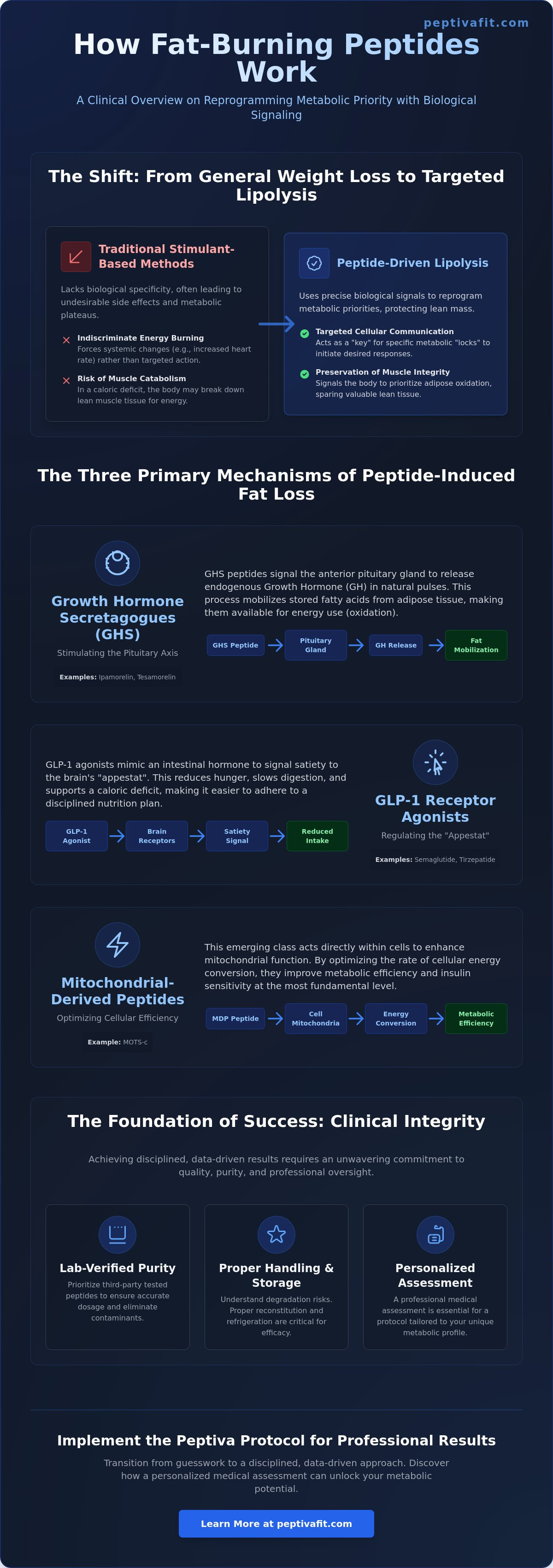
Traditional weight loss strategies often fail because they lack biological specificity. When the body enters a caloric deficit without proper signaling, it frequently resorts to muscle catabolism to meet its energy demands. Clinical lipolysis is defined as the breakdown of fats and other lipids by hydrolysis, a process that must be prioritized over the degradation of lean tissue. Signaling molecules provide the instructions necessary to shift this priority. This ensures that the body focuses on white adipose tissue oxidation while preserving the structural integrity of skeletal muscle. This targeted approach is the fundamental answer to how do fat burning peptides work in a professional performance context. It allows for fat loss without the fear of wasting the muscle mass you've worked to build.
The Three Primary Mechanisms of Peptide-Induced Fat Loss
The complexity of human metabolism requires a multi-faceted approach to pharmacological intervention. When analyzing how do fat burning peptides work, we must categorize them by their specific biological pathways. These pathways include the stimulation of endogenous hormones, the regulation of satiety signals in the brain, and the direct targeting of adipose tissue. Selecting the correct mechanism depends entirely on an individual’s unique metabolic profile and hormonal baseline. A misaligned protocol often leads to the very plateaus that serious practitioners seek to avoid.
Growth Hormone Secretagogues (GHS) and the Pituitary Axis
GHS molecules, such as Ipamorelin or specific tesamorelin dosage protocols, function by stimulating the anterior pituitary gland to release endogenous Growth Hormone (GH). This increase in GH pulses facilitates the mobilization of stored fatty acids from adipose tissue into the bloodstream for oxidation. Clinical practitioners prioritize the 'pulse' effect over a continuous 'bleed' to maintain long-term pituitary sensitivity. This rhythmic release mimics natural physiological patterns, ensuring the endocrine system remains responsive while accelerating fat loss. It's a disciplined approach to hormonal management that respects the body's innate feedback loops.
GLP-1 Receptor Agonists and Appestat Regulation
The second mechanism involves GLP-1 receptor agonists, which are among the most recognized FDA-approved peptides for weight loss. These analogs mimic the incretin hormones that signal satiety to the hypothalamus, effectively reducing what is colloquially known as 'food noise.' By delaying gastric emptying, these peptides prolong the sensation of fullness and regulate blood glucose levels. This prevents the insulin spikes that typically lead to long-term adipose storage, creating a stable environment for metabolic optimization. The neurological shift in appetite control allows for sustained caloric restriction without the psychological fatigue common in traditional dieting.
Direct Lipolytic Fragments: Bypassing the Hormonal Cascade
Certain sequences, such as HGH Frag 176-191 and AOD-9604, offer a more targeted approach. These are direct lipolytic fragments that isolate the fat-burning portion of the growth hormone molecule. They induce fat oxidation without elevating IGF-1 levels or negatively impacting insulin sensitivity. This makes them highly effective for individuals seeking localized adipose reduction without systemic hormonal disruption. This targeted approach is essential for understanding how do fat burning peptides work when systemic hormonal elevation is not the primary goal. AOD-9604 specifically mimics the lipolytic effects of natural growth hormone but lacks the growth-promoting properties, making it a specialized tool for metabolic engineering. Understanding which of these three pathways aligns with your goals is a prerequisite for success. For those serious about a data-driven approach, a personalized medical assessment is the first step in determining the optimal signaling strategy.
Comparing Systemic vs. Targeted Peptide Protocols
A sophisticated approach to metabolic engineering requires a clear distinction between systemic and targeted protocols. Systemic protocols induce broad metabolic shifts, impacting appetite regulation, insulin sensitivity, and total energy expenditure across the entire organism. Conversely, targeted protocols focus on specific adipose depots without causing systemic hormonal disruption or affecting glycemic markers. The fundamental question of how do fat burning peptides work is best answered by examining the interplay between these two distinct signaling strategies. While many users focus on total weight reduction, professional protocols prioritize body composition, ensuring that fat loss does not come at the expense of lean muscle mass.
Clinical data suggests that body composition changes are a more accurate metric of success than simple scale weight. Traditional weight loss often ignores the metabolic cost of muscle wasting. By contrast, peptide signaling allows for the preservation of structural integrity while forcing the body to oxidize stored lipids. This dual action is why synergy between different peptide classes often yields superior results compared to monotherapy.
Systemic Metabolic Optimization: CJC-1295 and Ipamorelin
Systemic optimization often utilizes the synergy between GHRH analogs, such as CJC-1295, and GHRPs, such as Ipamorelin. This combination maximizes endogenous signaling by stimulating the pituitary gland from multiple angles. This systemic elevation in growth hormone pulses does more than just oxidize fat. It improves recovery times, enhances sleep quality, and raises the baseline metabolic rate. For those seeking a comprehensive framework, you can consult the fat loss peptide guide for specific systemic stacking strategies that align with professional standards. These protocols are designed for individuals who require a total metabolic reset rather than localized intervention.
Selective Fat Oxidation: The Role of HGH Frag 176-191
Targeted lipolysis is essential for addressing stubborn adipose tissue that remains resistant to systemic changes. HGH Frag 176-191 is a specialized tool in this regard because it isolates the lipolytic action of the growth hormone molecule. Unlike systemic GH secretagogues, this fragment has no glycemic impact, meaning it does not interfere with blood glucose or insulin sensitivity. This makes it an ideal candidate for integration into a wider metabolic optimization plan, especially for athletes who need to maintain peak performance while leaning out. When you understand how do fat burning peptides work at the localized level, you can address specific problem areas with clinical precision. This selective oxidation ensures that the body's energy demands are met by white adipose tissue rather than amino acid breakdown from skeletal muscle.
Clinical Considerations: Integrity, Purity, and Administration
The efficacy of any metabolic signaling protocol depends entirely on the molecular integrity of the sequences used. When exploring how do fat burning peptides work, practitioners must account for the chemical stability of the peptide itself. A sequence that has degraded due to thermal stress or UV exposure will not interact correctly with cellular receptors. This failure in signaling results in wasted resources and, more importantly, a lack of physiological response. Maintaining clinical-grade results requires a disciplined approach to sourcing, storage, and handling that mirrors the standards of a high-level research laboratory.
Purity is the most critical variable in the metabolic equation. Peptides are fragile. Their secondary and tertiary structures are susceptible to environmental factors that can render them inert. Without third-party verification, there is no guarantee that the sequence in the vial matches the intended signaling molecule. To ensure you are utilizing only the highest caliber of research materials, you should only utilize lab tested peptides that meet a minimum 99% purity threshold.
The Importance of Molecular Integrity and Lab Verification
Lab verification is not a luxury; it's a prerequisite for any serious optimization strategy. Impurities or truncated sequences can lead to immunogenic responses where the body's immune system identifies the peptide as a foreign invader rather than a messenger. This not only halts the fat-burning process but can cause systemic inflammation. High-Performance Liquid Chromatography (HPLC) and Mass Spectrometry (MS) are the gold standards for verification. HPLC determines the purity of the sample, while MS confirms the exact molecular weight and sequence identity. This level of data accuracy is why PeptivaFit prioritizes rigorous testing to ensure researcher safety and the validity of metabolic data.
Precision in Reconstitution and Storage
The transition from a lyophilized powder to a liquid solution is a delicate chemical process. Reconstitution requires bacteriostatic water, which contains 0.9% benzyl alcohol to inhibit bacterial growth and maintain peptide stability. You must avoid aggressive agitation during this process. Shaking the vial can shear the fragile molecular bonds, effectively destroying the peptide before it is administered. For a detailed technical breakdown, follow this clinical guide on how to reconstitute peptides to ensure you preserve the integrity of the sequence.
- Lyophilized Storage: Unopened vials should be kept in a climate-controlled environment, ideally between -20°C and 4°C, to prevent degradation.
- Reconstituted Storage: Once liquid, most sequences must be refrigerated at 2°C to 8°C and used within a specific window, typically 28 to 30 days.
- Aseptic Technique: Subcutaneous delivery requires strict adherence to sterile protocols to prevent contamination of the vial or the injection site.
Understanding how do fat burning peptides work also involves respecting their biological fragility. A sequence is only as effective as the environment in which it is kept. By maintaining these clinical standards, you ensure that the signaling molecules remain active and capable of triggering the precise metabolic shifts required for adipose oxidation.
Implementing the Peptiva Protocol for Professional Results
Successful metabolic engineering requires more than the mere acquisition of sequences; it demands a structured framework that accounts for individual biological variability. Understanding how do fat burning peptides work is only the first stage of a professional optimization strategy. The Peptiva Protocol provides this framework, moving beyond the molecule to address the entire metabolic environment. Peptides are biological keys that require a functional lock and a supportive environment to yield results. Without the appropriate nutritional substrates and the stimulus provided by resistance training, the metabolic signals sent by these sequences may fail to produce a permanent change in body composition. This disciplined approach ensures that fat loss is achieved while protecting the lean tissue that defines a high-performance physique.
The Role of Personalized Medical Assessments
A personalized medical assessment serves as the non-negotiable prerequisite for any effective peptide strategy. Identifying baseline hormonal levels prevents the implementation of redundant or counterproductive signaling. For example, administering growth hormone secretagogues when endogenous levels are already optimal may lead to receptor desensitization. A thorough screening for contraindications ensures that your long-term metabolic health remains the priority. This data-driven approach separates clinical application from the unregulated experimentation often found in 'bro-science' communities. It allows for the creation of a strategy that is as unique as your own genetic blueprint, prioritizing safety and efficacy over mass-market trends.
Monitoring metabolic markers such as fasted glucose, IGF-1, and lipid profiles provides the objective data needed to validate the protocol's success. When these markers are tracked with precision, the practitioner can make informed decisions about titration and cycle length. This level of scrutiny is what defines professional-grade self-optimization. It transforms a simple fat loss phase into a sophisticated exercise in metabolic engineering.
Integrating 1-on-1 Coaching for Metabolic Stability
Biological feedback is the only reliable metric for long-term success. Integrating 1-on-1 Coaching provides the professional oversight necessary to monitor these feedback loops and adjust dosages in real-time. The transition from active fat loss to metabolic maintenance is often where most individuals fail. Professional guidance helps navigate this shift, ensuring the body does not revert to previous energy-storage patterns. This iterative process allows for constant refinement based on how your body responds to specific signaling molecules. Empower your journey with the Peptiva Protocol and lab-tested peptides to achieve the sophisticated control your performance demands.
Advancing Your Metabolic Optimization Strategy
Transitioning from general weight loss to clinical metabolic engineering requires a fundamental shift in perspective. You've seen that these sequences don't simply "burn" fat; they reprogram substrate utilization and prioritize adipose oxidation through precise cellular messaging. Understanding how do fat burning peptides work at the receptor level allows you to move beyond the plateaus of traditional dieting and protect your structural integrity. By selecting the correct signaling pathway, you can maintain your lean tissue while achieving significant body composition shifts.
Achieving clinical-grade results demands a disciplined approach to molecular purity and professional oversight. We prioritize sequences with 99%+ lab-verified purity, ensuring that your research data remains accurate and your biological signaling remains uninterrupted. Every successful journey begins with a personalized medical assessment to identify your baseline and the support of 1-on-1 coaching to navigate the complexities of hormonal signaling. This integrated framework ensures that your metabolic rate remains optimized while your lean tissue is preserved.
Access the Peptiva Protocol: Your Clinical Path to Fat Loss and take control of your metabolic future with confidence. Your commitment to data-driven performance starts here.
Frequently Asked Questions
How long does it take for fat burning peptides to start working?
Biological signaling begins immediately upon administration, but measurable changes in body composition typically manifest between 4 and 12 weeks. The exact timeframe depends on the specific peptide sequence, the individual's metabolic baseline, and adherence to the wider protocol. While cellular shifts occur rapidly, the physical oxidation of adipose tissue is a steady process that requires consistent signaling over a sustained period to yield professional results.
Can I combine different fat loss peptides safely?
Combining peptides that utilize distinct metabolic pathways is a standard clinical strategy for enhancing efficacy. Stacking a Growth Hormone Secretagogue with a lipolytic fragment allows for a synergistic effect that addresses both systemic energy expenditure and localized fat oxidation. Such combinations must be managed through a structured framework to ensure that signaling remains balanced and doesn't lead to receptor desensitization or redundant hormonal messaging.
Do fat burning peptides cause heart palpitations like traditional stimulants?
Peptides do not function as central nervous system stimulants and generally don't cause the heart palpitations or jitteriness associated with thermogenic agents. They operate through endocrine signaling and receptor binding rather than adrenergic stimulation. This clinical approach offers a more stable method for those seeking to understand how do fat burning peptides work without the systemic stress typical of mass-market weight loss supplements.
What happens if I stop taking peptides once I've lost the fat?
The adipose reduction achieved through peptide signaling is maintainable provided the underlying metabolic environment and nutritional habits remain stable. Once exogenous administration ceases, your body returns to its endogenous signaling baseline. The Peptiva Protocol emphasizes the transition to a maintenance phase, ensuring that the metabolic shifts achieved during the protocol are supported by natural physiological processes after the intervention concludes.
Is a medical assessment really necessary before starting a peptide protocol?
A personalized medical assessment is a critical prerequisite for any disciplined optimization strategy. This evaluation establishes your baseline hormonal markers and screens for contraindications that could impact your long-term health. Without this data, any peptide administration is merely guesswork. Professional oversight ensures that the chosen sequences align with your specific biological needs, preventing redundant signaling and ensuring maximum protocol efficiency.
How do I know if my peptides have degraded or lost potency?
Degradation is often indicated by a lack of expected physiological response or visible changes in the reconstituted solution, such as persistent cloudiness or particulates. Because peptides are fragile, improper handling or exposure to temperatures above 8°C after reconstitution will shear molecular bonds. Utilizing lab tested peptides and adhering to strict storage requirements is the only way to guarantee that the molecular integrity of the sequence remains intact.
Can peptides help with localized fat loss in specific areas like the abdomen?
Specific fragments are designed to isolate the lipolytic action of growth hormone, allowing for a more targeted approach to stubborn adipose depots. While systemic peptides affect total energy balance, these fragments focus on the oxidation of white adipose tissue without disrupting systemic insulin sensitivity. This targeted mechanism provides a sophisticated solution for individuals seeking to address specific problem areas that have remained resistant to traditional dieting and exercise.
Do peptides for fat loss interfere with natural hormone production?
Most metabolic peptides are designed to mimic or stimulate natural pulses rather than suppress endogenous production. However, understanding how do fat burning peptides work involves respecting the body's feedback loops. Improper administration or excessive durations without scheduled breaks can lead to temporary desensitization. Following a professionally designed protocol that includes recovery periods ensures that the pituitary gland and hypothalamus remain responsive and that natural hormonal integrity is preserved.

![Shelf Life of Reconstituted Peptides: A Clinical Reference Guide [2026]](https://getautoseo.com/storage/hero_images/shelf-life-of-reconstituted-peptides-a-clinical-reference-guide-2026.jpg?v=b8ed5173acaa)
