
![Liposuction vs. Peptide Therapy for Fat Loss: A Clinical Comparison [2026]](https://getautoseo.com/storage/hero_images/liposuction-vs-peptide-therapy-for-fat-loss-a-clinical-comparison-2026.jpg?v=04aa43fcb106)
The immediate physical removal of fat cells through surgical intervention might be the least effective method for securing a permanent metabolic transformation. While the appeal of a rapid aesthetic change is understandable, the frustration of persistent visceral adiposity remains a clinical reality for those seeking long-term resolution. When evaluating liposuction vs peptide therapy for fat loss in 2026, one must distinguish between the mechanical extraction of subcutaneous tissue and the systemic optimization of metabolic pathways. Surgery addresses the symptom of fat accumulation, whereas peptide protocols target the underlying biological signaling that governs fat storage and oxidation. It's a choice between altering the silhouette and recalibrating the metabolism.
We recognize that clinical-grade results require more than just a temporary reduction in volume. This article provides a rigorous comparison of these two distinct modalities to help you determine which protocol aligns with your specific biological objectives and performance standards. The following analysis delivers a clear understanding of the distinction between mechanical fat removal and systemic metabolic optimization to determine the most effective protocol for your long-term body composition goals. We'll examine the latest data regarding surgical recovery, insulin sensitivity, and the sustainability of peptide-induced fat oxidation to define a sophisticated, science-backed strategy for 2026.
Key Takeaways
- Distinguish between the mechanical extraction of localized subcutaneous tissue and the systemic biological regulation of metabolic health.
- Evaluate the clinical efficacy of liposuction vs peptide therapy for fat loss by assessing whether your primary objective is aesthetic contouring or the reduction of metabolic-resistant visceral fat.
- Understand how signaling molecules utilize the GHRH pathway to stimulate endogenous growth hormone pulses, promoting systemic lipid oxidation rather than temporary volume reduction.
- Identify the physiological markers, including insulin sensitivity and growth hormone levels, that dictate the most effective intervention for your 2026 body composition goals.
- Learn why maintaining molecular integrity through precise reconstitution and coaching is essential for transitioning from a surgical paradigm to a sustainable metabolic protocol.
Mechanical vs. Biological Paradigms: Defining the Fat Loss Landscape
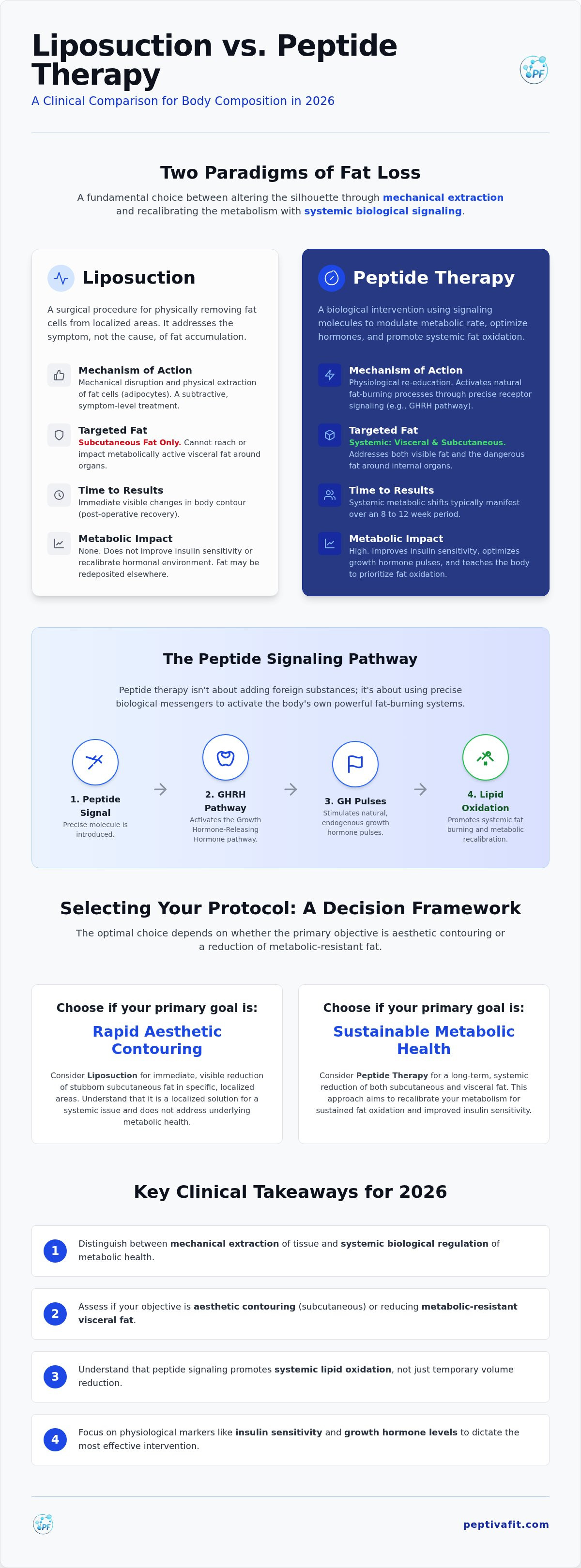
The clinical landscape of body composition has shifted from purely aesthetic interventions toward systemic metabolic optimization. When evaluating liposuction vs peptide therapy for fat loss, one must first recognize the fundamental difference between physical subtraction and biological regulation. Liposuction is a surgical procedure involving the mechanical extraction of subcutaneous adipocytes from localized areas; it's a tool for contouring, not a metabolic cure. In contrast, peptide therapy functions as a biological intervention. It utilizes precise signaling molecules to modulate metabolic rate and lipolysis, addressing the body's internal environment rather than just its external shape.
Understanding the distinction between subcutaneous and visceral fat is essential for any serious optimization strategy. Subcutaneous fat is the adipose tissue located directly beneath the skin. While visible, it's often metabolically benign. Visceral fat, however, wraps around internal organs and drives systemic inflammation and insulin resistance. Mechanical removal via surgery is limited to the subcutaneous layer. It cannot reach visceral stores and does nothing to address the underlying metabolic dysfunction that caused the fat accumulation in the first place. Without correcting the biological signaling, the body's drive to store energy remains unchanged.
The Subtractive Logic of Liposuction
The primary appeal of surgical extraction is its capacity for immediate, visible changes in body contour. By physically removing fat cells, surgery provides a rapid reduction in volume that diet or exercise may struggle to achieve in stubborn areas. However, this subtractive logic is inherently limited. Because it's a symptom-level treatment, it doesn't recalibrate the hormonal environment. Patients often find that while the treated area remains leaner, the body may begin depositing new fat in untreated regions or increasing visceral stores if the metabolic baseline isn't corrected. It's a localized solution for a systemic issue.
The Signaling Logic of Peptide Therapy
Peptide therapy operates on a paradigm of physiological re-education. These endogenous messengers communicate with specific receptors to trigger natural fat-burning processes. By utilizing peptides for metabolism and fat loss, individuals can target both visceral and subcutaneous adipose tissue simultaneously. This systemic signaling doesn't just empty fat cells; it improves insulin sensitivity and optimizes growth hormone pulses. This approach addresses the liposuction vs peptide therapy for fat loss debate by focusing on long-term sustainability. It's about teaching the body to prioritize lipid oxidation as a default state, creating a leaner composition that's supported by the body's own internal chemistry.
Mechanisms of Action: How They Target Adipose Tissue
Comparing the mechanisms of liposuction vs peptide therapy for fat loss reveals a stark contrast between cellular destruction and metabolic signaling. Surgical methods, including cryolipolysis and traditional suction, induce adipocyte death through mechanical or thermal stress. This process physically removes the fat storage units from the body. Conversely, peptide-based protocols rely on the activation of the GHRH pathway to increase endogenous growth hormone pulses. This biological approach requires lab tested peptides to ensure predictable molecular responses. While surgery offers immediate post-operative changes in contour, peptide therapy typically requires an 8 to 12 week window to manifest systemic metabolic shifts.
Liposuction: Mechanical Disruption and Lymphatic Clearance
During a standard Liposuction procedure, the body must engage the lymphatic system to clear the debris of disrupted fat cells. This recovery phase carries inherent risks, such as irregular contouring or Paradoxical Adipose Hyperplasia (PAH), where treated areas unexpectedly expand. Because the procedure doesn't alter the patient's biological drive to store energy, the body may redistribute fat to visceral depots or untreated subcutaneous areas if the underlying metabolic environment remains unchanged. Without a shift in systemic signaling, the mechanical removal of cells is often a temporary solution to a chronic metabolic state.
Peptide Therapy: Stimulating the GHRH-GH Axis
Peptide secretagogues like Ipamorelin and CJC-1295 stimulate the pituitary gland to release growth hormone in a manner that mimics natural physiological pulses. For those targeting stubborn central adiposity, a specific tesamorelin dosage is often utilized due to its clinical efficacy in reducing abdominal visceral fat. Lipolysis is the biochemical breakdown of lipids into free fatty acids for energy utilization. This method prioritizes metabolic flexibility over simple volume reduction, ensuring that the body is capable of utilizing stored energy efficiently. For those seeking a disciplined approach to systemic health, a personalized medical assessment is the first step in identifying the appropriate biological markers for intervention.
Direct Comparison: Aesthetic Contouring vs. Metabolic Flexibility
The primary divergence in liposuction vs peptide therapy for fat loss is the distinction between localized contouring and systemic metabolic flexibility. A Liposuction procedure overview illustrates that surgical extraction is restricted to subcutaneous tissue, providing a rapid change in silhouette without altering the patient's underlying biochemistry. In contrast, peptide protocols target total body composition by modulating the endocrine environment. While surgery is performed in a clinical facility under anesthesia, peptide therapy involves a disciplined, self-administered subcutaneous protocol designed to produce gradual but profound physiological shifts.
Sustainability remains a critical factor for the mature individual. Surgery carries a documented risk of compensatory fat return, where the body deposits new lipids in untreated areas or visceral depots to maintain its established set point. Peptide therapy addresses this by improving insulin sensitivity and elevating growth hormone levels, creating a biological foundation for long-term leanness. It's the difference between removing the evidence of a metabolic issue and resolving the metabolic issue itself.
The Visceral Fat Divide
A significant limitation of surgical intervention is its inability to safely access visceral fat. This metabolically active adipose tissue wraps around internal organs and drives systemic inflammation. Because liposuction is limited to the "pinchable" subcutaneous layer, it cannot mitigate the health risks associated with deep abdominal adiposity. Clinical data suggests that specific peptides are superior for reducing this dangerous visceral tissue. The Peptiva Protocol prioritizes these critical health markers, ensuring that aesthetic improvements are a byproduct of enhanced internal function rather than a superficial mask for metabolic dysfunction.
Safety, Regulation, and Molecular Integrity
Choosing between these modalities requires an objective assessment of risk profiles. Surgical complications can include infection, scarring, and anesthesia-related events. Peptide therapy carries its own set of considerations, primarily involving hormonal fluctuations that must be monitored with precision. We believe that personalized medical assessments are non-negotiable for protocol safety and efficacy. To maintain high-level standards, PeptivaFit enforces rigorous lab-verification for all research supplies. This commitment to molecular integrity ensures that the signaling molecules used in your protocol meet the strict purity requirements necessary for predictable clinical outcomes.
Selecting Your Protocol: A Decision Framework for 2026
Choosing the correct intervention requires an objective analysis of your current physiological state and long-term performance goals. Determining whether to pursue liposuction vs peptide therapy for fat loss depends on whether your challenge is structural or metabolic. Localized, diet-resistant pockets of fat often respond well to mechanical extraction, while systemic adiposity and visceral accumulation require a biological recalibration. In 2026, the clinical consensus prioritizes metabolic health markers, such as insulin sensitivity and endogenous growth hormone levels, over simple scale weight when defining a successful outcome.
Your commitment level is a secondary but vital consideration. Surgical procedures offer a condensed timeline but involve significant downtime and the risk of post-operative irregularities. Conversely, peptide protocols demand a disciplined daily routine and consistent data monitoring to achieve systemic results. Professional oversight is essential to navigate these complexities. A clinical guide ensures that the chosen protocol aligns with your unique biomarkers, preventing the common mistake of applying a mechanical solution to a hormonal problem.
The Ideal Candidate for Liposuction
Surgical intervention is most effective for individuals already at or near their goal weight who possess isolated subcutaneous deposits. These "pinchable" areas, often found in the flanks or submental region, are frequently resistant to traditional metabolic interventions. It's a tool for those seeking immediate structural changes to their body proportions. However, certain individuals are poor candidates for this modality:
- Individuals with a high BMI seeking generalized weight loss.
- Patients with significant visceral adiposity, which surgery cannot safely reach.
- Those unwilling to accept the risks of anesthesia and potential surgical scarring.
The Ideal Candidate for Peptide Therapy
Peptide protocols are designed for the performance-focused individual who prioritizes systemic metabolic optimization. If a high waist-to-hip ratio suggests the presence of visceral fat, a biological approach is clinically superior. This modality is ideal for those struggling with age-related growth hormone decline or insulin resistance. Adherence is the primary driver of success in these cases. Utilizing 1-on-1 coaching allows for precise, data-driven adjustments to your protocol, ensuring that the signaling molecules maintain their intended efficacy over the 8 to 12 week metabolic shift. To begin your clinical transition, request a personalized medical assessment to establish your baseline markers.
The Peptiva Protocol: Implementing a Science-Backed Strategy
The Peptiva Protocol represents a paradigm shift for those seeking a sophisticated alternative to invasive procedures. While the debate regarding liposuction vs peptide therapy for fat loss often focuses on the speed of results, the true metric of success is the longevity and health of the metabolic environment. We provide a structured framework that moves beyond localized extraction to target the cellular mechanisms of adiposity. Central to this process is the preservation of molecular integrity. Understanding how to reconstitute peptides is a fundamental requirement for maintaining the potency of the signaling molecules used in your protocol.
Personalized medical assessments serve as the essential bridge between laboratory research and individual outcomes. We don't rely on generalized advice. Instead, we use your specific biomarkers to calibrate a strategy that facilitates metabolic mastery. When deciding between liposuction vs peptide therapy for fat loss, the choice is ultimately between a surgical event and a biological evolution. This transition requires a shift in mindset; you're no longer seeking a superficial fix but are instead engineering a resilient physiological state.
Beyond the Protocol: Clinical Oversight and Purity
The efficacy of any peptide-based intervention is entirely dependent on the purity of the compounds utilized. PeptivaFit strictly rejects unverified research chemicals that lack rigorous documentation. In an industry often clouded by anecdotal "bro-science," we prioritize lab-verified supplies and academic-grade education. Clinical oversight is not merely a safety measure; it's the mechanism through which we ensure your metabolic pulses are optimized without unnecessary hormonal volatility. We empower our clients through continuous data monitoring, allowing for a level of control and privacy that traditional surgery cannot provide.
Initiating Your Metabolic Transformation
Accessing the Peptiva Protocol begins with a comprehensive evaluation of your metabolic baseline. This disciplined entry point ensures that every participant meets the maturity and health requirements necessary for advanced optimization. Candidates may choose between a single consultation call for immediate protocol guidance or 1-on-1 coaching for long-term strategic oversight. Coaching provides the granular adjustments required to navigate the 8 to 12 week metabolic shift required for systemic fat oxidation. To begin your clinical investigation and secure your assessment, visit PeptivaFit to initiate your protocol today.
Transitioning from Surface-Level Aesthetics to Metabolic Resilience
The choice between mechanical fat removal and systemic biological optimization marks the difference between a temporary aesthetic shift and a permanent physiological transformation. Liposuction remains a valid tool for isolated, structural contouring, yet it cannot resolve the metabolic dysfunction associated with visceral fat accumulation. When analyzing liposuction vs peptide therapy for fat loss, the 2026 clinical consensus favors protocols that prioritize metabolic flexibility and growth hormone optimization. This systemic approach ensures that leanness is a byproduct of enhanced internal function rather than a surgical extraction.
Achieving these results requires a commitment to molecular integrity and disciplined oversight. We provide the framework necessary to bridge the gap between advanced research and sustainable body composition. By utilizing lab-verified peptide supplies and personalized medical assessments for every protocol, we ensure your strategy is calibrated to your unique biomarkers. Our expert 1-on-1 coaching for clinical results provides the guidance needed to navigate this metabolic evolution with precision.
Initiate your metabolic optimization with the Peptiva Protocol and take control of your long-term wellness. You're capable of engineering a body that functions as efficiently as it looks.
Frequently Asked Questions
Is peptide therapy more effective than liposuction for visceral belly fat?
Peptide therapy is clinically superior for targeting visceral belly fat because surgical extraction cannot safely access the deep adipose tissue surrounding internal organs. While liposuction removes subcutaneous cells, it does nothing to address the metabolic drivers of visceral accumulation. Specific peptides modulate the GHRH pathway to stimulate lipid oxidation in these deep depots. This biological approach resolves the underlying metabolic dysfunction rather than providing a superficial, localized solution to a systemic health concern.
Can I combine peptide therapy with liposuction for better results?
Combining these modalities is a common strategy for individuals seeking both structural refinement and metabolic stability. Liposuction provides the immediate aesthetic contouring of stubborn subcutaneous pockets, while peptide protocols ensure the body doesn't redistribute fat to untreated areas or visceral stores post-surgery. When evaluating liposuction vs peptide therapy for fat loss, using them in tandem allows for a comprehensive transformation that addresses both the physical symptoms and the biological causes of adiposity.
How long do results last with peptides compared to surgical fat removal?
Surgical results are immediate but often lack long-term sustainability if the patient's metabolic baseline remains unchanged. Without systemic intervention, the body may compensatory store fat in new locations. Peptide results typically manifest over an 8 to 12 week period as the endocrine system recalibrates. These biological shifts create a more resilient metabolic environment, making the fat loss easier to maintain. Sustainability depends on correcting the signaling pathways that govern energy storage and utilization.
What are the primary side effects of fat loss peptides vs. liposuction?
Liposuction carries risks inherent to invasive surgery, such as infection, scarring, anesthesia complications, and Paradoxical Adipose Hyperplasia. Peptide therapy involves different considerations, primarily related to hormonal fluctuations, transient water retention, or localized injection site irritation. Because peptides are signaling molecules, they must be administered with precision. We prioritize disciplined oversight and data monitoring to mitigate these risks, ensuring that the biological response remains within optimal clinical parameters for each individual.
Is a medical assessment required before starting a peptide protocol?
A personalized medical assessment is a non-negotiable requirement for initiating any protocol through PeptivaFit. We operate with a high level of responsibility and expect the same from our clients. These assessments allow us to evaluate your specific biomarkers, including insulin sensitivity and growth hormone levels, to tailor the protocol for maximum efficacy. This clinical step ensures that the signaling molecules used are appropriate for your unique physiological profile and safety requirements.
Do fat loss peptides require a specific diet and exercise routine to work?
Peptide protocols are not a replacement for disciplined nutrition and resistance training; they are physiological force multipliers. These signaling molecules optimize how your body responds to a caloric deficit and physical stress by prioritizing lipid oxidation and preserving lean tissue. Without a foundation of metabolic demand created through diet and exercise, the efficacy of the protocol is significantly diminished. We provide 1-on-1 coaching to help you integrate these lifestyle factors into a cohesive strategy.
How do I know if my peptides are lab-tested and pure?
Verifying molecular integrity requires access to third-party Certificates of Analysis that confirm purity and sequence identity. PeptivaFit provides lab-verified peptide supplies that meet rigorous clinical standards, ensuring you aren't utilizing unverified research chemicals. We reject the "bro-science" prevalent in the mass market, favoring academic-grade transparency and data-driven results. Every compound in our protocol undergoes strict testing to guarantee that the molecular signaling remains predictable and effective for your transformation.

![Shelf Life of Reconstituted Peptides: A Clinical Reference Guide [2026]](https://getautoseo.com/storage/hero_images/shelf-life-of-reconstituted-peptides-a-clinical-reference-guide-2026.jpg?v=b8ed5173acaa)
