

The traditional "bulk and cut" cycle is a biologically inefficient relic that often results in more visceral adiposity than actual myofibrillar hypertrophy. You've likely experienced the frustration of watching your waistline expand faster than your performance metrics, despite a meticulously tracked calorie surplus. It's a common plateau where systemic inflammation and declining insulin sensitivity stall your progress. This guide explores how high-purity peptides for nutrient partitioning can recalibrate your metabolic environment. By optimizing the GH-IGF-1 axis, you can effectively direct caloric intake toward muscle accretion while preventing the storage of unwanted body fat.
You'll discover how to leverage Growth Hormone secretagogues and metabolic peptides to ensure your next phase is defined by lean tissue gain rather than systemic water retention. We'll examine the specific mechanisms that improve glucose disposal and the clinical standards required for research-grade results. We will also outline why PeptivaFit and a personalized medical assessment serve as the necessary foundation for any serious optimization strategy. This analysis provides the data-driven framework you need to master nutrient partitioning and achieve a truly refined physique.
Key Takeaways
- Understand the biological mechanisms of the GH-IGF-1 axis and how it dictates whether calories are utilized for muscle protein synthesis or stored as adipose tissue.
- Identify the specific clinical applications of Tesamorelin and Ipamorelin for maintaining lean abdominal composition and selective growth hormone release.
- Learn how to integrate specific peptides for nutrient partitioning to optimize insulin sensitivity and metabolic work capacity during high-calorie phases.
- Master the professional protocols for precise reconstitution and microgram-level dosage calculations to maintain molecular integrity and research accuracy.
- Establish why a personalized medical assessment and the Peptiva Protocol are the essential gatekeepers for a safe and effective transition into performance optimization.
The Science of Nutrient Partitioning: Why Peptides are Essential for Lean Bulking
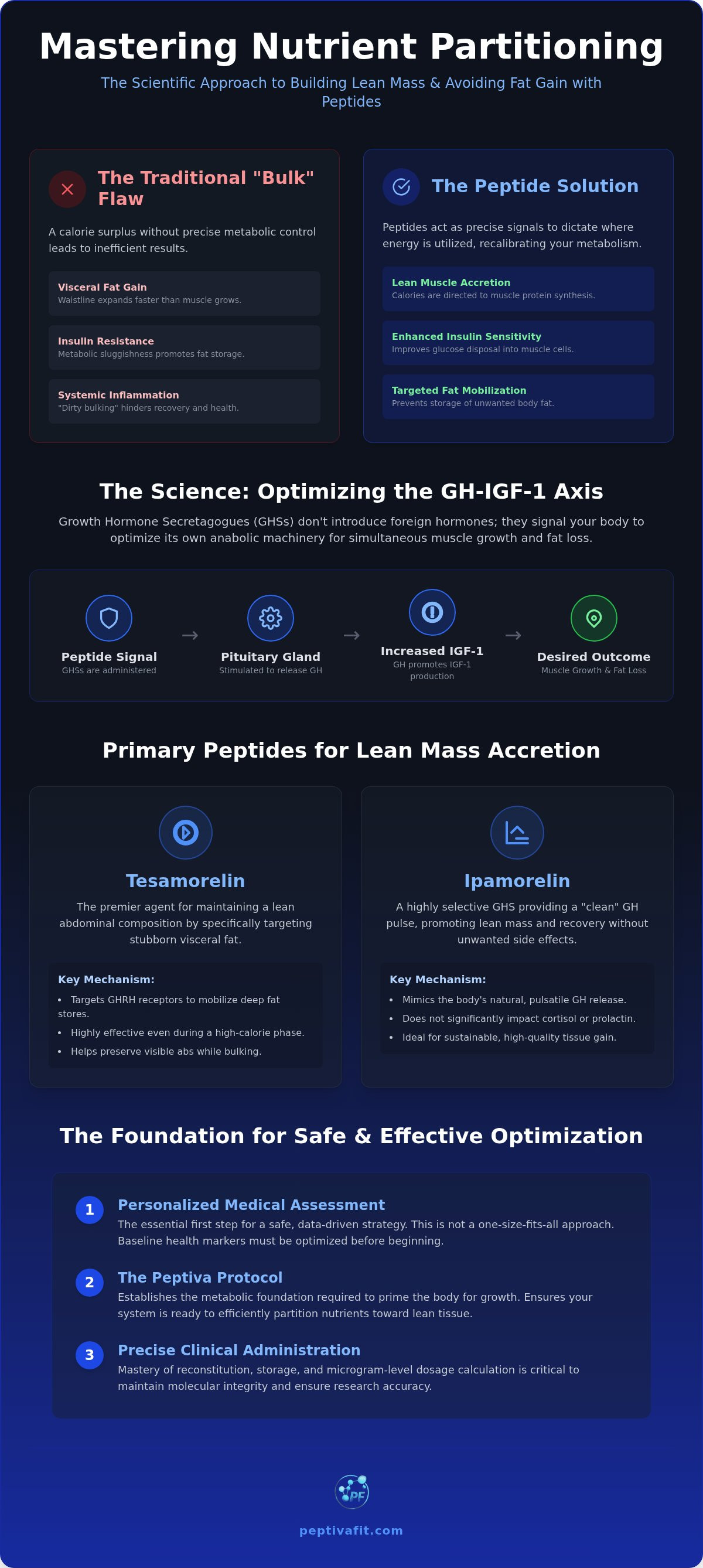
Nutrient partitioning is the physiological mechanism that determines the metabolic fate of consumed energy. In a hypercaloric state, the body must decide whether to sequester those calories into skeletal muscle tissue or store them as white adipose tissue. For the dedicated individual, the goal is to shift this ratio heavily toward muscle accretion. This is where peptides for nutrient partitioning become a critical component of a sophisticated growth strategy. Unlike traditional methods that rely solely on caloric abundance, peptides act as precise signaling molecules that dictate where that energy is utilized.
The Growth Hormone (GH) axis serves as the primary regulator of this process. It facilitates simultaneous protein synthesis and lipolysis, allowing for lean tissue growth even while body fat is kept at a minimum. When you introduce Growth hormone secretagogues (GHSs), you are effectively instructing the body to prioritize the repair and expansion of lean mass. Maintaining high insulin sensitivity is equally vital. During a bulk, many fall into the trap of "dirty bulking," which creates a state of chronic inflammation and mounting insulin resistance. This metabolic sluggishness ensures that any additional weight gained is largely visceral fat rather than functional muscle.
Metabolic Flexibility and the Growth Axis
Transitioning from a catabolic state to an anabolic environment requires more than just heavy training. It demands metabolic flexibility. GHSs are designed to maintain the natural pulsatile rhythms of the pituitary gland. This avoids the risk of shutdown often associated with exogenous hormones. By supporting endogenous IGF-1 levels, these peptides promote localized muscle hyperplasia. This isn't just about making existing muscle cells larger; it's about creating new ones, providing a more permanent foundation for future growth. The Peptiva Protocol serves as the metabolic foundation required before starting such a performance cycle, ensuring the body is primed for growth through data-driven optimization.
Peptides vs. Traditional Anabolic Agents
Traditional anabolic agents often produce rapid weight gain, but much of that is subcutaneous water retention. This "wet" look obscures muscle definition and places unnecessary strain on the cardiovascular system. Peptides offer a "dry" alternative. They prioritize systemic metabolic health, ensuring that gains are sustainable and high quality. Utilizing specific peptides for nutrient partitioning allows for a more granular control over body composition. Choosing peptide signaling over harsher alternatives allows for a long-term approach to performance. Before beginning such a cycle, many find it necessary to first master the foundation found in a fat loss peptide guide to ensure baseline insulin sensitivity and health markers are optimized.
Primary Peptide Candidates for Lean Mass Accretion
Selecting specific research compounds requires a clinical understanding of how different signaling pathways influence body composition. While the previous section established the fundamental theory of growth, we must now identify the specific peptides for nutrient partitioning that provide the highest degree of metabolic control. These agents aren't generic growth stimulants; they're precise tools designed to manipulate the biological hierarchy of energy storage.
Tesamorelin for Visceral Fat Management
Tesamorelin is widely regarded as the premier option for maintaining lean abdominal composition during a calorie surplus. It functions by targeting GHRH receptors to mobilize stubborn visceral fat stores, a mechanism that is particularly beneficial when insulin levels are elevated from increased carbohydrate intake. Following a precise tesamorelin dosage allows for the preservation of a "six-pack" aesthetic even while in a significant surplus. This selective action differentiates it from standard GH secretagogues that may cause generalized water retention. By focusing on the reduction of ectopic fat, it ensures that your growth phase remains visually and metabolically clean.
Ipamorelin and CJC-1295: The Synergistic Foundation
The combination of Ipamorelin and CJC-1295 (No DAC) represents the gold standard for increasing the amplitude of natural growth hormone pulses. Ipamorelin is a selective GHRP that triggers GH release without the unwanted spikes in cortisol or prolactin often seen with older generations like GHRP-2 or GHRP-6. When paired with CJC-1295, a GHRH analog, the results are synergistic. This dual-pathway approach mimics the body's natural nocturnal secretion patterns, maximizing the time spent in an anabolic state. It's a disciplined strategy that prioritizes long-term endocrine health over short-term, unstable gains.
Scientific literature, such as The Role of Peptides in Nutrition, highlights how these signaling molecules influence musculoskeletal health and metabolic efficiency. To manage the hunger response often associated with secretagogue use, timing is essential. Administering these compounds shortly before sleep or in a fasted state helps ensure dietary compliance. This prevents the impulsive overeating that often derails a lean bulk. By maintaining this level of control, you ensure that every calorie consumed serves a specific purpose in tissue repair.
Beyond these secretagogues, direct IGF-1 analogs play a role in signaling for satellite cell activation and localized hyperplasia. However, managing these advanced pathways requires professional oversight. A personalized medical assessment is the necessary gatekeeper to ensure these protocols are both safe and effective for your specific biological profile. This data-driven approach removes the guesswork from performance optimization, allowing for a more sophisticated level of self-mastery.
Strategic Stacking: Synergizing Peptides for Performance
Individual agents provide targeted benefits, but true optimization requires a multi-faceted approach. Stacking various peptides for nutrient partitioning allows for a comprehensive metabolic environment where muscle accretion is maximized and adipose storage is minimized. Synergy is the goal. This isn't about simply increasing the volume of compounds. It's about identifying complementary pathways that amplify results while managing the body's adaptive responses. A disciplined researcher understands that strategic rotation and precise timing are necessary to maintain high receptor sensitivity throughout a performance cycle.
A common error in advanced protocols is ignoring receptor saturation. Overstimulating the same pathway can lead to desensitization, where the body's response to a compound diminishes. To avoid this, protocols must be structured with periods of rest or the introduction of compounds that operate through distinct mechanisms. This methodical approach ensures that the physiological "machinery" remains responsive to the signaling instructions provided by the peptides.
The Recovery Stack: BPC-157 and TB-500
Rapid muscle growth often outpaces the structural integrity of tendons and ligaments. This imbalance is a primary cause of training interruptions. Integrating bpc 157 peptide is essential for supporting these connective tissues during periods of significant strength gains. When you pair this with TB-500, the protocol addresses both localized repair and systemic angiogenesis. TB-500 promotes the migration of cells to injured areas and supports the formation of new blood vessels, which is critical during high-volume training phases.
These recovery agents act as a structural insurance policy. They allow for an increased training frequency by reducing the inflammatory response and accelerating the resolution of micro-traumas. By maintaining the health of the musculoskeletal system, you ensure that your growth phase isn't derailed by preventable injuries.
Metabolic Efficiency Stacks
Maintaining metabolic work capacity is the primary challenge during a high-calorie phase. As discussed in clinical literature regarding Peptides for Bodybuilding, the objective is to ensure that surplus energy is utilized by the mitochondria rather than stored in adipose tissue. Utilizing mots c peptide helps regulate mitochondrial function and improves glucose disposal, which is vital for maintaining peptides for nutrient partitioning efficacy.
Combining GH secretagogues with mitochondrial peptides creates a powerful environment for lean tissue accretion. By improving insulin sensitivity, you prevent the metabolic sluggishness that often occurs when caloric intake is high. Monitoring blood glucose levels remains a non-negotiable safety protocol to ensure these stacks are functioning at peak efficiency. This level of data-driven control is why a personalized medical assessment is required before starting the Peptiva Protocol. It ensures your metabolic foundation is secure before introducing advanced performance variables.
Clinical Administration: Reconstitution, Dosage, and Molecular Integrity
Precision in administration is as vital as the selection of the compounds themselves. If the molecular integrity of a sequence is compromised during handling, the biological signaling required for peptides for nutrient partitioning will fail. This section outlines the rigorous standards necessary to maintain the stability and potency of your research materials. A disciplined approach to preparation ensures that the metabolic instructions delivered to your cells remain clear and effective.
Mastering the professional protocol for how to reconstitute peptides is the first step in ensuring metabolic efficacy. Most high-purity peptides arrive in a lyophilized state, requiring the addition of bacteriostatic water. This process must be handled with extreme care. Mechanical stress, such as shaking the vial, can physically destroy delicate amino acid structures, rendering the compound useless. Instead, you should allow the diluent to trickle down the side of the glass, letting the vacuum-sealed environment draw the liquid in naturally.
Calculating precise dosages is a frequent point of failure for many. You must convert milligrams to micrograms without error to ensure both safety and biological results. For instance, a 5mg vial contains 5,000mcg. If your protocol requires 250mcg, you're utilizing only 5% of the total volume per administration. This level of granularity demands an accurate understanding of syringe markings and total diluent volume to avoid over or under-dosing.
The Reconstitution Protocol
Maintaining a sterile field is non-negotiable. Proper alcohol swabbing of both the vial stopper and the injection site prevents systemic inflammation or localized infection. Selecting the correct needle gauge, typically 29 to 31, minimizes tissue trauma and preserves the integrity of the vial’s rubber seal over multiple uses. Once reconstituted, temperature control becomes the primary variable. Most peptides require refrigeration between 2°C and 8°C and must be protected from light to prevent rapid degradation. Shelf-life management is critical, as many sequences lose potency within 30 to 60 days post-reconstitution.
Ensuring Product Purity
The "research-grade" label is often used to bypass regulatory scrutiny, but it doesn't guarantee quality. You must demand third-party lab reports for every batch. High-Performance Liquid Chromatography (HPLC) and Mass Spectrometry (MS) are the industry standards for verifying purity and sequence identity. Look for purity percentages exceeding 98%. You should also identify red flags such as the presence of TFA salts, heavy metals, or endotoxins. These contaminants can trigger an immune response that stalls muscle growth. To ensure your research is supported by clinical-grade materials and professional oversight, you can access lab tested peptides through the PeptivaFit platform.
Beyond Research: Professional Oversight for Performance Optimization
Mastering the biological signaling of peptides for nutrient partitioning is a significant technical achievement, but it's only half of the equation. The transition from theoretical research to personal optimization requires a shift in perspective. You aren't just managing compounds; you're managing a complex, interconnected endocrine system. Without professional oversight, even the most advanced protocol can lead to metabolic imbalances or diminished returns. Establishing long-term metabolic health must remain the priority over transient, short-term physical gains.
A personalized medical assessment serves as the indispensable foundation for any performance strategy. It provides the baseline data necessary to tailor a protocol to your specific physiological needs. Many individuals begin their journey by utilizing a fat loss peptide guide to restore insulin sensitivity and metabolic flexibility. Once this foundation is secure, the transition to a growth strategy becomes more efficient and safer. This methodical progression ensures that your body is actually prepared to handle the increased caloric load and growth signaling of a lean bulking phase.
The PeptivaFit Performance Framework
The framework utilized at PeptivaFit integrates lab-tested peptides with rigorous professional monitoring. We don't believe in "forever cycles." Instead, we build sustainable phases that include on-ramping, maintenance, and deliberate off-cycle periods. This structure allows the body to recover and prevents the pituitary desensitization discussed in previous sections. Clinical oversight is the only reliable way to prevent the pitfalls of hormonal imbalance, such as elevated prolactin or suppressed natural GH production. By monitoring biomarkers throughout the process, we can make data-driven adjustments that ensure your progress never stalls.
Next Steps: Consultation and Implementation
Success in elite body composition is rarely the result of guesswork. It requires constant refinement based on bio-feedback. 1-on-1 coaching offers the opportunity to adjust your protocol in real-time, responding to how your body handles specific dosages and training volumes. For those seeking immediate verification of their current strategy, booking a single consultation call provides a direct line to expert analysis. This ensures your approach to peptides for nutrient partitioning is aligned with the latest clinical standards and your personal health profile. Secure your personalized medical assessment and protocol today.
Mastering the Metabolic Environment for Sustainable Growth
Establishing a refined physique requires moving beyond the rudimentary "calorie surplus" model and embracing a data-driven approach to hormonal signaling. By leveraging high-purity peptides for nutrient partitioning, you gain the ability to dictate caloric fate with clinical precision. This guide has analyzed the necessity of GH axis optimization, the strategic integration of recovery agents like BPC-157, and the uncompromising standards required for molecular integrity.
Achieving elite body composition isn't about guesswork; it's about disciplined implementation and verified data. We provide lab-verified purity reports for all research supplies and mandate professional medical oversight for every client protocol. This selective approach ensures that your pursuit of performance remains both safe and effective. It's a long-term commitment to self-mastery that favors scientific standards over market hype rather than temporary fixes.
Optimize your lean bulk with the Peptiva Protocol and lab-tested peptides. You now have the framework to transform your metabolic environment. Execute your strategy with the precision your performance demands.
Frequently Asked Questions
How long does it take to see muscle growth results from peptides?
Measurable muscle growth results typically manifest within a 4 to 12-week timeframe of consistent administration. While improvements in recovery and sleep quality often occur within the first 14 days, the structural changes associated with tissue hypertrophy require sustained signaling. This period allows the GH-IGF-1 axis to stabilize and influence satellite cell activation. For optimal results, these protocols should be integrated with the Peptiva Protocol to ensure the metabolic foundation is prepared for growth.
Can I use peptides for lean bulking without a calorie surplus?
Lean bulking requires a caloric surplus to provide the necessary substrate for new tissue accretion. While peptides for nutrient partitioning improve the efficiency of energy allocation, they cannot create mass from a caloric deficit. The primary benefit of these compounds is directing those extra calories toward skeletal muscle rather than adipose storage. Without adequate fuel, the body will prioritize maintenance over the energy-intensive process of hypertrophy, regardless of the signaling environment.
Are peptides for lean bulking legal for competitive athletes?
Most growth hormone secretagogues and performance-enhancing peptides are strictly prohibited by the World Anti-Doping Agency (WADA) and USADA. These substances fall under the category of S2 Peptide Hormones and Growth Factors. Competitive athletes must exercise extreme caution, as these compounds are detectable in standard drug testing panels. Our services are tailored for individuals seeking personal optimization and wellness under professional oversight rather than those subject to the regulations of organized competitive sports.
Do I need to cycle off peptides for muscle growth?
Cycling is essential to prevent pituitary desensitization and maintain receptor sensitivity over time. A common protocol involves 12 to 16 weeks of active use followed by a 4-week recovery phase. This period of rest allows the body's natural endocrine rhythms to stabilize and prevents the diminished returns associated with chronic stimulation. Professional monitoring through a personalized medical assessment ensures that these cycles are timed to maximize efficacy while protecting long-term metabolic health.
What are the most common side effects of GH secretagogues?
Common side effects of GH secretagogues include transient water retention, increased hunger, and localized tingling in the extremities, often referred to as paresthesia. Some users may also experience a slight decrease in insulin sensitivity if dosages are not properly managed. These effects are typically dose-dependent and can be mitigated through precise administration and professional oversight. Using lab tested peptides ensures that you are avoiding systemic inflammation caused by impurities or unverified research supplies.
Can peptides help with muscle retention during a "mini-cut" phase?
Peptides are highly effective for muscle preservation during a "mini-cut" or aggressive fat loss phase. By maintaining elevated IGF-1 levels and promoting nitrogen retention, these compounds prevent the catabolic breakdown of lean tissue that often accompanies a caloric deficit. This allows for a more refined body composition without the loss of strength or muscle volume. Integrating these strategies requires the metabolic foundation established in our fat loss peptide guide to ensure peak efficiency.
Is it safe to stack multiple peptides at once?
Stacking multiple peptides is safe and often superior when the compounds target complementary pathways. For example, combining a GHRH like CJC-1295 with a GHRP like Ipamorelin creates a synergistic pulse that is more effective than either agent alone. However, stacking increases the complexity of the protocol and the risk of receptor saturation. Professional 1-on-1 coaching is recommended to manage these variables and ensure that each compound contributes to your specific performance goals.
How do I know if the peptides I purchased are of high purity?
High purity is verified through third-party laboratory testing, specifically High-Performance Liquid Chromatography (HPLC) and Mass Spectrometry (MS). These reports should confirm a purity level of at least 98% and verify the correct molecular mass of the sequence. At PeptivaFit, we provide lab-verified purity reports for all supplies to ensure our clients are utilizing research-grade materials. This transparency is the only way to avoid common contaminants like heavy metals or endotoxins found in unverified sources.

![Shelf Life of Reconstituted Peptides: A Clinical Reference Guide [2026]](https://getautoseo.com/storage/hero_images/shelf-life-of-reconstituted-peptides-a-clinical-reference-guide-2026.jpg?v=b8ed5173acaa)
