

The majority of the biohacking community currently operates within a precarious gray market of unverified research chemicals that lack molecular stability and clinical oversight. Transitioning to a professional peptide shot protocol requires more than just a vial; it demands a disciplined understanding of reconstitution, precise subcutaneous administration, and metabolic data. You've likely felt the frustration of navigating conflicting online advice while fearing the risks associated with unverified supplies. It is a reasonable concern for anyone serious about their long-term health and performance.
This guide serves as your clinical roadmap to mastering the science and safety of injectable peptides for metabolic optimization. We'll bridge the gap between scientific investigation and practical application, ensuring you understand exactly how these compounds interact with your physiology. You will learn the specific protocols for subcutaneous delivery, the importance of lab-verified purity, and how a structured, expert-led approach eliminates the guesswork of fat loss. We'll also cover the 2026 regulatory updates and the essential steps for maintaining a safe, data-driven regimen.
Key Takeaways
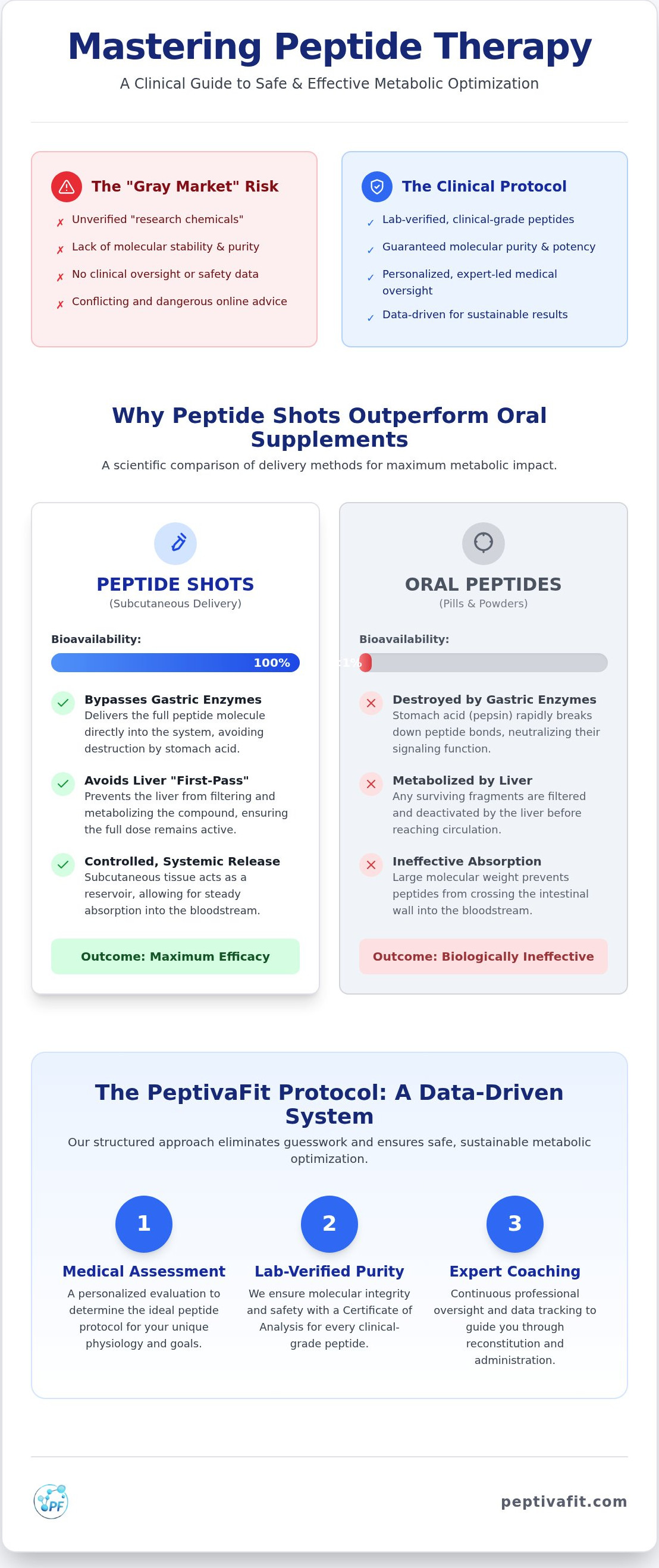
- Understand why subcutaneous delivery is the clinical standard for bypassing gastric enzymes and ensuring maximum peptide bioavailability.
- Learn the precise steps to administer a peptide shot safely, focusing on sterile technique and accurate dosage for lipolytic protocols.
- Master the process of verifying molecular purity through a Certificate of Analysis to avoid the inherent dangers of unverified research chemicals.
- Discover why the Peptiva Protocol requires a personalized medical assessment and expert coaching to achieve sustainable, data-driven metabolic optimization.
What is a Peptide Shot? Defining Injectable Peptide Therapy
A peptide shot is the subcutaneous administration of specific amino acid sequences designed to trigger targeted biological responses. To understand the foundation of this therapy, one must first ask: What is a Peptide? At its core, these are short chains of amino acids that act as signaling molecules within the body. Unlike broad-spectrum hormones, peptides are highly selective. They bind to specific cellular receptors to initiate precise physiological changes, such as lipolysis or tissue repair. This selectivity allows for a level of metabolic control that was previously unattainable through traditional supplementation.
The distinction between clinical-grade and research-grade substances is the most critical factor in determining biological impact. Clinical-grade peptides are manufactured in sterile, regulated environments to ensure exact molecular weight and purity. Conversely, "research chemicals" often found online lack the oversight necessary for human safety. They may contain impurities that trigger immune responses or lack the potency required for results. The evolution of this field has moved beyond treating deficiency diseases like diabetes toward a more sophisticated application: metabolic optimization. It's now a tool for high-performance individuals seeking to refine their internal chemistry through data-driven protocols.
The Mechanism of Action in Performance Peptides
Injecting peptides ensures 100% bioavailability by bypassing the digestive tract. When you administer a peptide shot, the molecule enters the bloodstream or local tissue without being degraded by stomach acid. The frequency of administration depends on the peptide's half-life, which is the time it takes for half of the substance to be cleared from the system. Some peptides require daily administration, while others remain active for several days. This therapy utilizes both endocrine signaling, where peptides travel through the blood to distant organs, and paracrine signaling, which affects neighboring cells for localized recovery. This dual-action capability makes them exceptionally versatile for both systemic fat loss and targeted injury repair.
Why Subcutaneous Injection is the Industry Standard
Subcutaneous delivery is superior to oral or nasal methods because it preserves molecular integrity. Oral peptides are often destroyed by pepsin and other gastric enzymes before they can reach the small intestine. Even if they survive, their molecular weight often prevents them from crossing the intestinal barrier effectively. The adipose tissue layer, located just beneath the skin, serves as a reservoir. It allows for a steady, controlled release of the compound into the circulation. This method also minimizes systemic side effects by avoiding the "first-pass" metabolism of the liver. It remains the clinical gold standard for maintaining stable plasma levels of metabolic regulators without the peaks and valleys associated with other delivery routes.
The Science of Subcutaneous Delivery: Why Shots Trump Oral Peptides
Oral administration of peptides is fundamentally inefficient for performance optimization. The human gastrointestinal tract is designed to dismantle proteins into individual amino acids for nutrition, not to preserve their signaling function. A peptide shot ensures the molecule reaches its target without digestive degradation. Gastric enzymes like pepsin and the highly acidic environment of the stomach rapidly hydrolyze peptide bonds, rendering the molecule biologically inert before it reaches the small intestine. Even if a fragment survives, its molecular weight often exceeds the threshold for passive diffusion across the intestinal wall, leaving the majority of the dose unabsorbed.
The peptide shot bypasses these anatomical hurdles entirely. By delivering the compound directly into the subcutaneous tissue, we ensure that the delicate 3D structure of the peptide remains intact. This method facilitates a direct route to the systemic circulation, achieving peak plasma concentrations that oral routes cannot match. Crucially, subcutaneous delivery avoids the "first-pass effect" in the liver. When substances are absorbed through the GI tract, they're first filtered by the liver, which often metabolizes a significant portion of the active compound. Injectable therapy ensures that the full dose remains available for cellular signaling, maximizing metabolic efficiency.
Bioavailability and Molecular Stability
Bioavailability in injectable therapy refers to the percentage of the administered dose that reaches systemic circulation in an unchanged, biologically active form. Maintaining molecular stability is paramount; even minor changes to the folding of a peptide can nullify its ability to bind to target receptors. While Harvard Health on Peptide Safety highlights the risks of unregulated supplements, clinical-grade injectable protocols prioritize this structural integrity to ensure predictable metabolic outcomes. This preservation of structure is why subcutaneous delivery remains the gold standard for therapeutic efficacy.
Precision Dosing and Metabolic Control
Clinical protocols rely on the precision of micro-dosing to manage metabolic responses with surgical accuracy. Subcutaneous injections allow for fine-tuned adjustments that aren't possible with the variable absorption rates of oral formulations. The choice of injection site, typically the periumbilical region or outer thigh, influences the rate of absorption due to differences in local blood flow. This control allows practitioners to adjust protocols based on real-time individual response data. For those seeking this level of scientific oversight, a personalized medical assessment is the essential first step in a data-driven fat loss journey.
Targeted Peptide Shot Protocols: From Fat Loss to Cellular Repair
While mass-market discussions often center on generic weight loss, clinical peptide therapy utilizes highly specialized sequences to target specific metabolic pathways. A targeted peptide shot provides a level of precision that broad-spectrum medications lack. For instance, Tesamorelin focuses on visceral adipose tissue reduction. AOD-9604 mimics the lipolytic region of human growth hormone without affecting blood sugar or insulin sensitivity. These tools allow for a surgical approach to body composition that respects the body's natural regulatory systems.
Growth hormone secretagogues like Ipamorelin and CJC-1295 work by stimulating the pituitary gland to release endogenous growth hormone in natural pulses. This synergy avoids the risks associated with synthetic HGH while supporting lean muscle preservation and improved sleep quality. It's a disciplined method of hormonal optimization. These protocols require precise timing to align with the body's circadian rhythms, ensuring that the secretagogue pulses mirror natural physiological patterns.
Longevity protocols often incorporate MOTS-C, a mitochondrial-derived peptide that regulates metabolic homeostasis, and Epithalon, which targets telomere maintenance. These compounds represent the frontier of cellular health, focusing on the underlying drivers of aging rather than just symptom management. They require strict adherence to clinical schedules to be effective. By optimizing mitochondrial function, these peptides help maintain energy production and insulin sensitivity as the body ages.
The Peptiva Protocol for Fat Loss
Achieving significant body composition changes requires a structured approach that accounts for individual metabolic baselines. The Peptiva Protocol integrates these compounds into a cohesive strategy, ensuring that each peptide shot supports a broader physiological objective. Understanding the correct Tesamorelin dosage is essential for safety, as visceral fat reduction requires consistent, data-backed administration rather than arbitrary application. This structured guide eliminates the confusion inherent in navigating complex fat loss pathways alone.
Recovery and Tissue Regeneration Stacks
Systemic repair often necessitates the Wolverine Stack, which is a combination of BPC-157 and TB-500. The BPC-157 peptide is renowned for its angiogenic properties, which accelerate the healing of tendons, ligaments, and the gut lining. When paired with MOTS-C peptide, the protocol shifts toward mitochondrial optimization, enhancing exercise capacity and insulin sensitivity. This comprehensive approach ensures that the body isn't just losing fat but is also regenerating at a cellular level. Combining repair peptides with metabolic boosters creates a synergistic environment for long-term wellness and performance.
Ensuring Molecular Integrity: Lab Testing and Safe Administration
The "research only" designation serves as a legal disclaimer that allows manufacturers to bypass the rigorous safety standards required for human clinical use. Administering a peptide shot from an unverified source introduces the risk of injecting heavy metals, residual solvents, or truncated peptide sequences that can trigger unpredictable immune responses. To maintain biological safety, one must look beyond the marketing and verify the molecular integrity of every vial. This level of scrutiny is what separates a disciplined protocol from a high-stakes gamble with your metabolic health.
A Certificate of Analysis (COA) is your primary tool for verification, but it's only valid if it's batch-specific and verifiable through the testing lab's own database. A legitimate COA uses High-Performance Liquid Chromatography (HPLC) to determine purity and Mass Spectrometry (MS) to confirm the identity of the peptide. Purity should ideally exceed 98%. Anything less suggests the presence of unknown synthesis byproducts that could compromise the effectiveness of the therapy or cause systemic inflammation. We view these documents as mandatory prerequisites for any clinical intervention.
Safe administration also depends on the solvent used for reconstitution. Bacteriostatic water is the clinical standard because it contains 0.9% benzyl alcohol, which inhibits the growth of bacteria within the vial. Using sterile water without this preservative limits the life of the peptide to a single use, as the lack of an antimicrobial agent allows for rapid contamination. Maintaining stability post-reconstitution requires a deep understanding of molecular fragility; peptides are delicate chains that can be easily denatured by heat or kinetic energy.
Identifying High-Quality Peptide Sources
Red flags in the peptide industry include a lack of batch numbers, missing dates on testing reports, or labs that refuse to provide third-party verification. Transparency is not just a preference; it's a requirement for safety. At PeptivaFit, we emphasize that lab-verified supply is the only way to ensure the compound you're injecting matches the protocol's requirements. Beyond sourcing, the technical execution of proper peptide reconstitution is vital to prevent denaturing the delicate amino acid chains. For those ready to move away from the uncertainty of "research grade" chemicals, you can access our lab tested peptides to ensure clinical-grade results.
A Disciplined Approach to Administration
Safe subcutaneous administration requires a sterile field and a methodical preparation process. You must always use a new, single-use insulin syringe and sanitize both the vial's rubber stopper and the injection site with 70% isopropyl alcohol. Site rotation is equally important to prevent the development of lipodystrophy or localized tissue irritation. Follow these essential steps for every administration:
- Sanitize the vial and the skin thoroughly before each draw.
- Gently introduce the bacteriostatic water down the side of the vial to avoid foaming.
- Store reconstituted peptides in a dark, refrigerated environment between 36°F and 46°F.
- Never shake the vial; use a gentle swirling motion if necessary.
Monitoring for systemic feedback is the final step in a safe protocol. This includes tracking changes in appetite, sleep quality, and local skin reactions. If you notice persistent redness at the injection site, it may indicate a reaction to the bacteriostatic agent or an improper depth of the peptide shot. A disciplined observer uses this data to refine their approach under professional guidance.
Implementing the Peptiva Protocol: Expert Oversight for Metabolic Success
A peptide shot is a potent catalyst, but its efficacy is maximized only when integrated into a broader clinical framework. Self-administration without professional oversight often leads to suboptimal results or avoidable side effects. A personalized medical assessment is the foundational step in this process. It ensures that the chosen protocol aligns with your unique hormonal profile, cardiovascular health, and metabolic baseline. Without this initial data, any intervention is merely guesswork that ignores the complexities of your internal chemistry.
Peptides are not shortcuts; they're precision tools that amplify the results of disciplined nutrition and resistance training. For example, growth hormone secretagogues work best when paired with strategic protein intake and specific training volumes that support lean tissue preservation. Sustainable fat loss isn't achieved through a single cycle, but through the long-term stabilization of metabolic health and insulin sensitivity. This requires a commitment to a lifestyle that supports the signaling pathways activated by the peptide shot.
The Value of Professional Peptide Coaching
Expert oversight is the primary safeguard against common dosage errors and the inevitable plateaus that occur during body recomposition. Our 1-on-1 coaching provides more than just technical support; it offers a rigorous analysis of your systemic feedback. Transitioning from a single consultation call to a comprehensive coaching package allows for real-time, data-driven adjustments. This level of individual attention ensures that your protocol remains effective as your body composition evolves, pushing you toward elite performance standards that typical consumer products can't reach.
Getting Started with PeptivaFit
Accessing the Peptiva Protocol begins with a commitment to scientific-grade standards. We provide a structured environment where you can obtain lab-tested peptides and a clear roadmap for their administration. The initial medical screening process is designed to filter for suitability, ensuring that every participant is prepared for the discipline required by our protocols. This is a selective service for individuals who value data over hype and safety over sensation. Schedule your professional medical assessment today to begin your transition from standard wellness to advanced, data-driven metabolic optimization.
Advancing Your Metabolic Optimization
Mastering the application of a peptide shot requires a transition from casual biohacking to a disciplined, clinical methodology. You now understand that subcutaneous delivery preserves molecular integrity and that lab-verified purity is the only defense against the risks of the gray market. These tools are most effective when guided by scientific data rather than anecdotal evidence. Precision is paramount. By prioritizing structural stability and sterile administration, you ensure that your physiological signals remain precise and productive.
The path to elite performance demands more than just high-quality compounds; it requires a structured environment where every variable is monitored. Our approach integrates lab-verified purity standards with personalized medical assessments to eliminate the guesswork inherent in self-directed protocols. Expert-led 1-on-1 coaching provides the data-driven adjustments necessary for long-term metabolic health and sustainable fat loss.
Secure your clinical fat loss protocol and lab-tested peptides here. Your commitment to these scientific standards is the first step toward achieving a level of performance that matches your ambition.
Frequently Asked Questions
Are peptide shots legal for fat loss and performance?
Peptide therapy is legal when prescribed by a licensed medical professional and fulfilled through regulated pharmacies. In July 2026, the FDA's Pharmacy Compounding Advisory Committee recommended several peptides for the 503A Bulks List, which facilitates legal compounding for individual patients. However, purchasing unverified substances labeled as "research chemicals" for human use remains outside legal and safety standards. Our protocol ensures all interventions are managed within a compliant, professional framework following a medical assessment.
How long does it take to see results from a peptide shot protocol?
Biological changes begin at the cellular level immediately, but visible body composition results usually manifest within four to twelve weeks. This timeline depends on your specific metabolic baseline and adherence to nutrition and training. For instance, secretagogues may improve sleep quality within days, while lipolytic agents like AOD-9604 require consistent administration over several months to produce measurable fat loss. Patience and data-driven monitoring are required for sustainable metabolic optimization.
Can I travel with my reconstituted peptide shots?
You can travel with your medication, but you must maintain a consistent cold chain to preserve molecular stability. Most reconstituted peptides require refrigeration between 36°F and 46°F to prevent the delicate amino acid chains from degrading. Use a specialized medical cooling case and keep your vials in your carry-on luggage to avoid the extreme temperature fluctuations found in cargo holds. Always carry your medical assessment documentation to ensure compliance with TSA regulations during transit.
What is the difference between a peptide shot and a steroid?
Peptides and steroids utilize fundamentally different mechanisms of action. While steroids are synthetic hormones that often suppress your body's natural production, a peptide shot acts as a signaling molecule to stimulate endogenous processes. Peptides are highly selective, targeting specific receptors to trigger growth hormone release or tissue repair without the systemic disruption associated with anabolic steroids. This selectivity typically results in a more sophisticated safety profile for those focused on performance optimization.
What happens if I miss a dose in my peptide protocol?
If you miss a dose, you should resume your regular schedule with the next scheduled injection. Don't double the dose to compensate for the omission, as this can disrupt the signaling rhythm and increase the risk of localized sensitivity. Maintaining a stable plasma concentration is vital for achieving the desired metabolic response. If you find yourself frequently missing doses, our 1-on-1 coaching can help you establish a more disciplined routine to ensure protocol efficacy.
Are there any long-term side effects of peptide shot therapy?
Long-term data on specific peptides is still being gathered through rigorous scientific investigation. Current clinical observations suggest that when used under professional oversight with lab-verified purity, the risks are significantly mitigated. Potential issues like temporary water retention or local site reactions are usually manageable through precise dosage adjustments. This is why a personalized medical assessment is non-negotiable; it allows us to monitor your systemic feedback and ensure your protocol remains safe and sustainable.

![Shelf Life of Reconstituted Peptides: A Clinical Reference Guide [2026]](https://getautoseo.com/storage/hero_images/shelf-life-of-reconstituted-peptides-a-clinical-reference-guide-2026.jpg?v=b8ed5173acaa)
