

What if the period you spend away from your protocol is actually the most critical phase for your long-term metabolic success? Most dedicated individuals recognize that more isn't always better, yet the fear of losing hard-earned progress often leads to perpetual, inefficient use. You've likely observed that the rapid fat loss experienced in the initial weeks eventually slows to a crawl despite maintaining a rigorous schedule. One of the most frequent inquiries we address from serious researchers is: can you cycle different peptides to bypass this physiological plateau?
It's a valid concern rooted in the reality of receptor desensitization and diminishing returns on your investment. This guide provides a clinical framework for strategic rotation, moving beyond the simplistic binary of being on or off a cycle toward a sophisticated model of cellular recalibration. We'll define the biological necessity of these breaks and clarify the technical distinctions between stacking and rotating. By the end of this analysis, you'll possess a clear protocol for maintaining peak receptor sensitivity and optimizing fat loss cycles without the risk of metabolic adaptation.
Key Takeaways
- Understand the biological mechanism of receptor internalization and why chronic exposure inevitably leads to the diminishing returns of the plateau effect.
- Determine the clinical answer to the question, "can you cycle different peptides," by applying a structured framework that utilizes distinct peptide classes to avoid cross-receptor interference.
- Learn to distinguish between stacking for immediate synergy and cycling for long-term sustainability to ensure your physiological systems remain responsive.
- Discover the "Bridge" strategy, a method for maintaining metabolic progress by transitioning between specific peptide classes while allowing primary receptors to recover.
- Implement the Peptiva Protocol as a disciplined methodology for fat loss that prioritizes lab-verified purity and clinical oversight.
The Molecular Rationale: Understanding the Mechanism of Peptide Cycling
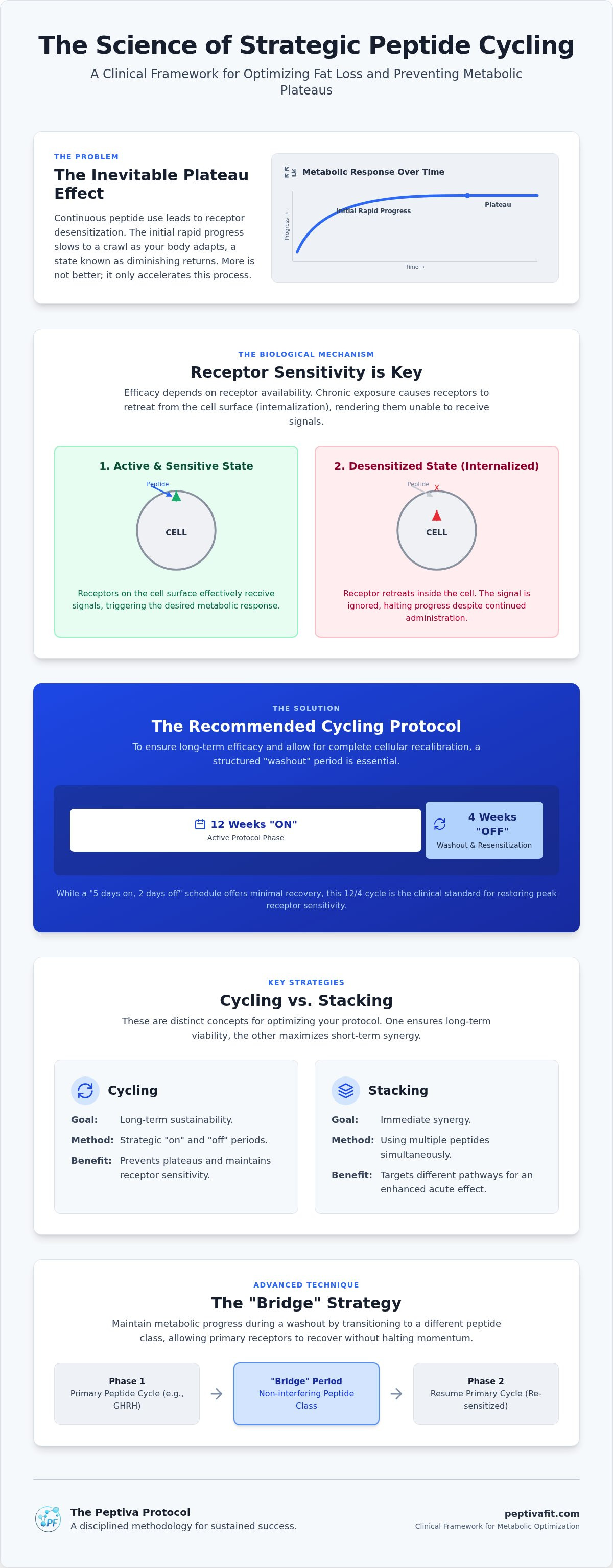
Peptide cycling isn't a suggestion; it's a physiological requirement for maintaining efficacy. We define this process as the strategic implementation of "on" and "off" periods designed to prevent the body from adapting to exogenous signaling. In clinical research, a distinction exists between acute signaling, which triggers the desired metabolic response, and chronic exposure, which leads to metabolic noise. When receptors are constantly saturated, the signal loses its clarity. Understanding this molecular ceiling is the first step in determining how can you cycle different peptides effectively for sustained fat loss.
Homeostasis serves as the body's primary regulatory mechanism, constantly working to maintain internal stability. When you introduce exogenous peptides, your biological systems attempt to compensate by reducing sensitivity. This reality dictates that "more is not better." Increasing the dosage of a saturated system doesn't enhance fat loss. Instead, it merely accelerates the rate of receptor desensitization. A disciplined approach prioritizes the quality of the signal over the quantity of the compound.
Peptide Half-Life and Systemic Clearance
The molecular structure of a peptide determines its half-life, which in turn dictates the duration of a viable cycle. Systemic clearance refers to the rate at which the compound is removed from the bloodstream. However, a common misconception exists in the research community: rapid clearance doesn't equate to immediate receptor recovery. Even after the peptide is cleared, the receptors may remain internalized or "off-line" for a significant period. A disciplined washout period is necessary to ensure that when you ask, "can you cycle different peptides," you're accounting for the time required for these cellular structures to return to the cell surface.
Homeostasis and Biological Feedback Loops
Biological systems operate through complex feedback loops. Under consistent exogenous pressure, the body often down-regulates its own hormone production to prevent overstimulation. Strategic cycling mimics the natural pulsatile rhythms of growth hormone, which the body releases in bursts rather than a steady stream. Without these intentional breaks, you risk shutting down endogenous pathways, making it harder for your system to function without assistance. Maintaining these natural rhythms is essential for long-term metabolic health and ensuring the Peptiva Protocol remains effective over multiple phases. This clinical approach avoids the metabolic burnout associated with undisciplined, continuous protocols.
The Biological Necessity of Receptor Resensitization
Biological efficacy depends entirely on receptor availability. When exogenous ligands constantly occupy a receptor site, the cell initiates a process called internalization. The receptor physically retreats from the cell membrane into the cytoplasm, rendering it inaccessible to further signaling. This is the primary mechanism behind desensitization. A common technical inquiry within high-level research is: can you cycle different peptides to maintain this sensitivity? Without strategic pauses, the signal remains high but the response drops to zero, creating a frustrating plateau where progress halts despite consistent administration. Understanding how can you cycle different peptides is the difference between a successful transformation and a stalled protocol.
Maintaining sensitivity requires a disciplined schedule. A baseline "5 days on, 2 days off" protocol provides a brief window for receptor recovery, but it's rarely sufficient for long-term optimization. Systemic recovery often demands more substantial breaks. We typically recommend a 4-week "washout" period after a standard 12-week cycle. This duration allows for a complete recalibration of cellular pathways and prevents the chronic saturation that leads to diminishing returns on expensive protocols.
GHRH and GHRP Receptor Sensitivity
Specific considerations apply to Growth Hormone Releasing Hormones (GHRH) and Secretagogues. For instance, Tesamorelin is highly effective for visceral fat reduction, yet its potency requires strict adherence to cycling. Researchers often pair CJC-1295 with Ipamorelin to utilize their synergistic effects on the pituitary. However, prolonged use of these combinations can trigger somatostatin interference. Somatostatin acts as the body's natural "brake" on growth hormone release; if it remains chronically elevated due to lack of cycling, it will effectively negate the benefits of your protocol.
Metabolic Adaptation in Fat Loss Cycles
The body is an adaptive machine. In fat loss phases, lipolytic signals that were once highly effective eventually become ignored as the body seeks to preserve energy stores. Our fat loss peptide guide emphasizes that cycling is the only way to bypass this metabolic adaptation. You'll know your receptors require a washout period when you experience stalled weight loss, increased water retention, or a noticeable decrease in the "tightening" effect of the compounds. For those seeking a more tailored approach to these cycles, a personalized medical assessment can provide the data needed to adjust your timing for maximum efficacy.
Strategic Rotation: Transitioning Between Different Peptide Classes
Peptide rotation is a precision-based strategy, not a random substitution. It involves moving between compounds that target distinct biological pathways to ensure no single system becomes overtaxed. When researchers ask, "can you cycle different peptides," they're often seeking a methodology to sustain progress during necessary breaks from primary metabolic stimulants. This requires a disciplined 4-step framework. First, identify the primary target receptor class, such as the GHRH axis. Second, monitor for biomarkers of saturation or stalled lipolysis. Third, implement a "Bridge" compound that utilizes a non-competing pathway. Finally, allow a minimum of 30 days for primary receptor resensitization before re-entry.
The "Bridge" strategy is particularly effective for individuals who refuse to accept stagnation. By transitioning to a different class of ligands, you maintain physiological momentum while allowing your primary receptors to recover. However, rotating too many compounds simultaneously without rigorous data monitoring often leads to systemic noise. This makes it impossible to identify which compound is driving specific results. A sophisticated approach prioritizes clarity over complexity, ensuring each phase of the rotation has a defined clinical objective.
Transitioning from Fat Loss to Recovery
Shifting focus from metabolic stimulation to tissue repair is a common clinical practice that prevents burnout. After a 12-week fat loss phase, many researchers rotate to healing peptides like BPC-157. This transition helps manage systemic inflammation that may have accumulated during high-intensity training. It allows the body to prioritize structural integrity while the hormonal pathways responsible for fat loss undergo a necessary washout. Maintaining body composition during this phase relies on the "metabolic floor" established during the previous cycle, rather than continued stimulation.
Rotating Mitochondrial vs. Hormonal Peptides
Mitochondrial-derived peptides like MOTS-c offer a unique opportunity for rotation because they operate independently of the GH axis. While hormonal secretagogues focus on pituitary signaling, mitochondrial regulators improve metabolic flexibility at the cellular level. This is why MOTS-c is often utilized during the "off" periods of a secretagogue cycle. It provides a secondary layer of metabolic support without interfering with receptor recovery. Understanding how can you cycle different peptides across these distinct biological systems is the foundation of a sustainable, multi-year optimization strategy.
Stacking vs. Cycling: Optimizing Synergy Without Overload
Stacking is defined as the concurrent administration of multiple compounds to achieve a physiological result greater than the sum of its parts. While stacking targets immediate results through multi-pathway stimulation, cycling focuses on long-term sustainability by protecting receptor sensitivity. The complexity of a stack directly correlates to the intensity of the subsequent recovery phase. When you ask, can you cycle different peptides, you must account for the cumulative burden a stack places on your regulatory systems. For example, the "Wolverine Stack" (BPC-157 and TB-500) is a frequent case study in synergy, utilizing distinct pathways, angiogenesis and cellular migration, to accelerate tissue repair. Because this combination forces high-intensity signaling across multiple cellular fronts, it requires a significantly more rigorous "off" period than a single-compound protocol. Failure to respect these recovery windows leads to metabolic adaptation and the eventual failure of the protocol.
Synergistic Fat Loss Stacks
Maximum pulsatile growth hormone release is often achieved by combining a Growth Hormone Releasing Hormone (GHRH) with a Growth Hormone Releasing Peptide (GHRP). This combination creates a synergistic effect that mimics natural biological pulses more effectively than monotherapy. Utilizing peptides for metabolism and fat loss within a stacked protocol requires careful monitoring of side effects. Increased water retention, tingling in the extremities, or lethargy often signals that the pituitary is being overstimulated. Disciplined researchers prioritize the lowest effective dose of a stack to maintain the longevity of the protocol. This approach avoids the metabolic noise that occurs when signaling pathways are chronically saturated, ensuring that each pulse remains clear and effective.
Avoiding Antagonistic Combinations
Not all combinations are productive. Antagonistic combinations occur when two peptides compete for the same receptor sites, leading to receptor saturation and wasted research material. This is where the "more is better" fallacy leads to diminishing returns and unnecessary systemic stress. Precise peptide reconstitution is vital in stacked protocols to ensure molecular integrity is maintained during administration. If the concentration is inaccurate, the intended synergy is lost, and the risk of side effects increases. To ensure your stack is built on a foundation of purity and clinical accuracy, utilize lab tested peptides for all research protocols. Maintaining this level of discipline is the only way to achieve predictable, high-level results without compromising your long-term metabolic health.
Implementing the Peptiva Protocol for Long-Term Success
The Peptiva Protocol represents the final evolution of structured metabolic optimization. It's not merely a list of compounds; it's a disciplined framework that integrates clinical oversight with high-purity research materials. When establishing a long-term strategy, the question of can you cycle different peptides becomes a matter of data-driven timing rather than guesswork. This protocol moves beyond the speculative advice of the general market, requiring strict adherence to lab-verified supplies and personalized monitoring. Success in this field isn't accidental. It's the result of a methodical approach that prioritizes biological integrity over rapid, unsustainable gains.
Professional 1-on-1 coaching serves as the bridge between theoretical protocols and real-world application. By analyzing your specific response to different rotations, a coach can adjust the duration of your "off" periods to prevent the metabolic noise that leads to plateaus. This level of exclusivity ensures that your protocol remains as unique as your own physiology, moving away from the inefficiencies of standardized cycles.
The Role of Lab Purity in Cycling Efficacy
Systemic efficacy is entirely dependent on the molecular integrity of your research materials. Contaminants and impurities don't just reduce the effectiveness of a dose; they can actively interfere with receptor signaling. This is a critical failure point. If a peptide supply contains residual solvents or truncated sequences, the body may mount an immune response that mimics the symptoms of receptor desensitization. This creates a false plateau that no amount of cycling can fix. High-quality, lab-tested peptides ensure that every "on" phase of your rotation is hitting the intended target with 99% purity or higher. Without this baseline of quality, the sophisticated rotation strategies discussed previously are rendered moot.
Personalization Through Medical Consultations
A "one-size-fits-all" approach to cycling is fundamentally suboptimal for metabolic health. Every individual's endocrine system responds differently to exogenous pressure, meaning your specific "on" and "off" durations should be dictated by objective data. We utilize personalized medical assessments and blood work to determine the exact rate of your receptor resensitization. This level of precision allows for the adjustment of rotations based on real-world biomarkers rather than generic internet guidelines. To refine your specific strategy and move away from standardized cycles, schedule a single consultation call to review your current markers and optimize your rotation schedule.
Strategic Mastery of Metabolic Signaling
Success in performance optimization depends on your ability to respect the body's homeostatic boundaries. We've established that receptor resensitization is a fundamental requirement, not a suggestion. By shifting from chronic exposure to a structured model of strategic rotation, you prevent the metabolic adaptation that stalls fat loss progress. The clinical reality of can you cycle different peptides is that a disciplined transition between compounds, such as moving from growth hormone secretagogues to tissue repair ligands, ensures your physiological systems remain responsive. This approach moves beyond the simplistic "more is better" mentality toward a sophisticated paradigm of cellular recalibration.
The Peptiva Protocol provides the advanced fat loss frameworks and personalized clinical oversight necessary to execute these rotations with precision. By utilizing lab-verified molecular purity, you eliminate the variables that often ruin research outcomes. You're now equipped to move past the plateau and take definitive control of your metabolic health. Optimize your metabolic health with the Peptiva Protocol and lab-verified peptides. Your commitment to a data-driven, disciplined protocol is the most reliable path to achieving and sustaining peak performance.
Frequently Asked Questions
Can I switch from one fat loss peptide to another without a break?
You shouldn't switch between peptides of the same class without a dedicated washout period. If both compounds target the growth hormone axis, switching from one to another won't allow your receptors to recover. This practice often leads to the same desensitization issues as continuous use. A disciplined protocol requires at least a 30-day break to ensure your next phase is effective rather than just adding systemic noise.
How long should a typical peptide cycle last for fat loss?
A standard fat loss cycle typically lasts between 8 and 12 weeks. This duration provides enough time for significant metabolic signaling without causing profound receptor down-regulation. Longer cycles often see diminishing returns as the body adapts to the exogenous signal. After this window, we recommend a minimum 4-week break to reset your biological baseline. Following this structure is the best way to maintain the efficacy of the Peptiva Protocol over multiple phases.
What happens if I don't cycle my peptides and use them continuously?
Continuous use without strategic breaks leads to receptor internalization and systemic desensitization. Your body recognizes the chronic saturation and attempts to maintain homeostasis by turning off the relevant receptors. Eventually, you'll experience a complete plateau where the compounds no longer produce results despite continued administration. In some cases, prolonged exposure can also suppress your body's natural production of these hormones, making long-term metabolic health more difficult to maintain.
Is it better to stack peptides or rotate them one at a time?
Stacking and rotation serve different clinical objectives. Stacking involves using synergistic compounds simultaneously to maximize immediate results, such as combining a GHRH with a GHRP. Rotation is a more sustainable approach for long-term progress. When researchers ask, can you cycle different peptides, the answer often involves a blend of both strategies. You might stack for 12 weeks, then rotate to a different peptide class to allow your primary receptors to recover.
Does the '5 days on, 2 days off' rule apply to all peptides?
The "5 days on, 2 days off" rule is a common baseline for secretagogues, but it isn't a universal requirement for all peptides. Some compounds with shorter half-lives or different mechanisms of action may require daily administration for consistent results. However, this intermittent schedule is often used to provide brief windows of receptor recovery. Your specific schedule should be dictated by the molecular structure of the peptide and your individual metabolic response rather than a generic rule.
How do I know if my receptors have become desensitized?
You'll know your receptors have become desensitized when you experience a noticeable stall in progress despite no changes to your diet or training. Other signs include a loss of the tightening effect or a decrease in the improved sleep quality often associated with metabolic peptides. In some cases, side effects like water retention may increase while the primary benefits disappear. This is a clear signal that your system requires a strategic washout period to restore sensitivity.
Can I use BPC-157 during the 'off' period of a Tesamorelin cycle?
You can use BPC-157 during the off period of a Tesamorelin cycle because these peptides target entirely different biological pathways. Tesamorelin operates on the growth hormone axis; BPC-157 focuses on angiogenesis and tissue repair. This is a prime example of how can you cycle different peptides to maintain physiological momentum. Rotating to a recovery peptide allows your metabolic receptors to resensitize while you focus on systemic healing and inflammation management.
Do I need a medical assessment before starting a new peptide rotation?
A personalized medical assessment is essential before beginning any new peptide rotation. This ensures your current biomarkers support the transition and that you aren't introducing compounds that could negatively interact with your unique physiology. Professional oversight allows for the design of a protocol based on objective data rather than speculation. At PeptivaFit, we prioritize this clinical foundation to ensure that every protocol is both safe and optimized for your specific metabolic goals.

![Shelf Life of Reconstituted Peptides: A Clinical Reference Guide [2026]](https://getautoseo.com/storage/hero_images/shelf-life-of-reconstituted-peptides-a-clinical-reference-guide-2026.jpg?v=b8ed5173acaa)
