
![Peptides for Body Recomposition: A Clinical Protocol for Muscle Gain and Fat Loss [2026]](https://getautoseo.com/storage/hero_images/peptides-for-body-recomposition-a-clinical-protocol-for-muscle-gain-and-fat-loss-2026.jpg?v=49d53cbe2973)
The traditional "bulk and cut" cycle is a primitive and inefficient relic that frequently compromises metabolic health for fleeting aesthetic gains. In 2026, serious investigators of human performance recognize that true optimization requires a more precise, data-driven approach. You've likely reached a point where traditional diet and exercise protocols no longer yield the specific, high-resolution results your efforts deserve. It's frustrating to face a plateau while navigating the risks of unverified supplies or the daunting complexity of medical-grade administration.
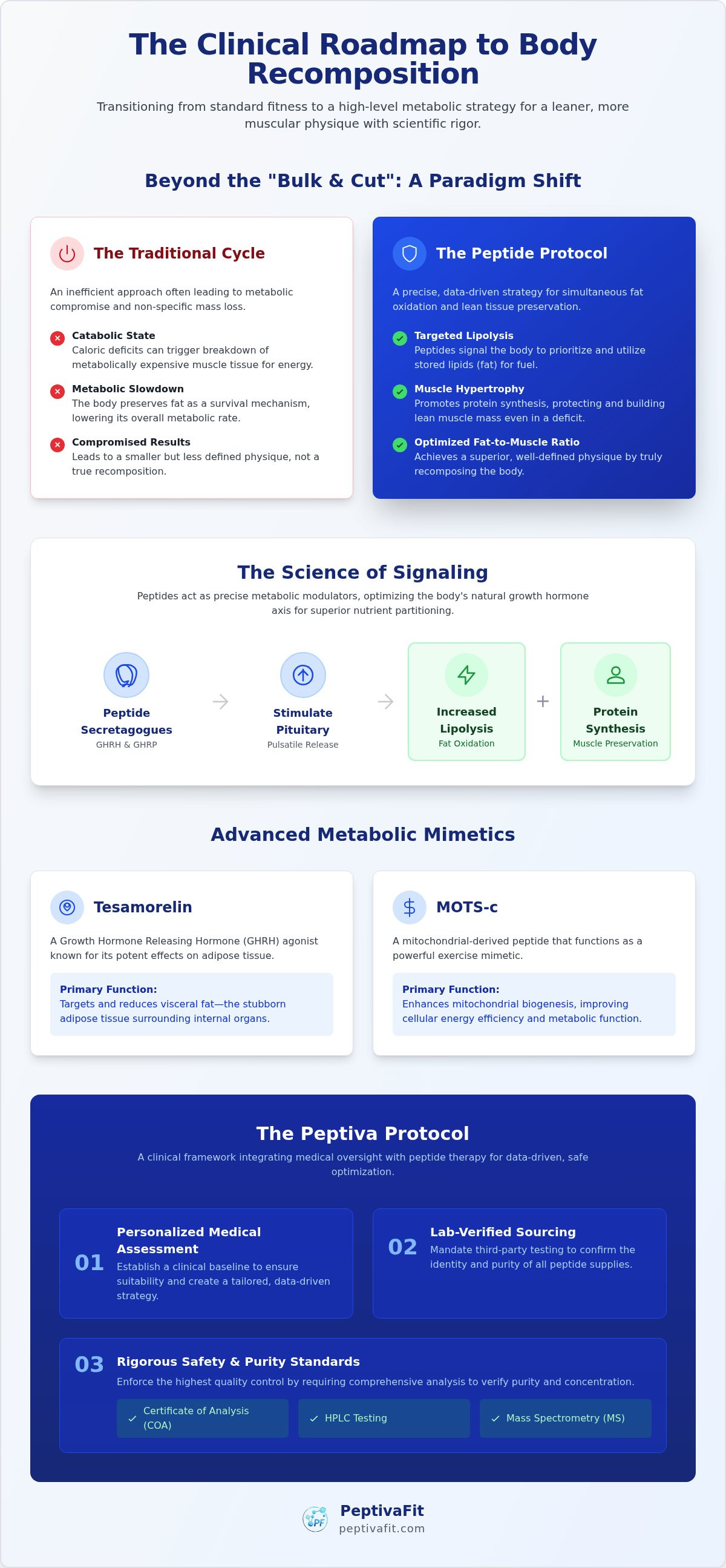
This article provides the definitive clinical roadmap for utilizing peptides for body recomposition to achieve simultaneous fat oxidation and lean tissue preservation. You'll master the sophisticated application of growth hormone secretagogues and mitochondrial mimetics through a lens of safety and regulatory compliance. We'll move beyond the noise of the mass market to explore the Peptiva Protocol, detailing lab-verified sourcing, precise reconstitution requirements, and the necessity of personalized medical assessments. By the end of this guide, you'll possess a disciplined framework to transition from standard fitness routines to a high-level metabolic strategy that delivers a leaner, more muscular physique with uncompromising scientific rigor.
Key Takeaways
- Achieve simultaneous adipose reduction and muscle hypertrophy by bypassing the metabolic pitfalls of traditional caloric deficits.
- Master the clinical synergy between GHRH agonists and GHRP to optimize the use of peptides for body recomposition while maintaining natural hormonal pulses.
- Identify the specific roles of Tesamorelin for visceral fat reduction and MOTS-C for exercise-mimetic mitochondrial support.
- Enforce rigorous safety standards by requiring COA, HPLC, and MS testing to verify the purity and concentration of all peptide supplies.
- Establish the Peptiva Protocol as your clinical framework, beginning with a personalized medical assessment to ensure data-driven, safe optimization.
The Science of Body Recomposition: Beyond Traditional Weight Loss
Body recomposition is the simultaneous process of adipose tissue reduction and lean muscle hypertrophy. It differs fundamentally from standard weight loss, which often results in a non-specific reduction of total body mass. For the serious investigator, the goal is not a lower number on the scale, but a radical optimization of the fat-to-muscle ratio. This requires a sophisticated understanding of how the body prioritizes energy storage and expenditure under metabolic stress.
Traditional caloric deficits often lead to a metabolic purgatory. When you restrict calories without pharmacological or physiological intervention, the body frequently enters a catabolic state. In this environment, it prioritizes the preservation of adipose tissue as a survival mechanism while breaking down metabolically expensive muscle fibers for energy. This creates a physique that's smaller but less defined, often accompanied by a stagnant or declining metabolic rate. Peptides for body recomposition function as high-precision signaling molecules that bypass these evolutionary roadblocks by forcing the body to utilize stored lipids while protecting protein structures.
Metabolic recomposition is a targeted shift in nutrient partitioning toward muscle tissue.
The Role of the Growth Hormone Axis in Nutrient Partitioning
The growth hormone (GH) axis serves as the primary regulator for how your body utilizes available fuel. High levels of endogenous GH promote lipolysis and protein synthesis; however, GH production naturally declines as you age. This decline isn't just a number; it's a physiological shift that makes fat loss more difficult and muscle preservation nearly impossible during a cut. By the time most individuals reach their mid-30s, the pulsatile release of GH has diminished significantly, leading to a gradual loss of muscle density and an increase in visceral fat.
While exogenous HGH is a common medical intervention, it often suppresses your natural production and lacks the biological rhythm required for long-term health. GH secretagogues offer a more disciplined, physiological approach. These peptides stimulate the pituitary gland to release its own stored growth hormone in a natural, pulsatile manner. This maintains the body's feedback loops while elevating the baseline for recovery and fat oxidation, ensuring that your hormonal environment supports growth rather than stagnation.
Peptides as Metabolic Signaling Modulators
Clinical investigators must distinguish between peptides that stimulate the GH axis and those that function as exercise mimetics. Targeted receptor signaling is the key to achieving systemic results. Some peptides focus on mitochondrial biogenesis, essentially "teaching" the cells to burn energy more efficiently, while others emphasize the mobilization of fatty acids from stubborn adipose depots. For a deeper understanding of these foundational mechanisms, consult our Peptides for Metabolism and Fat Loss: A Clinical Overview [2026].
Using peptides for body recomposition allows for the clinical targeting of specific receptors, such as the GHS-R1a, to trigger lipolysis without the systemic side effects of traditional stimulants. These signaling modulators force the body to prioritize fat as a fuel source during training. This ensures that lean tissue remains protected even when you're operating in a caloric deficit, allowing for the precise physical sculpting that traditional protocols cannot achieve.
Primary Peptides for Targeted Lipolysis and Muscle Hypertrophy
The clinical application of peptides for body recomposition relies on the precise orchestration of the Growth Hormone (GH) axis. To achieve simultaneous fat loss and muscle retention, practitioners often employ a dual-signaling strategy using Growth Hormone Releasing Hormone (GHRH) agonists and Growth Hormone Releasing Peptides (GHRP). This combination creates a synergistic effect that significantly outperforms mono-therapy. By stimulating the pituitary from two distinct pathways, these secretagogues ensure the body remains in an anabolic state even during the aggressive caloric deficits required for a cut. This preservation of lean mass is what separates a successful recomposition from a standard, catabolic weight loss phase.
Growth Hormone Secretagogues: CJC-1295 and Ipamorelin
The combination of CJC-1295 (without DAC) and Ipamorelin is the foundational stack for maintaining physiological GH levels. CJC-1295 acts as a GHRH mimetic, extending the duration of the GH pulse. It's critical to select the version without DAC (Drug Affinity Complex) to avoid GH bleed, a state of continuous secretion that can lead to pituitary desensitization and impaired insulin sensitivity. Ipamorelin, a selective GHRP, triggers the pulse itself without the undesirable side effects of older generations, such as increased hunger or elevated cortisol and prolactin levels.
Timing is a vital component of this protocol. Administering these peptides before sleep or in a fasted state mimics the body's natural circadian rhythms, maximizing the nocturnal GH peak. This pulsatile release is essential for long-term efficacy. It allows the pituitary gland to recover between doses, preventing the metabolic adaptation often seen with synthetic HGH. Those serious about their results should consider a personalized medical assessment to determine the exact dosing schedule required for their specific metabolic profile.
HGH Fragment 176-191 and AOD-9604 for Fat Oxidation
While secretagogues provide systemic anabolic support, specific fragments of the HGH molecule offer targeted lipolytic effects. HGH Fragment 176-191 is a truncated peptide representing the last 15 amino acids of the growth hormone chain. Its primary function is the stimulation of beta-3 adrenergic receptors, which are responsible for fat breakdown. Unlike full-chain HGH, this fragment doesn't compete for insulin receptors. This means it provides potent fat burning benefits without the risk of hyperglycemia or reduced insulin sensitivity.
AOD-9604 is a stabilized analog of Fragment 176-191. While the fragment is typically administered via subcutaneous injection for maximum efficacy, AOD-9604 has shown some oral bioavailability in specific clinical contexts. However, for peptides for body recomposition to be effective, subcutaneous administration remains the preferred route for most investigators. These fragments are particularly useful for targeting stubborn adipose depots that are traditionally resistant to diet and exercise alone.
Advanced Metabolic Mimetics: MOTS-C and Tesamorelin
While the secretagogues discussed in previous sections provide an anabolic foundation, peptides for body recomposition often require more specialized signaling to address resistant adipose tissue and cellular energy bottlenecks. Advanced mimetics like MOTS-c and Tesamorelin function beyond simple growth hormone stimulation. They target the underlying metabolic machinery that dictates how your body partitions energy at the mitochondrial level. These molecules are particularly effective for individuals who've reached a plateau where traditional protocols no longer produce a measurable shift in visceral fat or metabolic rate.
Tesamorelin is the only FDA-approved peptide specifically for visceral lipodystrophy. By addressing the "stubborn" fat depots that secretagogues alone may miss, these advanced molecules offer a more comprehensive approach to physical transformation. They ensure that the metabolic environment is optimized for both the destruction of deep adipose tissue and the support of cellular health.
Mitochondrial Efficiency with MOTS-c
MOTS-c is a mitochondrial-derived peptide that acts as a potent metabolic regulator. It functions as an exercise mimetic, essentially triggering the same metabolic pathways activated by high-intensity physical activity. This makes it an invaluable tool for maintaining metabolic health in sedentary or injured individuals who can't perform the resistance training typically required for body recomposition. It works synergistically with GH signaling by ensuring the cells possess the mitochondrial capacity to handle increased metabolic demands.
MOTS-c significantly enhances insulin sensitivity and promotes glucose uptake directly into skeletal muscle tissue. By improving the efficiency of the mitochondria, it prevents the metabolic slowdown often associated with chronic caloric restriction. For a deeper technical analysis of these pathways, investigators should review our MOTS-C Peptide: A Comprehensive Reference on Mitochondrial-Derived Metabolic Regulation. This mitochondrial support is the missing link for many who struggle with energy partitioning during a fat loss phase.
Tesamorelin for Visceral Adipose Tissue Reduction
Tesamorelin represents the clinical gold standard for reducing visceral adipose tissue (VAT). This is the deep "belly fat" that surrounds internal organs and drives systemic inflammation. Clinical data indicates that Tesamorelin is uniquely effective at reducing this specific fat phenotype, which is often resistant to standard GHRP/GHRH protocols. It works by stimulating the pituitary to release GH in a way that specifically targets the metabolic pathways responsible for visceral lipolysis without negatively impacting glucose levels.
Integrating this peptide into a broader strategy requires precision. You can find detailed administration protocols in our Tesamorelin Dosage: A Clinical Guide to Metabolic Optimization Protocols. As of 2026, Tesamorelin remains the final piece of the body recomposition puzzle for those seeking to eliminate the last remnants of stubborn visceral fat while maintaining an elite metabolic profile. It provides the surgical precision necessary to achieve a truly lean physique that traditional dieting cannot reach.
Clinical Implementation: Purity, Reconstitution, and Safety
The primary obstacle to a successful protocol is the systemic risk posed by the unregulated "gray market." Many individuals attempting to use peptides for body recomposition unwittingly source under-dosed or contaminated "research only" substances. These products often lack the necessary analytical verification required for safety and efficacy. To maintain clinical standards, every investigator must adhere to a strict 3-point checklist for identifying lab-verified peptide supplies: a Certificate of Analysis (COA) from an independent third-party laboratory, High-Performance Liquid Chromatography (HPLC) testing, and Mass Spectrometry (MS) verification. Without these data points, the risk of injecting heavy metals or pyrogens is unacceptably high.
The Necessity of Lab-Verified Peptide Supplies
High-Performance Liquid Chromatography (HPLC) is the gold standard for purity in the pharmaceutical sector. It functions by separating each component in a mixture to quantify the exact concentration of the active peptide. This ensures that a 5mg vial contains exactly 5mg of the target molecule, rather than fillers or synthesis byproducts. The "gray market" frequently bypasses these expensive tests, leading to significant variations in potency. PeptivaFit eliminates this uncertainty by providing access only to lab-verified materials. This disciplined approach ensures investigator safety and protects the metabolic environment from the inflammatory responses associated with unverified sources.
Reconstitution and Dosage Precision
Peptide bonds are delicate molecular structures. Improper handling destroys their integrity before they can exert a physiological effect. Our protocol for How to Reconstitute Peptides: A Clinical Guide to Molecular Integrity details the precise steps required to preserve these chains. You must use bacteriostatic water containing 0.9% benzyl alcohol to prevent microbial growth. Maintaining a strict cold chain between 2°C and 8°C (36°F to 46°F) is mandatory to prevent thermal degradation of the reconstituted solution.
Precision extends to the physical act of mixing. Shaking a vial creates mechanical shear force that can break the peptide chains, rendering the solution biologically inert. You should always allow the diluent to roll slowly down the interior glass wall of the vial. For the administration of peptides for body recomposition, the use of insulin syringes is standard. These allow for precise micro-dosing in complex stacks where accuracy is measured in micrograms rather than milligrams. To ensure your protocol is built on a foundation of purity, secure your supply through lab tested peptides before beginning any intervention.
The Peptiva Protocol: Integrating Medical Oversight with Peptide Therapy
Scientific theory and physical results often exist in separate spheres. The Peptiva Protocol serves as the essential bridge between these two domains, transforming abstract biochemical knowledge into a disciplined clinical framework. While the use of peptides for body recomposition offers significant promise, the application must be governed by rigorous medical oversight to ensure systemic safety and long-term efficacy. This isn't a mass-market solution; it's a restricted methodology designed for individuals who prioritize data-driven health optimization over speculative experimentation.
A personalized medical assessment is the non-negotiable prerequisite for any intervention within our system. This initial screening allows for the identification of baseline metabolic markers and potential contraindications that would otherwise remain hidden. During therapy, consistent blood work monitoring is mandatory to track IGF-1 levels and glucose metabolism. These data points allow for the precise calibration of growth hormone secretagogues, ensuring that the protocol remains within a physiological range that promotes fat oxidation without compromising insulin sensitivity.
Why Personalized Medical Assessments are Non-Negotiable
Individual health markers dictate the selection and dosage of every peptide in a stack. Markers such as Hemoglobin A1C and fasting insulin provide a window into your current metabolic flexibility, while a thorough review of cancer history is a critical safety gatekeeper. PeptivaFit operates as a selective entity, ensuring that only qualified candidates who meet specific health criteria begin the protocol. This exclusivity isn't arbitrary. It's a marker of clinical discipline that protects the investigator. By establishing these boundaries, we ensure that the use of peptides for body recomposition remains a sophisticated tool for wellness rather than a liability.
1-On-1 Coaching for Performance Optimization
Bio-feedback is the most critical component of real-time protocol management. Through 1-on-1 coaching, investigators receive professional oversight that allows for immediate adjustments based on physical responses. This level of individual attention is vital for preventing common side effects such as peripheral edema (water retention) or transient lethargy. A coach ensures that peptide administration is perfectly synchronized with periodized resistance training and specific nutritional strategies, maximizing the anabolic window while maintaining systemic balance.
The integration of pharmaceutical-grade signaling with high-performance lifestyle habits is what ultimately delivers the desired outcome of a leaner, more muscular physique. If you're ready to move beyond generic advice and enter a space defined by scientific rigor and personal responsibility, we invite you to evaluate your candidacy. You may book a Single Consultation Call to discuss your specific metabolic profile and determine the most appropriate path for your optimization journey.
Mastering Your Metabolic Future
Body recomposition is no longer a matter of guesswork; it's a discipline of precise molecular signaling. By integrating growth hormone secretagogues with advanced mitochondrial mimetics, you can bypass the traditional metabolic barriers that once dictated your physical limits. Success in utilizing peptides for body recomposition requires more than just access to compounds. It demands an uncompromising commitment to clinical purity, data-driven dosing, and rigorous medical oversight to ensure that every intervention supports your long-term health.
At PeptivaFit, we provide the specialized focus needed for high-performance metabolic optimization. Every supply includes lab-verified purity reports, and our protocol participants receive expert medical assessments to ensure safety and efficacy. You now have the opportunity to move beyond the limitations of standard fitness protocols and adopt a scientific roadmap for physical excellence. Access the Peptiva Protocol and Lab-Verified Peptides to begin your clinical transformation. Your path to a leaner, more muscular physique is now a matter of data and discipline.
Frequently Asked Questions
Are peptides for body recomposition legal for personal use?
As of 2026, the legal status of these molecules is dictated by their classification and sourcing. Following the FDA reclassification in early 2026, many peptides like CJC-1295 and Ipamorelin are available through licensed compounding pharmacies with a valid prescription. However, "research chemicals" sold for laboratory use are not intended for human consumption and occupy an unregulated gray market. Legal compliance requires obtaining these substances through professional medical channels and licensed pharmacies to ensure they aren't classified as restricted research materials.
How long does it take to see results from a body recomposition peptide stack?
Noticeable changes in body composition typically emerge within 12 to 16 weeks of consistent administration. While metabolic shifts like improved sleep quality or increased recovery speed often occur in the first 21 days, the visible reduction of adipose tissue and lean muscle hypertrophy requires a longer signaling window. This duration allows for the pulsatile growth hormone release to influence nutrient partitioning effectively. Persistence with the protocol is mandatory, as these mimetics work through cumulative physiological signaling rather than immediate alterations.
Do I need to follow a specific diet while using peptides for fat loss?
Peptides aren't a replacement for nutritional discipline but rather an accelerator of nutrient partitioning. For optimal results, a high protein diet is essential to provide the amino acids necessary for lean muscle hypertrophy during adipose reduction. Most investigators find that maintaining a slight caloric deficit or eating at maintenance levels prevents the metabolic adaptation often seen in standard dieting. Integrating specific macronutrient ratios ensures that the signaling molecules have the requisite fuel to prioritize muscle preservation over fat storage.
Can I stack BPC-157 with fat loss peptides for better recovery?
Stacking BPC-157 with peptides for body recomposition is a common strategy for enhancing recovery from high-intensity resistance training. While BPC-157 primarily targets the healing of connective tissues and gastrointestinal lining, its systemic anti-inflammatory effects can complement the metabolic actions of growth hormone secretagogues. This synergy allows for more frequent and intense training sessions, which are the necessary physical stimulus for muscle growth. Always verify the purity of every compound in your stack to prevent cross-contamination or adverse reactions.
What are the most common side effects of growth hormone secretagogues?
The most frequently reported side effects include transient water retention, increased appetite, and mild numbness in the extremities. These reactions are often dose-dependent and typically resolve as the body adapts to elevated growth hormone levels. Some individuals might experience lethargy if the dosage isn't properly calibrated to their metabolic needs. Professional oversight is vital to monitor these bio-feedback markers and adjust the protocol in real-time, preventing minor side effects from compromising the overall success of the recomposition phase.
Why is lab testing more important than the price of the peptide?
Purity and concentration are the only metrics that guarantee safety and efficacy. Low-cost peptides from unverified sources often contain heavy metals, synthesis byproducts, or incorrect dosages that can cause systemic inflammation or permanent metabolic damage. Investing in lab-tested peptides ensures that your supply has undergone HPLC and MS verification to confirm its molecular identity. In a clinical context, the hidden costs of using contaminated substances far outweigh the initial savings of purchasing from unregulated "gray market" vendors.
Is a medical assessment required before starting the Peptiva Protocol?
Yes, a personalized medical assessment is a non-negotiable prerequisite for entering our protocol. This assessment establishes a baseline for your metabolic health, including markers like fasting insulin and Hemoglobin A1C. It also serves as a safety screen to identify any contraindications that might make peptide therapy inappropriate for your specific physiology. We operate as a selective entity to ensure that every participant is medically qualified to handle the physiological shifts associated with advanced metabolic signaling and performance optimization.
Can peptides like Tesamorelin be used long-term for weight maintenance?
Tesamorelin is clinically indicated for the reduction of visceral adipose tissue, but its long-term use for maintenance should be governed by periodic medical review. While it's effective at targeting stubborn "belly fat" phenotypes, continuous administration can lead to diminished returns if the pituitary isn't allowed to recover. Most protocols involve cycling the peptide or transitioning to a lower maintenance dose once the initial recomposition goals are achieved. Monitoring IGF-1 levels and glucose sensitivity is essential for any investigator considering extended therapy durations.

![Shelf Life of Reconstituted Peptides: A Clinical Reference Guide [2026]](https://getautoseo.com/storage/hero_images/shelf-life-of-reconstituted-peptides-a-clinical-reference-guide-2026.jpg?v=b8ed5173acaa)
