

Your body isn't a simple furnace for calories; it's a sophisticated biological engine governed by specific hormonal signaling pathways. When progress stalls despite a disciplined regimen, the limitation often lies in your underlying biochemical environment, particularly when selecting peptides for fat loss vs muscle gain. You've likely felt the frustration of stagnant body composition or the legitimate concern that unverified research chemicals might compromise your long-term health. It's a common crossroads for the serious practitioner who values data over marketing hype.
This protocol provides the clinical clarity you require to master these compounds with lab-verified precision. You'll gain a professional framework for understanding the GH-IGF-1 axis and the 2026 regulatory environment, including recent FDA advisory recommendations on compounds like BPC-157 and MOTS-c. We'll define a clear hierarchy of lipolytic and hypertrophic peptides, ensuring your implementation is both data-driven and strictly safety-oriented. By the end of this investigation, you'll possess the scientific literacy to transition from trial and error to a controlled, professional approach to physical optimization.
Key Takeaways
- Understand how to leverage the GH-IGF-1 axis to distinguish between lipolytic and anabolic signaling when selecting peptides for fat loss vs muscle gain.
- Differentiate between the clinical applications of Tesamorelin for targeted visceral adipose reduction and Ipamorelin for selective growth hormone stimulation with a high safety profile.
- Recognize that systemic recovery is the physiological ceiling for hypertrophy and learn how BPC-157 facilitates the connective tissue repair necessary for sustained performance.
- Master the technical requirements of sourcing by learning to interpret lab-verified Certificates of Analysis (COA) to ensure molecular purity and the absence of hazardous contaminants.
- Establish a professional implementation framework that utilizes personalized medical assessments and coaching to manage complex dosing and GH-axis feedback loops.
The Mechanism of Action: The GH-IGF-1 Axis and Metabolic Signaling
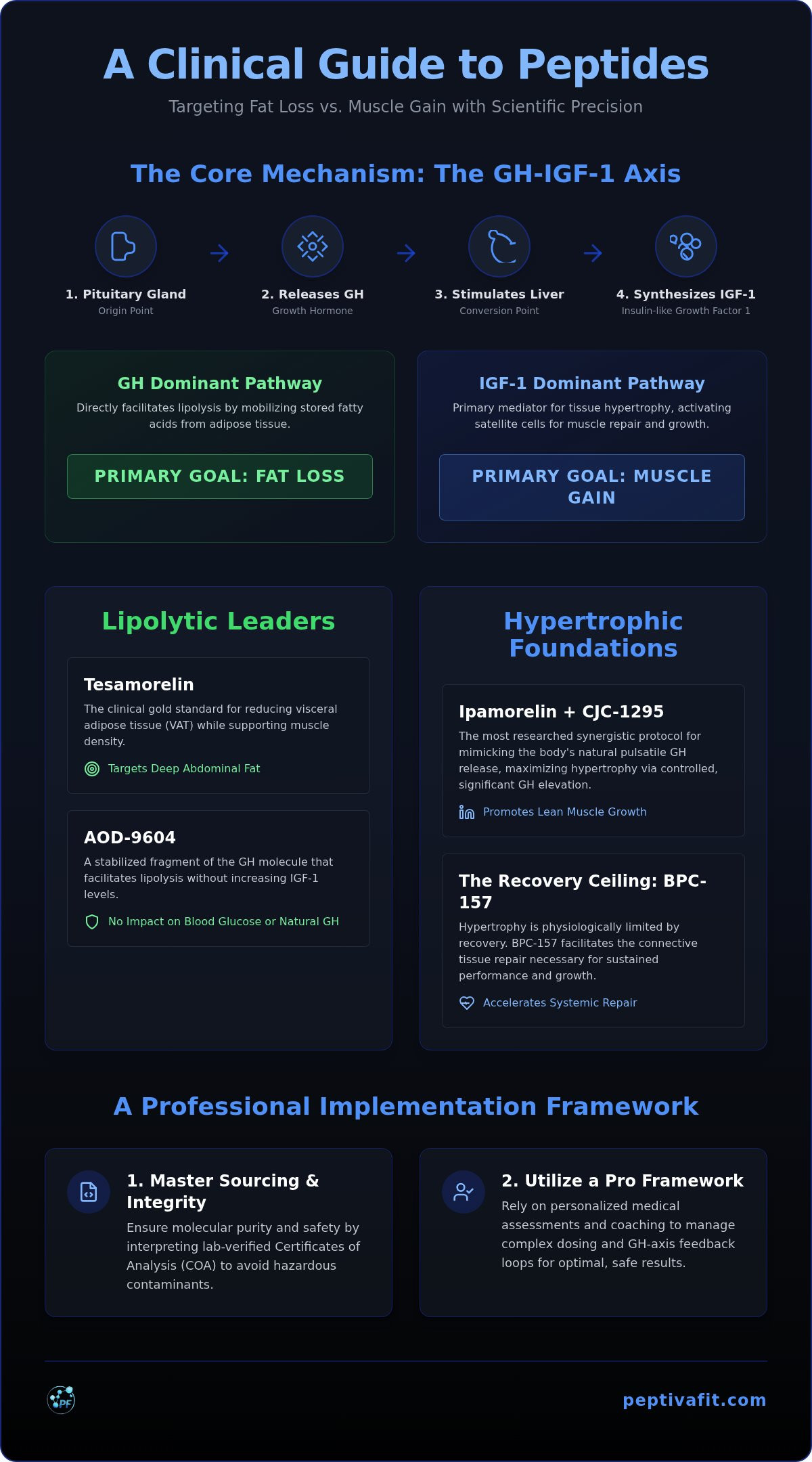
The somatotropic axis is the primary regulatory system for adult body composition. At its core, the pituitary gland releases Growth Hormone (GH) in a pulsatile manner, a process vital for metabolic regulation and cellular repair. Once GH enters the systemic circulation, it stimulates the liver to synthesize Insulin-like Growth Factor 1 (IGF-1). This conversion is the critical pivot point when evaluating peptides for fat loss vs muscle gain. While GH itself facilitates lipolysis by mobilizing fatty acids, IGF-1 serves as the primary mediator for tissue hypertrophy.
Hypertrophy requires the activation of myogenic satellite cells. These precursor cells respond to IGF-1 signaling by proliferating and fusing with existing muscle fibers, increasing the total nuclear capacity of the tissue. Effective peptide therapy doesn't seek to maintain static, elevated levels of these hormones. Instead, it aims to mimic the natural pulsatile rhythms of the body. This approach preserves the sensitivity of the GH-axis and prevents the negative feedback loops associated with traditional growth hormone replacement.
GHRH vs. GHRP: Understanding Secretagogue Synergy
Clinical protocols often utilize a synergistic combination of two distinct classes of Growth Hormone Secretagogues (GHSs). Growth Hormone Releasing Hormones (GHRH) act as signal amplifiers, increasing the volume of GH released during a natural pulse. Conversely, Growth Hormone Releasing Peptides (GHRP) function as pulse initiators by mimicking the action of the hormone ghrelin. Combining these agents allows for a significant but controlled elevation in GH levels. This dual-action strategy is essential when distinguishing the effects of various peptides for fat loss vs muscle gain to ensure maximum biological response without pituitary fatigue.
The mTOR Pathway and Nutrient Partitioning
The presence of IGF-1 directly upregulates the mTOR pathway, the primary molecular sensor for muscle protein synthesis. When this pathway is active, the body prioritizes the assembly of new contractile proteins over the breakdown of existing tissue. This mechanism is central to favorable nutrient partitioning. Nutrient partitioning is the physiological process of directing consumed energy toward lean tissue repair and glycogen storage rather than adipose accumulation. By manipulating these pathways, individuals can achieve a metabolic state where calories are utilized for structural growth rather than stored as fat.
Comparative Analysis: Peptides for Fat Loss vs. Muscle Gain
Selecting the appropriate compound depends on whether your primary objective is metabolic acceleration or structural tissue growth. The choice between peptides for fat loss vs muscle gain isn't merely about dosage; it's about targeting specific receptors and signaling pathways to achieve a distinct physiological outcome. While some agents focus on the direct oxidation of lipids, others prioritize the anabolic environment necessary for muscle fiber recruitment and repair.
Lipolytic Leaders: Tesamorelin and AOD-9604
Tesamorelin stands as the clinical gold standard for reducing visceral adipose tissue (VAT). Unlike generalized weight loss agents that may lead to muscle wasting, it specifically targets the deep abdominal fat that surrounds vital organs while supporting increased muscle density. This makes it an elite tool for those prioritizing a lean, hardened physique without sacrificing functional mass.
For those seeking fat oxidation without systemic growth hormone elevation, AOD-9604 offers a unique advantage. This peptide is a stabilized fragment of the C-terminus of the human growth hormone molecule. It facilitates lipolysis by mimicking the fat-reducing properties of GH but lacks the sequences responsible for increasing IGF-1 levels. Consequently, it doesn't impact blood glucose levels or suppress the natural GH-axis, making it an ideal candidate for pure fat loss cycles. Practitioners should consult our Tesamorelin Dosage Guide for specific technical implementation details.
Hypertrophic Foundations: Ipamorelin and CJC-1295
The combination of Ipamorelin and CJC-1295 is the most extensively researched protocol for maintaining and building lean body mass. Ipamorelin is a highly selective Growth Hormone Releasing Peptide (GHRP) that triggers a significant GH pulse without the unwanted elevations in cortisol or prolactin often associated with earlier generations like GHRP-2. It doesn't stimulate the "hunger hormone" ghrelin, allowing for disciplined nutritional adherence during a growth phase.
When paired with CJC-1295, a GHRH analog that extends the hormonal half-life, the result is a potent environment for anabolic repair. This Clinical Perspective on Peptides underscores the necessity of distinguishing between these precision tools and unregulated market alternatives. For a broader view of these mechanisms, see our report on Peptides for Metabolism and Fat Loss. Choosing the right path requires objective data; a personalized medical assessment can help determine which sequence aligns with your current metabolic baseline.
The Recovery Connection: Why Systematic Repair is the Ceiling for Growth
Hypertrophy is often viewed as a direct result of training intensity, but the rate of muscle gain is fundamentally limited by the speed of systemic repair. If the structural integrity of tendons and ligaments cannot match the force production of rapidly growing muscle fibers, progress will inevitably plateau or end in injury. This is a critical distinction when evaluating peptides for fat loss vs muscle gain. While fat loss protocols prioritize metabolic signaling, muscle gain requires a robust framework for structural fortification.
Systemic recovery isn't a passive state; it's an active, energy-intensive biological process. When you push past your natural physiological limits, the body's baseline repair mechanisms often become overwhelmed. Utilizing specific repair-oriented peptides allows a practitioner to raise the "ceiling" of their progress by ensuring that the architectural support of the body, specifically the connective tissue, is as resilient as the muscle tissue it supports.
BPC-157 for Connective Tissue Integrity
BPC-157, a gastric pentadecapeptide, is highly regarded in clinical research for its ability to promote angiogenesis, which is the formation of new blood vessels. This process is vital for delivering oxygen and nutrients to poorly vascularized tissues like tendons and ligaments. As muscle strength increases rapidly through secretagogue use, these connective structures often become the weakest link in the kinetic chain. BPC-157 provides the biological support required to ensure joint health keeps pace with muscular development. By accelerating the healing of micro-tears in connective tissue, BPC-157 supports muscle gain indirectly through injury prevention and the maintenance of structural stability. For a technical analysis of this compound, consult our BPC-157 Clinical Reference.
Optimizing the Recovery Window for Lean Mass
TB-500, a synthetic version of the naturally occurring Thymosin Beta-4, complements BPC-157 by facilitating cellular migration and modulating inflammatory responses. It plays a unique role in actin sequestering, a process essential for cell structure and fiber regeneration after high-intensity stimulus. When these two compounds are combined, they create a potent environment for rapid tissue turnover. This synergy allows for a significant increase in weekly training volume without the typical risk of overtraining or systemic fatigue.
To further enhance this window, MOTS-C can be integrated to improve mitochondrial-driven metabolic efficiency. This ensures that the energy required for cellular repair is readily available at the molecular level. When comparing peptides for fat loss vs muscle gain, the inclusion of recovery agents ensures that your physiological ceiling is constantly rising rather than acting as a hard stop to your performance goals.
Sourcing and Molecular Integrity: The Role of Lab-Verified Supply
The biochemical distinction between peptides for fat loss vs muscle gain becomes a secondary concern if the compound's molecular integrity is compromised. In a market saturated with "research-grade" substances, the burden of verification falls entirely on the practitioner. Substandard sourcing introduces significant risks, including heavy metal contamination, the presence of bacterial endotoxins, and chronic under-dosing. These variables don't just stall your progress; they pose a direct threat to your systemic health and immunological stability.
Validating a peptide's quality requires an understanding of High-Performance Liquid Chromatography (HPLC) and Mass Spectrometry. HPLC determines the purity of the peptide by separating its components, while Mass Spectrometry confirms the specific molecular weight to ensure the amino acid sequence is correct. A legitimate Certificate of Analysis (COA) must be batch-specific and issued by an independent third-party laboratory. If a supplier can't provide a recent, verifiable COA that matches the current batch number, the product's efficacy is purely speculative.
Identifying Red Flags in Peptide Research Laboratories
Transparency is the hallmark of a professional laboratory. Common red flags include the absence of third-party testing or the use of outdated COAs that refer to batches produced months or years prior. Suppliers who obscure their manufacturing origins or fail to provide explicit batch numbers are often operating without rigorous quality control. Once you've secured a verified compound, the next step is precise preparation to ensure the molecule remains active. For detailed instructions on maintaining stability during the mixing process, refer to our guide on How to Reconstitute Peptides.
Maintaining Molecular Integrity Post-Purchase
Peptide stability is highly sensitive to environmental factors. Lyophilization, or freeze-drying, is a non-negotiable standard for long-term storage of unconstituted peptides, as it prevents degradation during transit. Once reconstituted, these compounds must be stored in a temperature-controlled environment and handled with care to avoid mechanical stress on the delicate amino acid chains. The use of bacteriostatic water is mandatory to inhibit bacterial growth within the vial over the course of a cycle. Lab-tested peptides are the only responsible choice for those implementing high-level protocols. To ensure your research is supported by clinical-grade materials, you can access lab tested peptides through our selective procurement framework.
Implementing the Peptiva Protocol: From Assessment to Performance
Successful implementation of the PeptivaFit Protocol requires a fundamental shift in perspective. You must view these compounds not as standalone supplements, but as precision instruments within a managed medical framework. The biochemical choice between peptides for fat loss vs muscle gain is only the first step in a sophisticated sequence of metabolic optimization. True performance gains are realized when the protocol is tailored to your unique physiological landscape, ensuring that every peptide pulse is met with the appropriate nutritional and mechanical stimuli. It's a process that demands discipline and a commitment to data over anecdotal evidence.
Personalized medical oversight is the foundation of this discipline. Before initiating any cycle, a personalized medical assessment establishes your baseline metabolic health. We prioritize the monitoring of specific biomarkers, including serum IGF-1, fasting insulin, and HbA1c. These data points allow for the precise calibration of dosages, preventing the insulin resistance or pituitary fatigue that can occur with unmanaged use. A single consultation call provides the opportunity to review these markers with an expert, allowing for real-time troubleshooting and the customization of your stack based on individual bio-markers. This proactive approach ensures your body remains in a state of high-responsiveness throughout the protocol's duration.
Personalized Medical Oversight and Biomarkers
The role of blood work cannot be overstated in a professional protocol. By tracking HbA1c and fasting insulin, we ensure that growth hormone secretagogues don't negatively impact your glucose metabolism. Monitoring IGF-1 levels allows us to verify that the pituitary gland is responding appropriately to the GHRH and GHRP signals. If markers deviate from the optimal range, we adjust the frequency or timing of the administration. This level of clinical scrutiny is what separates a professional protocol from the high-risk guesswork often found in unregulated forums.
The PeptivaFit Coaching Advantage
The transition from amateur self-experimentation to professional optimization is facilitated by the PeptivaFit coaching advantage. Through 1-on-1 coaching, practitioners receive the guidance necessary to manage complex dosing schedules and monitor for subtle side effects. This professional framework ensures that molecular safety remains the primary priority while metabolic efficiency is maximized. The PeptivaFit Protocol acts as the definitive framework for this process, integrating peptide therapy with high-intensity resistance training and specific macronutrient partitioning strategies. It's a disciplined, long-term approach designed for those who value scientific-grade results. You can directly access The PeptivaFit Protocol and Professional Coaching Packages to secure the expertise required for this level of physical transformation.
Master Your Metabolic Architecture
The strategic choice between peptides for fat loss vs muscle gain is a high-stakes decision in hormonal signaling. Effective protocols depend on your ability to leverage the GH-IGF-1 axis while maintaining the structural integrity of your connective tissues. You've learned that hypertrophy is limited by recovery and that metabolic acceleration requires precise, lab-verified compounds to avoid systemic contamination. True optimization is a data-driven pursuit that leaves no room for the variables of unverified research chemicals.
Professional results are built on the foundation of clinical-grade standards and disciplined oversight. Optimize your body composition with the Peptiva Protocol and Lab-Tested Peptides. This comprehensive framework provides personalized medical assessments, lab-verified peptide purity with HPLC testing, and expert 1-on-1 metabolic coaching to ensure your safety and efficacy. You're now equipped to transition from general experimentation to professional-grade performance. Your path to metabolic mastery is defined by data, not guesswork.
Frequently Asked Questions
What is the absolute best peptide for lean muscle gain?
The combination of Ipamorelin and CJC-1295 is widely considered the clinical standard for sustained lean muscle gain. Ipamorelin acts as a selective growth hormone releasing peptide, while CJC-1295 serves as a signal amplifier to increase the natural growth hormone pulse. This synergy creates an optimal anabolic environment for satellite cell activation. For those prioritizing muscle density alongside visceral fat reduction, Tesamorelin remains the most potent option for body composition optimization.
Are peptides for muscle growth legal in the United States?
The legal landscape in 2026 is defined by specific regulatory classifications. Peptides like Tesamorelin and Sermorelin are FDA-approved and legal when prescribed by a licensed physician for specific medical conditions. In July 2026, the FDA's Pharmacy Compounding Advisory Committee recommended several compounds, including BPC-157 and TB-500, for the 503A bulks list for pharmacy compounding. However, selling these substances as "research chemicals" for human consumption remains prohibited, necessitating professional medical oversight.
How quickly can I expect to see results from a fat loss peptide stack?
Metabolic shifts occur within the first 14 days of a protocol, though visual changes typically manifest between weeks four and twelve. When evaluating peptides for fat loss vs muscle gain, lipolytic agents like AOD-9604 or Tesamorelin require consistent administration to mobilize visceral adipose tissue. Results are contingent upon the optimization of nutrient partitioning and training intensity. Practitioners often report improved sleep quality and recovery before significant fat loss becomes apparent on a DEXA scan.
Do peptides for muscle gain cause side effects like traditional steroids?
Peptides function as secretagogues, meaning they stimulate your pituitary gland to release endogenous growth hormone rather than introducing synthetic hormones. Unlike anabolic-androgenic steroids, they don't cause liver toxicity or significant HPTA suppression. Potential side effects are generally limited to mild water retention or localized irritation at the injection site. However, unmanaged dosing can impact insulin sensitivity, which is why monitoring fasting insulin and glucose levels is a non-negotiable requirement for safety.
How do I monitor my health while using GH secretagogues?
Rigorous health monitoring involves tracking specific metabolic biomarkers through regular blood work. Essential markers include IGF-1 to verify pituitary response, alongside fasting insulin and HbA1c to monitor glucose disposal and insulin sensitivity. These data points allow for precise adjustments to your protocol. A professional framework like the Peptiva Protocol integrates these assessments with 1-on-1 coaching to ensure that performance gains don't compromise long-term metabolic health or hormonal balance.
Can I use peptides for muscle gain if I am also trying to lose fat?
Simultaneous body recomposition is achievable by leveraging compounds that improve nutrient partitioning. Peptides like Ipamorelin can support lean mass maintenance while lipolytic agents like Tesamorelin target adipose stores. The success of this dual approach depends on your ability to balance the biochemical differences between peptides for fat loss vs muscle gain. Integrating these tools with a slight caloric deficit and high protein intake allows the body to prioritize fat oxidation while preserving structural tissue.
What is the difference between Ipamorelin and HGH?
Ipamorelin is a secretagogue that triggers your body's natural, pulsatile release of growth hormone, whereas HGH is an exogenous, synthetic hormone that provides a static elevation. Ipamorelin carries a lower risk of side effects because it respects the body's natural feedback loops and doesn't suppress endogenous production. It's a more selective approach that avoids the cortisol and prolactin spikes associated with older secretagogues, making it a safer long-term tool for performance optimization.
How do I know if the peptides I bought are high purity?
Purity verification requires a batch-specific Certificate of Analysis (COA) from an independent third-party laboratory. High-purity peptides must undergo High-Performance Liquid Chromatography (HPLC) to confirm purity levels above 99% and Mass Spectrometry to verify the correct molecular sequence. You must also ensure the report includes testing for heavy metals and bacterial endotoxins. Relying on "research-grade" labels without these verified documents is a significant risk to your systemic health and protocol efficacy.

![Shelf Life of Reconstituted Peptides: A Clinical Reference Guide [2026]](https://getautoseo.com/storage/hero_images/shelf-life-of-reconstituted-peptides-a-clinical-reference-guide-2026.jpg?v=b8ed5173acaa)
