

Why does adipose tissue often remain resilient even when your caloric deficit is mathematically perfect? It's a common frustration for those who've reached a plateau where standard methodology fails to trigger further lipolysis. You're likely seeking the best peptides for cutting fat not as a shortcut, but as a sophisticated tool to master the science of metabolic signaling. This guide moves past the marketing noise to define how specific sequences interact with growth hormone receptors to mobilize stubborn lipids.
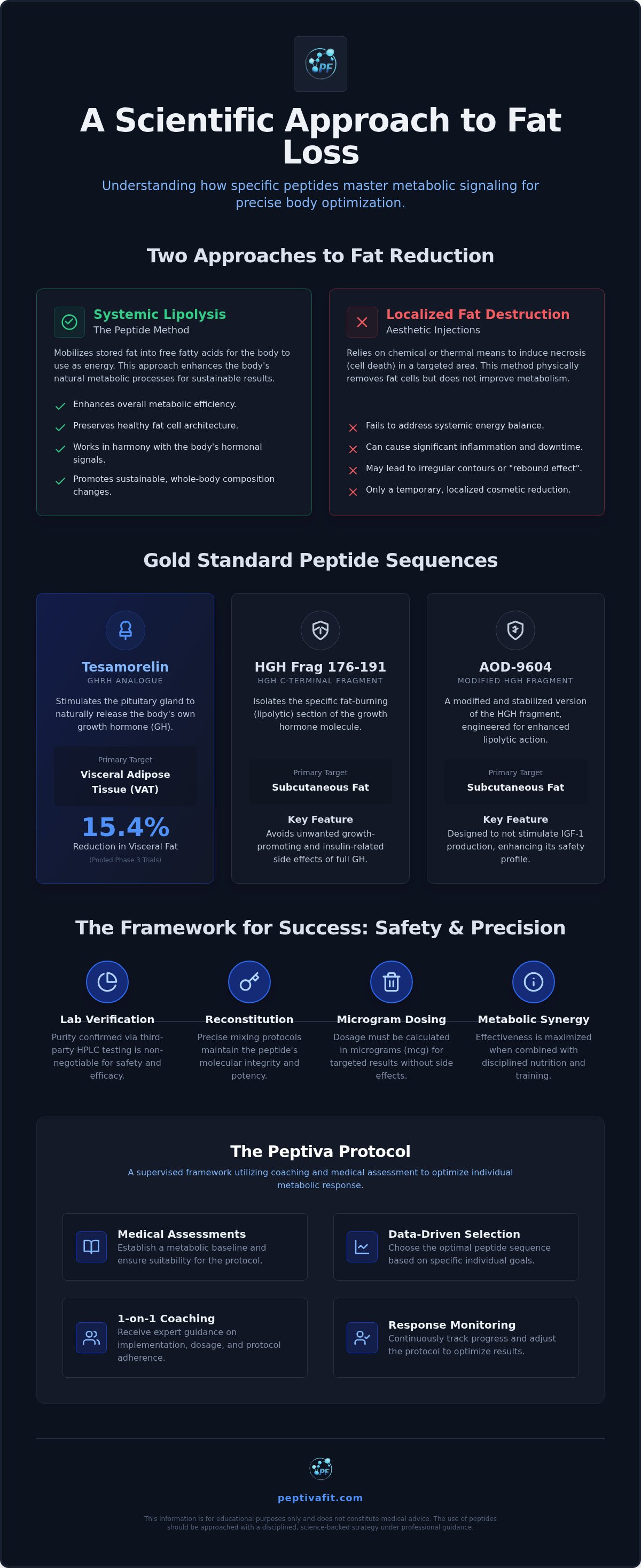
We understand that you value data over hype and safety over sensation. We'll examine the efficacy of compounds like Tesamorelin, which demonstrated a 15.4 percent reduction in visceral fat in pooled Phase 3 trials. You'll gain a clear framework for selecting lab-verified supplies and understanding the regulatory landscape of 2026. By establishing a disciplined approach to these metabolic tools, you can move beyond the confusion of aesthetic fat-dissolvers and implement a precise, science-backed strategy for body optimization.
Key Takeaways
- Understand the critical distinction between metabolic lipolysis and cellular necrosis to ensure your strategy targets systemic signaling rather than localized destruction.
- Evaluate the clinical status and potency of sequences such as HGH Frag 176-191 and Tesamorelin to identify the best peptides for cutting fat for your specific goals.
- Learn to navigate the complex landscape of unverified suppliers by identifying the necessity of third-party HPLC testing for ensuring peptide purity.
- Master the technical protocols for precise reconstitution and microgram-based dosing to maintain the molecular integrity of your lab tested peptides.
- Discover how to implement the Peptiva Protocol, a disciplined framework that utilizes 1-on-1 coaching and medical assessments to optimize your individual metabolic response.
Defining the Mechanism: Systemic Lipolysis vs. Localized Fat Destruction
Peptides are precise amino acid sequences that function as targeted metabolic signaling molecules. Unlike broad-spectrum hormones, these sequences act as biological keys, unlocking specific physiological responses without the systemic volatility associated with larger molecules. When identifying the best peptides for cutting fat, it's essential to distinguish between adipocyte necrosis and metabolic lipolysis. While aesthetic procedures often rely on necrosis, the literal destruction of fat cells through chemical or thermal means, peptides facilitate Systemic Lipolysis. This natural process involves the mobilization of stored triglycerides into free fatty acids for oxidation, preserving cellular architecture while reducing the volume of adipose tissue.
Systemic optimization is inherently superior to localized destruction for those seeking sustainable body composition goals. While a localized injection might address a specific pocket of fat, it does nothing to improve the body's overall metabolic efficiency. High-level lipolytic peptides mimic natural growth hormone (GH) signals, instructing the body to prioritize fat as a primary fuel source. This signaling approach ensures that changes in body composition are supported by an underlying metabolic shift, rather than just a temporary cosmetic reduction that fails to address systemic energy balance.
The Biochemical Process of Triglyceride Mobilization
At the cellular level, lipolysis is governed by the activation of hormone-sensitive lipase (HSL). This enzyme is responsible for breaking down stored triglycerides into glycerol and free fatty acids. Modern fat-loss peptides often interact with Beta-3 adrenergic receptors, which are primarily located in adipose tissue. This interaction stimulates the release of energy without significantly impacting heart rate or blood pressure. Crucially, the most effective sequences utilize non-diabetogenic signaling. This means they trigger fat loss without negatively affecting insulin sensitivity or blood glucose levels, which is a significant advantage over traditional, non-selective growth hormone therapy.
Peptides vs. Traditional Aesthetic Injections
Traditional localized treatments involve significant inflammatory responses and downtime. These methods destroy the fat cell entirely, which can lead to irregular contours if the remaining cells expand during future weight fluctuations. In contrast, metabolic peptides support long-term maintenance by refining the body's natural signaling pathways. There's no "rebound effect" because the body's ability to mobilize fat has been enhanced, not just its storage capacity physically reduced. For a deeper dive into these mechanisms, you can review our Peptides for Metabolism and Fat Loss: A Clinical Overview [2026]. This foundational context is necessary for anyone serious about utilizing lab tested peptides for precise body composition goals.
The Gold Standard Sequences: AOD-9604, HGH Frag 176-191, and Tesamorelin
Identifying the best peptides for cutting fat requires a transition from theoretical mechanisms to the clinical application of specific amino acid sequences. Three primary sequences dominate the current research landscape: AOD-9604, HGH Frag 176-191, and Tesamorelin. Each molecule utilizes distinct signaling pathways to prioritize adipose mobilization while maintaining metabolic stability. While fragments are often cited as the best peptides for cutting fat in subcutaneous areas, GHRH analogues offer a different utility for systemic health.
AOD-9604 and HGH Frag 176-191 are derived from the C-terminal end of the human growth hormone molecule. These fragments are engineered to isolate the lipolytic action of GH from its growth-promoting and insulin-antagonizing effects. In contrast, Tesamorelin acts as a Growth Hormone-Releasing Hormone (GHRH) analogue, stimulating the pituitary to release the body's endogenous supply of GH. This fundamental difference in action dictates their primary targets, with fragments focusing on subcutaneous tissue and GHRH analogues demonstrating high specificity for visceral adipose tissue (VAT).
AOD-9604 and the C-Terminal Fragment
AOD-9604 is a modified version of the 177-191 amino acid chain. It lacks the ability to bind to the growth hormone receptor in a way that stimulates IGF-1 production, which is a critical safety feature for those monitoring cellular proliferation. Clinical trials, including Phase IIa studies, have highlighted its ability to stimulate lipolysis without altering blood glucose levels. To achieve optimal results, researchers often follow specific administration windows, typically in a fasted state to maximize receptor sensitivity. Detailed implementation strategies are available in our Comprehensive Fat Loss Peptide Guide. Given the current regulatory environment as of September 2026, including active litigation regarding its compounding status, securing Lab Verification and Purity Standards is non-negotiable for any investigative protocol.
Tesamorelin: Targeting the Visceral Adipose Tissue (VAT)
Tesamorelin represents the gold standard for addressing deep abdominal fat, which is often metabolic-resistant. Clinical data indicates a 15.4 percent reduction in visceral fat over 26 weeks in specific patient populations. By mimicking endogenous GHRH, it preserves the natural pulsatile release of growth hormone, offering a more physiological approach than exogenous GH fragments. For those focusing on this specific metabolic target, understanding the nuances of administration is vital; see our Tesamorelin Dosage: A Clinical Guide to Metabolic Optimization Protocols.
Implementing these sequences requires a disciplined framework to ensure efficacy and safety. You might consider exploring the Peptiva Protocol to ensure your metabolic strategy is supported by clinical-grade data and professional oversight.
The Critical Importance of Lab Verification and Purity Standards
The "Research Use Only" (RUO) designation is a regulatory classification that shifts the responsibility of quality assurance from the manufacturer to the end-user. In an unregulated market, many suppliers bypass the rigorous testing required to ensure safety. Even the best peptides for cutting fat can be compromised by bacterial endotoxins, residual solvents, or heavy metals if they aren't subjected to high-level scrutiny. These contaminants don't just reduce efficacy; they introduce significant risks of systemic inflammation and immune reactivity. When metabolic signaling is the goal, the purity of the signal is just as important as the sequence itself.
High-Performance Liquid Chromatography (HPLC) is the essential methodology for determining the chemical purity of a peptide sequence. This process separates the components of a sample, allowing a lab to identify the percentage of the target peptide versus unintended side-products. At PeptivaFit, we maintain that lab-tested peptides are the non-negotiable baseline for any metabolic protocol. Without third-party verification, an investigator is essentially operating blindly, risking biological complications for the sake of cost-saving.
How to Read a Certificate of Analysis (COA)
A Certificate of Analysis (COA) serves as the only objective proof of a peptide's molecular integrity and chemical identity. When reviewing a COA, the purity percentage is the primary metric, and it should ideally exceed 99 percent for research applications. However, purity alone is insufficient. Mass Spectrometry (MS) is required to confirm the molecular mass, ensuring the amino acid sequence matches the intended compound. If the mass is incorrect, the peptide is a different substance entirely, regardless of how pure it claims to be on the chromatogram.
The Role of Professional Medical Oversight
Scientific data suggests that even the best peptides for cutting fat require a precise physiological context to be effective and safe. Personalized medical assessments are essential to screen for contraindications and pre-existing metabolic conditions that could be exacerbated by growth hormone fragments or GHRH analogues. Baseline blood work, specifically monitoring markers like HbA1c and fasting insulin, provides a roadmap for how your body will respond to lipolytic signaling. PeptivaFit integrates this medical expertise into every protocol, ensuring that metabolic optimization is achieved through data-driven oversight rather than guesswork. This disciplined approach separates serious performance optimization from casual consumer trends.
Strategic Implementation: Reconstitution, Dosage Protocols, and Metabolic Synergy
Identifying the best peptides for cutting fat is only the initial phase of a successful metabolic optimization strategy. The actual physiological impact is contingent upon a disciplined approach to molecular handling and biological timing. The first critical step involves precise reconstitution using bacteriostatic water, which serves as the essential medium for maintaining molecular stability. You must treat these sequences with extreme care; the delicate peptide bonds are highly susceptible to mechanical stress. Avoid vigorous shaking at all costs, as this mechanical agitation can denature the protein and render the sequence biologically inert. For a technical breakdown of the necessary equipment and steps, consult our guide on How to Reconstitute Peptides: A Clinical Guide to Molecular Integrity.
Once reconstituted, vials require strict environmental controls. While lyophilized powder remains stable at room temperature for short periods, the liquid form demands consistent refrigeration to prevent rapid degradation. Dosing is calculated in micrograms (mcg), a level of precision that reflects the high potency of these signaling molecules. To prevent receptor desensitization, implement a pulsed dosing schedule. Continuous stimulation of growth hormone receptors can lead to a diminished metabolic response over time. By utilizing specific "on" and "off" cycles, you preserve the body's sensitivity to the lipolytic signal, ensuring the best peptides for cutting fat remain effective throughout the duration of your protocol.
Environmental Optimization for Fat Loss
The biological environment at the moment of administration dictates the success of lipolytic signaling. Insulin is the primary antagonist of fat mobilization; its presence effectively blunts the action of even the most potent peptides. Therefore, aligning administration with fasted windows is a non-negotiable requirement. This timing ensures that the fatty acids mobilized by the peptide are actually available for oxidation rather than being re-esterified back into adipose tissue due to elevated glucose levels.
Maximum synergy is achieved through the integration of fasted cardiovascular activity. While the peptide provides the signal to mobilize stored lipids, physical exertion creates the metabolic demand to actually oxidize those released fatty acids. Furthermore, don't overlook the role of sleep quality. Deep, restorative sleep supports the body's natural pulsatile release of endogenous growth hormone, which acts as a primer for the exogenous sequences you introduce. This comprehensive environment ensures that your protocol functions as a complete metabolic framework rather than a series of isolated actions. To ensure your implementation meets these rigorous scientific standards, you should book a personalized medical assessment to refine your specific dosing and timing requirements.
The Peptiva Protocol: A Comprehensive Framework for Metabolic Results
The Peptiva Protocol is an elite metabolic framework designed for individuals who prioritize data-driven results over market hype. It's not a generic "stack" but a disciplined system that integrates high-level biofeedback with specific signaling sequences. While many search for the best peptides for cutting fat, few understand that these molecules only function optimally within a highly structured environment. By using lab tested peptides as a metabolic catalyst, the protocol synchronizes lipid mobilization with your body's natural circadian rhythms and dietary windows. This systemic approach is supported by 1-on-1 coaching, which provides the necessary oversight to adjust protocols based on real-time physiological data. Maintaining endocrine balance is a core pillar of our methodology, ensuring that your long-term health is never sacrificed for short-term aesthetic changes.
Why 'Stacking' Without a Protocol Leads to Diminishing Returns
Casual stacking often results in the over-stimulation of growth hormone pathways, which can lead to receptor downregulation. When receptors become desensitized, the lipolytic signal is lost, regardless of the dosage administered. A structured protocol prevents this by balancing fat mobilization with systemic recovery. For example, integrating recovery sequences can mitigate the stress of intensive metabolic phases. For a detailed analysis of recovery synergy, refer to our BPC-157 Peptide: A Comprehensive Clinical Reference Guide (2026). This balance maintains endocrine equilibrium while maximizing the oxidation of adipose tissue. Without a strategic pause or cycling phase, the body's natural feedback loops can trigger a reduction in endogenous hormone production. The Peptiva Protocol manages these variables through precise timing and the inclusion of supportive sequences that protect cellular integrity.
Next Steps: Professional Consultation and Assessment
Achieving long-term body composition goals requires a transition from general research to personalized application. A single consultation call provides the opportunity to determine protocol suitability based on your current metabolic baseline and history. For those ready to commit to a rigorous optimization schedule, a personalized medical assessment serves as the definitive starting point. This evaluation ensures that all contraindications are identified before the initiation of any peptide sequence. We prioritize safety and efficacy by requiring baseline blood work to monitor insulin sensitivity and systemic inflammation throughout the process. We invite you to Explore the Peptiva Protocol for Fat Loss to begin your transition toward a more sophisticated, data-driven approach to metabolic health.
Mastering the Metabolic Signal
Transitioning from general interest to precise implementation requires a shift in perspective. You've learned that identifying the best peptides for cutting fat is only the first step in a disciplined body composition strategy. Success depends on the molecular integrity of lab-verified supplies and the strategic timing of administration within fasted windows to maximize lipolytic signaling. By prioritizing clinical-grade purity and professional medical oversight, you move beyond the risks of unverified research supplies and uncontrolled variables.
The path to metabolic optimization is most effective when supported by a structured framework rather than isolated experiments. You can Access the Peptiva Protocol: Fat Loss Peptide Guide to integrate third-party lab-verified purity with expert 1-on-1 coaching. This data-driven approach ensures that every microgram of your protocol serves your specific physiological requirements. With the right data and a disciplined mindset, achieving your precise body composition goals is a measurable and predictable process.
Frequently Asked Questions
Are fat-dissolving peptides the same as Kybella or deoxycholic acid?
No, these substances utilize fundamentally different mechanisms. Kybella uses deoxycholic acid to trigger chemical necrosis, which physically destroys adipocytes in a localized area. In contrast, metabolic peptides facilitate systemic lipolysis by signaling the body to mobilize stored fatty acids for energy. This distinction is vital for those seeking the best peptides for cutting fat without the significant inflammation and recovery time associated with cellular destruction.
Which is the best peptide for losing stubborn visceral belly fat?
Tesamorelin is widely recognized as the gold standard for targeting visceral adipose tissue (VAT). While fragments like AOD-9604 focus on subcutaneous fat, Tesamorelin acts as a GHRH analogue to stimulate the natural release of growth hormone. This specific signaling pathway is highly effective for reducing the deep abdominal fat that surrounds internal organs. Professional oversight ensures your metabolic baseline supports this advanced signaling strategy for long-term health.
How long does it take to see visible fat loss results from a peptide protocol?
Visible changes typically manifest between 8 and 12 weeks of consistent protocol adherence. Metabolic signaling is a gradual physiological process that requires the mobilization and subsequent oxidation of fatty acids. Results aren't instantaneous because your body must adapt to the new signaling environment. Data-driven monitoring through the Peptiva Protocol allows for precise adjustments if biofeedback indicates a plateau in your rate of fat mobilization.
Do I need to be in a calorie deficit while using fat-loss peptides?
Yes, a caloric deficit remains a biological requirement for fat loss. Peptides act as a catalyst by mobilizing stored lipids into the bloodstream, but those fatty acids must be oxidized through an energy deficit. If you consume excess calories, the mobilized fat is simply re-stored in the adipose tissue. Integrating the best peptides for cutting fat into a disciplined nutritional framework ensures that mobilized energy is actually utilized.
Can peptides like AOD-9604 cause permanent fat cell destruction?
No, lipolytic peptides don't cause permanent fat cell destruction or necrosis. Instead, they facilitate the shrinking of adipocytes by releasing stored triglycerides. This process preserves the cellular architecture of the adipose tissue while reducing its overall volume. Because the cells remain intact, long-term maintenance requires continued metabolic discipline. You must maintain a stable energy balance to prevent these cells from expanding again through future excess caloric intake.
Is it necessary to use bacteriostatic water for peptide reconstitution?
Yes, bacteriostatic water is the required medium for peptide reconstitution. It contains 0.9 percent benzyl alcohol, which inhibits bacterial growth within the vial for up to 28 days. Using sterile water or saline lacks this preservative, which significantly increases the risk of contamination and rapid molecular degradation. Maintaining the molecular integrity of lab tested peptides is impossible without this specific reconstitution fluid to ensure a stable and safe administration.
What are the common side effects of lipolytic peptides like Frag 176-191?
Common side effects are generally localized to the administration site, such as temporary redness, itching, or minor swelling. Because Frag 176-191 isolates the lipolytic fragment of growth hormone, it avoids the systemic issues like water retention or joint pain often associated with full-length GH. However, some individuals report mild lethargy if administration timing isn't correctly aligned with their metabolic state or sleep cycle. Personalized medical assessments help mitigate these individual responses.
How do I verify the purity of the peptides I am researching?
Purity verification requires a third-party Certificate of Analysis (COA) that includes both HPLC and Mass Spectrometry data. HPLC determines the purity percentage, which should ideally exceed 99 percent for research applications. Mass Spectrometry confirms the amino acid sequence matches the intended compound. You shouldn't rely on in-house testing or unverified claims. PeptivaFit prioritizes lab tested peptides to ensure every sequence meets these rigorous scientific standards for safety and efficacy.

![Shelf Life of Reconstituted Peptides: A Clinical Reference Guide [2026]](https://getautoseo.com/storage/hero_images/shelf-life-of-reconstituted-peptides-a-clinical-reference-guide-2026.jpg?v=b8ed5173acaa)
