

Sustainable fat loss is no longer a matter of willpower; it's a matter of precise biochemical signaling. You likely recognize that generic caloric deficits and standard advice often fail to address the complex hormonal barriers that stall your progress. A clinical peptide weight loss plan is not a standalone injection; it's a sophisticated metabolic intervention requiring precise data and lab-verified purity. This approach addresses the frustration of stagnant results and the safety risks associated with unverified, underdosed research chemicals.
This protocol serves as your definitive metabolic roadmap; moving you toward a disciplined, data-driven strategy for 2026. You'll gain a comprehensive understanding of how to leverage the latest advancements in multi-receptor agonists; including the February 2026 regulatory shifts that reclassified critical compounds for clinical compounding. We will detail the exact scientific standards required for fat loss and physiological health; ensuring your journey is guided by professional oversight and rigorous quality control.
Key Takeaways
- Define a structured peptide weight loss plan as a multi-pathway signaling protocol rather than a simple appetite suppressant.
- Distinguish between Growth Hormone Releasing Hormones (GHRHs) and Growth Hormone Releasing Peptides (GHRPs) to optimize the adult fat metabolism axis.
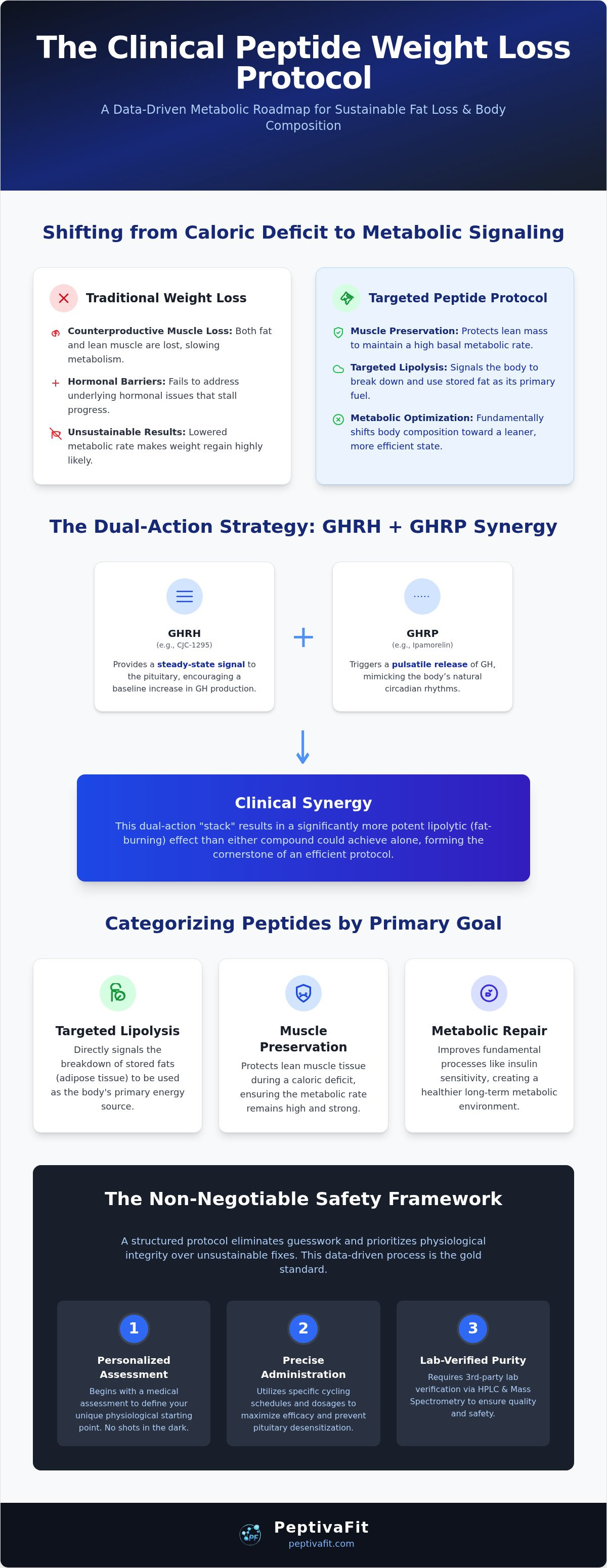
- Categorize therapeutic compounds based on primary physiological goals; such as targeted lipolysis, muscle tissue preservation, or fundamental metabolic repair.
- Master precise administration strategies; including specific cycling schedules to prevent pituitary desensitization and standardized reconstitution techniques.
- Establish non-negotiable safety standards by requiring 3rd-party lab verification through HPLC and mass spectrometry for all research compounds.
Understanding the Peptide Weight Loss Plan: A Multi-Pathway Approach
A sophisticated peptide weight loss plan is far more than a simple prescription for weight reduction. It's a structured protocol that utilizes specific amino acid chains to signal targeted metabolic changes at the cellular level. While many are familiar with the mechanisms of anti-obesity medications like semaglutide, which focus heavily on appetite suppression through the GLP-1 receptor, targeted peptide therapy offers a more nuanced approach. By addressing specific physiological pathways; this clinical strategy moves beyond blunt hunger control to optimize how the body mobilizes and utilizes energy.
True metabolic optimization requires a comprehensive roadmap. A disciplined plan doesn't rely on caloric restriction alone, which often leads to metabolic slowdown and muscle loss. Instead, it integrates dietary synergy, precise cycle timing, and professional medical oversight to ensure the body remains in a fat-burning state without compromising long-term health. This distinction is critical for professionals who prioritize performance and physiological integrity over quick, unsustainable fixes.
The Role of Peptides in Body Composition
Standard weight loss often results in a loss of both adipose tissue and lean muscle mass. This is a counterproductive outcome that lowers your basal metabolic rate and makes weight regain almost inevitable. Peptides change this dynamic by influencing lipolysis, the process where the body breaks down stored fats to be used as fuel. By signaling for muscle preservation while simultaneously accelerating fat oxidation, these compounds help you maintain a robust metabolism even during a caloric deficit. You aren't just losing weight; you're fundamentally shifting your body composition toward a leaner, more efficient state.
Why a Structured Protocol Beats "Research-Only" Guesswork
The landscape of self-optimization is often clouded by "research-only" compounds sold without guidance or quality assurance. Engaging with these substances without a clinical roadmap is a significant risk that can lead to pituitary desensitization or severe dosing errors. The Peptiva Protocol was developed to eliminate this guesswork by providing a systematic framework for fat loss. This process begins with a personalized medical assessment to define your unique physiological starting point. Without this data-driven foundation; any intervention is merely a shot in the dark. A structured peptide weight loss plan ensures that every administration is backed by scientific standards and lab-verified purity.
The Biological Mechanics of Targeted Lipolysis and Metabolic Signaling
Understanding the biological mechanics of a peptide weight loss plan requires a shift in focus from simple caloric math to endocrine signaling. Central to this process is the Growth Hormone (GH) axis, which governs how the adult body manages fat metabolism and lean tissue preservation. As we age, natural GH production declines; this often results in increased visceral adiposity and a slower metabolic rate. While the FDA approval of tirzepatide emphasized the role of incretin mimetics in weight management, the GH axis remains a critical target for those seeking to optimize body composition rather than just reducing total mass.
Peptides act as precise messengers that can restart these dormant metabolic pathways. By improving insulin sensitivity and promoting the mobilization of stored fatty acids, these compounds create a physiological environment where fat is used as the primary fuel source. This targeted lipolysis ensures that the weight lost comes from adipose tissue; protecting the skeletal muscle that is vital for long-term metabolic health.
GHRH vs. GHRP: The Dual-Action Strategy
A sophisticated protocol often utilizes a combination of Growth Hormone Releasing Hormones (GHRHs) and Growth Hormone Releasing Peptides (GHRPs). GHRHs, such as CJC-1295, provide a steady-state signal to the pituitary gland, encouraging a baseline increase in GH production. Conversely, GHRPs like Ipamorelin trigger a pulsatile release that mimics the body's natural circadian rhythms. When you stack these two pathways; the clinical synergy results in a significantly more potent lipolytic effect than either could achieve alone. This dual-action approach is a cornerstone of any disciplined peptide weight loss plan designed for maximum efficiency.
Mitochondrial Optimization for Long-Term Results
Beyond the GH axis, mitochondrial health serves as the foundation of cellular energy expenditure. The MOTS-C peptide is a unique mitochondrial-derived regulator that effectively mimics the metabolic benefits of physical exercise. It upregulates the AMPK pathway, which functions as the body's master metabolic switch; increasing glucose uptake in muscle tissue and enhancing overall insulin sensitivity. By optimizing mitochondrial function, you aren't just losing fat; you're increasing your body's capacity to burn energy at rest. For individuals ready to implement these biological mechanics through a structured roadmap, the Peptiva Protocol provides the elite clinical framework necessary for such a transformation.
Comparative Analysis of Leading Weight Loss Peptides
Selecting the correct components for a peptide weight loss plan requires a data-driven approach that prioritizes your specific physiological objectives over market trends. Not all peptides function through the same pathways; some focus on systemic metabolic repair while others are engineered for acute lipolysis. A comprehensive fat loss peptide guide categorizes these compounds by their primary mechanism; ensuring that each administration serves a distinct purpose within the broader protocol. Current research on peptides in obesity treatment suggests that the most effective strategies often involve a rotation of compounds to prevent receptor saturation and maintain metabolic flexibility.
The field is moving toward a more nuanced understanding of how these molecules interact with the endocrine system. It's no longer about just "losing weight"; it's about optimizing the ratio of fat to lean tissue. This requires a disciplined selection process where the compound's profile matches the user's metabolic needs. Whether the goal is to reverse years of metabolic damage or to strip away the last layers of stubborn adipose tissue; the choice of peptide dictates the success of the intervention. You shouldn't settle for a one-size-fits-all approach when specific data is available to customize your roadmap.
Tesamorelin: The Gold Standard for Visceral Fat
Tesamorelin stands out as a premier GHRH analog specifically indicated for the reduction of visceral adipose tissue (VAT). Clinical data indicates that Tesamorelin can reduce visceral fat by approximately 15% after 26 weeks of consistent use; with some trials showing up to 18% reduction at the 52-week mark. Adhering to a precise Tesamorelin dosage is essential for managing IGF-1 levels; as this peptide significantly increases natural growth hormone output. It's the ideal choice for individuals who possess a "lean-obese" phenotype or those struggling with stubborn abdominal fat that is resistant to traditional dietary interventions.
AOD-9604 and HGH Frag 176-191: Targeted Lipolysis
AOD-9604 is a stabilized analog of the C-terminal fragment of human growth hormone (HGH). Following the February 2026 regulatory shifts that reclassified these fragments for legal compounding; they've become a staple in sophisticated protocols. Unlike full-molecule HGH; these fragments are designed to stimulate lipolysis without negatively affecting blood glucose levels or inducing the systemic side effects associated with elevated IGF-1. This makes them a safer alternative for those focused strictly on fat oxidation. However; the efficacy of these fragments is highly dependent on timing. They must be administered in a fasted state to avoid the insulin response that can blunt their fat-burning potential. This level of precision separates a professional peptide weight loss plan from amateur experimentation.
Strategic Implementation: Cycles, Dosages, and Administration
The transition from theoretical knowledge to clinical application requires a disciplined approach to administration. A professional peptide weight loss plan is built on structured cycles; specifically the 5-day on, 2-day off protocol. This strategic pause is essential to prevent pituitary desensitization and ensure that the body's natural feedback loops remain responsive to signaling. Without these scheduled breaks, the efficacy of GHRHs and GHRPs can diminish, leading to plateaued results and unnecessary metabolic stress.
Timing is equally critical for success. The "Golden Hour" for peptide administration typically falls in the early morning while in a fasted state or immediately before bedtime. These windows align with the body's natural growth hormone pulses and low insulin levels, which maximizes the lipolytic environment. Subcutaneous administration remains the standard, utilizing insulin-grade syringes for precise delivery into adipose tissue. You must rotate injection sites daily to prevent localized tissue irritation; ensuring consistent absorption rates across the protocol.
Reconstitution Precision and Molecular Integrity
Peptides are highly sensitive molecular chains that require meticulous handling to maintain their structural integrity. When you learn how to reconstitute peptides, you understand that the introduction of bacteriostatic water must be a slow, controlled process. High-pressure streams or vigorous shaking can shear the delicate amino acid bonds, rendering the compound biologically inactive. Once reconstituted, these vials must be stored at temperatures between 2°C and 8°C (36°F to 46°F) to preserve their potency over the duration of the cycle.
Monitoring Progress and Adjusting the Protocol
A data-driven roadmap relies on consistent monitoring of specific bio-markers. Tracking fasting glucose, insulin levels, and IGF-1 provides the objective feedback necessary to determine when to "blast"—accelerating the protocol for maximum fat loss—or when to "cruise" to allow for physiological recovery. This level of oversight is where 1-on-1 coaching becomes indispensable. Professional guidance ensures that dosages are adjusted based on real-time data rather than guesswork. If you are ready to move beyond amateur experimentation and secure a lab-verified metabolic roadmap, you can access the Peptiva Protocol here to begin your clinical assessment.
The Peptiva Protocol: Integrating Clinical Oversight and Lab-Verified Purity
The peptide market is often described as a "wild west" of unverified vendors and inconsistent quality. For the professional seeking a disciplined peptide weight loss plan; this lack of regulation is a non-negotiable risk that can compromise both results and safety. The Peptiva Protocol was established to bridge the gap between advanced metabolic research and clinical-grade safety standards. By combining lab-tested peptides with rigorous medical assessments; the protocol provides a secure environment for physiological optimization. This isn't a mass-market solution; it's an exclusive framework designed for individuals who value data over hype and safety over sensation.
The Purity Standard: Why Lab-Tested Peptides Matter
The dangers of unverified research chemicals cannot be overstated. Contaminants; heavy metals; and under-dosed vials from non-clinical sources can lead to severe adverse reactions or total protocol failure. High-integrity research requires non-negotiable verification through 3rd-party High-Performance Liquid Chromatography (HPLC) and Mass Spectrometry (MS) testing. These tests confirm the exact molecular identity and purity percentage of every compound. PeptivaFit ensures every client operates within a framework of lab-verified compounds; eliminating the risks associated with anonymous online marketplaces. When identifying a high-integrity research laboratory; ensure they meet the following criteria:
- Verification of batch-specific COAs (Certificates of Analysis) for every compound.
- Confirmation of 3rd-party testing performed by independent; domestic laboratories.
- Purity thresholds that consistently exceed 99% for all research compounds.
- Transparent reporting on the absence of heavy metals and bacterial endotoxins.
Personalized Coaching and Medical Consultation
Metabolic medicine is inherently individualistic; what works for one endocrine profile may be entirely ineffective or even counterproductive for another. A "one size fits all" plan ignores the nuances of insulin sensitivity; baseline IGF-1 levels; and unique inflammatory markers. This is why the protocol integrates 1-on-1 coaching and specialized medical assessments to refine your roadmap. We prioritize a selective and restricted environment to maintain the high-level expertise our clients expect; ensuring that every adjustment is backed by clinical logic rather than guesswork.
For those ready to move from general interest to structured implementation; a single consultation call serves as the essential entry point for refining your protocol. This discussion allows for a granular review of your metabolic history and the fine-tuning of your administration schedule. True transformation requires more than just a vial; it requires the discipline of a clinically-guided strategy. Joining the Peptiva community means committing to a higher standard of performance and a long-term process of physiological health.
Securing Your Metabolic Future Through Clinical Precision
Mastering a peptide weight loss plan involves more than simple administration; it requires a disciplined integration of biochemical signaling and strategic cycling. You now understand that sustainable fat loss is achieved through targeted lipolysis and mitochondrial optimization rather than blunt caloric restriction. By prioritizing lab-verified peptide purity and comprehensive personalized medical assessments, you ensure that your metabolic roadmap is built on a foundation of scientific integrity.
Professional oversight is the final component in securing long-term physiological health. Expert 1-on-1 metabolic coaching provides the data-driven adjustments necessary to navigate the complexities of adult metabolism. It's time to move beyond the unverified research market and step into a structured, elite framework designed for your specific needs. Access the Peptiva Protocol and Start Your Clinical Weight Loss Plan to claim sophisticated control over your performance and wellness. You're ready to achieve the metabolic excellence your discipline deserves.
Frequently Asked Questions
Is a peptide weight loss plan safer than Ozempic?
Safety depends on clinical oversight and the specific biological pathway targeted. While GLP-1 agonists like Ozempic are effective, they often cause significant gastrointestinal distress and muscle wasting in some individuals. A structured peptide weight loss plan utilizing GHRHs and GHRPs focuses on the Growth Hormone axis to prioritize fat oxidation while preserving lean muscle mass. This targeted approach often results in a more favorable side-effect profile for those who prioritize body composition over simple weight reduction.
How long does it take to see results from fat loss peptides?
You will likely notice improvements in sleep quality and recovery within the first 14 days of administration. However, visible changes in body composition and fat loss typically require 8 to 12 weeks of consistent adherence to the protocol. For specific targets like visceral adipose tissue, clinical data on compounds like Tesamorelin shows significant reduction starting at 26 weeks. Sustainable physiological change is a long-term process rather than an overnight fix.
Do I need to follow a specific diet while on the Peptiva Protocol?
Metabolic optimization requires dietary synergy to maximize the signaling effects of the peptides. The Peptiva Protocol emphasizes a high-protein diet to support muscle preservation and specific nutrient timing to avoid blunting the fat-burning process. You must manage insulin levels through controlled carbohydrate intake, especially around the "Golden Hour" of administration. Without a disciplined nutritional foundation, the biochemical signals sent by the peptides won't reach their full lipolytic potential.
What are the most common side effects of weight loss peptides?
Common side effects are generally mild and localized when using high-purity compounds. You might experience transient water retention, slight tingling in the extremities, or minor irritation at the injection site. These effects often subside as the body adapts to the increased hormonal signaling. More significant issues, such as pituitary desensitization, only occur when users fail to follow the recommended 5-day on, 2-day off cycling schedule or exceed clinical dosages without professional guidance.
Can I stack multiple peptides for faster weight loss?
Stacking is a primary strategy for achieving clinical synergy within a metabolic roadmap. Combining a Growth Hormone Releasing Hormone with a Growth Hormone Releasing Peptide creates a more potent pulsatile release than either compound used in isolation. This dual-pathway approach accelerates lipolysis by addressing both baseline signaling and acute release. However, stacks must be carefully structured through a personalized medical assessment to ensure the endocrine system remains balanced and responsive throughout the cycle.
How do I know if my peptides are high quality and pure?
Purity is only guaranteed through independent, 3rd-party laboratory verification. You must demand batch-specific Certificates of Analysis that include both High-Performance Liquid Chromatography (HPLC) and Mass Spectrometry (MS) results. These tests confirm the compound's identity and ensure it's free from contaminants like heavy metals or bacterial endotoxins. PeptivaFit maintains this standard by providing only lab-verified peptides, ensuring every vial meets the non-negotiable purity requirements for human research and optimization.
Will I gain the weight back after stopping a peptide cycle?
Weight regain is less likely when the protocol focuses on metabolic repair rather than temporary appetite suppression. Peptides improve insulin sensitivity and mitochondrial health, which helps reset your body's "set point" for fat storage. If you maintain the disciplined lifestyle habits established during the cycle, your improved metabolic rate will support long-term weight maintenance. The goal of the Peptiva Protocol is to create a permanent physiological shift rather than a temporary weight loss result.
Do peptides for weight loss require a prescription?
The regulatory landscape changed significantly in February 2026, allowing for the legal compounding of many previously restricted peptides with a physician's prescription. While some compounds are available for scientific investigation as research chemicals, a clinical peptide weight loss plan should always be conducted under professional medical oversight. This ensures you're using legal, high-purity substances that are appropriately dosed for your specific physiological needs and health history.

![Shelf Life of Reconstituted Peptides: A Clinical Reference Guide [2026]](https://getautoseo.com/storage/hero_images/shelf-life-of-reconstituted-peptides-a-clinical-reference-guide-2026.jpg?v=b8ed5173acaa)
