

The pursuit of aggressive weight loss often triggers a metabolic penalty that sacrifices lean muscle for short-term scale victories. You likely understand the frustration of stubborn adipose tissue that remains unresponsive despite rigorous caloric deficits and disciplined training. This metabolic resistance isn't a failure of will; it's a biological safeguard that requires sophisticated intervention. Identifying the best peptides for female fat loss involves moving beyond simple appetite suppression toward precise molecular signaling that prioritizes lipolysis while safeguarding metabolic health.
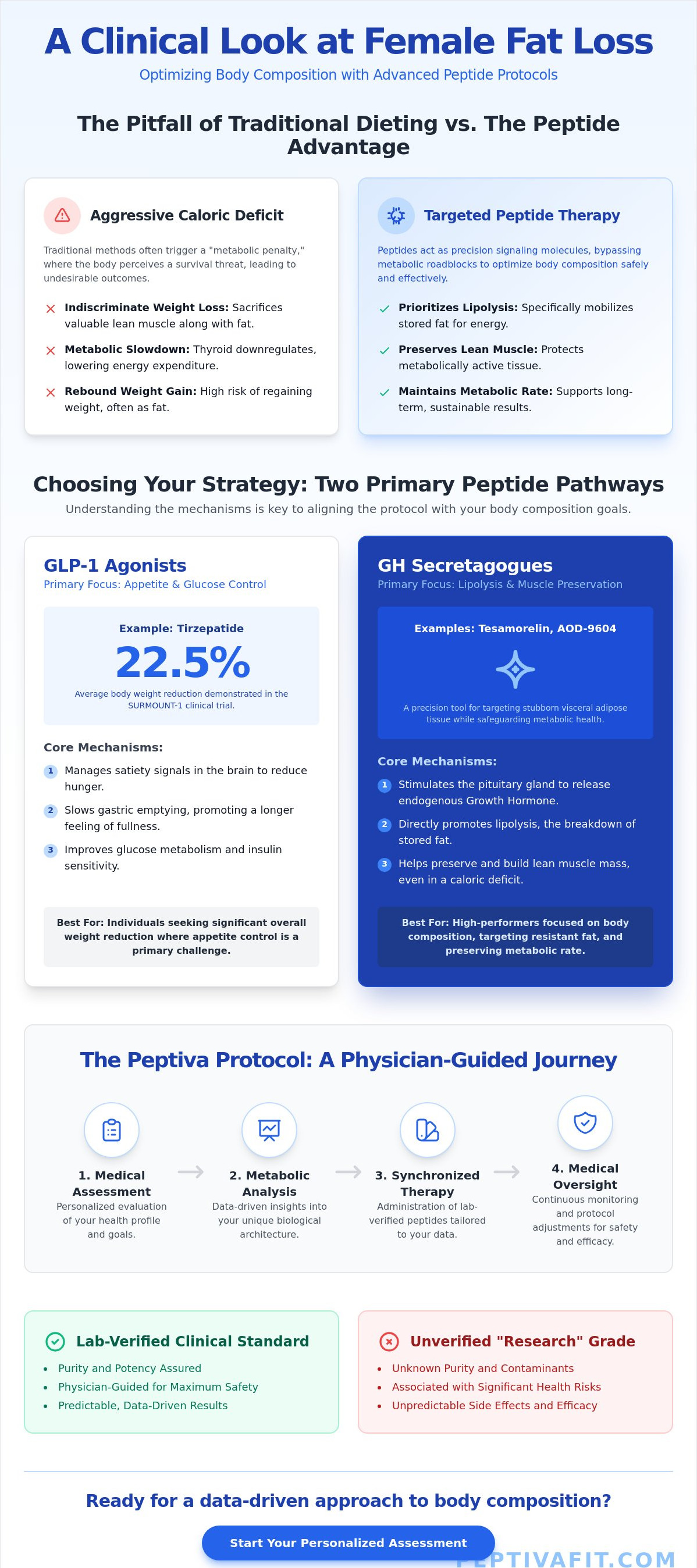
This 2026 clinical review provides a professional analysis of metabolic optimization through advanced peptide protocols. You'll learn how to distinguish between FDA-approved medications like Tirzepatide, which demonstrated a 22.5% average weight loss in the SURMOUNT-1 trial, and newly reclassified compounds like AOD-9604. We'll examine the specific mechanisms required to maintain lean tissue and explore how the Peptiva Protocol integrates lab-tested peptides with a personalized medical assessment. This guide offers a disciplined, data-driven framework for those seeking significant body composition improvements without the risk of metabolic regression.
Key Takeaways
- Identify the biological mechanisms, such as the interplay of estrogen and the growth hormone axis, that define successful female metabolic optimization.
- Evaluate the clinical applications of Tesamorelin and AOD-9604, currently recognized as the best peptides for female fat loss for targeting visceral adipose tissue.
- Contrast the mechanisms of GLP-1 agonists against GH secretagogues to ensure fat loss protocols prioritize the preservation of lean muscle mass.
- Establish rigorous safety standards by understanding the risks associated with unverified research-grade peptides compared to lab-verified clinical standards.
- Access a structured methodology through the Peptiva Protocol, which synchronizes peptide therapy with metabolic data and personalized medical oversight.
The Biological Architecture of Female Metabolic Optimization
Metabolic optimization represents the high-level synchronization of hormonal signaling and cellular energy expenditure. It is a state where the body's internal environment is tuned to prioritize fat oxidation while maintaining the structural integrity of lean tissue. For women, achieving this state is significantly more complex than for men. Female physiology is dictated by a multi-layered interplay between estrogen, cortisol, and the Growth Hormone (GH) axis. Estrogen serves as a primary regulator of fat distribution and insulin sensitivity, while cortisol levels often dictate whether the body remains in a storage-dominant or mobilization-dominant state.
Traditional weight loss strategies frequently fail because they ignore these biological nuances. When a woman enters an aggressive caloric deficit, her body often perceives a survival threat. This triggers a "Metabolic Plateau" where the thyroid downregulates and the body begins to catabolize muscle tissue to preserve energy. Peptides offer a sophisticated alternative. These compounds act as precision signaling molecules that bypass these traditional metabolic roadblocks by communicating directly with specific receptors. In the clinical search for the best peptides for female fat loss, the focus shifts from simple calorie restriction to the modulation of hormones like Glucagon-like peptide-1 (GLP-1), which manages glucose metabolism and satiety at a foundational level.
The Role of the Growth Hormone Axis in Body Composition
Natural growth hormone production begins a steady decline as women age, which directly impacts the efficiency of lipolysis and cellular repair. While exogenous HGH provides a blunt replacement that often carries systemic risks, certain peptides stimulate the body's endogenous release. This maintains a pulsatile rhythm, which is vital for maintaining female hormonal balance without suppressing natural function. By encouraging the pituitary gland to release its own GH, these compounds help preserve lean tissue even when the body is in a fat-loss phase. This specialized signaling ensures that the metabolic rate remains elevated, preventing the rebound weight gain common in less disciplined approaches.
Lipolysis vs. Weight Loss: Why the Distinction Matters
Weight loss is a deceptive metric. It fails to distinguish between the loss of water, muscle, and actual adipose tissue. Lipolysis is the specific mobilization of stored fatty acids for fuel, and it's the only metric that truly reflects body composition optimization. Identifying the best peptides for female fat loss requires looking at compounds that target fat stores without sacrificing the muscle that supports metabolic health. For instance, utilizing a specific tesamorelin dosage allows for the targeted reduction of visceral adipose tissue. This clinical precision ensures that the weight lost is specifically the inflammatory fat that compromises health, rather than the lean muscle that drives long-term performance.
Clinical Review: Best Peptides for Female Fat Loss in 2026
Scientific investigation into metabolic optimization has evolved beyond standard anorectics and simple caloric restriction. The February 2026 reclassification of several key compounds into Category 1 has expanded the clinical availability of physician-guided protocols. While many consumers seek the best peptides for weight loss, the distinction lies in selecting agents that prioritize body composition over mere scale reduction. For the high-performing woman, the objective isn't just weight loss; it's the preservation of metabolic rate through the targeted elimination of adipose tissue.
Tesamorelin: The Precision Tool for Visceral Adipose Tissue
Tesamorelin operates as a potent Growth Hormone Releasing Hormone (GHRH) analogue. Its primary mechanism involves stimulating the pituitary gland to increase endogenous GH production in a pulsatile manner. Clinical data consistently highlights its efficacy in reducing abdominal fat, particularly the deep visceral stores that are often resistant to traditional exercise. For a technical breakdown of how these signaling pathways influence cellular energy expenditure, refer to our clinical overview of peptides for metabolism. This peptide is specifically valued for its ability to improve metabolic health without negatively impacting insulin sensitivity, a common concern with older generation therapies.
AOD-9604 and Frag 176-191: Targeted Lipolytic Signaling
AOD-9604 is a C-terminal fragment of the human growth hormone molecule, specifically designed to trigger lipolysis without the hyperglycemic effects associated with full-chain HGH. This makes it an ideal candidate for women concerned about maintaining stable blood sugar levels during a fat loss phase. Unlike research-grade fragments with unstable half-lives, clinical-grade AOD-9604 offers a reliable signaling profile that mimics the body's natural fat-burning response to exercise. It remains a low-side-effect entry point because it doesn't disrupt the broader endocrine system or suppress natural growth hormone production. It's often utilized in protocols where the primary goal is the mobilization of stubborn fatty acids from the hips and thighs.
Ipamorelin: The Selective GH Secretagogue
Ipamorelin is frequently cited as the safest and most selective growth hormone releasing peptide (GHRP) for female users. Its selectivity is its greatest asset; it targets the GH receptor without causing the spikes in prolactin or cortisol often seen with older secretagogues like GHRP-2 or GHRP-6. Beyond fat loss, users frequently report secondary benefits such as improved sleep architecture and enhanced skin elasticity. When combined with CJC-1295, it creates a synergistic environment for sustained metabolic elevation. This combination, often referred to as a "stack," ensures that the Growth Hormone axis remains active for longer durations, facilitating recovery and fat oxidation throughout the day.
Mitochondrial-derived peptides like MOTS-C represent the next frontier in this field. MOTS-C acts as a metabolic regulator that mimics the benefits of physical exertion at the cellular level, enhancing insulin sensitivity and glucose uptake in muscle tissue. Selecting the best peptides for female fat loss requires an individualized approach that accounts for current hormonal baselines and lifestyle variables. A personalized medical assessment is essential to ensure the chosen protocol aligns with your specific metabolic requirements and safety standards.
GLP-1 Agonists vs. GH Secretagogues: Choosing Your Strategy
Selecting the best peptides for female fat loss requires a strategic understanding of how different signaling pathways affect body composition. GLP-1 receptor agonists, such as Semaglutide and Tirzepatide, primarily function through appetite suppression and the delay of gastric emptying. While these are highly effective for reducing caloric intake, they do not inherently accelerate the metabolic rate. In contrast, Growth Hormone (GH) secretagogues like Ipamorelin focus on metabolic acceleration by stimulating the endogenous release of GH. This promotes the direct mobilization of fatty acids for energy while protecting structural proteins in muscle tissue.
The risk of sarcopenia, or significant muscle loss, is a critical concern during aggressive weight loss phases. Clinical data from GLP-1 trials indicates that a substantial portion of weight lost can come from lean mass if nutritional intake and resistance training are not optimized. This often results in a "skinny fat" physique where the individual weighs less but possesses a higher body fat percentage and a lower basal metabolic rate. Integrating GH peptides into a protocol mitigates this risk. By maintaining growth hormone levels, these peptides signal the body to preserve muscle and bone density, ensuring that the weight loss is almost exclusively from adipose tissue.
Sustainability is the primary differentiator between pure suppression and metabolic optimization. Pure appetite suppression often leads to a metabolic rebound once the medication is discontinued, as the body's underlying energy expenditure has remained stagnant or decreased. The Peptiva Protocol addresses this by combining pathways. This clinical framework utilizes GLP-1s to manage glucose and satiety while leveraging GH secretagogues to "re-tool" the metabolism. This dual-action approach creates a more resilient metabolic profile that is easier to maintain long-term.
When to Prioritize GLP-1 Agonists (Semaglutide/Tirzepatide)
GLP-1 therapy is the priority for candidates presenting with significant insulin resistance, metabolic syndrome, or chronic overeating patterns. These individuals require the neurochemical "reset" that GLP-1s provide to establish a sustainable caloric deficit. However, medical oversight is non-negotiable to prevent malnutrition and muscle wasting. In these instances, utilizing a mots c peptide protocol can be a vital adjunct. This mitochondrial-derived peptide supports cellular energy production and insulin sensitivity, helping to maintain metabolic health even as caloric intake drops.
The Case for GH Secretagogues in Athletic Women
Athletic women who are already active but struggle to shift "last-mile" body fat are better served by GH secretagogues. These women often don't need appetite suppression; they need to overcome hormonal plateaus that prevent the mobilization of stubborn fat stores. GH peptides provide the added benefit of enhanced recovery from high-intensity training, allowing for greater volume and intensity in the gym. Beyond body composition, these compounds support connective tissue integrity and bone density, which are essential for long-term athletic performance and injury prevention. This strategy focuses on refinement and optimization rather than just mass reduction.
Implementation and Safety: The Necessity of Lab-Verified Research
The efficacy of any metabolic protocol depends entirely on the molecular integrity of the compounds used. While the search for the best peptides for female fat loss often leads to various online vendors, a critical distinction exists between research-grade chemicals and clinical-grade peptides. Research-grade products are frequently manufactured in facilities that lack stringent regulatory oversight. This leads to documented risks of heavy metal contamination, B-grade synthesis, or inaccurate dosing. These impurities don't just hinder results; they introduce systemic risks that can compromise long-term endocrine health.
Maintaining the stability of these delicate amino acid chains is equally vital. A common point of failure in self-guided protocols is proper peptide reconstitution. If the lyophilized powder isn't handled with clinical precision, the molecular bonds can shear. This renders the peptide inactive or, in worse cases, immunogenic. True optimization requires a disciplined approach to both sourcing and handling to ensure the signaling molecules reach their target receptors intact.
Identifying High-Quality Peptide Sources
A legitimate Certificate of Analysis (COA) is the only objective way to verify a peptide’s quality. This document must confirm three specific metrics: Purity, Identity, and Quantity. Purity should ideally exceed 98%, while Mass Spectrometry confirms the Identity of the molecule. Avoid pre-mixed liquid peptides. These solutions degrade rapidly at room temperature and are prone to bacterial growth. Lyophilized powder remains the clinical standard for stability. PeptivaFit prioritizes lab-verified supplies to ensure every participant receives compounds that meet exact pharmacological standards.
The Importance of Medical Oversight and Bloodwork
Advanced fat loss is a high-stakes endeavor that requires objective data monitoring. Baseline bloodwork is non-negotiable for anyone serious about body composition. We monitor IGF-1 to assess the Growth Hormone axis, HbA1c for glucose management, and fasting insulin to evaluate metabolic flexibility. Without these metrics, peptide administration is mere guesswork. Professional 1-on-1 coaching provides the necessary oversight to detect side effects, such as peripheral edema or glucose fluctuations, before they become problematic. This disciplined approach separates elite optimization from reckless experimentation. Secure your safety and results by scheduling a personalized medical assessment today.
The Peptiva Protocol: A Data-Driven Approach to Body Composition
The identification of the best peptides for female fat loss is merely the initial phase of a sophisticated physiological recalibration. True body composition optimization requires a structured framework that transcends generic advice and mass-market supplements. The Peptiva Protocol serves as this definitive clinical framework. It's a disciplined, data-driven methodology designed specifically for individuals who demand precision, privacy, and elite-level results. By integrating advanced peptide therapy with granular metabolic data and specific lifestyle variables, the protocol moves beyond simple weight reduction toward a state of systemic metabolic efficiency. This is a restricted environment for those serious about their long-term health and performance.
Customizing Your Fat Loss Journey
Standardized dosing often fails because it ignores individual biochemical variance and hormonal nuances. The Peptiva Protocol adapts to your specific metabolic starting point. It accounts for your unique history with estrogen fluctuations, cortisol management, and prior weight loss attempts. This level of customization is facilitated through professional 1-on-1 coaching. Within this partnership, dosage and timing are continuously refined based on real-time feedback and objective markers. For many individuals, a single consultation call provides the necessary clarity to transition from the confusion of research-grade anecdotes to a strictly guided, high-level execution plan. We prioritize your privacy throughout this process, ensuring a secure space for clinical optimization.
The Peptiva Advantage: Beyond the Guide
Success in the field of metabolic optimization is predicated on the quality of the compounds and the depth of the professional oversight. We ensure that every participant has access to lab-tested peptides that meet the highest clinical standards of purity and identity. This eliminates the dangerous variables associated with unverified research chemicals discussed in previous sections. Beyond the supply, the Peptiva advantage lies in the ongoing professional support and the empowerment that comes from specialized education. You aren't just following a static guide; you're becoming the master of your own physiology. Through a personalized medical assessment, you gain the data necessary to make informed decisions about your body. This isn't a quick fix but a long-term commitment to metabolic excellence and structural integrity.
Securing Long-Term Metabolic Sovereignty
Achieving a refined body composition requires moving beyond the rudimentary metrics of the bathroom scale. You've seen that identifying the best peptides for female fat loss involves respecting the delicate balance of the growth hormone axis while prioritizing the preservation of lean tissue. Success in 2026 is predicated on a disciplined transition from theoretical research to clinical execution. This process demands a commitment to data over hype and safety over sensation. By focusing on molecular signaling rather than simple caloric restriction, you protect your basal metabolic rate and ensure that fat loss remains both targeted and sustainable.
The Peptiva Protocol provides the elite framework necessary to navigate this complex landscape with absolute confidence. Our methodology integrates lab-verified molecular integrity with personalized medical assessments and expert 1-on-1 metabolic coaching. These components work in unison to eliminate the risks of unverified research chemicals and imprecise dosing. You don't have to settle for mass-market advice when you can access a protocol tailored to your specific physiological requirements and performance goals.
Access the Peptiva Protocol: Your Clinical Guide to Metabolic Optimization today. You possess the tools to master your own physiology; it's time to apply them with clinical intent and professional oversight.
Frequently Asked Questions
What is the single best peptide for female fat loss?
No single compound is universally superior, as the best peptides for female fat loss depend on individual metabolic baselines and specific fat distribution. Tesamorelin is currently the clinical standard for reducing stubborn visceral adipose tissue, while AOD-9604 is often preferred for targeted lipolysis without impacting blood glucose or insulin sensitivity. A personalized medical assessment is necessary to determine which signaling pathway aligns with your specific physiological requirements.
Are peptides safe for women with hormonal imbalances like PCOS?
Peptide therapy can be a highly effective intervention for women with PCOS, provided the protocol is managed with strict medical oversight. Compounds that enhance insulin sensitivity and mitochondrial function, such as MOTS-C, address the underlying metabolic dysfunction common in PCOS cases. These protocols must be carefully calibrated to manage the androgenic and inflammatory variables unique to the condition, ensuring that fat loss does not come at the expense of hormonal stability.
How long does it take to see results from a fat loss peptide protocol?
Visible changes in body composition typically manifest within 8 to 12 weeks of consistent protocol adherence. While molecular signaling and metabolic shifts begin almost immediately, the actual mobilization and oxidation of stored fatty acids require a sustained biological environment to produce measurable scale and measurement changes. Clinical data for GLP-1 agonists often track results over 68 to 72 weeks to observe maximum weight reduction and metabolic stabilization.
Do I need to follow a specific diet while using peptides for fat loss?
A structured nutritional plan is essential to maximize the efficacy of any peptide protocol. High protein intake is particularly critical to prevent the muscle wasting often associated with rapid weight loss, especially when using GLP-1 agonists. Peptides function as precision signaling molecules that enhance your body's response to a disciplined environment; they do not replace the fundamental requirements of energy balance and nutrient density.
Can peptides help with menopause-related weight gain?
Peptides are specifically effective for menopause-related weight gain by addressing the age-related decline in natural growth hormone production. GH secretagogues like Ipamorelin help restore pulsatile GH release, which directly counters the metabolic slowdown and fat redistribution typical of the menopausal transition. This approach focuses on hormonal restoration and metabolic efficiency rather than just temporary appetite suppression, making it a more sustainable strategy for aging women.
Is it necessary to cycle peptides, or can they be used long-term?
Most growth hormone secretagogues require strategic cycling, such as a five days on and two days off schedule, to prevent receptor desensitization and maintain the body's natural feedback loops. This disciplined approach ensures the signaling molecules remain effective over the long term. Under professional 1-on-1 coaching, protocols are adjusted based on ongoing bloodwork and metabolic data to determine the appropriate duration for each specific peptide.
What is the difference between research peptides and prescription medications?
The primary distinction lies in regulatory oversight and manufacturing standards. FDA-approved medications like Wegovy and Zepbound undergo rigorous clinical testing for safety, while "research peptides" are often sold without purity guarantees or clinical verification. Identifying the best peptides for female fat loss requires sourcing compounds that have been lab-tested for molecular integrity, ensuring they are free from heavy metals and synthesis byproducts that can compromise health.
How do I ensure the peptides I am using are pure and effective?
Verifying purity requires a third-party Certificate of Analysis (COA) for every batch of peptides used. This document must confirm the peptide’s identity through mass spectrometry and its purity through high-performance liquid chromatography, with purity levels ideally exceeding 98 percent. Accessing lab-tested peptides through a professional framework like the Peptiva Protocol ensures that you are receiving compounds that meet exact pharmacological identities and clinical safety standards.

![Shelf Life of Reconstituted Peptides: A Clinical Reference Guide [2026]](https://getautoseo.com/storage/hero_images/shelf-life-of-reconstituted-peptides-a-clinical-reference-guide-2026.jpg?v=b8ed5173acaa)
