

Traditional caloric restriction often triggers a metabolic stalemate where the body prioritizes fat preservation over energy expenditure. You've likely reached a threshold where standard fat loss protocols no longer yield measurable results, regardless of your discipline. This stagnation is rarely a failure of will; it's a failure of biological signaling. Mastering biohacking weight loss with peptides offers a sophisticated mechanism to bypass these metabolic plateaus by targeting specific hormonal pathways with clinical precision.
By engaging with this data-driven framework, you'll learn to move beyond the confusion of gray-market sourcing and imprecise dosing. We'll outline how to achieve visceral fat reduction and lean muscle preservation through a structured protocol, ensuring every intervention is backed by lab-verified purity. This article provides a comprehensive analysis of the 2026 regulatory environment, the efficacy of multi-receptor agonists like Tirzepatide, and the exact clinical methodology required to transition from generic advice to elite metabolic optimization.
Key Takeaways
- Move beyond the limitations of caloric restriction by understanding how peptide signaling can bypass metabolic adaptation and hormonal plateaus.
- Identify the specific roles of HGH Fragment 176-191 and Tesamorelin in promoting targeted lipolysis and reducing deep visceral fat.
- Recognize the importance of High-Performance Liquid Chromatography (HPLC) testing in ensuring the safety and purity of your research materials.
- Master the technical steps for peptide reconstitution to ensure molecular stability and maintain sterile administration standards.
- Implement a comprehensive strategy for biohacking weight loss with peptides by integrating professional coaching and personalized medical assessments into your regimen.
Biohacking Weight Loss: The Shift from Caloric Deficits to Peptide Signaling
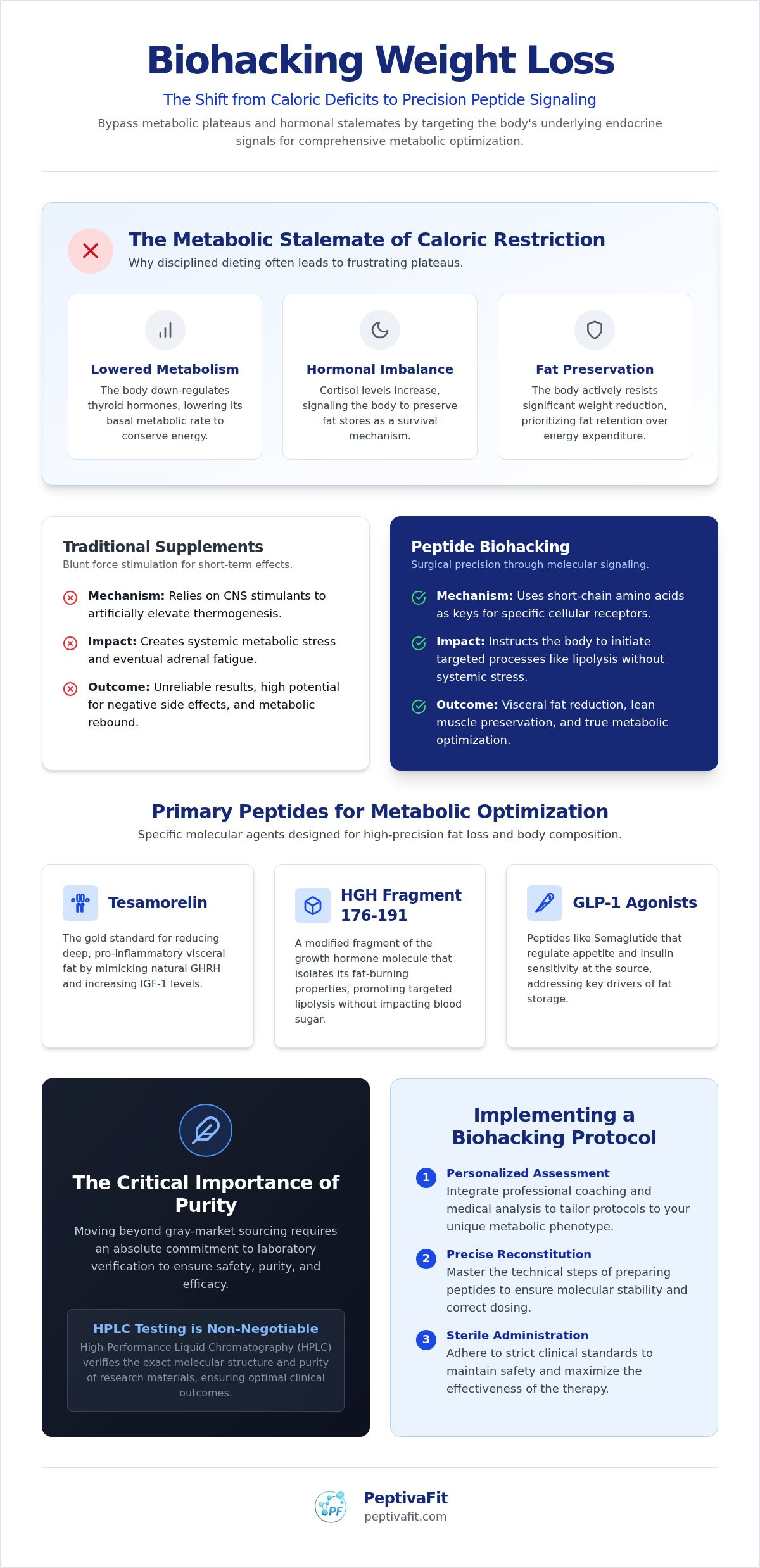
Success in long-term body composition requires more than rudimentary caloric restriction. While traditional methods focus strictly on the energy balance equation, biohacking weight loss with peptides prioritizes the underlying endocrine signals that govern fat storage and energy utilization. Peptides are short-chain amino acids that function as precise biological signaling molecules. They act as keys to specific cellular receptors, instructing the body to initiate complex physiological processes without the systemic volatility associated with traditional pharmacology.
Conventional dieting frequently fails due to metabolic adaptation. When you reduce caloric intake, the body responds by down-regulating thyroid hormones and increasing cortisol. This effectively lowers your basal metabolic rate to preserve fat stores. This biological "set point" is a survival mechanism that resists significant weight reduction. A biohacking framework uses exogenous peptide therapy to bypass these defensive adaptations, shifting the objective from mere weight loss to comprehensive metabolic optimization.
Peptides vs. Traditional Weight Loss Supplements
Standard weight loss supplements often rely on central nervous system stimulants to artificially elevate heart rate and thermogenesis. This approach creates systemic metabolic stress and eventual adrenal fatigue. In contrast, peptides for metabolism and fat loss utilize molecular signaling to achieve results with surgical precision. For instance, Semaglutide for weight management functions as a GLP-1 receptor agonist, regulating appetite and insulin sensitivity at the source rather than through blunt force stimulation.
Growth Hormone Secretagogues (GHS) play a critical role in nutrient partitioning. By encouraging the endogenous release of growth hormone, these peptides ensure that ingested nutrients are directed toward lean muscle repair and maintenance rather than adipose tissue accumulation. This represents a fundamental evolution in how we approach body composition, moving beyond the "burn more than you eat" oversimplification.
The Role of Growth Hormone in Adult Metabolism
Adult metabolism is significantly influenced by the natural decline of growth hormone (GH) levels, a process that often accelerates after age thirty. This decline is directly correlated with an increase in visceral fat and a decrease in lean tissue preservation. Biohacking weight loss with peptides seeks to restore GH levels within a specific therapeutic window, optimizing the body's ability to mobilize stored energy.
- GH Decline: Contributes to the accumulation of stubborn, pro-inflammatory visceral fat.
- Signal Restoration: Targeted peptides mimic natural pulses to maintain metabolic vigor.
- Biochemical Efficiency: Lipolysis is the biochemical breakdown of lipids into fatty acids.
Focusing on these signaling pathways allows individuals to achieve a level of precision fat loss that's impossible through diet and exercise alone. This approach demands a disciplined adherence to data and laboratory verification to ensure optimal clinical outcomes.
Primary Peptides for Targeted Lipolysis and Metabolic Optimization
Biohacking weight loss with peptides requires a move from theoretical signaling to the application of specific molecular agents. While the previous section established why signaling is superior to caloric restriction, achieving results depends on selecting the correct peptide for your metabolic phenotype. This selection includes both FDA-approved peptides for weight loss and specific research-grade fragments designed for high-precision lipolysis.
Tesamorelin: The Gold Standard for Visceral Adiposity
Tesamorelin stands as a premier agent for addressing visceral adiposity. Unlike generic fat loss agents, it specifically targets deep abdominal fat by mimicking natural growth hormone-releasing hormone (GHRH). Clinical data indicates it increases IGF-1 levels without significantly altering glucose metabolism, making it ideal for those with existing insulin resistance. This specificity is crucial; visceral fat is metabolically active and pro-inflammatory, contributing to long-term metabolic dysfunction. For precise implementation, consult our Tesamorelin dosage guide to align your research with established clinical protocols.
HGH Frag 176-191: Targeted Fat Burning Without GH Side Effects
For individuals prioritizing fat oxidation without the systemic effects of elevated growth hormone, HGH Fragment 176-191 is a critical tool. This peptide is a modified form of amino acids 176-191 of the human growth hormone polypeptide. It isolates the lipolytic domain from the growth-promoting domain. Consequently, it facilitates fat burning without inducing the insulin resistance or water retention often seen with full-chain GH therapy. It's a staple in our fat loss peptide guide due to its high safety profile and targeted efficacy for stubborn adipose tissue.
Metabolic optimization is further enhanced through the synergistic use of CJC-1295 and Ipamorelin. CJC-1295 is a GHRH analog that extends the half-life of growth hormone release, while Ipamorelin is a selective ghrelin receptor agonist. Together, they produce a robust, naturalistic pulse of growth hormone that avoids the undesirable prolactin or cortisol elevations associated with older secretagogues. This combination supports muscle preservation while the body is in a lipolytic state.
For those focusing on cellular energy, mitochondrial-derived peptides like MOTS-C offer a unique pathway. MOTS-C acts as an exercise mimetic by regulating insulin sensitivity and promoting fatty acid oxidation at the mitochondrial level. It's particularly effective for overcoming the metabolic stagnation that occurs as mitochondrial efficiency wanes with age. Achieving these results requires more than just access to compounds; it demands a structured approach to administration. If you're ready to move beyond trial and error, consider a personalized medical assessment to determine which signaling molecules align with your specific metabolic profile.
The Critical Importance of Laboratory Verification and Molecular Purity
The primary obstacle to successful biohacking weight loss with peptides isn't biological resistance, but chemical inconsistency. While 'Research Use Only' is a necessary legal designation for specific compounds, it doesn't inherently guarantee or preclude quality. Instead, it shifts the responsibility of due diligence to the end user. Achieving metabolic optimization requires an uncompromising approach to molecular purity, as the introduction of contaminants can trigger systemic inflammation or unpredictable immune responses that stall fat loss.
Clinical-grade biohacking demands two specific analytical benchmarks: High-Performance Liquid Chromatography (HPLC) and Mass Spectrometry (MS). HPLC measures the purity of the sample by separating the peptide from any residual manufacturing byproducts. Mass Spectrometry confirms the exact molecular mass, ensuring the substance is the intended sequence and not a generic analog. For any serious protocol, a purity level of 99% or higher is the mandatory standard. Anything lower implies the presence of acetate salts, residual solvents, or bacterial endotoxins that can compromise your health and negate the benefits of the signaling molecule.
How to Read a Certificate of Analysis (COA)
A Certificate of Analysis is only as valid as the lab that issued it. You should prioritize third-party testing over in-house manufacturer claims to ensure an objective assessment of the batch. When reviewing a COA, verify that the batch number on the report matches the physical vial. It's essential to look for a recent date; reports older than six months may indicate a vendor is using outdated data for new, unverified batches. Red flags include blurred logos, inconsistent fonts, or the absence of a verifiable lab technician signature, all of which suggest fraudulent documentation.
The Peptiva Standard for Lab-Tested Peptides
PeptivaFit operates as a gatekeeper for high-purity research materials, ensuring every compound in our framework meets the highest analytical standards. We prioritize molecular integrity because we understand that metabolic optimization is a high-stakes endeavor. Our protocol integrates lab-verified peptides with a personalized medical assessment to mitigate individual risk factors before any administration begins. Sourcing isn't merely a logistical step. It's the most critical decision in your journey of biohacking weight loss with peptides, determining the difference between clinical success and biological setback.
Implementing a Biohacking Protocol: Reconstitution and Administration
Practical application in biohacking weight loss with peptides begins with a fundamental understanding of molecular stability. Peptides are fragile chains of amino acids that are highly susceptible to environmental stress. To preserve their structural integrity, they're shipped in a lyophilized, or freeze-dried, state. This process removes moisture while keeping the molecular structure intact, preventing degradation during transit. Reconstitution is the critical bridge between receiving your research materials and beginning a precise metabolic protocol.
Clinical reconstitution requires the use of bacteriostatic water, which contains 0.9% benzyl alcohol. This additive is essential because it inhibits bacterial growth, allowing a single vial to be used for multiple administrations over several weeks. Maintaining a sterile field is non-negotiable. Every contact point, including the vial stopper and the diluent container, must be sanitized with 70% isopropyl alcohol to prevent the introduction of contaminants into the solution.
The Reconstitution Process Step-by-Step
For those requiring a detailed visual breakdown, refer to our masterclass on how to reconstitute peptides. When adding the bacteriostatic water, you should aim the needle at the inner wall of the glass vial rather than directly at the lyophilized powder. Allow the liquid to trickle down slowly. You must use a gentle swirl technique to integrate the solution. Never shake the vial. Shaking creates kinetic energy that can cause mechanical degradation of the peptide chain, effectively rendering the compound biologically inactive. Once the solution is clear, store it in a refrigerated environment between 2 and 8 degrees Celsius, away from direct light.
Optimizing the Administration Window
Timing is a primary variable in protocol efficacy. Growth hormone secretagogues, for instance, are most effective when administered in a fasted state. Because insulin acts as a direct antagonist to GH release, injecting these compounds after a meal will significantly blunt the resulting metabolic pulse. Many successful frameworks prioritize night-time administration. This strategy aligns with the body's natural circadian rhythms and the significant nocturnal pulses of endogenous growth hormone that occur during deep sleep cycles.
Precision dosing is the hallmark of a disciplined biohacker. Most research peptides are measured in milligrams (mg), while administration is calculated in micrograms (mcg). If you reconstitute a 5mg vial with 2ml of bacteriostatic water, each 0.1ml (10 units on a standard U-100 syringe) contains 250mcg. Accurate math is the only way to avoid sub-therapeutic results or unexpected side effects. To maintain long-term receptor sensitivity, you must also implement cycling protocols, such as a five-day on, two-day off schedule. This prevents pituitary desensitization and ensures the body remains responsive to the signaling. If you're unsure how to calculate your specific requirements, you can book a single consultation call to secure professional guidance on your administration strategy.
The Peptiva Protocol: A Sophisticated Framework for Metabolic Success
The Peptiva Protocol is the culmination of clinical observation and molecular data. It isn't a collection of disparate suggestions. It's a cohesive, data-driven framework. For those serious about biohacking weight loss with peptides, this protocol provides the structure to ensure fat loss occurs without compromising systemic health. A critical component is the integration of BPC-157 peptide. While primarily known for tissue repair, BPC-157 serves as a systemic modulator. It supports gut health and mitigates the inflammatory stress often associated with rapid adipose mobilization.
Metabolic optimization is a high-stakes endeavor. It leaves no room for guesswork. The protocol is an exclusive service for the serious biohacker who values precision. By utilizing 1-on-1 coaching, participants receive real-time adjustments based on feedback and data. This ensures the signaling remains effective throughout the entire cycle.
Personalized Medical Assessments and Oversight
A comprehensive baseline metabolic panel is mandatory before any therapy begins. Generic advice fails. It ignores individual biochemical variance. PeptivaFit requires these assessments to analyze biomarkers like fasting insulin, IGF-1, and thyroid function. This data facilitates the transition from broad applications to clinical precision. Each protocol is tailored to the individual's specific metabolic phenotype. We ensure the chosen peptides align with your unique hormonal architecture.
Accessing Expert Guidance and Consultation
The margin for error in advanced peptide therapy is slim. Professional coaching offers a high return on investment. It helps users avoid pitfalls like receptor desensitization or improper reconstitution. Troubleshooting a protocol in isolation often leads to sub-therapeutic results. A single consultation call provides the clarity needed to refine an administration window. It helps adjust a dosage for better alignment with circadian rhythms. This level of oversight ensures your journey in biohacking weight loss with peptides remains safe and disciplined.
Advancing Toward Metabolic Precision
Transitioning from rudimentary weight loss to high-level metabolic optimization requires a fundamental shift in perspective. You've explored how specific signaling molecules can target visceral fat while bypassing the systemic stress of stimulants. Success in biohacking weight loss with peptides isn't merely about access to compounds. It's about the disciplined application of lab-verified materials and precise reconstitution techniques. This methodical approach ensures that your biological signals are restored with clinical accuracy rather than blunt force.
The Peptiva Protocol provides the necessary clinical oversight to move beyond the limitations of unverified sourcing. By integrating lab-verified molecular purity reports and specialized protocols for visceral fat, you can achieve your body composition goals with scientific-grade standards. Personalized medical assessments ensure that every intervention is tailored to your unique metabolic phenotype. It's time to replace metabolic stagnation with a data-driven framework designed for long-term physiological excellence. Your path to optimized performance starts with a commitment to clinical precision.
Begin Your Metabolic Transformation with the Peptiva Protocol
Clinical Guidance: Frequently Asked Questions
Is biohacking weight loss with peptides legal in the United States?
Peptides sold for research purposes are legal for laboratory investigation, but clinical use requires professional oversight. Following the July 2026 FDA advisory committee recommendations, several peptides like BPC-157 and TB-500 have been recommended for inclusion on the 503A Bulk Drug Substances List. However, mass-marketed "generic" GLP-1s face strict federal enforcement. Biohacking weight loss with peptides demands navigating these regulatory boundaries by prioritizing lab-verified materials and personalized medical assessments to ensure safety and compliance.
How long does it take to see visible fat loss results with peptide therapy?
Visible fat loss results typically manifest between eight and twelve weeks of consistent protocol adherence. While initial metabolic shifts occur at the cellular level immediately, visceral fat reduction and body composition changes require a steady therapeutic window to become measurable. This duration allows the body to bypass metabolic adaptation without triggering defensive hormonal down-regulation. Results are cumulative; therefore, the Peptiva Protocol emphasizes a methodical, long-term approach rather than the unsustainable quick fixes typical of mass-market products.
Can I combine multiple peptides like Tesamorelin and Ipamorelin in one protocol?
Combining multiple peptides, such as a GHRH analog like Tesamorelin and a GHRP like Ipamorelin, is a standard strategy for achieving maximum metabolic synergy. This dual-signal approach creates a more robust growth hormone pulse by stimulating the pituitary from two different pathways simultaneously. Such combinations are central to advanced biohacking weight loss with peptides, as they optimize nutrient partitioning more effectively than monotherapy. Our 1-on-1 coaching ensures these combinations are balanced to prevent receptor desensitization.
What are the most common side effects of fat loss peptides?
Common side effects include localized injection site irritation, mild water retention, and increased appetite, particularly with specific growth hormone secretagogues. Some users may experience lethargy if dosing isn't aligned with their metabolic panel. These reactions are often dose-dependent and can be mitigated through precise administration and professional oversight. Undergoing a personalized medical assessment before beginning any protocol is essential to identify individual sensitivities and adjust the framework for optimal tolerance and efficacy.
Do I need to follow a specific diet while using the Peptiva Protocol?
The Peptiva Protocol is most effective when integrated with a high-protein, nutrient-dense diet and strategic fasted windows. Peptides function as signaling molecules that optimize your existing metabolic efforts; they don't serve as a total replacement for nutritional discipline. Specifically, maintaining a fasted state during the insulin window around administration is vital for GH secretagogues to prevent blunting the metabolic pulse. Our coaching provides the dietary structure needed to maximize the lipolytic effects of your specific peptide stack.
How do I ensure the peptides I buy are actually high-purity and lab-tested?
High-purity peptides must be accompanied by a third-party Certificate of Analysis (COA) that includes both HPLC and Mass Spectrometry data. You should verify that the batch number on the vial matches the report and that the testing date is recent, ideally within the last six months. Purity levels should exceed 99% to ensure the absence of bacterial endotoxins or residual solvents. PeptivaFit acts as a gatekeeper, providing only lab-verified materials that meet these rigorous clinical standards.
What is the difference between a GH fragment and a GH secretagogue?
A GH fragment, such as HGH Frag 176-191, is a truncated piece of the growth hormone molecule that isolates the fat-burning domain without affecting blood sugar or growth. In contrast, a GH secretagogue like Ipamorelin instructs your pituitary gland to release its own full-chain growth hormone. Fragments offer targeted lipolysis with fewer systemic side effects, while secretagogues provide broader metabolic benefits, including improved recovery and muscle preservation. Both play distinct roles within a sophisticated biohacking framework.
Can peptides help preserve muscle mass while I am in a caloric deficit?
Peptides are highly effective at preserving lean muscle mass during a caloric deficit by improving nutrient partitioning. By elevating levels of IGF-1 and growth hormone, these compounds signal the body to prioritize the oxidation of stored adipose tissue for energy while protecting muscle fibers from catabolism. This metabolic shift is a primary goal of the Peptiva Protocol, allowing for precision fat loss that maintains the structural integrity and metabolic vigor of your musculoskeletal system during restricted intake.

![Shelf Life of Reconstituted Peptides: A Clinical Reference Guide [2026]](https://getautoseo.com/storage/hero_images/shelf-life-of-reconstituted-peptides-a-clinical-reference-guide-2026.jpg?v=b8ed5173acaa)
