

Constant stimulation of growth hormone pathways might seem like the fastest route to a leaner physique, but for the disciplined practitioner, the opposite is often true. Persistent administration without strategic breaks frequently leads to receptor desensitization and metabolic stalling. You likely understand that true transformation requires a delicate balance of biological signaling, yet the conflicting information regarding cycle lengths and the fear of "GH bleed" often creates unnecessary hesitation. Mastering how to cycle peptides for body recomposition is the only way to ensure your body remains responsive to these powerful metabolic tools while maintaining long-term health.
This clinical protocol provides a precise framework for 2026, incorporating the latest data following the April FDA updates and the upcoming July 2026 Pharmacy Compounding Advisory Committee meeting. We define the exact timing for on and off cycles to maximize lipolytic activity while protecting your physiological homeostasis. You will gain a clear schedule for stacking metabolic peptides to simultaneously reduce adipose tissue and preserve lean muscle mass. This guide moves beyond general advice to offer a methodical, data-driven approach to timing, stacking, and metabolic monitoring for the serious individual.
Key Takeaways
- Understand the physiological necessity of strategic rest periods to prevent receptor desensitization and ensure consistent metabolic signaling.
- Learn how to cycle peptides for body recomposition by implementing a "5-on / 2-off" weekly schedule to preserve pituitary sensitivity.
- Identify the synergistic relationship between GHRHs and GHRPs to maximize lipolytic activity while protecting lean muscle tissue.
- Establish a standardized 12-week protocol followed by a mandatory 4-week washout period to maintain long-term metabolic and hormonal health.
- Discover how to mitigate risks such as "GH bleed" and insulin resistance through precise administration timing and the use of lab-verified compounds.
The Biological Rationale for Cycling Peptides in Recomposition
Biological systems thrive on pulsatile signaling rather than constant saturation. In the context of metabolic optimization, peptide cycling is defined as the strategic alternation between active administration and scheduled rest periods. This methodical approach prevents the body's internal feedback loops from initiating a state of diminished returns. When individuals investigate how to cycle peptides for body recomposition, they must understand that the objective is to maintain high receptor sensitivity while managing two distinct metabolic pathways: lipolysis and protein synthesis.
The human body prioritizes homeostatic regulation above all other functions. Introducing exogenous secretagogues without interruption eventually triggers a compensatory response. Chronic stimulation leads to several physiological hurdles:
- Downregulation: A reduction in the number or sensitivity of cellular receptors.
- Metabolic Adaptation: The body adjusts its baseline energy expenditure to counter the peptide's effects.
- Endogenous Suppression: A decline in natural hormone production due to persistent external signaling.
Strategic cycling ensures the biological signal remains potent. It allows the endocrine system to reset, ensuring that each subsequent phase of the protocol is as effective as the first.
Receptor Desensitization and Pituitary Fatigue
The pituitary gland operates on a delicate rhythmic cycle to release growth hormone. Introducing exogenous growth hormone secretagogues (GHS) forces the release of stored GH, but constant pressure on this system leads to physiological exhaustion. A deep dive into the biological mechanism of growth hormone secretagogues reveals that the pituitary has a finite capacity for immediate release, often referred to as the saturation point. Exceeding this point or refusing to implement rest periods leads to pituitary fatigue. In this state, the gland no longer responds to the GHS signal. This failure can result in somatopause-like symptoms, including persistent lethargy, increased water retention, and a complete stall in fat loss progress. Understanding how to cycle peptides for body recomposition requires respecting these biological limits to avoid long-term desensitization.
The Dual-Action Mechanism: Fat Loss vs. Muscle Preservation
Body recomposition is a sophisticated dual-track goal that requires the simultaneous reduction of adipose tissue and the preservation of lean muscle mass. Standard protocols often fail because they prioritize one at the expense of the other. A true recomposition framework utilizes specific peptides for metabolism and fat loss that target lipolytic pathways while concurrently signaling for IGF-1 and protein synthesis. This synergy is only sustainable when the body is not in a state of metabolic adaptation. By cycling these compounds, you maintain a "recomp" environment where the body is primed to utilize fat stores for energy while diverting essential amino acids toward muscle repair. This requires a more nuanced protocol than a simple "cut" or "bulk" because it demands the body remain responsive to both anabolic and catabolic signals in a controlled, rhythmic fashion.
Selecting the Primary Peptides for a Recomposition Stack
Selecting the correct compounds is the primary prerequisite for mastering how to cycle peptides for body recomposition. A sophisticated stack must balance lipolytic agents with anabolic secretagogues to ensure the body remains in a state of positive nitrogen balance while aggressively mobilizing stored fatty acids. Without this dual-track approach, the body often enters a catabolic state that sacrifices lean muscle mass during the caloric deficits necessary for fat loss. Choosing the right molecular tools allows for a precise metabolic shift that favors muscle retention over adipose storage.
Growth Hormone Secretagogues: The Foundation
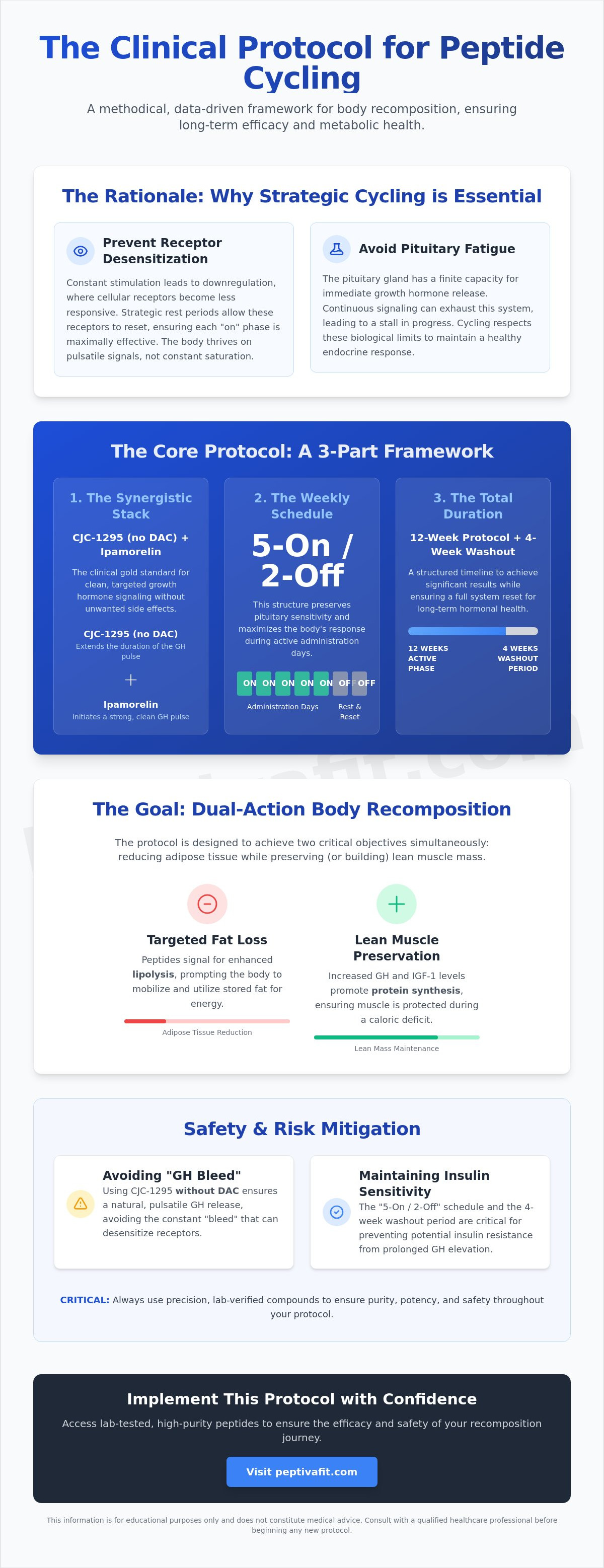
The combination of CJC-1295 (without DAC) and Ipamorelin represents the clinical gold standard for metabolic signaling. While CJC-1295 extends the duration of the growth hormone pulse, Ipamorelin initiates the pulse itself by mimicking ghrelin without the unwanted side effects of increased hunger or prolactin elevation. This synergy creates a far more potent physiological response than either compound used in isolation. It allows for a natural GH rhythm that avoids the "bleed" associated with longer-acting analogs. For those specifically targeting stubborn abdominal adiposity, following a precise Tesamorelin dosage schedule can significantly accelerate the reduction of visceral fat, which is often resistant to traditional diet and exercise alone.
Targeted Lipolytics and Recovery Enhancers
Beyond foundational secretagogues, specific fragments and mitochondrial peptides provide targeted metabolic advantages. HGH Frag 176-191 is uniquely effective because it isolates the fat-burning portion of the growth hormone molecule. It facilitates fat oxidation by inhibiting the formation of new lipids and stimulating the breakdown of existing fat cells. Crucially, it achieves this without the systemic risks of hyperglycemia or reduced insulin sensitivity often found with full-molecule exogenous growth hormone.
Intense training loads required for successful recomposition demand superior systemic recovery. Integrating BPC-157 peptide supports connective tissue integrity and mitigates the inflammatory response associated with heavy resistance training. Additionally, MOTS-C peptide may be utilized to enhance exercise endurance and metabolic flexibility by optimizing mitochondrial function at the cellular level. This comprehensive approach ensures that your body can handle the physical stress of a recomposition phase without injury.
When sourcing these compounds, clinical purity is non-negotiable. The recent FDA warning on unapproved peptides underscores the significant risks of utilizing unverified, injectable products that lack rigorous quality control and sterility. For a structured approach to these compounds, you might consider reviewing the Peptiva Protocol to ensure your selection aligns with high-level clinical standards and safety mandates.
Designing the Cycle: Duration, Frequency, and Off-Periods
Determining how to cycle peptides for body recomposition requires a shift from the "more is better" mindset to a disciplined, rhythmic administration schedule. This protocol is designed to prevent the pituitary gland from reaching a state of chronic fatigue. A structured cycle ensures that the body remains responsive to exogenous signals without triggering a permanent homeostatic shutdown. Precision in timing is the difference between a successful transformation and a metabolic plateau.
The '5-on / 2-off' weekly schedule serves as the tactical foundation for this protocol. By providing the body with 48 hours of complete cessation each week, the risk of receptor downregulation is significantly minimized. It ensures that the growth hormone pulses remain sharp and effective rather than becoming a dull, constant background signal. This intermittent rest period is essential for maintaining long-term sensitivity to the compounds being utilized.
Pulse dosing is the preferred method for maximizing metabolic impact. Administering injections immediately prior to fasted morning cardio or before sleep leverages the body's natural circadian rhythms. As experts say oversight matters, these timings should be strictly adhered to under professional guidance to align with individual glucose levels and activity patterns. Titrating the dosage is also necessary. Starting with lower concentrations allows you to assess individual tolerance before moving to a full saturation dose.
Maintaining molecular integrity is as vital as the timing itself. Peptides are fragile chains of amino acids that can easily degrade if handled improperly. Refer to our clinical guide on peptide reconstitution to ensure you aren't compromising your results through poor preparation or storage techniques.
The 12-Week Recomposition Framework
The loading phase (Weeks 1-4) focuses on establishing baseline metabolic changes and assessing tolerance through careful titration. Moving into the optimization phase (Weeks 5-10), dosages are adjusted based on tangible body composition feedback and energy levels. The final taper phase (Weeks 11-12) prepares the system for the upcoming washout, preventing a sharp hormonal crash and ensuring a smooth transition back to endogenous reliance.
The Critical 'Off' Phase and Washout Period
A mandatory 4-week washout period must follow every 12-week cycle. Biologically, this break allows receptors to resensitize and endogenous hormone production to return to its baseline state. Skipping this phase is a common error that leads to permanent receptor downregulation and metabolic stalling. During the washout, the focus must shift to lifestyle maintenance. Maintaining high-intensity training and a strict nutritional profile ensures that the muscle gains and fat loss achieved during the cycle are solidified.
Mitigating Side Effects and Maintaining Insulin Sensitivity
Growth hormone secretagogues are potent metabolic drivers, but they aren't without physiological cost. Chronic elevation of growth hormone (GH) levels naturally increases blood glucose. If left unmonitored, this pathway leads to decreased insulin sensitivity and metabolic dysfunction. Understanding how to cycle peptides for body recomposition involves more than just timing injections; it requires active metabolic monitoring to ensure the body remains in a state of high insulin sensitivity. Without this discipline, the very compounds intended to improve body composition can inadvertently stall progress by creating a pro-diabetic environment.
Practitioners should utilize a glucometer to track fasting blood glucose daily. Consistent readings above 100 mg/dL indicate that the current dosage or cycle length is stressing the body's glucose disposal mechanisms. Additionally, you must avoid peptides with the Drug Affinity Complex (DAC). These versions cause a "GH bleed," where GH levels remain perpetually elevated without the necessary physiological troughs. This constant signaling is the primary driver of insulin resistance and pituitary exhaustion. Physical indicators such as peripheral edema (water retention) or tingling in the extremities are clinical signs that the dosage has exceeded the body's processing capacity. Refer to our fat loss peptide guide for specific risk-mitigation protocols and safety thresholds.
Managing Glucose and Prolactin
Oral secretagogues like MK-677 require more frequent "off" periods than their injectable counterparts. Due to its 24-hour half-life, MK-677 provides no respite for the pituitary gland or glucose levels, making it more likely to cause hyperglycemia. Utilizing natural glucose disposal agents (GDAs) such as berberine or alpha-lipoic acid can help maintain sensitivity during an active phase. For those concerned with hormonal balance, Ipamorelin is the superior choice; it doesn't stimulate the production of prolactin or cortisol, which are common side effects of less selective secretagogues.
The Role of Fasted Administration
The timing of your administration relative to nutrient intake determines the efficacy of the protocol. Carbohydrates and fats trigger an insulin response that immediately blunts the GH pulse. To maximize the lipolytic signal, maintain a strict 2-hour fasting window both before and after your injection. This creates a metabolic environment where the peptide can signal for fat oxidation without being neutralized by an insulin spike. If you require specialized oversight to manage these variables, consider a Personalized medical assessment to ensure your protocol is optimized for your specific metabolic profile.
The Peptiva Protocol: Integrating Precision Lab-Tested Peptides
Executing a sophisticated metabolic strategy requires more than just theoretical knowledge; it demands access to compounds of uncompromising quality and professional oversight. The Peptiva Protocol serves as the definitive framework for individuals seeking to master how to cycle peptides for body recomposition with clinical precision. This system moves beyond the generalized advice found in public forums, offering a structured, data-driven methodology that prioritizes long-term metabolic health alongside physical transformation. By aligning advanced molecular signaling with rigorous monitoring, the protocol ensures that every phase of the cycle is optimized for your specific physiological requirements.
Why Lab-Verified Purity is Non-Negotiable
The efficacy of any recomposition cycle is entirely dependent on the integrity of the peptides utilized. The "gray market" is frequently saturated with products that suffer from heavy metal contamination, residual solvents, or significant under-dosing, all of which can compromise your results and health. PeptivaFit maintains a strict commitment to providing lab-tested peptides, ensuring that the molecular structure of each batch is verified before it reaches the end user. This level of analytical rigor is essential for maintaining consistent signaling and avoiding the unpredictable side effects associated with impure substances. Molecular purity is strictly verified through High-Performance Liquid Chromatography (HPLC) testing standards to ensure that each compound meets a minimum purity threshold of 99%.
Consultation and Coaching: The Path to Mastery
A personalized medical assessment is the critical first step for any serious practitioner. This initial evaluation allows for the identification of baseline biomarkers, ensuring that your chosen protocol doesn't conflict with your underlying health status. While the technical aspects of how to cycle peptides for body recomposition are complex, 1-on-1 coaching provides the necessary diagnostic oversight to adjust administration protocols based on real-time physiological feedback. This level of individual attention allows for the fine-tuning of dosages and cycle lengths, preventing the plateaus that often occur when following a static, one-size-fits-all plan.
For those currently managing an active cycle, a Single Consultation Call can provide the troubleshooting necessary to resolve issues with water retention, lethargy, or stalled fat loss. This high-level support transforms a standard peptide cycle into a professional-grade metabolic intervention. PeptivaFit functions as an exclusive resource for researchers and performance athletes who demand data over hype and safety over sensation. Secure your personalized medical assessment and start the Peptiva Protocol today.
Advancing Toward Clinical Metabolic Optimization
Achieving a superior muscle-to-fat ratio in 2026 demands a level of discipline that exceeds standard fitness advice. By implementing a "5-on / 2-off" weekly schedule and adhering to a mandatory 4-week washout, you protect your pituitary sensitivity and ensure sustained progress. Mastering how to cycle peptides for body recomposition is not merely about administration; it's about the strategic management of biological feedback loops and the maintenance of insulin sensitivity through precise timing and lab-verified purity. Consistency in monitoring and quality is the only path to a permanent physiological shift.
For those who demand scientific-grade results, the Peptiva Protocol offers a comprehensive framework for success. Our system integrates lab-verified peptide purity through HPLC/MS testing with personalized medical oversight to ensure your safety and efficacy. You don't have to navigate these complex metabolic pathways alone. Access the Peptiva Protocol and Professional Coaching Packages to begin your clinical transformation with the precision your body deserves. Your commitment to data-driven wellness starts here.
Frequently Asked Questions
How long should I wait between peptide cycles for body recomposition?
You should wait a minimum of four weeks between 12-week cycles to allow for full receptor resensitization. This mandatory washout period ensures that your endogenous hormone production returns to its baseline and prevents permanent downregulation. Maintaining this discipline is a critical component of learning how to cycle peptides for body recomposition effectively. Without these breaks, the metabolic signaling becomes increasingly dull, leading to diminished physical returns.
Can I stack fat loss peptides with muscle-building peptides safely?
Stacking fat loss and muscle-building peptides is safe and often necessary for true recomposition, provided you use synergistic compounds like Ipamorelin and CJC-1295. This combination targets adipose tissue while simultaneously promoting protein synthesis and systemic recovery. The objective is to utilize compounds that operate through different pathways to avoid receptor competition. A structured stack allows you to reduce body fat while preserving the lean tissue required for a refined physique.
What happens if I forget to take my peptides for a few days during a cycle?
If you miss several days of administration, simply resume your regular schedule without attempting to double the dosage. Peptides operate on cumulative signaling rather than acute saturation; a brief interruption won't invalidate your progress, but it shouldn't become a frequent occurrence. You should maintain your "5-on / 2-off" rhythm to keep the pituitary gland responsive. Consistency remains the primary driver of long-term metabolic optimization and visible physical change.
Is it necessary to have a medical assessment before starting a peptide protocol?
A personalized medical assessment is mandatory to establish baseline biomarkers and identify any underlying contraindications. Monitoring fasting glucose, IGF-1 levels, and organ function provides the necessary data to adjust your protocol for maximum safety. Professional oversight separates serious metabolic optimization from high-risk experimentation. It's the only way to confirm that your body is physiologically prepared for the demands of an intensive recomposition cycle.
Do I need to change my diet while cycling peptides for recomposition?
Dietary discipline remains the foundation of any successful recomposition phase regardless of the compounds used. While peptides enhance fat oxidation and recovery, they cannot overcome a significant caloric surplus or poor nutrient density. You should prioritize high protein intake and timed carbohydrate consumption to support the growth hormone pulses. Peptides act as metabolic force multipliers, but they require a structured nutritional environment to produce significant changes.
Can peptide cycling cause long-term damage to my natural hormone production?
Proper cycling protocols are specifically designed to prevent long-term damage to your natural hormone production. By incorporating regular "off" periods, you allow the pituitary gland and hypothalamus to maintain their natural feedback loops. The risk of suppression only becomes significant when practitioners ignore mandatory washout periods or use excessively high dosages for extended durations. Following a clinical framework is the most effective way to ensure hormonal longevity.
What are the first signs that a peptide cycle is working for fat loss?
Improved sleep quality and enhanced muscle recovery are often the first physiological indicators that a cycle is effective. Within the first 21 days, many individuals notice a reduction in systemic inflammation and subtle changes in waist circumference. While the most dramatic fat loss occurs during the optimization phase, these early signs confirm that your body has successfully initiated the lipolytic signaling process and is responding to the protocol.
Are lab-tested peptides significantly different from research-grade peptides?
Lab-tested peptides are fundamentally different from unregulated products because they undergo rigorous HPLC and MS verification for purity and sterility. Research-grade chemicals often lack oversight, leading to issues with heavy metal contamination or inaccurate concentrations. Utilizing verified compounds is the only way to guarantee molecular integrity. This ensures you're receiving the exact amino acid sequence required for effective body recomposition without the health risks of "gray market" substances.

![Shelf Life of Reconstituted Peptides: A Clinical Reference Guide [2026]](https://getautoseo.com/storage/hero_images/shelf-life-of-reconstituted-peptides-a-clinical-reference-guide-2026.jpg?v=b8ed5173acaa)
