

The pursuit of rapid weight loss often functions as a biological trade-off, where the reduction of adipose tissue comes at the direct expense of cellular integrity and muscle retention. You likely recognize that stubborn visceral fat is more than an aesthetic hurdle; it's a primary driver of systemic inflammation that accelerates the aging process. Identifying the best peptide stack for fat loss and longevity is no longer a matter of gray market experimentation but a disciplined clinical strategy. Following the February 27, 2026, HHS announcement that reclassified key peptides like CJC-1295 and BPC-157 for licensed compounding, the path to metabolic optimization has become both more accessible and more regulated.
This clinical reference will help you synchronize metabolic optimization and cellular longevity through evidence-based peptide stacking protocols. You'll learn why the upcoming July 23-24, 2026, FDA review marks a turning point for those seeking laboratory-grade standards in their personal performance. This guide analyzes how growth hormone secretagogues and mitochondrial bioregulators work in tandem to eliminate stubborn fat while protecting your biological clock. We'll examine the specific mechanisms of action that support improved mitochondrial health and regulated recovery cycles for a truly functional physique.
Key Takeaways
- Identify the endocrine mechanisms by which visceral fat drives systemic inflammation and discover why metabolic optimization is a foundational pillar of biological age reversal.
- Learn to configure the best peptide stack for fat loss and longevity by layering growth hormone secretagogues with advanced mitochondrial bioregulators for simultaneous tissue repair.
- Implement a structured 12-week body recomposition protocol that utilizes strategic cycling to prevent receptor desensitization and ensure consistent physiological response.
- Explore the Khavinson bioregulator theory to understand how targeted peptide sequences modulate gene expression and support the pineal gland's role in systemic aging.
- Master the technical requirements for sourcing laboratory-grade compounds by learning to interpret Certificates of Analysis (CoA) for purity, dosing accuracy, and safety.
The Metabolic Bridge: Why Fat Loss is the Ultimate Longevity Intervention
The 2026 clinical consensus identifies metabolic health as the primary driver of all-cause mortality reduction. Adipose tissue is far from a passive energy reservoir; it functions as an active endocrine organ that dictates the pace of biological aging. When visceral fat accumulates around vital organs, it triggers a cascade of systemic inflammation often referred to as inflammaging. This chronic, low-grade inflammatory state damages cellular structures and accelerates the ticking of the epigenetic clock. Designing the best peptide stack for fat loss and longevity requires an understanding that shedding fat isn't just an aesthetic goal; it's a prerequisite for cellular repair.
Visceral fat acts as a biological disruptor by secreting pro-inflammatory cytokines such as IL-6 and TNF-alpha. These molecules interfere with insulin signaling and promote oxidative stress throughout the body. By reducing this toxic load, you effectively remove the primary obstacle to longevity. Peptides serve as the bridge in this process, acting as precise signaling molecules that reset metabolic pathways that have become dormant or dysfunctional due to age and poor body composition.
Adiposity and Cellular Senescence
Excessive adiposity promotes the accumulation of senescent cells, often termed "zombie cells." These cells have ceased division but remain metabolically active, secreting pro-inflammatory factors that degrade surrounding healthy tissue and recruit more cells into a senescent state. This dysfunction leads to rapid NAD+ depletion, which starves the mitochondria of the energy required for DNA repair and cellular maintenance. Metabolic flexibility is the ability to switch between fuel sources efficiently. Without this flexibility, the body remains trapped in a pro-inflammatory, glucose-dependent state that makes long-term health optimization impossible. Reducing fat mass through targeted Peptide therapeutics is the most direct way to clear these senescent signals and restore mitochondrial vigor.
The Endocrine Role of Peptides
Peptides function as high-precision signaling molecules that re-establish communication within the endocrine system. Unlike traditional hormone replacement, which often suppresses natural production through negative feedback loops, peptides work by stimulating or modulating existing biological pathways. For instance, a properly calibrated tesamorelin dosage specifically targets the pituitary gland to enhance the secretion of growth hormone releasing hormones. This process initiates the breakdown of visceral adipose tissue without the systemic side effects of exogenous hormones. This signaling mechanism restores the body's natural lipid metabolism and improves insulin sensitivity. By resetting these pathways, peptides allow for a more disciplined and laboratory-grade approach to body recomposition. It's this high-level control over biological data that differentiates a curated protocol from standard, mass-market fitness advice.
Core Stacks for Fat Loss: Maximizing Lipolysis and Growth Hormone
The synergy between Growth Hormone Releasing Hormones (GHRHs) and Growth Hormone Releasing Peptides (GHRPs) represents the clinical gold standard for endocrine optimization. By combining these two classes of signaling molecules, you create a "Golden Trio" that maximizes endogenous growth hormone pulses without overriding the body's natural feedback loops. This specific combination is often considered the best peptide stack for fat loss and longevity because it addresses both lipid mobilization and systemic cellular repair. While traditional exogenous hormones can suppress the pituitary gland, a curated peptide protocol encourages the body to function at its peak physiological capacity.
The Growth Hormone Axis: CJC-1295 and Ipamorelin
Ipamorelin is the preferred GHRP for longevity-focused individuals because it selectively stimulates growth hormone release without elevating cortisol, prolactin, or hunger-inducing ghrelin. When paired with CJC-1295, the results are exponentially more effective than using either compound in isolation. It's vital to distinguish between CJC-1295 with and without Drug Affinity Complex (DAC). For longevity purposes, the "No-DAC" version (often referred to as Mod GRF 1-29) is the disciplined choice. It mimics the natural pulsatile nature of GH release, whereas the DAC version provides a continuous, non-physiological bleed that can lead to pituitary desensitization and insulin resistance over time. These natural pulses are essential for deep tissue recovery and the regulation of circadian rhythms.
Targeted Fat Oxidation: AOD-9604 and Tesamorelin
For individuals struggling with deep abdominal adipose tissue, Tesamorelin remains the most potent clinical option. Clinical data from early 2026 trials continues to support its efficacy in specifically targeting the visceral fat that surrounds internal organs. AOD-9604 serves as a powerful adjunctive tool in this process. It's a stabilized analog of the lipolytic fragment of the human growth hormone molecule (HGH Frag 176-191). Unlike full-molecule HGH, AOD-9604 triggers fat oxidation without negatively impacting blood glucose levels or insulin sensitivity. You can find detailed administration schedules for these compounds in our fat loss peptide guide, which outlines how to layer these for maximum metabolic efficiency.
Preserving lean muscle mass during a caloric deficit is the primary challenge of any body recomposition phase. The Peptiva Protocol focuses on maintaining a positive nitrogen balance to ensure that weight loss is derived from fat stores rather than functional muscle tissue. This requires a level of precision that mass-market advice simply cannot provide. If you're ready to transition from general information to a data-driven strategy, consider a personalized medical assessment to define your specific biological baseline. This disciplined approach ensures that your pursuit of the best peptide stack for fat loss and longevity remains rooted in laboratory-grade safety and measurable results.
The Longevity Layer: Bioregulators and Mitochondrial Support
True systemic optimization requires moving beyond simple lipolysis and into the domain of gene expression and organ-specific rejuvenation. The Khavinson bioregulator theory posits that specific short-chain peptides act as epigenetic switches, re-activating protein synthesis in aging tissues that have become dormant. This is the stage where the best peptide stack for fat loss and longevity transitions from a weight-management tool into a comprehensive life-extension protocol. By targeting the pineal gland and mitochondrial efficiency, we address the root causes of metabolic decline and biological decay. This dual-action approach ensures that the metabolic "engine" is capable of sustaining the increased demand for fatty acid oxidation.
The 2026 clinical consensus emphasizes that fat loss is unsustainable if the underlying cellular machinery is compromised. Mitochondrial health serves as the primary engine for both energy production and fat metabolism. When these organelles are optimized, the body transitions from a state of glucose dependency to high-level metabolic flexibility. This shift is essential for reducing systemic inflammation and protecting the body against the chronic diseases of aging.
Epithalon and the Pineal Gland
The pineal gland serves as the body's central biological clock, regulating systemic aging through the pulsatile release of melatonin and other regulatory hormones. Epithalon, a synthetic version of the pineal-derived peptide epithalamin, has demonstrated a unique capacity to stimulate telomerase activity. This process effectively elongates telomeres and slows the rate of cellular senescence, providing a foundational layer for any longevity stack. The bioregulatory effects are further enhanced by vilon, a dipeptide that focuses on immune system rejuvenation and the regulation of DNA transcription. Integrating these bioregulators ensures that the body's internal timing and repair mechanisms remain functional as metabolic rates increase.
Mitochondrial Efficiency: MOTS-c and SLU-PP-332
Mitochondria are the sites of fatty acid oxidation; if mitochondrial efficiency is low, fat loss efforts will inevitably stall. Mitochondrial-derived peptides (MDPs) represent a significant gap in traditional fat loss advice, yet they're critical for metabolic homeostasis. Specifically, mots c peptide acts as a metabolic regulator that improves insulin sensitivity and prevents weight gain by signaling the body to enhance glucose uptake. It effectively functions as an exercise mimetic, providing the cellular benefits of physical activity even during recovery phases.
The 2026 clinical landscape has been further refined by the introduction of slu-pp-332. As a novel ERR agonist, it triggers mitochondrial biogenesis and increases endurance by shifting the body's preference toward fat as a primary fuel source. This synergy between mitochondrial output and the ability to oxidize fatty acids is what defines the best peptide stack for fat loss and longevity. By reinforcing the cellular engine, you ensure that body recomposition is supported by robust, laboratory-grade biological foundations.
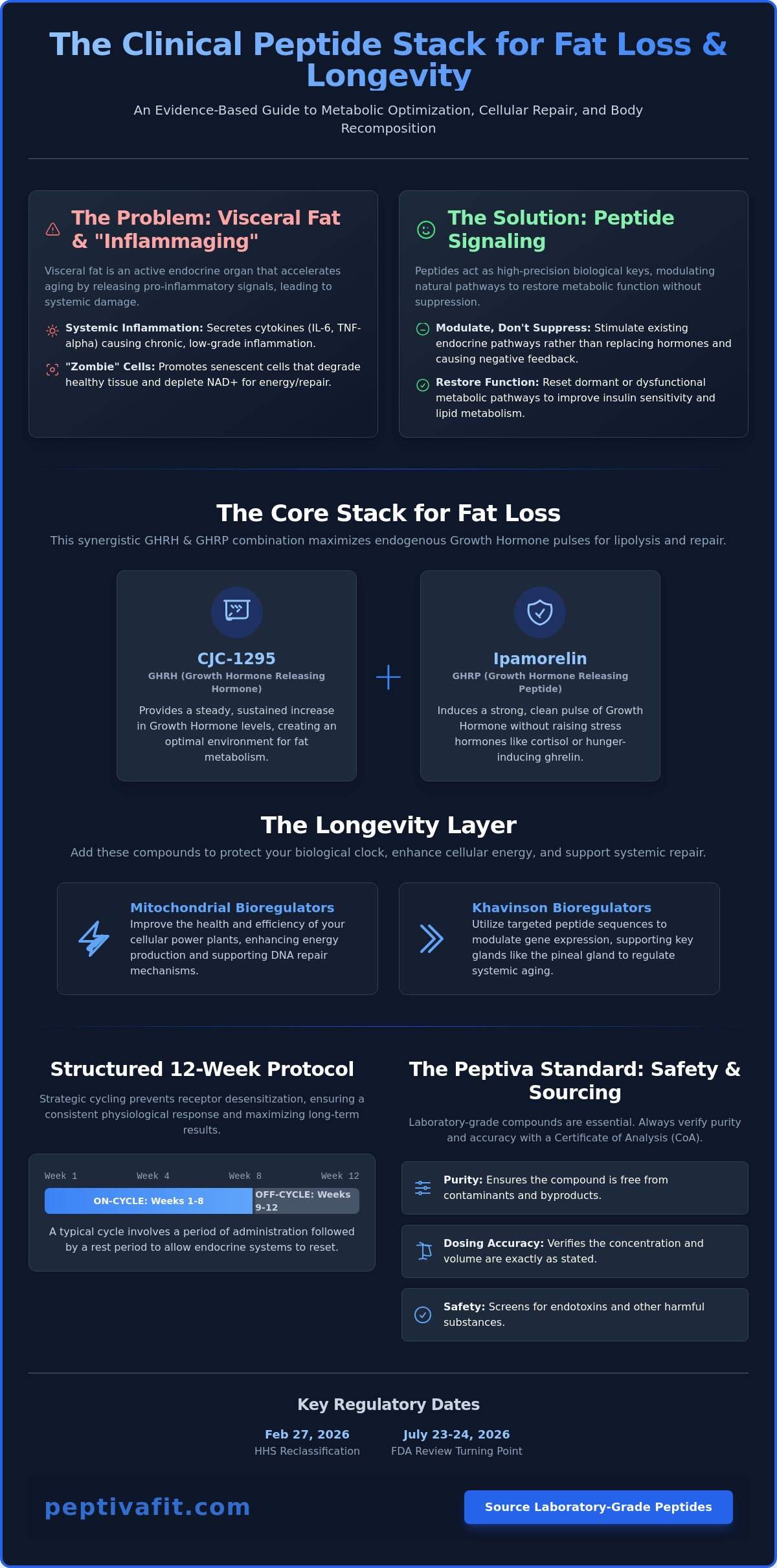
Designing the Ultimate Hybrid Stack: Protocols and Cycling
Transitioning from theoretical knowledge to clinical application requires a methodical 12-week framework. A structured approach ensures that the best peptide stack for fat loss and longevity remains effective without inducing receptor desensitization. This physiological phenomenon occurs when continuous exposure to a signaling molecule causes the body to downregulate its response, leading to diminished returns. To mitigate this, a disciplined "On/Off" cycling logic is mandatory. For instance, a 5-days-on, 2-days-off schedule for growth hormone secretagogues preserves pituitary sensitivity and prevents long-term feedback loop suppression.
Administration timing must align with endogenous hormonal rhythms to maximize efficacy. Secretagogues like Ipamorelin are typically administered in the evening to capitalize on the natural nocturnal growth hormone pulse. Conversely, mitochondrial mimetics like MOTS-c are often better suited for morning administration to support daytime metabolic demand and energy expenditure. Maintaining training intensity is critical during this period. Integrating bpc 157 peptide into the protocol provides the necessary systemic repair to sustain high-frequency resistance training, which serves as the primary driver for muscle preservation during fat loss phases.
Phase 1: The Priming Phase (Weeks 1-4)
The initial four weeks focus on mitochondrial activation and stabilizing the gut-brain axis. This priming period utilizes conservative dosages to assess individual metabolic response and establish a biological baseline before introducing more potent compounds. It's essential to monitor fasted blood glucose levels daily during this phase to ensure that growth hormone modulation doesn't negatively impact insulin sensitivity. By prioritizing cellular readiness and gut health, you prepare the metabolic environment for more aggressive lipolytic signaling in the subsequent phase of the protocol.
Phase 2: The Optimization Phase (Weeks 5-12)
Once the biological foundation is established, the focus shifts toward maximizing fat oxidation and cellular rejuvenation. This phase involves layering Tesamorelin or AOD-9604 with bioregulators like Epithalon to achieve simultaneous adipose reduction and telomere support. Precision is paramount during this stage; you must understand how to reconstitute peptides correctly to maintain molecular integrity and prevent degradation. Failure to adhere to laboratory-grade preparation standards can render these fragile amino acid chains inactive, wasting the potential of the best peptide stack for fat loss and longevity. If you require a data-driven approach tailored to your specific physiology, you may request a personalized medical assessment to refine your 12-week protocol.
The Peptiva Standard: Safety, Sourcing, and Professional Oversight
The pursuit of the best peptide stack for fat loss and longevity is fundamentally compromised if the compounds utilized lack molecular integrity. A December 2025 investigation into unregulated online vendors revealed a high prevalence of underdosing and systemic contamination. While the February 27, 2026, HHS reclassification has expanded access to medical-grade peptides, the "gray market" for research chemicals remains a significant risk for the uninformed. Achieving a lean, functional physique requires a disciplined commitment to laboratory-grade standards that prioritize safety over speed. Without professional oversight, even the most theoretically sound stack can result in metabolic dysfunction or adverse systemic reactions.
Professional sourcing is the only method to ensure that the signaling molecules you introduce to your body are both pure and potent. PeptivaFit operates as a curated entity, providing access to lab-tested peptides that meet the most stringent clinical requirements. This level of exclusivity is designed for the mature demographic that understands performance optimization is a long-term investment rather than a quick fix. By maintaining high levels of personal responsibility and data-driven tracking, you can navigate the complexities of peptide therapy with sophisticated control.
Laboratory Verification and Purity
For individuals focused on cellular longevity, 99%+ purity is the only acceptable standard. Research-grade compounds often contain high levels of TFA (Trifluoroacetic acid) or residual solvents that can trigger systemic inflammation, the very state you're attempting to reverse. You must be capable of interpreting a Certificate of Analysis (CoA) to verify the results of High-Performance Liquid Chromatography (HPLC) and Mass Spectrometry (MS) testing. HPLC confirms the purity percentage, while MS verifies the molecular weight and identity of the peptide sequence. PeptivaFit curates only those supplies that have undergone this rigorous verification process, ensuring that every vial preserves the molecular integrity required for the PeptivaFit Protocol.
Professional Guidance and Medical Oversight
A "one size fits all" approach is a primary cause of failure in peptide therapy. Effective protocols require regular blood work to monitor IGF-1 levels, fasted insulin, and other critical metabolic markers. These data points allow for the precise adjustment of dosages to prevent side effects like peripheral edema or insulin resistance. Personalized medical assessments are the foundation of this process, moving beyond generic advice to create a strategy tailored to your specific biological baseline. 1-on-1 coaching further ensures protocol adherence and provides a safety net for real-time adjustments based on your physiological response.
Metabolic optimization is a methodical process that demands maturity and compliance. If you're ready to move beyond mass-market fitness advice and implement a laboratory-grade strategy, the first step is a clinical review of your current health status. You can schedule a Single Consultation Call to review your metabolic profile and determine the most effective path forward. This disciplined approach ensures that your journey toward the best peptide stack for fat loss and longevity is supported by authoritative guidance and measurable results.
Strategic Integration for Biological Superiority
The evolution of peptide therapy in 2026 has transformed the pursuit of body recomposition into a precise clinical discipline. Implementing the best peptide stack for fat loss and longevity requires more than just selecting high-performance compounds; it demands a synchronized strategy that balances lipolytic signaling with mitochondrial biogenesis. You've learned that addressing visceral fat is the essential first step in neutralizing systemic inflammation, while bioregulators provide the necessary foundation for long-term cellular integrity. Success in this space is defined by data, not hype.
PeptivaFit provides the exclusive infrastructure required for this level of optimization. We ensure that every protocol is backed by lab-verified HPLC and MS testing to guarantee 99% purity on all supplies. Our process begins with personalized medical assessments to define your biological baseline, followed by expert 1-on-1 coaching to manage your 12-week progression. This curated approach eliminates the risks associated with the unregulated gray market and places you in full control of your metabolic future.
Take the next step toward a lean, functional physique and enhanced biological durability. Access the Peptiva Protocol and Professional Peptide Coaching today. You have the tools and the data; it's time to execute with precision.
Frequently Asked Questions
What is the single best peptide for fat loss and longevity in 2026?
Tesamorelin is currently the most effective single peptide for targeting deep abdominal adipose tissue while supporting metabolic health. Clinical data from early 2026 suggests it can reduce visceral fat by up to 15% in specific populations without negatively impacting insulin sensitivity. While it's a potent standalone tool, the best peptide stack for fat loss and longevity usually integrates Tesamorelin with a mitochondrial bioregulator like MOTS-c to address both weight and cellular aging simultaneously.
Can I stack fat loss peptides with longevity bioregulators like Epithalon?
You can and should stack fat loss peptides with longevity bioregulators to maximize systemic benefits. While secretagogues drive lipolysis and growth hormone release, bioregulators like Epithalon focus on telomere maintenance and pineal gland regulation. This combination ensures that as the body undergoes the metabolic stress of fat loss, the underlying cellular repair mechanisms are reinforced. This creates a synergistic effect that standard weight loss protocols often ignore.
How long does it take to see results from a fat loss peptide stack?
Measurable changes in metabolic markers and body composition typically appear within 4 to 12 weeks of consistent administration. Initial improvements in sleep quality and recovery often occur within the first 14 days of a protocol. Substantial reductions in visceral fat require a full 90-day cycle to allow for the cumulative effects of growth hormone pulses and mitochondrial biogenesis. Patience and data tracking are essential for assessing long-term progress.
Are there side effects to stacking multiple peptides simultaneously?
Potential side effects of stacking include peripheral edema, joint discomfort, and fluctuations in insulin sensitivity. These risks increase when dosages aren't calibrated to an individual's specific biological baseline. Monitoring blood glucose levels is a mandatory protocol requirement to ensure that growth hormone elevation doesn't lead to hyperglycemia. Professional oversight is the only reliable way to mitigate these physiological responses during a complex multi-peptide cycle.
Do I need to follow a specific diet while on a peptide protocol?
A diet emphasizing high protein intake and controlled glycemic index carbohydrates is necessary to support the peptide's signaling effects. Peptides aren't a replacement for nutritional discipline; they're an optimization tool. Maintaining a protein intake of at least 1.6 grams per kilogram of body weight ensures that weight loss is derived from fat stores rather than muscle tissue. Proper nutrition maximizes the metabolic flexibility that peptides aim to restore.
How do I ensure the peptides I buy are actually lab-tested and pure?
You must verify every batch by requesting a third-party Certificate of Analysis (CoA) that includes HPLC and Mass Spectrometry data. HPLC confirms a purity level of 99% or higher, while Mass Spectrometry ensures the molecular weight matches the intended peptide sequence. PeptivaFit curates only lab-tested supplies that meet these rigorous standards. Avoid any vendor that cannot provide recent, batch-specific testing results from a reputable domestic laboratory.
What happens if I stop using a fat loss peptide stack abruptly?
Stopping a peptide stack abruptly doesn't typically result in a hormonal crash because peptides modulate rather than replace endogenous production. However, you'll experience a cessation of the accelerated recovery and lipolytic benefits. The body will return to its prior metabolic baseline over several weeks. A structured taper or transition into a maintenance bioregulator phase is often preferred to preserve the gains made during the best peptide stack for fat loss and longevity.
Is a medical assessment required before starting the Peptiva Protocol?
A personalized medical assessment is a non-negotiable requirement for entering the Peptiva Protocol. This assessment establishes your baseline IGF-1 levels and metabolic health markers, which are critical for designing a safe and effective strategy. This disciplined approach reflects our commitment to laboratory-grade standards and high-level personal responsibility. It ensures your protocol is tailored to your unique physiology rather than relying on generic, mass-market advice.

![Shelf Life of Reconstituted Peptides: A Clinical Reference Guide [2026]](https://getautoseo.com/storage/hero_images/shelf-life-of-reconstituted-peptides-a-clinical-reference-guide-2026.jpg?v=b8ed5173acaa)
