

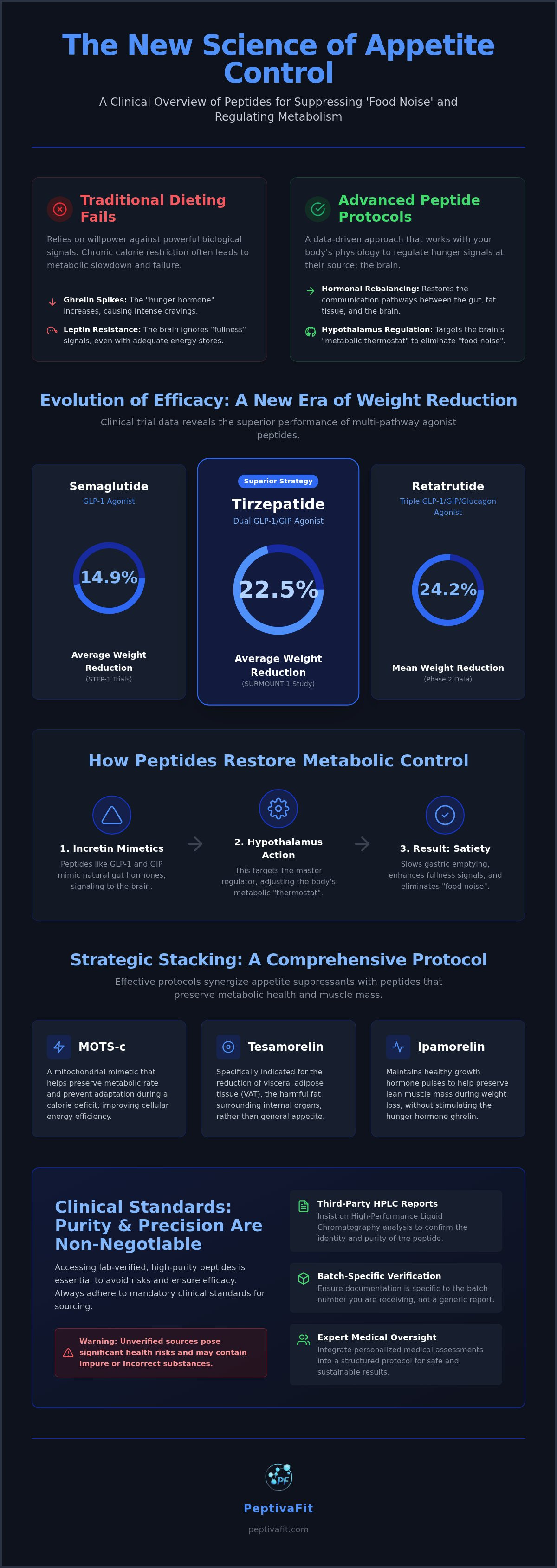
Clinical data from the SURMOUNT-1 trials demonstrated that participants utilizing advanced peptide protocols achieved an average body weight reduction of 22.5 percent over 72 weeks. This shift marks a transition from traditional willpower-based dieting to a sophisticated, data-driven approach to metabolic regulation. If you've struggled with persistent food noise or the metabolic adaptation that often follows a calorie deficit, you understand that hunger isn't merely a lack of discipline; it's a complex physiological signal. Identifying the best peptides for appetite control is no longer about finding a quick fix. It's about implementing a structured, medically-supervised framework for long-term success.
You'll discover the scientific mechanisms behind the most effective peptides for suppressing hunger and eliminating the psychological static of cravings through precise metabolic regulation. This review provides a comprehensive analysis of the 2026 clinical protocols, ensuring you can achieve total suppression of food noise while preserving the lean muscle mass required for a healthy metabolism. We'll examine the regulatory landscape of GLP-1 and GIP agonists, the emerging potential of triple-agonist research like Retatrutide, and the absolute necessity of accessing lab-verified, high-purity supplies to avoid the risks associated with unverified sources.
Key Takeaways
- Analyze the neurological feedback loops within the hypothalamus that govern endocrine signaling and satiety beyond simple caloric restriction.
- Compare the clinical efficacy of GLP-1 and GIP agonists to determine the best peptides for appetite control based on individual metabolic profiles.
- Understand the rationale for synergizing appetite suppressants with mitochondrial mimetics like MOTS-c to preserve metabolic rate and prevent adaptation.
- Identify mandatory clinical standards for peptide sourcing, including the necessity of third-party HPLC reports and batch-specific verification.
- Discover how to integrate expert oversight and personalized medical assessments into a structured protocol for sustainable fat loss.
Beyond Calories: The Molecular Biology of Hunger and Satiety
Appetite control isn't a psychological struggle; it's a physiological mandate dictated by a complex interplay of endocrine signals and neurological feedback loops. Your brain interprets energy status through various peptide hormones that transmit data between the gut, adipose tissue, and the central nervous system. When these signals fall out of alignment, willpower becomes an insufficient tool for weight management. Clinical research in 2026 suggests that the best peptides for appetite control work by restoring these communication pathways rather than simply masking hunger.
The hypothalamus serves as the master regulator of this system. It functions as a metabolic thermostat, integrating hormonal inputs to decide whether to conserve energy or stimulate consumption. Effective protocols target three primary pathways within this regulatory framework: incretin mimetics that modulate gut-brain signaling, growth hormone secretagogues that influence metabolic rate, and mitochondrial signaling agents that improve cellular energy efficiency. By addressing these specific biological markers, it's possible to distinguish between mechanical stomach fullness and the cessation of "food noise," which is the intrusive, obsessive thought pattern regarding the next meal.
The Ghrelin-Leptin Axis: Why Traditional Diets Fail
Chronic calorie restriction often triggers a state of "survival hunger" characterized by a significant spike in ghrelin, the body's primary orexigenic (hunger-stimulating) hormone. Simultaneously, individuals with higher levels of visceral fat often suffer from a breakdown in satiety signaling. Leptin resistance is a state where the brain ignores satiety signals despite adequate energy stores. This hormonal disconnect makes long-term adherence to traditional dieting nearly impossible without pharmacological intervention to stabilize the axis and lower the biological set point.
Incretin Hormones: The New Standard for Metabolic Control
Incretin hormones have redefined the clinical approach to obesity. Glucagon-like peptide-1 (GLP-1) functions by slowing gastric emptying, which physically extends the sensation of fullness after eating. However, the most significant advancements involve dual and triple agonists. Glucose-dependent insulinotropic polypeptide (GIP) enhances the satiety effect of GLP-1 while simultaneously improving lipid metabolism in adipose tissue. Understanding how peptides for metabolism and fat loss regulate these pathways is essential for any individual seeking to bypass the metabolic slowdown typical of standard weight loss attempts. These molecules don't just reduce intake; they optimize how the body utilizes available energy.
Evaluating the Top Peptides for Suppressing 'Food Noise' in 2026
The clinical landscape for pharmacological appetite suppression has shifted from basic stimulant-based anorectics to sophisticated hormonal modulation. Identifying the best peptides for appetite control requires a nuanced understanding of how specific molecules interact with the brain's reward centers and satiety signals. While Semaglutide established the baseline for efficacy with a 14.9 percent average weight reduction in STEP-1 trials, Tirzepatide has largely superseded it in clinical potency. By targeting both GLP-1 and GIP receptors, Tirzepatide achieved a 22.5 percent weight loss in the SURMOUNT-1 study, demonstrating that multi-pathway agonism is the superior strategy for eliminating intrusive "food noise."
Retatrutide represents the next frontier in this evolution. As a triple agonist targeting GLP-1, GIP, and glucagon receptors, Phase 2 data from 2026 shows a mean weight reduction of 24.2 percent. This triple-action mechanism addresses hunger while simultaneously increasing energy expenditure through glucagon receptor activation. However, not all peptides in a fat loss protocol are designed for hunger suppression. Tesamorelin, for instance, is specifically indicated for the reduction of visceral adipose tissue rather than general appetite regulation. Similarly, Ipamorelin is utilized for its ability to maintain growth hormone pulses without the significant ghrelin-induced hunger spikes associated with older peptides like GHRP-6.
The GLP-1/GIP Dual Agonists: Tirzepatide and Beyond
Dual agonism provides a more comprehensive approach to how peptides regulate appetite by mimicking multiple natural hormones simultaneously. This synergy often results in superior appetite suppression with a more favorable gastrointestinal profile compared to high-dose single agonists. Clinical observation suggests that the addition of GIP receptor activity may mitigate some of the nausea typically associated with GLP-1 saturation. Successfully managing the transition from active weight loss to metabolic maintenance is the primary challenge for 2026 protocols, requiring a personalized medical assessment to prevent rebound weight gain.
Growth Hormone Secretagogues for Body Composition
Optimizing body composition requires more than just caloric restriction. Structured tesamorelin dosage protocols are frequently integrated into advanced fat loss frameworks to target stubborn abdominal fat that is often resistant to diet alone. When combined with satiety peptides, these secretagogues help preserve lean mass during significant weight loss. Unlike first-generation research chemicals, modern secretagogues like Ipamorelin avoid the massive ghrelin spikes that can undermine a calorie-restricted protocol, ensuring that growth hormone levels remain optimized without compromising the best peptides for appetite control already in play.
Strategic Stacking: Synergizing Appetite Control with Metabolic Efficiency
Relying on a single mechanism for fat loss often triggers defensive biological adaptations. While incretin mimetics are clinically recognized as some of the best peptides for appetite control, their use in isolation can lead to a significant reduction in resting metabolic rate. Strategic stacking addresses this by targeting fat loss from multiple biological angles, ensuring that the body remains metabolically active even while caloric intake is restricted. This multi-pathway approach prevents the metabolic plateaus often encountered during long-term research protocols.
Precise timing and cycle duration are mandatory to prevent receptor downregulation. Continuous stimulation of the GLP-1 or GIP receptors without planned breaks can lead to diminished returns and increased sensitivity to side effects. A structured protocol typically involves 12 to 16 week cycles followed by a metabolic reset period. This disciplined approach ensures that your chosen interventions remain effective throughout the entire transformation process without compromising long-term hormonal health.
The Mitochondrial Edge: Integrating MOTS-C
Rapid weight loss frequently results in a loss of metabolic flexibility. The mots c peptide functions as a mitochondrial-derived transcript that mimics the metabolic benefits of exercise at a cellular level. By integrating this molecule into an appetite control protocol, researchers can prioritize mitochondrial health and improve insulin sensitivity. This prevents the "skinny fat" body composition that occurs when the body prioritizes muscle catabolism over fat oxidation during a deficit. Dosage timing is critical; metabolic mimetics should be cycled to align with high-intensity training phases for maximum efficacy.
Recovery and Integrity: The Wolverine Stack for Dieters
Systemic repair becomes a priority when training intensity is maintained alongside reduced caloric intake. High-dose incretin protocols can occasionally cause gastrointestinal irritation or delayed gastric emptying that disrupts nutrient absorption. Utilizing the bpc 157 peptide offers a clinical solution for maintaining gut health and providing joint support during intensive fat loss phases. This synergy allows for the maintenance of high-intensity performance even when the primary goal is rapid adipose tissue reduction. It's essential to maintain high-intensity performance while appetite is suppressed to signal the body to preserve lean muscle tissue.
Clinical Standards: Ensuring Purity and Precision in Peptide Research
A high-performance metabolic protocol is only as effective as the molecular integrity of the compounds utilized. Identifying the best peptides for appetite control requires more than just clinical knowledge; it demands rigorous validation of the compounds themselves. High-Performance Liquid Chromatography (HPLC) and Mass Spectrometry (MS) reports are the only acceptable methods for verifying the identity and purity of research peptides. Without these third-party laboratory validations, any protocol is compromised by variables that can lead to inconsistent results or adverse metabolic reactions.
Molecular integrity extends beyond the point of purchase. Understanding how to reconstitute peptides correctly is a critical component of maintaining the biological activity of these delicate amino acid chains. Improper handling, such as aggressive agitation or exposure to room temperatures for extended periods, can lead to peptide degradation. Storage protocols must be strictly followed; lyophilized vials should be kept in a climate-controlled, light-protected environment, while reconstituted solutions generally require refrigeration to ensure potency throughout the cycle.
Reading a Certificate of Analysis (COA)
A legitimate supplier must provide a batch-specific Certificate of Analysis. When evaluating these documents, the following clinical standards apply:
- Purity Percentages: A purity level of 99 percent or higher is the mandatory clinical standard for research applications.
- Contaminant Screening: Reports must explicitly confirm the absence of heavy metals and verify that endotoxin levels are within safe parameters.
- Batch Verification: The laboratory report must correspond directly to the specific batch number printed on the vial in your possession.
The Dangers of Unverified Compounds
The risks associated with unverified compounds go far beyond simple lack of efficacy. Online suppliers lacking transparency often distribute peptides containing fillers, pro-inflammatory agents, or incorrect peptide sequences that can trigger immune responses. These impurities can cause long-term damage to metabolic health, potentially inducing the very insulin resistance or systemic inflammation the protocol was intended to resolve. Professional oversight is a non-negotiable requirement for high-level protocols to ensure that every variable, from sourcing to administration, is controlled for safety. To ensure your research is supported by the highest standards of quality, you can access lab-tested peptides that meet these rigorous clinical benchmarks.
The Peptiva Protocol: Integrating Expert Oversight for Sustainable Results
Implementing a high-level metabolic strategy requires more than just access to compounds; it requires a structured framework that accounts for individual biological variability. While identifying the best peptides for appetite control is a foundational step, the actual transition from research to tangible results is governed by the Peptiva Protocol: Fat Loss Peptide Guide. This methodology moves beyond the "one-size-fits-all" approach typical of mass-market advice, prioritizing precise data over generalized assumptions. By following a validated roadmap, you can navigate the complexities of peptide synergy and receptor sensitivity with clinical precision.
Personalized Medical Assessments
Success begins with a rigorous baseline. A personalized medical assessment is the only reliable way to identify the metabolic roadblocks, such as subclinical thyroid dysfunction or latent insulin resistance, that might impede your progress. By screening for pre-existing conditions and hormonal imbalances before a cycle begins, you ensure that peptide selection is tailored to your specific body composition goals. Establishing baseline blood work isn't just a safety measure; it's a diagnostic tool that allows for the objective monitoring of progress and metabolic health throughout the protocol. This data-driven approach ensures that every intervention is justified by your unique physiological needs.
Expert Coaching and Consultation
Mastering the psychological and physiological aspects of "food noise" management often requires direct, expert oversight. 1-on-1 coaching provides the accountability and technical expertise needed to optimize dosage and administration for peak performance. This high-level guidance is particularly crucial when developing a long-term exit strategy. The goal of any sophisticated protocol is to achieve sustainable weight loss without a permanent reliance on peptide intervention. Accessing elite-level insights ensures that you aren't just suppressing hunger, but actively retraining your metabolic set point through habituation and physiological stabilization. Professional consultation helps you interpret subtle biological feedback, allowing for real-time adjustments that prevent the plateaus common in unguided research.
Ultimately, lab-tested peptides function as advanced tools within a broader performance framework. They aren't a replacement for disciplined nutrition or structured resistance training, but rather a force multiplier for those who are serious about their metabolic health. Integrating expert oversight ensures that these tools are used with the precision and responsibility they demand. Sustainable results are the product of combining the best peptides for appetite control with a lifestyle that supports long-term endocrine health and lean muscle preservation.
Mastering Metabolic Regulation through Clinical Precision
Effective weight management in 2026 has evolved beyond simple caloric restriction into the realm of precise hormonal modulation. You've seen how targeting the hypothalamus and the ghrelin-leptin axis with the best peptides for appetite control can eliminate the psychological burden of food noise while preserving vital lean muscle mass. Success requires a disciplined adherence to clinical standards, including the use of lab-verified compounds and strategic stacking to prevent metabolic adaptation.
Achieving elite performance and sustainable body composition demands a structured framework supported by data rather than guesswork. Our methodology prioritizes safety through personalized 1-on-1 medical assessments and expert coaching to ensure your protocol is as unique as your biology. It's time to take sophisticated control of your wellness journey with a partner that values scientific integrity and lab-verified purity. You have the tools to bypass traditional dieting failures and master your metabolic future.
Access the Peptiva Protocol and Optimize Your Metabolism Today
Frequently Asked Questions
What is the best peptide for appetite control in 2026?
Tirzepatide is currently considered the most potent option for chronic weight management due to its dual-agonist mechanism. Clinical data from the SURMOUNT-1 trials demonstrated a 22.5 percent weight reduction at the highest dose. While Semaglutide remains a primary standard, the introduction of triple agonists like Retatrutide in 2026 research represents the next phase of metabolic optimization for those seeking the best peptides for appetite control.
How long does it take for appetite-suppressing peptides to start working?
Most individuals observe a reduction in hunger signals within 24 to 48 hours of the initial administration. However, full metabolic stabilization and the complete cessation of food noise typically require several weeks of consistent titration. This gradual process allows the hypothalamus to adjust to shifted endocrine signals without triggering the aggressive counter-regulatory responses that often lead to dieting fatigue or early plateaus.
Can I stack Tesamorelin with Tirzepatide for faster fat loss?
Stacking these compounds is a frequent strategy in advanced fat loss protocols. Tirzepatide functions as the primary driver for appetite suppression and glycemic control, while Tesamorelin is specifically utilized to target the reduction of visceral adipose tissue. This combination allows for a multi-pathway approach to body recomposition, though it requires precise oversight to manage the distinct administration schedules and potential metabolic interactions of each peptide.
Is it safe to buy peptides for appetite control online?
Safety depends entirely on the transparency and clinical standards of the supplier. Purchasing peptides online is only advisable when the source provides batch-specific, third-party HPLC and Mass Spectrometry reports to verify 99 percent purity. Unverified compounds often contain pro-inflammatory fillers or incorrect sequences that can compromise metabolic health. Professional oversight and lab-verified supplies are non-negotiable requirements for any serious research protocol.
What are the common side effects of peptides like Semaglutide and Tirzepatide?
The most frequent adverse effects are gastrointestinal in nature, including nausea, delayed gastric emptying, and altered bowel habits. These symptoms are typically dose-dependent and often subside as the body adapts to the incretin mimetic. Utilizing a structured titration schedule and maintaining optimal hydration are essential strategies for mitigation. If symptoms persist, a clinical consultation is necessary to adjust the protocol and ensure long-term compliance.
Do I need a personalized medical assessment before starting the Peptiva Protocol?
A personalized medical assessment is a mandatory component of our safety framework. This evaluation identifies latent hormonal imbalances or metabolic roadblocks that could impede your results or increase the risk of adverse reactions. By establishing baseline blood work and reviewing your clinical history, we can tailor the best peptides for appetite control to your specific physiological profile, ensuring both efficacy and long-term health.
How do peptides eliminate 'food noise' in the brain?
Peptides eliminate food noise by modulating specific receptors in the hypothalamus that govern reward-seeking behavior and satiety. By mimicking natural hormones like GLP-1 and GIP, these compounds dampen the intrusive, obsessive thoughts regarding food consumption. This neurological shift allows individuals to make rational nutritional choices based on actual energy needs rather than being driven by the fluctuating endocrine signals that characterize chronic hunger.
Will I lose muscle mass while using appetite-control peptides?
Lean muscle loss is a potential risk during any significant caloric deficit. To prevent this, protocols often integrate growth hormone secretagogues like Ipamorelin alongside high protein intake and resistance training. These interventions signal the body to prioritize the oxidation of adipose tissue while sparing skeletal muscle mass. Monitoring body composition through regular assessments ensures the weight lost is primarily fat rather than metabolic tissue.

![Shelf Life of Reconstituted Peptides: A Clinical Reference Guide [2026]](https://getautoseo.com/storage/hero_images/shelf-life-of-reconstituted-peptides-a-clinical-reference-guide-2026.jpg?v=b8ed5173acaa)
